
Skip to Content
  • オフィス

    オフィス

    北米・南米
    • Atlanta
    • Austin
    • Bogota
    • Boston
    • Buenos Aires
    • Chicago
    • Dallas
    • Denver
    • Houston
    • Los Angeles
    • Mexico City
    • Minneapolis
    • Monterrey
    • Montreal
    • New York
    • Rio de Janeiro
    • San Francisco
    • Santiago
    • São Paulo
    • Seattle
    • Silicon Valley
    • Toronto
    • Washington, DC
    ヨーロッパ・中東・アフリカ
    • Amsterdam
    • Athens
    • Berlin
    • Brussels
    • Copenhagen
    • Doha
    • Dubai
    • Dusseldorf
    • Frankfurt
    • Helsinki
    • Istanbul
    • Johannesburg
    • Kyiv
    • Lisbon
    • London
    • Madrid
    • Milan
    • Munich
    • Oslo
    • Paris
    • Riyadh
    • Rome
    • Stockholm
    • Vienna
    • Warsaw
    • Zurich
    アジア・オーストラリア
    • Bangkok
    • Beijing
    • Bengaluru
    • Brisbane
    • Ho Chi Minh City
    • Hong Kong
    • Jakarta
    • Kuala Lumpur
    • Manila
    • Melbourne
    • Mumbai
    • New Delhi
    • Perth
    • Shanghai
    • Singapore
    • Sydney
    • Tokyo
    全てのオフィス
  • アルムナイ
  • メディア
  • お問い合わせ
  • 東京オフィス
  • Japan | 日本語

    地域と言語を選択

    グローバル
    • Global (English)
    北米・南米
    • Brazil (Português)
    • Argentina (Español)
    • Canada (Français)
    • Chile (Español)
    • Colombia (Español)
    ヨーロッパ・中東・アフリカ
    • France (Français)
    • DACH Region (Deutsch)
    • Italy (Italiano)
    • Spain (Español)
    • Greece (Elliniká)
    アジア・オーストラリア
    • China (中文版)
    • Korea (한국어)
    • Japan (日本語)
  • Saved items (0)
    Saved items (0)

    You have no saved items.

    後で閲読、共有できるようにするためにブックマークしてください

    Explore Bain Insights
  • 業界別プラクティス
    メインメニュー

    業界別プラクティス

    • 航空宇宙、防衛、政府関連
    • 農業
    • 化学製品
    • インフラ、建設
    • 消費財
    • 金融サービス
    • ヘルスケア
    • 産業機械、設備
    • メディア、エンターテインメント
    • 金属
    • 採掘・鉱業
    • 石油、ガス
    • 紙、パッケージ
    • プライベートエクイティ
    • 公共、社会セクター
    • 小売
    • テクノロジー
    • 通信
    • 交通
    • 観光産業
    • 公益事業、再生可能エネルギー
  • 機能別プラクティス
    メインメニュー

    機能別プラクティス

    • カスタマー・エクスペリエンス
    • サステイナビリティ、 社会貢献
    • Innovation
    • 企業買収、合併 (M&A)
    • オペレーション
    • 組織
    • プライベートエクイティ
    • マーケティング・営業
    • 戦略
    • アドバンスド・アナリティクス
    • Technology
    • フルポテンシャル・トランスフォーメーション
  • Digital
  • 知見/レポート
  • ベイン・アンド・カンパニーについて
    メインメニュー

    ベイン・アンド・カンパニーについて

    • ベインの信条
    • 活動内容
    • 社員とリーダーシップ
    • プレス・メディア情報
    • クライアントの結果
    • 受賞歴
    • パートナーシップを結んでいる団体
    Further: Our global responsibility
    • ダイバーシティ
    • 社会貢献
    • サステイナビリティへの取り組み
    • 世界経済フォーラム(WEF)
    Learn more about Further
  • キャリア
    メインメニュー

    キャリア

    • ベインで働く
      キャリア
      ベインで働く
      • Find Your Place
      • ベインで活躍する機会
      • ベインのチーム体制
      • 学生向けページ
      • インターンシップ
      • 採用イベント
    • ベインでの体験
      キャリア
      ベインでの体験
      • Blog: Inside Bain
      • キャリアストーリー
      • 社員紹介
      • Where We Work
      • 成長を後押しするサポート体制
      • アフィニティ・グループ
      • 福利厚生
    • Impact Stories
    • 採用情報
      キャリア
      採用情報
      • 採用プロセス
      • 面接内容
    FIND JOBS
  • オフィス
    メインメニュー

    オフィス

    • 北米・南米
      オフィス
      北米・南米
      • Atlanta
      • Austin
      • Bogota
      • Boston
      • Buenos Aires
      • Chicago
      • Dallas
      • Denver
      • Houston
      • Los Angeles
      • Mexico City
      • Minneapolis
      • Monterrey
      • Montreal
      • New York
      • Rio de Janeiro
      • San Francisco
      • Santiago
      • São Paulo
      • Seattle
      • Silicon Valley
      • Toronto
      • Washington, DC
    • ヨーロッパ・中東・アフリカ
      オフィス
      ヨーロッパ・中東・アフリカ
      • Amsterdam
      • Athens
      • Berlin
      • Brussels
      • Copenhagen
      • Doha
      • Dubai
      • Dusseldorf
      • Frankfurt
      • Helsinki
      • Istanbul
      • Johannesburg
      • Kyiv
      • Lisbon
      • London
      • Madrid
      • Milan
      • Munich
      • Oslo
      • Paris
      • Riyadh
      • Rome
      • Stockholm
      • Vienna
      • Warsaw
      • Zurich
    • アジア・オーストラリア
      オフィス
      アジア・オーストラリア
      • Bangkok
      • Beijing
      • Bengaluru
      • Brisbane
      • Ho Chi Minh City
      • Hong Kong
      • Jakarta
      • Kuala Lumpur
      • Manila
      • Melbourne
      • Mumbai
      • New Delhi
      • Perth
      • Shanghai
      • Singapore
      • Sydney
      • Tokyo
    全てのオフィス
  • アルムナイ
  • メディア
  • お問い合わせ
  • 東京オフィス
  • Japan | 日本語
    メインメニュー

    地域と言語を選択

    • グローバル
      地域と言語を選択
      グローバル
      • Global (English)
    • 北米・南米
      地域と言語を選択
      北米・南米
      • Brazil (Português)
      • Argentina (Español)
      • Canada (Français)
      • Chile (Español)
      • Colombia (Español)
    • ヨーロッパ・中東・アフリカ
      地域と言語を選択
      ヨーロッパ・中東・アフリカ
      • France (Français)
      • DACH Region (Deutsch)
      • Italy (Italiano)
      • Spain (Español)
      • Greece (Elliniká)
    • アジア・オーストラリア
      地域と言語を選択
      アジア・オーストラリア
      • China (中文版)
      • Korea (한국어)
      • Japan (日本語)
  • Saved items  (0)
    メインメニュー
    Saved items (0)

    You have no saved items.

    後で閲読、共有できるようにするためにブックマークしてください

    Explore Bain Insights
  • 業界別プラクティス
    • 業界別プラクティス

      • 航空宇宙、防衛、政府関連
      • 農業
      • 化学製品
      • インフラ、建設
      • 消費財
      • 金融サービス
      • ヘルスケア
      • 産業機械、設備
      • メディア、エンターテインメント
      • 金属
      • 採掘・鉱業
      • 石油、ガス
      • 紙、パッケージ
      • プライベートエクイティ
      • 公共、社会セクター
      • 小売
      • テクノロジー
      • 通信
      • 交通
      • 観光産業
      • 公益事業、再生可能エネルギー
  • 機能別プラクティス
    • 機能別プラクティス

      • カスタマー・エクスペリエンス
      • サステイナビリティ、 社会貢献
      • Innovation
      • 企業買収、合併 (M&A)
      • オペレーション
      • 組織
      • プライベートエクイティ
      • マーケティング・営業
      • 戦略
      • アドバンスド・アナリティクス
      • Technology
      • フルポテンシャル・トランスフォーメーション
  • Digital
  • 知見/レポート
  • ベイン・アンド・カンパニーについて
    • ベイン・アンド・カンパニーについて

      • ベインの信条
      • 活動内容
      • 社員とリーダーシップ
      • プレス・メディア情報
      • クライアントの結果
      • 受賞歴
      • パートナーシップを結んでいる団体
      Further: Our global responsibility
      • ダイバーシティ
      • 社会貢献
      • サステイナビリティへの取り組み
      • 世界経済フォーラム(WEF)
      Learn more about Further
  • キャリア
    人気検索キーワード
    • デジタル
    • 戦略
    前回の検索
      最近訪れたページ

      Content added to saved items

      Saved items (0)

      Removed from saved items

      Saved items (0)

      Technology Report

      Generative AI and Cybersecurity: Strengthening Both Defenses and Threats

      Generative AI and Cybersecurity: Strengthening Both Defenses and Threats

      Breakthroughs in technologies built on large language models will accelerate the arms race between hackers and companies.

      著者:Syed Ali and Frank Ford

      • min read
      }

      レポート

      Generative AI and Cybersecurity: Strengthening Both Defenses and Threats
      en
      概要
      • Generative artificial intelligence (AI) should strengthen cybersecurity, particularly in threat identification, although it’s unlikely to lead to full automation anytime soon.
      • Bad actors are also exploring generative AI’s potential to aid cyberattacks through innovations such as self-evolving malware.
      • Through a range of moves today, both buyers and providers of cybersecurity services can take advantage of the new technology while remaining protected.

      This article is part of Bain's 2023 Technology Report.

      Explore the report

      Only months after its public breakthrough, generative AI has shown the potential to transform cybersecurity products and operations. After the launch of ChatGPT and other products powered by large language models (LLMs), the cybersecurity industry is planning for generative AI to become a key tool. And that’s despite the launch challenge generative AI faces in cybersecurity—namely, the sensitive and siloed nature of security data, which makes it hard to get high-quality, comprehensive datasets to train and update an LLM model.

      So far, threat identification is the hot spot. When we analyzed cybersecurity companies that are using generative AI, we found that all were using it at the identification stage of the SANS Institute’s well-known incident response framework—the biggest uptake in any of the six SANS stages (preparation, identification, containment, eradication, recovery, and lessons learned). That fits our assessment that threat identification holds the greatest potential for generative AI to improve cybersecurity (see Figure 1). Generative AI is already helping analysts spot an attack faster, then better assess its scale and potential impact. For instance, it can help analysts more efficiently filter incident alerts, rejecting false positives. Generative AI’s ability to detect and hunt threats will only get more dynamic and automated.

      Figure 1
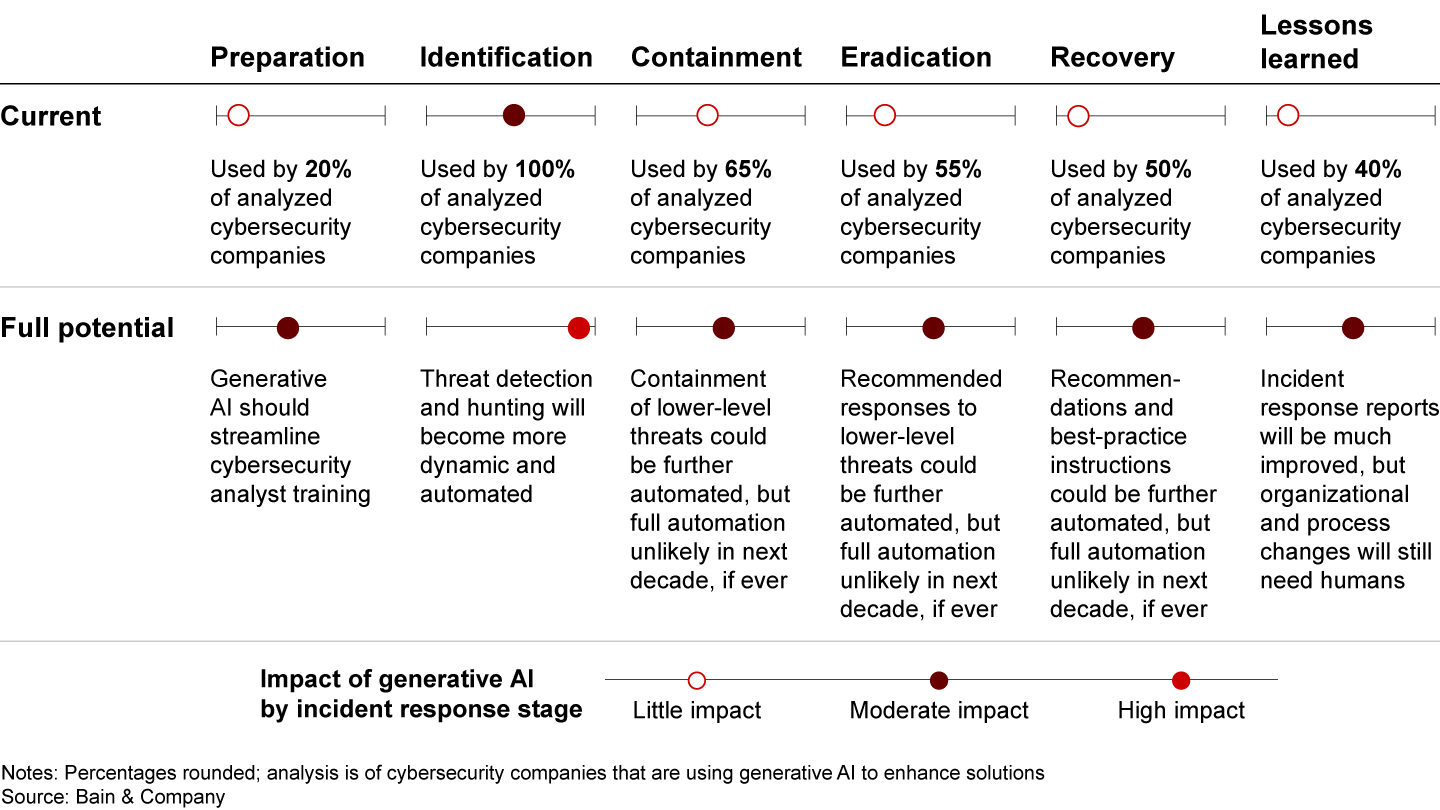
      Threat identification holds the most potential for generative AI to improve cybersecurity—and that’s where industry adoption has been strongest so far
      Threat identification holds the most potential for generative AI to improve cybersecurity—and that’s where industry adoption has been strongest so far
      Threat identification holds the most potential for generative AI to improve cybersecurity—and that’s where industry adoption has been strongest so far

      For the containment, eradication, and recovery stages of the SANS framework, adoption rates vary from about one-half to two-thirds of the cybersecurity companies we analyzed, with containment most advanced. In these stages, generative AI is already narrowing knowledge gaps by providing analysts with remedy and recovery instructions based on proven tactics from past incidents. While there will be more gains through automation of containment, eradication, and recovery plans, full automation is unlikely over the next 5 to 10 years, if at all. The longer-term impact of generative AI in these areas is likely to be moderate and will likely always need some human supervision.

      Generative AI is also being used in the lessons-learned stage, where it can automate the creation of incident response reports, improving internal communication. Crucially, the reports can be reincorporated into the model, improving defenses. For example, Google’s Security AI Workbench, powered by the Sec-PaLM 2 LLM, converts raw data from recent attacks into machine-readable and human-readable threat intelligence that can accelerate responses (under human supervision). But while the quality of generative AI–powered incident response reports should keep improving, human involvement is still likely to remain necessary.

      A double-edged sword

      Of course, generative AI can also be used as a cyberattacker's tool, giving them similar capabilities as defenders. For example, less experienced attackers can use it to create more enticing emails or more realistic deepfake videos, recordings, and images to send to phishing targets. Generative AI also allows bad actors to easily rewrite a known attack code to be just different enough to avoid detection.

      Generative AI has certainly become a trending topic for malicious actors. Mentions of generative AI on the dark web proliferated in 2023 (see Figure 2). It’s common to see hackers boasting that they’re using ChatGPT. One hacker posted that he was able to use generative AI to recreate malware strains from research publications, such as a Python-based stealer that can search and retrieve common file types (.docx, PDF, images) across a system.

      Figure 2
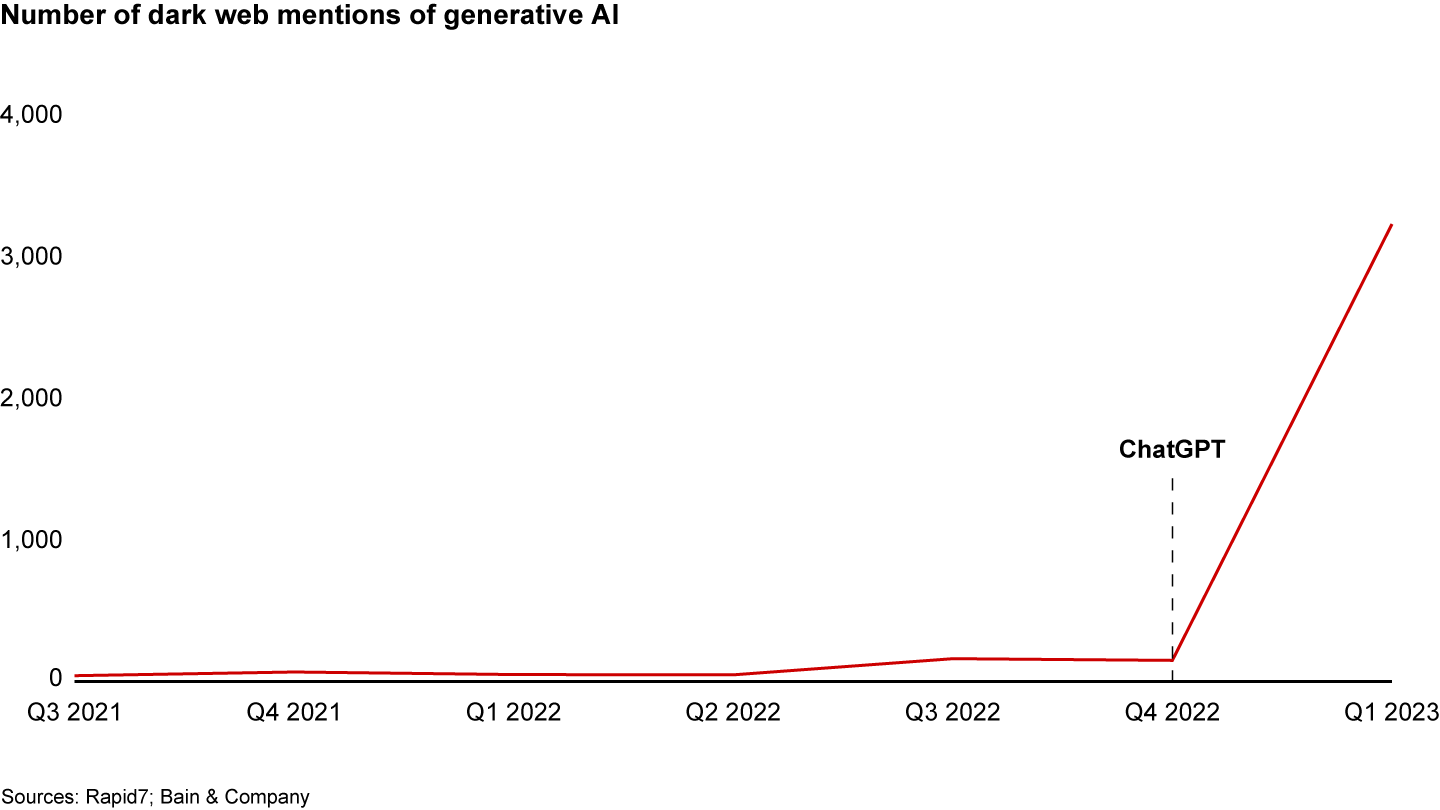
      The use of generative AI for nefarious purposes has become an increasingly popular topic on the dark web after the launch of ChatGPT
      The use of generative AI for nefarious purposes has become an increasingly popular topic on the dark web after the launch of ChatGPT
      The use of generative AI for nefarious purposes has become an increasingly popular topic on the dark web after the launch of ChatGPT

      The threat from bad actors will only increase as they use generative AI to standardize and update their tactics, techniques, and procedures. Generative AI–assisted dangers include strains of malware that self-evolve, creating variations to attack a specific target with a unique technique, payload, and polymorphic code that’s undetectable by existing security measures. Only the most agile cybersecurity operations will stay ahead.

      Actions to take now

      Corporate leaders should:

      • understand that generative AI won’t rid cybersecurity of its operational and technical complexities;
      • make generative AI and cybersecurity a recurring agenda item for board and C-suite meetings; and
      • avoid a narrow focus on controls or certain risks—cybersecurity demands a holistic approach.

      Chief information officers/chief information security officers should:

      • get security operations (SecOps) leaders to validate generative AI output, particularly threat-detection algorithms updated by generative AI;
      • train new and junior SecOps employees to hunt threats with and without generative AI to avoid dependence; and
      • where possible, avoid relying on a single vendor or generative AI model across the cybersecurity stack.

      Cybersecurity companies should:

      • hire the right mix of talent to bring generative AI capabilities into their products; and
      • guard against generative AI–created false information (hallucinations) and external tampering with generative AI algorithms and models that might create backdoor vulnerabilities.

      Generative AI will rapidly advance, and it’s essential that all stakeholders from cybersecurity providers to enterprises continuously update their specialist knowledge and strategy to take advantage—and stay protected.

      Read the Next Chapter

      Taking the Hyperbole Out of the Metaverse

      Read our 2023 Technology Report

      Download the PDF Explore the report
      著者
      • Headshot of Syed Ali
        Syed Ali
        パートナー, Houston
      • Headshot of Frank Ford
        Frank Ford
        パートナー, London
      関連業種
      • Cybersecurity
      • テクノロジー
      関連するコンサルティングサービス
      • Digital
      • IT
      コンサルティングサービス
      • Artificial Intelligence
      Technology Report
      Quantum Computing Moves from Theoretical to Inevitable

      Quantum will likely become part of a mosaic, working with classical computing to solve big problems.

      詳細
      Technology Report
      Will Agentic AI Disrupt SaaS?

      Disruption is mandatory. Obsolescence is optional.

      詳細
      Artificial Intelligence
      Four Ways Leaders Can Make AI Redesigns Stick

      As companies redesign to scale AI, these four lessons help leaders ensure their organizations actually live the new operating model.

      詳細
      Artificial Intelligence
      Reimagining Merchandising in the Era of Agentic AI

      The future of merchandising is not better analysis, but faster, smarter execution—and agentic AI is what makes that possible.

      詳細
      Technology Report
      State of the Art of Agentic AI Transformation

      Tech-forward enterprises have cracked the code on ROI for AI. Falling behind is riskier than ever as the next wave of agentic AI raises the stakes.

      詳細

      Value Evolution

      • Creating Value in Tech Throughout the Life Cycle

      • Preparing for Exit: A Buyer’s Market Is Coming for Tech Assets

      • AI Investors: Act Fast, Act Wisely

      • Technology Enters Its Post-Globalization Era

      Strategic Battlegrounds

      • You’re Out of Time to Wait and See on AI

      • How AI Is Recoding the Software Business Model

      • Generative AI and Cybersecurity: Strengthening Both Defenses and Threats

      • Taking the Hyperbole Out of the Metaverse

      • The Untapped Value at the Intelligent Edge

      • After the Chip Shortage, Fears of a Capacity Glut Are Overblown

      Operational Transformations

      • Digital Innovation: Getting the Architecture Foundations Right

      • The Talent Implications of Generative AI

      • How Enterprise Sales Can Supercharge Product-Led Growth

      • How Your Revenue Can Grow Faster Than Your Salesforce

      • Decarbonizing Technology Supply Chains

      First published in 9月 2023
      Tags
      • Artificial Intelligence
      • Cybersecurity
      • Digital
      • IT
      • Technology Report
      • テクノロジー

      クライアント支援事例

      サステイナビリティ、社会貢献 Can Microchips Turbocharge Sustainability Improvement?

      ケーススタディを見る

      Digital How a Data-Driven Mindset Powers McAfee’s Growth

      ケーススタディを見る

      Helping a Midsize ERP Player Compete against the Giants

      ケーススタディを見る

      お気軽にご連絡下さい

      私達は、グローバルに活躍する経営者が抱える最重要経営課題に対して、厳しい競争環境の中でも成長し続け、「結果」を出すために支援しています。

      Digital is a service mark of Bain & Company, Inc.

      ベインの知見。競争が激化するグローバルビジネス環境で、日々直面するであろう問題について論じている知見を毎月お届けします。

      *プライバシーポリシーの内容を確認し、合意しました。

      プライバシーポリシーをご確認頂き、合意頂けますようお願い致します。
      Bain & Company
      お問い合わせ Sustainability Accessibility Terms of use Privacy Cookie Policy Sitemap Log In

      © 1996-2026 Bain & Company, Inc.

      お問い合わせ

      How can we help you?

      • ビジネスについて
      • プレス報道について
      • 採用について
      全てのオフィス