

論説

At a Glance
- Most companies are only scratching the surface of achievable value today by treating cloud as just another IT topic.
- Understanding where you are in cloud adoption and aligning investments with business strategy are vital steps in garnering more value from cloud.
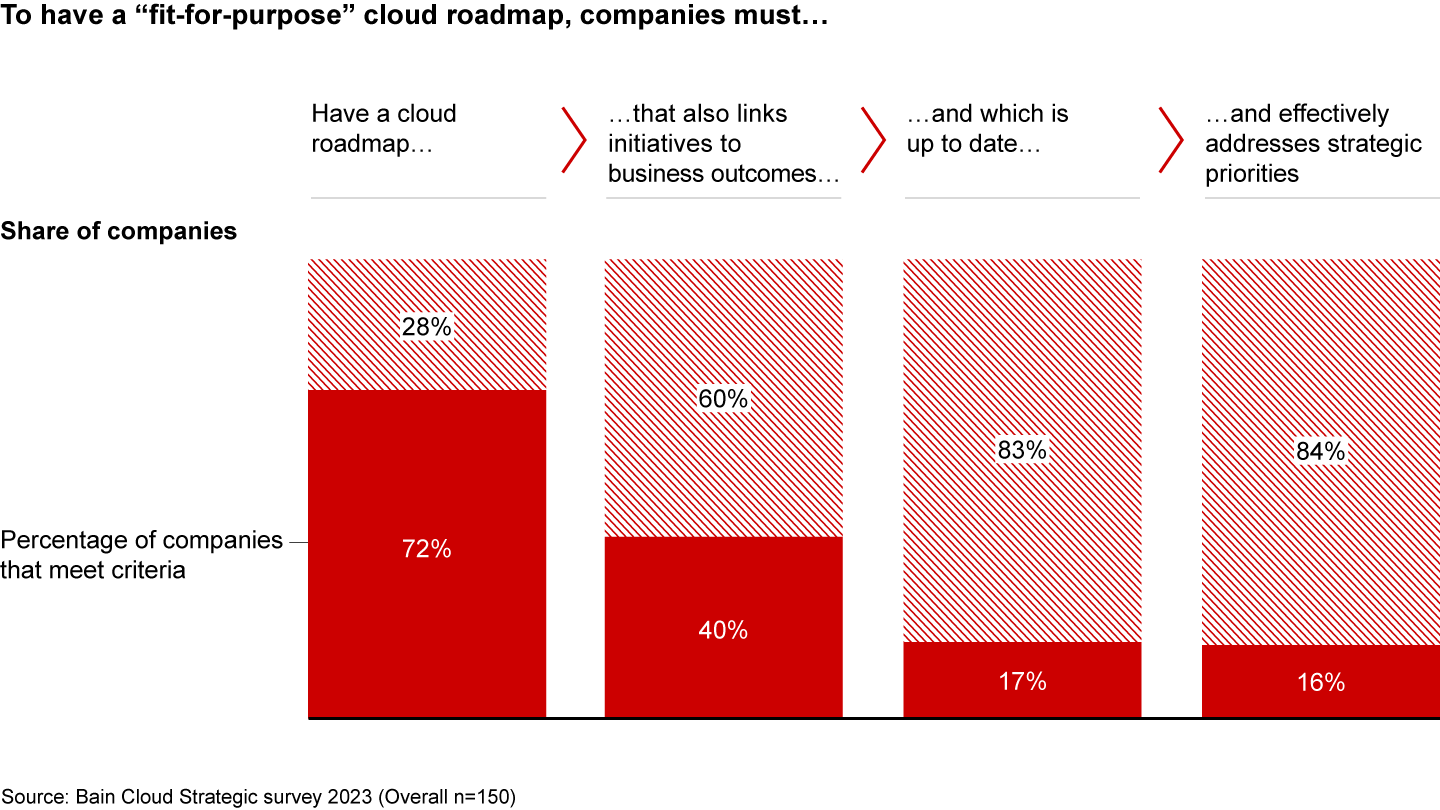
- Few companies are confident that their cloud road map focuses on strategic priorities, limiting their ability to get the most from their investments.
- Companies deriving the most value from cloud depend on strong support from senior leadership, close alignment of technology and the business, and development of necessary technological capabilities.
Once in a while, seismic changes fundamentally accelerate how businesses can create value. Developments like the Industrial Revolution and the Internet required companies to rethink their business models. Those who embraced the opportunities created new levels of value; those who didn’t got left behind—and many ultimately disappeared.
Written in collaboration with
Written in collaboration with

Cloud represents another such revolution, one that enables many important advances such as generative AI, data and analytics, and faster innovation in general. Even though cloud has been around for more than a decade, most companies are only scratching the surface of achievable value today by treating it as just another IT topic.
When done right, the value created from cloud can be dramatic:
- Connecting more than 120 factory sites through IoT solutions built on the cloud could bring a leading automotive company improvements of more than 30% in both increased productivity and decreased costs.
- An energy company deploying cloud-based predictive analytics reduced downtime by 20% and cut maintenance costs by 15%.
- A financial institution used a cloud-based analytics platform to learn more about customer trends and needs, which helped increase customer satisfaction by 12% and reduce expenses by about 15%.
These are just a few examples from companies that have derived significant value from the cloud. The secret to getting there starts with understanding where your company is today on its cloud journey, and aligning business and IT on how cloud can accelerate your strategic agenda.
Four states of cloud adoption
Most companies’ adoption levels fall into one of four states, with most dwelling in one of the first two (see Figure 1).
Figure 1
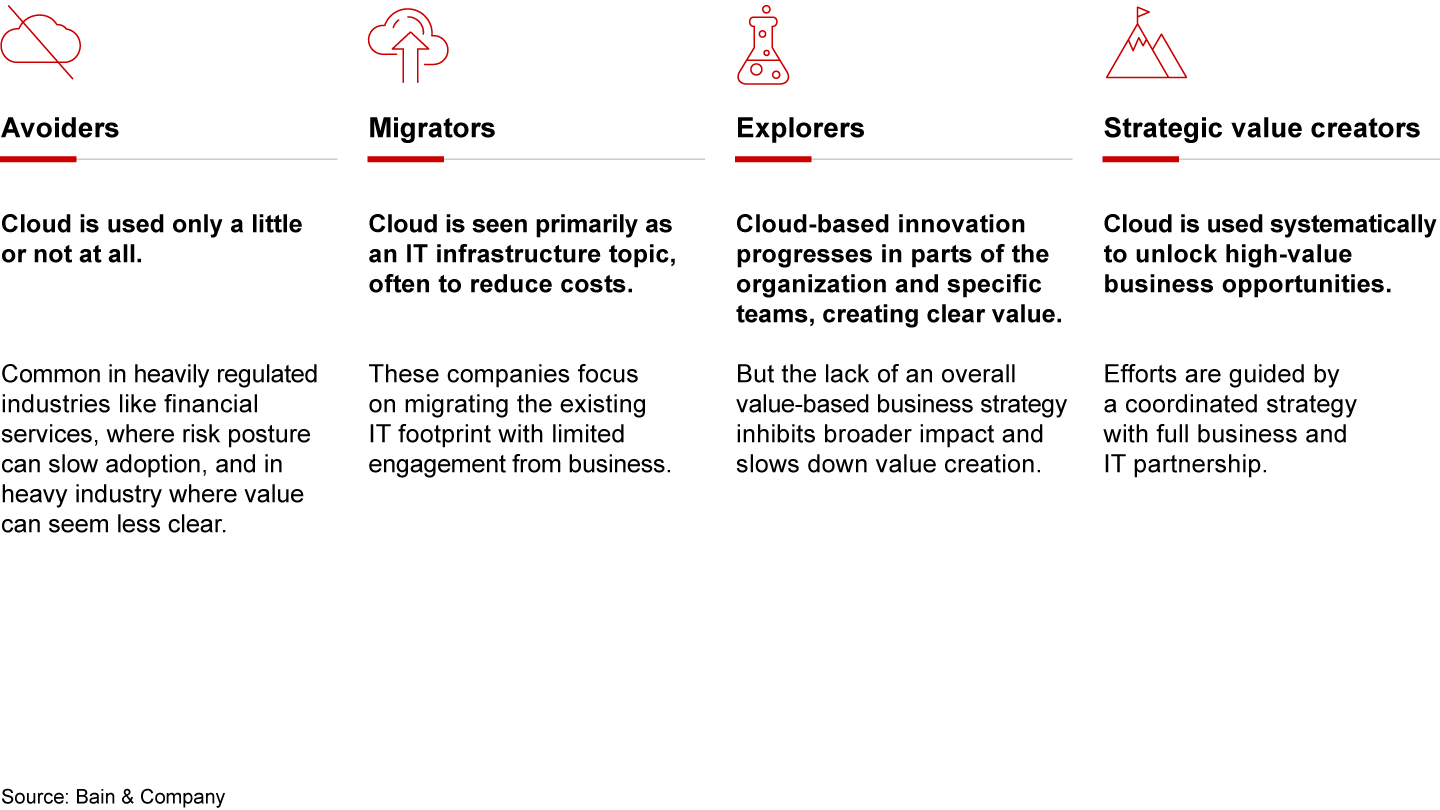

Avoiders. Some organizations still avoid public cloud and operate on their own data centers. This is often due to perceived regulatory requirements, concerns about the risk of using cloud, or a lack of appreciation of cloud’s potential. By taking this approach, those entities pay a heavy price, as they miss out on the significant long-term business value that cloud provides to all industries, including faster speed of innovation and access to new cloud-enabled profit pools.
Avoiders pay a heavy price, missing out on the significant long-term business value that cloud provides.
Migrators. Most enterprises fall into this category, having delegated cloud to the IT department without a comprehensive value-based cloud strategy. They pursue cloud from an infrastructure perspective, typically with the aim to reduce IT costs and gain flexibility.
However, companies can go off track at this stage:
- About 60% of companies adopt a “lift-and-shift” approach, moving workloads to the cloud without reengineering applications to optimize cost and drive innovation via cloud-native languages or specific services. This is typically done in anticipation of cost savings that may not materialize if the companies continue to use cloud in the same way they used their data centers. In fact, it can even lead to higher costs as the companies pay for both cloud usage and some remaining on-premise data centers.
- The other 40% take time to modernize as they move their workloads to cloud, taking advantage of cloud capabilities to optimize run costs and performance.
Even when companies are on the right path to modernize their applications as they migrate, Bain research finds that it’s still common to experience execution challenges, diminishing the value of cloud in the eyes of business leadership. The research found companies reporting that about 40% of their cloud execution capabilities are insufficient, resulting in cloud programs frequently getting delayed and not generating the targeted results, often because of a lack of investments. Shadow IT structures can also emerge, as the central IT team is often sidestepped for individual migration efforts, particularly in decentralized organizations.
This can lead to an unproductive cycle, where business leaders don't engage on cloud topics because they see little value, cost overruns, and delays. It can then become more difficult for IT to engage business leaders in the necessary strategic conversations about how cloud can help drive broader business impact, with the added challenge that many IT departments do not have the capabilities or organizational buy-in to engage the business as equals on strategic topics.
At this stage, as complexity grows, some companies start to lose control of cloud’s total cost of ownership (TCO). Focusing on cost and value optimization can improve cloud TCO by 20% to 30%, according to Bain research. Those funds can then be channeled into more strategic cloud opportunities.
As complexity grows, some companies lose control of cloud TCO. Focusing on cost and value optimization can improve cloud TCO by 20% to 30%, according to Bain experience. Those funds can then be channeled into more strategic cloud opportunities.
Explorers. Some companies try to break the cycle, as business and IT work together to get more value from the cloud. These efforts are often driven by individuals rather than a robust corporate effort—maybe a chief information or chief digital officer working with a leader from the business. These executives understand the value that cloud can create, such as increased speed to market through faster deployment of new product features. Discrete efforts tend to produce isolated success stories, often achieved through lengthy trial and error rather than through a repeatable engine that can drive instances of high business value across the organization. These efforts and successes should be encouraged and celebrated as the organization continues to progress.
Strategic value creators. Cloud’s value is maximized when companies acquire a deep understanding of how cloud creates business value, which may include new revenue streams, new services for customers, and broad adoption of new technologies. In this state, cloud initiatives are not left to the IT department; instead, a company-wide effort ensures that cloud acts as an accelerator to the highest-value business opportunities.
Strategic value creators don’t leave cloud initiatives to IT. Instead, a company-wide effort ensures that cloud acts as an accelerator to the highest-value business opportunities.
Few companies manage to get here. Bain research finds only a small percentage of companies with confidence that their cloud roadmap focuses on strategic priorities, indicating that only a few have reached the strategic value creator state (see Figure 2).
Figure 2

Those that did reach it managed to generate significant business value.
- Moderna started its cloud journey directly upon its founding in 2010 and began exploring the full strategic value of cloud. The clinical trials team and IT department joined forces and created a world-class digital lab living on the cloud, accelerating the development time for new vaccines. When Covid hit in 2019, this lab played a crucial role in rapidly developing the vaccine—in a fraction of the time previously required.
- Capital One was the first bank to announce it was going all-in on cloud in 2015. It built a comprehensive, business-focused cloud strategy and has since disrupted a broad variety of key business areas—including using cloud-enabled AI/ML solutions for real-time fraud detection, improving customer experience by deploying speech recognition, automating their call centers’ validation systems, and connecting their data sources to make them fully available in real time for new business use cases.
Harnessing the power of cloud
What do these strategic value creators have in common, and what can others learn from them? Ultimately, it boils down to three critical success factors.
- Business engagement. Leadership from the top is committed to delivering the maximum business value from cloud. This requires developing a comprehensive understanding of how cloud can help drive value for the business, exciting and inspiring key stakeholders, and ultimately prioritizing cloud-related efforts.
- Deep collaboration between business and technology to accelerate existing initiatives and identify new high-value ones. The ambition is to improve overall business strategy and advance the company toward leveraging cloud’s full potential.
- Building out the right execution capabilities and putting the appropriate investment behind them to drive outcomes. While this might seem obvious, many companies drop the ball here and fail to build the necessary capabilities to progress at pace with cloud, even when they have the right strategic ideas.
Getting these factors right is by no means easy, but a change as big as the shift to cloud often demands greater effort. Companies that embrace the opportunities cloud provides are the ones that reach the strategic value creator state and generate game-changing results. As in previous technological revolutions, those who wait too long to embrace the change risk being left behind.

About Amazon Web Services
Since 2006, Amazon Web Services has been the world’s most comprehensive and broadly adopted cloud. AWS has been continually expanding its services to support virtually any workload, and it now has more than 200 fully featured services for compute, storage, databases, networking, analytics, machine learning and artificial intelligence (AI), Internet of Things (IoT), mobile, security, hybrid, virtual and augmented reality (VR and AR), media, and application development, deployment, and management from 99 Availability Zones within 31 geographic regions, with announced plans for 15 more Availability Zones and five more AWS Regions in Canada, Israel, Malaysia, New Zealand, and Thailand. Millions of customers—including the fastest-growing startups, largest enterprises, and leading government agencies—trust AWS to power their infrastructure, become more agile, and lower costs. To learn more about AWS, visit aws.amazon.com.
Bain and AWS collaborate to help companies maximize the strategic business value they are getting from cloud.
First published in 11月 2023