
Skip to Content
  • オフィス

    オフィス

    北米・南米
    • Atlanta
    • Austin
    • Bogota
    • Boston
    • Buenos Aires
    • Chicago
    • Dallas
    • Denver
    • Houston
    • Los Angeles
    • Mexico City
    • Minneapolis
    • Monterrey
    • Montreal
    • New York
    • Rio de Janeiro
    • San Francisco
    • Santiago
    • São Paulo
    • Seattle
    • Silicon Valley
    • Toronto
    • Washington, DC
    ヨーロッパ・中東・アフリカ
    • Amsterdam
    • Athens
    • Berlin
    • Brussels
    • Copenhagen
    • Doha
    • Dubai
    • Dusseldorf
    • Frankfurt
    • Helsinki
    • Istanbul
    • Johannesburg
    • Kyiv
    • Lisbon
    • London
    • Madrid
    • Milan
    • Munich
    • Oslo
    • Paris
    • Riyadh
    • Rome
    • Stockholm
    • Vienna
    • Warsaw
    • Zurich
    アジア・オーストラリア
    • Bangkok
    • Beijing
    • Bengaluru
    • Brisbane
    • Ho Chi Minh City
    • Hong Kong
    • Jakarta
    • Kuala Lumpur
    • Manila
    • Melbourne
    • Mumbai
    • New Delhi
    • Perth
    • Shanghai
    • Singapore
    • Sydney
    • Tokyo
    全てのオフィス
  • アルムナイ
  • メディア
  • お問い合わせ
  • 東京オフィス
  • Japan | 日本語

    地域と言語を選択

    グローバル
    • Global (English)
    北米・南米
    • Brazil (Português)
    • Argentina (Español)
    • Canada (Français)
    • Chile (Español)
    • Colombia (Español)
    ヨーロッパ・中東・アフリカ
    • France (Français)
    • DACH Region (Deutsch)
    • Italy (Italiano)
    • Spain (Español)
    • Greece (Elliniká)
    アジア・オーストラリア
    • China (中文版)
    • Korea (한국어)
    • Japan (日本語)
  • Saved items (0)
    Saved items (0)

    You have no saved items.

    後で閲読、共有できるようにするためにブックマークしてください

    Explore Bain Insights
  • 業界別プラクティス
    メインメニュー

    業界別プラクティス

    • 航空宇宙、防衛、政府関連
    • 農業
    • 化学製品
    • インフラ、建設
    • 消費財
    • 金融サービス
    • ヘルスケア
    • 産業機械、設備
    • メディア、エンターテインメント
    • 金属
    • 採掘・鉱業
    • 石油、ガス
    • 紙、パッケージ
    • プライベートエクイティ
    • 公共、社会セクター
    • 小売
    • テクノロジー
    • 通信
    • 交通
    • 観光産業
    • 公益事業、再生可能エネルギー
  • 機能別プラクティス
    メインメニュー

    機能別プラクティス

    • カスタマー・エクスペリエンス
    • サステイナビリティ、 社会貢献
    • Innovation
    • 企業買収、合併 (M&A)
    • オペレーション
    • 組織
    • プライベートエクイティ
    • マーケティング・営業
    • 戦略
    • アドバンスド・アナリティクス
    • Technology
    • フルポテンシャル・トランスフォーメーション
  • Digital
  • 知見/レポート
  • ベイン・アンド・カンパニーについて
    メインメニュー

    ベイン・アンド・カンパニーについて

    • ベインの信条
    • 活動内容
    • 社員とリーダーシップ
    • プレス・メディア情報
    • クライアントの結果
    • 受賞歴
    • パートナーシップを結んでいる団体
    Further: Our global responsibility
    • ダイバーシティ
    • 社会貢献
    • サステイナビリティへの取り組み
    • 世界経済フォーラム(WEF)
    Learn more about Further
  • キャリア
    メインメニュー

    キャリア

    • ベインで働く
      キャリア
      ベインで働く
      • Find Your Place
      • ベインで活躍する機会
      • ベインのチーム体制
      • 学生向けページ
      • インターンシップ
      • 採用イベント
    • ベインでの体験
      キャリア
      ベインでの体験
      • Blog: Inside Bain
      • キャリアストーリー
      • 社員紹介
      • Where We Work
      • 成長を後押しするサポート体制
      • アフィニティ・グループ
      • 福利厚生
    • Impact Stories
    • 採用情報
      キャリア
      採用情報
      • 採用プロセス
      • 面接内容
    FIND JOBS
  • オフィス
    メインメニュー

    オフィス

    • 北米・南米
      オフィス
      北米・南米
      • Atlanta
      • Austin
      • Bogota
      • Boston
      • Buenos Aires
      • Chicago
      • Dallas
      • Denver
      • Houston
      • Los Angeles
      • Mexico City
      • Minneapolis
      • Monterrey
      • Montreal
      • New York
      • Rio de Janeiro
      • San Francisco
      • Santiago
      • São Paulo
      • Seattle
      • Silicon Valley
      • Toronto
      • Washington, DC
    • ヨーロッパ・中東・アフリカ
      オフィス
      ヨーロッパ・中東・アフリカ
      • Amsterdam
      • Athens
      • Berlin
      • Brussels
      • Copenhagen
      • Doha
      • Dubai
      • Dusseldorf
      • Frankfurt
      • Helsinki
      • Istanbul
      • Johannesburg
      • Kyiv
      • Lisbon
      • London
      • Madrid
      • Milan
      • Munich
      • Oslo
      • Paris
      • Riyadh
      • Rome
      • Stockholm
      • Vienna
      • Warsaw
      • Zurich
    • アジア・オーストラリア
      オフィス
      アジア・オーストラリア
      • Bangkok
      • Beijing
      • Bengaluru
      • Brisbane
      • Ho Chi Minh City
      • Hong Kong
      • Jakarta
      • Kuala Lumpur
      • Manila
      • Melbourne
      • Mumbai
      • New Delhi
      • Perth
      • Shanghai
      • Singapore
      • Sydney
      • Tokyo
    全てのオフィス
  • アルムナイ
  • メディア
  • お問い合わせ
  • 東京オフィス
  • Japan | 日本語
    メインメニュー

    地域と言語を選択

    • グローバル
      地域と言語を選択
      グローバル
      • Global (English)
    • 北米・南米
      地域と言語を選択
      北米・南米
      • Brazil (Português)
      • Argentina (Español)
      • Canada (Français)
      • Chile (Español)
      • Colombia (Español)
    • ヨーロッパ・中東・アフリカ
      地域と言語を選択
      ヨーロッパ・中東・アフリカ
      • France (Français)
      • DACH Region (Deutsch)
      • Italy (Italiano)
      • Spain (Español)
      • Greece (Elliniká)
    • アジア・オーストラリア
      地域と言語を選択
      アジア・オーストラリア
      • China (中文版)
      • Korea (한국어)
      • Japan (日本語)
  • Saved items  (0)
    メインメニュー
    Saved items (0)

    You have no saved items.

    後で閲読、共有できるようにするためにブックマークしてください

    Explore Bain Insights
  • 業界別プラクティス
    • 業界別プラクティス

      • 航空宇宙、防衛、政府関連
      • 農業
      • 化学製品
      • インフラ、建設
      • 消費財
      • 金融サービス
      • ヘルスケア
      • 産業機械、設備
      • メディア、エンターテインメント
      • 金属
      • 採掘・鉱業
      • 石油、ガス
      • 紙、パッケージ
      • プライベートエクイティ
      • 公共、社会セクター
      • 小売
      • テクノロジー
      • 通信
      • 交通
      • 観光産業
      • 公益事業、再生可能エネルギー
  • 機能別プラクティス
    • 機能別プラクティス

      • カスタマー・エクスペリエンス
      • サステイナビリティ、 社会貢献
      • Innovation
      • 企業買収、合併 (M&A)
      • オペレーション
      • 組織
      • プライベートエクイティ
      • マーケティング・営業
      • 戦略
      • アドバンスド・アナリティクス
      • Technology
      • フルポテンシャル・トランスフォーメーション
  • Digital
  • 知見/レポート
  • ベイン・アンド・カンパニーについて
    • ベイン・アンド・カンパニーについて

      • ベインの信条
      • 活動内容
      • 社員とリーダーシップ
      • プレス・メディア情報
      • クライアントの結果
      • 受賞歴
      • パートナーシップを結んでいる団体
      Further: Our global responsibility
      • ダイバーシティ
      • 社会貢献
      • サステイナビリティへの取り組み
      • 世界経済フォーラム(WEF)
      Learn more about Further
  • キャリア
    人気検索キーワード
    • デジタル
    • 戦略
    前回の検索
      最近訪れたページ

      Content added to saved items

      Saved items (0)

      Removed from saved items

      Saved items (0)

      Expert Commentary

      How to Forecast Interdependent Market Dynamics with Limited Data

      How to Forecast Interdependent Market Dynamics with Limited Data

      Sign-restricted Bayesian vector autoregression models prove useful for mid- and long-term forecasting.

      著者:Grigory Sizov, Michal Chojnowski and Jose von Roth

      • min read
      }

      記事

      How to Forecast Interdependent Market Dynamics with Limited Data
      en

      Recently, a company needed to forecast mid- and long-term effects of changes in local commodity prices critical to its country’s economy. We were asked to develop a software solution that would consider the effects on the total economy as well as on the individual sectors, such as imports and exports. The company wanted to review and compare outcomes of different commodity-price-change scenarios, in order to make better-informed strategic decisions.

      The scope and complexity of the project required collaboration among data scientists, econometricians, and economists with expert knowledge of the local market. Gathering these different types of expertise was critical to developing robust models and software applications.

      Challenges of economic time series forecasting

      After evaluating various analytical approaches, the team decided to use a forecasting technique called a sign-restricted Bayesian vector autoregression (BVAR) model. That decision addressed several aspects of this project:

      • Market dynamics stem from the interaction of many economic variables, none of which should be modeled on its own. In such situations, you must simulate how time-dependent variables affect one another. VARs do this by simultaneously modeling a number of interdependent equations, so that each variable serves as both a time-dependent output of a particular equation, as well as input for other equations.
      • Data for training and validating models is limited. Many economic variables in this particular country have been captured only annually, and do not extend far into the past. Machine learning experts know that training complex models on insufficient amounts of data results in overfitting, which infects the model with errors and lowers the quality of the forecast. Bayesian models contain hyperparameters that regulate the effective size of the space across which the model parameters are optimized. This allows you to tune the complexity of these models, making them more robust, thus reducing the risk of overfitting.
      • The available data also has little historical variance. This makes it difficult for the algorithm to learn relationships between the variables. Sign-restricted Bayesian methods provide a natural framework for incorporating expert knowledge about interdependencies between economic variables into such a system of equations.

      Preparing the data and building the model

      A typical machine-learning process involves several stages, each essential to obtaining trustworthy results. Typical stages include selecting the right modeling approach, data preprocessing and feature engineering, correctly setting up the training process, and careful model tuning and validation.

      Moreover, in the context of economic forecasting in the presence of interdependent variables, many of these stages require market expertise. This is especially relevant with sign-restricted BVARs, where the market expert provides insights around the relationship expectations among the economic indicators. For example, an economist can determine the nature of a relationship between two economic variables (independent, cause-effect or mutually dependent) or provide input on what level of time-lagged effects are realistic in the local market. These insights would be factored later into the hyperparameter tuning.

      Several other decisions come up during the modeling process:

      • You may need to assess and potentially correct issues arising in time series forecasting, such as nonstationarity, variables co-integration and training data. These have effects on the model quality, especially its long-term stability.
      • Monetary variables usually are provided in nominal values, and should be converted to real values in order to account for the effects of inflation.
      • While optional, consider converting monetary economic variables from their original currencies to one chosen currency, such as US dollars. This allows you to link local market dynamics to the global economy.
      • Specific to macroeconomic modeling, it’s important to ensure consistency between the total economy and individual sectors. We took a top-down approach, by modeling the total economy separately from the sectors, then connecting the two sides through a scaling factor.

      The role of impulse response functions

      Once we trained the model and computed forecasts, the next step was to modify this forecast by taking into account various price-change scenarios. The key outputs of the training process that enable this are impulse response functions (IRFs).

      The IRFs show how a one-time unit shock in one of the variables affects the others. By modeling several shocks in the different commodity prices, we could evaluate the mid- and long-term predictions of economic variables in each of the sectors and in the total economy (see Figure 1).

      Figure 1
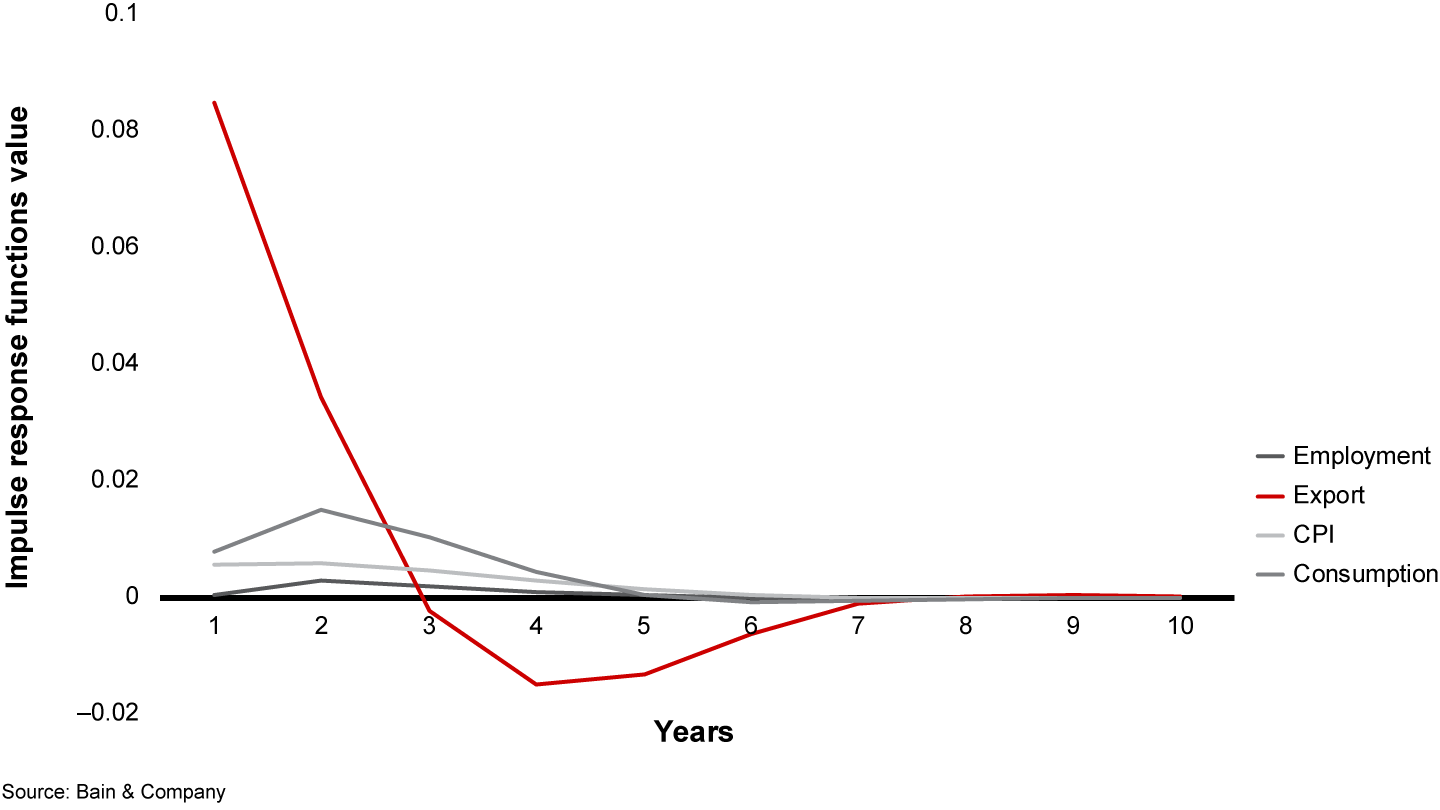
      Impulse response functions show the reaction of different economic variables to a one-time shock in imports

      The IRFs also serve as a good indicator of model quality: In a correctly built model, the IRFs should smoothly decay to zero over time. If this isn’t reflected in the IRFs, that indicates the model does not have long-term stability.

      The tool we built allows the user to model scenarios where different commodities undergo different tunable price changes. It then combines the IRFs with the corresponding commodity prices and shows the user the dynamics of the economy in this particular scenario. Being able to simulate and compare different scenarios allows the company to make smart business decisions amid changing market conditions.

      *    *    *

      By choosing appropriate data preprocessing steps and the right modeling approach—sign-restricted BVARS in this case—you can overcome the limitations imposed by small amounts of historical data. Delivering the model through a bespoke software solution allows you to design a user-friendly interface. This gives users flexibility to perform economic scenario modeling without being experts in the specific domain.

      著者
      • Headshot of Grigory Sizov
        Grigory Sizov
        Alumni, Berlin
      • Headshot of Micha? Chojnowski
        Michał Chojnowski
        Alumni, Warsaw
      • Headshot of Jose von Roth
        Jose von Roth
        Alumni, Berlin
      関連するコンサルティングサービス
      • アドバンスド・アナリティクス
      アドバンスド・アナリティクスエキスパートのコメント
      Defining the Intelligent Enterprise

      A recap from DeepLearning.AI’s AI Dev 25 × NYC.

      詳細
      アドバンスド・アナリティクス
      The AI Enterprise: Code Red

      Four questions every executive must answer now.

      詳細
      アドバンスド・アナリティクスエキスパートのコメント
      Making Friends with Collinearity: How Driver Interactions Can Inform Targeted Interventions

      Driver analysis helps inform decisions on which drivers deserve the greatest effort.

      詳細
      アドバンスド・アナリティクス
      The Business Case For Prioritizing The Human Side Of AI

      Those that see productivity gains are thinking about people changes alongside process changes.

      詳細
      アドバンスド・アナリティクスエキスパートのコメント
      Mission Possible: Driver Analysis with Collinear Variables

      Many commonly used methods have serious limitations when assessing the variable importance of collinear drivers.

      詳細
      First published in 11月 2019
      Tags
      • アドバンスド・アナリティクス
      • アドバンスド・アナリティクスエキスパートのコメント

      クライアント支援事例

      アドバンスド・アナリティクス Analytics Powers a Software Company’s Bold Revenue Goals

      ケーススタディを見る

      顧客戦略、マーケティング Direct marketing excellence through experimental design

      ケーススタディを見る

      アドバンスド・アナリティクス Analytics guide an entertainment company's growth strategy

      ケーススタディを見る

      お気軽にご連絡下さい

      私達は、グローバルに活躍する経営者が抱える最重要経営課題に対して、厳しい競争環境の中でも成長し続け、「結果」を出すために支援しています。

      ベインの知見。競争が激化するグローバルビジネス環境で、日々直面するであろう問題について論じている知見を毎月お届けします。

      *プライバシーポリシーの内容を確認し、合意しました。

      プライバシーポリシーをご確認頂き、合意頂けますようお願い致します。
      Bain & Company
      お問い合わせ Sustainability Accessibility Terms of use Privacy Cookie Policy Sitemap Log In

      © 1996-2026 Bain & Company, Inc.

      お問い合わせ

      How can we help you?

      • ビジネスについて
      • プレス報道について
      • 採用について
      全てのオフィス