Skip to Content
  • オフィス

    オフィス

    北米・南米
    • Atlanta
    • Austin
    • Bogota
    • Boston
    • Buenos Aires
    • Chicago
    • Dallas
    • Denver
    • Houston
    • Los Angeles
    • Mexico City
    • Minneapolis
    • Monterrey
    • Montreal
    • New York
    • Rio de Janeiro
    • San Francisco
    • Santiago
    • São Paulo
    • Seattle
    • Silicon Valley
    • Toronto
    • Washington, DC
    ヨーロッパ・中東・アフリカ
    • Amsterdam
    • Athens
    • Berlin
    • Brussels
    • Copenhagen
    • Doha
    • Dubai
    • Dusseldorf
    • Frankfurt
    • Helsinki
    • Istanbul
    • Johannesburg
    • Kyiv
    • Lisbon
    • London
    • Madrid
    • Milan
    • Munich
    • Oslo
    • Paris
    • Riyadh
    • Rome
    • Stockholm
    • Vienna
    • Warsaw
    • Zurich
    アジア・オーストラリア
    • Bangkok
    • Beijing
    • Bengaluru
    • Brisbane
    • Ho Chi Minh City
    • Hong Kong
    • Jakarta
    • Kuala Lumpur
    • Manila
    • Melbourne
    • Mumbai
    • New Delhi
    • Perth
    • Shanghai
    • Singapore
    • Sydney
    • Tokyo
    全てのオフィス
  • アルムナイ
  • メディア
  • お問い合わせ
  • 東京オフィス
  • Japan | 日本語

    地域と言語を選択

    グローバル
    • Global (English)
    北米・南米
    • Brazil (Português)
    • Argentina (Español)
    • Canada (Français)
    • Chile (Español)
    • Colombia (Español)
    ヨーロッパ・中東・アフリカ
    • France (Français)
    • DACH Region (Deutsch)
    • Italy (Italiano)
    • Spain (Español)
    • Greece (Elliniká)
    アジア・オーストラリア
    • China (中文版)
    • Korea (한국어)
    • Japan (日本語)
  • Saved items (0)
    Saved items (0)

    You have no saved items.

    後で閲読、共有できるようにするためにブックマークしてください

    Explore Bain Insights
  • 業界別プラクティス
    メインメニュー

    業界別プラクティス

    • 航空宇宙、防衛、政府関連
    • 農業
    • 化学製品
    • インフラ、建設
    • 消費財
    • 金融サービス
    • ヘルスケア
    • 産業機械、設備
    • メディア、エンターテインメント
    • 金属
    • 採掘・鉱業
    • 石油、ガス
    • 紙、パッケージ
    • プライベートエクイティ
    • 公共、社会セクター
    • 小売
    • テクノロジー
    • 通信
    • 交通
    • 観光産業
    • 公益事業、再生可能エネルギー
  • 機能別プラクティス
    メインメニュー

    機能別プラクティス

    • カスタマー・エクスペリエンス
    • サステイナビリティ、 社会貢献
    • Innovation
    • 企業買収、合併 (M&A)
    • オペレーション
    • 組織
    • プライベートエクイティ
    • マーケティング・営業
    • 戦略
    • アドバンスド・アナリティクス
    • Technology
    • フルポテンシャル・トランスフォーメーション
  • Digital
  • 知見/レポート
  • ベイン・アンド・カンパニーについて
    メインメニュー

    ベイン・アンド・カンパニーについて

    • ベインの信条
    • 活動内容
    • 社員とリーダーシップ
    • プレス・メディア情報
    • クライアントの結果
    • 受賞歴
    • パートナーシップを結んでいる団体
    Further: Our global responsibility
    • ダイバーシティ
    • 社会貢献
    • サステイナビリティへの取り組み
    • 世界経済フォーラム(WEF)
    Learn more about Further
  • キャリア
    メインメニュー

    キャリア

    • ベインで働く
      キャリア
      ベインで働く
      • Find Your Place
      • ベインで活躍する機会
      • ベインのチーム体制
      • 学生向けページ
      • インターンシップ
      • 採用イベント
    • ベインでの体験
      キャリア
      ベインでの体験
      • Blog: Inside Bain
      • キャリアストーリー
      • 社員紹介
      • Where We Work
      • 成長を後押しするサポート体制
      • アフィニティ・グループ
      • 福利厚生
    • Impact Stories
    • 採用情報
      キャリア
      採用情報
      • 採用プロセス
      • 面接内容
    FIND JOBS
  • オフィス
    メインメニュー

    オフィス

    • 北米・南米
      オフィス
      北米・南米
      • Atlanta
      • Austin
      • Bogota
      • Boston
      • Buenos Aires
      • Chicago
      • Dallas
      • Denver
      • Houston
      • Los Angeles
      • Mexico City
      • Minneapolis
      • Monterrey
      • Montreal
      • New York
      • Rio de Janeiro
      • San Francisco
      • Santiago
      • São Paulo
      • Seattle
      • Silicon Valley
      • Toronto
      • Washington, DC
    • ヨーロッパ・中東・アフリカ
      オフィス
      ヨーロッパ・中東・アフリカ
      • Amsterdam
      • Athens
      • Berlin
      • Brussels
      • Copenhagen
      • Doha
      • Dubai
      • Dusseldorf
      • Frankfurt
      • Helsinki
      • Istanbul
      • Johannesburg
      • Kyiv
      • Lisbon
      • London
      • Madrid
      • Milan
      • Munich
      • Oslo
      • Paris
      • Riyadh
      • Rome
      • Stockholm
      • Vienna
      • Warsaw
      • Zurich
    • アジア・オーストラリア
      オフィス
      アジア・オーストラリア
      • Bangkok
      • Beijing
      • Bengaluru
      • Brisbane
      • Ho Chi Minh City
      • Hong Kong
      • Jakarta
      • Kuala Lumpur
      • Manila
      • Melbourne
      • Mumbai
      • New Delhi
      • Perth
      • Shanghai
      • Singapore
      • Sydney
      • Tokyo
    全てのオフィス
  • アルムナイ
  • メディア
  • お問い合わせ
  • 東京オフィス
  • Japan | 日本語
    メインメニュー

    地域と言語を選択

    • グローバル
      地域と言語を選択
      グローバル
      • Global (English)
    • 北米・南米
      地域と言語を選択
      北米・南米
      • Brazil (Português)
      • Argentina (Español)
      • Canada (Français)
      • Chile (Español)
      • Colombia (Español)
    • ヨーロッパ・中東・アフリカ
      地域と言語を選択
      ヨーロッパ・中東・アフリカ
      • France (Français)
      • DACH Region (Deutsch)
      • Italy (Italiano)
      • Spain (Español)
      • Greece (Elliniká)
    • アジア・オーストラリア
      地域と言語を選択
      アジア・オーストラリア
      • China (中文版)
      • Korea (한국어)
      • Japan (日本語)
  • Saved items  (0)
    メインメニュー
    Saved items (0)

    You have no saved items.

    後で閲読、共有できるようにするためにブックマークしてください

    Explore Bain Insights
  • 業界別プラクティス
    • 業界別プラクティス

      • 航空宇宙、防衛、政府関連
      • 農業
      • 化学製品
      • インフラ、建設
      • 消費財
      • 金融サービス
      • ヘルスケア
      • 産業機械、設備
      • メディア、エンターテインメント
      • 金属
      • 採掘・鉱業
      • 石油、ガス
      • 紙、パッケージ
      • プライベートエクイティ
      • 公共、社会セクター
      • 小売
      • テクノロジー
      • 通信
      • 交通
      • 観光産業
      • 公益事業、再生可能エネルギー
  • 機能別プラクティス
    • 機能別プラクティス

      • カスタマー・エクスペリエンス
      • サステイナビリティ、 社会貢献
      • Innovation
      • 企業買収、合併 (M&A)
      • オペレーション
      • 組織
      • プライベートエクイティ
      • マーケティング・営業
      • 戦略
      • アドバンスド・アナリティクス
      • Technology
      • フルポテンシャル・トランスフォーメーション
  • Digital
  • 知見/レポート
  • ベイン・アンド・カンパニーについて
    • ベイン・アンド・カンパニーについて

      • ベインの信条
      • 活動内容
      • 社員とリーダーシップ
      • プレス・メディア情報
      • クライアントの結果
      • 受賞歴
      • パートナーシップを結んでいる団体
      Further: Our global responsibility
      • ダイバーシティ
      • 社会貢献
      • サステイナビリティへの取り組み
      • 世界経済フォーラム(WEF)
      Learn more about Further
  • キャリア
    人気検索キーワード
    • デジタル
    • 戦略
    前回の検索
      最近訪れたページ

      Content added to saved items

      Saved items (0)

      Removed from saved items

      Saved items (0)

      論説

      In Retail, Inclusive Customer Journeys Lead to Growth

      In Retail, Inclusive Customer Journeys Lead to Growth

      New Bain research highlights the value of making everyone feel invited, at every stage of a purchase.

      著者:Madison Dyal Anderson, Naiara De Leon, Aaron Cheris, and Julie Coffman

      • min read
      }

      論説

      In Retail, Inclusive Customer Journeys Lead to Growth
      en
      概要
      • We surveyed US shoppers to determine how customer inclusion affects shopper behavior and what retailers should do to be inclusive.
      • We found that inclusion matters to customers (of all backgrounds) and will shape their overall sentiment toward a retailer and willingness to shop there.
      • Customer inclusion complements customer strategy, improving the overall shopping experience and fostering stronger growth.

      These days, retailers have a fair idea of what exclusion looks like to customers. An innocent shopper stereotyped as a likely thief. A store assistant making prejudiced assumptions about someone’s budget or tastes. Executive teams are actively trying to prevent these and other damaging forms of exclusion, not just for moral reasons, but also because it’s clear that such incidents lose business. For instance, a third of Gen Z and millennial shoppers say they would stop shopping at a store if they or an acquaintance felt excluded there.

      However, when it comes to the opposite of customer exclusion—customer inclusion—C-suite understanding is at a much earlier stage. What makes a customer journey inclusive? And how much does that inclusion benefit not just shoppers but also retailers? Answers to these questions tend to be sketchy, despite the rise of Diversity, Equity, and Inclusion (DEI) programs. That’s partly because of a lack of focused research on the topic.

      To better understand customer inclusion and its value, Bain & Company surveyed more than 7,600 US shoppers across grocery, branded clothing, and beauty products, while analyzing almost 1 million online shopper transactions. We asked shoppers directly what inclusion meant to them and, crucially, how included they felt at various US retailers.

      We found that inclusion doesn’t matter to only one or two demographic groups. Yet some retailers struggle to make all steps of customer journeys inclusive. That’s a missed opportunity. Our analysis showed that top retailers grow even faster when they excel at inclusion at the same time as outperforming against traditional customer advocacy benchmarks. It’s time for inclusive journeys to move up the strategic agenda.

      Understanding an inclusive customer journey

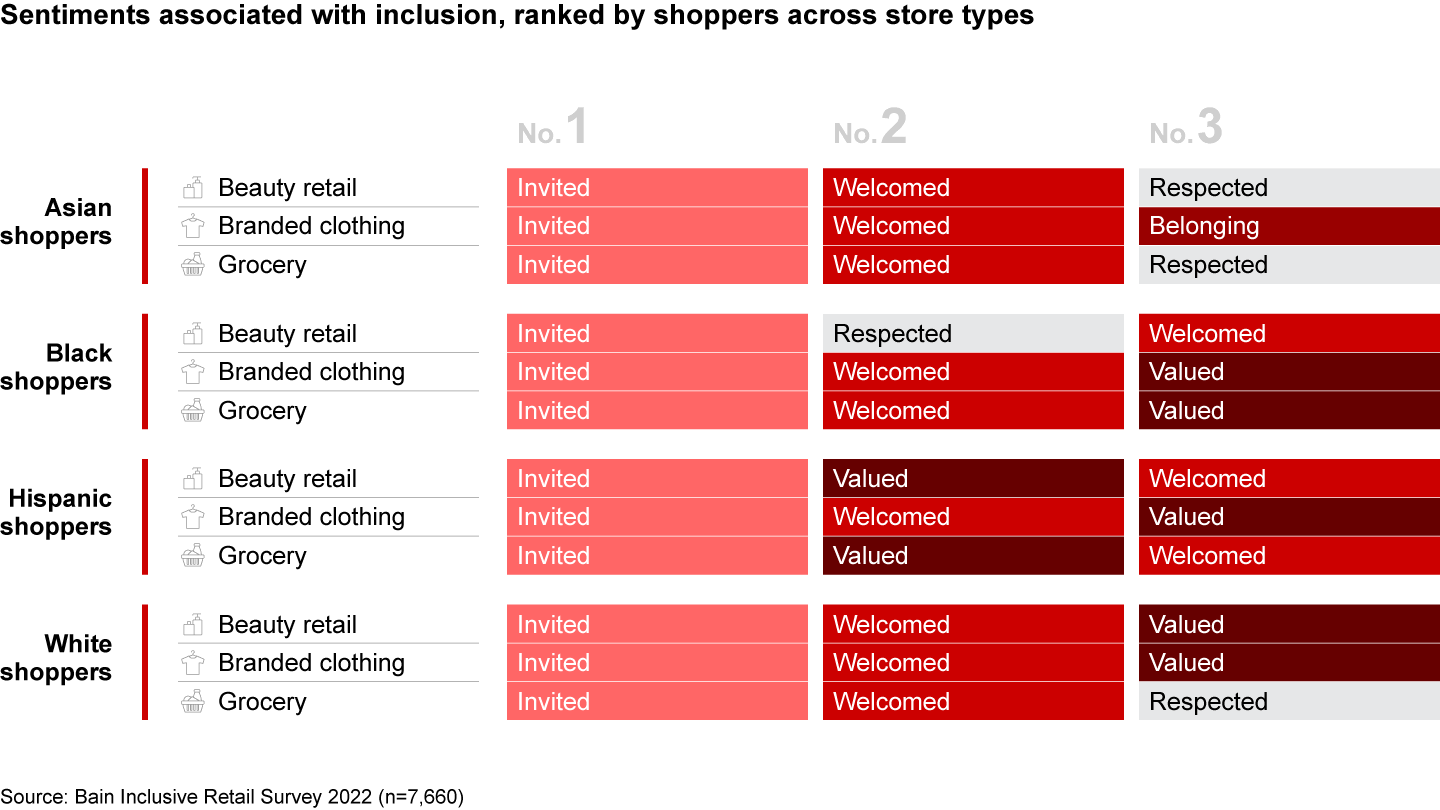
      Inclusion might seem impossible to pin down, meaning too many things to too many people. That’s not what we found. Common themes can guide retailers in inclusive journeys. We asked shoppers to break down the sentiments they experienced when shopping in what they deemed to be an inclusive environment. How important was a sense of belonging? A sense of being valued, respected, or treated fairly? Across races and ethnicities, two sentiments—of being “invited” and “welcomed”—emerged above the rest (see Figure 1).

      Figure 1
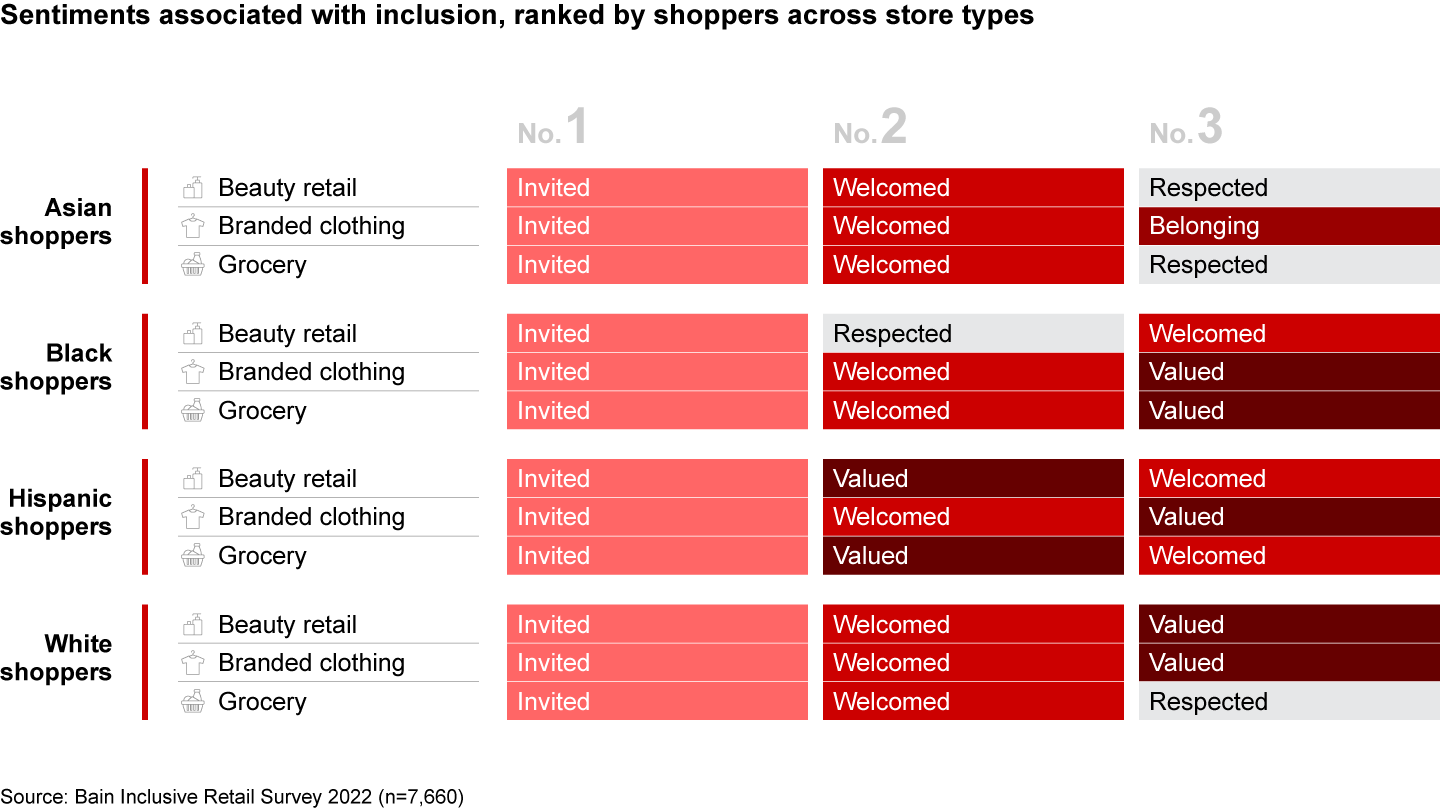
      In any retail setting, customers above all want to feel invited and welcomed, no matter their race or ethnicity

      Anecdotal feedback in our survey shows how customers notice inclusion and are looking to be welcomed.

      • One customer said: “I feel included in shopping when folks are friendly, like speaking when I enter their space—when they value customers and make me feel invited.”
      • A different shopper offered their own clear summary of inclusive customer service: “Whether you are spending $5 or $5,000 … they value you.”
      • Another customer recalled a store assistant’s astute recommendations: “They hit me right between the eyes! She spoke to me in a way that conveyed that she understood me in my language. All of that helped to quickly seal the deal.”

      We also researched how activities across the customer journey make a shopper feel welcomed or not. We analyzed what retailers do at the awareness and branding stage (such as marketing and community outreach) through consideration and purchase (customer service, store design, etc.), to the feedback and post-purchase engagement stage. Even though the desire to be invited and welcomed is consistent across groups, we found that the activities that are most crucial to inclusion differ by individual customer and their background.

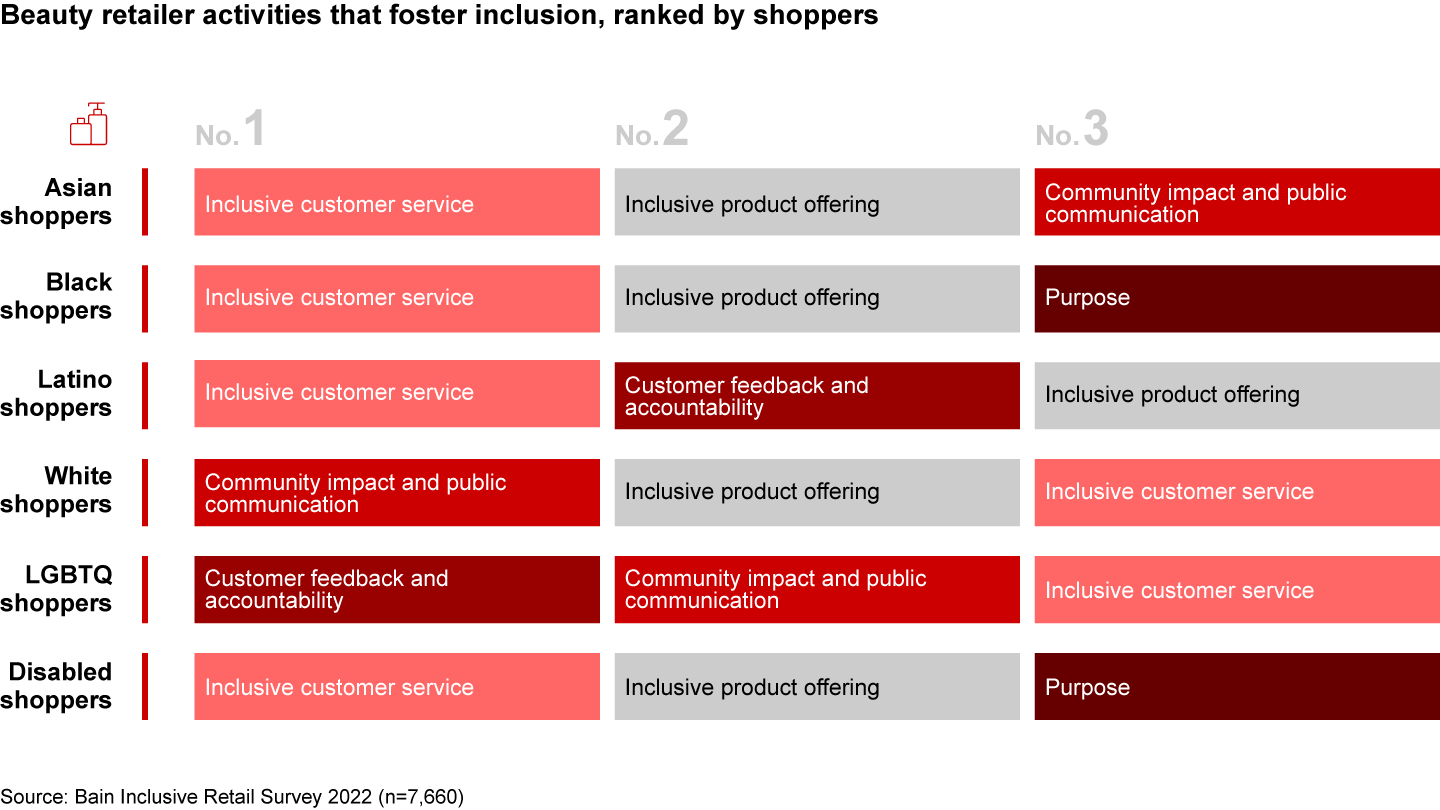
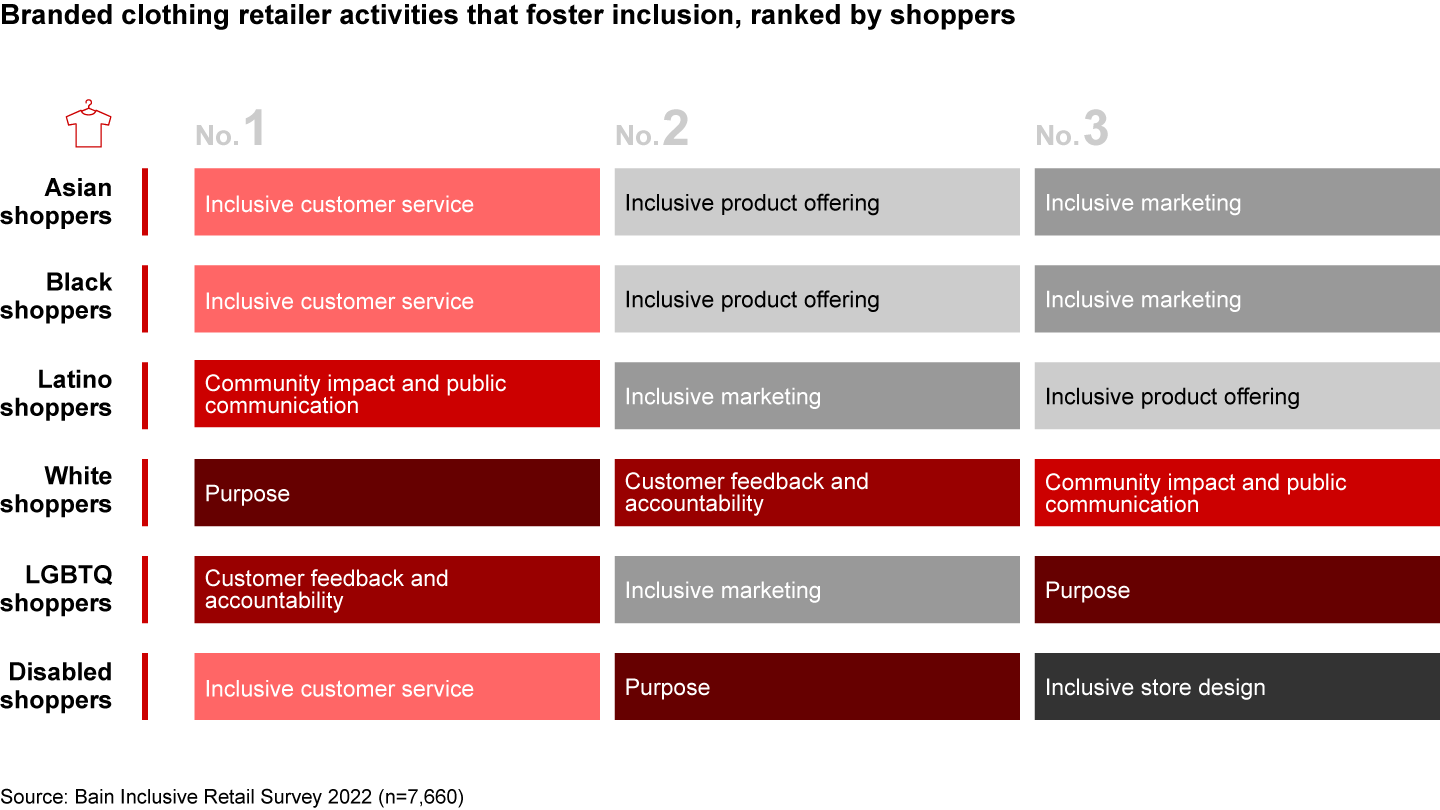
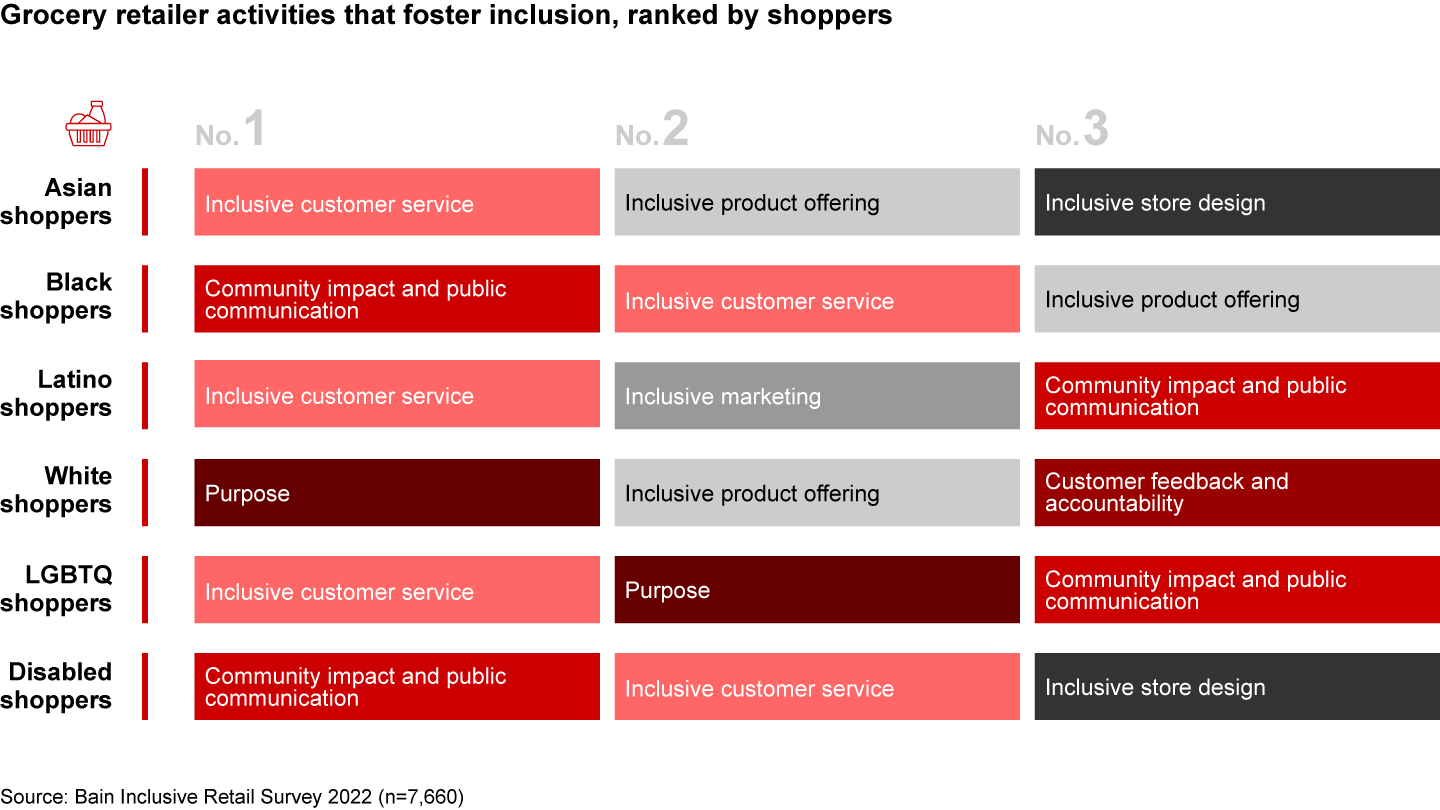
      For Asian, Black, and Latino shoppers, customer service emerged as the primary interaction that determines if and how they feel included by a given retailer (see Figure 2). Among white shoppers, actions that strengthen a retailer’s corporate purpose and community impact are more likely to shape views of its inclusiveness. LGBTQ shoppers value customer feedback and accountability. Beyond customer service, disabled shoppers put more emphasis on inclusive store design.

      Figure 2
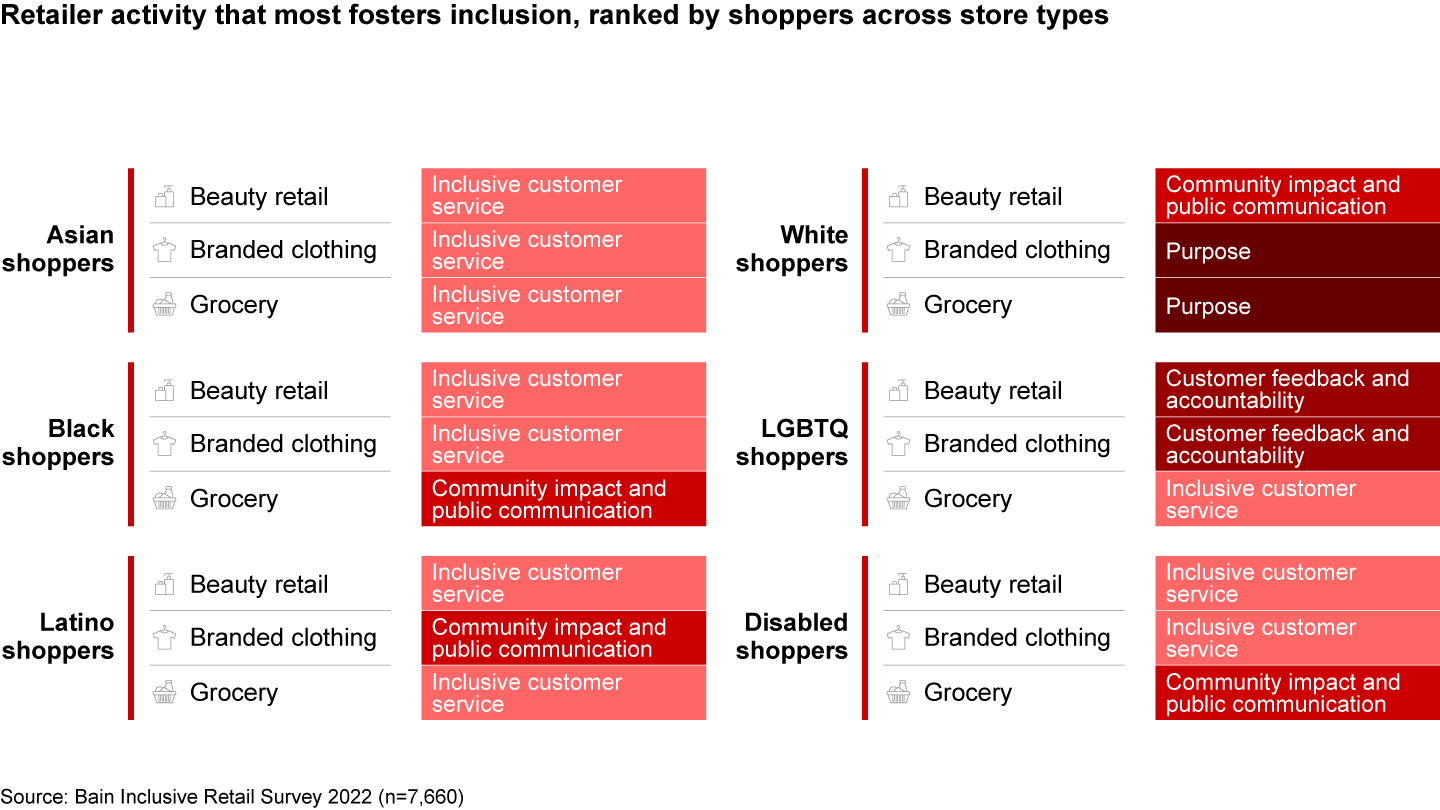
      Customer service is the key to making many shoppers feel included, although priorities vary by demographic and category
      Figure 2
      Customer service is the key to making many shoppers feel included, although priorities vary by demographic and category
      Figure 2
      Customer service is the key to making many shoppers feel included, although priorities vary by demographic and category
      Figure 2
      Customer service is the key to making many shoppers feel included, although priorities vary by demographic and category

      This variation demonstrates that mastering inclusive retailing isn’t just a case of pulling one or two levers. It won’t be enough to focus efforts solely on customer service or marketing, say. That would risk falling short in activities that have a crucial importance to one or more groups. Instead, we found that the strongest retailers make every stage of the customer journey inclusive, maximizing their appeal in the process.

      Crucially, this holistic approach to inclusive journeys needn’t clash with a focused and segmented customer strategy. After all, customer strategy and inclusion strategy are both founded on deep knowledge of customer needs and attitudes. The trick is to create a customer experience that’s inclusive for all and elevated for target segments. This is doable, particularly when segmentation is guided by behavior more than demographics.

      The link between inclusion and growth

      Our research suggests effective inclusion can turbocharge the already considerable benefits of a high Net Promoter ScoreSM, our measure of a customer’s willingness to recommend a brand to others. We measured inclusion via two indicators. The first was consistency of NPS across demographic groups. For instance, if members of one ethnic group awarded a high average NPS but another marked the retailer much lower, that might be a sign of an inconsistent experience that welcomes some more than others. We also surveyed customers’ perception of whether a retailer behaves in an inclusive way.

      In our study, retailers achieving both high NPS and high inclusion outgrew their peers, posting compound annual revenue growth of 7.9% from 2019 to 2021, vs. low-single-digit growth or declining sales at other retailers (see Figure 3). What’s more, high advocacy/high inclusion retailers outgrew peers among both people of color and white customers. That’s the reward for providing an excellent customer experience consistently, regardless of a shopper’s background.

      Figure 3
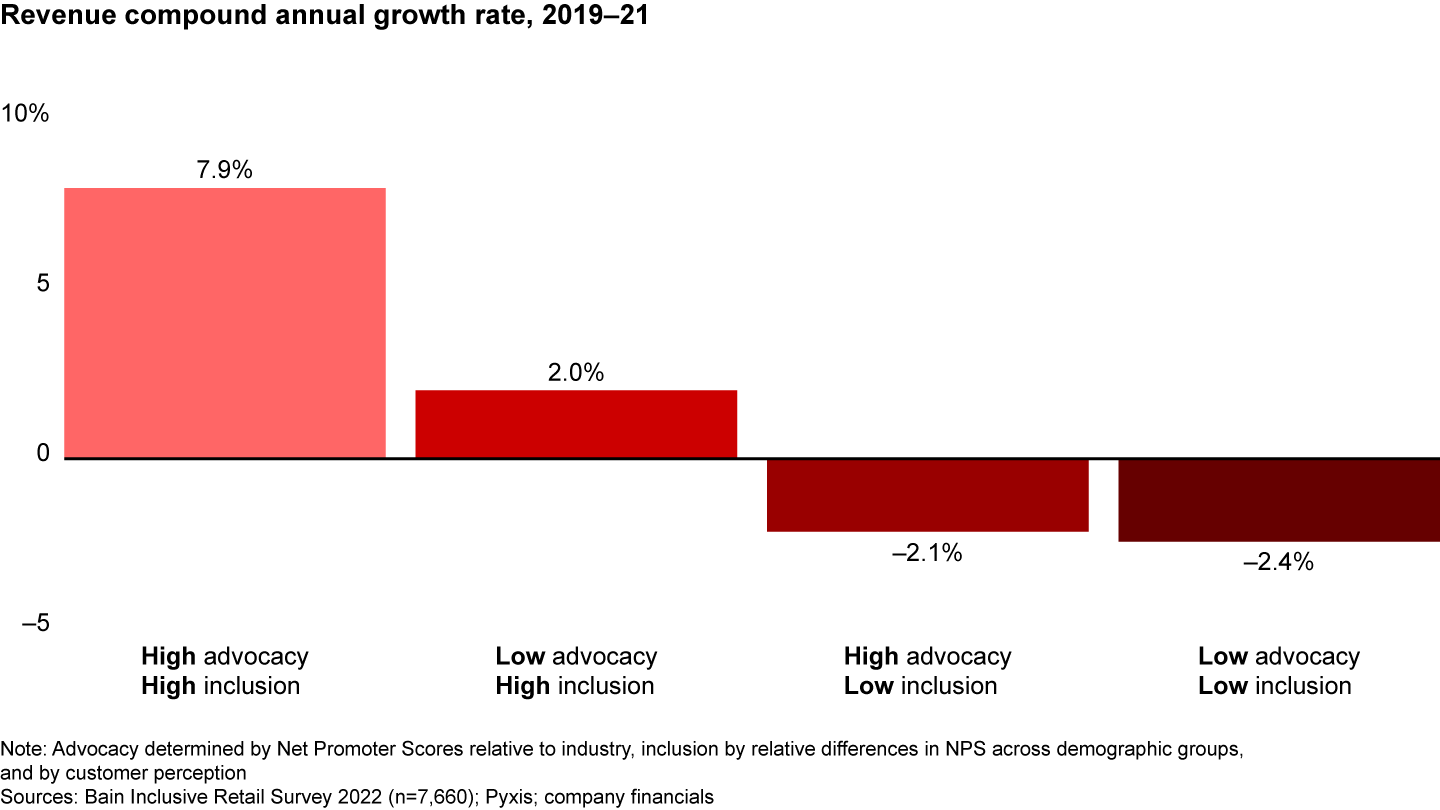
      More inclusive retailers tend to achieve higher revenue growth, particularly if they excel at turning customers into cheerleaders

      All this leads us to believe that for healthy, sustained growth, a retailer needs overall strong customer advocacy (as measured by NPS) and strong indicators of inclusion.

      H-E-B, the Texan grocer, is a leader in this regard. It helps maintain a broad and passionate fan base through inclusive actions that span the full customer journey. For instance, it has a localized and diverse offering that includes Latino-oriented Mi Tienda products and store formats, as well as Texas-focused items that resonate with a swath of customers. The company is also an empathetic presence in its local community through initiatives such as support for first responders, Texas schools, disaster relief, and US troops and their families.

      This end-to-end inclusiveness means that H-E-B doesn’t just stand out for its high overall NPS. It also distinguishes itself by minimizing the variation in NPS between demographic groups. For instance, its Net Promoter Scores among Latino, Black, and white customers are almost identically strong.

      NIKE is another retailer that stands out for both strong inclusion and strong customer advocacy. Innovative design helps it stay true to its belief that “if you have a body, you are an athlete,” through products such as FlyEase shoes that can be taken off easily, without the use of hands. The FlyEase range was developed with insights from the disability community, yet it has a differentiated appeal for children and seniors, too. Crucially, customers view NIKE as highly inclusive across the customer journey, not just in product design.

      Retailers that combine strong customer advocacy and inclusion can lock in customers for the long term. One grocery shopper made that clear in our survey. They recounted: “I was looking for an item and the grocery clerk walked with me to where it was. He was very patient with me because I just had hip surgery and couldn't walk very fast. We chatted along the way and I knew that I would never shop anywhere else!”

      On the flipside, a lack of inclusion will encourage significant numbers of shoppers to switch retailers. It’s not just Gen Z and millennials who would stop shopping at a store if they or someone they knew felt excluded there. A third of shoppers identifying as Latino, Black, or disabled told us they would do the same, while an even larger proportion of LGBTQ shoppers (38%) said they would take their business elsewhere.

      Integrating inclusion into customer strategy 

      Creating consistently inclusive customer journeys begins with a clear assessment of a retailer’s starting point.

      Executive teams should first evaluate current customer sentiment. How consistent is NPS across different populations? Are there any episodes within the customer journey that produce big NPS fluctuations between demographic groups?

      The following questions can also help to reveal opportunities for enhanced customer inclusion:

      • Are our team members in customer service roles (including stores and call centers) equipped and encouraged to be inviting? Are they held accountable for the quality of their welcome?
      • How do we ensure shoppers feel welcome in digital customer interactions, including their experience with chatbots and personalized marketing?
      • How are we considering inclusion as a priority in upstream decisions (e.g., in assortment, product design, marketing, and store design)?
      • Is the way we develop customer strategy and talk about target customers focused on how they behave and make purchase decisions (vs. demographic-based segmentation)?

      Customer experience can be inclusive for all and elevated for a retailer’s core customers. Do both: Wow customers in target segments based on how they behave, and raise the bar for an inclusive experience regardless of who the customer is.

      • Acknowledgments

        The authors would like to thank Qingdi Huang, Cecilia Rios Murrieta, Isabel Sjodin, Hardi Patel, Andrea D’Arcy, Phil Sager, Cassy Reichert, and Lewis Weinger for their contribution to this work.

      著者
      • Headshot of Madison Dyal Anderson
        Madison Dyal Anderson
        パートナー, Dallas
      • Headshot of Naiara De Leon
        Naiara De Leon
        Alumni, Dallas
      • Headshot of Aaron Cheris
        Aaron Cheris
        パートナー, San Francisco
      • Headshot of Julie Coffman
        Julie Coffman
        パートナー, Chicago
      関連業種
      • 小売
      関連するコンサルティングサービス
      • Diversity, Equity & Inclusion
      小売
      The Business of Belonging

      Why making everyone feel included is smart strategy.

      詳細
      小売
      Stay Relevant, Spark Energy: Pedro Arnt, CEO dLocal

      How can a hyperscaler grow at lightning speed without losing its soul? 

      詳細
      Diversity, Equity & Inclusion
      POWERful Women's Annual State of the Nation 2025

      Bain & Company collaborated with POWERful Women on their annual report on female representation in the UK energy industry.

      詳細
      小売
      The 2026 Retail Executive Agenda

      Here are letters to the C-suite to help strengthen strategy, catalyze collaboration, and expand value creation in the AI age.

      詳細
      Diversity, Equity & Inclusion
      Unlocking China's Female Leadership Potential: An Actionable Path Forward

      Closing the workplace gender gap creates a more prosperous future for everyone.

      詳細
      First published in 10月 2023
      Tags
      • Diversity, Equity & Inclusion
      • 小売

      クライアント支援事例

      Customer Experience With Sophisticated Customer Segmentation, a Travel Company Sets Sail

      ケーススタディを見る

      顧客戦略、マーケティング A major retailer rejuvenates sales by thinking local

      ケーススタディを見る

      Digital Omnichannel strategy boosts fashion company

      ケーススタディを見る

      お気軽にご連絡下さい

      私達は、グローバルに活躍する経営者が抱える最重要経営課題に対して、厳しい競争環境の中でも成長し続け、「結果」を出すために支援しています。

      Net Promoter®, NPS®, NPS Prism®, and the NPS-related emoticons are registered trademarks and Net Promoter Score℠ and Net Promoter System℠ are service marks of Bain & Company, Inc., Satmetrix Systems, Inc., and Fred Reichheld.

      ベインの知見。競争が激化するグローバルビジネス環境で、日々直面するであろう問題について論じている知見を毎月お届けします。

      *プライバシーポリシーの内容を確認し、合意しました。

      プライバシーポリシーをご確認頂き、合意頂けますようお願い致します。
      Bain & Company
      お問い合わせ Sustainability Accessibility Terms of use Privacy Cookie Policy Sitemap Log In

      © 1996-2026 Bain & Company, Inc.

      お問い合わせ

      How can we help you?

      • ビジネスについて
      • プレス報道について
      • 採用について
      全てのオフィス