Skip to Content
  • オフィス

    オフィス

    北米・南米
    • Atlanta
    • Austin
    • Bogota
    • Boston
    • Buenos Aires
    • Chicago
    • Dallas
    • Denver
    • Houston
    • Los Angeles
    • Mexico City
    • Minneapolis
    • Monterrey
    • Montreal
    • New York
    • Rio de Janeiro
    • San Francisco
    • Santiago
    • São Paulo
    • Seattle
    • Silicon Valley
    • Toronto
    • Washington, DC
    ヨーロッパ・中東・アフリカ
    • Amsterdam
    • Athens
    • Berlin
    • Brussels
    • Copenhagen
    • Doha
    • Dubai
    • Dusseldorf
    • Frankfurt
    • Helsinki
    • Istanbul
    • Johannesburg
    • Kyiv
    • Lisbon
    • London
    • Madrid
    • Milan
    • Munich
    • Oslo
    • Paris
    • Riyadh
    • Rome
    • Stockholm
    • Vienna
    • Warsaw
    • Zurich
    アジア・オーストラリア
    • Bangkok
    • Beijing
    • Bengaluru
    • Brisbane
    • Ho Chi Minh City
    • Hong Kong
    • Jakarta
    • Kuala Lumpur
    • Manila
    • Melbourne
    • Mumbai
    • New Delhi
    • Perth
    • Shanghai
    • Singapore
    • Sydney
    • Tokyo
    全てのオフィス
  • アルムナイ
  • メディア
  • お問い合わせ
  • 東京オフィス
  • Japan | 日本語

    地域と言語を選択

    グローバル
    • Global (English)
    北米・南米
    • Brazil (Português)
    • Argentina (Español)
    • Canada (Français)
    • Chile (Español)
    • Colombia (Español)
    ヨーロッパ・中東・アフリカ
    • France (Français)
    • DACH Region (Deutsch)
    • Italy (Italiano)
    • Spain (Español)
    • Greece (Elliniká)
    アジア・オーストラリア
    • China (中文版)
    • Korea (한국어)
    • Japan (日本語)
  • Saved items (0)
    Saved items (0)

    You have no saved items.

    後で閲読、共有できるようにするためにブックマークしてください

    Explore Bain Insights
  • 業界別プラクティス
    メインメニュー

    業界別プラクティス

    • 航空宇宙、防衛、政府関連
    • 農業
    • 化学製品
    • インフラ、建設
    • 消費財
    • 金融サービス
    • ヘルスケア
    • 産業機械、設備
    • メディア、エンターテインメント
    • 金属
    • 採掘・鉱業
    • 石油、ガス
    • 紙、パッケージ
    • プライベートエクイティ
    • 公共、社会セクター
    • 小売
    • テクノロジー
    • 通信
    • 交通
    • 観光産業
    • 公益事業、再生可能エネルギー
  • 機能別プラクティス
    メインメニュー

    機能別プラクティス

    • カスタマー・エクスペリエンス
    • サステイナビリティ、 社会貢献
    • Innovation
    • 企業買収、合併 (M&A)
    • オペレーション
    • 組織
    • プライベートエクイティ
    • マーケティング・営業
    • 戦略
    • アドバンスド・アナリティクス
    • Technology
    • フルポテンシャル・トランスフォーメーション
  • Digital
  • 知見/レポート
  • ベイン・アンド・カンパニーについて
    メインメニュー

    ベイン・アンド・カンパニーについて

    • ベインの信条
    • 活動内容
    • 社員とリーダーシップ
    • プレス・メディア情報
    • クライアントの結果
    • 受賞歴
    • パートナーシップを結んでいる団体
    Further: Our global responsibility
    • ダイバーシティ
    • 社会貢献
    • サステイナビリティへの取り組み
    • 世界経済フォーラム(WEF)
    Learn more about Further
  • キャリア
    メインメニュー

    キャリア

    • ベインで働く
      キャリア
      ベインで働く
      • Find Your Place
      • ベインで活躍する機会
      • ベインのチーム体制
      • 学生向けページ
      • インターンシップ
      • 採用イベント
    • ベインでの体験
      キャリア
      ベインでの体験
      • キャリアストーリー
      • 社員紹介
      • Where We Work
      • 成長を後押しするサポート体制
      • アフィニティ・グループ
      • 福利厚生
    • Impact Stories
    • 採用情報
      キャリア
      採用情報
      • 採用プロセス
      • 面接内容
    FIND JOBS
  • オフィス
    メインメニュー

    オフィス

    • 北米・南米
      オフィス
      北米・南米
      • Atlanta
      • Austin
      • Bogota
      • Boston
      • Buenos Aires
      • Chicago
      • Dallas
      • Denver
      • Houston
      • Los Angeles
      • Mexico City
      • Minneapolis
      • Monterrey
      • Montreal
      • New York
      • Rio de Janeiro
      • San Francisco
      • Santiago
      • São Paulo
      • Seattle
      • Silicon Valley
      • Toronto
      • Washington, DC
    • ヨーロッパ・中東・アフリカ
      オフィス
      ヨーロッパ・中東・アフリカ
      • Amsterdam
      • Athens
      • Berlin
      • Brussels
      • Copenhagen
      • Doha
      • Dubai
      • Dusseldorf
      • Frankfurt
      • Helsinki
      • Istanbul
      • Johannesburg
      • Kyiv
      • Lisbon
      • London
      • Madrid
      • Milan
      • Munich
      • Oslo
      • Paris
      • Riyadh
      • Rome
      • Stockholm
      • Vienna
      • Warsaw
      • Zurich
    • アジア・オーストラリア
      オフィス
      アジア・オーストラリア
      • Bangkok
      • Beijing
      • Bengaluru
      • Brisbane
      • Ho Chi Minh City
      • Hong Kong
      • Jakarta
      • Kuala Lumpur
      • Manila
      • Melbourne
      • Mumbai
      • New Delhi
      • Perth
      • Shanghai
      • Singapore
      • Sydney
      • Tokyo
    全てのオフィス
  • アルムナイ
  • メディア
  • お問い合わせ
  • 東京オフィス
  • Japan | 日本語
    メインメニュー

    地域と言語を選択

    • グローバル
      地域と言語を選択
      グローバル
      • Global (English)
    • 北米・南米
      地域と言語を選択
      北米・南米
      • Brazil (Português)
      • Argentina (Español)
      • Canada (Français)
      • Chile (Español)
      • Colombia (Español)
    • ヨーロッパ・中東・アフリカ
      地域と言語を選択
      ヨーロッパ・中東・アフリカ
      • France (Français)
      • DACH Region (Deutsch)
      • Italy (Italiano)
      • Spain (Español)
      • Greece (Elliniká)
    • アジア・オーストラリア
      地域と言語を選択
      アジア・オーストラリア
      • China (中文版)
      • Korea (한국어)
      • Japan (日本語)
  • Saved items  (0)
    メインメニュー
    Saved items (0)

    You have no saved items.

    後で閲読、共有できるようにするためにブックマークしてください

    Explore Bain Insights
  • 業界別プラクティス
    • 業界別プラクティス

      • 航空宇宙、防衛、政府関連
      • 農業
      • 化学製品
      • インフラ、建設
      • 消費財
      • 金融サービス
      • ヘルスケア
      • 産業機械、設備
      • メディア、エンターテインメント
      • 金属
      • 採掘・鉱業
      • 石油、ガス
      • 紙、パッケージ
      • プライベートエクイティ
      • 公共、社会セクター
      • 小売
      • テクノロジー
      • 通信
      • 交通
      • 観光産業
      • 公益事業、再生可能エネルギー
  • 機能別プラクティス
    • 機能別プラクティス

      • カスタマー・エクスペリエンス
      • サステイナビリティ、 社会貢献
      • Innovation
      • 企業買収、合併 (M&A)
      • オペレーション
      • 組織
      • プライベートエクイティ
      • マーケティング・営業
      • 戦略
      • アドバンスド・アナリティクス
      • Technology
      • フルポテンシャル・トランスフォーメーション
  • Digital
  • 知見/レポート
  • ベイン・アンド・カンパニーについて
    • ベイン・アンド・カンパニーについて

      • ベインの信条
      • 活動内容
      • 社員とリーダーシップ
      • プレス・メディア情報
      • クライアントの結果
      • 受賞歴
      • パートナーシップを結んでいる団体
      Further: Our global responsibility
      • ダイバーシティ
      • 社会貢献
      • サステイナビリティへの取り組み
      • 世界経済フォーラム(WEF)
      Learn more about Further
  • キャリア
    人気検索キーワード
    • デジタル
    • 戦略
    前回の検索
      最近訪れたページ

      Content added to saved items

      Saved items (0)

      Removed from saved items

      Saved items (0)

      Technology Report

      Incumbents vs. Disrupters: The Best Defense Is Offense

      Incumbents vs. Disrupters: The Best Defense Is Offense

      Traditional enterprise software companies face intensifying competition, but they can regain their edge with a three-step plan to fearlessly disrupt themselves.

      著者:Prasad Narasimhan Sulur, Jesse Klein, and Ravi Vijayaraghavan

      • min read
      }
      Incumbents vs. Disrupters: The Best Defense Is Offense
      en
      概要
      • More than 75% of the largest venture capital investments in recent years went to IT infrastructure and industry-focused enterprise software companies, illustrating the potential for innovation perceived in these sectors.
      • Many incumbents overlook or underestimate the signals of impending disruption until it’s too late.
      • The most successful reject the legacy mindset, effectively monitor emerging business threats, invest in a clear R&D and M&A strategy, and fearlessly disrupt themselves.

      This article is part of Bain's 2022 Technology Report.

      Explore the report

      When 75% of the largest venture capital investments move assertively in one direction, it’s time to take notice.

      That’s the situation in which the leaders of incumbent enterprise software companies find themselves. From 2017 to 2021, more than three-quarters of VC investments of $100 million or more went to IT infrastructure and industry-focused, or vertical, software companies, according to Bain & Company analysis of our Startup Investment Cruncher database (see Figure 1).

      Figure 1
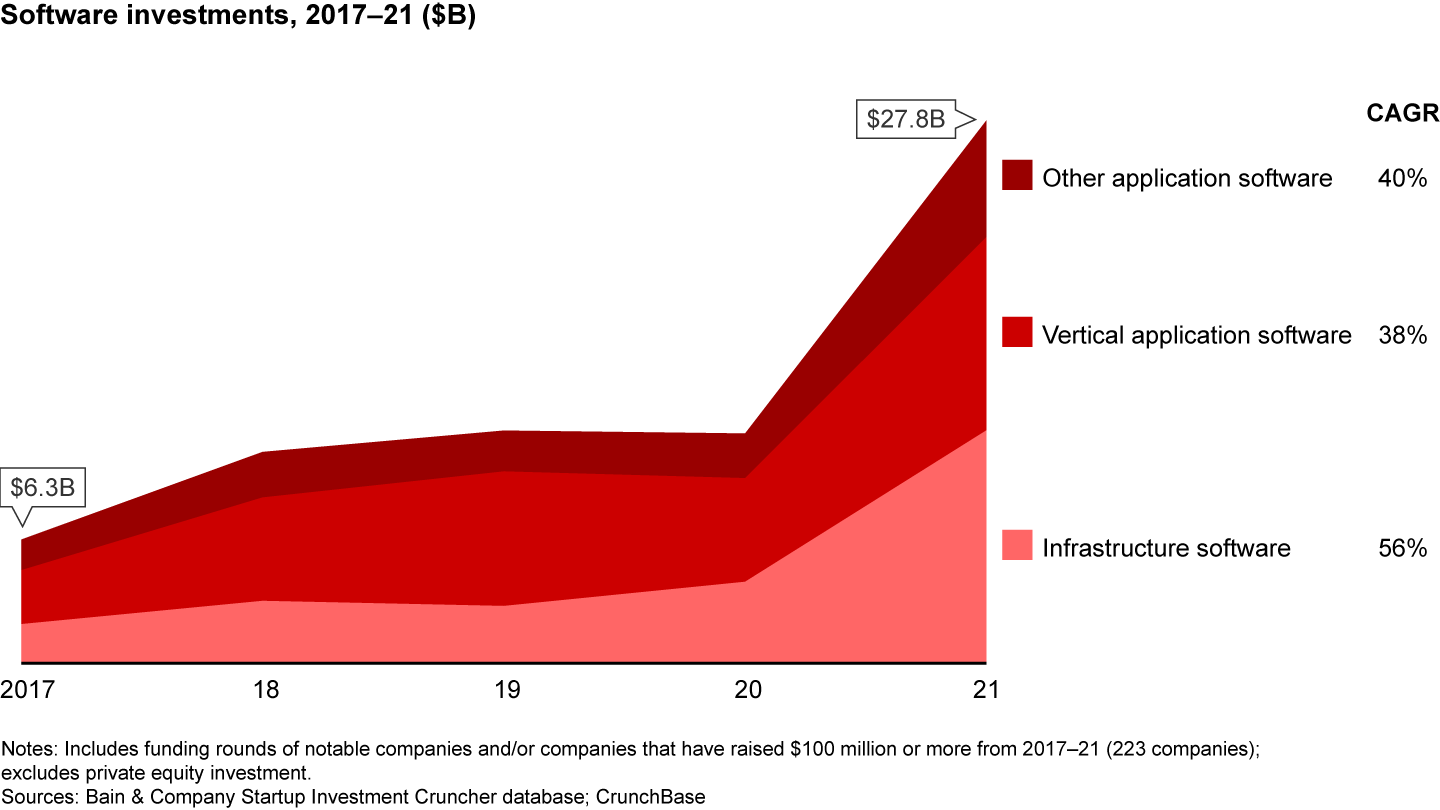
      Venture capital firms are investing more in infrastructure and industry-focused vertical application software

      Investors are backing start-ups that are taking aim at software markets supposedly immune to disruption in industries as disparate as education, healthcare, restaurants, and auto dealerships. These markets historically had high barriers to entry and loyal customers, and the cost of switching to alternative vendors was high.

      Now, however, companies can develop and deploy new software more quickly and easily than ever, thanks to open-source software architectures and platforms that make it possible to develop apps with little to no coding expertise. As a result, start-ups are no longer afraid of markets that long appeared untouchable and are gradually winning over customers.

      Consider Toast, which in just over a decade has emerged as a leader in restaurant point of sale software with nearly $2 billion in annual revenue, thanks in part to a direct sales model and a simplified technology developed specifically for restaurants. Or look at legal management software provider Onit, which has used its cloud-based, “no-code” platform with a simple user interface to make products that are generally faster to implement and easier to use than legacy systems. That formula has made Onit one of the fastest-growing tech companies in North America.

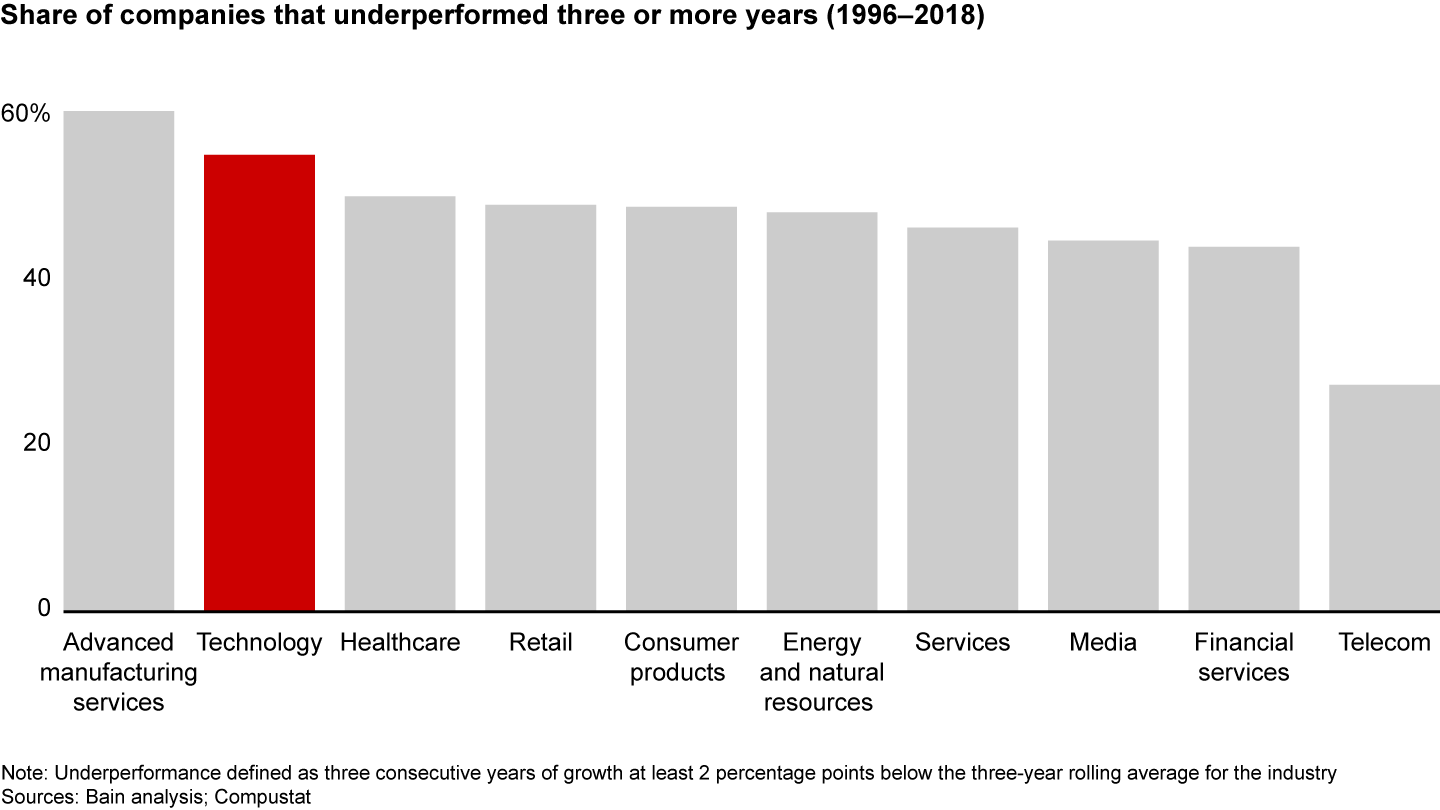
      Unfortunately for incumbents, many don’t pick up signals of impending disruption until it’s too late, or worse, they recognize the signals, but disregard them because they believe they’re in a niche, sufficiently sheltered market. In a 2022 Bain survey of executives at 98 tech companies, nearly 50% said they see disruptive threats to their company’s market share position as mild or not critical at all; only 5% saw such threats as severe. But other evidence suggests that tech companies are highly susceptible to the kind of disruption that leads to sector underperformance—and that the longer a tech company underperforms, the less likely it is to turn around (see Figure 2).

      Figure 2: Figure 2
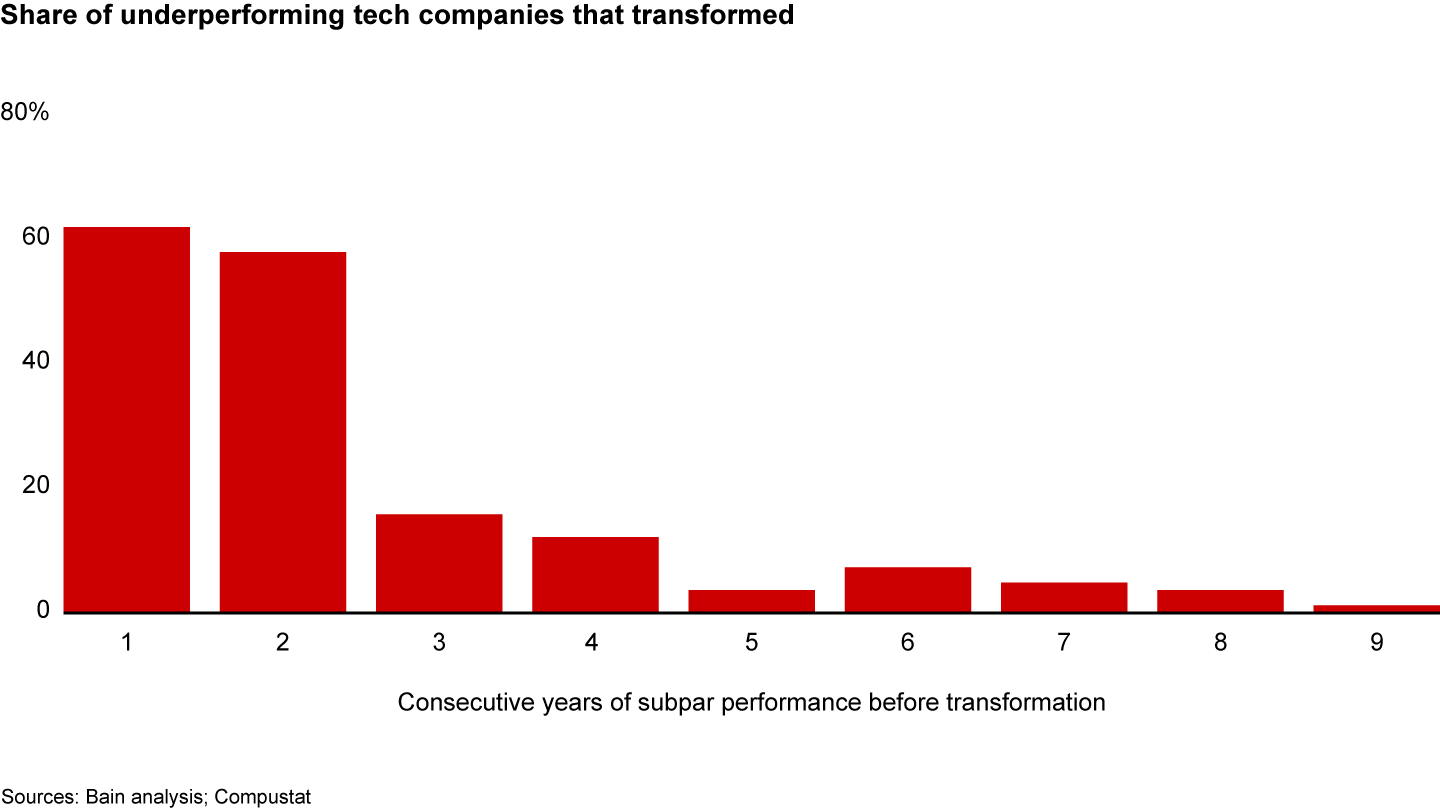
      The longer a tech company underperforms, the lower its chances of a turnaround

      Figure 2: Figure 2

      Technology companies are easily disrupted

      The incumbents that don’t heed signals of disruption continue to bet on the playbook that has worked for years: make a series of acquisitions, take out costs, manage the businesses for cash, and enjoy slow-but-steady growth. That playbook will likely remain valuable, but it’s no longer sufficient to protect against what’s coming. Although venture capital investment in and valuation of high-growth tech companies both declined in the first half of this year, such drops won’t curb the long-term increased pace of disruption.

      Now is an opportune moment for incumbents to go on offense. In recent years, established companies were expected to deliver steady profits, and therefore had less freedom to invest in innovation, leaving them at a disadvantage against start-up competitors. But the rules are changing. Start-ups are under more pressure to deliver profits, not just growth. Incumbents have an opening to press forward and seize momentum.

      Staying ahead of the game

      Leadership that rejects the legacy mindset is the most important hallmark of software incumbents that have successfully defended against disruption. Not satisfied with slow-but-steady growth, these leaders want to be at the forefront of technology for their industry, and they take pride in what their products help their customers accomplish. This sounds like a given for any leadership team, but in truth many companies lose sight of these goals or only pay them lip service. That leaves their companies vulnerable to complacency and, eventually, irrelevance.

      The most successful software incumbents put that mindset into action by focusing on three things.

      Continually assessing potential threats and new business opportunities. Leading companies put defending against disruption at the heart of their strategy. There are a lot of ways to do this, but it's good to start by building competitive threat assessments into the annual planning process. Many tech companies have room to improve in this area. In a 2022 Bain survey of CIOs and CTOs, nearly half said their company doesn’t have a strong ability to identify potential disrupters in their core market (see Figure 3).

      Figure 2: Figure 3
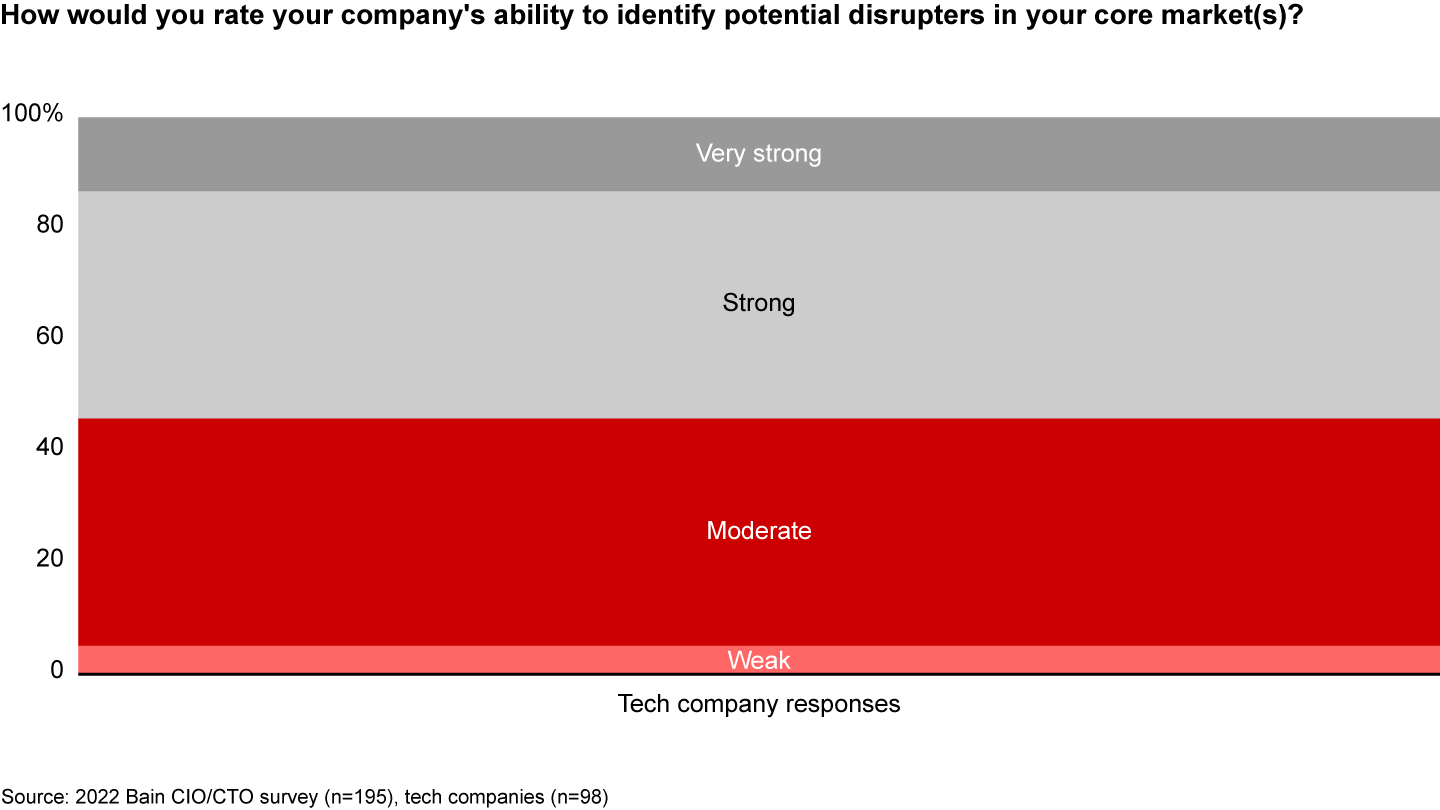
      Nearly half of tech companies say they lack a strong ability to identify disrupters in their core markets

      To avoid threat assessments becoming a check-the-box exercise, leading companies not only monitor the competitive landscape, but also think deeply about anything and everything that could emerge in the future to prey upon their business vulnerabilities. Paranoia is a virtue here.

      Moving the CEO closer to the company’s R&D roadmap of products and tech capabilities. Sometimes, the response to disruption might simply require refreshing product features or adding new ones. But when it calls for a fundamental redefinition of the company’s core business, that’s a decision only the CEO can make—and it needs to be made quickly to stay ahead of the competition. Closer collaboration between the CEO and the head of research and development can also help incumbent software companies make the appropriate investment trade-offs in order to fix their “technology debt,” a common pitfall wherein companies choose incremental feature upgrades or additions at the expense of refreshing their core product, which can atrophy as a result. 

      Investing in migrating customers to the new offering. Once the company is ready to scale up a new, innovative product or modernized technology platform, managing the transition in the market can be even more difficult than navigating the internal shift. Customers might be reluctant or refuse to switch, which might spook the sales team or discourage it from promoting the new offering. And the board might not want to risk upsetting the status quo, which has worked for so long. 

      Leading companies reorient the sales team’s priorities to focus on the new offering, adjusting the team’s incentives if necessary. They build targeted sales plays around the new offering and ensure close communication between sales and R&D to make the customer migration work. 

      The most successful companies start small by winning “lighthouse” customers, a targeted set of existing buyers willing to try out nascent products. Then they use those success stories to persuade more customers to switch. Genesys’s cloud strategy illustrates how incumbents can turn potential disruption to their advantage (see Figure 4).  

      Figure 2: Figure 4
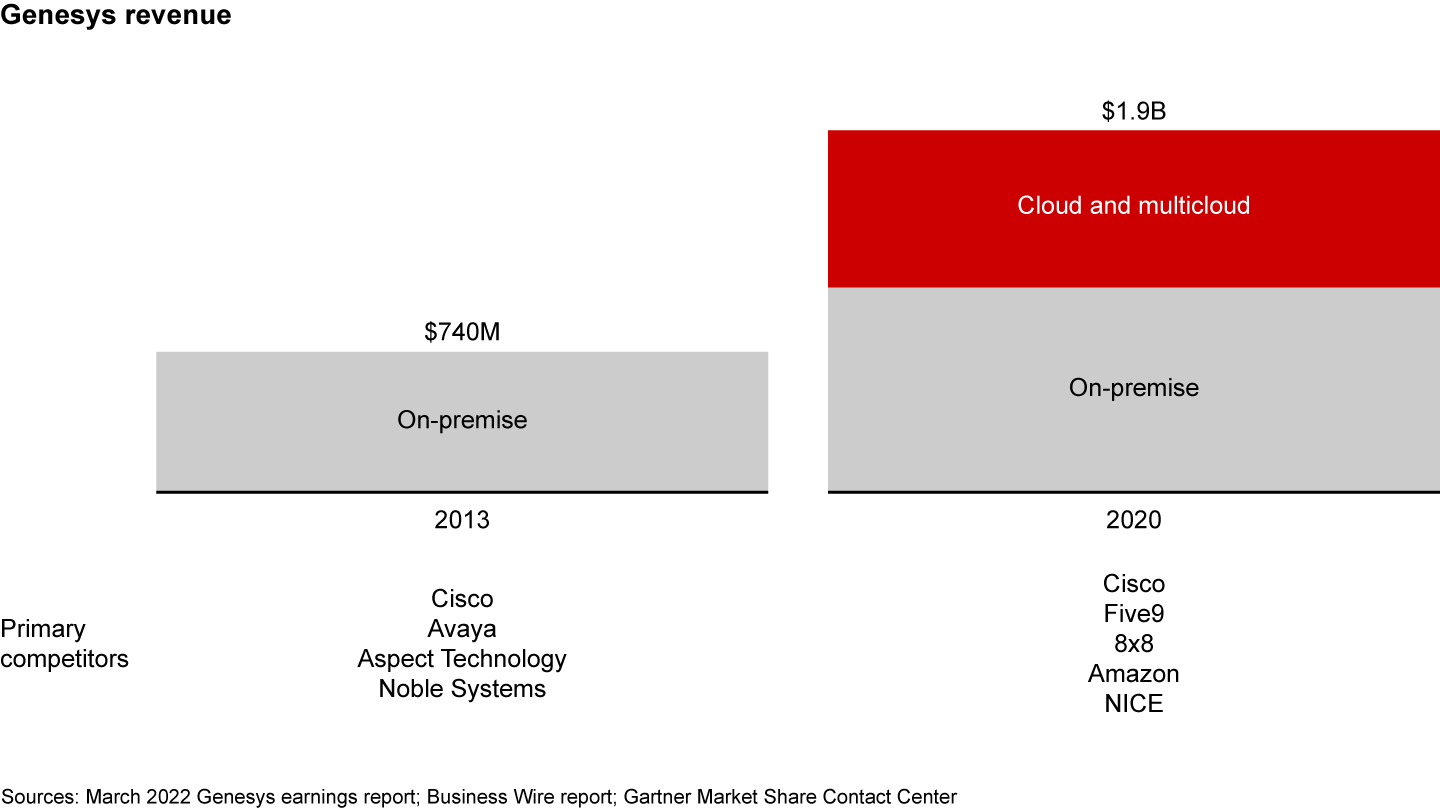
      Genesys has grown by moving into the cloud and now faces a new set of competitors

      In 2013, a year after Genesys was spun out of Alcatel-Lucent, it was operating almost entirely on-premise, with some hosting. Recognizing early that its customers were starting to prefer cloud-based products, the contact center software provider began shifting away from its legacy on-premise solution with a couple of small tuck-in acquisitions. It swung for the fences with the $1.4 billion purchase of Interactive Intelligence in 2016. To capture the value of the deal, the Genesys leadership team crafted a plan to win new customers and carefully manage the transition of existing customers to Interactive’s more modern, multitenant cloud product. Through a series of moves, Genesys capitalized on the cloud trend responsible for nearly half its growth in 2022 and joined a new competitive set.

      Meanwhile, Rocket Software’s approach to staying ahead of the competition has combined focused R&D with prolific mergers and acquisitions. Making more than 45 acquisitions in its 32-year history, Rocket has built a diverse portfolio of enterprise software products supporting the legacy platforms of many of the largest companies worldwide. The company strategically reviews its products regularly to ensure it’s serving customers’ highest priorities, and then adapts its portfolio to deliver what customers need today or will in the near future.

      Ultimately, even as incumbent enterprise software companies face intensifying competition, the traditional playbook can still yield solid returns for the foreseeable future. But more incumbents are starting to recognize there’s a better way. Staying ahead of disruptive competitors will set them on a path to accelerate growth for years to come.

      Read the Next Chapter

      Now Is the Moment for Tech's New Growth Imperative

      Value Evolution

      • The Rise of Growth Equity Investors

      • A Multicloud World

      • Welcome to Web3

      • The US-China Decoupling

      Competitive Battlegrounds

      • Defending against Disruption

      • The Engine 2 Imperative

      • AI’s Next Frontier

      • The Industrial IoT

      Operational Advantage

      • Beyond the Rule of 40

      • Sales Productivity

      • Consumption-Based Pricing

      • Software R&D Efficiencies

      • The Chip Shortage

      • The Circular Economy

      Read our 2022 Technology Report

      Explore the report Download PDF
      著者
      • Headshot of Prasad Narasimhan Sulur
        Prasad Narasimhan Sulur
        Alumni, Boston
      • Jesse Klein
        パートナー, Boston
      • Headshot of Ravi Vijayaraghavan
        Ravi Vijayaraghavan
        パートナー, Singapore
      関連業種
      • Software
      • テクノロジー
      Technology Report
      Will Agentic AI Disrupt SaaS?

      Disruption is mandatory. Obsolescence is optional.

      詳細
      Technology Report
      Quantum Computing Moves from Theoretical to Inevitable

      Quantum will likely become part of a mosaic, working with classical computing to solve big problems.

      詳細
      テクノロジー
      Software M&A

      The good news: Most deal best practices still apply to AI acquisitions.

      詳細
      Technology Report
      How Can We Meet AI’s Insatiable Demand for Compute Power?

      Technological innovation, new revenue, and public support may be needed to fund and supply enough electricity.

      詳細
      テクノロジー
      Where Have All the Sales Reps Gone?

      The math has changed: Future growth won’t reflect the size of the sales staff, but how much value you add.

      詳細
      First published in 9月 2022
      Tags
      • CIO Insights
      • Software
      • Technology Report
      • テクノロジー

      クライアント支援事例

      Helping a Midsize ERP Player Compete against the Giants

      ケーススタディを見る

      顧客戦略、マーケティング Video: A Marketing Transformation Puts a Software Leader Back on Top

      ケーススタディを見る

      業績改善 Aggressively growing an IT service provider with a high-performance culture

      ケーススタディを見る

      お気軽にご連絡下さい

      私達は、グローバルに活躍する経営者が抱える最重要経営課題に対して、厳しい競争環境の中でも成長し続け、「結果」を出すために支援しています。

      ベインの知見。競争が激化するグローバルビジネス環境で、日々直面するであろう問題について論じている知見を毎月お届けします。

      *プライバシーポリシーの内容を確認し、合意しました。

      プライバシーポリシーをご確認頂き、合意頂けますようお願い致します。
      Bain & Company
      お問い合わせ Sustainability Accessibility Terms of use Privacy Cookie Policy Sitemap Log In

      © 1996-2026 Bain & Company, Inc.

      お問い合わせ

      How can we help you?

      • ビジネスについて
      • プレス報道について
      • 採用について
      全てのオフィス