
Skip to Content
  • オフィス

    オフィス

    北米・南米
    • Atlanta
    • Austin
    • Bogota
    • Boston
    • Buenos Aires
    • Chicago
    • Dallas
    • Denver
    • Houston
    • Los Angeles
    • Mexico City
    • Minneapolis
    • Monterrey
    • Montreal
    • New York
    • Rio de Janeiro
    • San Francisco
    • Santiago
    • São Paulo
    • Seattle
    • Silicon Valley
    • Toronto
    • Washington, DC
    ヨーロッパ・中東・アフリカ
    • Amsterdam
    • Athens
    • Berlin
    • Brussels
    • Copenhagen
    • Doha
    • Dubai
    • Dusseldorf
    • Frankfurt
    • Helsinki
    • Istanbul
    • Johannesburg
    • Kyiv
    • Lisbon
    • London
    • Madrid
    • Milan
    • Munich
    • Oslo
    • Paris
    • Riyadh
    • Rome
    • Stockholm
    • Vienna
    • Warsaw
    • Zurich
    アジア・オーストラリア
    • Bangkok
    • Beijing
    • Bengaluru
    • Brisbane
    • Ho Chi Minh City
    • Hong Kong
    • Jakarta
    • Kuala Lumpur
    • Manila
    • Melbourne
    • Mumbai
    • New Delhi
    • Perth
    • Shanghai
    • Singapore
    • Sydney
    • Tokyo
    全てのオフィス
  • アルムナイ
  • メディア
  • お問い合わせ
  • 東京オフィス
  • Japan | 日本語

    地域と言語を選択

    グローバル
    • Global (English)
    北米・南米
    • Brazil (Português)
    • Argentina (Español)
    • Canada (Français)
    • Chile (Español)
    • Colombia (Español)
    ヨーロッパ・中東・アフリカ
    • France (Français)
    • DACH Region (Deutsch)
    • Italy (Italiano)
    • Spain (Español)
    • Greece (Elliniká)
    アジア・オーストラリア
    • China (中文版)
    • Korea (한국어)
    • Japan (日本語)
  • Saved items (0)
    Saved items (0)

    You have no saved items.

    後で閲読、共有できるようにするためにブックマークしてください

    Explore Bain Insights
  • 業界別プラクティス
    メインメニュー

    業界別プラクティス

    • 航空宇宙、防衛、政府関連
    • 農業
    • 化学製品
    • インフラ、建設
    • 消費財
    • 金融サービス
    • ヘルスケア
    • 産業機械、設備
    • メディア、エンターテインメント
    • 金属
    • 採掘・鉱業
    • 石油、ガス
    • 紙、パッケージ
    • プライベートエクイティ
    • 公共、社会セクター
    • 小売
    • テクノロジー
    • 通信
    • 交通
    • 観光産業
    • 公益事業、再生可能エネルギー
  • 機能別プラクティス
    メインメニュー

    機能別プラクティス

    • カスタマー・エクスペリエンス
    • サステイナビリティ、 社会貢献
    • Innovation
    • 企業買収、合併 (M&A)
    • オペレーション
    • 組織
    • プライベートエクイティ
    • マーケティング・営業
    • 戦略
    • アドバンスド・アナリティクス
    • Technology
    • フルポテンシャル・トランスフォーメーション
  • Digital
  • 知見/レポート
  • ベイン・アンド・カンパニーについて
    メインメニュー

    ベイン・アンド・カンパニーについて

    • ベインの信条
    • 活動内容
    • 社員とリーダーシップ
    • プレス・メディア情報
    • クライアントの結果
    • 受賞歴
    • パートナーシップを結んでいる団体
    Further: Our global responsibility
    • ダイバーシティ
    • 社会貢献
    • サステイナビリティへの取り組み
    • 世界経済フォーラム(WEF)
    Learn more about Further
  • キャリア
    メインメニュー

    キャリア

    • ベインで働く
      キャリア
      ベインで働く
      • Find Your Place
      • ベインで活躍する機会
      • ベインのチーム体制
      • 学生向けページ
      • インターンシップ
      • 採用イベント
    • ベインでの体験
      キャリア
      ベインでの体験
      • Blog: Inside Bain
      • キャリアストーリー
      • 社員紹介
      • Where We Work
      • 成長を後押しするサポート体制
      • アフィニティ・グループ
      • 福利厚生
    • Impact Stories
    • 採用情報
      キャリア
      採用情報
      • 採用プロセス
      • 面接内容
    FIND JOBS
  • オフィス
    メインメニュー

    オフィス

    • 北米・南米
      オフィス
      北米・南米
      • Atlanta
      • Austin
      • Bogota
      • Boston
      • Buenos Aires
      • Chicago
      • Dallas
      • Denver
      • Houston
      • Los Angeles
      • Mexico City
      • Minneapolis
      • Monterrey
      • Montreal
      • New York
      • Rio de Janeiro
      • San Francisco
      • Santiago
      • São Paulo
      • Seattle
      • Silicon Valley
      • Toronto
      • Washington, DC
    • ヨーロッパ・中東・アフリカ
      オフィス
      ヨーロッパ・中東・アフリカ
      • Amsterdam
      • Athens
      • Berlin
      • Brussels
      • Copenhagen
      • Doha
      • Dubai
      • Dusseldorf
      • Frankfurt
      • Helsinki
      • Istanbul
      • Johannesburg
      • Kyiv
      • Lisbon
      • London
      • Madrid
      • Milan
      • Munich
      • Oslo
      • Paris
      • Riyadh
      • Rome
      • Stockholm
      • Vienna
      • Warsaw
      • Zurich
    • アジア・オーストラリア
      オフィス
      アジア・オーストラリア
      • Bangkok
      • Beijing
      • Bengaluru
      • Brisbane
      • Ho Chi Minh City
      • Hong Kong
      • Jakarta
      • Kuala Lumpur
      • Manila
      • Melbourne
      • Mumbai
      • New Delhi
      • Perth
      • Shanghai
      • Singapore
      • Sydney
      • Tokyo
    全てのオフィス
  • アルムナイ
  • メディア
  • お問い合わせ
  • 東京オフィス
  • Japan | 日本語
    メインメニュー

    地域と言語を選択

    • グローバル
      地域と言語を選択
      グローバル
      • Global (English)
    • 北米・南米
      地域と言語を選択
      北米・南米
      • Brazil (Português)
      • Argentina (Español)
      • Canada (Français)
      • Chile (Español)
      • Colombia (Español)
    • ヨーロッパ・中東・アフリカ
      地域と言語を選択
      ヨーロッパ・中東・アフリカ
      • France (Français)
      • DACH Region (Deutsch)
      • Italy (Italiano)
      • Spain (Español)
      • Greece (Elliniká)
    • アジア・オーストラリア
      地域と言語を選択
      アジア・オーストラリア
      • China (中文版)
      • Korea (한국어)
      • Japan (日本語)
  • Saved items  (0)
    メインメニュー
    Saved items (0)

    You have no saved items.

    後で閲読、共有できるようにするためにブックマークしてください

    Explore Bain Insights
  • 業界別プラクティス
    • 業界別プラクティス

      • 航空宇宙、防衛、政府関連
      • 農業
      • 化学製品
      • インフラ、建設
      • 消費財
      • 金融サービス
      • ヘルスケア
      • 産業機械、設備
      • メディア、エンターテインメント
      • 金属
      • 採掘・鉱業
      • 石油、ガス
      • 紙、パッケージ
      • プライベートエクイティ
      • 公共、社会セクター
      • 小売
      • テクノロジー
      • 通信
      • 交通
      • 観光産業
      • 公益事業、再生可能エネルギー
  • 機能別プラクティス
    • 機能別プラクティス

      • カスタマー・エクスペリエンス
      • サステイナビリティ、 社会貢献
      • Innovation
      • 企業買収、合併 (M&A)
      • オペレーション
      • 組織
      • プライベートエクイティ
      • マーケティング・営業
      • 戦略
      • アドバンスド・アナリティクス
      • Technology
      • フルポテンシャル・トランスフォーメーション
  • Digital
  • 知見/レポート
  • ベイン・アンド・カンパニーについて
    • ベイン・アンド・カンパニーについて

      • ベインの信条
      • 活動内容
      • 社員とリーダーシップ
      • プレス・メディア情報
      • クライアントの結果
      • 受賞歴
      • パートナーシップを結んでいる団体
      Further: Our global responsibility
      • ダイバーシティ
      • 社会貢献
      • サステイナビリティへの取り組み
      • 世界経済フォーラム(WEF)
      Learn more about Further
  • キャリア
    人気検索キーワード
    • デジタル
    • 戦略
    前回の検索
      最近訪れたページ

      Content added to saved items

      Saved items (0)

      Removed from saved items

      Saved items (0)

      論説

      Is the Bank Branch Dead?

      Is the Bank Branch Dead?

      Customers deserting bank branches in favor of mobile and online channels for many interactions signal that the size and nature of the branch network has to change faster and more substantially than most banks acknowledge.

      著者:Richard Fleming, Mark Schofield and Damian Stephenson

      • min read
      }

      論説

      Is the Bank Branch Dead?
      en

      No, the branch has not died. But with customers deserting branches in favor of mobile and online channels for many interactions, the size and nature of the branch network has to change faster and more substantially than most banks acknowledge. Banks will be pressed to redesign networks to make them smaller, less costly and oriented toward high-value sales and advice.

      Consider the evidence for radical transformation. For one thing, the network has oversaturated the population. In the US, Bain & Company estimates that 80% of customers live or work within 3 miles of a branch, up from about 75% fifteen years ago. US branches cluster together more densely than their European counterparts, yet US banks do not achieve meaningfully higher convenience scores. And customers use traditional-format branches less every year. As currently configured, the typical US branch requires at least 5,000 teller transactions per month to justify the cost of the operation, and we estimate that for a typical US regional bank, one-third of US branches fall below this level.

      Mark Schofield, a partner in Bain's Financial Services practice, discusses three critical ways that banks can harvest digital dividends and create smaller, radically different branch networks.

      Some smaller, alternative formats have already proven to be profitable by focusing on sales and advice while encouraging customers to use digital channels for their routine transactions. Nordea’s branch network in Europe’s Nordic countries, for instance, has evolved from being predominantly full-service to focusing on advisory or daily cash and service. Along the way, Nordea’s retail cost-to-income ratio has improved from above 60% to 56%. ABN AMRO, based in the Netherlands, reduced its branch footprint by 46% between 2009 and 2013, while also increasing the share of limited-service branches.

      Granted, closing and reformatting branches usually requires a one-time capital investment. But these activities deliver considerable productivity gains: Every 100 closures in North America, for instance, might free up $40 million to $60 million in annual operating expenses. Moreover, banks that reduce their footprint and transform remaining branches can increase their revenues. That’s because they’ve shifted many interactions from branch to digital channels (see Figure 1), which are less expensive to operate and, when built right, delight customers.
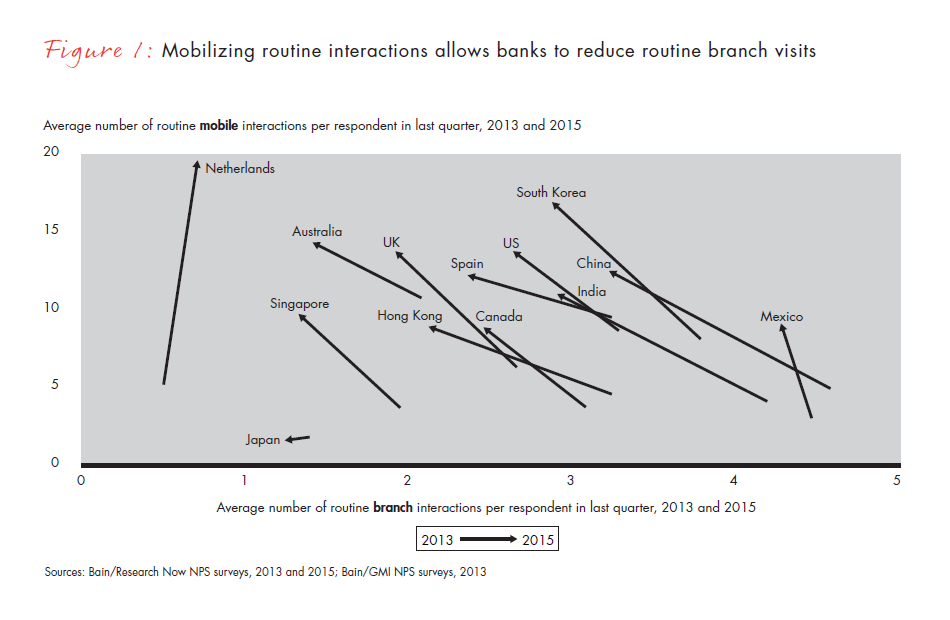

      is-the-bank-branch-dead-fig-01_embed

      The experiences to date of retail banks that have excelled in branch transformation suggest a few principles essential to a successful transition.

      Take on three activities in parallel. Banks must reduce bad interactions (due to errors or rework) in the branch and shift avoidable interactions to digital channels. For most banks, 60% to 70% of teller transactions are either bad or avoidable and can be migrated to digital channels with changes to customer behavior or with a few changes to policy and process.

      In parallel, they can test, redefine and implement their new branch model by progressively closing or remodeling locations and by realigning staff to match new skills with the newly emphasized sales and advice roles.

      They also should progressively digitalize customer experiences to emphasize convenience and speed.

      Build the business case with eyes open. The base case should not resemble the current situation, but rather should factor in the customer defection and reduced cross-selling that will occur as competitors expand digital offerings. Also, banks should calculate the upside using overall profit lift through revenue growth, an improved customer experience and reduced operating cost, rather than calculating in cost terms only.

      It’s critical to emphasize self-funding: Savings generated through reductions in volume and physical footprint can be reinvested to expand digital transactions. This will require the early commitment of the entire leadership team, as the nature of the work cuts across most functions of the business.

      Execute a customer-centric plan at the micro-market level. For each micro-market, consisting of 10 to 20 branches, the plan should address the specific priorities and engagement methods for the local customer base, and customer feedback should inform service improvements. The plan should model the expected shift in channel interactions and the attendant reduction in physical volumes, which in turn can inform the number and type of assets, such as staff and ATMs, required in the future.

      Banks carry a major liability in the forms of the fixed cost of existing branches that will have to close, plus the investment cost required to reformat and retool the network. Delays in branch transformation will likely force that liability into banks’ stock prices. Faster-moving banks will stand a better chance of reaping the benefits of convenient digital channels combined with smarter branch networks.

      By Richard Fleming, Mark Schofield and Damian Stephenson.


      is-the-bank-branch-dead-fig-01_full
      著者
      • Headshot of Richard Fleming
        Richard Fleming
        パートナー, Sydney
      • Mark Schofield
        Former Partner, Toronto
      • Headshot of Damian Stephenson
        Damian Stephenson
        パートナー, Sydney
      関連業種
      • 金融サービス
      金融サービス
      Wolf in Sheep's Clothing: Disruption Ahead for Transaction Banking

      The field is getting crowded and technology-intensive. How can banks stand out?

      詳細
      銀行業の未来
      Perform Today, Prove Tomorrow, Propel the Stock Valuation

      Leading banks build credibility with investors by aligning their strategy, execution, and equity story.

      詳細
      金融サービス
      Rethinking Transformation: Lawrence Lam on Leading Change at Prudential

      Frankie Leung speaks with Lawrence Lam, CEO of Prudential Hong Kong, about organizational transformation and sustaining change through a people-led approach.

      詳細
      銀行業の未来
      Voting with Their Feet: Banking Consumers Want a Seamless Digital Experience

      Half of consumers’ digital purchases go to a competitor of their primary bank, and half of those who buy anywhere encounter friction in the process.

      詳細
      金融サービス
      Banking M&A

      As conditions shift, leading banks are fusing scale with scope to create future-ready organizations.

      詳細
      First published in 11月 2015
      Tags
      • 金融サービス
      • 銀行業の未来

      クライアント支援事例

      Digital A European Banking Giant Rises to the Fintech Challenge

      ケーススタディを見る

      戦略 A financial services leader gains market confidence

      ケーススタディを見る

      チェンジ・マネジメント The change process unlocks potential and profits

      ケーススタディを見る

      お気軽にご連絡下さい

      私達は、グローバルに活躍する経営者が抱える最重要経営課題に対して、厳しい競争環境の中でも成長し続け、「結果」を出すために支援しています。

      ベインの知見。競争が激化するグローバルビジネス環境で、日々直面するであろう問題について論じている知見を毎月お届けします。

      *プライバシーポリシーの内容を確認し、合意しました。

      プライバシーポリシーをご確認頂き、合意頂けますようお願い致します。
      Bain & Company
      お問い合わせ Sustainability Accessibility Terms of use Privacy Cookie Policy Sitemap Log In

      © 1996-2026 Bain & Company, Inc.

      お問い合わせ

      How can we help you?

      • ビジネスについて
      • プレス報道について
      • 採用について
      全てのオフィス