

論説

概要
- Insurgent brands typically grow at least 10 times their category average, but some have faced a slowdown, with 40% underperforming their category average.
- Elements of the insurgents’ playbook couldn’t help them overcome the shifting dynamics caused by the pandemic. Many asset-light insurgents struggled to meet surges in demand; alternative channels shut down; retailers focused on fewer, larger brands to keep shelves stocked; and consumers shifted to larger pack sizes and away from on-the-go consumption.
- While the jury is out on how certain trends will evolve after the crisis, opportunities will open up for existing and new insurgents to disrupt over the long term, as they quickly pivot to benefit from changes such as a renewed consumer focus on health and more online purchasing.
The Covid-19 pandemic that upended so many lives and businesses has overnight changed the nature of competition between traditional big brands and the upstart insurgents that have been capturing the lion’s share of growth in their consumer goods categories.
Insurgents (which we define as companies that are growing 10 times their category average and have more than $25 million in annual revenues) seemed unstoppable during the past eight years that we tracked their performance. Now, some of the hallmarks of their rapid success—asset-light comanufacturing, distribution-driven growth, and premium offerings skewed toward on-the-go consumption, to name a few—have become less advantageous in a Covid-19 world.
Overcoming short-term headwinds
When demand peaked in many categories, insurgents’ reliance on comanufacturers and low absolute inventory levels lessened their flexibility to meet that demand. Worried consumers stockpiling basic goods looked for value and trusted brands, not premium products. Struggling to fill shelves, retailers turned to big brands as a reliable source of best-selling hero SKUs in large pack sizes. Meanwhile, insurgents faced a new world without sampling, experiential marketing or trade shows—all because of social distancing. And retail channels, such as health stores and independent coffee shops that were key to their distribution growth, were closed.

Macro Surveillance Platform
For more detail on the business implications of coronavirus from Bain’s Macro Trends Group, log on to the Macro Surveillance Platform. Learn more about the platform >
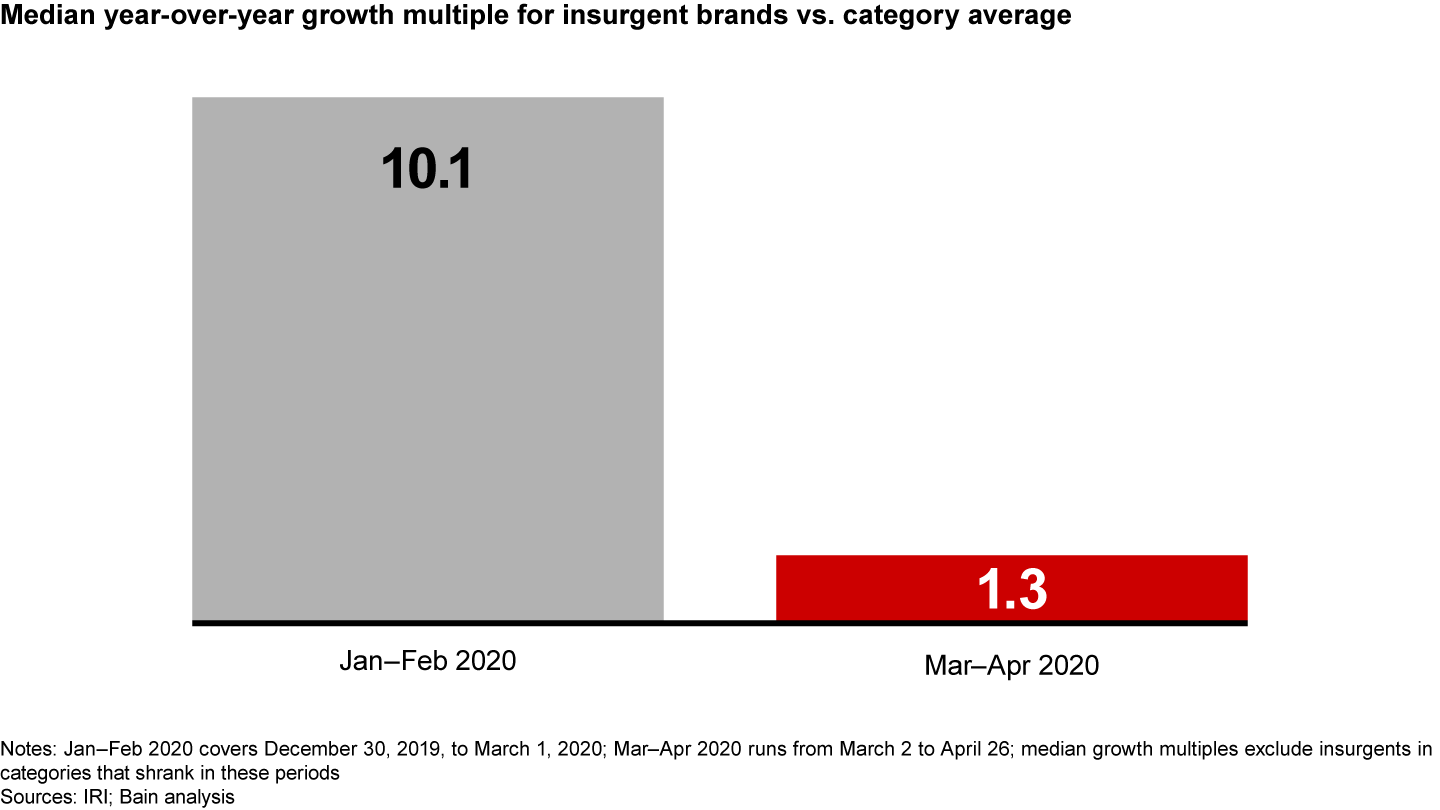
These and other rapid changes left insurgents with a playbook that suddenly felt inadequate. In January and February, insurgents captured 35% of the growth across a range of categories. By March and April, that plunged to only 5% (see Figure 1). While all the insurgents we studied have grown at a rate at least 10 times their category average over the past six years, that rate dropped to 1.3 times their category average during the pandemic (see Figure 2). Roughly 40% of them find themselves underperforming their category average.
Figure 1
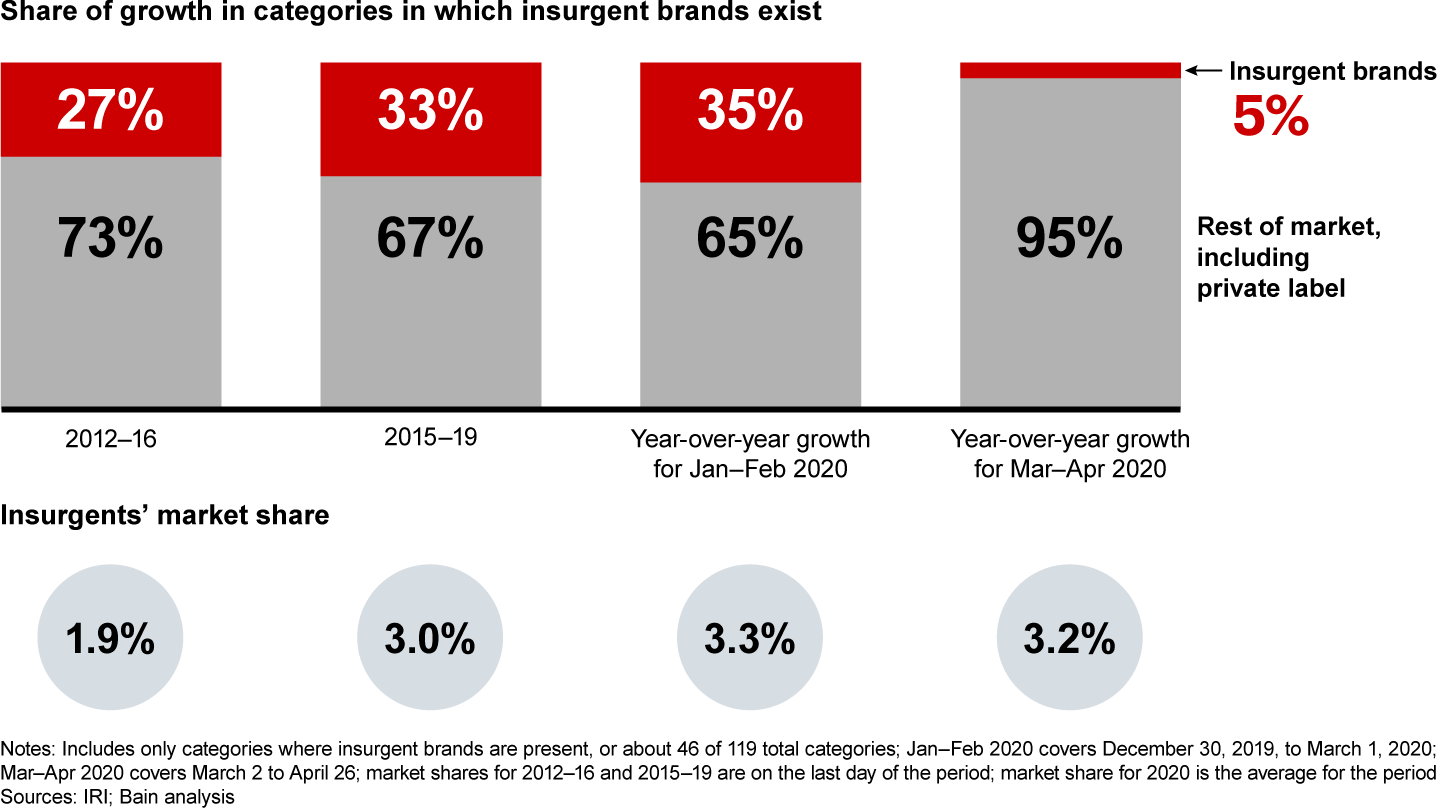

Figure 2

It would be easy, but shortsighted, to view this as the end of insurgents as a serious competitive threat. Some will fall behind, but most will continue to grow alongside or ahead of their categories, sufficiently well-capitalized to remain afloat during the crisis. Only a handful of the insurgents we studied lack the financial backing that would suggest they’d be at risk over the longer term.
In fact, the pandemic has been an opportunity for insurgents to demonstrate their agility and resilience. Like incumbents, many insurgents have quickly pivoted their marketing to engage consumers and remain relevant, tailoring their messaging to reflect relatable themes such as working from home, cooking family meals and social distancing. They adapted their marketing in ways that were authentic to their brands. Harry’s launched a mental health marketing campaign, while Quest started livestream fitness classes, and Beyond Meat donated burgers to hospitals and nonprofits.
As consumers stockpiled, some insurgents swiftly adjusted product offerings to meet consumer needs. Real Good Foods launched a line of “Care Packages”—boxes filled with frozen ready-made meals in varieties such as “family,” “self-care” and “real good day.” Other insurgents marketed value packs for delivery and expanded online purchase options to address consumer anxiety about their food supply while in quarantine.
Many insurgents adapted their business models to make it easier for consumers to access their products via new distribution methods. Founders Brewing began offering curbside pickup outside of its Michigan taprooms. Others advertised partnerships with home delivery services or doubled down on existing direct-to-consumer capabilities to ensure they could meet consumer demand. Beverage insurgent Spindrift expanded its e-commerce presence with an increased focus on Amazon sales, while continuing to sell its products directly to consumers online.
Benefiting from longer-term shifts
With the anticipated onset of a recession, insurgents now face a new set of challenges. Values will shift as the income gap widens and consumers show increased price sensitivity. At-home consumption behavior spurred by confinement and health concerns will be prolonged in a recession as consumers seek more affordable options. Retailers may continue to simplify assortments and toughen negotiations with suppliers to protect their own margins. And the competitive environment could intensify as big brands strengthen their retailer relationships and accelerate supply chain automation, while retailers invest to grow their own store brands.
However, there are longer-term tailwinds coming out of the Covid-19 pandemic that will favor insurgent brands. New groups of consumers will emerge with different needs that insurgents—given their size—are often best positioned to address. For some, the pandemic has created a renewed focus on health and wellness. About 40% of respondents to an AllianceBernstein survey in April said they care more about “real” food with simple, natural ingredients than they did before the pandemic. Even in a recession, certain segments of the population will continue to seek differentiated offerings at premium prices.
Another winning battleground for insurgents: the acceleration in online purchasing brought on by confinement will create a major, long-term shift in online habits. E-commerce grew 60% year-over-year during March, with more than 35% of that growth coming from new households or those that significantly increased purchase frequency, according to Nielsen. Insurgents are poised to tap into this opportunity, drawing on their e-commerce and digital marketing expertise to create compelling consumer propositions, target consumers effectively, and build awareness and consumer intimacy online.
Finally, insurgents have Agile operating models that enable them to pivot in ways that big brands struggle with. Recessions create opportunities for insurgents to disrupt categories with new offerings (formats, occasions) and business models (subscription boxes, meal kits, delivery partnerships). Significant investment capital exists in the market, with approximately $680 billion of venture, growth and buyout dry powder ready to be invested in North America alone, according to Preqin. And there will be a surge of unemployed talent with the valuable skills and appetite for entrepreneurial endeavors.
So, while growth will slow in the near term for current insurgents, the environment will be ripe for a resurgence. Growth will return for those that can weather the storm, and the next cohort of winning insurgents will emerge. They will use deep consumer insights to create and offer authentic value propositions that truly address existing—and emerging—consumer needs. They’ll start small, successfully targeting and connecting with unique consumer segments. They’ll build consumer intimacy and loyalty, delivering differentiated online experiences and continuously evolving products or services to achieve the kind of growth we’ve seen in the last five years.
The road ahead for incumbents
What does this mean for incumbents? Fending off insurgents requires big brands to retain the agility and staying power that they exhibited during the crisis. Faced with extraordinary challenges, these larger organizations were forced to mobilize, innovate and adapt faster than ever to meet the changing needs of their retail customers and consumers. They kicked up their metabolic rates with daily cross-functional meetings. They made quick, tough calls on product lines to generate production capacity, worked with suppliers and transport companies to ensure product and delivery performance, and recalibrated marketing spending. Many decisions that might have taken months before the pandemic were made in days. Having demonstrated what they’re capable of, they’re now asking themselves, “How do we bottle this behavior and make it part of our post-Covid culture?”
Incumbents that are able to cement closer relationships with winning retailers and adapt their messaging and value propositions to retain new households will capitalize on the increased penetration and shelf presence they achieved in the pandemic. And those looking to remain relevant in the shifting environment will pursue M&A opportunities across the full value chain to build the right portfolio mix or enhance their capabilities that will be relevant in the shifting environment. Deal multiples in consumer products fell 30% in the 2008–2009 recession. If that scenario repeats itself, lower multiples alongside heightened strategic parenting advantages such as scale and supply will increase the returns on investment for what have historically been challenging deals.
Big brands may be experiencing record sales in many categories. Whether that healthy performance continues will depend partly on their ability to stay vigilant in spotting growth opportunities and developing the capabilities required to tap into them. It may not seem that way now, but insurgents remain an enduring threat to growth for large brands.

Coronavirus
The global Covid-19 pandemic has extracted a terrible human toll and spurred sweeping changes in the world economy. Across industries, executives have begun reassessing their strategies and repositioning their companies to thrive now and in the world beyond coronavirus.
The authors would like to thank Anna Geyler, Rosa Glenn and John Petrie for their contributions to this work.
First published in 5月 2020