Skip to Content
  • オフィス

    オフィス

    北米・南米
    • Atlanta
    • Austin
    • Bogota
    • Boston
    • Buenos Aires
    • Chicago
    • Dallas
    • Denver
    • Houston
    • Los Angeles
    • Mexico City
    • Minneapolis
    • Monterrey
    • Montreal
    • New York
    • Rio de Janeiro
    • San Francisco
    • Santiago
    • São Paulo
    • Seattle
    • Silicon Valley
    • Toronto
    • Washington, DC
    ヨーロッパ・中東・アフリカ
    • Amsterdam
    • Athens
    • Berlin
    • Brussels
    • Copenhagen
    • Doha
    • Dubai
    • Dusseldorf
    • Frankfurt
    • Helsinki
    • Istanbul
    • Johannesburg
    • Kyiv
    • Lisbon
    • London
    • Madrid
    • Milan
    • Munich
    • Oslo
    • Paris
    • Riyadh
    • Rome
    • Stockholm
    • Vienna
    • Warsaw
    • Zurich
    アジア・オーストラリア
    • Bangkok
    • Beijing
    • Bengaluru
    • Brisbane
    • Ho Chi Minh City
    • Hong Kong
    • Jakarta
    • Kuala Lumpur
    • Manila
    • Melbourne
    • Mumbai
    • New Delhi
    • Perth
    • Shanghai
    • Singapore
    • Sydney
    • Tokyo
    全てのオフィス
  • アルムナイ
  • メディア
  • お問い合わせ
  • 東京オフィス
  • Japan | 日本語

    地域と言語を選択

    グローバル
    • Global (English)
    北米・南米
    • Brazil (Português)
    • Argentina (Español)
    • Canada (Français)
    • Chile (Español)
    • Colombia (Español)
    ヨーロッパ・中東・アフリカ
    • France (Français)
    • DACH Region (Deutsch)
    • Italy (Italiano)
    • Spain (Español)
    • Greece (Elliniká)
    アジア・オーストラリア
    • China (中文版)
    • Korea (한국어)
    • Japan (日本語)
  • Saved items (0)
    Saved items (0)

    You have no saved items.

    後で閲読、共有できるようにするためにブックマークしてください

    Explore Bain Insights
  • 業界別プラクティス
    メインメニュー

    業界別プラクティス

    • 航空宇宙、防衛、政府関連
    • 農業
    • 化学製品
    • インフラ、建設
    • 消費財
    • 金融サービス
    • ヘルスケア
    • 産業機械、設備
    • メディア、エンターテインメント
    • 金属
    • 採掘・鉱業
    • 石油、ガス
    • 紙、パッケージ
    • プライベートエクイティ
    • 公共、社会セクター
    • 小売
    • テクノロジー
    • 通信
    • 交通
    • 観光産業
    • 公益事業、再生可能エネルギー
  • 機能別プラクティス
    メインメニュー

    機能別プラクティス

    • カスタマー・エクスペリエンス
    • サステイナビリティ、 社会貢献
    • Innovation
    • 企業買収、合併 (M&A)
    • オペレーション
    • 組織
    • プライベートエクイティ
    • マーケティング・営業
    • 戦略
    • アドバンスド・アナリティクス
    • Technology
    • フルポテンシャル・トランスフォーメーション
  • Digital
  • 知見/レポート
  • ベイン・アンド・カンパニーについて
    メインメニュー

    ベイン・アンド・カンパニーについて

    • ベインの信条
    • 活動内容
    • 社員とリーダーシップ
    • プレス・メディア情報
    • クライアントの結果
    • 受賞歴
    • パートナーシップを結んでいる団体
    Further: Our global responsibility
    • ダイバーシティ
    • 社会貢献
    • サステイナビリティへの取り組み
    • 世界経済フォーラム(WEF)
    Learn more about Further
  • キャリア
    メインメニュー

    キャリア

    • ベインで働く
      キャリア
      ベインで働く
      • Find Your Place
      • ベインで活躍する機会
      • ベインのチーム体制
      • 学生向けページ
      • インターンシップ
      • 採用イベント
    • ベインでの体験
      キャリア
      ベインでの体験
      • Blog: Inside Bain
      • キャリアストーリー
      • 社員紹介
      • Where We Work
      • 成長を後押しするサポート体制
      • アフィニティ・グループ
      • 福利厚生
    • Impact Stories
    • 採用情報
      キャリア
      採用情報
      • 採用プロセス
      • 面接内容
    FIND JOBS
  • オフィス
    メインメニュー

    オフィス

    • 北米・南米
      オフィス
      北米・南米
      • Atlanta
      • Austin
      • Bogota
      • Boston
      • Buenos Aires
      • Chicago
      • Dallas
      • Denver
      • Houston
      • Los Angeles
      • Mexico City
      • Minneapolis
      • Monterrey
      • Montreal
      • New York
      • Rio de Janeiro
      • San Francisco
      • Santiago
      • São Paulo
      • Seattle
      • Silicon Valley
      • Toronto
      • Washington, DC
    • ヨーロッパ・中東・アフリカ
      オフィス
      ヨーロッパ・中東・アフリカ
      • Amsterdam
      • Athens
      • Berlin
      • Brussels
      • Copenhagen
      • Doha
      • Dubai
      • Dusseldorf
      • Frankfurt
      • Helsinki
      • Istanbul
      • Johannesburg
      • Kyiv
      • Lisbon
      • London
      • Madrid
      • Milan
      • Munich
      • Oslo
      • Paris
      • Riyadh
      • Rome
      • Stockholm
      • Vienna
      • Warsaw
      • Zurich
    • アジア・オーストラリア
      オフィス
      アジア・オーストラリア
      • Bangkok
      • Beijing
      • Bengaluru
      • Brisbane
      • Ho Chi Minh City
      • Hong Kong
      • Jakarta
      • Kuala Lumpur
      • Manila
      • Melbourne
      • Mumbai
      • New Delhi
      • Perth
      • Shanghai
      • Singapore
      • Sydney
      • Tokyo
    全てのオフィス
  • アルムナイ
  • メディア
  • お問い合わせ
  • 東京オフィス
  • Japan | 日本語
    メインメニュー

    地域と言語を選択

    • グローバル
      地域と言語を選択
      グローバル
      • Global (English)
    • 北米・南米
      地域と言語を選択
      北米・南米
      • Brazil (Português)
      • Argentina (Español)
      • Canada (Français)
      • Chile (Español)
      • Colombia (Español)
    • ヨーロッパ・中東・アフリカ
      地域と言語を選択
      ヨーロッパ・中東・アフリカ
      • France (Français)
      • DACH Region (Deutsch)
      • Italy (Italiano)
      • Spain (Español)
      • Greece (Elliniká)
    • アジア・オーストラリア
      地域と言語を選択
      アジア・オーストラリア
      • China (中文版)
      • Korea (한국어)
      • Japan (日本語)
  • Saved items  (0)
    メインメニュー
    Saved items (0)

    You have no saved items.

    後で閲読、共有できるようにするためにブックマークしてください

    Explore Bain Insights
  • 業界別プラクティス
    • 業界別プラクティス

      • 航空宇宙、防衛、政府関連
      • 農業
      • 化学製品
      • インフラ、建設
      • 消費財
      • 金融サービス
      • ヘルスケア
      • 産業機械、設備
      • メディア、エンターテインメント
      • 金属
      • 採掘・鉱業
      • 石油、ガス
      • 紙、パッケージ
      • プライベートエクイティ
      • 公共、社会セクター
      • 小売
      • テクノロジー
      • 通信
      • 交通
      • 観光産業
      • 公益事業、再生可能エネルギー
  • 機能別プラクティス
    • 機能別プラクティス

      • カスタマー・エクスペリエンス
      • サステイナビリティ、 社会貢献
      • Innovation
      • 企業買収、合併 (M&A)
      • オペレーション
      • 組織
      • プライベートエクイティ
      • マーケティング・営業
      • 戦略
      • アドバンスド・アナリティクス
      • Technology
      • フルポテンシャル・トランスフォーメーション
  • Digital
  • 知見/レポート
  • ベイン・アンド・カンパニーについて
    • ベイン・アンド・カンパニーについて

      • ベインの信条
      • 活動内容
      • 社員とリーダーシップ
      • プレス・メディア情報
      • クライアントの結果
      • 受賞歴
      • パートナーシップを結んでいる団体
      Further: Our global responsibility
      • ダイバーシティ
      • 社会貢献
      • サステイナビリティへの取り組み
      • 世界経済フォーラム(WEF)
      Learn more about Further
  • キャリア
    人気検索キーワード
    • デジタル
    • 戦略
    前回の検索
      最近訪れたページ

      Content added to saved items

      Saved items (0)

      Removed from saved items

      Saved items (0)

      Technology Report

      Product Management: The Key to Unlocking Return on Your Software R&D Investment

      Product Management: The Key to Unlocking Return on Your Software R&D Investment

      Product management is instrumental to boosting returns on software development investments, but few companies do it well.

      著者:Bill Radzevych, Rakesh Mehrotra, and Jay Bhatnagar

      • min read
      }

      レポート

      Product Management: The Key to Unlocking Return on Your Software R&D Investment
      en
      概要
      • Only 25% of chief technology officers say the return on their company’s software development investments meets expectations, Bain research shows.
      • Companies that excel in product management are over 40% more likely to beat the Rule of 40 performance metric.
      • Leading companies build successful product management teams by empowering and properly funding them, focusing them on delivering value to customers, and better managing the product portfolio.

      This article is part of Bain's 2022 Technology Report.

      Explore the report

      As companies across industries struggle to generate meaningful returns on their software research and development (R&D) investments, many overlook a solution that’s right at their fingertips: effective product management.

      Only 25% of chief technology officers feel the return on their software development investments meets the expectations of senior management and the board, according to a 2022 Bain & Company survey. Executives know what derails these investments. It’s usually some combination of an underdeveloped product roadmap that doesn’t truly embody the company’s strategy, poorly prioritized product features, poor software development execution, released products that don’t address customer problems, and opaque engineering activities that make it difficult to focus on the right priorities or even understand what those priorities are.

      While some of those challenges are squarely in the domain of the CTO or engineering leadership, effective product management can play an outsized role in resolving them. Bain evaluated more than 60 factors and found that strong product management is perhaps the single most important ingredient in achieving software development goals. And it leads to better performance in the market. Our analysis found that companies that excel in product management are over 40% more likely to beat the Rule of 40, the principle that a software company is balancing growth and profitability well when its combined revenue growth rate and profit margin exceeds 40%, regardless of company size, growth stage, or market (see sidebar “About the Rule of 40”). That’s important because software companies that outperform the Rule of 40 have valuation multiples (measured by the ratio of enterprise value to revenue) an average of 50% to 60% higher than companies that underperform the rule, according to Bain research.

      • About the Rule of 40

        Venture capitalists began to popularize the Rule of 40 in 2015 as a high-level health check for software-as-a-service companies, but it’s broadly applicable to most software companies. The metric neatly captures the fundamental trade-off between investing in growth (including new products and customer acquisition) and short-term profitability. Analysts have differed on which measure of profitability to use—most use earnings before interest, taxes, depreciation, and amortization (EBITDA), but some have proposed free cash flow, EBIT, or net income as alternatives. We use EBITDA, a publicly available profitability metric that excludes the effect of taxes and accounting policies.

      Most executives understand product management plays an integral role in software development. After all, product managers essentially own the product. They’re responsible for building product roadmaps, coordinating development, and prioritizing which features to add. They also bring a valuable cross-functional perspective to development activities.

      However, when we evaluated seven capabilities critical to a world-class product management organization (see sidebar “How We Measure Product Management Maturity”), we found very few companies do all of them well. More than 40% of companies in our survey self-reported significant gaps in two or more of the critical capabilities in our Product Management Maturity Index, saying they rarely or only occasionally demonstrate those capabilities.

      • How We Measure Product Management Maturity

        Bain’s Product Management Maturity Index measures the maturity of a company’s product management capabilities, based on seven elements. 

        • Customer centricity. Does the company deeply understand customer needs, such as purchase criteria, segmented by customer group?
        • Strategic roadmaps. Are the company’s product roadmaps well prioritized, and do they link to its overall business strategy?
        • Empowerment. Do the company’s product managers have ownership of the product’s vision and strategy?
        • Engineering collaboration. Do the product management and engineering teams work together to prioritize, appropriately scope, and deliver on product development efforts?
        • Marketing collaboration. Do product managers work closely with product marketing on the go-to-market strategy, such as how to best position the product publicly and providing appropriate guidance to field sales teams?
        • Product life cycle. Do product managers own and make effective decisions about the product life cycle, such as the launch and timing of retirement of the product?
        • Shared best practices. Does the product management team have a defined set of best practices in areas such as product roadmaps, customer feedback, and market analysis?

      In a company’s early days, product management often has a leadership role, or at least a strong partnership. As the number of products increases and product management becomes one of many functions in a highly complex organization, the capability often atrophies. Too often, just when product managers are most needed to deal with complexity and simplify the product line, their role is reduced to program management, with important decisions led by engineering, finance, and sales. That can leave product managers frustrated, disenchanted, and more likely to leave.

      Indeed, attracting and retaining top product management talent has grown more difficult. In this year’s survey, about 40% of product management executives reported attrition rates of more than 15% during the prior 12 months, and 60% said attrition is worse now than it was three years ago (see Figure 1).

      Figure 1
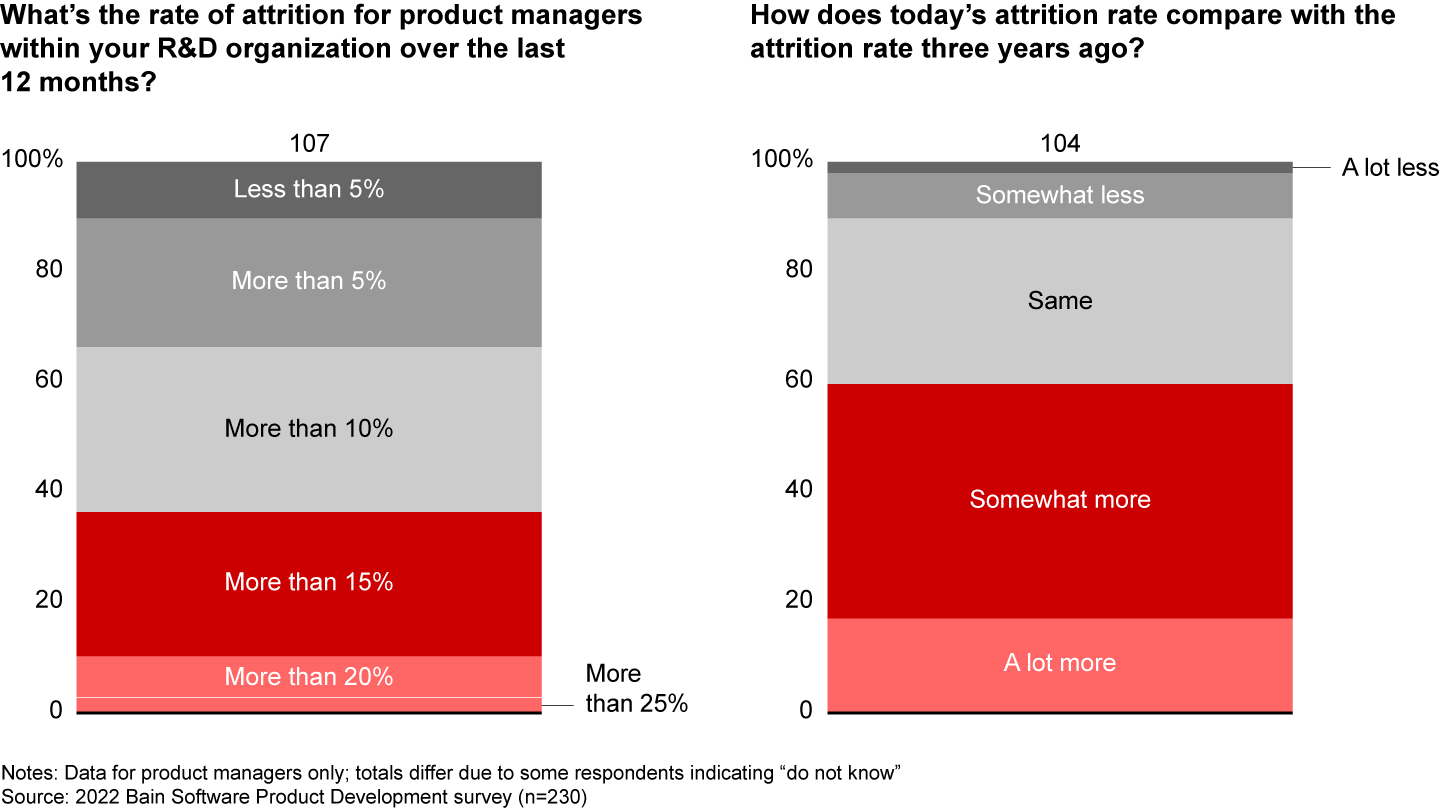
      Software product management executives report high attrition, and it’s getting worse

      How to reinvigorate product management

      For most companies, any software R&D turnaround starts with putting product management back in the front seat. In our work with companies around the globe, we’ve found three steps critical to developing world-class product management.

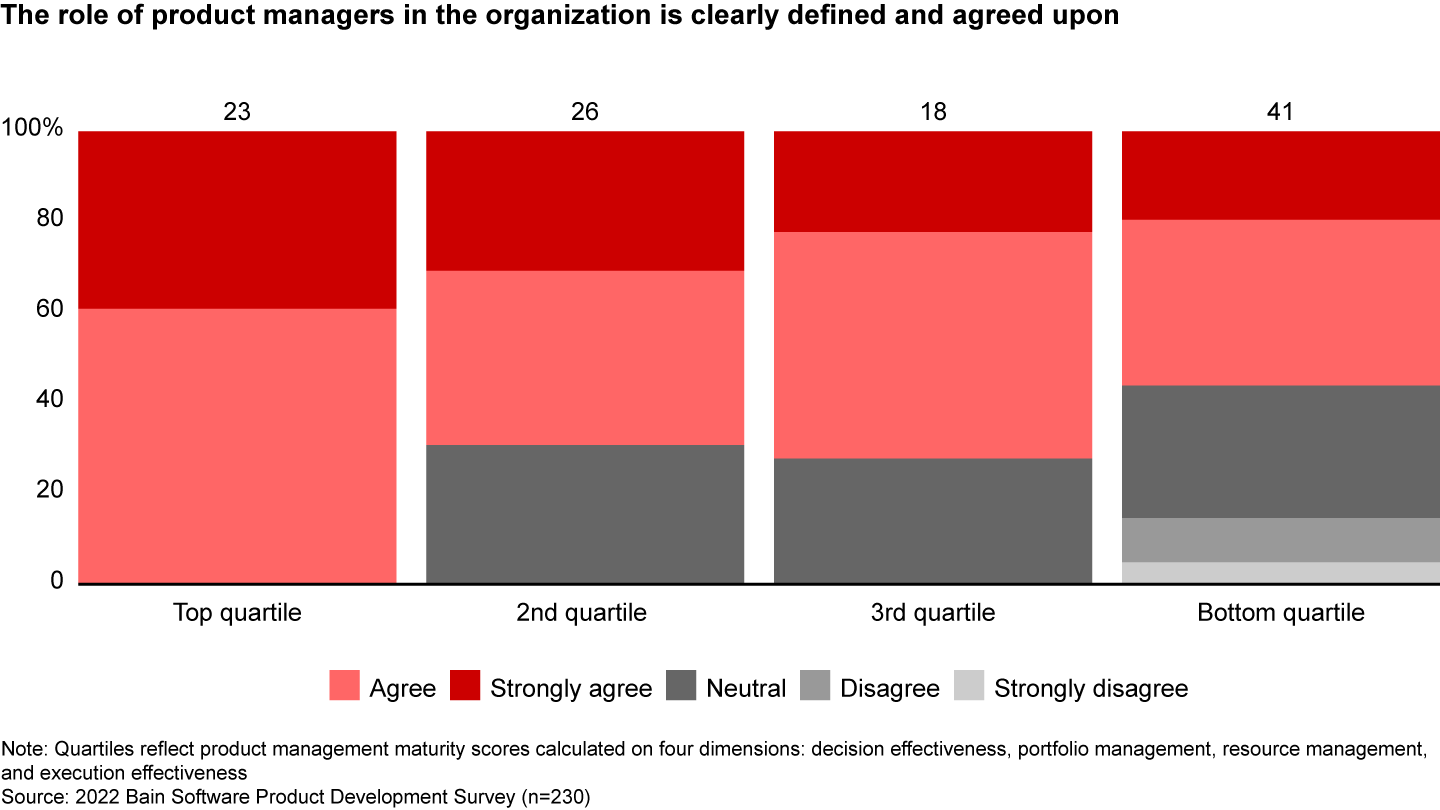
      Empower the product management team. Product management holds significant authority and leadership responsibilities at the most successful software companies, either as general managers or through an influential chief product officer. Giving product management teams responsibility for products from launch to retirement tends to increase their effectiveness (see Figure 2). At leading companies, product managers direct product strategy decisions, and have significant cross-functional influence. And they have clearly defined expectations that everyone in the company understands (see Figure 3).

      Figure 2
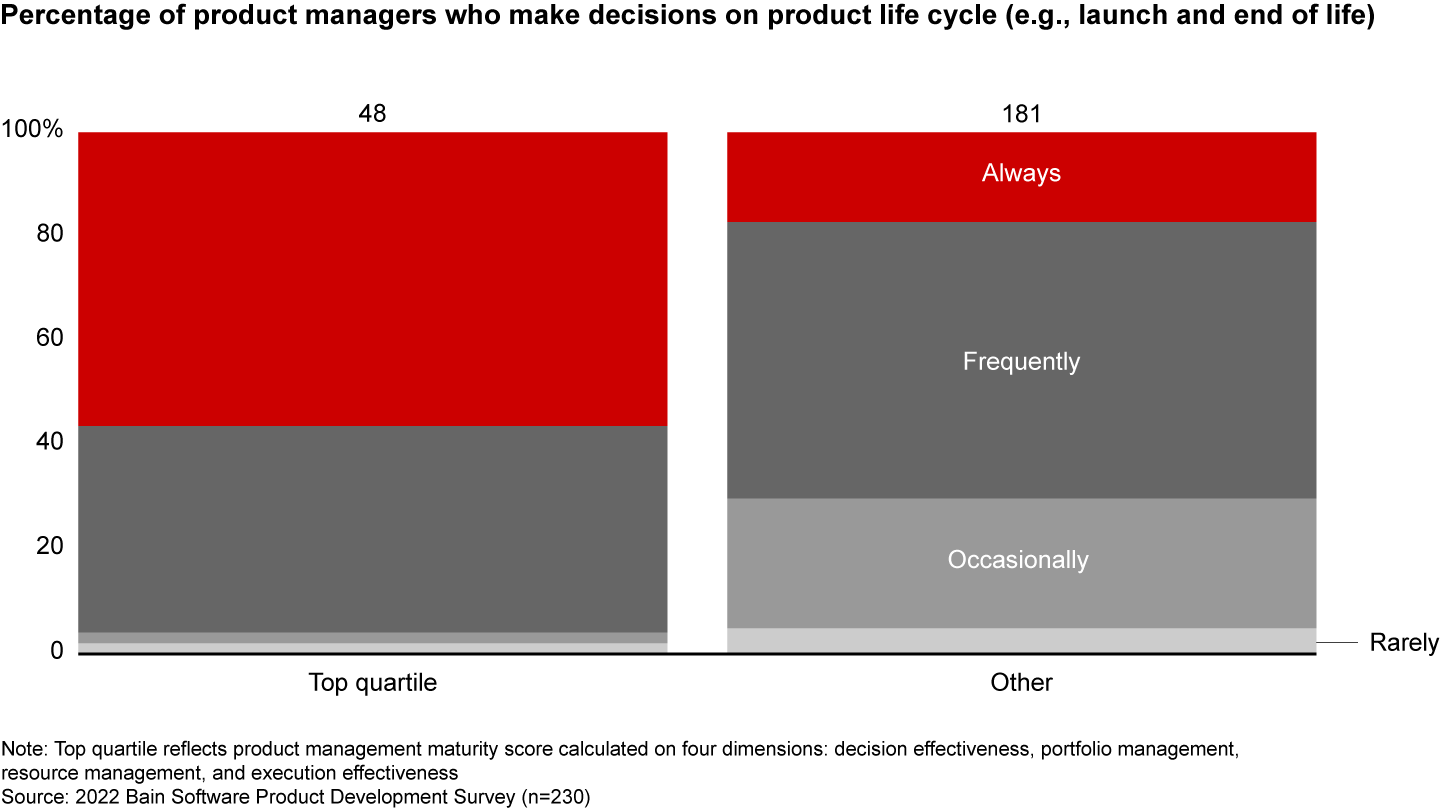
      Empowering product managers to make decisions increases the team’s effectiveness
      Figure 3
      High-performing companies create clear expectations for their product managers

      Leading companies also dedicate sufficient resources to this function. Every company is different, of course; the need for product managers will vary based on the maturity of the product and the product manager’s skills. But overall, too many companies expect great results without explicitly assigning product managers to all areas of software development or ensuring each area has the right level of support. Our research shows that the sweet spot for the best-performing product management organizations is one product manager for every 11 to 15 software engineers. Results decline when product management has fewer resources.

      Strengthen the portfolio management capability. Clarifying the process for managing the product portfolio is a powerful way to align teams. It also tends to improve investment decisions.

      In this context, portfolio management refers to key processes that nearly all companies have but often don’t actively manage or explicitly document. Best practices start with linking the product strategy to execution using a common language to describe distinct investments by product line and market. Next, companies institute a regular cadence to review and reset product investments. Finally, they make explicit who owns product decisions, and have well-defined methods for prioritizing within the portfolio. By creating a common framework and putting product managers in position to own and direct sections of the portfolio, companies avoid the common pitfall of failing to truly reevaluate the portfolio and instead repeatedly renew past decisions.

      One software company freed up significant funds to invest in new growth areas simply by improving its portfolio management. The company redefined its product taxonomy, mapped its current investments so all teams were working from the same set of facts, and then clearly articulated its objectives for each part of the business. As a result, the company reallocated about 20% of its product budget to new sources of potential value creation, including one product that could power the company’s growth in the future, all without disrupting existing businesses.

      Focus on systematically delivering value to customers. At leading companies, this means regularly assessing product investment priorities based on hard data about customer usage, adoption, and engagement. Product managers have the autonomy to invest in areas that don’t always pan out, with the understanding that investments will be adjusted as new data arrives. 

      These companies recognize that data alone doesn’t tell the full story, so they also engage directly with customers. All product objectives aim to solve customer problems, and product managers often spend time with customers. Some even build customer meetings into their onboarding of a new product manager. 

      Top of the agenda

      Product management is no longer primarily the purview of the head of product; at leading companies, it’s top of mind for the entire C-suite and board of directors. They realize it can play a powerful role in directing engineering effort, maximizing precious R&D resources, eliminating low-value investments, and, ultimately, achieving and sustaining financial growth that outperforms the competition.

      Read the Next Chapter

      When Will the Chip Shortage End?

      Value Evolution

      • The Rise of Growth Equity Investors

      • A Multicloud World

      • Welcome to Web3

      • The US-China Decoupling

      Competitive Battlegrounds

      • Defending against Disruption

      • The Engine 2 Imperative

      • AI’s Next Frontier

      • The Industrial IoT

      Operational Advantage

      • Beyond the Rule of 40

      • Sales Productivity

      • Consumption-Based Pricing

      • Software R&D Efficiencies

      • The Chip Shortage

      • The Circular Economy

      Read our 2022 Technology Report

      Explore the report Download PDF
      著者
      • Headshot of Bill Radzevych
        Bill Radzevych
        パートナー, Seattle
      • Headshot of Rakesh Mehrotra
        Rakesh Mehrotra
        パートナー, Silicon Valley
      • Headshot of Jay Bhatnagar
        Jay Bhatnagar
        パートナー, San Francisco
      関連業種
      • Cloud Computing
      • IoT
      • IT Services
      • Semiconductors
      • Software
      • テクノロジー
      Technology Report
      To Scale the Industrial Internet of Things, Don’t Forget Hardware

      Just like software companies, OEMs and hardware makers are critical to getting the industrial IoT to the next level.

      詳細
      Technology Report
      Will Agentic AI Disrupt SaaS?

      Disruption is mandatory. Obsolescence is optional.

      詳細
      CIO Insights
      Despite Tech Layoffs, Competition for Talent Remains Fierce

      Tech workers increasingly value career development opportunities and remote or hybrid work options, while compensation has soared.

      詳細
      Technology Report
      State of the Art of Agentic AI Transformation

      Tech-forward enterprises have cracked the code on ROI for AI. Falling behind is riskier than ever as the next wave of agentic AI raises the stakes.

      詳細
      テクノロジー
      Using Hardware to Scale the Industrial Internet of Things

      Bain partners discuss the opportunity for hardware vendors to help companies develop their IoT pilots.

      詳細
      First published in 9月 2022
      Tags
      • CIO Insights
      • Cloud Computing
      • IoT
      • IT Services
      • Semiconductors
      • Software
      • Technology Report
      • テクノロジー

      クライアント支援事例

      サステイナビリティ、社会貢献 Can Microchips Turbocharge Sustainability Improvement?

      ケーススタディを見る

      チェンジ・マネジメント A Go-to-Market Redesign Helps a Tech Company Thrive

      ケーススタディを見る

      Helping a Midsize ERP Player Compete against the Giants

      ケーススタディを見る

      お気軽にご連絡下さい

      私達は、グローバルに活躍する経営者が抱える最重要経営課題に対して、厳しい競争環境の中でも成長し続け、「結果」を出すために支援しています。

      ベインの知見。競争が激化するグローバルビジネス環境で、日々直面するであろう問題について論じている知見を毎月お届けします。

      *プライバシーポリシーの内容を確認し、合意しました。

      プライバシーポリシーをご確認頂き、合意頂けますようお願い致します。
      Bain & Company
      お問い合わせ Sustainability Accessibility Terms of use Privacy Cookie Policy Sitemap Log In

      © 1996-2026 Bain & Company, Inc.

      お問い合わせ

      How can we help you?

      • ビジネスについて
      • プレス報道について
      • 採用について
      全てのオフィス