Brief

|
|
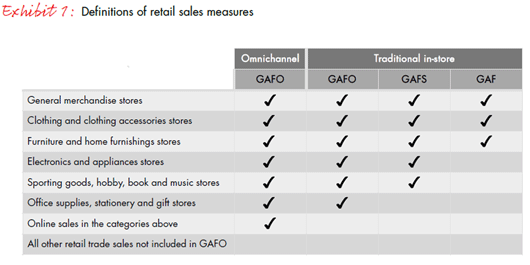
Bain is forecasting omnichannel sales growth of 4% this holiday season, in line with last year. Our forecast encompasses both in-store and e-commerce sales for GAFO categories.1 We predict in-store GAFO sales growth of 2.5% to 3%, lower than last year’s 3% rate but in line with the 10-year average. We expect e-commerce sales to be a strong driver again, with growth of 15% to 17%. Continued improvement in financial markets, housing, and employment has increased consumer wealth and purchasing power, which bodes well for spending this holiday season. However, some watch-outs exist: Recent retail sales momentum, falling consumer confidence, and strong spending on durables could dampen GAFO sales in November and December. Moderate growth across blurring channel boundaries Bain expects omnichannel GAFO sales growth of 4% this holiday season (Figure 1). Our forecast includes both in-store and online GAFO sales because the two are increasingly difficult to separate. Omnichannel shopping is blurring boundaries, as customers move from personal computers to mobile devices to physical stores throughout the purchase process. For example, a customer may go to a store and see a product she wants, compare prices on her mobile phone, and later buy the product on her computer for pickup in another store. Alternatively, while she is commuting home from work, she may buy a product on her tablet that is shipped from a nearby store to reduce delivery times. These omnichannel shopping behaviors enrich customers’ experiences but make sales attribution by channel, and even by device, far more challenging. Any discussion of in-store GAFO sales alone does not tell the whole story. So this year, for the first time, we are forecasting overall GAFO sales growth, across all channels. 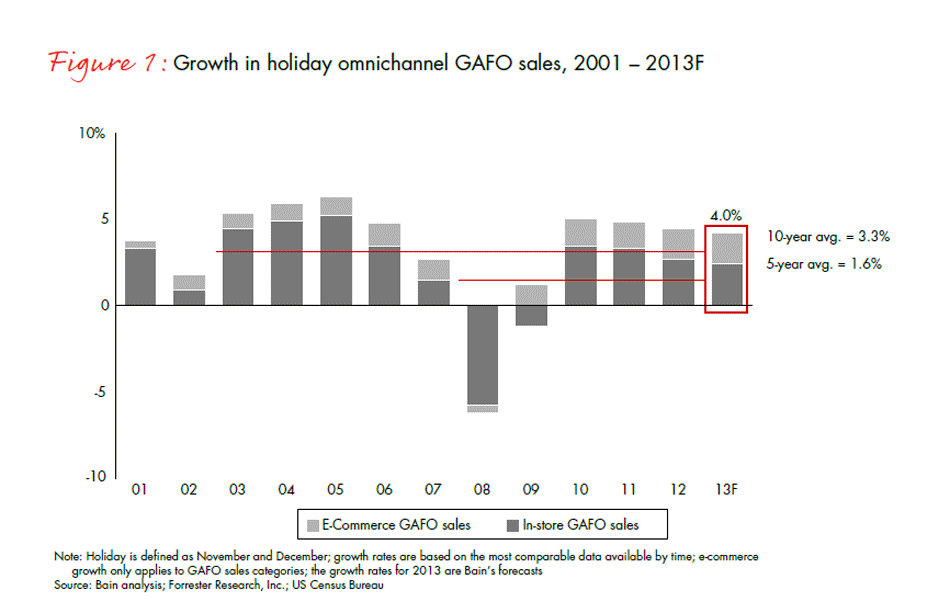
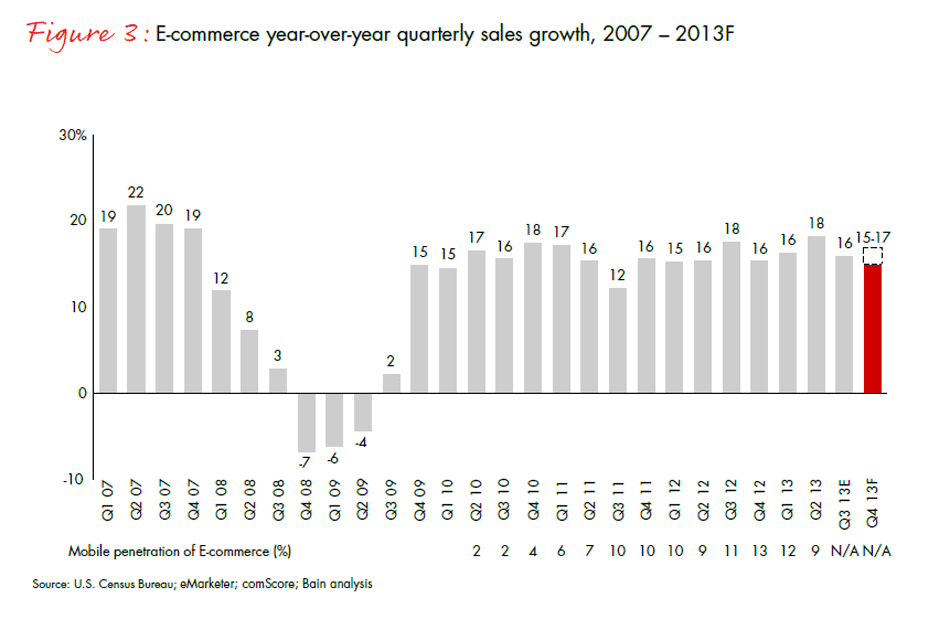
In-store GAFO sales are still critical to the holiday season, comprising roughly 90% of omnichannel GAFO sales. We forecast in-store GAFO sales growth of 2.5% to 3% in the 2013 holiday season, possibly below last year’s growth of 3% but above the 10-year average growth of 2.2% (Figure 2). E-commerce has continued to show strong momentum, with 18% growth in the second quarter and 16% estimated growth in the third quarter of 2013 (Figure 3). Increases in e-commerce sales are being driven by consumers’ growing adoption of tablets and other mobile devices, and by retailers’ investments in better mobile sites and applications. Bain believes that e-commerce will continue its strong momentum and grow 15% to 17% this year. As a point of comparison, analysts expect Amazon’s US sales to grow 24% during the last quarter of 2013. 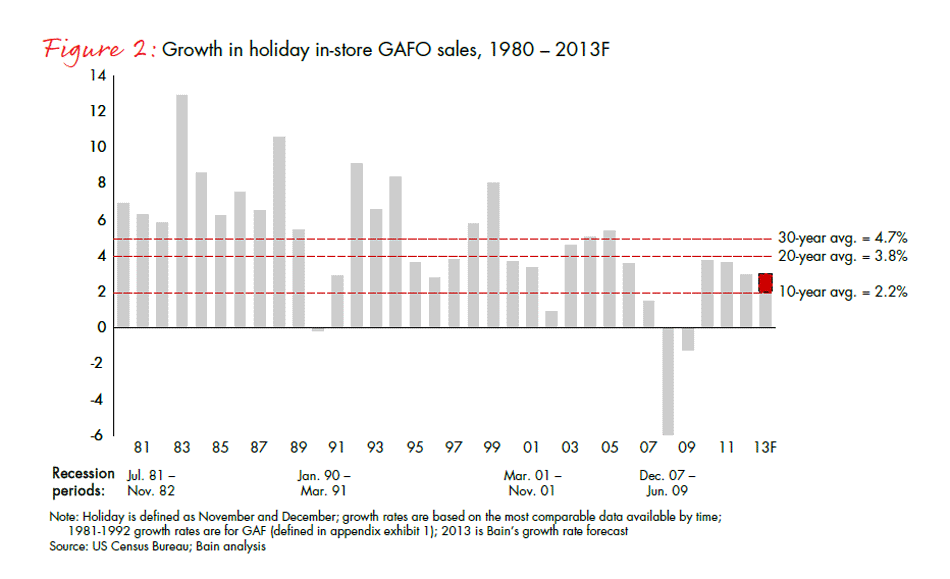
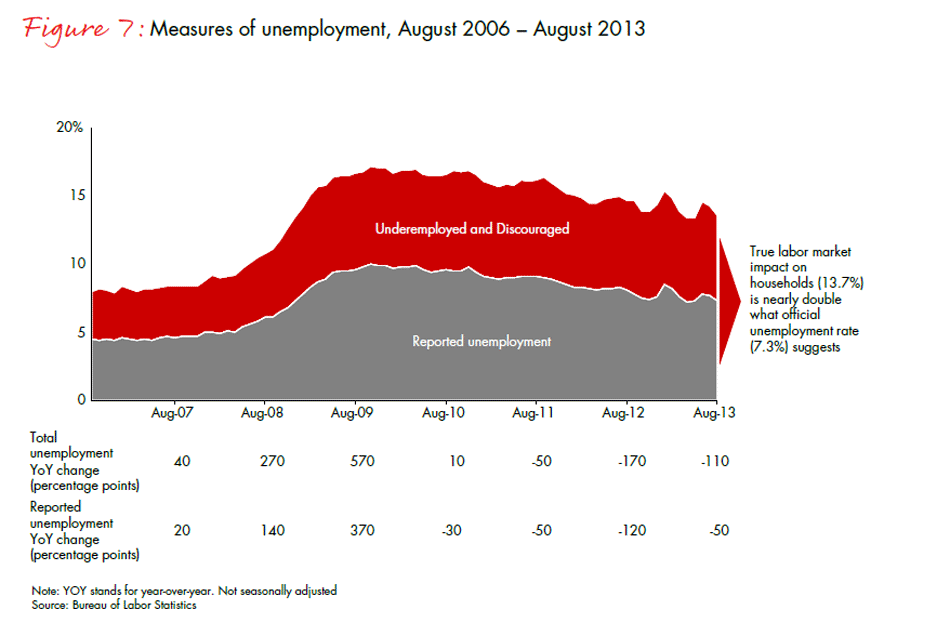
Macroeconomic foundations offer a mixed message Macroeconomic foundations create a varied environment for this holiday season (Figure 4). Wealth metrics such as the S&P 500 Index, housing prices and unemployment numbers are most predictive of holiday sales, and this year they point to higher growth. At the same time, recent sales momentum, another predictor of holiday sales, has been sluggish; year-to-date GAFO sales have grown more slowly compared to both last year and the 10-year average. The contradiction between these indicators suggests that although consumers are on better financial footing, that may not translate directly into higher holiday sales growth. We discuss reasons for this later in the issue, including a shift in spending towards durables, and a recent downturn in consumer confidence. 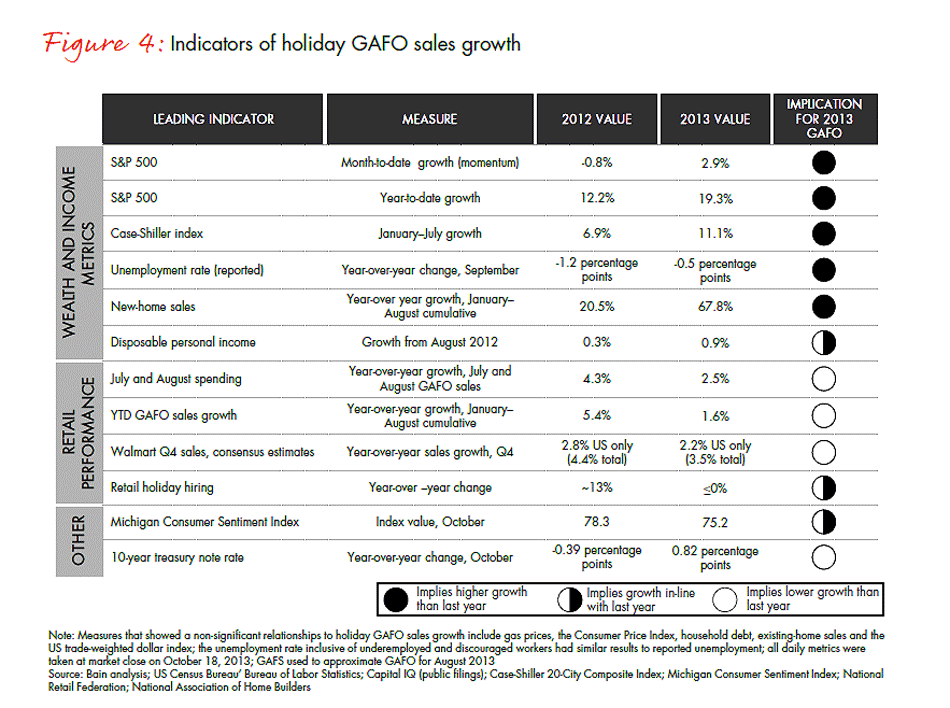
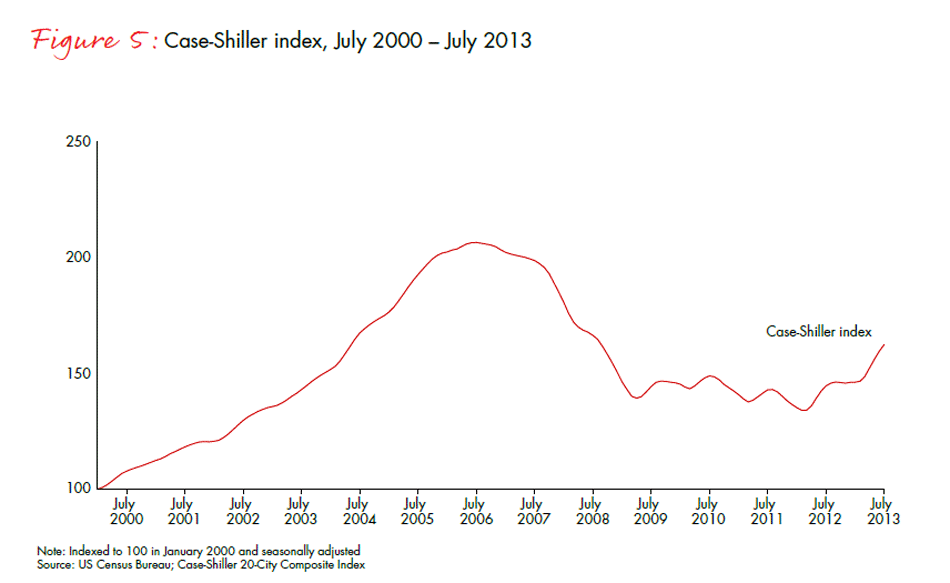
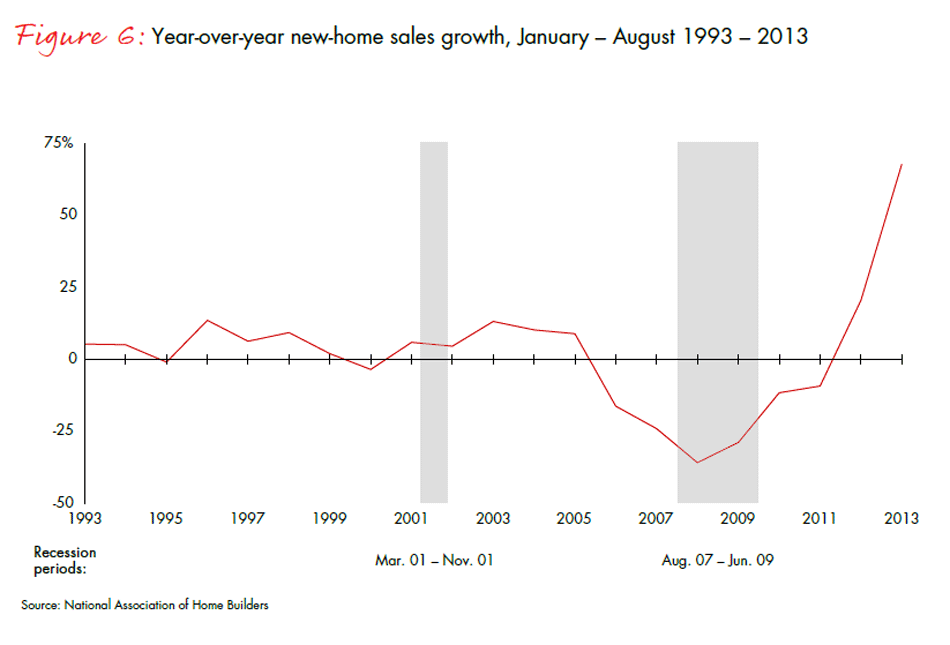
Consumers’ ability to spend is at its strongest level since the recession This year, measures of consumer wealth and financial stability, including the S&P 500 Index, the housing market and employment data are up across the board. Consumers have more wealth and income to draw on this holiday season.
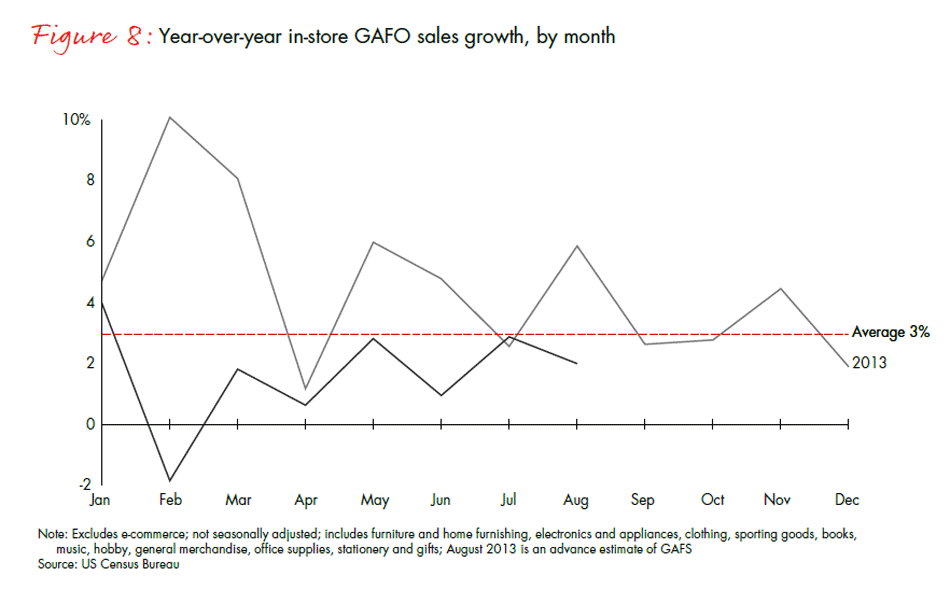
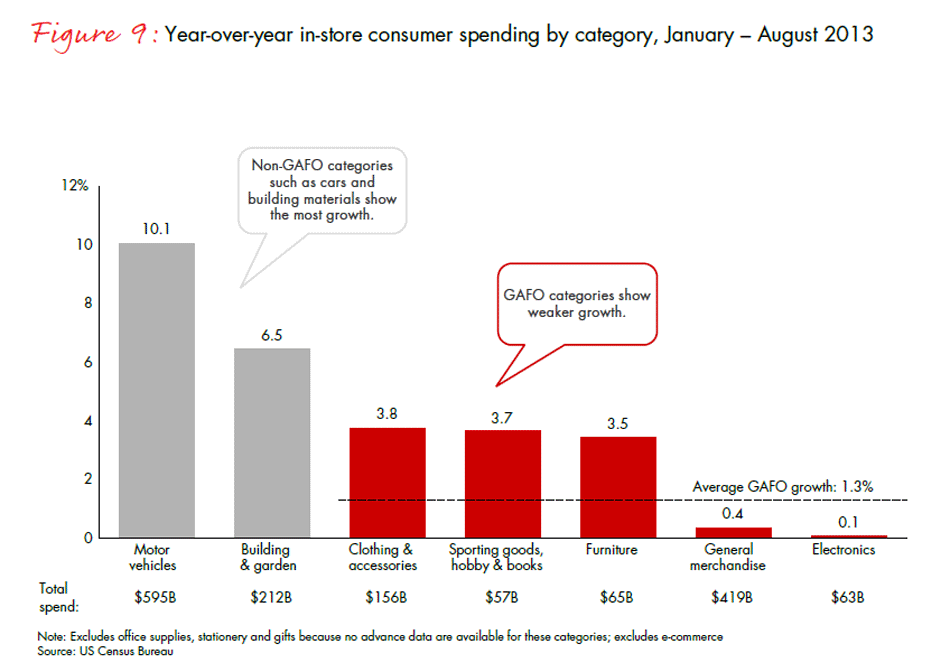
Where has all the spending gone? In-store GAFO sales growth has slowed this year, increasing just 1.6% year-over-year during January through August 2013 versus 5.4% for the same period last year (Figure 8). Some of this slowdown is due to cannibalization from online sales, but other factors are also at work:
Retailers are sending mixed signals this holiday season No one has greater insight into holiday sales than retailers themselves, which will drive sales based on their inventory, pricing, promotion, marketing, online, and store service strategies. Retailer-specific strategy and execution are leading to mixed outlooks:
Successful retailers are innovating to deliver a superior omnichannel experience for their customers This season more retailers will deliver seamless omnichannel experiences and roll-out innovations in fulfillment, marketing, pricing and information technology. Target plans to have its “Buy Online, Pick Up in Store” service operating at all 1,800 of its US stores by Black Friday. Macy’s will be using at least 500 of its 800 stores as online fulfillment centers by the end of the year. Walmart has launched an improved mobile app that “scans as you shop,” expediting access to product reviews and checkout. EBay is investing heavily in new mobile-payment technologies. Staples, Target, Toys “R” Us and Best Buy are all promising to match Amazon.com’s pricing. Other retailers are using technology to empower store associates to make real-time pricing decisions. For a list of selected references, please view the full article Appendix
 |