
Skip to Content
  • オフィス

    オフィス

    北米・南米
    • Atlanta
    • Austin
    • Bogota
    • Boston
    • Buenos Aires
    • Chicago
    • Dallas
    • Denver
    • Houston
    • Los Angeles
    • Mexico City
    • Minneapolis
    • Monterrey
    • Montreal
    • New York
    • Rio de Janeiro
    • San Francisco
    • Santiago
    • São Paulo
    • Seattle
    • Silicon Valley
    • Toronto
    • Washington, DC
    ヨーロッパ・中東・アフリカ
    • Amsterdam
    • Athens
    • Berlin
    • Brussels
    • Copenhagen
    • Doha
    • Dubai
    • Dusseldorf
    • Frankfurt
    • Helsinki
    • Istanbul
    • Johannesburg
    • Kyiv
    • Lisbon
    • London
    • Madrid
    • Milan
    • Munich
    • Oslo
    • Paris
    • Riyadh
    • Rome
    • Stockholm
    • Vienna
    • Warsaw
    • Zurich
    アジア・オーストラリア
    • Bangkok
    • Beijing
    • Bengaluru
    • Brisbane
    • Ho Chi Minh City
    • Hong Kong
    • Jakarta
    • Kuala Lumpur
    • Manila
    • Melbourne
    • Mumbai
    • New Delhi
    • Perth
    • Shanghai
    • Singapore
    • Sydney
    • Tokyo
    全てのオフィス
  • アルムナイ
  • メディア
  • お問い合わせ
  • 東京オフィス
  • Japan | 日本語

    地域と言語を選択

    グローバル
    • Global (English)
    北米・南米
    • Brazil (Português)
    • Argentina (Español)
    • Canada (Français)
    • Chile (Español)
    • Colombia (Español)
    ヨーロッパ・中東・アフリカ
    • France (Français)
    • DACH Region (Deutsch)
    • Italy (Italiano)
    • Spain (Español)
    • Greece (Elliniká)
    アジア・オーストラリア
    • China (中文版)
    • Korea (한국어)
    • Japan (日本語)
  • Saved items (0)
    Saved items (0)

    You have no saved items.

    後で閲読、共有できるようにするためにブックマークしてください

    Explore Bain Insights
  • 業界別プラクティス
    メインメニュー

    業界別プラクティス

    • 航空宇宙、防衛、政府関連
    • 農業
    • 化学製品
    • インフラ、建設
    • 消費財
    • 金融サービス
    • ヘルスケア
    • 産業機械、設備
    • メディア、エンターテインメント
    • 金属
    • 採掘・鉱業
    • 石油、ガス
    • 紙、パッケージ
    • プライベートエクイティ
    • 公共、社会セクター
    • 小売
    • テクノロジー
    • 通信
    • 交通
    • 観光産業
    • 公益事業、再生可能エネルギー
  • 機能別プラクティス
    メインメニュー

    機能別プラクティス

    • カスタマー・エクスペリエンス
    • サステイナビリティ、 社会貢献
    • Innovation
    • 企業買収、合併 (M&A)
    • オペレーション
    • 組織
    • プライベートエクイティ
    • マーケティング・営業
    • 戦略
    • アドバンスド・アナリティクス
    • Technology
    • フルポテンシャル・トランスフォーメーション
  • Digital
  • 知見/レポート
  • ベイン・アンド・カンパニーについて
    メインメニュー

    ベイン・アンド・カンパニーについて

    • ベインの信条
    • 活動内容
    • 社員とリーダーシップ
    • プレス・メディア情報
    • クライアントの結果
    • 受賞歴
    • パートナーシップを結んでいる団体
    Further: Our global responsibility
    • ダイバーシティ
    • 社会貢献
    • サステイナビリティへの取り組み
    • 世界経済フォーラム(WEF)
    Learn more about Further
  • キャリア
    メインメニュー

    キャリア

    • ベインで働く
      キャリア
      ベインで働く
      • Find Your Place
      • ベインで活躍する機会
      • ベインのチーム体制
      • 学生向けページ
      • インターンシップ
      • 採用イベント
    • ベインでの体験
      キャリア
      ベインでの体験
      • Blog: Inside Bain
      • キャリアストーリー
      • 社員紹介
      • Where We Work
      • 成長を後押しするサポート体制
      • アフィニティ・グループ
      • 福利厚生
    • Impact Stories
    • 採用情報
      キャリア
      採用情報
      • 採用プロセス
      • 面接内容
    FIND JOBS
  • オフィス
    メインメニュー

    オフィス

    • 北米・南米
      オフィス
      北米・南米
      • Atlanta
      • Austin
      • Bogota
      • Boston
      • Buenos Aires
      • Chicago
      • Dallas
      • Denver
      • Houston
      • Los Angeles
      • Mexico City
      • Minneapolis
      • Monterrey
      • Montreal
      • New York
      • Rio de Janeiro
      • San Francisco
      • Santiago
      • São Paulo
      • Seattle
      • Silicon Valley
      • Toronto
      • Washington, DC
    • ヨーロッパ・中東・アフリカ
      オフィス
      ヨーロッパ・中東・アフリカ
      • Amsterdam
      • Athens
      • Berlin
      • Brussels
      • Copenhagen
      • Doha
      • Dubai
      • Dusseldorf
      • Frankfurt
      • Helsinki
      • Istanbul
      • Johannesburg
      • Kyiv
      • Lisbon
      • London
      • Madrid
      • Milan
      • Munich
      • Oslo
      • Paris
      • Riyadh
      • Rome
      • Stockholm
      • Vienna
      • Warsaw
      • Zurich
    • アジア・オーストラリア
      オフィス
      アジア・オーストラリア
      • Bangkok
      • Beijing
      • Bengaluru
      • Brisbane
      • Ho Chi Minh City
      • Hong Kong
      • Jakarta
      • Kuala Lumpur
      • Manila
      • Melbourne
      • Mumbai
      • New Delhi
      • Perth
      • Shanghai
      • Singapore
      • Sydney
      • Tokyo
    全てのオフィス
  • アルムナイ
  • メディア
  • お問い合わせ
  • 東京オフィス
  • Japan | 日本語
    メインメニュー

    地域と言語を選択

    • グローバル
      地域と言語を選択
      グローバル
      • Global (English)
    • 北米・南米
      地域と言語を選択
      北米・南米
      • Brazil (Português)
      • Argentina (Español)
      • Canada (Français)
      • Chile (Español)
      • Colombia (Español)
    • ヨーロッパ・中東・アフリカ
      地域と言語を選択
      ヨーロッパ・中東・アフリカ
      • France (Français)
      • DACH Region (Deutsch)
      • Italy (Italiano)
      • Spain (Español)
      • Greece (Elliniká)
    • アジア・オーストラリア
      地域と言語を選択
      アジア・オーストラリア
      • China (中文版)
      • Korea (한국어)
      • Japan (日本語)
  • Saved items  (0)
    メインメニュー
    Saved items (0)

    You have no saved items.

    後で閲読、共有できるようにするためにブックマークしてください

    Explore Bain Insights
  • 業界別プラクティス
    • 業界別プラクティス

      • 航空宇宙、防衛、政府関連
      • 農業
      • 化学製品
      • インフラ、建設
      • 消費財
      • 金融サービス
      • ヘルスケア
      • 産業機械、設備
      • メディア、エンターテインメント
      • 金属
      • 採掘・鉱業
      • 石油、ガス
      • 紙、パッケージ
      • プライベートエクイティ
      • 公共、社会セクター
      • 小売
      • テクノロジー
      • 通信
      • 交通
      • 観光産業
      • 公益事業、再生可能エネルギー
  • 機能別プラクティス
    • 機能別プラクティス

      • カスタマー・エクスペリエンス
      • サステイナビリティ、 社会貢献
      • Innovation
      • 企業買収、合併 (M&A)
      • オペレーション
      • 組織
      • プライベートエクイティ
      • マーケティング・営業
      • 戦略
      • アドバンスド・アナリティクス
      • Technology
      • フルポテンシャル・トランスフォーメーション
  • Digital
  • 知見/レポート
  • ベイン・アンド・カンパニーについて
    • ベイン・アンド・カンパニーについて

      • ベインの信条
      • 活動内容
      • 社員とリーダーシップ
      • プレス・メディア情報
      • クライアントの結果
      • 受賞歴
      • パートナーシップを結んでいる団体
      Further: Our global responsibility
      • ダイバーシティ
      • 社会貢献
      • サステイナビリティへの取り組み
      • 世界経済フォーラム(WEF)
      Learn more about Further
  • キャリア
    人気検索キーワード
    • デジタル
    • 戦略
    前回の検索
      最近訪れたページ

      Content added to saved items

      Saved items (0)

      Removed from saved items

      Saved items (0)

      論説

      Rightsizing Your Way to the Cloud

      Rightsizing Your Way to the Cloud

      Many companies fail to realize the savings they expected when they migrate workloads to the public cloud. It doesn’t have to be that way.

      著者:Mark Brinda and Kate Woolley

      • min read
      }

      論説

      Rightsizing Your Way to the Cloud
      en
      概要
      • Poorly planned direct-match migration to the public cloud can cost 10% to 15% more than keeping workloads on-premise, leaving many companies disappointed and frustrated.
      • Eighty-four percent of workloads on-premise are overprovisioned, meaning that when companies migrate a workload to the cloud, they’re sending excess capacity along with it.
      • Companies that “rightsize” their workloads to eliminate overprovisioning can cut costs by as much as 30% to 60%.
      • Rightsizing creates opportunities for vendors as well—to help their customers scale, automate, and operate using public, private, and hybrid cloud models.

      Written in collaboration with

      Written in collaboration with

      blobid3.jpg


      Why are companies often disappointed when they migrate their workloads to the public cloud? Many times, the promised efficiencies and savings just don’t materialize. In fact, when companies don’t do the necessary preparatory work, so-called direct-match migration to the public cloud—the like-for-like transfer of existing data, services, and applications—can be 10% to 15% more expensive that keeping the work in a legacy, on-premise environment, according to an analysis of more than 60,000 workloads by Bain & Company and Amazon Web Services (AWS). In other words, for all the vaunted promise of the cloud, it actually can be cheaper to keep things unchanged.

      When we asked more than 350 IT decision makers what aspects of their cloud deployment had been the most disappointing, their top complaint was that the cost of ownership had not declined.

      What’s gone wrong? Drawing on AWS Migration Evaluator, the migration assessment service for workload optimization, we have found that 84% of on-premise workloads are overprovisioned (see Figure 1). That means that when companies migrate a workload to the cloud, they're sending excess computing and storage capacity right along with it. Instead of becoming more efficient, they're merely transferring their existing inefficiencies to a new location. This practice is known among IT experts as “lift and shift.”

      Figure 1
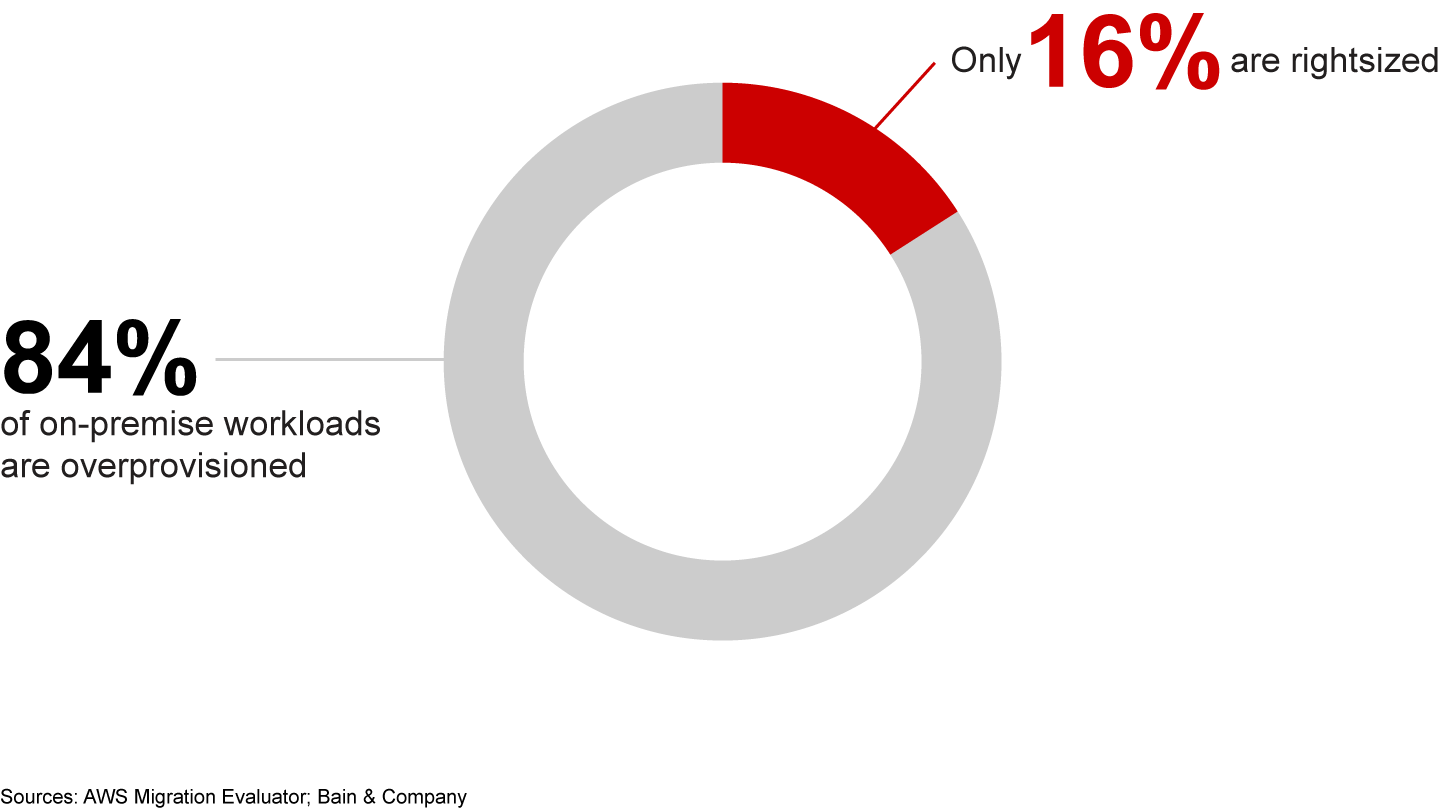
      When companies send their workload to the cloud, most send excess capacity along with it

      But there’s another way to do it. Companies that have mastered the art of migration to the public cloud take a disciplined approach to “rightsizing” their workloads. They view migration as an opportunity to thoroughly assess computing and storage practices throughout the company. They often find a great deal of fragmentation and duplication, with workloads scattered across machines and data centers. Records can be incomplete and outdated. Some companies discover “zombie servers,” computers that are no longer needed, but have never been purged or deactivated.

      Our experience shows that companies that rightsize their workloads can cut costs by as much as 30% to 60% when they migrate them to the public cloud. Companies that achieve the highest savings have existing Microsoft SQL relational database-management-system licenses that can be migrated to the cloud. However, even companies without transferable licenses can generate considerable savings by rightsizing their workloads. That means eliminating zombie servers, winding down unnecessary activities, and accurately provisioning all the migrated work. Many companies find that they can more tightly provision their workloads if they establish a reserve of excess capacity that can be drawn on when needed for surges in activity—or so-called burstable instances (see Figure 2).

      Figure 2
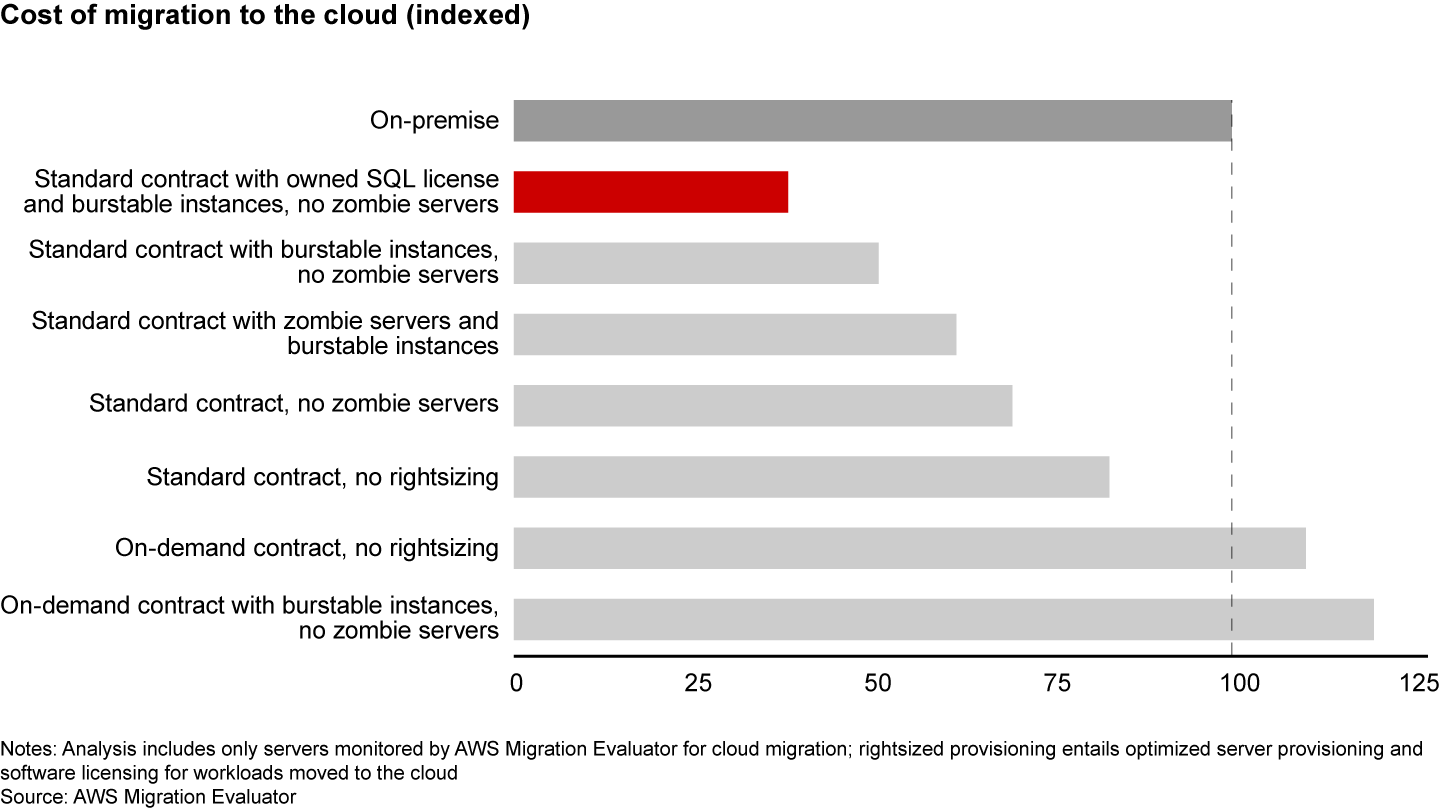
      Rightsizing workloads can reduce migration costs by as much as 60%

      Companies that rightsize the right way carefully assess usage patterns. They study the intensity and duration of average peak computing demand, so they can make informed decisions about downsizing server capacity and accommodating some of that excess demand with burstable instances. They take a similar look at storage patterns, evaluating average and peak memory usage and proximity to the server so they can more effectively downsize. They also aim to rationalize the number of core processors they need, so they can optimize spending on software licensing fees that are tied to processor counts.

      Smart companies also recognize that migration doesn’t treat all workloads equally. Companies are likely to save more when they migrate nonproduction workloads to the public cloud than when they migrate production workloads. That’s because the computing usage in nonproduction workloads tends to be more volatile and thus more likely to benefit from the flexibility the public cloud provides. Also, for testing and development activities, migration can help companies reduce software licensing fees that are tied to core processor counts. In addition, companies usually can achieve greater savings migrating nonvirtualized workloads rather than virtualized workloads. That’s because virtualization offers many of the same benefits the public cloud provides in terms of efficiency and flexibility.

      The economics of cloud migration have notable implications for technology vendors. Customers are increasingly able to implement a cloud-transition roadmap that identifies and eliminates unused capacity in their on-premise environment. This can create a headwind for technology vendors, since rightsizing reduces demand for their systems and software. On the other hand, this presents an opportunity for vendors, which are well-positioned to help their customers face the enormous challenge of managing in a hybrid environment, with a mix of cloud and on-premise technologies.

      There are signs that vendors recognize the potential of the cloud-migration opportunity, as demonstrated by IBM’s acquisition of Red Hat, a leading provider of cloud software. Companies are still in the early stages of cloud migration, and the complexity that they must manage is only increasing.

      One company that has benefited from a rightsized migration to the public cloud is Morningstar, the financial research firm. The company faced a decision regarding contracts with multiple worldwide data centers that were set to expire. Should it renew data-center arrangements or should it migrate some or all workloads to the public cloud? Morningstar worked with AWS Migration Evaluator to evaluate the potential costs and benefits of migration, bearing in mind that Morningstar had a substantial on-premise infrastructure. By rightsizing its workloads, Morningstar found that the majority of its instances would cost 30% less if operated in the cloud.

      Rightsizing can make a dramatic difference. AWS Migration Evaluator’s experience shows that direct-match migration of 105,000 server instances and 20 terabytes of storage on-premise would increase costs by 22%, while rightsizing those workloads would reduce costs by 36%.

      These results demonstrate that migration to the public cloud doesn't have to be disappointing. The public cloud offers great benefits to companies trying to keep pace with digital innovation. It’s easy to use and can be scaled on demand; it’s reliable and features continuous uptime; and companies don’t have to spend a penny on maintenance. When companies rightsize their workloads, they can reap all these benefits of the public cloud and actually save money in the process.

      Written in collaboration with AWS Migration Evaluator

      AWS Migration Evaluator (formerly TSO Logic) provided data, insights, and analysis used in this report. AWS Migration Evaluator’s services optimizes cloud planning to support a data-based business case for transformation.

      著者
      • Headshot of Mark Brinda
        Mark Brinda
        パートナー, New York
      • Kate Woolley
        Alumni, New York
      関連業種
      • テクノロジー
      関連するコンサルティングサービス
      • IT
      コンサルティングサービス
      • Systems & Architecture
      テクノロジー
      How Bank CIOs Can Build a Solid Foundation for Generative AI

      A comprehensive approach, not siloed proofs of concept, will allow a bank to serve customers better and improve its economics.

      詳細
      テクノロジー
      Why SaaS Stocks Have Dropped—and What It Signals for Software’s Next Chapter

      A sharp reset in valuations reflects AI-driven disruption, slowing retention, and a growing divide between incumbents and future winners.

      詳細
      Systems & Architecture
      Tech Execs Lack Confidence in System Integrators

      Only 6% said that they would recommend their system integrators for an enterprise resource planning (ERP) transformation.

      詳細
      テクノロジー
      How Businesses Can Prepare for Post-Quantum Cybersecurity Threats

      Your company will soon face attackers armed with quantum technology. Will you be ready?

      詳細
      テクノロジー
      Software M&A

      The good news: Most deal best practices still apply to AI acquisitions.

      詳細
      First published in 12月 2018
      Tags
      • IT
      • Systems & Architecture
      • テクノロジー

      クライアント支援事例

      サステイナビリティ、社会貢献 Can Microchips Turbocharge Sustainability Improvement?

      ケーススタディを見る

      顧客戦略、マーケティング Increased sales productivity frees selling time and saves millions

      ケーススタディを見る

      IT Salvaging a Technology Outsourcing Deal Gone Bad

      ケーススタディを見る

      お気軽にご連絡下さい

      私達は、グローバルに活躍する経営者が抱える最重要経営課題に対して、厳しい競争環境の中でも成長し続け、「結果」を出すために支援しています。

      ベインの知見。競争が激化するグローバルビジネス環境で、日々直面するであろう問題について論じている知見を毎月お届けします。

      *プライバシーポリシーの内容を確認し、合意しました。

      プライバシーポリシーをご確認頂き、合意頂けますようお願い致します。
      Bain & Company
      お問い合わせ Sustainability Accessibility Terms of use Privacy Cookie Policy Sitemap Log In

      © 1996-2026 Bain & Company, Inc.

      お問い合わせ

      How can we help you?

      • ビジネスについて
      • プレス報道について
      • 採用について
      全てのオフィス