
Skip to Content
  • オフィス

    オフィス

    北米・南米
    • Atlanta
    • Austin
    • Bogota
    • Boston
    • Buenos Aires
    • Chicago
    • Dallas
    • Denver
    • Houston
    • Los Angeles
    • Mexico City
    • Minneapolis
    • Monterrey
    • Montreal
    • New York
    • Rio de Janeiro
    • San Francisco
    • Santiago
    • São Paulo
    • Seattle
    • Silicon Valley
    • Toronto
    • Washington, DC
    ヨーロッパ・中東・アフリカ
    • Amsterdam
    • Athens
    • Berlin
    • Brussels
    • Copenhagen
    • Doha
    • Dubai
    • Dusseldorf
    • Frankfurt
    • Helsinki
    • Istanbul
    • Johannesburg
    • Kyiv
    • Lisbon
    • London
    • Madrid
    • Milan
    • Munich
    • Oslo
    • Paris
    • Riyadh
    • Rome
    • Stockholm
    • Vienna
    • Warsaw
    • Zurich
    アジア・オーストラリア
    • Bangkok
    • Beijing
    • Bengaluru
    • Brisbane
    • Ho Chi Minh City
    • Hong Kong
    • Jakarta
    • Kuala Lumpur
    • Manila
    • Melbourne
    • Mumbai
    • New Delhi
    • Perth
    • Shanghai
    • Singapore
    • Sydney
    • Tokyo
    全てのオフィス
  • アルムナイ
  • メディア
  • お問い合わせ
  • 東京オフィス
  • Japan | 日本語

    地域と言語を選択

    グローバル
    • Global (English)
    北米・南米
    • Brazil (Português)
    • Argentina (Español)
    • Canada (Français)
    • Chile (Español)
    • Colombia (Español)
    ヨーロッパ・中東・アフリカ
    • France (Français)
    • DACH Region (Deutsch)
    • Italy (Italiano)
    • Spain (Español)
    • Greece (Elliniká)
    アジア・オーストラリア
    • China (中文版)
    • Korea (한국어)
    • Japan (日本語)
  • Saved items (0)
    Saved items (0)

    You have no saved items.

    後で閲読、共有できるようにするためにブックマークしてください

    Explore Bain Insights
  • 業界別プラクティス
    メインメニュー

    業界別プラクティス

    • 航空宇宙、防衛、政府関連
    • 農業
    • 化学製品
    • インフラ、建設
    • 消費財
    • 金融サービス
    • ヘルスケア
    • 産業機械、設備
    • メディア、エンターテインメント
    • 金属
    • 採掘・鉱業
    • 石油、ガス
    • 紙、パッケージ
    • プライベートエクイティ
    • 公共、社会セクター
    • 小売
    • テクノロジー
    • 通信
    • 交通
    • 観光産業
    • 公益事業、再生可能エネルギー
  • 機能別プラクティス
    メインメニュー

    機能別プラクティス

    • カスタマー・エクスペリエンス
    • サステイナビリティ、 社会貢献
    • Innovation
    • 企業買収、合併 (M&A)
    • オペレーション
    • 組織
    • プライベートエクイティ
    • マーケティング・営業
    • 戦略
    • アドバンスド・アナリティクス
    • Technology
    • フルポテンシャル・トランスフォーメーション
  • Digital
  • 知見/レポート
  • ベイン・アンド・カンパニーについて
    メインメニュー

    ベイン・アンド・カンパニーについて

    • ベインの信条
    • 活動内容
    • 社員とリーダーシップ
    • プレス・メディア情報
    • クライアントの結果
    • 受賞歴
    • パートナーシップを結んでいる団体
    Further: Our global responsibility
    • ダイバーシティ
    • 社会貢献
    • サステイナビリティへの取り組み
    • 世界経済フォーラム(WEF)
    Learn more about Further
  • キャリア
    メインメニュー

    キャリア

    • ベインで働く
      キャリア
      ベインで働く
      • Find Your Place
      • ベインで活躍する機会
      • ベインのチーム体制
      • 学生向けページ
      • インターンシップ
      • 採用イベント
    • ベインでの体験
      キャリア
      ベインでの体験
      • キャリアストーリー
      • 社員紹介
      • Where We Work
      • 成長を後押しするサポート体制
      • アフィニティ・グループ
      • 福利厚生
    • Impact Stories
    • 採用情報
      キャリア
      採用情報
      • 採用プロセス
      • 面接内容
    FIND JOBS
  • オフィス
    メインメニュー

    オフィス

    • 北米・南米
      オフィス
      北米・南米
      • Atlanta
      • Austin
      • Bogota
      • Boston
      • Buenos Aires
      • Chicago
      • Dallas
      • Denver
      • Houston
      • Los Angeles
      • Mexico City
      • Minneapolis
      • Monterrey
      • Montreal
      • New York
      • Rio de Janeiro
      • San Francisco
      • Santiago
      • São Paulo
      • Seattle
      • Silicon Valley
      • Toronto
      • Washington, DC
    • ヨーロッパ・中東・アフリカ
      オフィス
      ヨーロッパ・中東・アフリカ
      • Amsterdam
      • Athens
      • Berlin
      • Brussels
      • Copenhagen
      • Doha
      • Dubai
      • Dusseldorf
      • Frankfurt
      • Helsinki
      • Istanbul
      • Johannesburg
      • Kyiv
      • Lisbon
      • London
      • Madrid
      • Milan
      • Munich
      • Oslo
      • Paris
      • Riyadh
      • Rome
      • Stockholm
      • Vienna
      • Warsaw
      • Zurich
    • アジア・オーストラリア
      オフィス
      アジア・オーストラリア
      • Bangkok
      • Beijing
      • Bengaluru
      • Brisbane
      • Ho Chi Minh City
      • Hong Kong
      • Jakarta
      • Kuala Lumpur
      • Manila
      • Melbourne
      • Mumbai
      • New Delhi
      • Perth
      • Shanghai
      • Singapore
      • Sydney
      • Tokyo
    全てのオフィス
  • アルムナイ
  • メディア
  • お問い合わせ
  • 東京オフィス
  • Japan | 日本語
    メインメニュー

    地域と言語を選択

    • グローバル
      地域と言語を選択
      グローバル
      • Global (English)
    • 北米・南米
      地域と言語を選択
      北米・南米
      • Brazil (Português)
      • Argentina (Español)
      • Canada (Français)
      • Chile (Español)
      • Colombia (Español)
    • ヨーロッパ・中東・アフリカ
      地域と言語を選択
      ヨーロッパ・中東・アフリカ
      • France (Français)
      • DACH Region (Deutsch)
      • Italy (Italiano)
      • Spain (Español)
      • Greece (Elliniká)
    • アジア・オーストラリア
      地域と言語を選択
      アジア・オーストラリア
      • China (中文版)
      • Korea (한국어)
      • Japan (日本語)
  • Saved items  (0)
    メインメニュー
    Saved items (0)

    You have no saved items.

    後で閲読、共有できるようにするためにブックマークしてください

    Explore Bain Insights
  • 業界別プラクティス
    • 業界別プラクティス

      • 航空宇宙、防衛、政府関連
      • 農業
      • 化学製品
      • インフラ、建設
      • 消費財
      • 金融サービス
      • ヘルスケア
      • 産業機械、設備
      • メディア、エンターテインメント
      • 金属
      • 採掘・鉱業
      • 石油、ガス
      • 紙、パッケージ
      • プライベートエクイティ
      • 公共、社会セクター
      • 小売
      • テクノロジー
      • 通信
      • 交通
      • 観光産業
      • 公益事業、再生可能エネルギー
  • 機能別プラクティス
    • 機能別プラクティス

      • カスタマー・エクスペリエンス
      • サステイナビリティ、 社会貢献
      • Innovation
      • 企業買収、合併 (M&A)
      • オペレーション
      • 組織
      • プライベートエクイティ
      • マーケティング・営業
      • 戦略
      • アドバンスド・アナリティクス
      • Technology
      • フルポテンシャル・トランスフォーメーション
  • Digital
  • 知見/レポート
  • ベイン・アンド・カンパニーについて
    • ベイン・アンド・カンパニーについて

      • ベインの信条
      • 活動内容
      • 社員とリーダーシップ
      • プレス・メディア情報
      • クライアントの結果
      • 受賞歴
      • パートナーシップを結んでいる団体
      Further: Our global responsibility
      • ダイバーシティ
      • 社会貢献
      • サステイナビリティへの取り組み
      • 世界経済フォーラム(WEF)
      Learn more about Further
  • キャリア
    人気検索キーワード
    • デジタル
    • 戦略
    前回の検索
      最近訪れたページ

      Content added to saved items

      Saved items (0)

      Removed from saved items

      Saved items (0)

      Technology Report

      To Scale the Industrial Internet of Things, Don’t Forget Hardware

      To Scale the Industrial Internet of Things, Don’t Forget Hardware

      Just like software companies, OEMs and hardware makers are critical to getting the industrial IoT to the next level.

      著者:Michael Schallehn, Ann Bosche, and Neil Malik

      • min read
      }

      レポート

      To Scale the Industrial Internet of Things, Don’t Forget Hardware
      en
      概要
      • Bain’s 2022 survey of industrial IoT decision makers finds more companies piloting the technology, cutting costs, and increasing revenue, but struggling to scale.
      • Scaling these pilots and getting the industrial IoT to the next level of automation and intelligence requires addressing problems that hardware vendors and manufacturers are well positioned to solve.

      This article is part of Bain's 2022 Technology Report.

      Explore the report

      If you’re looking for good news on the industrial Internet of Things (IoT), there’s plenty. Our 2022 survey of 500 IoT decision makers in Europe and the US found that the number of organizations implementing proofs of concept grew nearly 20% from 2018 to 2022 and is expected to grow another 20% by 2026. Nearly all report that their deployments are going as well as or better than expected, with cost reductions and revenue increases of 30% to 40%.

      Yet despite these good results, IoT hasn’t enjoyed rapid, widespread adoption. Why? 

      It’s mainly because of a struggle to scale beyond initial proofs of concept; 80% of buyers scale fewer than 60% of their pilot projects. The top reasons include the complexity of integration, vendors that are unable to support scaling, and inadequate life cycle support of the IoT solution (see Figure 1). In a proof of concept, such challenges can be solved by throwing engineering resources and programmers at the project, but that’s not sustainable once a company is ready to scale something to the broader organization.

      Figure 1
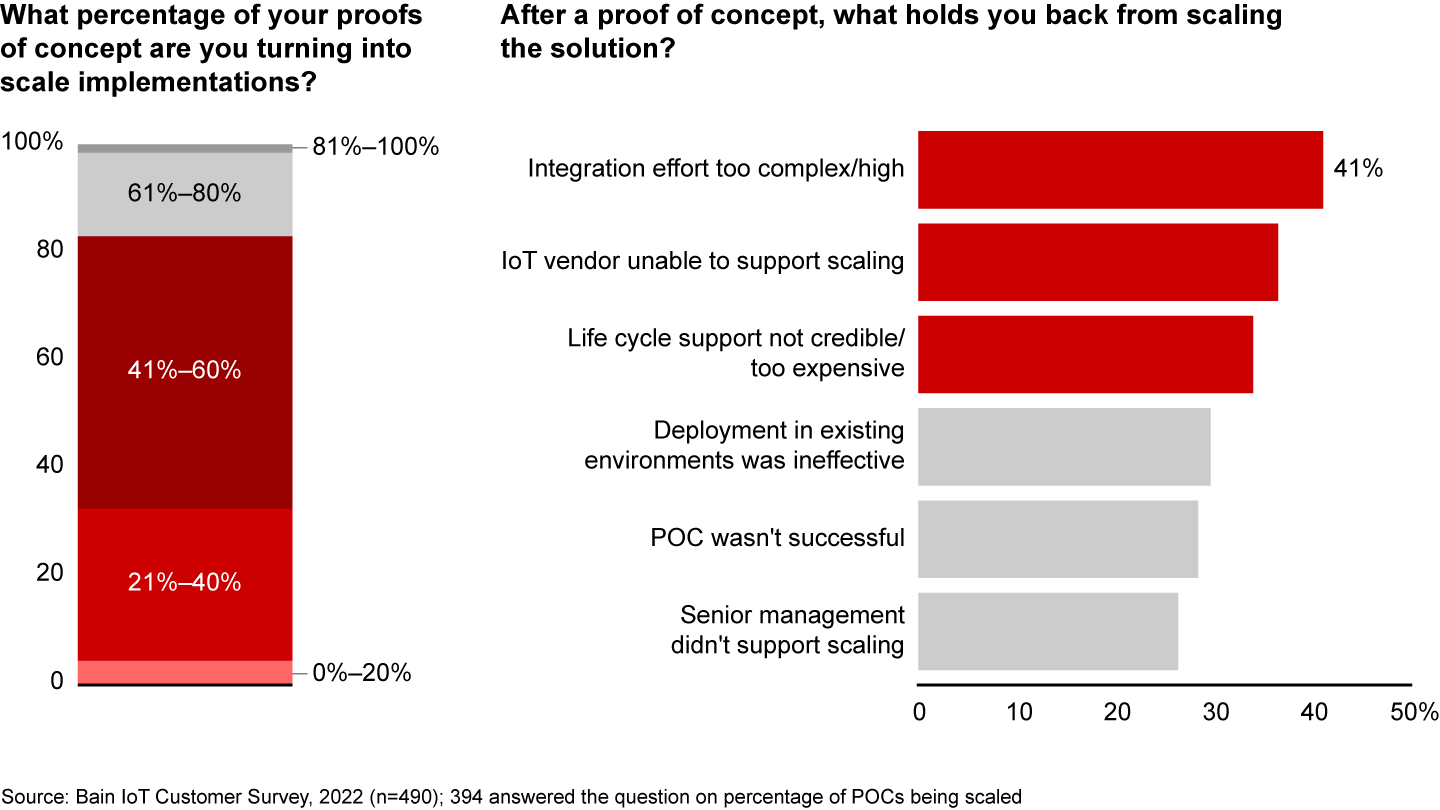
      Four-fifths of companies are scaling fewer than 60% of proofs of concept, and integration is a bigger obstacle than pilot failure

      One thing that’s not standing in the way is security. Regulators have pushed for―and IoT specialists, security providers, and device manufacturers have developed―important security solutions. So, while security remains a concern broadly, in IoT it no longer causes as much angst it once did (see Figure 2).

      Figure 2
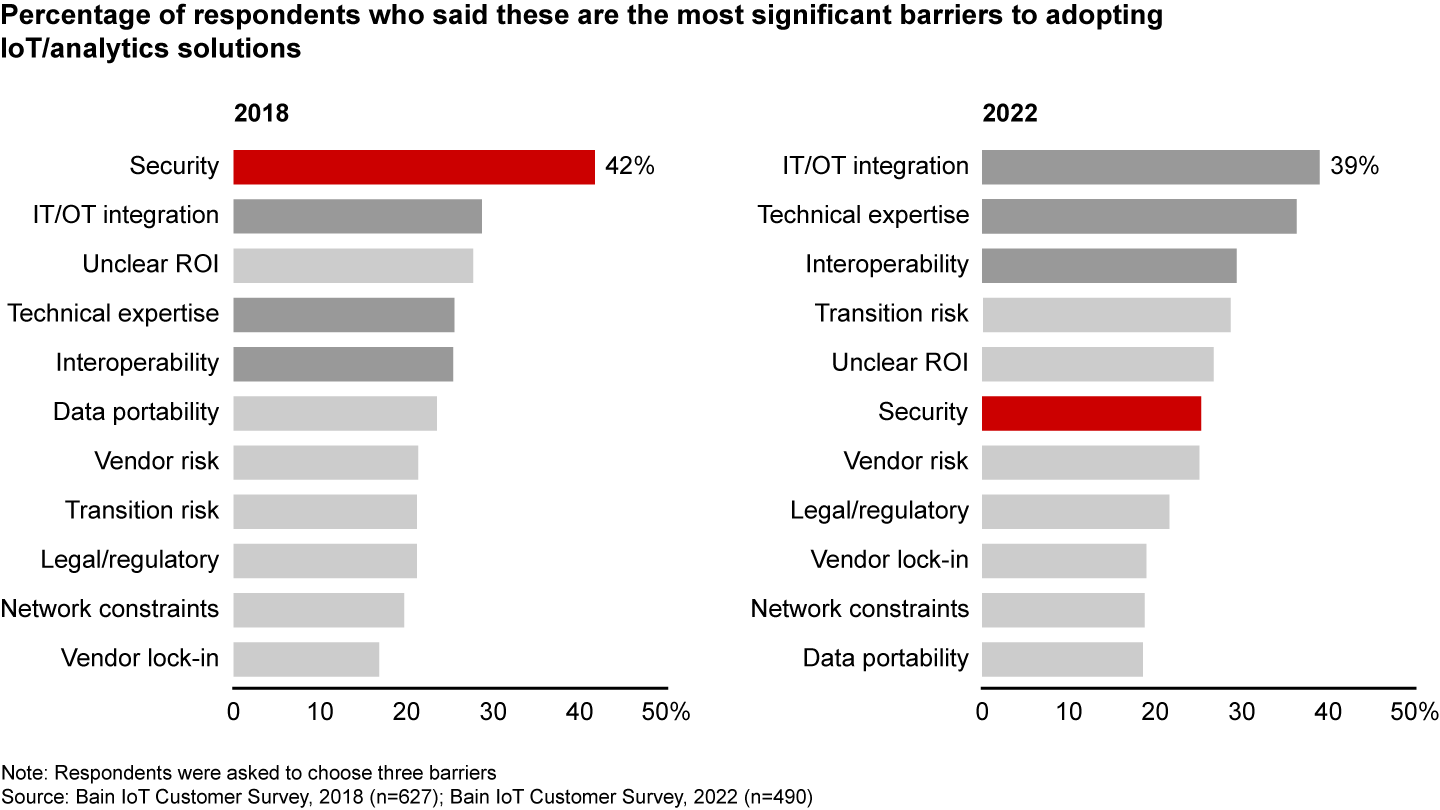
      Barriers to IoT adoption still exist, but buyers are increasingly focused on implementation

      Industrial IoT initially focused on software, but today much of the low-hanging fruit―the benefits quickly garnered from adding sensors for equipment, people, and materials in the field—has been harvested. The next step, developing and realizing integrated IoT uses, is more complex. It requires the next level of intelligence, which will rely on integrating information technology and operational technology, technical expertise in areas like artificial intelligence (AI) algorithms and data science, and capacities like interoperability that become more complicated when machines become self-automated.

      Making this jump requires addressing problems hardware vendors and industrial original equipment manufacturers (OEMs) know how to tackle and solve. In addition to manufacturing devices, hardware vendors have many other essential attributes, including industry expertise, feet on the street, and experience with shop floor implementation. Their field application engineers, a rare asset in the industrial IoT, can solve implementation challenges at the customer site. Using their system competence, they can help develop edge computing systems for AI inference, for example, or address such implementation challenges as unreliable networks by deploying 5G private networks or other modern connectivity technology. 

      Recognizing the importance of systems integration, leading hardware companies are building their capabilities. A decade ago, Krones, which provides packaging and filling lines for the food and beverage industry, began to develop industrial IoT-enabled digital solutions focused on food safety and quality and on enhancing line-operating and financial performance. Building both organically and through acquisitions, it has branched out from its hardware roots to offer software and systems integration as well. Krones’s IoT-focused Syskron division was an important contributor to its 2021 gross margin of approximately 51%, 15 percentage points higher than that of peers.

      Both hardware vendors and OEMs have strong customer relationships that could benefit software, cloud application, and platform vendors, who all listed customer access as one of their top three concerns when surveyed. Many industrial OEMs and hardware vendors have go-to-market and service and support capabilities tailored to specific industries and built with years of investment. Their higher customer lifetime values and more favorable customer unit economics mean they can more easily recover such investment than software companies.

      Companies that don’t have all the things IoT entails beyond software—sensors, hardware, implementation, and integration support—must either partner with companies that do or build those capabilities through acquisitions or internal development. Hilti, a builder of high-performance tools and fastening and protection devices, has used its direct-to-customer model, large field force (two-thirds of its 31,000 employees), strong brand recognition, and customer loyalty to build interest in its industrial IoT solutions, including ON!Track, one of the bigger point solutions in construction technology. Recently the company added solution consultants and integrators to expand its go-to-market and systems-integration capabilities.

      Almost all IoT buyers want some sort of cloud connection, and Amazon Web Services and Microsoft Azure have invested especially heavily in programming frameworks and development platforms with predefined IoT applications. This has attracted developers that software vendors and analytics vendors want to work with (see Figure 3). In our survey, cloud service providers, software application and analytics vendors all cite device or hardware leadership as either their biggest or second-biggest shortcoming. This opens an opportunity for industrial OEMs like Siemens, Schneider, Hitachi, as well as companies like Intel and Cisco, to help them work on the toughest industrial IoT problems and, in turn, attract skilled developers with industry-specific expertise.

      Figure 3
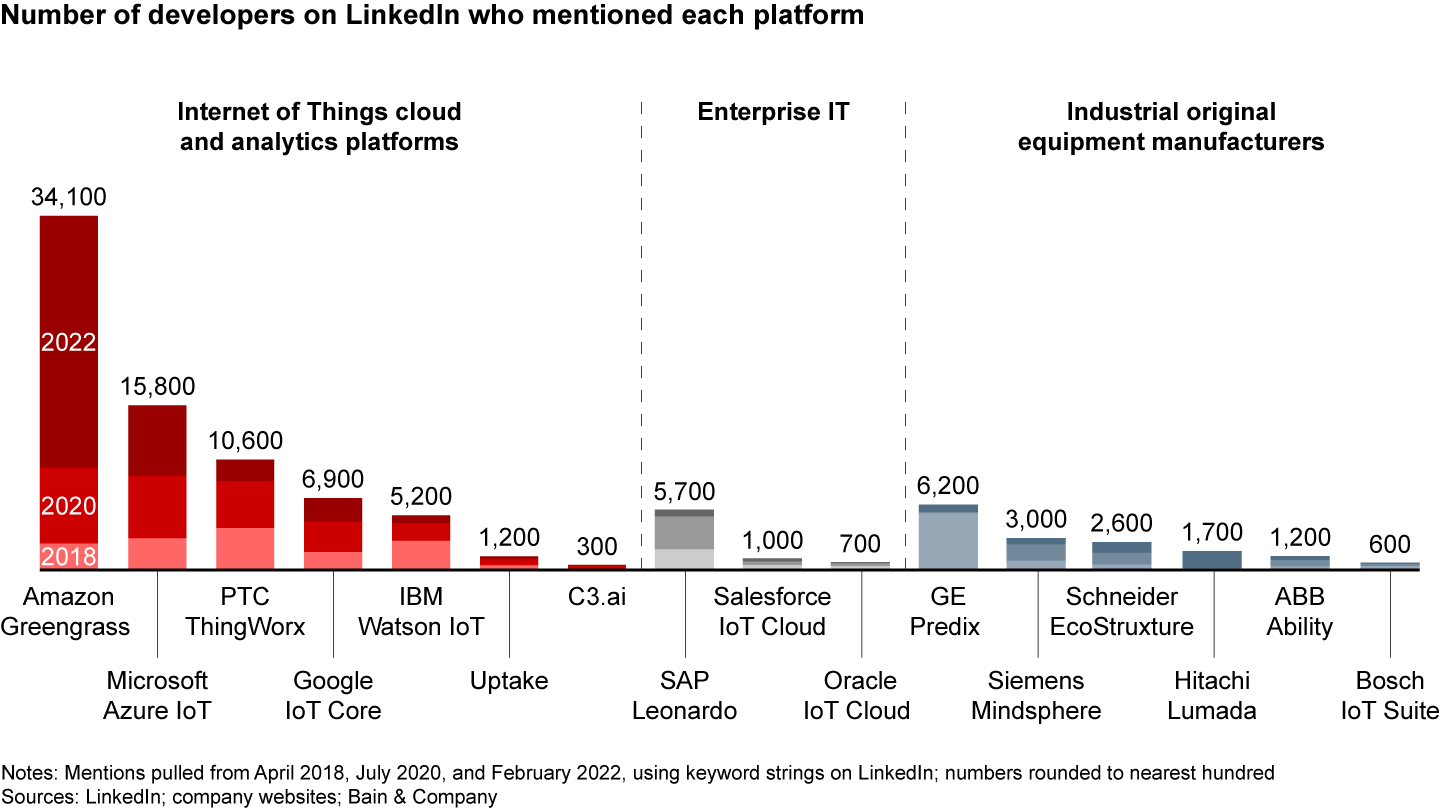
      Cloud and analytics platforms are the most popular among developers; Amazon’s lead is significant

      Working together will only become more important as industrial IoT solutions grow more sophisticated, requiring a combination of hardware, software, and services to deliver the expected benefits. Often, they’ll have to tie into existing infrastructure and environments. It’s a level of integration that requires domain know-how and industrial specificity. In construction, Hilti is showing how an incumbent can build an IoT-focused business. In packaging, another manufacturer has improved line performance stability by 30% and cut product defects and waste in half by using connected machines, mobility apps, and remote support to predict maintenance and spot performance deviation. Hardware companies and industrial OEMs have the industry expertise, integration experience, and partnerships to provide services and support that can take the industrial IoT from a series of successful pilot programs to something truly transformative.

      Since integrating the assets and capabilities of software companies is so important, hardware vendors and OEMs building up an IoT business are smart to consider how they can partner with top software vendors and how they need to adjust their go-to-market strategy to include software in the mix. Likewise, software vendors can think about which hardware vendors could best close any gaps they have.

      Read the Next Chapter

      Is 60 the New (Rule of) 40? Setting a New Standard of Software Excellence

      Value Evolution

      • The Rise of Growth Equity Investors

      • A Multicloud World

      • Welcome to Web3

      • The US-China Decoupling

      Competitive Battlegrounds

      • Defending against Disruption

      • The Engine 2 Imperative

      • AI’s Next Frontier

      • The Industrial IoT

      Operational Advantage

      • Beyond the Rule of 40

      • Sales Productivity

      • Consumption-Based Pricing

      • Software R&D Efficiencies

      • The Chip Shortage

      • The Circular Economy

      Read our 2022 Technology Report

      Explore the report Download PDF
      著者
      • Headshot of Michael Schallehn
        Michael Schallehn
        パートナー, Silicon Valley
      • Headshot of Ann Bosche
        Ann Bosche
        パートナー, San Francisco
      • Headshot of Neil Malik
        Neil Malik
        パートナー, Zurich
      関連業種
      • Cloud Computing
      • IoT
      • IT Services
      • Semiconductors
      • Software
      • テクノロジー
      Technology Report
      Product Management: The Key to Unlocking Return on Your Software R&D Investment

      Product management is instrumental to boosting returns on software development investments, but few companies do it well.

      詳細
      Technology Report
      Quantum Computing Moves from Theoretical to Inevitable

      Quantum will likely become part of a mosaic, working with classical computing to solve big problems.

      詳細
      CIO Insights
      Despite Tech Layoffs, Competition for Talent Remains Fierce

      Tech workers increasingly value career development opportunities and remote or hybrid work options, while compensation has soared.

      詳細
      Technology Report
      How Can We Meet AI’s Insatiable Demand for Compute Power?

      Technological innovation, new revenue, and public support may be needed to fund and supply enough electricity.

      詳細
      テクノロジー
      Using Hardware to Scale the Industrial Internet of Things

      Bain partners discuss the opportunity for hardware vendors to help companies develop their IoT pilots.

      詳細
      First published in 9月 2022
      Tags
      • CIO Insights
      • Cloud Computing
      • IoT
      • IT Services
      • Semiconductors
      • Software
      • Technology Report
      • テクノロジー

      クライアント支援事例

      Helping a Midsize ERP Player Compete against the Giants

      ケーススタディを見る

      業績改善 Aggressively growing an IT service provider with a high-performance culture

      ケーススタディを見る

      顧客戦略、マーケティング Sales blueprint puts IT Services Co.'s growth back on track

      ケーススタディを見る

      お気軽にご連絡下さい

      私達は、グローバルに活躍する経営者が抱える最重要経営課題に対して、厳しい競争環境の中でも成長し続け、「結果」を出すために支援しています。

      ベインの知見。競争が激化するグローバルビジネス環境で、日々直面するであろう問題について論じている知見を毎月お届けします。

      *プライバシーポリシーの内容を確認し、合意しました。

      プライバシーポリシーをご確認頂き、合意頂けますようお願い致します。
      Bain & Company
      お問い合わせ Sustainability Accessibility Terms of use Privacy Cookie Policy Sitemap Log In

      © 1996-2026 Bain & Company, Inc.

      お問い合わせ

      How can we help you?

      • ビジネスについて
      • プレス報道について
      • 採用について
      全てのオフィス