

Global Private Equity Report

At a Glance
- Great sector strategy recognizes that every sector—not just the “growthy” ones—can produce top-tier returns.
- But generating those returns requires matching a firm’s unique strengths to the sectors where they will bear the most fruit.
- Those decisions have historically come from the gut, but new data tools are finally giving firms a fact-based way to raise their game.
This article is part of Bain’s 2022 Global Private Equity Report
As capital becomes increasingly commoditized across global markets, it’s no surprise that more and more private equity firms are specializing to gain an edge.
That might mean anything from focusing on a specific style of deal to seeking opportunities that fit an investor’s particular value-creation profile. But more often than not, it means sector specialization, as deal teams seek ways to source deals others can’t and identify ways to create value that others don’t see.
The mistake some investors make when choosing sectors, however, is assuming that strong market growth equates with superior returns. That can certainly be the case for, say, software or healthcare specialists if they have enough differentiated expertise to stand out from the crowd. But the firms achieving sustainable success in sector investing recognize that choosing the right assets in many sectors—even sleepier ones—can generate above-market returns.
What’s crucial is developing a fine-grained understanding of where your firm has a competitive advantage and focusing your efforts there. That involves three kinds of inquiries:
- Are we in the right sectors? The first question most firms ask is whether a given sector is a good place to invest. A better question: “Is this the right place for us to invest?” A strong sector strategy starts with a clear-eyed assessment of where you have a differentiated “right to win,” how effectively you are competing already, and what it really takes to be a world-class investor in the vertical.
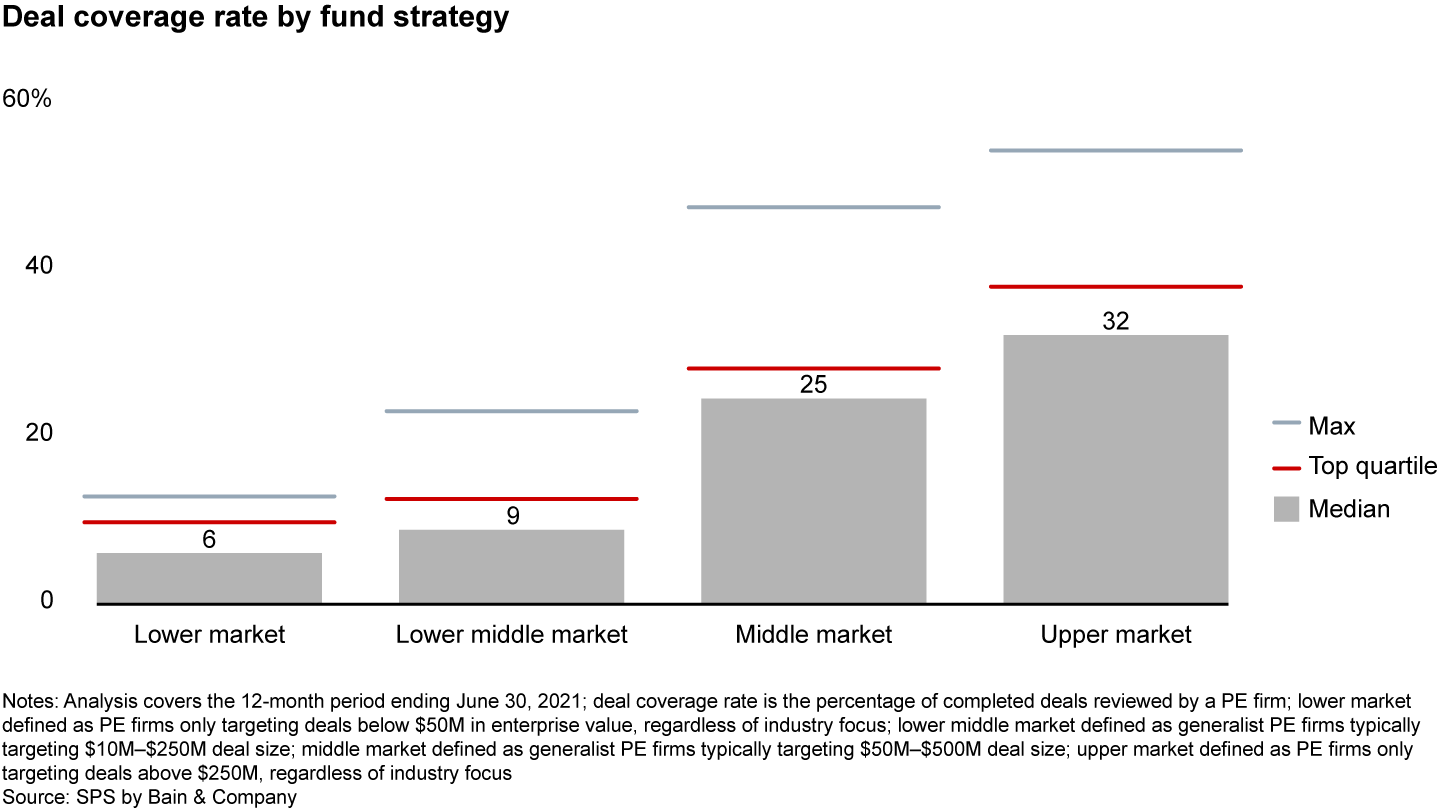
- Are we in the flow? A common refrain across the private equity industry is “we see everything.” But this is rarely true, based on emerging data. In its 2021 analysis of 157 PE firms, SPS reported that most see only 15% to 30% of the deals within their target universe, and even top-quartile performers typically see no more than 40% (see Figure 1). Improving those results starts with gathering data on what you are missing, figuring out why those deals weren’t on your radar, and building the (often industry-specific) relationships and networks that raise your profile among sellers and intermediaries.
- How focused should our strategy be? One of the biggest challenges for any private equity firm building a sector strategy is knowing when to say no. Making the right decisions about which and how many sectors to focus on again benefits from objectivity. How much potential really remains in your existing sectors? How much investment would it take to crack open a new one, and how does that mesh with the team and resources you have available? At the end of the day, is your strategy disciplined enough to create a virtuous cycle within your chosen sector?
Figure 1

Private equity investors are nothing if not data driven, but firms have historically been forced to rely on a limited set of facts in making these critical “where to play” decisions. Until recently, meaningful data simply didn’t exist to quantify relative sector performance at a granular level and, importantly, to understand where a firm’s performance rates against its rivals.
This is starting to change. Data can now provide a window into sector performance and enhance a firm’s ability to develop rigorous answers to these essential strategic questions. New tools, in other words, are replacing gut feel with real analysis.
Are we in the right sectors?
It’s true that, on average and over specific time periods, some sectors produce better returns than others. But these differences are often overstated when it comes to sector selection.
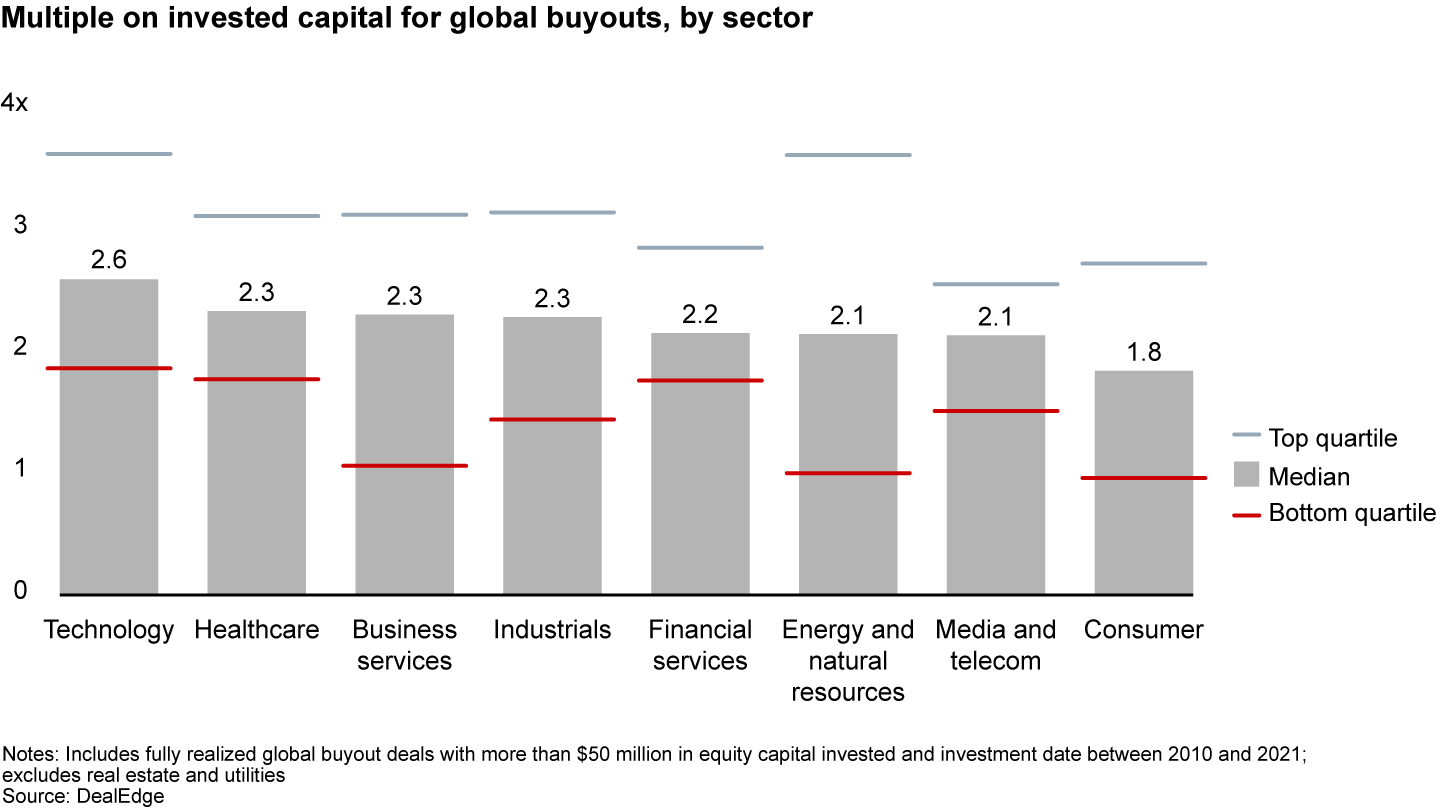
Bain research shows that the distribution of returns within a given sector is actually considerably higher than it is between sectors. Buyouts in the broad technology sector, for instance, have produced median returns of 2.6x over the past decade, while industrial deals have returned 2.3x. Within the industrial sector itself, however, top-quartile deals produced 3.1x returns and bottom-quartile deals 1.4x. That means a good manufacturing buyout during that period far outpaced an average tech deal (see Figure 2).
Figure 2

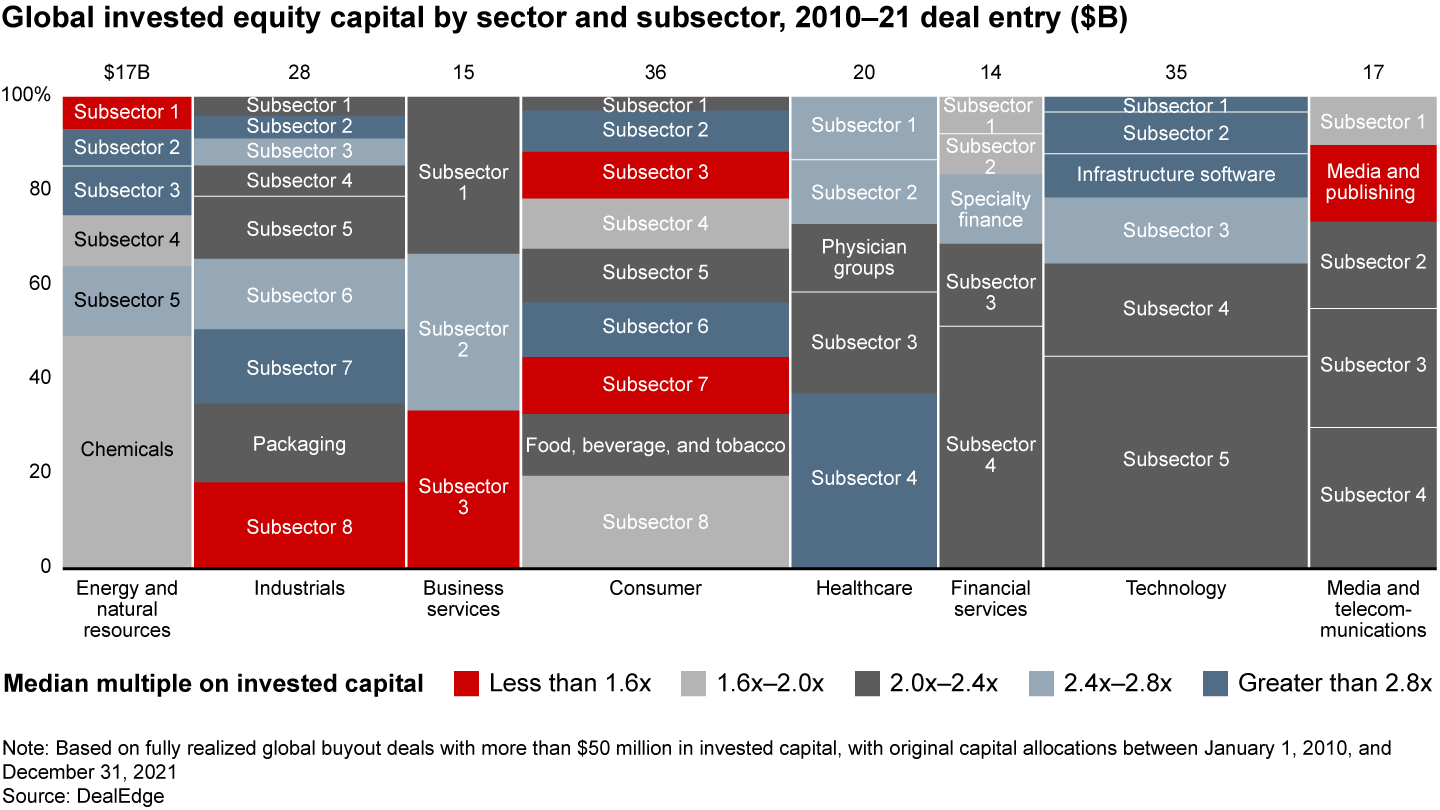
The most effective sector strategies assume that there are no inherently “bad” sectors. Good and bad deals can be found in most parts of the economy; even within broad industries, subsector returns vary widely (see Figure 3). What matters is whether a firm has the specific expertise and capabilities to produce top-tier performance wherever it chooses to invest. Chasing returns in a seemingly hot sector without having a differentiated advantage can be dangerous. At worst, it leads to the classic PE problem of the winner’s curse—paying too much for a portfolio company that others have passed on because they really do understand the sector and the challenges inherent in that particular deal.
Figure 3

Determining a firm’s edge starts with analyzing the returns for the sectors it invests in and then comparing its track record to returns generated by the competition. This gives firm leadership an unbiased view of a subsector’s potential. It shows whether or not the firm is outperforming others in an industry (equivalent to alpha in public markets) on top of sector-level market returns (beta).
While investors in public markets have long been able to disentangle alpha from beta, a lack of private-market sector data has historically made it almost impossible for PE firms to do so. That is starting to change as data sources emerge to let firms analyze comparative performance with much more confidence. DealEdge, a private equity data and analytics platform, allows general partners to compare returns across subsectors, check sizes, and geographies—rigid plastic packaging vs. paper or glass packaging, for instance, or healthcare equipment deals in Europe vs. those in the US. This provides a rich vein of market data that can form the basis of apples-to-apples benchmarks for a firm’s deals.
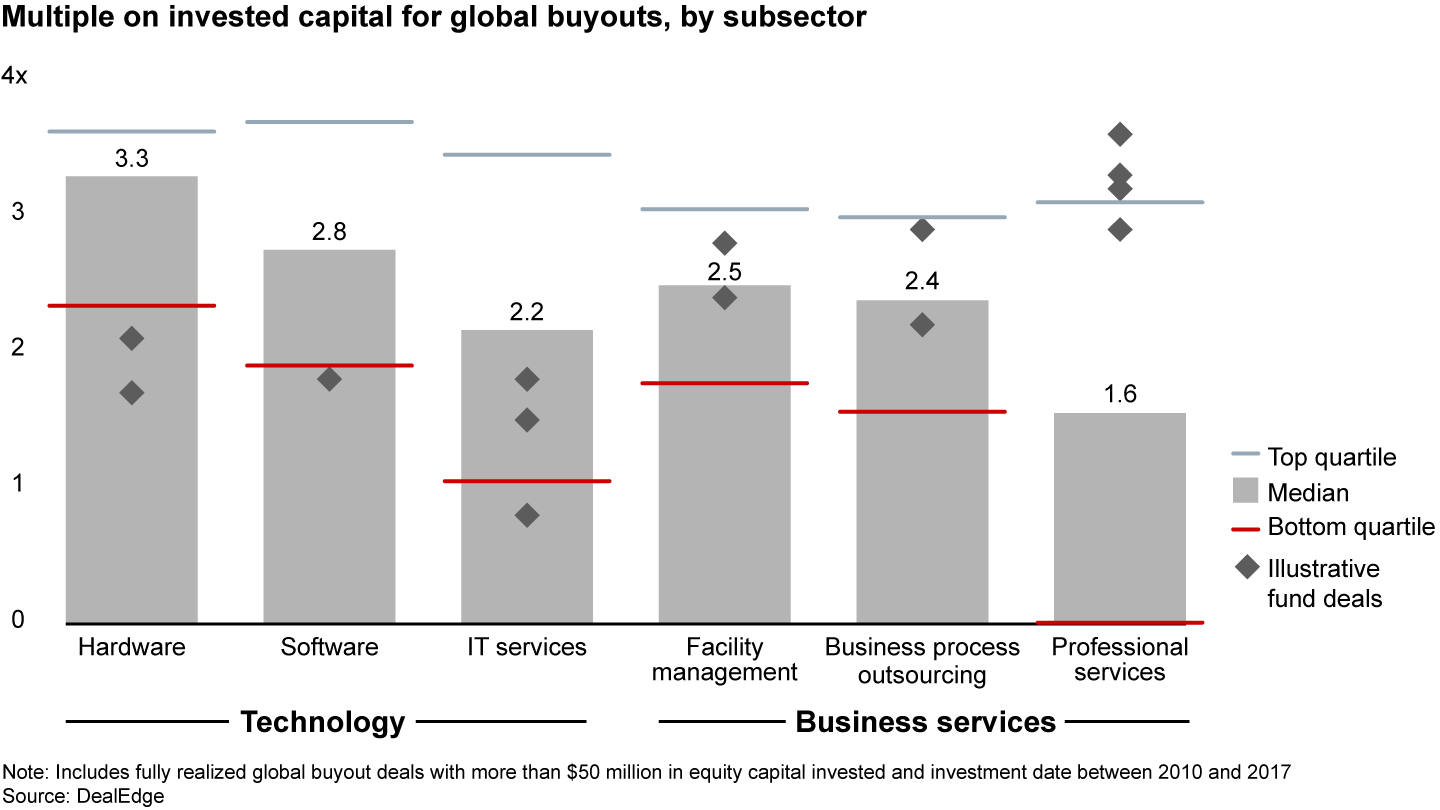
Firms that go through this exercise are often surprised by the results. One recently discovered that some of its best deals came from a seemingly lackluster subsector within professional services, where market returns overall had been poor for a decade (see Figure 4). The data showed that the firm had developed a distinctive ability to find and execute strong buyouts in the subsector—a capability others couldn’t match. At the same time, its deals in technology—a hot sector with stronger overall growth—were middling relative to the competition. That raised key strategic questions: Do we invest to get better in tech, or do we exit and focus our resources on what we already do best?
Figure 4

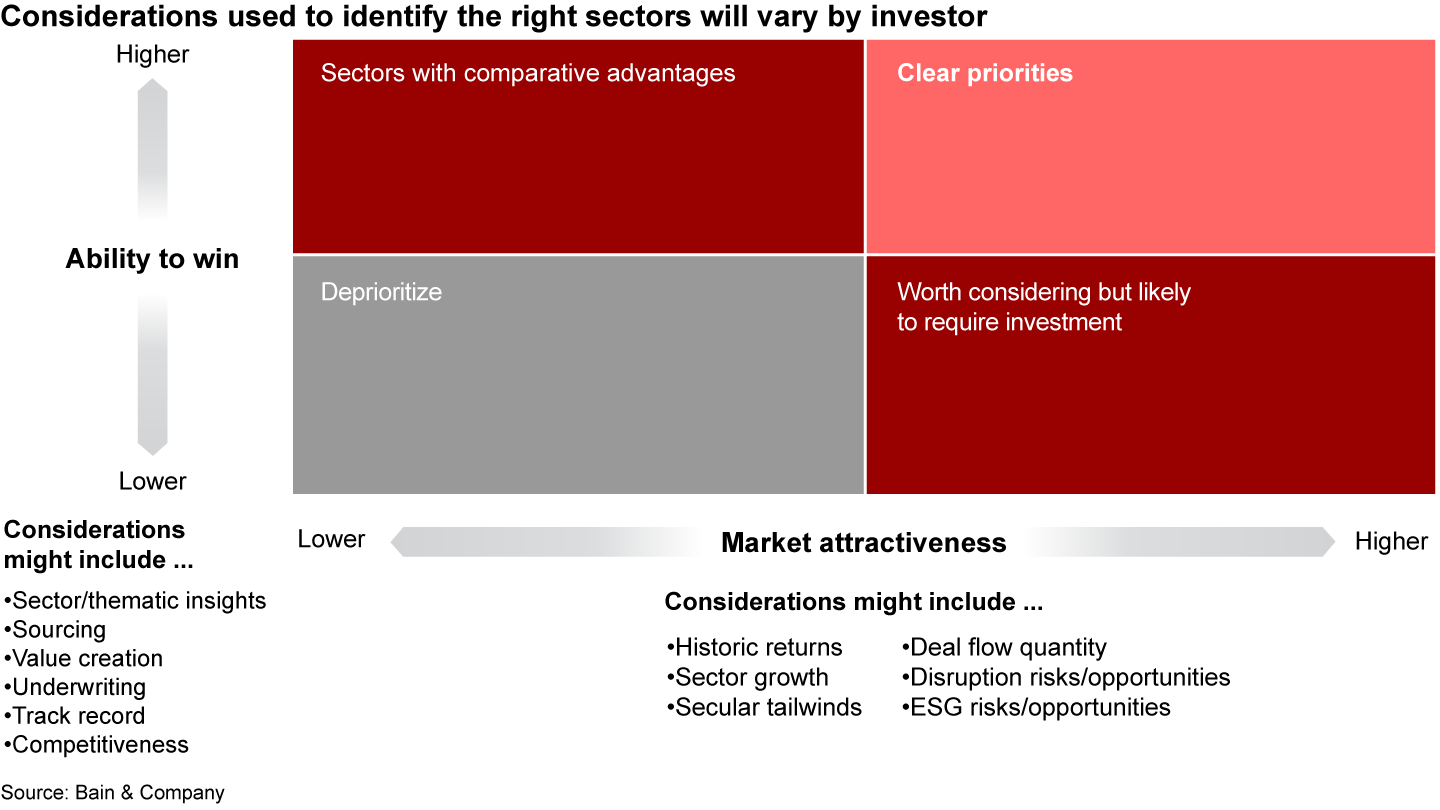
This kind of analysis helps prioritize strategic choices by delivering essential insights into where a fund’s distinctive capabilities intersect with market attractiveness (see Figure 5). Finding your sector sweet spot involves a range of considerations: Have you demonstrated an ability to capitalize on growth in a hot sector by spotting key trends early? Could your ability to develop commercial excellence at your portfolio companies generate revenue growth in a flat industry? Are there enough opportunities to run your best investment themes? All of these factors—weighed against market attractiveness—can help a firm produce its best strategic roadmap.
Figure 5

Are we in the flow?
At a time when most GPs are under heavy pressure to put investor capital to work, deal flow is critical. Improving it has two components: First, do the sectors you invest in (or want to invest in) offer enough deals of the right size to absorb the capital you need to deploy? Second, are you well enough positioned to see the deals you want to see?
Here, too, data is changing the game. Understanding deal activity in a sector—particularly at a granular subsector level—requires clear sight lines into deals transacted, deal size, and who was involved. Traditional M&A databases capture deal size to the extent it is publicly disclosed, which typically means a limited subset of deals biased toward the larger transactions that show up in the media.
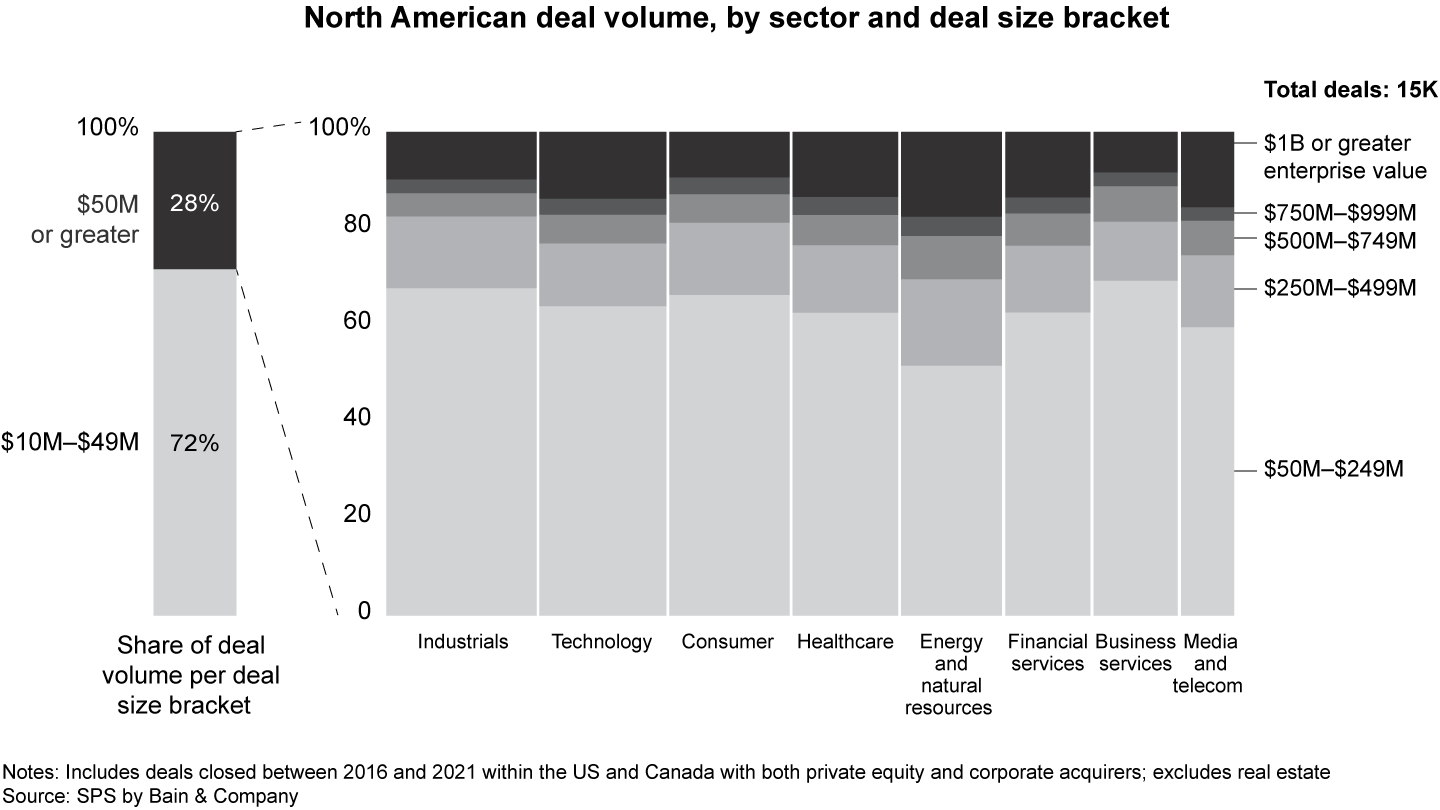
Increasingly, however, richer data sets are emerging that allow private equity firms to see which deals have taken place in a given subsector, the size of each deal, how competitive the process was, and which intermediaries were involved in the transaction. SPS, for instance, tracks all intermediated M&A activity across more than 500 subsectors and assigns a deal-size range to every transaction (see Figure 6).
Figure 6

Whether you are actually seeing the deals happening in your sectors of interest is another matter. As noted above, most firms think they’re tracking many more of the opportunities than they actually are. In the spirit of “you can’t manage what you can’t measure,” a precise understanding of sector coverage provides invaluable intelligence into where a firm is truly in the flow and where it is missing important opportunities.
The objective is not only to see more deals, but to earn a place on the short list of sellers looking to engage serious buyers in limited deal processes. Deal flow in private equity is still fundamentally a relationship game. Top-quartile firms have long known that it matters if you are networked into the universe of bankers, owners, management teams, and other advisers in a given space. Knowing which deals they’ve missed and which individual bankers brought those deals to market helps firms network in a highly targeted way to build the relationships required to succeed.
When one sector-focused fund set out recently to determine how many deals it was seeing in its core focus areas, the results were sobering. Comparing its deal pipeline to the total number of deals that actually came to market, the firm discovered that its deal coverage ranged from as high as 60% for one investment bank to as low as 30% for another. In the subsectors the firm found most promising, it was missing a large number of attractive deals.
These insights became the foundation for a broader effort to market the firm and its capabilities more effectively. It isolated a small number of core subsectors and went to work building a new sourcing strategy for each one. Firm leaders gave deal teams new responsibilities for sourcing and business development. Those teams are now hitting the road to make sure the key bankers and intermediaries (those with the best deal flow in target subsectors) know precisely what the firm’s focus is and which value-creation capabilities it brings to bear. Teams are also stepping up efforts to build ties and credibility with sellers and management teams in these sectors. SPS benchmarks show that focused efforts like these can improve deal coverage rates in chosen sectors by 15 to 20 percentage points or more, often doubling a firm’s deal flow in targeted areas.
How focused should our strategy be?
Private equity firms are typically keen to do more, not less; “no” may be the most underused word in the industry. But in today’s market, some of the best investors are being just as disciplined about what they won’t do as what they will.
Rather than setting a target number of sectors, firms that succeed in deepening their sector expertise often flip the problem on its head. They draw a realistic picture of what good sector coverage looks like and then work backward from there to figure out where they can have the most impact. The bar should be high: Firms that aspire to see more deals and participate in limited processes (vs. auctions with a dozen or more firms) realistically need to establish themselves as one of the top three or so firms that sellers and intermediaries turn to when looking for the likeliest buyer for a specific deal profile.
Understanding what it takes to build this kind of presence in a new sector clarifies strategic options and priorities. Venturing into new markets can certainly be an important way to expand a firm’s scope or refresh its positioning with limited partners. Growing firms inevitably must expand their focus.
Firms that succeed in deepening their sector expertise draw a realistic picture of what good sector coverage looks like and then work backward from there to figure out where they can have the most impact.
Yet moving into a new sector is challenging, expensive, and time consuming, which is why the most effective sector strategists tend to ride their strongest areas of emphasis for as long as they can. Doubling down on core investment themes while working in a disciplined way to improve sourcing and coverage takes full advantage of existing momentum and the years spent building critical mass in a sector. Firms that establish credibility in a particular space are often first in line to see attractive opportunities. Deals can beget deals, and success begets success.
Thoma Bravo’s $12.3 billion acquisition of cybersecurity giant Proofpoint, for instance, hardly came out of the blue. As we note in this year’s update on software investing, it was the culmination of a highly successful cybersecurity investing theme that began more than a decade ago and has involved 25 different deals. Likewise, L Catterton has turned its 2004 acquisition of Wellness Pet Food into a clear leadership position within the pet-care consumer subsector. Following a reported 7x return on the Wellness deal, the firm accelerated its investment in US pet-care companies with buyouts of Ainsworth Pet Nutrition, Nature’s Variety, and PetVet Care Centers. With a successful playbook in hand, it then expanded internationally, investing in companies like Inspired Pet Nutrition (IPN) and Lily’s Kitchen in the UK, as well as Petlove in Brazil and Pure & Natural in China.
Over the course of several years, L Catterton’s deepening insights, experience, and network building created a flywheel effect that has helped the firm make over a dozen pet-care investments. Its ability to spot trends early, partner with management teams, and help portfolio companies accelerate performance has become well known and valued within the sector. Under L Catterton’s ownership, for instance, IPN’s Harringtons brand jumped from sixth to first in the UK dry dog food market. Revenues for Ainsworth’s leading Nutrish brand grew more than sixfold, while operational improvements boosted margins. Any owner or intermediary interested in buying or selling a pet-related asset knows that L Catterton has to be part of the conversation. That helps win processes and leads to proprietary opportunities both as a majority and minority investor.
Sector investing can be a powerful way to differentiate a firm and spur new growth. But top performers know it is essential to match your strategy to your firm’s unique blend of expertise, capabilities, investing style, and size. While these are challenging and consequential choices, new analytical tools are providing firms with a data-driven way to set strategic priorities and make investments with confidence.
More from the report
Read our 2022 Global Private Equity Report
First published in 3月 2022