
Skip to Content
  • オフィス

    オフィス

    北米・南米
    • Atlanta
    • Austin
    • Bogota
    • Boston
    • Buenos Aires
    • Chicago
    • Dallas
    • Denver
    • Houston
    • Los Angeles
    • Mexico City
    • Minneapolis
    • Monterrey
    • Montreal
    • New York
    • Rio de Janeiro
    • San Francisco
    • Santiago
    • São Paulo
    • Seattle
    • Silicon Valley
    • Toronto
    • Washington, DC
    ヨーロッパ・中東・アフリカ
    • Amsterdam
    • Athens
    • Berlin
    • Brussels
    • Copenhagen
    • Doha
    • Dubai
    • Dusseldorf
    • Frankfurt
    • Helsinki
    • Istanbul
    • Johannesburg
    • Kyiv
    • Lisbon
    • London
    • Madrid
    • Milan
    • Munich
    • Oslo
    • Paris
    • Riyadh
    • Rome
    • Stockholm
    • Vienna
    • Warsaw
    • Zurich
    アジア・オーストラリア
    • Bangkok
    • Beijing
    • Bengaluru
    • Brisbane
    • Ho Chi Minh City
    • Hong Kong
    • Jakarta
    • Kuala Lumpur
    • Manila
    • Melbourne
    • Mumbai
    • New Delhi
    • Perth
    • Shanghai
    • Singapore
    • Sydney
    • Tokyo
    全てのオフィス
  • アルムナイ
  • メディア
  • お問い合わせ
  • 東京オフィス
  • Japan | 日本語

    地域と言語を選択

    グローバル
    • Global (English)
    北米・南米
    • Brazil (Português)
    • Argentina (Español)
    • Canada (Français)
    • Chile (Español)
    • Colombia (Español)
    ヨーロッパ・中東・アフリカ
    • France (Français)
    • DACH Region (Deutsch)
    • Italy (Italiano)
    • Spain (Español)
    • Greece (Elliniká)
    アジア・オーストラリア
    • China (中文版)
    • Korea (한국어)
    • Japan (日本語)
  • Saved items (0)
    Saved items (0)

    You have no saved items.

    後で閲読、共有できるようにするためにブックマークしてください

    Explore Bain Insights
  • 業界別プラクティス
    メインメニュー

    業界別プラクティス

    • 航空宇宙、防衛、政府関連
    • 農業
    • 化学製品
    • インフラ、建設
    • 消費財
    • 金融サービス
    • ヘルスケア
    • 産業機械、設備
    • メディア、エンターテインメント
    • 金属
    • 採掘・鉱業
    • 石油、ガス
    • 紙、パッケージ
    • プライベートエクイティ
    • 公共、社会セクター
    • 小売
    • テクノロジー
    • 通信
    • 交通
    • 観光産業
    • 公益事業、再生可能エネルギー
  • 機能別プラクティス
    メインメニュー

    機能別プラクティス

    • カスタマー・エクスペリエンス
    • サステイナビリティ、 社会貢献
    • Innovation
    • 企業買収、合併 (M&A)
    • オペレーション
    • 組織
    • プライベートエクイティ
    • マーケティング・営業
    • 戦略
    • アドバンスド・アナリティクス
    • Technology
    • フルポテンシャル・トランスフォーメーション
  • Digital
  • 知見/レポート
  • ベイン・アンド・カンパニーについて
    メインメニュー

    ベイン・アンド・カンパニーについて

    • ベインの信条
    • 活動内容
    • 社員とリーダーシップ
    • プレス・メディア情報
    • クライアントの結果
    • 受賞歴
    • パートナーシップを結んでいる団体
    Further: Our global responsibility
    • ダイバーシティ
    • 社会貢献
    • サステイナビリティへの取り組み
    • 世界経済フォーラム(WEF)
    Learn more about Further
  • キャリア
    メインメニュー

    キャリア

    • ベインで働く
      キャリア
      ベインで働く
      • Find Your Place
      • ベインで活躍する機会
      • ベインのチーム体制
      • 学生向けページ
      • インターンシップ
      • 採用イベント
    • ベインでの体験
      キャリア
      ベインでの体験
      • Blog: Inside Bain
      • キャリアストーリー
      • 社員紹介
      • Where We Work
      • 成長を後押しするサポート体制
      • アフィニティ・グループ
      • 福利厚生
    • Impact Stories
    • 採用情報
      キャリア
      採用情報
      • 採用プロセス
      • 面接内容
    FIND JOBS
  • オフィス
    メインメニュー

    オフィス

    • 北米・南米
      オフィス
      北米・南米
      • Atlanta
      • Austin
      • Bogota
      • Boston
      • Buenos Aires
      • Chicago
      • Dallas
      • Denver
      • Houston
      • Los Angeles
      • Mexico City
      • Minneapolis
      • Monterrey
      • Montreal
      • New York
      • Rio de Janeiro
      • San Francisco
      • Santiago
      • São Paulo
      • Seattle
      • Silicon Valley
      • Toronto
      • Washington, DC
    • ヨーロッパ・中東・アフリカ
      オフィス
      ヨーロッパ・中東・アフリカ
      • Amsterdam
      • Athens
      • Berlin
      • Brussels
      • Copenhagen
      • Doha
      • Dubai
      • Dusseldorf
      • Frankfurt
      • Helsinki
      • Istanbul
      • Johannesburg
      • Kyiv
      • Lisbon
      • London
      • Madrid
      • Milan
      • Munich
      • Oslo
      • Paris
      • Riyadh
      • Rome
      • Stockholm
      • Vienna
      • Warsaw
      • Zurich
    • アジア・オーストラリア
      オフィス
      アジア・オーストラリア
      • Bangkok
      • Beijing
      • Bengaluru
      • Brisbane
      • Ho Chi Minh City
      • Hong Kong
      • Jakarta
      • Kuala Lumpur
      • Manila
      • Melbourne
      • Mumbai
      • New Delhi
      • Perth
      • Shanghai
      • Singapore
      • Sydney
      • Tokyo
    全てのオフィス
  • アルムナイ
  • メディア
  • お問い合わせ
  • 東京オフィス
  • Japan | 日本語
    メインメニュー

    地域と言語を選択

    • グローバル
      地域と言語を選択
      グローバル
      • Global (English)
    • 北米・南米
      地域と言語を選択
      北米・南米
      • Brazil (Português)
      • Argentina (Español)
      • Canada (Français)
      • Chile (Español)
      • Colombia (Español)
    • ヨーロッパ・中東・アフリカ
      地域と言語を選択
      ヨーロッパ・中東・アフリカ
      • France (Français)
      • DACH Region (Deutsch)
      • Italy (Italiano)
      • Spain (Español)
      • Greece (Elliniká)
    • アジア・オーストラリア
      地域と言語を選択
      アジア・オーストラリア
      • China (中文版)
      • Korea (한국어)
      • Japan (日本語)
  • Saved items  (0)
    メインメニュー
    Saved items (0)

    You have no saved items.

    後で閲読、共有できるようにするためにブックマークしてください

    Explore Bain Insights
  • 業界別プラクティス
    • 業界別プラクティス

      • 航空宇宙、防衛、政府関連
      • 農業
      • 化学製品
      • インフラ、建設
      • 消費財
      • 金融サービス
      • ヘルスケア
      • 産業機械、設備
      • メディア、エンターテインメント
      • 金属
      • 採掘・鉱業
      • 石油、ガス
      • 紙、パッケージ
      • プライベートエクイティ
      • 公共、社会セクター
      • 小売
      • テクノロジー
      • 通信
      • 交通
      • 観光産業
      • 公益事業、再生可能エネルギー
  • 機能別プラクティス
    • 機能別プラクティス

      • カスタマー・エクスペリエンス
      • サステイナビリティ、 社会貢献
      • Innovation
      • 企業買収、合併 (M&A)
      • オペレーション
      • 組織
      • プライベートエクイティ
      • マーケティング・営業
      • 戦略
      • アドバンスド・アナリティクス
      • Technology
      • フルポテンシャル・トランスフォーメーション
  • Digital
  • 知見/レポート
  • ベイン・アンド・カンパニーについて
    • ベイン・アンド・カンパニーについて

      • ベインの信条
      • 活動内容
      • 社員とリーダーシップ
      • プレス・メディア情報
      • クライアントの結果
      • 受賞歴
      • パートナーシップを結んでいる団体
      Further: Our global responsibility
      • ダイバーシティ
      • 社会貢献
      • サステイナビリティへの取り組み
      • 世界経済フォーラム(WEF)
      Learn more about Further
  • キャリア
    人気検索キーワード
    • デジタル
    • 戦略
    前回の検索
      最近訪れたページ

      Content added to saved items

      Saved items (0)

      Removed from saved items

      Saved items (0)

      論説

      Telcos and Coronavirus: Three Steps to Manage the Crisis

      Telcos and Coronavirus: Three Steps to Manage the Crisis

      Telcos have a vital role to play in helping communities respond to the Covid-19 pandemic.

      著者:Alex Bhak, Herbert Blum, Frank Ford, and Christophe Van de Weyer

      • min read
      }

      論説

      Telcos and Coronavirus: Three Steps to Manage the Crisis
      en
      概要
      • Telcos are under enormous pressure to continue delivering critical infrastructure and services during the coronavirus outbreak.
      • They can prioritize three short-term actions to manage the crisis: help people adjust to remote working and social distancing; stabilize operations; and invest in cybersecurity.
      • Telcos that act quickly and effectively can help communities respond to the pandemic and emerge stronger.

      With the world turned upside down by the coronavirus, telecommunications companies face one of the greatest challenges in their history. Like other organizations, they have a duty to, first and foremost, support and care for their employees. But telcos are also under enormous pressure to continue delivering infrastructure and services critical to everyone, especially during a crisis of this magnitude.

      Telecom executives are scrambling to tackle a host of issues simultaneously. Given the urgency, we recommend prioritizing three short-term actions to manage the crisis before turning attention to the plan for recovery. Those that do so will not only help their communities and the world respond to the pandemic, but will emerge stronger in the aftermath.

      For Our Clients

      Macro Surveillance Platform

      For more detail on the business implications of coronavirus from Bain’s Macro Trends Group, log on to the Macro Surveillance Platform. Learn more about the platform >

      1. Help people adjust for the long haul

      With offices, schools and public places shuttering to contain the spread of the virus, there’s a shift en masse to remote working and to video and teleconferencing. Network traffic in some countries has surged 70% or more during the outbreak (see Figure 1).

      Figure 1
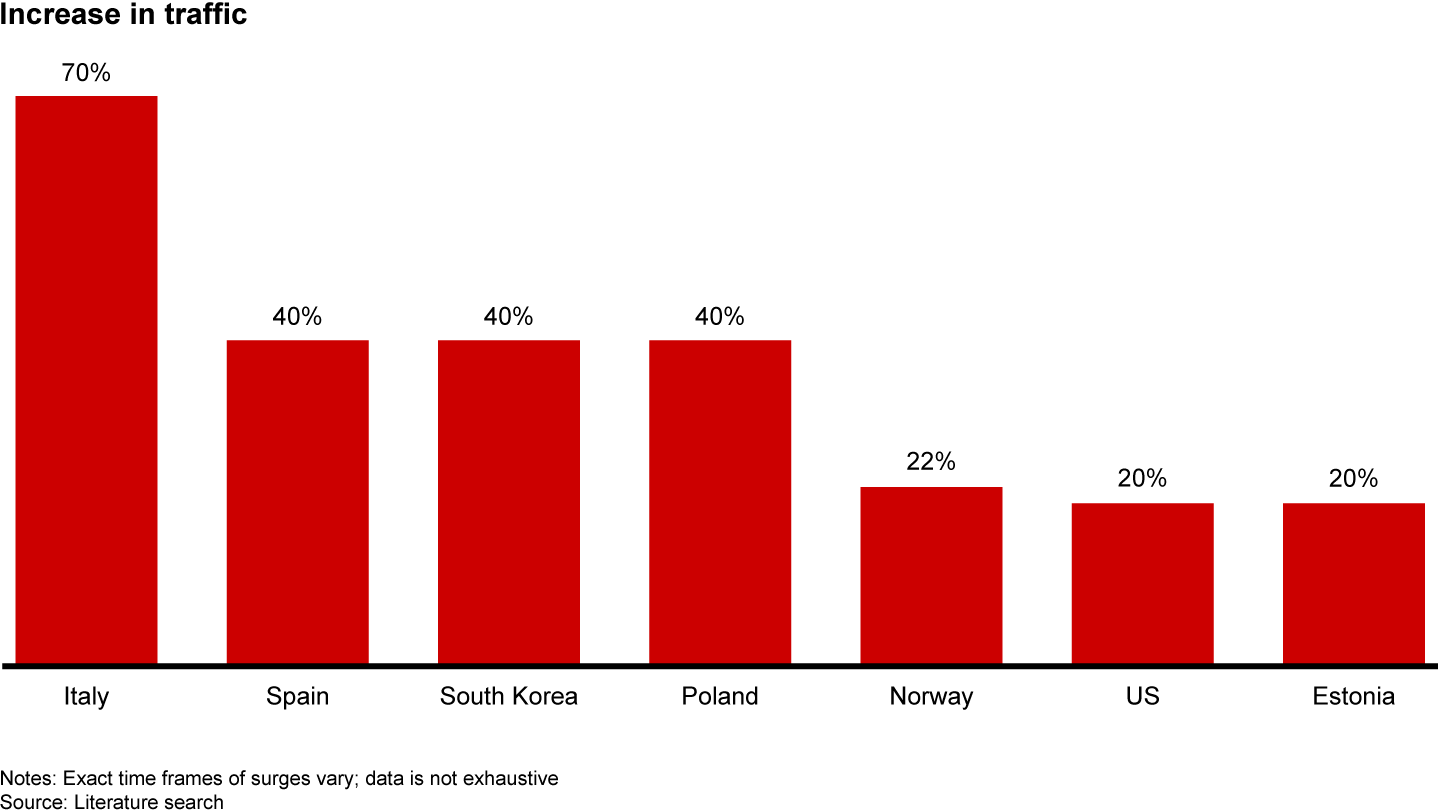
      Network traffic has surged worldwide during the Covid-19 outbreak
      Network traffic has surged worldwide during the Covid-19 outbreak
      Network traffic has surged worldwide during the Covid-19 outbreak

      Telcos can ease this transition by taking several immediate steps.

      First, they can offer discounted or free voice, data and content services to customers. The menu could include enabling enterprise customers’ employees to call each other for free, allowing data overages and providing open access to applications and services, such as educational content and online learning platforms for students, teachers and parents.

      Next, telcos should be ready to help customers upgrade their services to cope with higher bandwidth requirements as workers and their families spend more time at home. The options might include Internet speed-booster packages and switching connections from copper to higher-performing fiber-optic broadband services.

      Telcos can offer comprehensive “workplace-as-a-service” solutions for customers, including remote working and conferencing hardware, unified communication packages and partnerships, and virtual private network (VPN) capabilities. They can also provide advice on how to set up and troubleshoot home office products, and even productivity checks with remote experts.

      Lastly, telcos can respond to the needs of enterprise customers through payment flexibility or creating ad hoc support teams to assist critical organizations such as pharmacies, hospitals and other first responders.

      Many telcos have begun enacting these solutions already. Those that act quickly and effectively can help people adjust to the difficult situation. By doing so, they can also build greater trust and loyalty among the communities they serve and reaffirm their core value proposition.

      2. Stabilize operations in the new normal

      The pandemic will likely push telcos to modify front- and back-office operations to be more flexible and resilient.

      For example, the crisis will probably accelerate adoption of telcos’ digital customer-service channels and services. Companies can make this easier by directing customers to self-service channels through quick, coordinated changes to their automated voice-response programs, call-center scripts and in-store signs. One effective tactic could be forming Agile remote teams to design these measures to meet the needs of different customer groups, starting with seniors and professionals working from home.

      Telcos’ brick-and-mortar stores and third-party dealer networks will see much lower foot traffic for the foreseeable future. But the upside is until things return to normal, store employees could support help desks, technicians and home deliveries. We suggest testing a few critical omnichannel customer-care approaches on a small scale to ensure consistency before rolling them out more widely.

      On the other hand, call centers will field more customer inquiries during the outbreak, and telcos might consider planning new outbound contact programs. Customer churn is likely to drop dramatically during this period, so rebalancing the marketing team’s priorities to support product and service upgrades, setup and feedback could prove useful. Leading telcos will deploy feedback management tools to better understand and anticipate customer needs and take proactive measures.

      Field engineers will remain on the physical front lines during the crisis, so special precautions will be required to protect their health. Visits to customers’ homes and offices will be reduced to only the most critical situations. With many isolated or quarantined premises, engineers will drop off equipment, then use remote video chats to help customers install or repair it. Additional precautions include limiting or staggering depot exchanges by taking vans home at night, fully stocked. Up-to-date inventory will be vital.

      For telecom networks, the top priority is resolving congestion as traffic spikes. Aside from overall surges in traffic, peak demand on fixed-line networks has risen more than 20% in affected regions, putting some network nodes under extreme stress and sometimes beyond capacity. To address connectivity issues proactively, specialists in network operations centers (NOCs) can deploy predictive analytics tools to identify the highest-risk areas. Leading organizations will grant these centers special, preapproved funding so they can act swiftly and obtain equipment on short notice. Telcos might also consider options for managing network traffic, such as throttling applications that result in unsustainable peak traffic loads or intermittently reducing video resolution as needed. In some countries, telcos and regulators might decide to repurpose spectrum to increase network capacity. And of course, telcos must enhance business-continuity and infection-prevention measures to protect NOC staff and facilities.

      3. Shore up cybersecurity

      As in other crises, there are reports of a rise in cyberattacks. Companies are moving quickly to add production capacity and maintain effective operations while they shift work to different locations. But such moves increase exposure to cyber threats because business-continuity measures, such as backup servers, are typically not as secure as normal production systems. They can lack the latest security patches and undergo less-rigorous testing. Remote workers are also vulnerable because they’re more likely to use less-secure networks, such as home or public WiFi, and phishing attacks against employees often increase during times like these.

      Hackers recognize these weaknesses and aggressively exploit the situation. Businesses are also aware they need to strengthen their cybersecurity. In November, well before the Covid-19 outbreak, 48% of executives in a multi-industry survey conducted by Bain reported their company’s cyberdefenses were inadequate (see Figure 2).

      Figure 2
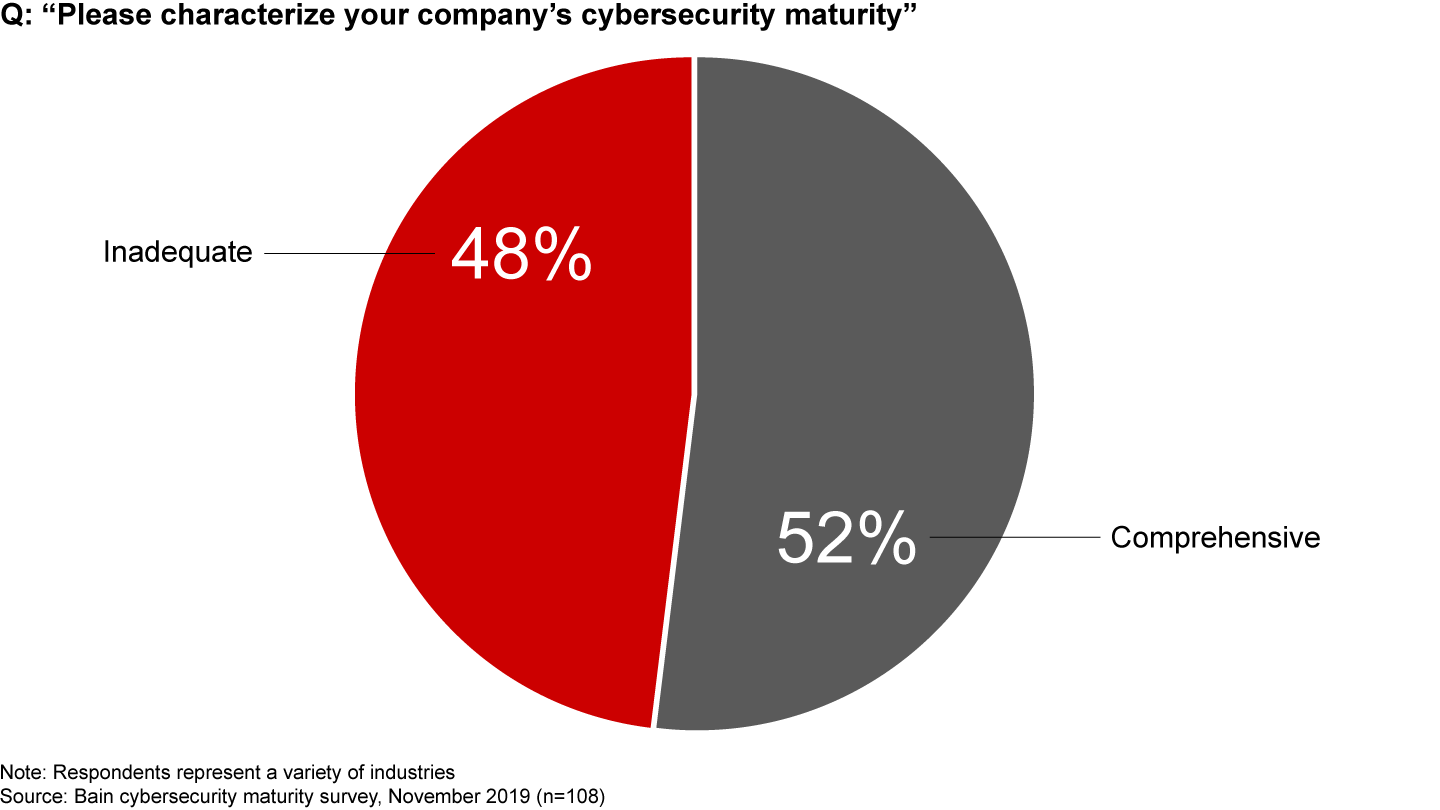
      Before the coronavirus crisis, nearly half of surveyed enterprises said they had inadequate cyberdefenses
      Before the coronavirus crisis, nearly half of surveyed enterprises said they had inadequate cyberdefenses
      Before the coronavirus crisis, nearly half of surveyed enterprises said they had inadequate cyberdefenses

      Telcos can do their part by fortifying their own security postures, rapidly improving where needed and ensuring their customers have access to the best possible defenses against cyber threats.

      Specific actions might include testing the security protocols of telcos’ business-continuity arrangements, particularly if that’s how production capacity is being boosted in the short term. Telcos can also work to identify and eliminate their cyber vulnerabilities by ramping up their “red” teams—security professionals who probe and assess their organization’s defenses, often simulating cyberattacks—and “blue” teams—defensive pros who try to counter attacks by red teams and real hackers.

      Telcos that provide security services to consumers can offer discounted or free services during the outbreak. They can also share best practices for increasing security while working remotely.

      Ultimately, what’s at stake with Covid-19 is not just a risk of increased cybercrime and socioeconomic instability, but also the lives and well-being of millions of people. Telecommunications companies have a vital role to play in helping communities and organizations respond to the pandemic. If handled effectively, telcos can also strengthen their relationships with the people they serve and help everyone emerge from the crisis even stronger.

      The authors are partners in Bain & Company’s Telecommunications practice. Alex Bhak and Frank Ford are based in Bain’s London office; Ozan Bayulgen is based in Istanbul; Herbert Blum is the practice’s global leader and based in Toronto; and Christophe Van de Weyer is based in Brussels.

      Related Insights

      Coronavirus

      The global Covid-19 pandemic has extracted a terrible human toll and spurred sweeping changes in the world economy. Across industries, executives have begun reassessing their strategies and repositioning their companies to thrive now and in the world beyond coronavirus.

      著者
      • Headshot of Alex Bhak
        Alex Bhak
        パートナー, London
      • Headshot of Herbert Blum
        Herbert Blum
        パートナー, Toronto
      • Headshot of Frank Ford
        Frank Ford
        パートナー, London
      • Christophe Van de Weyer
        Former Partner, Brussels
      関連業種
      • Cybersecurity
      • 通信
      関連するコンサルティングサービス
      • Automation
      • Digital
      • Digital Marketing
      • IT
      • アドバンスド・アナリティクス
      コンサルティングサービス
      • Net Promoter®
      Coronavirus
      Covid-19: Building a Digital Bridge to the New Normal

      Technology and analytics are key to weathering the coronavirus pandemic and emerging stronger.

      詳細
      Coronavirus
      Cash Management Practices to Weather a Downturn

      Take an honest look at the business, and decide where to improve.

      詳細
      通信
      Shift to Vertical: David Haines, Group CEO, Flora Food Group

      What does it take to stay connected to your customers when scale and complexity threaten to pull you away? 

      詳細
      How Banks Can Tease Out the Loyalty Metrics That Matter

      Measuring performance on the key episodes for a bank’s customers allows the bank to focus on investments that will improve loyalty—and its economics.

      詳細
      Coronavirus
      Ramping Up Online Grocery without Breaking the Bank

      Bain’s Marc-André Kamel discusses the challenges that online grocery presents for retailers and CPGs and how they can pair up to find a winning solution.

      詳細
      First published in 3月 2020
      Tags
      • Automation
      • Coronavirus
      • Cybersecurity
      • Digital
      • Digital Marketing
      • IT
      • Net Promoter®
      • アドバンスド・アナリティクス
      • 通信

      クライアント支援事例

      フルポテンシャル・トランスフォメーション Turning around a pioneering service for working parents with sick children

      ケーススタディを見る

      業績改善 Transforming a telecommunications giant

      ケーススタディを見る

      Net Promoter System® Dialing up customer experience in telecommunications

      ケーススタディを見る

      お気軽にご連絡下さい

      私達は、グローバルに活躍する経営者が抱える最重要経営課題に対して、厳しい競争環境の中でも成長し続け、「結果」を出すために支援しています。

      Net Promoter®, NPS®, NPS Prism®, and the NPS-related emoticons are registered trademarks and Net Promoter Score℠ and Net Promoter System℠ are service marks of Bain & Company, Inc., Satmetrix Systems, Inc., and Fred Reichheld. Digital is a service mark of Bain & Company, Inc.

      ベインの知見。競争が激化するグローバルビジネス環境で、日々直面するであろう問題について論じている知見を毎月お届けします。

      *プライバシーポリシーの内容を確認し、合意しました。

      プライバシーポリシーをご確認頂き、合意頂けますようお願い致します。
      Bain & Company
      お問い合わせ Sustainability Accessibility Terms of use Privacy Cookie Policy Sitemap Log In

      © 1996-2026 Bain & Company, Inc.

      お問い合わせ

      How can we help you?

      • ビジネスについて
      • プレス報道について
      • 採用について
      全てのオフィス