

論説

概要
- Traditional retailers and digital insurgents have become more evenly matched, and each is trying to learn from the other as they compete for an omnichannel advantage.
- Many retailers, including insurgents, will need more scale to fund the blending of physical and online channels, while diversification will be vital as profit growth from traditional activities dries up.
- Tomorrow’s industry leaders will need to undergo a customer epiphany to extend their understanding of shoppers, while internally playing “talent Tetris” to overcome recruiting and retention challenges.
Since the early days of the Internet, traditional retailers and digital insurgents have been battling for the same customers. Now, they are increasingly competing for the same talent, too.
Big hitters lured from tech to a retail incumbent include Walmart’s chief technology officer, a veteran of Google, Microsoft, and Amazon. Those going in the opposite direction include a former Tesco mainstay now running Amazon’s physical stores and a senior executive at Australia’s Woolworths recruited to the Amazon Fresh grocery leadership team.

Future of Retail Diagnostic
Quickly assess where your company stands on key success pillars.
The two-way flow of talent between some of the youngest and oldest names in the industry is a potent sign of the convergence that will be one of the defining characteristics of retail over the next decade.
On one side of the industry, that convergence is being powered by traditional retailers upping their digital game. Leaving behind their store-first roots, they are adding omnichannel capabilities pioneered by tech-first retailers. At the same time, they are speeding up their decision making and increasing their spending on technology and innovation in a further bid to emulate disrupters.
Conversely, digital natives are honing the classic retail capabilities patiently built up over decades by incumbent rivals. Many need these skills to run physical outlets amassed through acquisition (examples include Amazon’s purchase of Whole Foods Market and Alibaba’s takeover of Sun Art) or organic diversification (such as the London grocery store recently built by food delivery aggregator Deliveroo in partnership with Morrisons). Macroeconomic turbulence has also made it financially imperative to excel at retailing basics, online and offline.
Against this backdrop of convergence, we think other boundaries in retail will continue to erode. That’s because profit pools are on the brink of an unprecedented shift. Our analysis suggests that, between now and 2030, retailers will see only modest profit growth from traditional trade (meaning retail activities centered on the simple sale of goods procured from suppliers). Instead, the lion’s share of profit growth is likely to come from activity that reaches beyond trade.
This value-creating diversification might take the form of more marketplaces that generate commissions by linking third-party sellers to customers. Retailers can also branch out in other ways, such as through business-to-business services and products that extract fresh revenue from their existing assets, including logistics infrastructure, customer data, and underexploited advertising channels on apps and websites. Overall, we forecast that “beyond trade” activities will account for half of industry profits in 2030 in a typical Western market (see Figure 1).
Figure 1
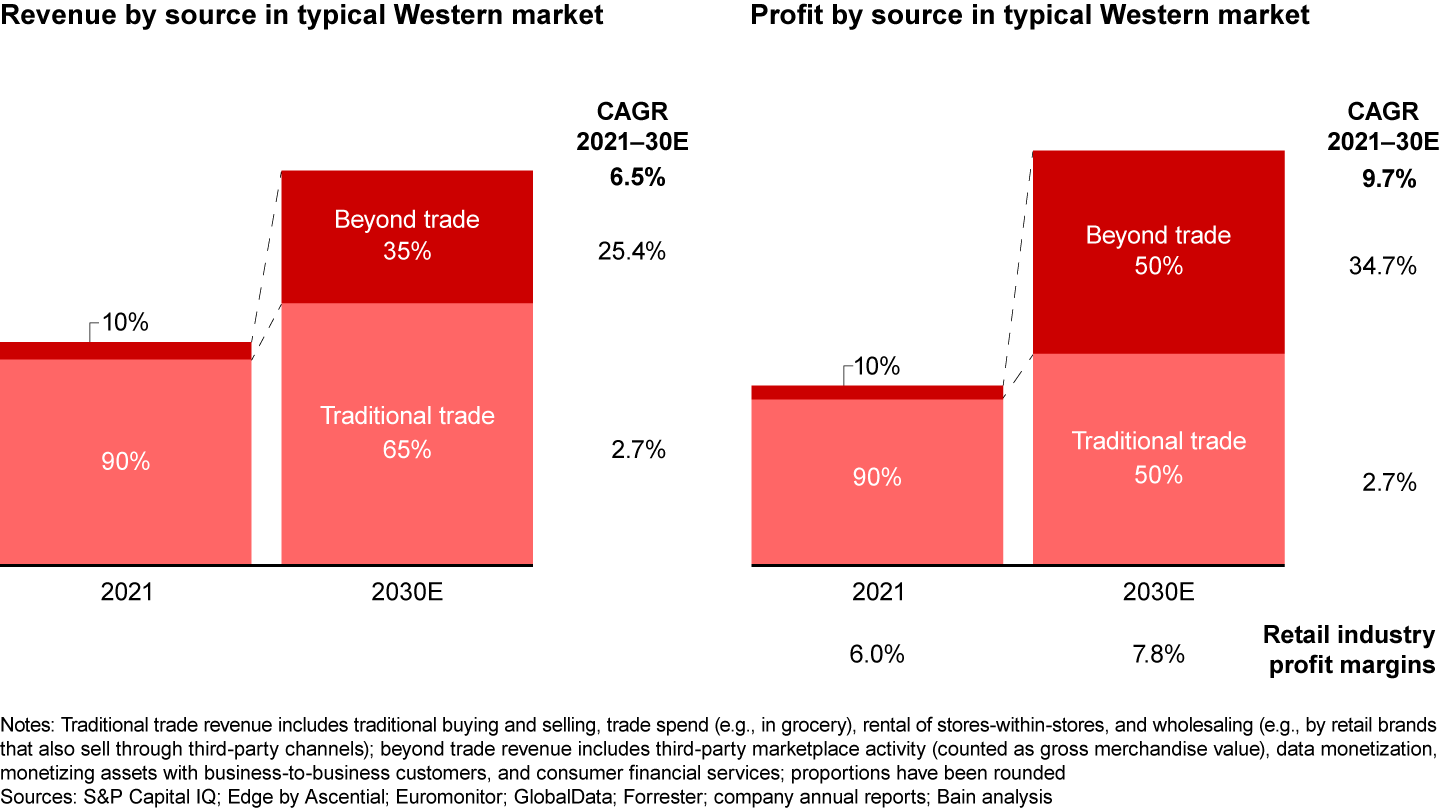

Converging business models and blurring profit boundaries will threaten some companies. But the industry’s coming evolution will offer fresh opportunity amid the upheaval. Retailers have risen to a series of challenges since our 2019 Future of Retail analysis (see the Bain Brief “The Future of Retail: Winning Models for a New Era”). Through their ingenuity, they helped keep society functioning during the Covid-19 pandemic, and they are now doing their utmost to ease a cost-of-living crisis caused by war and global macroeconomic turbulence. With the right strategic moves, executive teams can also chart a value-creating course through tomorrow’s flux.
Convergence will be funded by scale
The age of convergence is dawning partly because incumbents and tech-first retailers have become more evenly matched in the wake of Covid-19. Prior to the pandemic, the overall momentum was with digital natives. Amid store overcapacity, many traditional retailers were struggling to adapt to the rise of e-commerce, competition from discounters, and waves of innovation. At the same time, ecosystem players such as Amazon, Alibaba, and JD.com were gaining share, partly by supporting their retail offering with profit generated by their extensive nonretail activities.
Covid-19 accelerated bankruptcies at surprisingly few store-first retailers. More striking was the number of incumbent retailers that gained a second wind. Some were in categories that experienced stronger demand in the pandemic, such as grocery. Others moved with the speed of digital natives to extend their existing omnichannel capabilities, adopt nimbler ways of working, and strengthen both sales and profit.
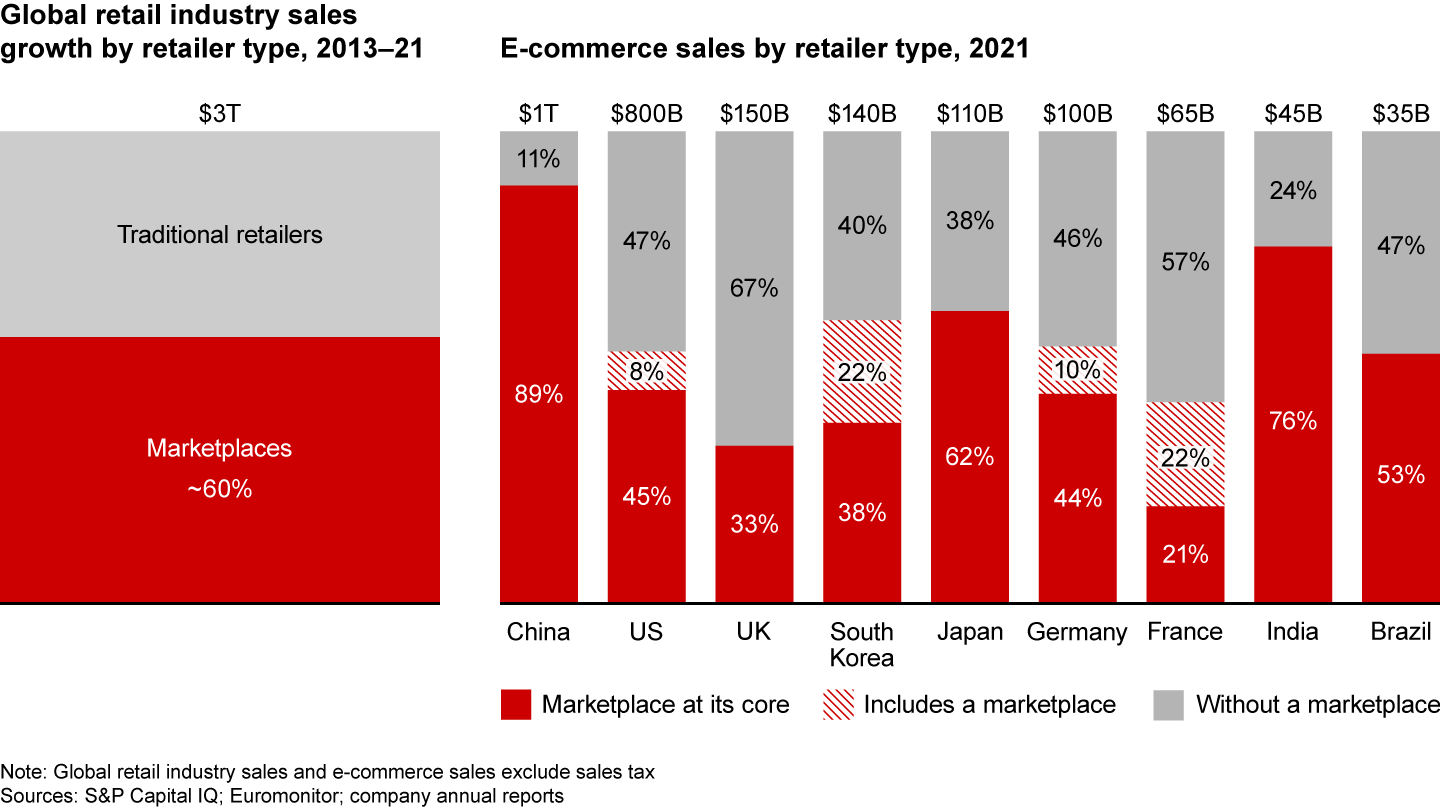
Ecosystem players and online marketplaces continued their relentless march during the pandemic. Our analysis shows that they captured about 60% of global retail growth between 2013 and 2021, solidifying a dominant position in key markets (see Figure 2).
Figure 2

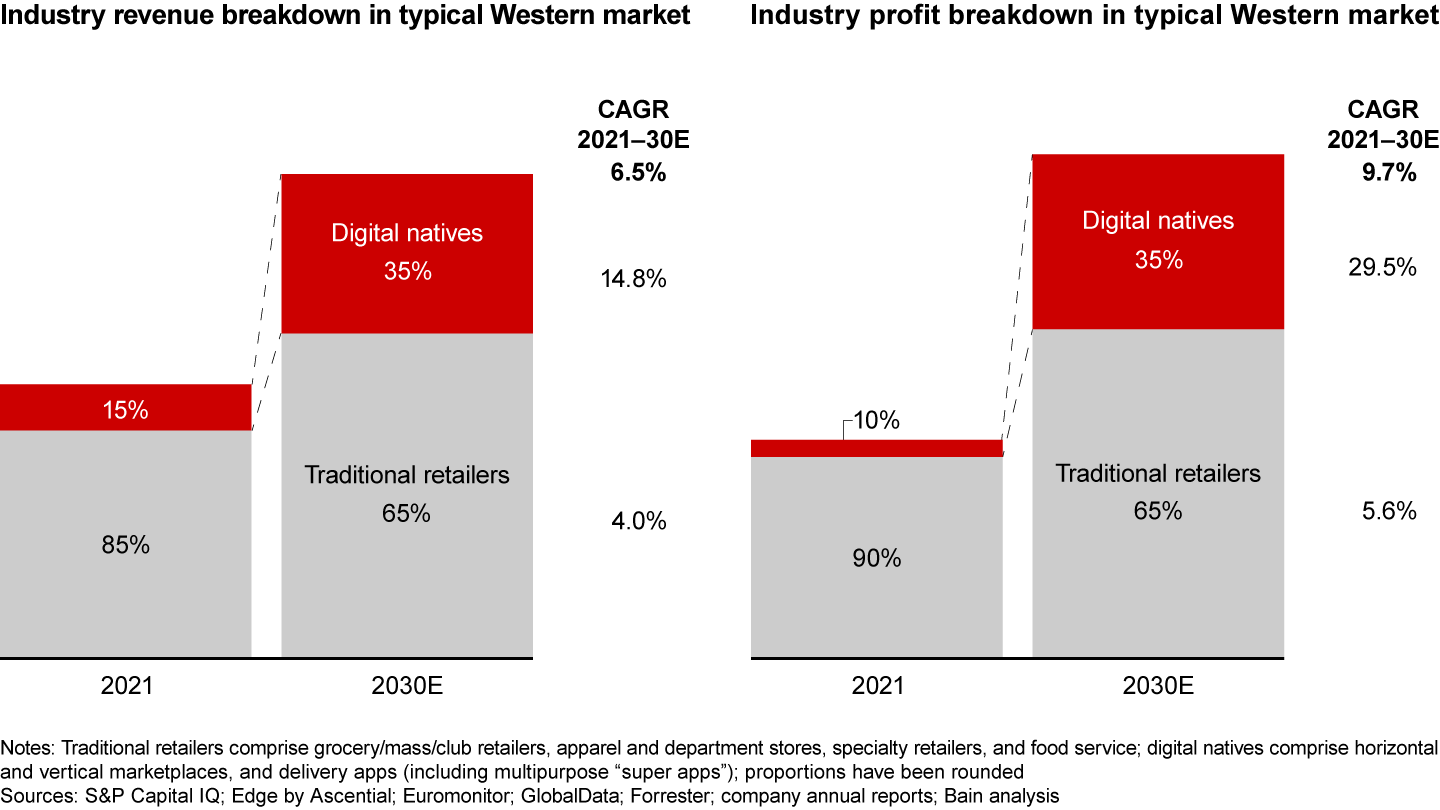
However, the drastic shift in sentiment about tech stocks in 2022 has put ecosystem players under more pressure to generate profits, rather than relying on stellar revenue growth to enthuse investors. Tighter funding in tech is already having an even bigger impact outside ecosystems, threatening the existence of some innovative digital newcomers that had been competing hard with incumbents. Easy access to capital had masked the fact that these businesses were subscale and lacked a proper profit engine. The failure of the weakest of these ambitious lossmakers, along with a greater focus on retailing basics at stronger players, should help improve the overall profitability of digital-native retailers, offsetting the impact of the tougher funding environment and higher customer acquisition costs (see Figure 3).
Figure 3

So, the playing field has been leveled to some extent, with incumbents emerging from the pandemic in stronger shape than many might have predicted, and tech-first retailers facing a few headwinds after years of mostly enjoying tailwinds. This equalization should allow executive teams (and investors) to see more clearly the imbalances that remain, most notably in scale.
In our 2019 Future of Retail analysis, we said retailers would above all need a different type of scale to thrive, one that matched local market power with the absolute scale to fund IT spending. That’s even more true in a converging industry. Incumbent retailers still face the challenge of somehow matching the vast sums tech-first players are investing in digital tools, data analytics, and other technology. Now, digital natives are also riding two horses at once, continuing to pour money into tech while funding a new push into physical retailing (and a more asset-heavy balance sheet).
Only scale can pay for transformations like these, by allowing companies to raise capital more easily, invest more in the business (both in terms of capital expenditure and price-cutting), and amortize assets across a larger base. Across the industry, expect more scale-enhancing deals in the vein of US grocer Kroger’s recent $24.6 billion agreement to acquire rival Albertsons.
How tomorrow’s industry leaders will win
How will retailers master the age of convergence? It’s a given that tomorrow’s industry leaders will have an elevated purpose and greater sustainability. In addition to building scale through mergers and acquisitions or organic growth, they will continuously recharge their business by realizing cost reductions every year (which will amount to a cultural change for many tech-led companies).
Incumbents and first-wave digital natives will also “tech up” by upgrading legacy infrastructure; by using technology, data, and automation to improve and accelerate decision making; by increasing spending on innovation; and by gauging whether, when, and how much to invest in new digital opportunities such as nonfungible tokens and the metaverse. Beyond that, we think winners will do the following:
Undergo a customer epiphany. The customer will increasingly shape decisions, not the channel. That’s a key light-bulb moment for tomorrow’s retailers. Knowing how consumers behave in your store or on your website won’t be enough. Retailers will instead need a holistic understanding of how people live, work, shop, and amuse themselves, partly gained through integrating external data from social media and other sources. They will look at customers not just as consumers but as renters, repairers, and reusers, too, as the push for sustainability gains momentum. A true customer epiphany can lead to a robust and sticky consumer ecosystem while opening the door to hyperpersonalization, a true source of differentiation.
At the same time, channel-centric metrics such as sales per square foot/meter need to be supplemented (or supplanted) by the likes of catchment area economics, customer lifetime value, customer/member retention, and Net Promoter ScoreSM. Winners will know where and when to meet consumers, in new environments such as the metaverse as well as more familiar channels and occasions. They will also base other decisions, such as prioritization of IT investments, on customer impact.
Excel at omnichannel 3.0. The future is omnichannel, and retailers will have to push the boundaries of what’s possible to stand out. That means coming to grips with web3 digital innovations and applications such as blockchains and the metaverse. These promise huge advances, such as full digitalization and transparency of interactions across channels, as well as the seamless integration of payments. But executive teams can’t just throw money at every “next big thing” on the horizon; resource constraints mean they need to ruthlessly prioritize the most promising omni 3.0 bets around the most relevant use cases, such as customer engagement, experience, and loyalty. Crucially, they also need to fix structural issues that have dogged the sector ever since physical and digital channels started to blur into one, such as weaknesses in fulfillment and pricing.
But the profit dilution caused by the migration of sales online should ease in some respects. Delivery costs should become less punishing, aided by the introduction of technological innovations such as drones and autonomous vehicles. Fewer online orders will be sent straight back because they don’t fit or match expectations, thanks to advances in areas such as virtual reality product previews or perfect sizing and fitting.
Grow beyond trade. With the profit pool from traditional buying and selling unlikely to grow, retailers will have to find new sources of value creation. They can take inspiration from Amazon, which has used profits thrown off by its AWS cloud-computing platform to bankroll its expansion in retail while also building a powerful online advertising business. The need to diversify is only getting more intense because of shopping’s online migration, as web sales tend to be less profitable, while today’s rising costs add further urgency. Retailers can respond by seizing growth opportunities in retail media (which offers enviable margins and a chance for grocers to leverage supplier relationships), data monetization, and other digitally enabled revenue streams.
Building on their customer epiphany, retailers can gain further resilience by creating or extending consumer or business-to-business ecosystems, accessing adjacent profit pools in the process. Likewise, expansion in circular markets can offset the decline in some traditional consumption that will be caused by the growing focus on sustainability. Growth beyond trade is an emerging theme in investor presentations; execution is now imperative—and that will require a strong enough core business to use as a base.
Play talent Tetris. Tech-led innovators remain talent magnets. That’s particularly true in retail, where digital disrupters are 10 times more likely to find it easy to attract and retain tech-savvy talent than retailers at the earliest stage of digital transformation, according to Bain research. Most retailers must play a tricky game of “talent Tetris” to become the employer of choice in tighter labor markets that have made frontline recruitment a conundrum. Winners will respond quickly when innovation makes some jobs more value-accretive than others, all the while investing heavily in technology and automation.
Walmart, for instance, is removing hard-to-fill frontline activities through automation and data-led operational refinements; the savings go toward better frontline pay and the retraining of redeployed staff. Other masters of talent Tetris will stand out in their own way. For example, some discount supermarkets have built a reputation for giving teams a lot of responsibility and attractive compensation.
Start with the unvarnished truth
To rise to the challenges of a new era and choose where to invest first, executive teams need an illusion-free understanding of their starting point. The solution is not going to be the same for every retailer. Executive teams can ask themselves a series of targeted questions to get to this unvarnished truth and begin to devise a path forward that fits their company’s circumstances. They include:
- Are we subscale, and how can we gain scale?
- How can we secure a share of the “beyond trade” profit pool?
- Is our core business strong enough (and our operating model flexible enough) to support such diversification?
- How do we go beyond customer segmentation and instead target and personalize in a way that earns the loyalty and advocacy of our customers?
Convergence will require further cultural change on both sides of retail. Traditional retailers must keep asking: What can we learn from tech-first rivals? And digital natives still have work to do to emulate the core retail prowess of incumbents. At a time of great economic challenge around the world, it’s another big item in the in tray for executive teams. But the converged future of retail also presents huge long-term opportunities that can be grasped with a strategic evolution beginning today.
A Powerful Diagnostic Guides Your Future

Do we truly know our consumers—how they live, work, and shop? Are our tech and data skills good enough? Are we struggling with profitability or with finding the funds to invest in key projects?
Our Future of Retail diagnostic sheds light on these and related critical questions so you can develop a winning strategy and take all the right actions to succeed. No matter your starting point, we can help you assess where you are today and map the most efficient journey to your ideal end state.

The Future of Retail diagnostic is a fast, flexible assessment powered by highly curated data and benchmarking capabilities. It evaluates your company and identifies gaps to best practices on seven key pillars:
- ESG
- Customer centricity
- Omnichannel operations
- Financial performance
- Technology
- Talent management
- Adjacent profit pools

The Future of Retail diagnostic generates visually rich results that include:
- A detailed, outside-in scorecard displaying your performance vs. peers across a range of metrics, as well as deep dives on critical themes (personalization, ESG performance, and much more)
- A survey-based maturity assessment that identifies the largest gaps across seven pillars, leveraging feedback from key stakeholders, so you see how to prepare for the future of retail
- A roadmap that clarifies your point of departure, provides an overview of the most promising performance boosters, and presents a plan to scale and embed your new approach
Do we truly know our consumers—how they live, work, and shop? Are our tech and data skills good enough? Are we struggling with profitability or with finding the funds to invest in key projects?
Our Future of Retail diagnostic sheds light on these and related critical questions so you can develop a winning strategy and take all the right actions to succeed. No matter your starting point, we can help you assess where you are today and map the most efficient journey to your ideal end state.
The Future of Retail diagnostic is a fast, flexible assessment powered by highly curated data and benchmarking capabilities. It evaluates your company and identifies gaps to best practices on seven key pillars:
- ESG
- Customer centricity
- Omnichannel operations
- Financial performance
- Technology
- Talent management
- Adjacent profit pools
The Future of Retail diagnostic generates visually rich results that include:
- A detailed, outside-in scorecard displaying your performance vs. peers across a range of metrics, as well as deep dives on critical themes (personalization, ESG performance, and much more)
- A survey-based maturity assessment that identifies the largest gaps across seven pillars, leveraging feedback from key stakeholders, so you see how to prepare for the future of retail
- A roadmap that clarifies your point of departure, provides an overview of the most promising performance boosters, and presents a plan to scale and embed your new approach
First published in 12月 2022