

論説

概要
- The combined markets of the Internet of Things will grow to about $520 billion in 2021, more than double the $235 billion spent in 2017.
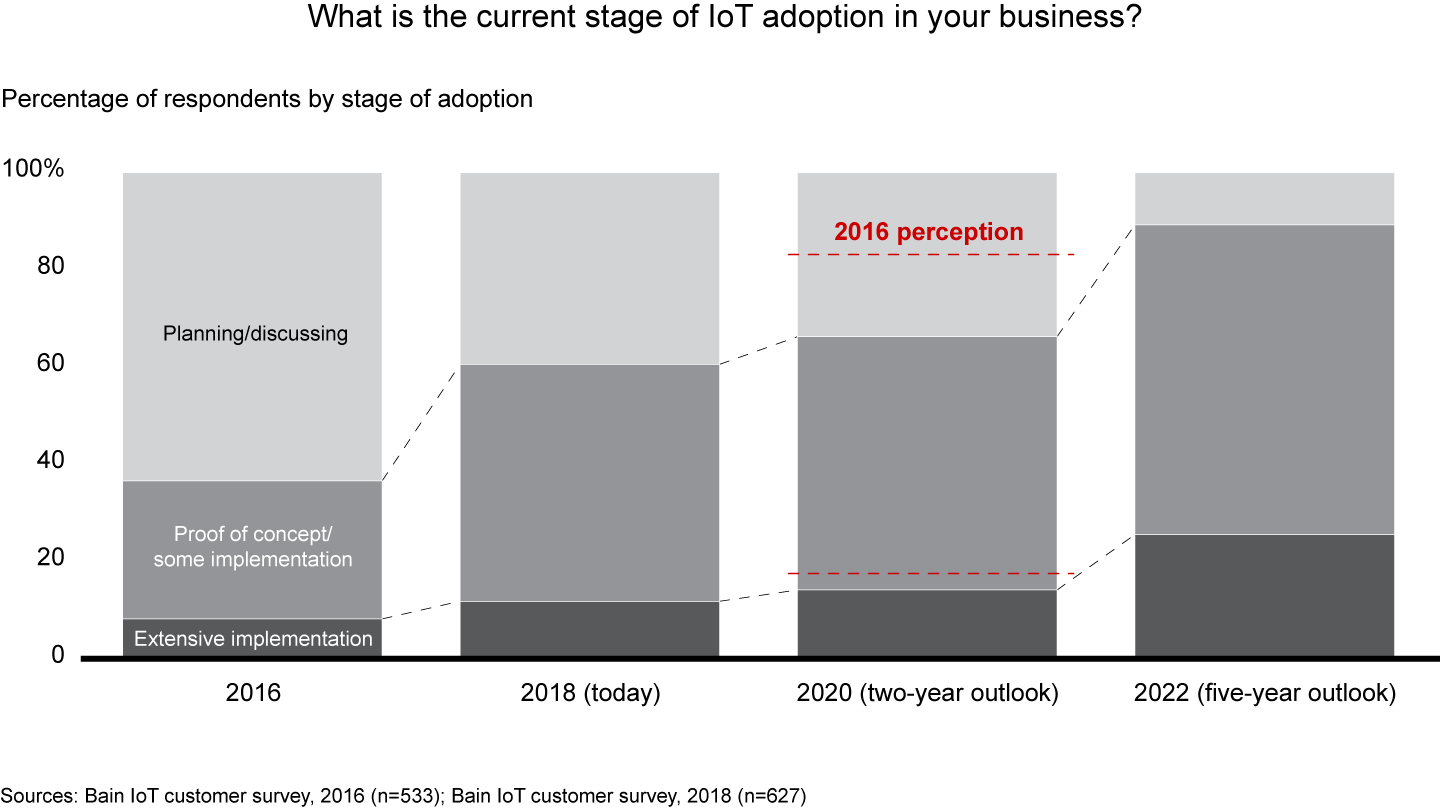
- Customers are planning more proofs of concept, but many have tempered their expectations about the pace of adoption.
- Cloud service providers have emerged as influential providers of IoT analytics and services, but their broad focus leaves opportunities for other providers to serve specific industries.
- Vendors should focus on fewer industries and work closely with partners to deliver more targeted industry solutions.
Enterprise customers remain bullish on the Internet of Things, but their enthusiasm has been tempered by the realization that complete solutions may take longer to implement and yield a return than they had originally expected. Even so, we expect the markets for IoT hardware, software, systems integration, and data and telecom services to grow to $520 billion in 2021, more than double the $235 billion spent in 2017 (see Figure 1).
Since our last extensive survey on the Internet of Things and analytics two years ago, customers believe that vendors have made little progress on lowering the most significant barriers to IoT adoption—including security, ease of integration with existing information technology (IT) and operational technology (OT) systems, and uncertain returns on investment. So these customers have extended their expectations about when those use cases will reach scale in their organizations. On average, they are planning less extensive IoT implementations by 2020 than they were planning just a couple of years ago (see Figure 2).
In spite of these concerns, enterprise and industrial customers still see success within their reach. They are still running more proofs of concept than they were two years ago. And more customers are considering trying out new use cases: 60% in 2018 compared with fewer than 40% in 2016.
Figure 1
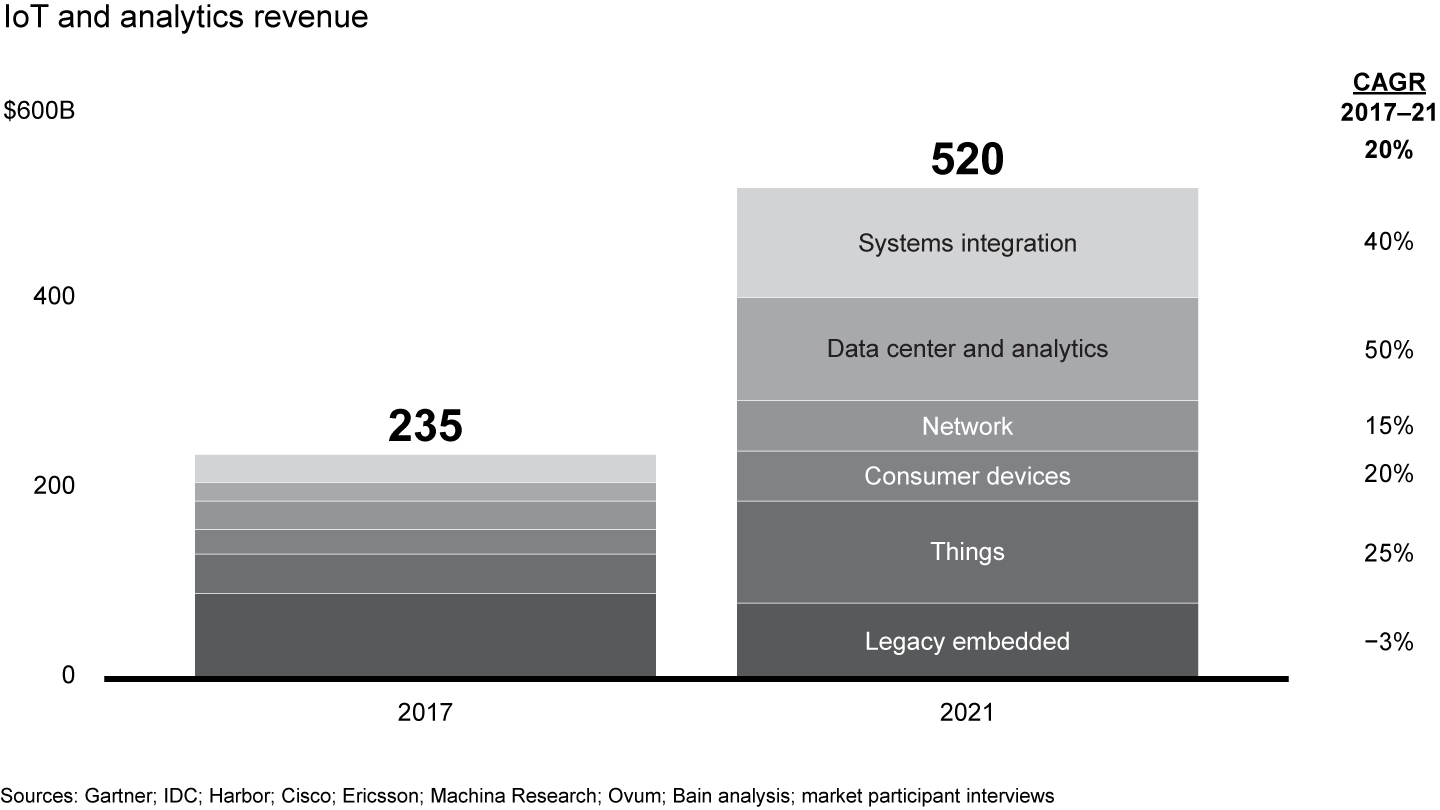

Figure 2

Cloud service providers (CSPs) have emerged as more prominent and influential vendors in the space, particularly Amazon Web Services (AWS) and Microsoft Azure. CSPs are lowering barriers to IoT adoption, allowing for simpler implementations and making it easier to try out new use cases and scale up quickly. Their broad horizontal services provide little optimization for industry-specific applications, however, leaving a significant opportunity for industry solutions from systems integrators, enterprise app developers, industry IoT specialists, device makers and telcos.
This pent-up demand represents a huge opportunity for technology providers that can meet customer needs. Our survey found that vendors are aligned with customers’ concerns on some barriers (security, returns on investment), but less so on others (integration, interoperability and data portability). Based on our experience with previous technology cycles, the key to addressing these concerns lies in focusing on fewer industries in order to learn what customers really want and need. Gaining deep experience in a few use cases helps vendors anticipate customer needs in those industries and allows them to create a repeatable playbook and end-to-end solutions.
Darren Jackson, a partner with Bain's Technology practice, discusses how companies can succeed with IoT adoption by focusing on fewer industries, understanding customer pain points and addressing those concerns through end-to-end solutions.
What’s changed? What remains the same?
In our survey, customers told us that CSPs and analytics and infrastructure software vendors have the most influence over the IoT solutions they are buying. Many customers see CSPs as leaders in providing easy access to IoT tools that collect, aggregate, curate and analyze data. For example, AWS and Microsoft Azure have both expanded their IoT-specific tools over the past 18 months. CSPs are leveraging their deep expertise in analytics to expand across IoT battlegrounds, as well as to fortify their position in the analytics and cloud battleground for enterprise and industrial customers (see the Bain Brief “Defining the Battlegrounds of the Internet of Things”).
Edge analytics have also become increasingly important as solutions providers and customers realize they can move processing power out from the cloud and closer to the sensors and cameras where data is collected. Video surveillance, for example, is just one use in which it could be more cost effective to analyze data close to the source instead of sending bandwidth-intensive video to the cloud.
In terms of barriers to adoption, customers identified the same three most significant issues as they did in 2016: security, integration with existing technology and uncertain returns on investment (see Figure 3).
Figure 3
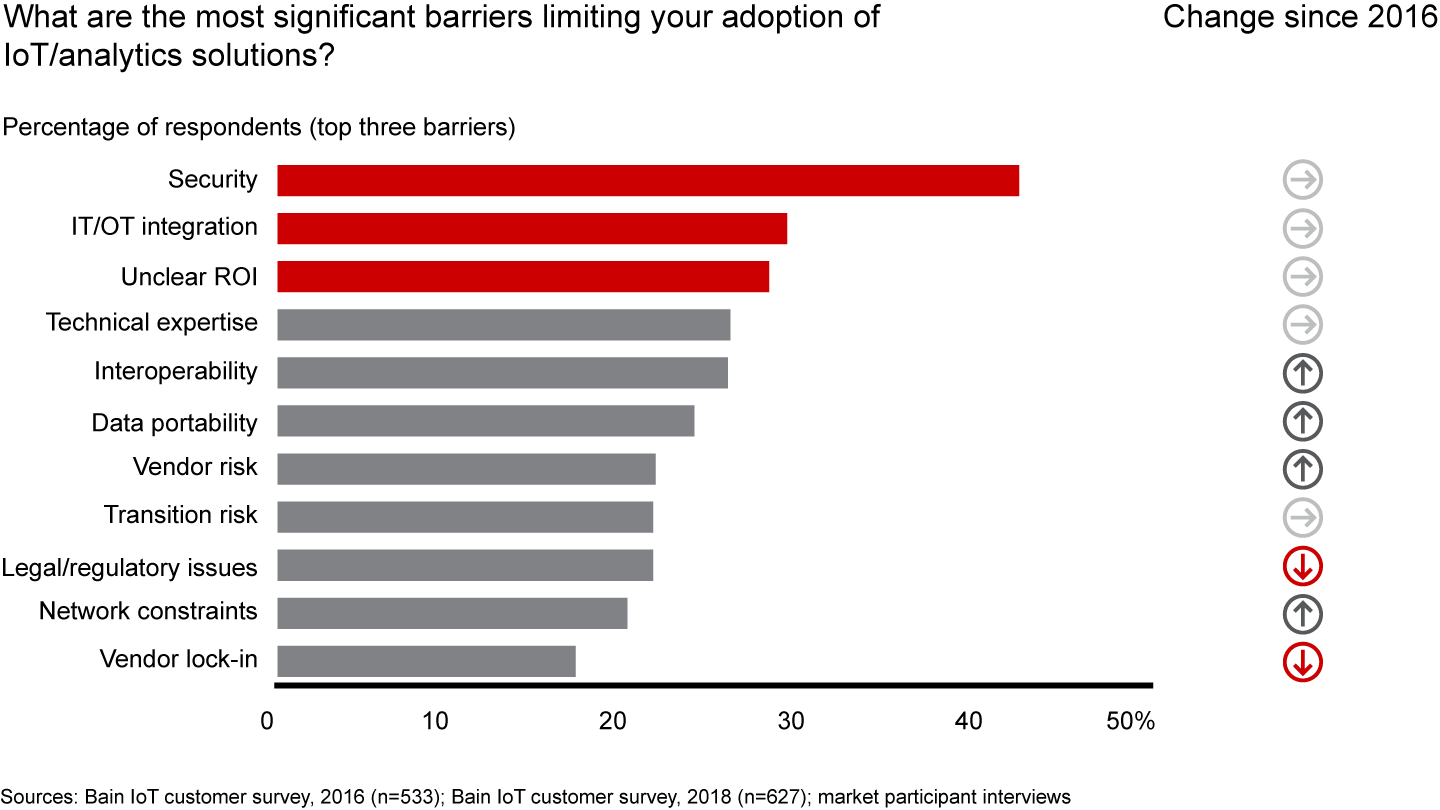

Security concerns weigh particularly heavily. Our research finds that enterprise customers would buy more IoT devices and pay more for them (about 22% more on average) if their security concerns were addressed (see the Bain Brief “Cybersecurity Is the Key to Unlocking Demand in the Internet of Things”).
Integration also remains a top barrier. Vendors haven’t made it easy for customers to integrate their IoT solutions into business processes or IT and OT—and they may be underestimating their customers’ concerns. If vendors invest in learning more about typical implementation challenges in their customers’ industries, they’ll be able to offer more complete end-to-end solutions.

More Digital Transformation Insights
Digital transformation is a topic of rich and vital discussion in boardrooms and among executive teams around the world. Here are some insights on what it takes to lead and deliver a digital transformation.
Priorities are shifting, too. Predictive maintenance emerged as one of the first attractive IoT use cases as sensors and analytics helped companies determine more precisely when maintenance or replacement was necessary. Schindler, for example, worked with GE’s Predix Platform to implement a broad predictive maintenance program designed to optimize maintenance on more than 60,000 elevators and escalators worldwide. But some of the interest in predictive maintenance has waned because customers found that the returns on investment have taken longer than expected. Legacy data formats and missing historical data are part of the problem, and insights have been harder to glean than first promised.
Interest in remote monitoring, on the other hand, has risen because it tends to be an easily integrated or standalone application. Industrial equipment leader ABB, for example, bundles remote monitoring into its connected robotics systems and connected low-voltage networks, which allows customers to troubleshoot and quickly identify issues requiring greater attention.
Across use cases, vendors and their enterprise customers are not always completely aligned. Customers’ interest in many IoT use cases has risen since 2016. Vendors are somewhat more bearish as they prioritize their investments in the use cases that are proving themselves in the marketplace, which they are able to scale up more efficiently.
What to do about it
The next few years will be critical to the development of IoT markets as leaders continue to make gains and expand their industry-specific offers. Incumbents that fail to move quickly enough to address customers’ needs are likely to get leapfrogged by more nimble competitors. Device makers, in particular, run the risk of seeing software and analytics competitors capture the value of solutions, leaving them to deliver lower-profitability hardware components.
The right actions vary, of course, from one company’s situation to another. But three themes are nearly universal for IoT vendors.
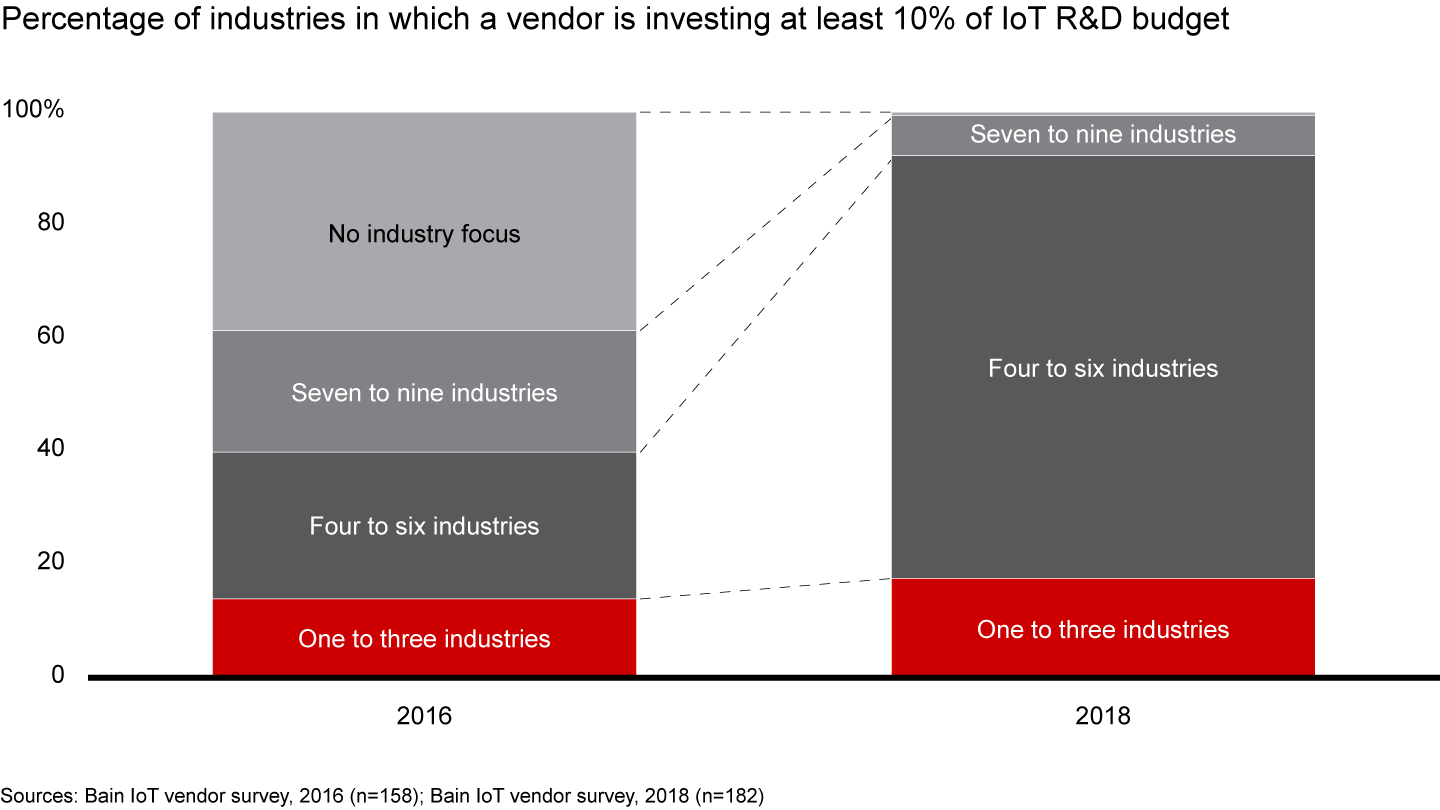
Focus on getting a few industries right. Industry customization and intelligent packaging are emerging as keys for success. Leading vendors are targeting their solutions on fewer industries than before—a welcome change that will allow them to deliver solutions better suited to customers’ needs. They should continue to narrow their focus: More than 80% of vendors still target four to six industries—too many to build depth rapidly (see Figure 4). Focusing on two or three domains allows vendors to incorporate significant industry expertise, providing a competitive edge against the more generic offers by CSPs.
Figure 4

Develop end-to-end solutions. As vendors gain experience implementing IoT solutions in specific industries, they develop cost-effective, end-to-end packages with partners—something for which buyers have been clamoring. Many IoT deployments require customization, usually based on industry application: More than 60% of customers say the solutions they buy are more than 25% customized. When vendors explore the use cases particular to an industry, they learn about the different data sets required, the sensors measuring it and how to process it to glean valuable insights. From this, they learn what’s transferable to the next customer. They can then create standard packages, reducing customization requirements, shortening sales cycles and increasing the likelihood of success.
Several companies are showing how to adapt technology to markets in this way through partnerships and acquisitions. IBM Watson, for example, develops proofs of concept with customers and applies those lessons to develop industry playbooks that include multiple-use cases. IBM Watson’s concept work with Samsung, for example, informed later work with elevator company Kone and French railroad operator SNCF. Verizon chose acquisitions as a way to gain deep expertise in telematics, buying Hughes Telematics, Fleetmatics, Telogis and Movildata to boost its fleet management.
Leading industrial automation vendors also are exploring ways to lower barriers for their customers and extend their systems to IoT markets. For example, Siemens’ Mindsphere is integrating its digital twin IoT software for customers already running its product life cycle management systems.
Prepare to scale by removing barriers to adoption. Customers and vendors believe that progress has been slower than they had expected in overcoming the main barriers to adoption (see the Bain Brief “How Providers Can Succeed in the Internet of Things”). Vendors have more experience with operational considerations today than they had two years ago, however, and customers have a better understanding of the necessary investments. Customers also have more realistic expectations about the returns they can expect.
Leaders will translate their experience into repeatable playbooks that address their customers’ concerns about security, integration and returns on investment. Understanding customers’ pain points is the first step; addressing them and baking them into end-to-end solutions will position technology providers to deliver cost-effective IoT solutions that can scale.
Ann Bosche is a partner with Bain & Company in San Francisco, and David Crawford and Michael Schallehn are Bain partners in the Silicon Valley office. Darren Jackson is a Bain partner in Los Angeles, and Christopher Schorling is a Bain partner in Frankfurt. All five work with Bain’s Global Technology practice.
The authors would like to thank Aneesa Sayall, a manager in San Francisco, for her contributions to this work.
First published in 8月 2018