
Skip to Content
  • オフィス

    オフィス

    北米・南米
    • Atlanta
    • Austin
    • Bogota
    • Boston
    • Buenos Aires
    • Chicago
    • Dallas
    • Denver
    • Houston
    • Los Angeles
    • Mexico City
    • Minneapolis
    • Monterrey
    • Montreal
    • New York
    • Rio de Janeiro
    • San Francisco
    • Santiago
    • São Paulo
    • Seattle
    • Silicon Valley
    • Toronto
    • Washington, DC
    ヨーロッパ・中東・アフリカ
    • Amsterdam
    • Athens
    • Berlin
    • Brussels
    • Copenhagen
    • Doha
    • Dubai
    • Dusseldorf
    • Frankfurt
    • Helsinki
    • Istanbul
    • Johannesburg
    • Kyiv
    • Lisbon
    • London
    • Madrid
    • Milan
    • Munich
    • Oslo
    • Paris
    • Riyadh
    • Rome
    • Stockholm
    • Vienna
    • Warsaw
    • Zurich
    アジア・オーストラリア
    • Bangkok
    • Beijing
    • Bengaluru
    • Brisbane
    • Ho Chi Minh City
    • Hong Kong
    • Jakarta
    • Kuala Lumpur
    • Manila
    • Melbourne
    • Mumbai
    • New Delhi
    • Perth
    • Shanghai
    • Singapore
    • Sydney
    • Tokyo
    全てのオフィス
  • アルムナイ
  • メディア
  • お問い合わせ
  • 東京オフィス
  • Japan | 日本語

    地域と言語を選択

    グローバル
    • Global (English)
    北米・南米
    • Brazil (Português)
    • Argentina (Español)
    • Canada (Français)
    • Chile (Español)
    • Colombia (Español)
    ヨーロッパ・中東・アフリカ
    • France (Français)
    • DACH Region (Deutsch)
    • Italy (Italiano)
    • Spain (Español)
    • Greece (Elliniká)
    アジア・オーストラリア
    • China (中文版)
    • Korea (한국어)
    • Japan (日本語)
  • Saved items (0)
    Saved items (0)

    You have no saved items.

    後で閲読、共有できるようにするためにブックマークしてください

    Explore Bain Insights
  • 業界別プラクティス
    メインメニュー

    業界別プラクティス

    • 航空宇宙、防衛、政府関連
    • 農業
    • 化学製品
    • インフラ、建設
    • 消費財
    • 金融サービス
    • ヘルスケア
    • 産業機械、設備
    • メディア、エンターテインメント
    • 金属
    • 採掘・鉱業
    • 石油、ガス
    • 紙、パッケージ
    • プライベートエクイティ
    • 公共、社会セクター
    • 小売
    • テクノロジー
    • 通信
    • 交通
    • 観光産業
    • 公益事業、再生可能エネルギー
  • 機能別プラクティス
    メインメニュー

    機能別プラクティス

    • カスタマー・エクスペリエンス
    • サステイナビリティ、 社会貢献
    • Innovation
    • 企業買収、合併 (M&A)
    • オペレーション
    • 組織
    • プライベートエクイティ
    • マーケティング・営業
    • 戦略
    • アドバンスド・アナリティクス
    • Technology
    • フルポテンシャル・トランスフォーメーション
  • Digital
  • 知見/レポート
  • ベイン・アンド・カンパニーについて
    メインメニュー

    ベイン・アンド・カンパニーについて

    • ベインの信条
    • 活動内容
    • 社員とリーダーシップ
    • プレス・メディア情報
    • クライアントの結果
    • 受賞歴
    • パートナーシップを結んでいる団体
    Further: Our global responsibility
    • ダイバーシティ
    • 社会貢献
    • サステイナビリティへの取り組み
    • 世界経済フォーラム(WEF)
    Learn more about Further
  • キャリア
    メインメニュー

    キャリア

    • ベインで働く
      キャリア
      ベインで働く
      • Find Your Place
      • ベインで活躍する機会
      • ベインのチーム体制
      • 学生向けページ
      • インターンシップ
      • 採用イベント
    • ベインでの体験
      キャリア
      ベインでの体験
      • Blog: Inside Bain
      • キャリアストーリー
      • 社員紹介
      • Where We Work
      • 成長を後押しするサポート体制
      • アフィニティ・グループ
      • 福利厚生
    • Impact Stories
    • 採用情報
      キャリア
      採用情報
      • 採用プロセス
      • 面接内容
    FIND JOBS
  • オフィス
    メインメニュー

    オフィス

    • 北米・南米
      オフィス
      北米・南米
      • Atlanta
      • Austin
      • Bogota
      • Boston
      • Buenos Aires
      • Chicago
      • Dallas
      • Denver
      • Houston
      • Los Angeles
      • Mexico City
      • Minneapolis
      • Monterrey
      • Montreal
      • New York
      • Rio de Janeiro
      • San Francisco
      • Santiago
      • São Paulo
      • Seattle
      • Silicon Valley
      • Toronto
      • Washington, DC
    • ヨーロッパ・中東・アフリカ
      オフィス
      ヨーロッパ・中東・アフリカ
      • Amsterdam
      • Athens
      • Berlin
      • Brussels
      • Copenhagen
      • Doha
      • Dubai
      • Dusseldorf
      • Frankfurt
      • Helsinki
      • Istanbul
      • Johannesburg
      • Kyiv
      • Lisbon
      • London
      • Madrid
      • Milan
      • Munich
      • Oslo
      • Paris
      • Riyadh
      • Rome
      • Stockholm
      • Vienna
      • Warsaw
      • Zurich
    • アジア・オーストラリア
      オフィス
      アジア・オーストラリア
      • Bangkok
      • Beijing
      • Bengaluru
      • Brisbane
      • Ho Chi Minh City
      • Hong Kong
      • Jakarta
      • Kuala Lumpur
      • Manila
      • Melbourne
      • Mumbai
      • New Delhi
      • Perth
      • Shanghai
      • Singapore
      • Sydney
      • Tokyo
    全てのオフィス
  • アルムナイ
  • メディア
  • お問い合わせ
  • 東京オフィス
  • Japan | 日本語
    メインメニュー

    地域と言語を選択

    • グローバル
      地域と言語を選択
      グローバル
      • Global (English)
    • 北米・南米
      地域と言語を選択
      北米・南米
      • Brazil (Português)
      • Argentina (Español)
      • Canada (Français)
      • Chile (Español)
      • Colombia (Español)
    • ヨーロッパ・中東・アフリカ
      地域と言語を選択
      ヨーロッパ・中東・アフリカ
      • France (Français)
      • DACH Region (Deutsch)
      • Italy (Italiano)
      • Spain (Español)
      • Greece (Elliniká)
    • アジア・オーストラリア
      地域と言語を選択
      アジア・オーストラリア
      • China (中文版)
      • Korea (한국어)
      • Japan (日本語)
  • Saved items  (0)
    メインメニュー
    Saved items (0)

    You have no saved items.

    後で閲読、共有できるようにするためにブックマークしてください

    Explore Bain Insights
  • 業界別プラクティス
    • 業界別プラクティス

      • 航空宇宙、防衛、政府関連
      • 農業
      • 化学製品
      • インフラ、建設
      • 消費財
      • 金融サービス
      • ヘルスケア
      • 産業機械、設備
      • メディア、エンターテインメント
      • 金属
      • 採掘・鉱業
      • 石油、ガス
      • 紙、パッケージ
      • プライベートエクイティ
      • 公共、社会セクター
      • 小売
      • テクノロジー
      • 通信
      • 交通
      • 観光産業
      • 公益事業、再生可能エネルギー
  • 機能別プラクティス
    • 機能別プラクティス

      • カスタマー・エクスペリエンス
      • サステイナビリティ、 社会貢献
      • Innovation
      • 企業買収、合併 (M&A)
      • オペレーション
      • 組織
      • プライベートエクイティ
      • マーケティング・営業
      • 戦略
      • アドバンスド・アナリティクス
      • Technology
      • フルポテンシャル・トランスフォーメーション
  • Digital
  • 知見/レポート
  • ベイン・アンド・カンパニーについて
    • ベイン・アンド・カンパニーについて

      • ベインの信条
      • 活動内容
      • 社員とリーダーシップ
      • プレス・メディア情報
      • クライアントの結果
      • 受賞歴
      • パートナーシップを結んでいる団体
      Further: Our global responsibility
      • ダイバーシティ
      • 社会貢献
      • サステイナビリティへの取り組み
      • 世界経済フォーラム(WEF)
      Learn more about Further
  • キャリア
    人気検索キーワード
    • デジタル
    • 戦略
    前回の検索
      最近訪れたページ

      Content added to saved items

      Saved items (0)

      Removed from saved items

      Saved items (0)

      論説

      Upgrading Your Technology Operating Model: Six Themes for Success

      Upgrading Your Technology Operating Model: Six Themes for Success

      It takes real change to deliver high returns on investment in technology.

      著者:Daan van Ginneken, Joao Valadares, and Will Poindexter

      • min read
      }

      論説

      Upgrading Your Technology Operating Model: Six Themes for Success
      en
      概要
      • Investments in technology can’t generate significant value without shifts in the way companies manage their technology organization.
      • Making the right decisions about the tech operating model can reduce operating expenses and improve returns on tech investment.
      • Aligning the business and technology functions around outcomes rather than output helps reposition technology as a value generator rather than cost center.

      When technology spending and operations are discussed in executive suites, we often hear a mixture of frustration and concern. Senior executives are frustrated that, while ramping up investments in technology and talent, they’re not getting the payback they expected in value, speed, and cost-effectiveness. And even though their organizations have been climbing the experience curve on digital capabilities, cloud computing, modularity, and automation, they now see a new wave of tech coming their way bringing web3, the metaverse, and artificial intelligence (AI). Most are currently focused closely on cost, intent on reducing operational spending and ensuring that any new investments are realized successfully.

      Executives are asking: How can we get on top of this and make technology deliver maximum value?

      The answer is usually that, although companies have thrown more money into technology, few have changed their overall operating model to envision, develop, and manage technology in ways that lead to maximum outcomes. Without those changes, ROI will always be lower and run rates higher than they should be.

      Technology generates value

      So what has to change?

      As companies adapt their operating model to enhance the value from their technology investments, they need to focus on technology that helps the business grow, as opposed to tech that just keeps the lights on.

      But before any of those things occur, the most important change is a mindset shift. Executive teams have to stop thinking of their technology function as a cost center and begin to see it as a place where the company generates value. Even when they’re looking mostly to control spending in the near term, they can change the narrative from reducing spending to prioritizing value.

      This is an important shift, because it forces everyone to focus on outcomes. It changes the relationship between the business and technology, elevating tech leaders to become thought partners who collaborate with their business peers. This requires the business side to build a deeper understanding of technology and engage on the topic more frequently and on more equal footing. Accountability grows, ideas flow in both directions, delivery speeds up, and quality increases.

      Six traits of successful operating models

      In our client work across industries, we’ve identified six key themes that successful companies apply to their operating models to realize greater value from their technology investments.

      Adopt the product model. Arguably the central theme in any operating model upgrade is to adopt the product model rather than project-based work as the way to organize, manage, and resource technology and data investments and activities. This changes everything because it sets up persistent cross-functional teams that continuously focus on improving their product and its business outcomes. It places greater emphasis on the user’s needs, and it requires close collaboration and sometimes integration with the business. Together they ensure products get adopted, which might involve changes in the business. This can profoundly impact the organizational structure and ways of working, regardless of whether they adopt the model in full or implement a subset of best practices. It fosters a healthy blend of new feature creation with maintenance, since the product team is responsible and held accountable for both. Finally, the product model tends to produce greater job satisfaction because teams have more direct ownership of the product and outcomes.

      Invest for outcomes. The shift to a product model supports an equally important change in funding: Executive teams fund a product area rather than individual projects. The company assigns persistent budgets to product teams and holds them accountable for delivering outcomes, such as increasing conversion of online baskets to sales, reducing call volume to human resources, or increasing visibility in the supply chain. They let the people on those products figure out what to do with the money. Product owners have the flexibility to shift that spending based on how products and markets evolve over the course of the year and on which products are meeting their targets. If products cannot deliver, their budgets will shift to higher-value areas.

      Talent first. Talent remains a critical topic on executives’ mind. Demand for top tech talent more than doubled between 2015 and 2019. While some high-profile layoffs at the largest tech firms may have temporarily eased the labor markets around places like Silicon Valley and Seattle, they’ll have little effect on the long-term, structural unbalances in the broader global market for top tech talent.

      The nature of the job is also evolving quickly: 40% of the most in-demand jobs didn’t exist in 2015. And among those in demand, their expectations have changed; they can pick and choose where and how they work. The pandemic spurred the adoption of a work-from-home model, and now flexibility (in location, timing, and choice of projects) remains a top criterion for choosing a job. Adopting a product model also affects the talent footprint, demanding different skills and possibly reducing the overall headcount.

      Other trends are shaping the market for top tech labor. More companies are bringing their most important roles in-house, and this often provides an opportunity to rethink the size of departments and rebalance roles among thinkers, doers, and watchers. Many companies have overinvested in watcher-type roles such as project managers and business analysts, which tend to be more expensive and create less value than thinker or doer roles (see Figure 1). This represents an opportunity to evolve your talent strategy and optimize labor spending.

      Figure 1
      Getting the right balance helps produce good technology results

      Global scale, local traction. In the past, there was a tension between executives who advocated for localization to appeal to consumers (or regulations) in specific countries or business units, and those who argued for centralization of systems and platforms across the company, to gain economies of scale and pool innovation. More recently, it’s possible to please both. Cloud computing makes global scale more achievable, while modular architecture and APIs support the flexibility that allows for localization. The technology is so flexible that you can build things centrally and make it relevant for local brands or business units—something that wasn’t as easy to do 10 years ago.

      Delivery excellence. Adopting Agile ways of working, in teams and at scale, is an essential first step in improving the company’s ability to deliver quickly at the highest levels of quality. Another important action is implementing software engineering best practices, including adoption of DevOps (bringing new development and maintenance together), automated testing and release, and best practice for code writing and review. Advances in AI can help here as well. Adopting best practices in software engineering can boost developer efficiency by 25% to 50%, increase quality and stability of code by 20% to 40%, and deliver products 5 to 10 times faster.

      Elevation of technology. Finally, and in line with a shift in mindset, at companies that say they’re getting their expected returns from technology investments, the relationship between technology and business has evolved from service provider to thought partner. One indicator of this is the number of companies that are raising their technology leaders to the C-suite. Ten years ago, only 10% of leading consumer packaged goods companies had their tech function in the C-suite; today, it’s about half. Heineken is among the companies that have created or elevated roles for their top technology executives at the highest levels of management. We see the same trend in the retail sector, with this figure more than doubling to 75% from about 35% in 10 years. Walmart consolidated four technology leader roles into one senior role that sits on the executive committee.

      Six traits can be a lot to focus on. Successful efforts select one or two areas for initial focus, build on success, and move on to other traits in sequence (see Figure 2).

      Figure 2
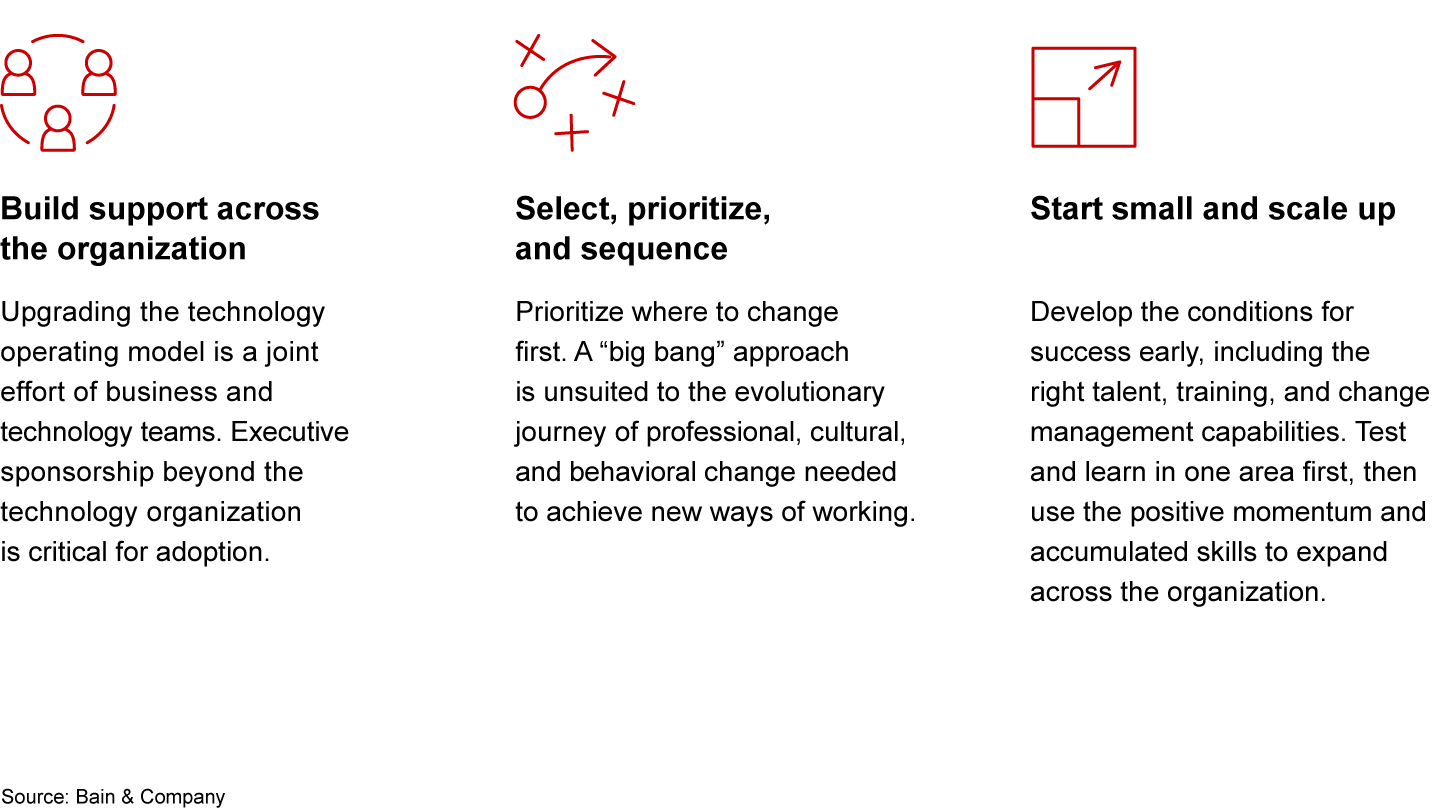
      Successful efforts build support, start small and scale up, and sequence initiatives according to priorities
      Successful efforts build support, start small and scale up, and sequence initiatives according to priorities
      Successful efforts build support, start small and scale up, and sequence initiatives according to priorities

      Nearly everyone is looking for stronger results and more value from their investments in technology. At the same time, cost pressures are leading most senior tech leaders to increase their scrutiny on technology spending. Evolving the technology operating model is an essential journey for tech leaders and their companies to achieve their goals.

      著者
      • Headshot of Daan van Ginneken
        Daan van Ginneken
        パートナー, Amsterdam
      • Headshot of Joao Valadares
        Joao Valadares
        パートナー, Lisbon
      • Headshot of Will Poindexter
        Will Poindexter
        パートナー, Denver
      関連するコンサルティングサービス
      • Digital
      • IT
      コンサルティングサービス
      • Technology Operating Model
      デジタルトランスフォメーション
      Choose to Win: The Five Decisions That Make or Break Banking Modernization

      Banking modernization involves more nuance than the binary-bet caricature of an existential “rip-and-replace” gamble versus a cosmetic refresh.

      詳細
      CIO Insights
      Is Türkiye Ready for Generative AI?

      A new study, in collaboration with TÜSİAD, investigates the AI readiness of Turkish business and the biggest barriers to achieving scale and maturity.

      詳細
      IT
      Reimagining Merchandising in the Era of Agentic AI

      The future of merchandising is not better analysis, but faster, smarter execution—and agentic AI is what makes that possible.

      詳細
      CIO Insights
      Top Digital Use Cases by Industry

      Bain’s research identifies the most useful digital applications, including those that offer the best opportunities for competitive advantage.

      詳細
      Technology Operating Model
      Sustainable Aviation Fuel: The Supply Race Is On

      European production is projected to fall nearly 20% short of mandate-driven demand by 2030, a big opportunity for global feedstock suppliers and refiners that invest now.

      詳細
      First published in 5月 2023
      Tags
      • CIO Insights
      • Digital
      • IT
      • Technology Operating Model
      • デジタルトランスフォメーション

      クライアント支援事例

      Digital A European Banking Giant Rises to the Fintech Challenge

      ケーススタディを見る

      Digital A Strategic Separation Enables New Growth for GSK and Haleon

      ケーススタディを見る

      アドバンスド・アナリティクス A Global Retailer Transforms Technology and Data to Conquer the Digital Future

      ケーススタディを見る

      お気軽にご連絡下さい

      私達は、グローバルに活躍する経営者が抱える最重要経営課題に対して、厳しい競争環境の中でも成長し続け、「結果」を出すために支援しています。

      Digital is a service mark of Bain & Company, Inc.

      ベインの知見。競争が激化するグローバルビジネス環境で、日々直面するであろう問題について論じている知見を毎月お届けします。

      *プライバシーポリシーの内容を確認し、合意しました。

      プライバシーポリシーをご確認頂き、合意頂けますようお願い致します。
      Bain & Company
      お問い合わせ Sustainability Accessibility Terms of use Privacy Cookie Policy Sitemap Log In

      © 1996-2026 Bain & Company, Inc.

      お問い合わせ

      How can we help you?

      • ビジネスについて
      • プレス報道について
      • 採用について
      全てのオフィス