
Skip to Content
  • オフィス

    オフィス

    北米・南米
    • Atlanta
    • Austin
    • Bogota
    • Boston
    • Buenos Aires
    • Chicago
    • Dallas
    • Denver
    • Houston
    • Los Angeles
    • Mexico City
    • Minneapolis
    • Monterrey
    • Montreal
    • New York
    • Rio de Janeiro
    • San Francisco
    • Santiago
    • São Paulo
    • Seattle
    • Silicon Valley
    • Toronto
    • Washington, DC
    ヨーロッパ・中東・アフリカ
    • Amsterdam
    • Athens
    • Berlin
    • Brussels
    • Copenhagen
    • Doha
    • Dubai
    • Dusseldorf
    • Frankfurt
    • Helsinki
    • Istanbul
    • Johannesburg
    • Kyiv
    • Lisbon
    • London
    • Madrid
    • Milan
    • Munich
    • Oslo
    • Paris
    • Riyadh
    • Rome
    • Stockholm
    • Vienna
    • Warsaw
    • Zurich
    アジア・オーストラリア
    • Bangkok
    • Beijing
    • Bengaluru
    • Brisbane
    • Ho Chi Minh City
    • Hong Kong
    • Jakarta
    • Kuala Lumpur
    • Manila
    • Melbourne
    • Mumbai
    • New Delhi
    • Perth
    • Shanghai
    • Singapore
    • Sydney
    • Tokyo
    全てのオフィス
  • アルムナイ
  • メディア
  • お問い合わせ
  • 東京オフィス
  • Japan | 日本語

    地域と言語を選択

    グローバル
    • Global (English)
    北米・南米
    • Brazil (Português)
    • Argentina (Español)
    • Canada (Français)
    • Chile (Español)
    • Colombia (Español)
    ヨーロッパ・中東・アフリカ
    • France (Français)
    • DACH Region (Deutsch)
    • Italy (Italiano)
    • Spain (Español)
    • Greece (Elliniká)
    アジア・オーストラリア
    • China (中文版)
    • Korea (한국어)
    • Japan (日本語)
  • Saved items (0)
    Saved items (0)

    You have no saved items.

    後で閲読、共有できるようにするためにブックマークしてください

    Explore Bain Insights
  • 業界別プラクティス
    メインメニュー

    業界別プラクティス

    • 航空宇宙、防衛、政府関連
    • 農業
    • 化学製品
    • インフラ、建設
    • 消費財
    • 金融サービス
    • ヘルスケア
    • 産業機械、設備
    • メディア、エンターテインメント
    • 金属
    • 採掘・鉱業
    • 石油、ガス
    • 紙、パッケージ
    • プライベートエクイティ
    • 公共、社会セクター
    • 小売
    • テクノロジー
    • 通信
    • 交通
    • 観光産業
    • 公益事業、再生可能エネルギー
  • 機能別プラクティス
    メインメニュー

    機能別プラクティス

    • カスタマー・エクスペリエンス
    • サステイナビリティ、 社会貢献
    • Innovation
    • 企業買収、合併 (M&A)
    • オペレーション
    • 組織
    • プライベートエクイティ
    • マーケティング・営業
    • 戦略
    • アドバンスド・アナリティクス
    • Technology
    • フルポテンシャル・トランスフォーメーション
  • Digital
  • 知見/レポート
  • ベイン・アンド・カンパニーについて
    メインメニュー

    ベイン・アンド・カンパニーについて

    • ベインの信条
    • 活動内容
    • 社員とリーダーシップ
    • プレス・メディア情報
    • クライアントの結果
    • 受賞歴
    • パートナーシップを結んでいる団体
    Further: Our global responsibility
    • ダイバーシティ
    • 社会貢献
    • サステイナビリティへの取り組み
    • 世界経済フォーラム(WEF)
    Learn more about Further
  • キャリア
    メインメニュー

    キャリア

    • ベインで働く
      キャリア
      ベインで働く
      • Find Your Place
      • ベインで活躍する機会
      • ベインのチーム体制
      • 学生向けページ
      • インターンシップ
      • 採用イベント
    • ベインでの体験
      キャリア
      ベインでの体験
      • キャリアストーリー
      • 社員紹介
      • Where We Work
      • 成長を後押しするサポート体制
      • アフィニティ・グループ
      • 福利厚生
    • Impact Stories
    • 採用情報
      キャリア
      採用情報
      • 採用プロセス
      • 面接内容
    FIND JOBS
  • オフィス
    メインメニュー

    オフィス

    • 北米・南米
      オフィス
      北米・南米
      • Atlanta
      • Austin
      • Bogota
      • Boston
      • Buenos Aires
      • Chicago
      • Dallas
      • Denver
      • Houston
      • Los Angeles
      • Mexico City
      • Minneapolis
      • Monterrey
      • Montreal
      • New York
      • Rio de Janeiro
      • San Francisco
      • Santiago
      • São Paulo
      • Seattle
      • Silicon Valley
      • Toronto
      • Washington, DC
    • ヨーロッパ・中東・アフリカ
      オフィス
      ヨーロッパ・中東・アフリカ
      • Amsterdam
      • Athens
      • Berlin
      • Brussels
      • Copenhagen
      • Doha
      • Dubai
      • Dusseldorf
      • Frankfurt
      • Helsinki
      • Istanbul
      • Johannesburg
      • Kyiv
      • Lisbon
      • London
      • Madrid
      • Milan
      • Munich
      • Oslo
      • Paris
      • Riyadh
      • Rome
      • Stockholm
      • Vienna
      • Warsaw
      • Zurich
    • アジア・オーストラリア
      オフィス
      アジア・オーストラリア
      • Bangkok
      • Beijing
      • Bengaluru
      • Brisbane
      • Ho Chi Minh City
      • Hong Kong
      • Jakarta
      • Kuala Lumpur
      • Manila
      • Melbourne
      • Mumbai
      • New Delhi
      • Perth
      • Shanghai
      • Singapore
      • Sydney
      • Tokyo
    全てのオフィス
  • アルムナイ
  • メディア
  • お問い合わせ
  • 東京オフィス
  • Japan | 日本語
    メインメニュー

    地域と言語を選択

    • グローバル
      地域と言語を選択
      グローバル
      • Global (English)
    • 北米・南米
      地域と言語を選択
      北米・南米
      • Brazil (Português)
      • Argentina (Español)
      • Canada (Français)
      • Chile (Español)
      • Colombia (Español)
    • ヨーロッパ・中東・アフリカ
      地域と言語を選択
      ヨーロッパ・中東・アフリカ
      • France (Français)
      • DACH Region (Deutsch)
      • Italy (Italiano)
      • Spain (Español)
      • Greece (Elliniká)
    • アジア・オーストラリア
      地域と言語を選択
      アジア・オーストラリア
      • China (中文版)
      • Korea (한국어)
      • Japan (日本語)
  • Saved items  (0)
    メインメニュー
    Saved items (0)

    You have no saved items.

    後で閲読、共有できるようにするためにブックマークしてください

    Explore Bain Insights
  • 業界別プラクティス
    • 業界別プラクティス

      • 航空宇宙、防衛、政府関連
      • 農業
      • 化学製品
      • インフラ、建設
      • 消費財
      • 金融サービス
      • ヘルスケア
      • 産業機械、設備
      • メディア、エンターテインメント
      • 金属
      • 採掘・鉱業
      • 石油、ガス
      • 紙、パッケージ
      • プライベートエクイティ
      • 公共、社会セクター
      • 小売
      • テクノロジー
      • 通信
      • 交通
      • 観光産業
      • 公益事業、再生可能エネルギー
  • 機能別プラクティス
    • 機能別プラクティス

      • カスタマー・エクスペリエンス
      • サステイナビリティ、 社会貢献
      • Innovation
      • 企業買収、合併 (M&A)
      • オペレーション
      • 組織
      • プライベートエクイティ
      • マーケティング・営業
      • 戦略
      • アドバンスド・アナリティクス
      • Technology
      • フルポテンシャル・トランスフォーメーション
  • Digital
  • 知見/レポート
  • ベイン・アンド・カンパニーについて
    • ベイン・アンド・カンパニーについて

      • ベインの信条
      • 活動内容
      • 社員とリーダーシップ
      • プレス・メディア情報
      • クライアントの結果
      • 受賞歴
      • パートナーシップを結んでいる団体
      Further: Our global responsibility
      • ダイバーシティ
      • 社会貢献
      • サステイナビリティへの取り組み
      • 世界経済フォーラム(WEF)
      Learn more about Further
  • キャリア
    人気検索キーワード
    • デジタル
    • 戦略
    前回の検索
      最近訪れたページ

      Content added to saved items

      Saved items (0)

      Removed from saved items

      Saved items (0)

      論説

      Using the Next Recession to Change the Game

      Using the Next Recession to Change the Game

      The winners are laying bold plans now to turn a downturn to their advantage.

      著者:Miguel Simoes de Melo, Thomas Kwasniok, and James Hadley

      • min read
      }

      論説

      Using the Next Recession to Change the Game
      en
      概要
      • Timing a recession is hard, but 10 years into the current recovery, a downturn is overdue.
      • Bain research shows that the winners in any recession set themselves up before the slowdown to act aggressively when the storm hits.
      • Now is the time to strengthen the core, align on strategy and prioritize the three or four initiatives that will enable the company to thrive as others flail.

      How long can the good times last? As the postcrisis recovery stretches toward its tenth year, that’s become a subject of spirited debate. The bulls suggest that favorable tax policy and aggressive US deregulation will spark growth indefinitely. The bears argue that fiscal restraint, a flattening yield curve and global trade tensions are signaling the expansion is waning.

      Timing a recession is notoriously hard, but two things are certain: A downturn will arrive eventually and this recovery is defying the odds already; only one recovery on record (from 1991-2001) has lasted as long as a decade, and most peter out within five years. We also know that for corporate leaders, the timing of the next downturn is probably less important than the answer to a couple of simple queries: Are we prepared for the inevitable downturn? And will we wish we had done something different when we still had the chance?

      Bain Brief

      不況時にこそ躍進するための戦略

      景気後退期に年平均成長率17%を達成できた企業群の共通項

      Our research suggests that the eventual winners in any downturn are companies that aggressively captured the opportunities unique to recessions. Playing offense, in other words, almost always trumps hunkering down or trying to weather through. The data shows that winners in a downturn actually make more dramatic gains than winners do during boom times, depending on the shape of the recession. These periods of tumult can be an important opportunity for strategic repositioning and very often prove to be inflection points, shifting profit pools and producing a new industry order.

      The current cycle is a good example. Going into the global financial crisis, the eventual winners and losers in a group of 3,500 global companies both were experiencing double-digit earnings growth. But as soon as the storm hit, performance began to diverge sharply: the winners continued to grow, while the losers stalled out (see Figure 1). The performance gap only widened during the recovery. This suggests that moves made before and during the crisis were key to determining a company’s trajectory once the upturn arrived.

      Figure 1
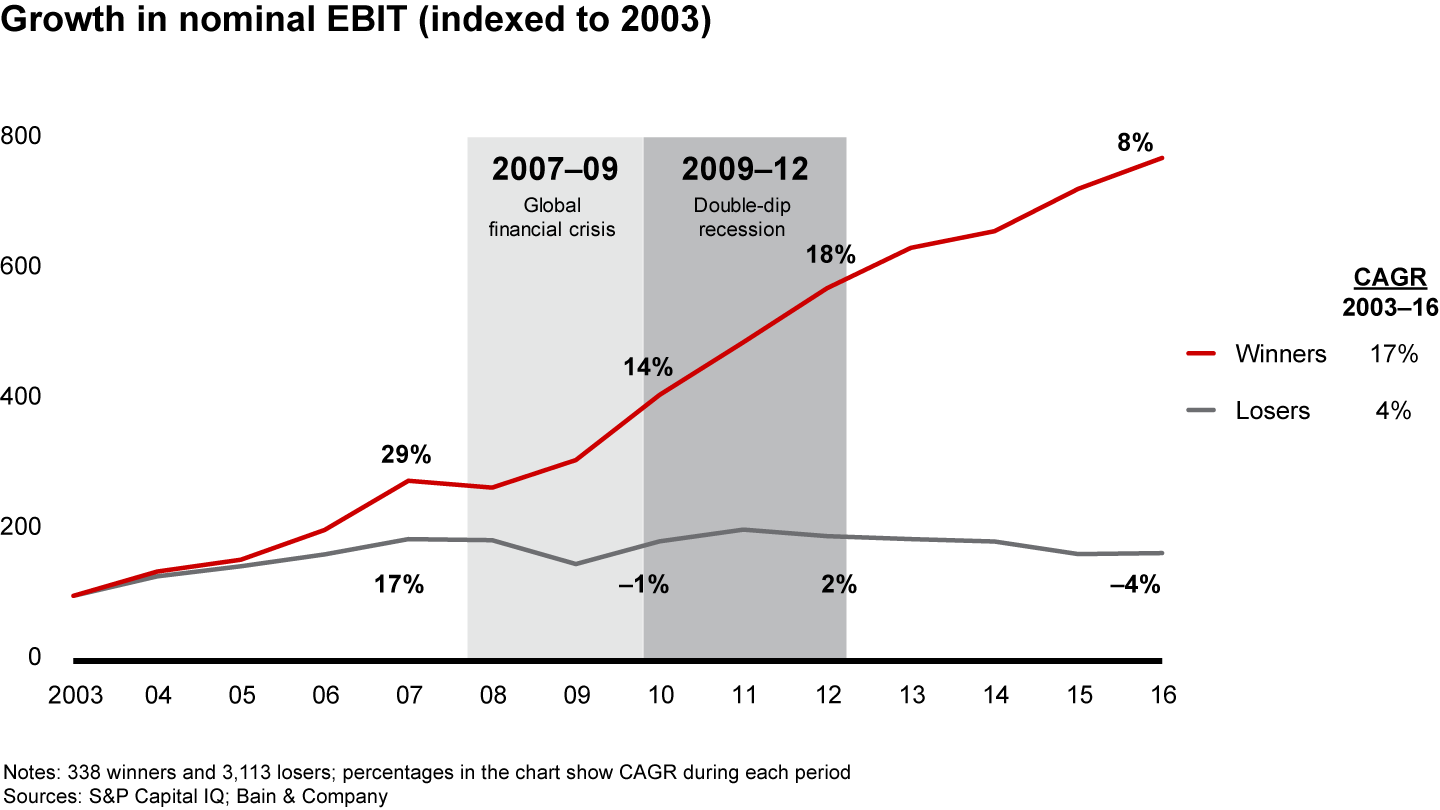
      Winners and losers both grew before the global financial crisis, but winners accelerated through it while the losers stalled
      Winners and losers both grew before the global financial crisis, but winners accelerated through it while the losers stalled
      Winners and losers both grew before the global financial crisis, but winners accelerated through it while the losers stalled

      What made the difference? Preparation and alignment on strategy before the downturn hit were key factors. The CEOs and boards of the winners in our study had already done the hard work of defining their core competitive advantages and prioritizing the three or four initiatives that were central to executing strategy. Then, as the recession approached, winning teams laid careful plans for boldly taking advantage of opportunities that might develop under different scenarios. They doubled down on their core initiatives to maintain momentum into the storm. They created strategic wish lists of potential acquisitions and primed their M&A engines. They considered which stars to recruit as others faltered. And they made the tough decisions to streamline the business and trim noncore activities to raise the “currency” to pay for their bold ambitions.

      Losers did very little of this. They tended to be less clearly aligned on strategic intent at the outset and lulled into a sense of complacency by prerecession growth. Few made contingency plans or thought through alternative scenarios. When the downturn hit, they switched to survival mode, making deep cuts and reacting defensively. The results speak for themselves. Having lost momentum during the downturn, the losers struggled to bounce back once the recovery took hold. The winners emerged stronger, gaining momentum from the bold, strategic moves they made before and during the recession.

      At Costco Wholesale Corp., preparing to profit from the global financial crisis meant recommitting to what it has always done best: simplifying its assortment and running stores more efficiently than others. It slashed the cost of running its in-store pharmacies by centralizing its prescription fill centers. It improved its already market-leading category management practices to limit SKUs and streamlined its supply chain. This flexibility allowed Costco to adapt its store offerings to make them more attractive to cash-strapped customers as the recession wore on. From a position of strength, the retail giant expanded its reach by 20 new warehouses during the recession and increased both revenues and margins. Indeed, while revenues dipped a modest 1.46% in fiscal 2009 as the company weathered the leading edge of the crisis, Costco roared back to double-digit revenue growth by 2011 and 2012.

      So what are the likely winners in the next cycle doing now to position themselves for the coming downturn? In our experience, the most effective teams focus their planning in several important ways.

      Stress-testing the business

      As we’ve seen, companies that thrive in recessions enter periods of economic turmoil with a clear understanding of their core strengths—who they are and what differentiates them from others. Stress-testing begins with carefully reviewing this point of departure and gauging how well the existing company would do against the economic and business scenarios that are most likely to unfold over the next 12 to 24 months. This involves crisis planning, certainly. What’s your degree of exposure to a sharp downturn? But it also means preparing to go on the offensive. Given the way the macro and industry environment may evolve, what opportunities is each scenario likely to present as we forge ahead aggressively on our journey to full potential?

      Envisioning a winning formula

      Taking this proactive approach positions leaders to envision how they’d win under any scenario. But executing on that vision requires an intentional plan for getting ready. This means precisely defining the key opportunities presented by each scenario and diagnosing the business capabilities the company would need to win. How proficient are we in the parts of the business that will really count as we move forward? Is our M&A capability up to the task? Do we have the right people in the right roles to take on the challenges this downturn will present? Do we have the financial underpinning that will allow us to move proactively?

      A ruthless focus on your core objectives is a critical part of leadership here. That means stepping up efforts to simplify the core business by reducing complexity and creating efficiencies. Leaders have to ask the tough questions about outsourcing noncore activities or divesting noncore business while multiples are still attractive. Companies inevitably take more risks during the good times, betting on an emerging market, say, or testing a hot new technology. Now is the time to make a call on those bets (never easy) and exit any that are soaking up resources that should be funneled back into the core.

      Drawing up the playbook

      Winners focus on turning planning into action by writing a playbook for each scenario that’s clearly tied to strategy. They ask, “What business levers we will need to pull under what conditions, and what are our priorities?” This starts with laying out the no-regret moves the company should make regardless of the scenario. If outsourcing a capability or closing a factory makes sense, it probably makes sense no matter what the next 12 to 24 months will bring. Winners then draw up scenario-specific action plans, being careful to define the key signposts they must monitor to gain early intelligence on which future is unfolding. This prepares leadership in advance with a full quiver of scenario-specific options and hedges and a clear mechanism for knowing when and where to put to the right ones into play.

      Trying to predict a recession with any precision is a risky game. Most often you’ll be wrong. But winning companies recognize that sustained profit growth throughout an economic cycle depends on controlling what they can control. The companies that power into a downturn and accelerate out of it aren’t complacent. They define the scenarios they’re likely to confront and lay bold plans to profit from whatever they encounter.

      Miguel Simoes de Melo is a partner in Bain & Company’s Strategy practice. Thomas Kwasniok is a partner in Bain’s Performance Improvement practice.  James Hadley leads the firm’s Strategy practice for Europe, the Middle East and Africa. All three are based in London.

      著者
      • Headshot of Miguel Simoes de Melo
        Miguel Simoes de Melo
        パートナー, London
      • Headshot of Thomas Kwasniok
        Thomas Kwasniok
        パートナー, London
      • Headshot of James Hadley
        James Hadley
        パートナー, London
      関連するコンサルティングサービス
      • Corporate Strategy
      • コスト・トランスフォーメーション
      業績改善
      不況時にこそ躍進するための戦略

      景気後退期に年平均成長率17%を達成できた企業群の共通項

      詳細
      Corporate Strategy
      To Avoid Activist Investors, Think Like Them

      CFOs can prepare for—and reduce—activism risk with a strong strategy that is well executed and well communicated.

      詳細
      Corporate Strategy
      A CFO’s Best Defense Against Activist Investors? Think Like Them

      Activists are hunting for missing value. Being prepared for them makes sense, but the best move is to beat them at their own game.

      詳細
      Corporate Strategy
      Capital Is Expensive Again. Now What?

      With growing interest rates, business managers need to allocate expenses towards long-term growth investments.

      詳細
      Corporate Strategy
      Dynamic Financial Planning for Real Events, Not the Calendar

      Companies could benefit by replacing a fixed annual exercise with a flexible approach that responds to changing conditions.

      詳細
      First published in 10月 2018
      Tags
      • Corporate Strategy
      • コスト・トランスフォーメーション

      クライアント支援事例

      戦略 A Steel Company Seeks to Regain Market Leadership

      ケーススタディを見る

      戦略 A Conglomerate Charts a New Global Strategy

      ケーススタディを見る

      Divestitures and Spin-offs A holding company lets go to grow

      ケーススタディを見る

      お気軽にご連絡下さい

      私達は、グローバルに活躍する経営者が抱える最重要経営課題に対して、厳しい競争環境の中でも成長し続け、「結果」を出すために支援しています。

      ベインの知見。競争が激化するグローバルビジネス環境で、日々直面するであろう問題について論じている知見を毎月お届けします。

      *プライバシーポリシーの内容を確認し、合意しました。

      プライバシーポリシーをご確認頂き、合意頂けますようお願い致します。
      Bain & Company
      お問い合わせ Sustainability Accessibility Terms of use Privacy Cookie Policy Sitemap Log In

      © 1996-2026 Bain & Company, Inc.

      お問い合わせ

      How can we help you?

      • ビジネスについて
      • プレス報道について
      • 採用について
      全てのオフィス