

論説

Where do we go from here? For private equity firms and their investors, the answer has never been more elusive.
As businesses and their employees bravely start getting back to work, the Covid-19 pandemic remains largely uncontained, spurring innumerable questions about planning and safety. While it’s clear enough that the unprecedented economic shock has spawned a global recession, even forecasters are reluctant to commit to how long it will last or how deep it will go. Demand has spiked in some industries and essentially gone to zero in others―jarring changes that have disrupted supply chains and roiled labor pools. Many industries are in a state of suspension, stuck between what used to be and what’s yet to come.

Macro Surveillance Platform
For more detail on the business implications of coronavirus from Bain’s Macro Trends Group, log on to the Macro Surveillance Platform. Learn more about the platform >
These issues present a major test for any company. But for PE firms they pose a unique challenge: How do we determine where the pandemic has dialed up risk and opportunity across a complex portfolio of companies?
Most firms have set up a war room to triage their immediate response to the crisis. But the lack of visibility around future demand complicates efforts to restart stalled portfolio companies, recapitalize them and plan for a longer-term recovery. Making smart decisions requires coming to a quick understanding of two things: What impact is Covid-19 having on customer demand right now, and what sort of shape will demand take as the economic downturn runs its course?
Armed with little reliable data in a constantly shifting environment, it pays to simplify. Portfolio managers need a logical framework to help think about the demand challenge systematically. The fundamental problem is that Covid-19 and the ensuing recession are having (and will continue to have) a wide range of impacts on sectors, subsectors and individual companies, making it difficult to extend assumptions across the portfolio. The scope of those impacts will also depend on the magnitude and duration of the disruption, factors that are impossible to pinpoint amid such great uncertainty.
Analyzing demand curves
Yet it is possible to quickly sort subsectors into six broad demand archetypes, each of which traces a unique impact and recovery curve (see Figure 1). This gives portfolio managers a way to highlight likely trends in demand and focus efforts on the right priorities.
Figure 1 (slideshow): 1
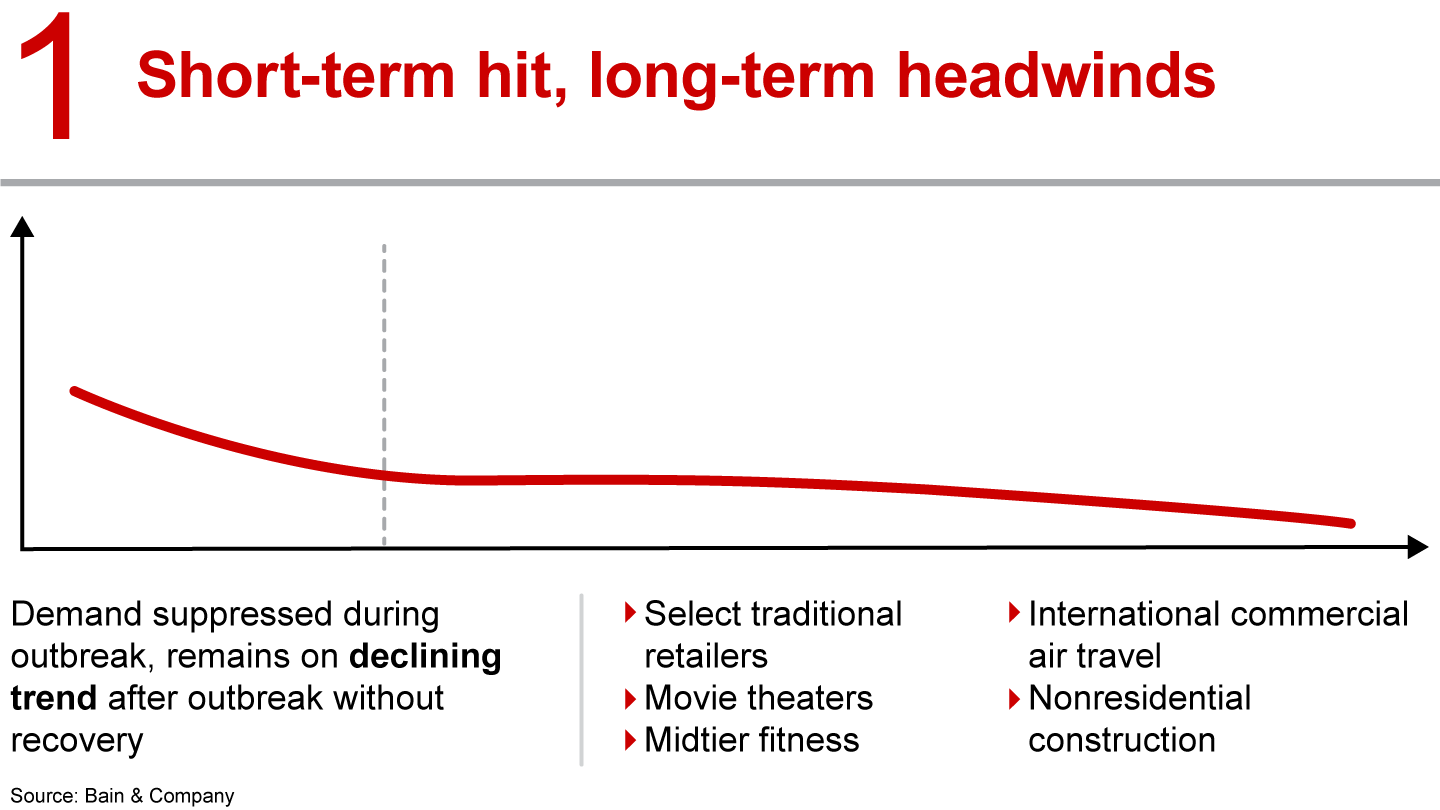

Figure 1 (slideshow): 2
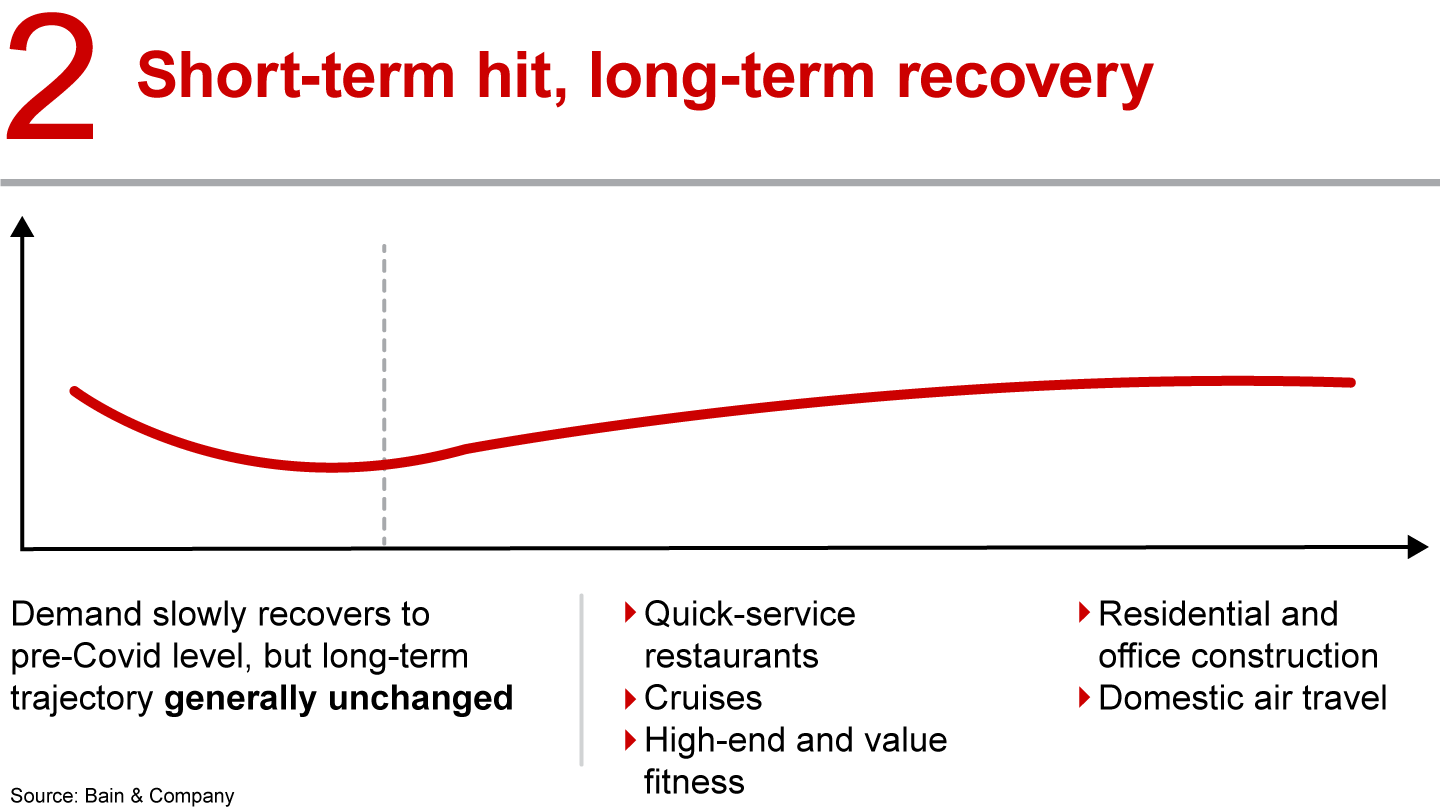

Figure 1 (slideshow): 3
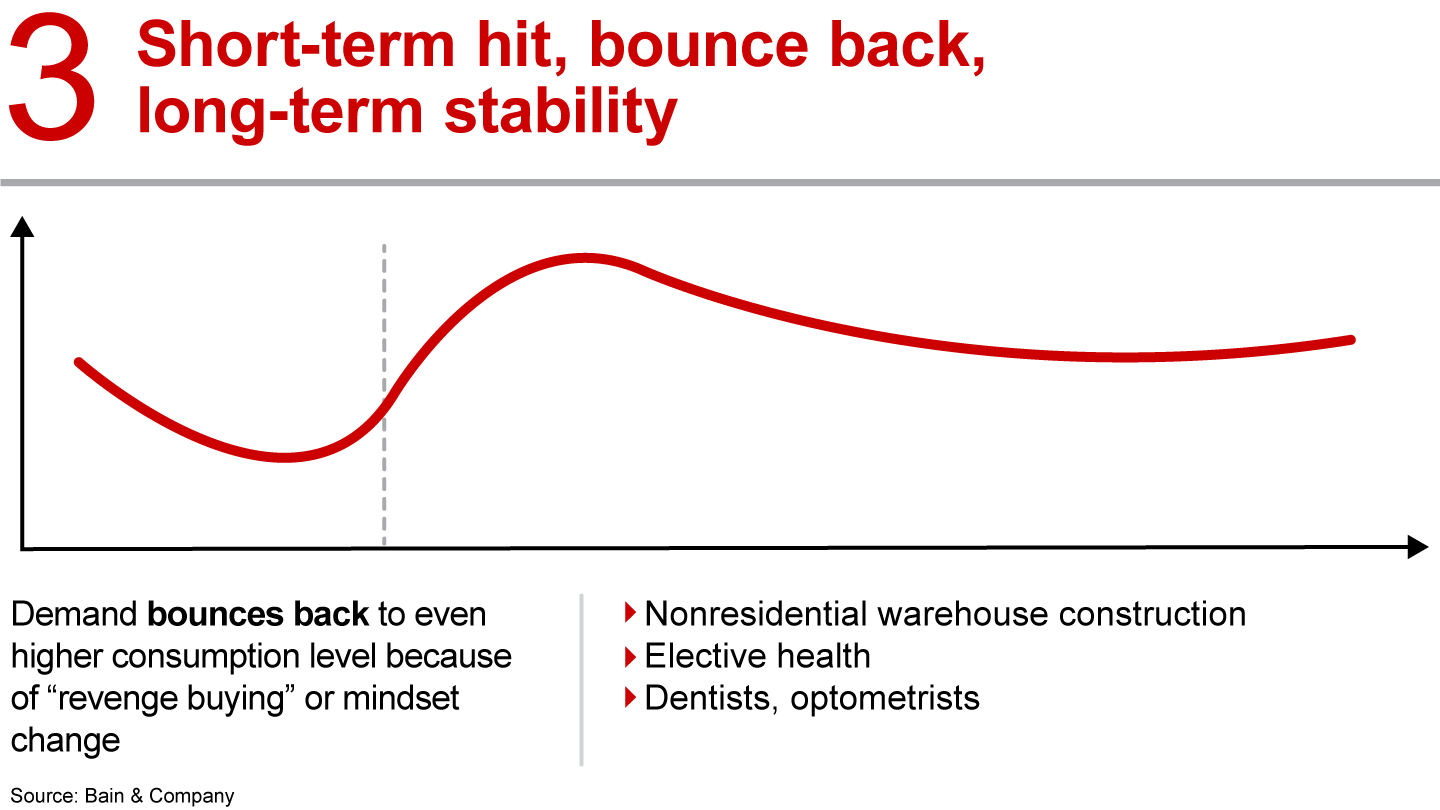

Figure 1 (slideshow): 4
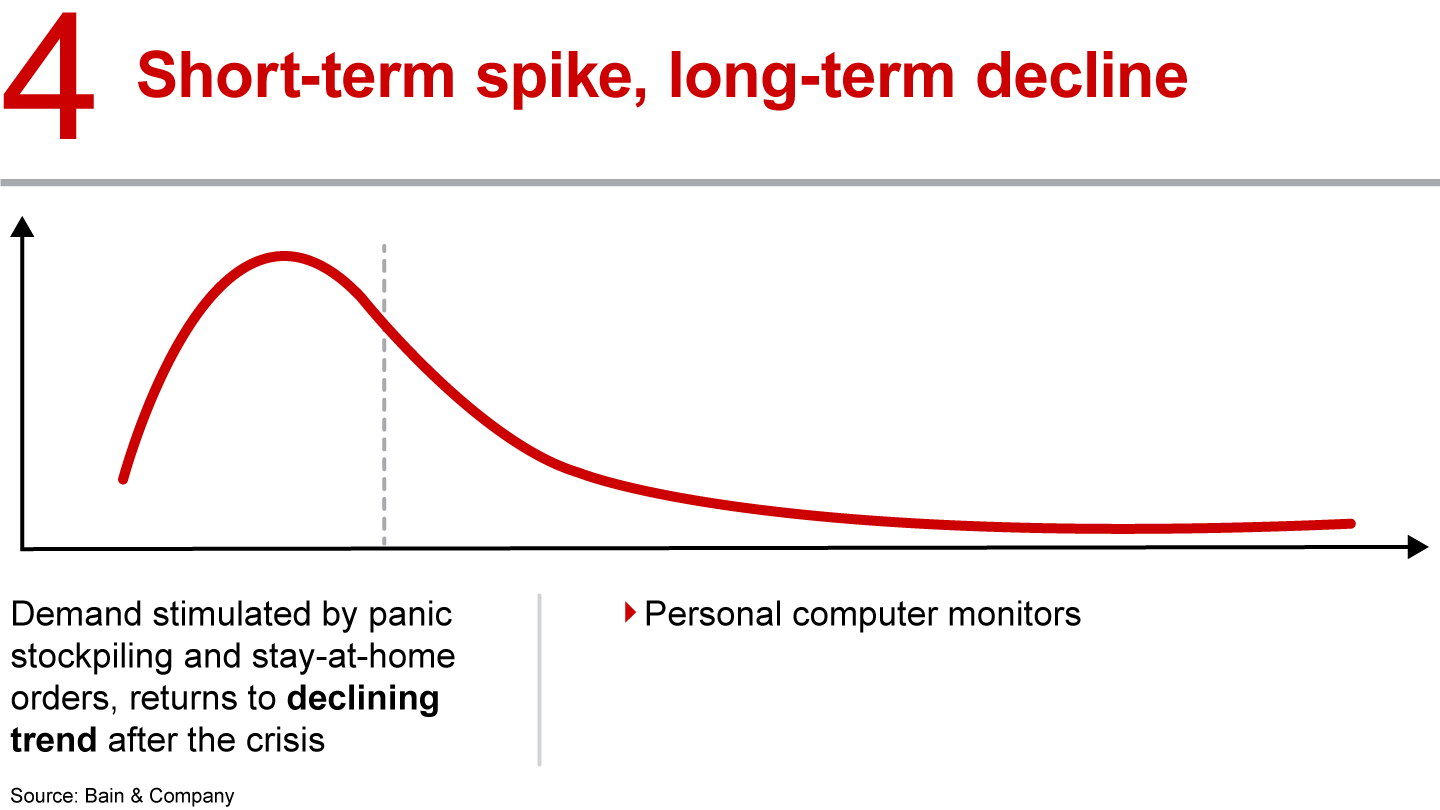

Figure 1 (slideshow): 5
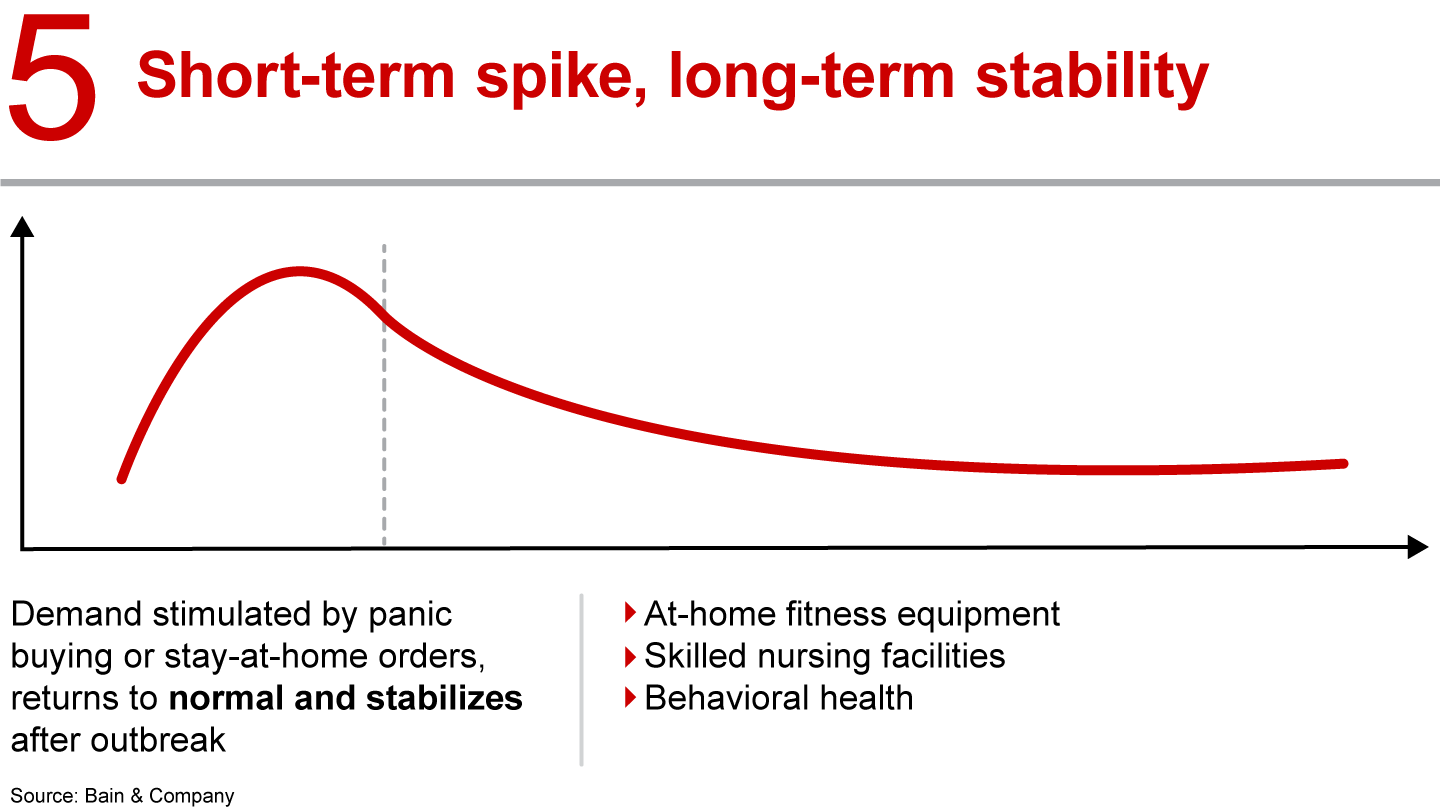

Figure 1 (slideshow): 6
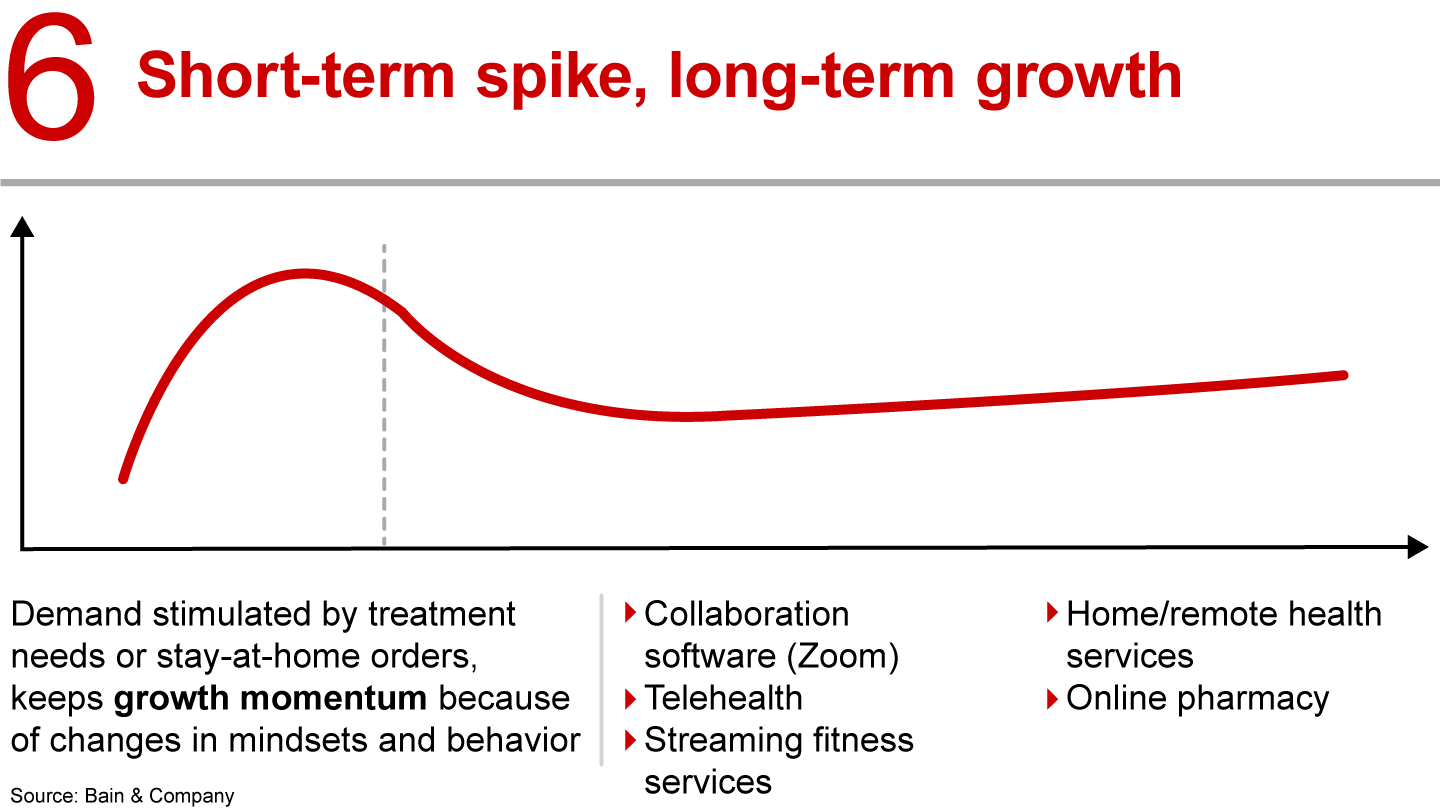

Three of these curves describe an initial Covid-related spike in demand, and three describe a short-term hit. Where each group begins to diverge, however, is in what’s likely to happen to demand over the next several years. Think, for example, of personal computer monitors or other types of goods that were declining pre-pandemic and fall into the “short-term spike, long-term decline” archetype. These products may have flown off shelves over the past couple of months in response to work-from-home needs, but there’s little reason to believe their long-term downward trend will somehow reverse itself when the economy recovers.
The story is different for online grocery shopping and collaboration services like Zoom (short-term spike, long-term growth), both of which were growing steadily before the pandemic. Experimentation during the crisis has convinced more and more customers that ordering or meeting online makes sense, pulling forward demand that will likely stick.
The archetypes also apply to B2B companies and can signal wide-ranging impacts. The precipitous drop in air travel, for instance, has led to order cancellations for new commercial aircraft, resonating across a global ecosystem of industrial companies. Traffic will come back as the economy recovers (the relationship between air travel and GDP has been one of the most consistent economic metrics for decades), but demand for new aircraft will lag a consumer rebound. Travel restrictions have to go away, people have to be comfortable getting back on crowded airplanes and the usual recessionary effects dampening traffic have to play out. There may also be some post-Covid behavior change as businesses in particular replace some face-to-face meetings with Zoom or BlueJeans sessions. Once traffic returns to 2019 levels, airlines will need new aircraft. But that may take years, not months, especially for wide-body aircraft.
What’s changed, what hasn’t
The archetypes are directional tools, not hard analytics. But in the absence of data, they provide a logical way to identify the most probable patterns, down to the subsector level. Their simple power is in helping sort through what’s changed and what’s the same in the wake of the global Covid-19 panic.
That starts with a clear understanding of what a subsector’s trajectory looked like before the pandemic hit. Then you need to factor in the black swan aspect of this crisis―it’s not like anything we’ve seen before. This isn’t just a cyclical financial downturn. The dire health implications and the resulting stay-at-home orders have had a profound impact on consumers, businesses and policymakers that may amplify the financial effect and create sustained change across the global economy.
Assessing the downturn’s impact on demand must account for traditional factors like depressed consumer sentiment and buying power. But it also needs to identify longer-lasting behavior shifts forged during the crisis, as well as new behaviors that will eventually revert to normal. We’ve developed an online assessment tool that allows you to estimate the effect of Covid-19 on a portfolio company’s sector. The inquiry boils down to a few essential questions:
- What was the underlying health and trajectory of the sector before the Covid-19 pandemic?
- How have the health crisis and shelter-in-place orders affected demand in the short term?
- After the pandemic is contained, how will customer behaviors change?
- Will the changes stick, and will that lead to innovation or new competitors?
- How does the sector typically behave in a recession, and is it positioned to weather this one?
- Will the recession lead to permanent structural changes, like shifts in profit pools, new players or broader regulation?
The goal is to marry an understanding of current impacts with deep industry experience. These questions move the discussion from “maybe this subsector will bounce back” to “what actually happened to this subsector during the last downturn and what’s different now that may change that result.” The answers give fund managers a means to identify which companies demand attention and which they can feel OK about. Some companies might be taking a hit now, but you don’t really need to worry about them. Others demand immediate cash infusions that will pay off over the long term. Thinking through demand impacts can also help you spot potential lag effects. B2B companies, for instance, often appear to be doing just fine at the beginning of a downturn because they are riding contracts they signed a year ago. Several months in, however, the bottom falls out when they discover they can’t get customers to renew.
These insights serve as guideposts, suggesting where the inquiry has to go deeper to sharpen conclusions and focus more precisely on the risks or opportunities a specific company faces. Consider the fitness segment. Home fitness and gyms have had very different trajectories during the crisis. Demand for brick-and-mortar gyms has basically gone to zero in the wake of distancing requirements, while consumers stuck at home have spent freely on Peloton bikes, barbells and digital fitness products.
Most types of gyms will recover when government restrictions ease, but probably not all. While some premium and budget workout facilities have strong underlying demand, midtier gyms were in trouble before the pandemic and will likely continue to slide. Home fitness isn’t monolithic either. Although the Covid spike will surely ease off for all home workout equipment, “dumb” products like standard treadmills and barbells will likely stabilize into old patterns. Digitally enabled solutions like Peloton and select digital apps, however, should accelerate as more consumers buy into their value proposition.
Staying vigilant
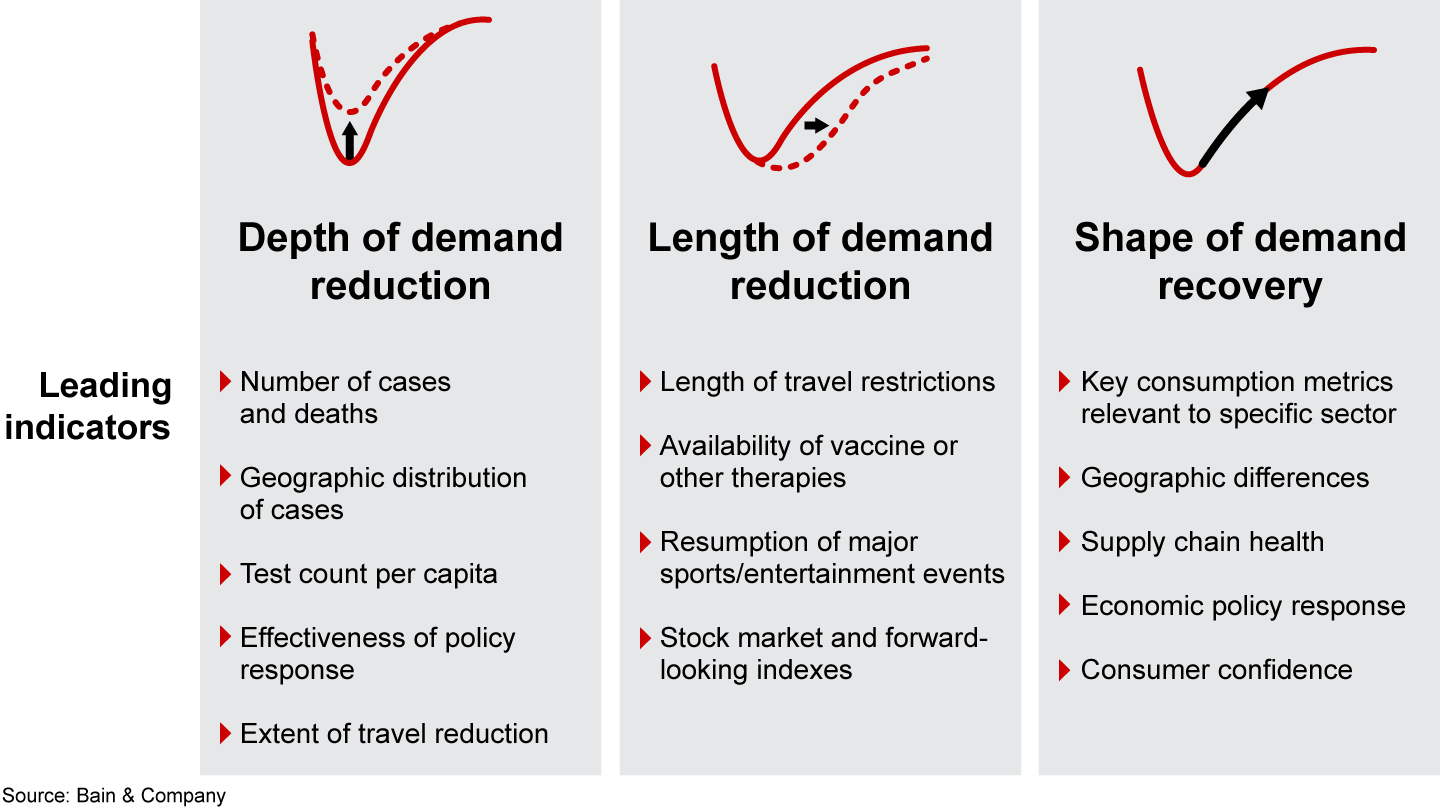
The great unknown in all of this, of course, is how long the Covid-related disruption will last and how disruptive it will end up being. Given the unprecedented nature of the crisis, it’s not possible to estimate with any precision the magnitude and duration of either the immediate health emergency or the ensuing economic downturn. Inevitably, demand curves will shift dynamically and unpredictably as conditions ebb and flow. If infections spike in a given geography as states lift distancing orders, for instance, the new hit will deepen the demand trough. If consumers avoid public spaces because they aren’t confident in the measures taken to ensure their safety, that will stretch out the demand recovery.
This means it will be important for funds to establish a set of leading indicators for each portfolio company, to understand when and to what extent consumer demand is coming back or experiencing new downward pressure (see Figure 2). Now more than ever, it will also be critical to deploy the full range of advanced analytics tools to monitor in real time how customers are behaving as the downturn plays out and what that means for individual companies.
Figure 1 (slideshow): Figure 2

Staying on top of change can be daunting, but sorting subsectors based on demand curve archetypes can help firms get out of Armageddon mode and back on the front foot, thinking about where potential long-term behavior or structural shifts may produce the next opportunity. Indeed, these techniques are a useful starting point during the “early look” phase of due diligence as firms begin to fill up their deal pipelines again.
What’s important is thinking clearly. While no one can predict precisely where the Covid-19 crisis is taking us, we’re not flying blind. Applying what you do know using a practical and systematic framework is an effective way to begin cutting through the fog.

First published in 5月 2020