
Skip to Content
  • オフィス

    オフィス

    北米・南米
    • Atlanta
    • Austin
    • Bogota
    • Boston
    • Buenos Aires
    • Chicago
    • Dallas
    • Denver
    • Houston
    • Los Angeles
    • Mexico City
    • Minneapolis
    • Monterrey
    • Montreal
    • New York
    • Rio de Janeiro
    • San Francisco
    • Santiago
    • São Paulo
    • Seattle
    • Silicon Valley
    • Toronto
    • Washington, DC
    ヨーロッパ・中東・アフリカ
    • Amsterdam
    • Athens
    • Berlin
    • Brussels
    • Copenhagen
    • Doha
    • Dubai
    • Dusseldorf
    • Frankfurt
    • Helsinki
    • Istanbul
    • Johannesburg
    • Kyiv
    • Lisbon
    • London
    • Madrid
    • Milan
    • Munich
    • Oslo
    • Paris
    • Riyadh
    • Rome
    • Stockholm
    • Vienna
    • Warsaw
    • Zurich
    アジア・オーストラリア
    • Bangkok
    • Beijing
    • Bengaluru
    • Brisbane
    • Ho Chi Minh City
    • Hong Kong
    • Jakarta
    • Kuala Lumpur
    • Manila
    • Melbourne
    • Mumbai
    • New Delhi
    • Perth
    • Shanghai
    • Singapore
    • Sydney
    • Tokyo
    全てのオフィス
  • アルムナイ
  • メディア
  • お問い合わせ
  • 東京オフィス
  • Japan | 日本語

    地域と言語を選択

    グローバル
    • Global (English)
    北米・南米
    • Brazil (Português)
    • Argentina (Español)
    • Canada (Français)
    • Chile (Español)
    • Colombia (Español)
    ヨーロッパ・中東・アフリカ
    • France (Français)
    • DACH Region (Deutsch)
    • Italy (Italiano)
    • Spain (Español)
    • Greece (Elliniká)
    アジア・オーストラリア
    • China (中文版)
    • Korea (한국어)
    • Japan (日本語)
  • Saved items (0)
    Saved items (0)

    You have no saved items.

    後で閲読、共有できるようにするためにブックマークしてください

    Explore Bain Insights
  • 業界別プラクティス
    メインメニュー

    業界別プラクティス

    • 航空宇宙、防衛、政府関連
    • 農業
    • 化学製品
    • インフラ、建設
    • 消費財
    • 金融サービス
    • ヘルスケア
    • 産業機械、設備
    • メディア、エンターテインメント
    • 金属
    • 採掘・鉱業
    • 石油、ガス
    • 紙、パッケージ
    • プライベートエクイティ
    • 公共、社会セクター
    • 小売
    • テクノロジー
    • 通信
    • 交通
    • 観光産業
    • 公益事業、再生可能エネルギー
  • 機能別プラクティス
    メインメニュー

    機能別プラクティス

    • カスタマー・エクスペリエンス
    • サステイナビリティ、 社会貢献
    • Innovation
    • 企業買収、合併 (M&A)
    • オペレーション
    • 組織
    • プライベートエクイティ
    • マーケティング・営業
    • 戦略
    • アドバンスド・アナリティクス
    • Technology
    • フルポテンシャル・トランスフォーメーション
  • Digital
  • 知見/レポート
  • ベイン・アンド・カンパニーについて
    メインメニュー

    ベイン・アンド・カンパニーについて

    • ベインの信条
    • 活動内容
    • 社員とリーダーシップ
    • プレス・メディア情報
    • クライアントの結果
    • 受賞歴
    • パートナーシップを結んでいる団体
    Further: Our global responsibility
    • ダイバーシティ
    • 社会貢献
    • サステイナビリティへの取り組み
    • 世界経済フォーラム(WEF)
    Learn more about Further
  • キャリア
    メインメニュー

    キャリア

    • ベインで働く
      キャリア
      ベインで働く
      • Find Your Place
      • ベインで活躍する機会
      • ベインのチーム体制
      • 学生向けページ
      • インターンシップ
      • 採用イベント
    • ベインでの体験
      キャリア
      ベインでの体験
      • Blog: Inside Bain
      • キャリアストーリー
      • 社員紹介
      • Where We Work
      • 成長を後押しするサポート体制
      • アフィニティ・グループ
      • 福利厚生
    • Impact Stories
    • 採用情報
      キャリア
      採用情報
      • 採用プロセス
      • 面接内容
    FIND JOBS
  • オフィス
    メインメニュー

    オフィス

    • 北米・南米
      オフィス
      北米・南米
      • Atlanta
      • Austin
      • Bogota
      • Boston
      • Buenos Aires
      • Chicago
      • Dallas
      • Denver
      • Houston
      • Los Angeles
      • Mexico City
      • Minneapolis
      • Monterrey
      • Montreal
      • New York
      • Rio de Janeiro
      • San Francisco
      • Santiago
      • São Paulo
      • Seattle
      • Silicon Valley
      • Toronto
      • Washington, DC
    • ヨーロッパ・中東・アフリカ
      オフィス
      ヨーロッパ・中東・アフリカ
      • Amsterdam
      • Athens
      • Berlin
      • Brussels
      • Copenhagen
      • Doha
      • Dubai
      • Dusseldorf
      • Frankfurt
      • Helsinki
      • Istanbul
      • Johannesburg
      • Kyiv
      • Lisbon
      • London
      • Madrid
      • Milan
      • Munich
      • Oslo
      • Paris
      • Riyadh
      • Rome
      • Stockholm
      • Vienna
      • Warsaw
      • Zurich
    • アジア・オーストラリア
      オフィス
      アジア・オーストラリア
      • Bangkok
      • Beijing
      • Bengaluru
      • Brisbane
      • Ho Chi Minh City
      • Hong Kong
      • Jakarta
      • Kuala Lumpur
      • Manila
      • Melbourne
      • Mumbai
      • New Delhi
      • Perth
      • Shanghai
      • Singapore
      • Sydney
      • Tokyo
    全てのオフィス
  • アルムナイ
  • メディア
  • お問い合わせ
  • 東京オフィス
  • Japan | 日本語
    メインメニュー

    地域と言語を選択

    • グローバル
      地域と言語を選択
      グローバル
      • Global (English)
    • 北米・南米
      地域と言語を選択
      北米・南米
      • Brazil (Português)
      • Argentina (Español)
      • Canada (Français)
      • Chile (Español)
      • Colombia (Español)
    • ヨーロッパ・中東・アフリカ
      地域と言語を選択
      ヨーロッパ・中東・アフリカ
      • France (Français)
      • DACH Region (Deutsch)
      • Italy (Italiano)
      • Spain (Español)
      • Greece (Elliniká)
    • アジア・オーストラリア
      地域と言語を選択
      アジア・オーストラリア
      • China (中文版)
      • Korea (한국어)
      • Japan (日本語)
  • Saved items  (0)
    メインメニュー
    Saved items (0)

    You have no saved items.

    後で閲読、共有できるようにするためにブックマークしてください

    Explore Bain Insights
  • 業界別プラクティス
    • 業界別プラクティス

      • 航空宇宙、防衛、政府関連
      • 農業
      • 化学製品
      • インフラ、建設
      • 消費財
      • 金融サービス
      • ヘルスケア
      • 産業機械、設備
      • メディア、エンターテインメント
      • 金属
      • 採掘・鉱業
      • 石油、ガス
      • 紙、パッケージ
      • プライベートエクイティ
      • 公共、社会セクター
      • 小売
      • テクノロジー
      • 通信
      • 交通
      • 観光産業
      • 公益事業、再生可能エネルギー
  • 機能別プラクティス
    • 機能別プラクティス

      • カスタマー・エクスペリエンス
      • サステイナビリティ、 社会貢献
      • Innovation
      • 企業買収、合併 (M&A)
      • オペレーション
      • 組織
      • プライベートエクイティ
      • マーケティング・営業
      • 戦略
      • アドバンスド・アナリティクス
      • Technology
      • フルポテンシャル・トランスフォーメーション
  • Digital
  • 知見/レポート
  • ベイン・アンド・カンパニーについて
    • ベイン・アンド・カンパニーについて

      • ベインの信条
      • 活動内容
      • 社員とリーダーシップ
      • プレス・メディア情報
      • クライアントの結果
      • 受賞歴
      • パートナーシップを結んでいる団体
      Further: Our global responsibility
      • ダイバーシティ
      • 社会貢献
      • サステイナビリティへの取り組み
      • 世界経済フォーラム(WEF)
      Learn more about Further
  • キャリア
    人気検索キーワード
    • デジタル
    • 戦略
    前回の検索
      最近訪れたページ

      Content added to saved items

      Saved items (0)

      Removed from saved items

      Saved items (0)

      M&A Report

      M&A in Aerospace and Defense: New Types of Deals in a Dynamic Industry

      M&A in Aerospace and Defense: New Types of Deals in a Dynamic Industry

      With defense missions and commercial flight markets being disrupted, historic leaders risk losing portions of their profit pools if they don’t react.

      著者:Clark Herndon, Michael Sion, and Austin Kim

      • min read
      }

      レポート

      M&A in Aerospace and Defense: New Types of Deals in a Dynamic Industry
      en
      At a Glance
      • With challenges to volume and margins, commercial aviation profit pools have been under pressure.
      • Despite relative stability in the defense market, budgets still face a crowding-out effect from inflation, sustainment needs, and competing fiscal priorities.
      • Companies in both commercial aviation and defense will pursue deals to diversify or consolidate.
      • We anticipate private capital to participate more (less antitrust risk, substantial dry powder), seeking out pockets of undermanagement and stable/growing volumes.

      This article is part of Bain's 2023 M&A Report.

      Explore the report

      For years, aerospace and defense (A&D) was a relatively stable industry with steady air travel penetration growth, long-term increases in defense budgets, and long-duration programs. Now, executives and investors face new strategic questions as the industry changes due to the lasting impact of the Covid-19 pandemic, macroeconomic and geopolitical uncertainties, and technological and regulatory disruptions. Companies must confront disruption, consider diversifying exposure, and grow volume and scale within an environment of lower volumes and margin pressure. M&A is likely to be a key tool many employ to achieve these objectives.

      As commercial aerospace rose above the most acute pandemic clouds, it emerged into a less-than-hospitable macro environment. China’s recovery has been uneven at best. In Europe, environmental, social, and corporate governance pressures and potential regulation stand to intensify air travel headwinds. Worldwide, pilot shortages are creating a bottleneck. These and other changes hurt volumes at a time when margins are already feeling the impact of cost inflation and the growth of risk-transfer products such as power-by-the-hour maintenance. Commercial aviation profit pools have been under pressure (see Figure 1).

      Figure 1
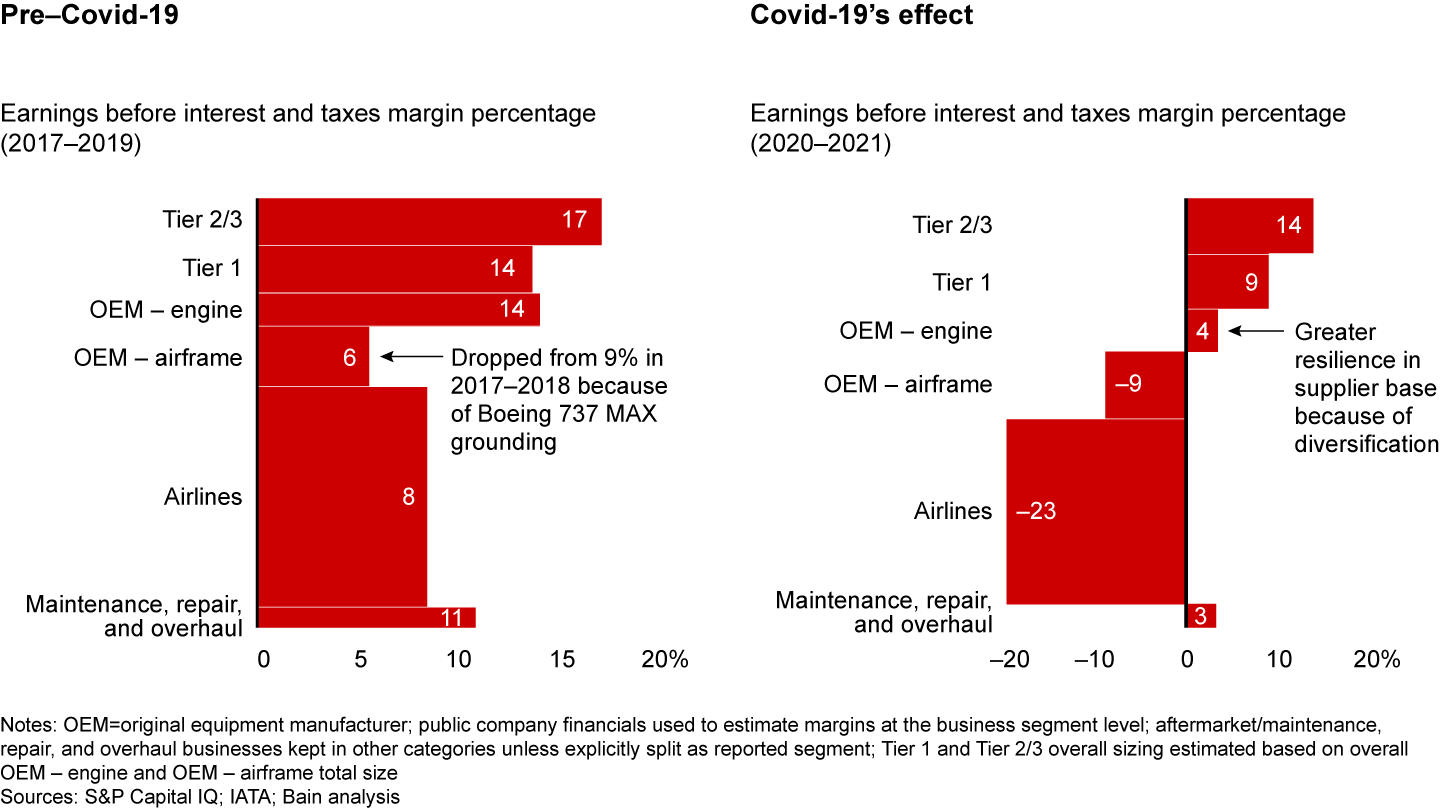
      Commercial aviation profit pools have been severely affected by the pandemic
      Commercial aviation profit pools have been severely affected by the pandemic
      Commercial aviation profit pools have been severely affected by the pandemic

      Conversely, the defense market has been relatively stable throughout Covid-19, and changes in the geopolitical environment along with lower levels of fiscal constraint have led to volume and budget tailwinds. Prepayments and government support helped stabilize the supply base during pandemic closures and supply chain disruptions. Russia’s invasion of Ukraine has increased spending commitments in Europe, and rising competition with China has the US and close allies (particularly Japan, South Korea, and Australia) shifting their spending priorities and increasing total spending. These countries are collectively building their own defense capabilities and deterrents, which will diversify what has been a US-oriented market. Using military aircraft suppliers as a proxy for the broader industry, profit pools have been much more stable as a result of these trends (see Figure 2).

      Figure 2
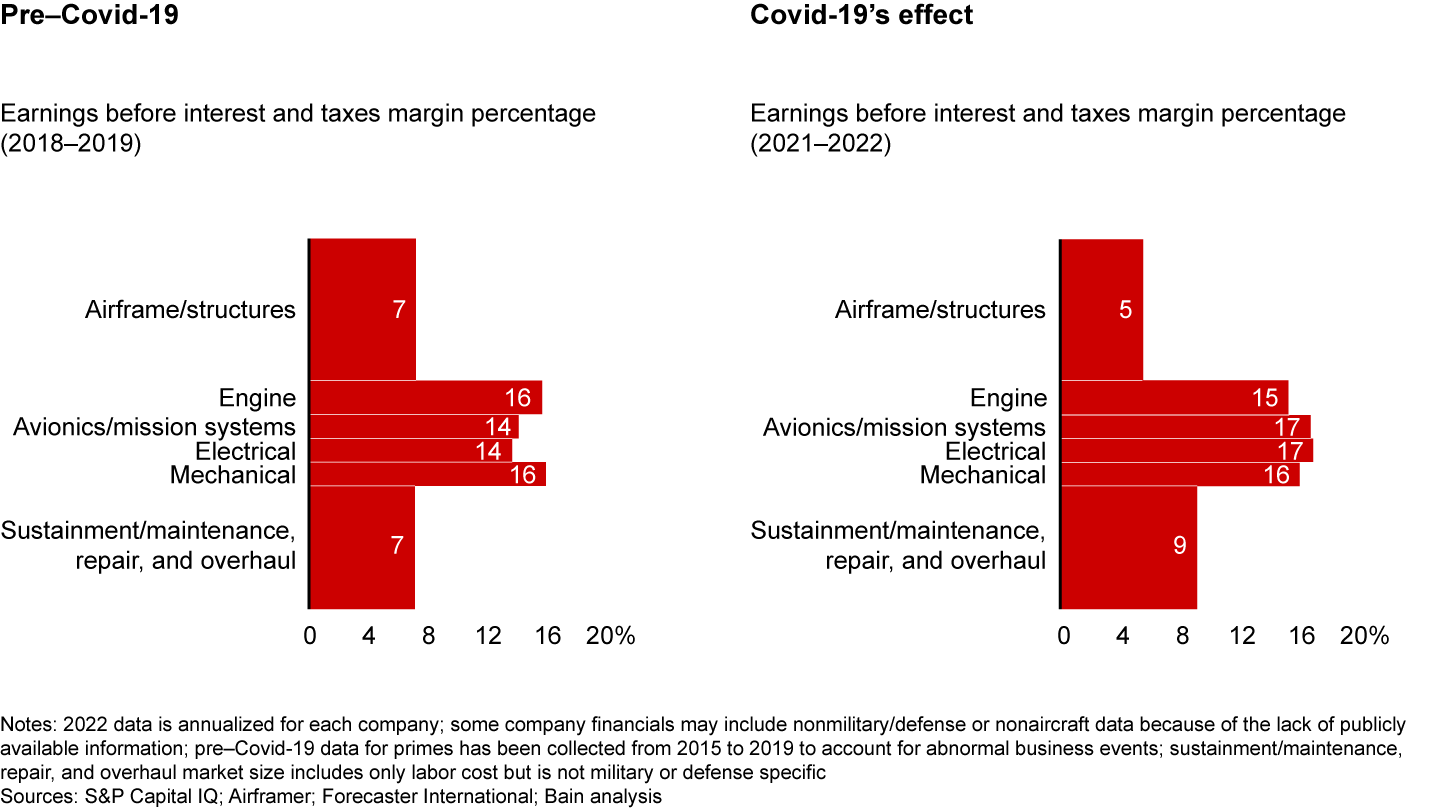
      Defense aircraft profit pools have remained relatively stable
      Defense aircraft profit pools have remained relatively stable
      Defense aircraft profit pools have remained relatively stable

      The shift to near-peer competition in the defense market has broader implications for the supply base. Requirements are growing, but budgets still face a crowding-out effect from inflation, sustainment needs, and competing governmental fiscal priorities. A macroeconomic downturn would likely exacerbate this disconnect between requirements and funding. The challenge for primes and suppliers is to meet demand for new capabilities in areas where commercial innovation and foreign spending are outpacing government investment—for example, cyber, autonomy, artificial intelligence, computing, and connectivity. Companies with exposure to these markets will find meaningful tailwinds, though they will also see competitive pressure from commercial players with innovative solutions that government buyers are increasingly willing to purchase.

      We see several important M&A trends as companies and financial investors navigate the marketplace.

      • Platform/segment diversification: Financial and strategic acquirers alike will continue to turn to M&A to diversify in attractive segments in commercial aviation (e.g., narrowbody, next-generation engines) and stable/growing segments in defense (e.g., major programs of record, advanced mission systems).
      • Defense adjacency growth/capability acquisitions: Companies in the defense industry will look to buy or partner for the capabilities they need to compete in nascent, high-growth markets. That was the reported objective of Raytheon Technologies’ acquisition of Blue Canyon in 2020 and SEAKR Engineering in 2021 in the space market as well as L3Harris’s 2022 purchase of Viasat’s tactical data links. We will see continued deals and partnerships seeking to benefit from faster time to market and lower development costs.
      • Commercial value chain consolidation: Scale matters in the aerospace supply chain, and consolidation is likely in segments that are fragmented despite benefits to site- or company-level scale. The recently announced Paradigm Precision and Whitcraft deal is a good example of this trend, and it is reasonable to expect further activity in Tiers 2 and 3. Another likely area of consolidation is maintenance, repair, and overhaul (MRO), which is fragmented today despite customer and operational benefits to site-level scale.
      • Consolidation in maturing markets: As nascent defense and commercial markets continue to grow, we expect to see consolidation as winners and losers emerge in crowded and highly competitive markets. For example, with space launch frequency increasing, vehicles and services will become more commoditized and smaller players will look for scale deals to lower costs and preserve margins.

      Budgets still face a crowding-out effect from inflation, sustainment needs, and competing governmental fiscal priorities.

      Given these trends, M&A is likely to be a critical tool in A&D in 2023 and beyond. We expect some activity in prime contracting/original equipment manufacturers and Tier 1 players (for example, L3Harris’s recent announcement of an agreement to acquire Aerojet Rocketdyne), although dealmaking is likely to be more muted vs. the past few decades because the degree of consolidation that regulators will permit remains an open question. We also expect more deals further down the supply chain, where margins can be attractive and there is fragmentation despite benefits to scale.

      And private capital will likely increase its participation in the sector, in line with recent trends. We expect more activity from both generalist funds as well as those that have traditionally focused on the sector. Private equity has less antitrust risk, substantial dry powder to invest, and is likely to seek out pockets of undermanagement and stable or growing volumes. And the industry has some fundamental traits that financial investors like—for example, enduring customer relationships, high backlog visibility, and stable cash flows.

      But not all investments will be winners. Below are the factors that can boost the odds of a successful deal.

      • Diversified exposure across platforms, programs, geographies: Recent disruptions caused by Covid-19 highlighted the advantages of diversified exposure. But the act of buying a company just to diversify won’t work unless there is a distinct parenting advantage—the acquirer won’t be able to justify the deal competition’s high multiple. Companies must have a clear deal thesis tied to a specific parenting advantage that unlocks value.
      • Exposure to narrowbody (commercial) and large programs of record such as the F-35 (defense): Backlogs are large and stable in major narrowbody and defense programs of record (e.g., Airbus’s A320, CFM’s LEAP, Pratt & Whitney’s PW1000 and F135, Lockheed-Martin’s F-35, and Northrop Grumman’s B-21); companies with exposure to these programs will tend to have scale advantages, higher margins, and more cash to reinvest in next-generation technologies.
      • Defensible intellectual property (IP): Suppliers that own critical design IP will continue to have an advantage and are more attractive targets, demanding higher multiples compared with contract manufacturers. Proprietary components and systems tend to generate higher margins, both in production and in the aftermarket.

      Private capital will likely increase its participation in the sector.

      • Operational excellence: Operational excellence is the differentiator in this industry and a key to margin expansion, particularly with long-running programs. Yet acquirers need to ensure that the operations expertise is fit for the mission. Some programs maintain low rates for long periods of time, and others benefit from high-rate production expertise that drives out cost through scale.
      • M&A/integration as a capability: The most successful acquirers in any industry are those that repeatably drive value and growth from acquisitions. From due diligence through to post-merger integration, a sound M&A strategy and execution capabilities that are disciplined and thesis focused are critical.

      M&A can be a valuable tool for diversification and access to new capabilities in aerospace and defense. For example, more diverse end-market exposure can help stabilize earnings and expose companies to higher growth segments (such as commercial narrowbody aircraft and major defense programs of record). In industries characterized by long program durations and sticky customer relationships, M&A can be a critical growth lever. And disruptions in both markets make acquisitions that deliver new capabilities to improve defensibility in a company’s core potentially attractive. For all of these reasons, winning aerospace and defense companies will develop focused, tailored investment theses that support and reinforce their broader corporate strategies—and pursue acquisitions that strengthen resilience and add value.

      Read the Next Chapter

      M&A in Automotive and Mobility: Finding Alternative Routes to the Future

      Read our 2023 M&A Report

      Download the PDF Explore the report
      著者
      • Headshot of Clark Herndon
        Clark Herndon
        パートナー, Washington, DC
      • Headshot of Michael Sion
        Michael Sion
        パートナー, Washington, DC
      • Headshot of Austin Kim
        Austin Kim
        Practice Vice President, Los Angeles
      関連業種
      • 航空、運輸
      • 航空宇宙、防衛、政府関連
      • 産業財、サービス
      関連するコンサルティングサービス
      • 企業買収、合併(M&A)
      M&A Report
      Defense M&A

      Bold moves will determine the winners as a continent rearms.

      詳細
      M&A Report
      Takeaways from Bain's 2026 M&A Report

      In this webinar recording, Bain's Suzanne Kumar, Dale Stafford, and Kai Grass share key trends shaping the deal landscape.

      詳細
      産業財、サービス
      Air Travel Forecast to 2040: Geopolitics and the Carbon Challenge

      Three charts illustrate how the aviation demand outlook remains stable, with uncertainties around tariffs and trade counterbalanced by evolving sustainability assumptions.

      詳細
      企業買収、合併(M&A)
      What Agency Consolidation Means for CMOs

      As agency holding companies get bigger and deeper, CMOs must rethink ownership, integration, and how to stay in control.

      詳細
      産業財、サービス
      Navigating the Next Decade of Air Travel

      Near-term challenges abound, but strong industry fundamentals should power long-term growth.

      詳細

      Overview

      • Looking Back at M&A in 2022

      • Looking Ahead to M&A in 2023

      Hot Topics

      • M&A in Times of Turbulence: Lessons from the Last Recession

      • When Buying (vs. Building) Is the Right Move for Engine 2

      • Tougher Times: Putting the Diligence Back in Due Diligence

      • How to Avoid the Fault Lines Sending Tremors through Cultural Integration in M&A

      Industry Views

      • Aerospace and Defense M&A

      • Automotive and Mobility M&A

      • Banking M&A

      • Consumer Goods M&A

      • Diversified Industrials M&A

      • Energy and Natural Resources M&A

      • Healthcare and Life Sciences M&A

      • Insurance M&A

      • Media and Entertainment M&A

      • Payments M&A

      • Retail M&A

      • Technology M&A

      • Telecommunications M&A

      • Wealth and Asset Management M&A

      Regional Perspectives

      • Brazil M&A

      • India M&A

      • Japan M&A

      • Middle East M&A

      First published in 1月 2023
      Tags
      • M&A Report
      • 企業買収、合併(M&A)
      • 航空、運輸
      • 航空宇宙、防衛、政府関連
      • 産業財、サービス

      クライアント支援事例

      An Airline’s Ancillary Revenue Soars Thanks to Test-and-Learn Experimentation

      ケーススタディを見る

      コスト・トランスフォーメーション A Defense Company Surmounts Industry Challenges with Cost Management

      ケーススタディを見る

      業績改善 Airline grounds planes to rise above financial cloud

      ケーススタディを見る

      お気軽にご連絡下さい

      私達は、グローバルに活躍する経営者が抱える最重要経営課題に対して、厳しい競争環境の中でも成長し続け、「結果」を出すために支援しています。

      ベインの知見。競争が激化するグローバルビジネス環境で、日々直面するであろう問題について論じている知見を毎月お届けします。

      *プライバシーポリシーの内容を確認し、合意しました。

      プライバシーポリシーをご確認頂き、合意頂けますようお願い致します。
      Bain & Company
      お問い合わせ Sustainability Accessibility Terms of use Privacy Cookie Policy Sitemap Log In

      © 1996-2026 Bain & Company, Inc.

      お問い合わせ

      How can we help you?

      • ビジネスについて
      • プレス報道について
      • 採用について
      全てのオフィス