
Skip to Content
  • オフィス

    オフィス

    北米・南米
    • Atlanta
    • Austin
    • Bogota
    • Boston
    • Buenos Aires
    • Chicago
    • Dallas
    • Denver
    • Houston
    • Los Angeles
    • Mexico City
    • Minneapolis
    • Monterrey
    • Montreal
    • New York
    • Rio de Janeiro
    • San Francisco
    • Santiago
    • São Paulo
    • Seattle
    • Silicon Valley
    • Toronto
    • Washington, DC
    ヨーロッパ・中東・アフリカ
    • Amsterdam
    • Athens
    • Berlin
    • Brussels
    • Copenhagen
    • Doha
    • Dubai
    • Dusseldorf
    • Frankfurt
    • Helsinki
    • Istanbul
    • Johannesburg
    • Kyiv
    • Lisbon
    • London
    • Madrid
    • Milan
    • Munich
    • Oslo
    • Paris
    • Riyadh
    • Rome
    • Stockholm
    • Vienna
    • Warsaw
    • Zurich
    アジア・オーストラリア
    • Bangkok
    • Beijing
    • Bengaluru
    • Brisbane
    • Ho Chi Minh City
    • Hong Kong
    • Jakarta
    • Kuala Lumpur
    • Manila
    • Melbourne
    • Mumbai
    • New Delhi
    • Perth
    • Shanghai
    • Singapore
    • Sydney
    • Tokyo
    全てのオフィス
  • アルムナイ
  • メディア
  • お問い合わせ
  • 東京オフィス
  • Japan | 日本語

    地域と言語を選択

    グローバル
    • Global (English)
    北米・南米
    • Brazil (Português)
    • Argentina (Español)
    • Canada (Français)
    • Chile (Español)
    • Colombia (Español)
    ヨーロッパ・中東・アフリカ
    • France (Français)
    • DACH Region (Deutsch)
    • Italy (Italiano)
    • Spain (Español)
    • Greece (Elliniká)
    アジア・オーストラリア
    • China (中文版)
    • Korea (한국어)
    • Japan (日本語)
  • Saved items (0)
    Saved items (0)

    You have no saved items.

    後で閲読、共有できるようにするためにブックマークしてください

    Explore Bain Insights
  • 業界別プラクティス
    メインメニュー

    業界別プラクティス

    • 航空宇宙、防衛、政府関連
    • 農業
    • 自動車
    • 化学製品
    • インフラ、建設
    • 消費財
    • 金融サービス
    • ヘルスケア
    • 産業機械、設備
    • メディア、エンターテインメント
    • 金属
    • 採掘・鉱業
    • 石油、ガス
    • 紙、パッケージ
    • プライベートエクイティ
    • 公共、社会セクター
    • 小売
    • テクノロジー
    • 通信
    • 交通
    • 観光産業
    • 公益事業、再生可能エネルギー
  • 機能別プラクティス
    メインメニュー

    機能別プラクティス

    • カスタマー・エクスペリエンス
    • サステイナビリティ、 社会貢献
    • Innovation
    • 企業買収、合併 (M&A)
    • オペレーション
    • 組織
    • プライベートエクイティ
    • マーケティング・営業
    • 戦略
    • アドバンスド・アナリティクス
    • Technology
    • フルポテンシャル・トランスフォーメーション
  • デジタル
  • 知見/レポート
  • ベイン・アンド・カンパニーについて
    メインメニュー

    ベイン・アンド・カンパニーについて

    • ベインの信条
    • 活動内容
    • 社員とリーダーシップ
    • プレス・メディア情報
    • クライアントの結果
    • 受賞歴
    • パートナーシップを結んでいる団体
    Further: Our global responsibility
    • ダイバーシティ
    • 社会貢献
    • サステイナビリティへの取り組み
    • 世界経済フォーラム(WEF)
    Learn more about Further
  • キャリア
    メインメニュー

    キャリア

    • ベインで働く
      キャリア
      ベインで働く
      • Find Your Place
      • ベインで活躍する機会
      • ベインのチーム体制
      • 学生向けページ
      • インターンシップ
      • 採用イベント
    • ベインでの体験
      キャリア
      ベインでの体験
      • Blog: Inside Bain
      • キャリアストーリー
      • 社員紹介
      • Where We Work
      • 成長を後押しするサポート体制
      • アフィニティ・グループ
      • 福利厚生
    • Impact Stories
    • 採用情報
      キャリア
      採用情報
      • 採用プロセス
      • 面接内容
    FIND JOBS
  • オフィス
    メインメニュー

    オフィス

    • 北米・南米
      オフィス
      北米・南米
      • Atlanta
      • Austin
      • Bogota
      • Boston
      • Buenos Aires
      • Chicago
      • Dallas
      • Denver
      • Houston
      • Los Angeles
      • Mexico City
      • Minneapolis
      • Monterrey
      • Montreal
      • New York
      • Rio de Janeiro
      • San Francisco
      • Santiago
      • São Paulo
      • Seattle
      • Silicon Valley
      • Toronto
      • Washington, DC
    • ヨーロッパ・中東・アフリカ
      オフィス
      ヨーロッパ・中東・アフリカ
      • Amsterdam
      • Athens
      • Berlin
      • Brussels
      • Copenhagen
      • Doha
      • Dubai
      • Dusseldorf
      • Frankfurt
      • Helsinki
      • Istanbul
      • Johannesburg
      • Kyiv
      • Lisbon
      • London
      • Madrid
      • Milan
      • Munich
      • Oslo
      • Paris
      • Riyadh
      • Rome
      • Stockholm
      • Vienna
      • Warsaw
      • Zurich
    • アジア・オーストラリア
      オフィス
      アジア・オーストラリア
      • Bangkok
      • Beijing
      • Bengaluru
      • Brisbane
      • Ho Chi Minh City
      • Hong Kong
      • Jakarta
      • Kuala Lumpur
      • Manila
      • Melbourne
      • Mumbai
      • New Delhi
      • Perth
      • Shanghai
      • Singapore
      • Sydney
      • Tokyo
    全てのオフィス
  • アルムナイ
  • メディア
  • お問い合わせ
  • 東京オフィス
  • Japan | 日本語
    メインメニュー

    地域と言語を選択

    • グローバル
      地域と言語を選択
      グローバル
      • Global (English)
    • 北米・南米
      地域と言語を選択
      北米・南米
      • Brazil (Português)
      • Argentina (Español)
      • Canada (Français)
      • Chile (Español)
      • Colombia (Español)
    • ヨーロッパ・中東・アフリカ
      地域と言語を選択
      ヨーロッパ・中東・アフリカ
      • France (Français)
      • DACH Region (Deutsch)
      • Italy (Italiano)
      • Spain (Español)
      • Greece (Elliniká)
    • アジア・オーストラリア
      地域と言語を選択
      アジア・オーストラリア
      • China (中文版)
      • Korea (한국어)
      • Japan (日本語)
  • Saved items  (0)
    メインメニュー
    Saved items (0)

    You have no saved items.

    後で閲読、共有できるようにするためにブックマークしてください

    Explore Bain Insights
  • 業界別プラクティス
    • 業界別プラクティス

      • 航空宇宙、防衛、政府関連
      • 農業
      • 自動車
      • 化学製品
      • インフラ、建設
      • 消費財
      • 金融サービス
      • ヘルスケア
      • 産業機械、設備
      • メディア、エンターテインメント
      • 金属
      • 採掘・鉱業
      • 石油、ガス
      • 紙、パッケージ
      • プライベートエクイティ
      • 公共、社会セクター
      • 小売
      • テクノロジー
      • 通信
      • 交通
      • 観光産業
      • 公益事業、再生可能エネルギー
  • 機能別プラクティス
    • 機能別プラクティス

      • カスタマー・エクスペリエンス
      • サステイナビリティ、 社会貢献
      • Innovation
      • 企業買収、合併 (M&A)
      • オペレーション
      • 組織
      • プライベートエクイティ
      • マーケティング・営業
      • 戦略
      • アドバンスド・アナリティクス
      • Technology
      • フルポテンシャル・トランスフォーメーション
  • デジタル
  • 知見/レポート
  • ベイン・アンド・カンパニーについて
    • ベイン・アンド・カンパニーについて

      • ベインの信条
      • 活動内容
      • 社員とリーダーシップ
      • プレス・メディア情報
      • クライアントの結果
      • 受賞歴
      • パートナーシップを結んでいる団体
      Further: Our global responsibility
      • ダイバーシティ
      • 社会貢献
      • サステイナビリティへの取り組み
      • 世界経済フォーラム(WEF)
      Learn more about Further
  • キャリア
    人気検索キーワード
    • デジタル
    • 戦略
    前回の検索
      最近訪れたページ

      Content added to saved items

      Saved items (0)

      Removed from saved items

      Saved items (0)

      Software Leadership in the Age of AI

      AI Brings Headwinds and Tailwinds to the Rule of 40

      AI Brings Headwinds and Tailwinds to the Rule of 40

      Investing to keep up with new competitors may force SaaS companies to accept the Rule of 30 for a while.

      著者:David Lipman, Greg Callahan, Daniel Goetz , and George Sunderland

      • min read
      }

      論説

      AI Brings Headwinds and Tailwinds to the Rule of 40
      en
      概要
      • Rising AI costs are squeezing margins at software companies, putting pressure on the Rule of 40.
      • Companies and investors may need to settle for smaller margins as they reinvest to stay competitive with AI-native rivals.
      • SaaS companies face a strategic choice: optimize for cash today or invest to win in a future shaped by AI.

      This is the first in a five-part series on the software industry in the age of AI. 

      Software companies and investors have long used the Rule of 40—that a software company’s growth rate plus profit margin should exceed 40%—as a target for high performers to hit. The rule forces management teams and investors to confront the trade-off between investing for growth and delivering returns.

      Hitting that 40% target has never been easy, but the rise of AI could make it just that much harder, at least for a while.

      Two reasons stand out:

      • Market growth for software-as-a-service (SaaS) companies is slowing as markets mature and penetration maxes out in some categories (see Figures 1 and 2).
      • Rising costs are squeezing profit margins. SaaS companies have long benefited from low marginal costs. The need to invest in AI inference, infrastructure, and model access introduces real variable costs into previously high-margin businesses. In many cases, the cost of goods sold is rising, particularly as usage scales. For example, a high-growth marketing technology company’s revenue rose 38% between Q3 2024 and Q3 2025 while its costs increased 349%, due in part to spending on new AI infrastructure and hosting (see Figure 3).
      Figure 1
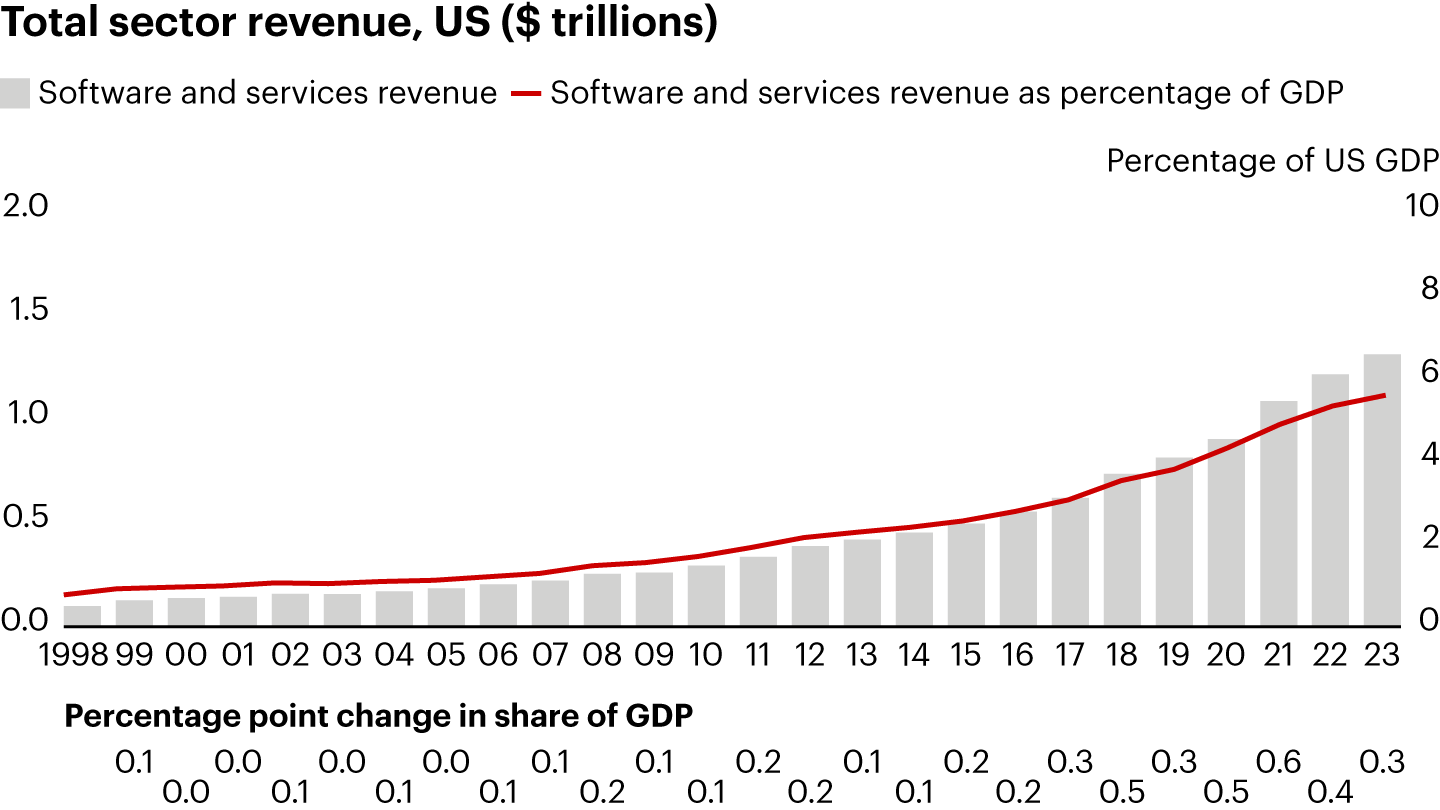
      Software spending growth continues to outpace GDP, but the gap is narrowing

      注 Shows base year 2019 inflation-adjusted dollar values; includes exports

      Sources: S&P Global; US Federal Reserve Bank
      Figure 2
      Software penetration is topping out in some areas, but other industries and functions still have room to grow
      出所 Historical Bain due-diligence data
      Figure 3
      A marketing technology company’s costs grew nearly nine times as fast as its revenue over a year
      visualization
      Source: Company annual and quarterly reports

      This doesn’t mean AI isn’t financially viable. It just means that margin growth won’t come automatically and will need to be designed for, actively managed, and re-earned.

      Re-earning comes through reinvestment. AI lowers the barrier to building software and accelerates feature parity, rendering basic functionality less valuable. Unless companies reinvest to improve their products and processes with AI, they’ll fall behind competitors who are investing for the future.

      AI’s tailwinds (eventually)

      AI can boost productivity in sales and marketing, general administrative tasks, and R&D. Companies that have figured out how to transform their business are gaining an edge, with some achieving 10% to 25% increases in EBITDA. But most aren’t there yet. Real productivity is hard, and most companies have yet to see true efficiency improvements in operations.

      Over time, AI could be the key to higher growth again. CIOs are slowing the growth of their core technology budgets while increasing their investments in AI. Where AI can replace labor costs, the total market for some software categories will grow significantly, possibly doubling. Forward-looking companies are investing and building now to capture that growth. Software companies that enhance their products with agents that can automate tasks, make better decisions, and expand the scope of what software does could see higher usage and new revenue streams. Thanks to their existing customer relationships, embedded workflows, and systems of record, incumbents may have an advantage over AI-native point solutions.

      AI also creates greater opportunities for pricing to outcomes rather than user numbers. Over time, this shifts the revenue pool from fixed software seats to the much larger economics of labor, operations, and services. However, these models take time to design, test, and scale, so they can’t offset costs immediately.

      A strategic fork in the road

      SaaS leadership teams and their investors will need to choose between two paths:

      • Financialize the business. Limit AI investment, focus on efficiency, protect existing business, and operate the company as a durable cash generator. For some companies, this will make sense, particularly in mature categories, but it limits future relevance and growth.
      • Invest to grow. Accept the short-term pressure on profit margins, invest aggressively in AI across product and operations, and aim to reemerge with stronger growth and differentiation. This path is harder, riskier, and more volatile, but it preserves the chance to excel five years out.

      The answer depends on the dynamics of your market and your ambitions within it. In legacy markets, optimizing for margin may preserve value. But in categories dependent on innovation, reinvestment is essential. Investors still care about balanced growth and profitability. But SaaS leadership teams may need to risk spending some time with a less ambitious benchmark—the Rule of 30—if they want to compete with AI-native players.

      著者
      • Headshot of David Lipman
        David Lipman
        パートナー, Boston
      • Headshot of Greg Callahan
        Greg Callahan
        パートナー, Boston
      • Headshot of Daniel Goetz
        Daniel Goetz
        Senior Manager, Austin
      • Headshot of George Sunderland
        George Sunderland
        パートナー, Austin
      関連業種
      • Software
      • テクノロジー
      関連するコンサルティングサービス
      • Digital
      • アドバンスド・アナリティクス
      テクノロジー
      Will Agentic AI Disrupt SaaS?

      Disruption is mandatory. Obsolescence is optional.

      詳細
      テクノロジー
      Why SaaS Stocks Have Dropped—and What It Signals for Software’s Next Chapter

      A sharp reset in valuations reflects AI-driven disruption, slowing retention, and a growing divide between incumbents and future winners.

      詳細
      アドバンスド・アナリティクス
      Your Next Customer Will Find You Using AI. Now What?

      Marketers who adapt their customer discovery strategy for AI-intermediated search and commerce will own the next decade of customer acquisition.

      詳細
      テクノロジー
      Software M&A

      The good news: Most deal best practices still apply to AI acquisitions.

      詳細
      アドバンスド・アナリティクス
      Quantum Will Not Speed Up Your Enterprise

      It will reshape a few critical problems—including cybersecurity and optimization—faster than many leaders expect.

      詳細
      First published in 4月 2026
      Tags
      • Digital
      • Software
      • アドバンスド・アナリティクス
      • テクノロジー

      クライアント支援事例

      A Technology Company’s Transformation Restores Its Growth Trajectory

      ケーススタディを見る

      Helping a Midsize ERP Player Compete against the Giants

      ケーススタディを見る

      業績改善 Aggressively growing an IT service provider with a high-performance culture

      ケーススタディを見る

      お気軽にご連絡下さい

      私達は、グローバルに活躍する経営者が抱える最重要経営課題に対して、厳しい競争環境の中でも成長し続け、「結果」を出すために支援しています。

      Digital is a service mark of Bain & Company, Inc.

      ベインの知見。競争が激化するグローバルビジネス環境で、日々直面するであろう問題について論じている知見を毎月お届けします。

      *プライバシーポリシーの内容を確認し、合意しました。

      プライバシーポリシーをご確認頂き、合意頂けますようお願い致します。
      Bain & Company
      お問い合わせ Sustainability Accessibility Terms of use Privacy Cookie Policy Sitemap Log In

      © 1996-2026 Bain & Company, Inc.

      お問い合わせ

      How can we help you?

      • ビジネスについて
      • プレス報道について
      • 採用について
      全てのオフィス