

論説
In relatively short order, unconventional gas has altered the North American energy landscape. Now it is shifting energy dynamics across the globe. North American natural gas prices now hover at $4/MCF, down from highs in the $10/MCF to $13/MCF range just a couple of years ago, thanks to the low extraction cost and sheer abundance of shale gas. The “Shale Gale” has turned North America into a “gas island,” no longer dependent on gas imports. The LNG once destined for US shores must now find new markets. This development, combined with the emerging potential of shale gas in Europe, Asia-Pacific and elsewhere, and compounded by events such as the Fukushima disaster, has added tremendous uncertainty to the global energy picture.
Energy players now face a number of questions about shale gas, LNG, other sources of gas supply and the historical pricing patterns and relationships of all three. Will the dynamics of shale gas in North America cascade across the world and affect Europe and Asia-Pacific? Will we see a truly global market for gas, with prices linked across the major market regions of Asia, Europe and North America?
Power generators face additional dilemmas: What does this mean for future generation types and fuel mix? What are the important indicators of changes in energy dynamics in their regional markets? And what other measures should they take to renegotiate contracts, mitigate risks or create advantage?
In North America, abundant shale gas has caused several dramatic effects. Given current consumption levels, the United States will require neither LNG nor Canadian imports until the next century. Focus in the US has shifted from importing gas to exporting it. As of November 2011, the Federal Energy Regulatory Commission (FERC) reported that two facility operators have proposed gas exports and another three have identified the potential to export.
Whether US shale gas will find its way into the LNG market in any meaningful quantity remains a big question. One possible way for the US to absorb increasing gas supplies is to spur domestic demand by promoting natural gas vehicles (NGVs), gas-to-liquids conversion (GTLs) and gas-fired distributed generation. Moreover, should a cost of carbon be established and levied against power producers, it would accelerate the rate at which gas is displacing coal, which today still represents the largest single generation fuel source in the US.
New supplies for Europe
In Europe, demand for additional gas continues to accelerate, driven by the depletion of conventional gas, ongoing environmental concerns and the Fukushima disaster’s impact on the role of nuclear power. All of these factors have made gas an increasingly important energy source. Historically, Europe’s supply comes from a combination of LNG imports, UK and Norwegian Continental Shelves and other indigenous gas sources, and long-haul pipeline gas imports from Russia. Now, in addition to new supplies of LNG once destined for North America, and additional supply from Russian and Middle East LNG, a new supply option has emerged: local unconventional gas. Several countries, notably Poland and Germany, are moving quickly to tap their indigenous shale gas.
All these new supplies create alternatives to traditional LNG imports and long-haul pipeline gas from Russia. Competition has increased dramatically, and pressure to decrease prices is mounting. For example, Centrica recently signed a contract with Qatar based on the UK’s wholesale gas price (NBP). Several major buyers in Europe followed suit, leading to contracts whose terms included a much higher degree of spot gas prices than typical for the region, and that resulted in overall price reductions of as much as 20 percent.
However, Europe faces several important challenges to developing its shale industry that are not present in North America, including significantly less oilfield service and equipment infrastructure, deeper and less homogenous shale resources, and greater land access issues due to population density. European governments are also generally less familiar with shale gas extraction and do not have well-developed regulation policies to address it. Despite these challenges, European LNG and piped gas prices—historically linked to oil—will slowly shift to a gas-on-gas pricing model.
The gas battleground: Asia-Pacific
Asia-Pacific is becoming the new global battleground for gas suppliers from around the world. We expect demand will grow substantially beyond traditional buyers (primarily Japan, Korea and Taiwan). That growth will come primarily from China, as well as from India and other rapidly growing Asian economies such as Thailand, Singapore and Vietnam.
Currently, supply to the region arrives from a combination of local conventional, pipeline, LNG imports and unconventional sources.
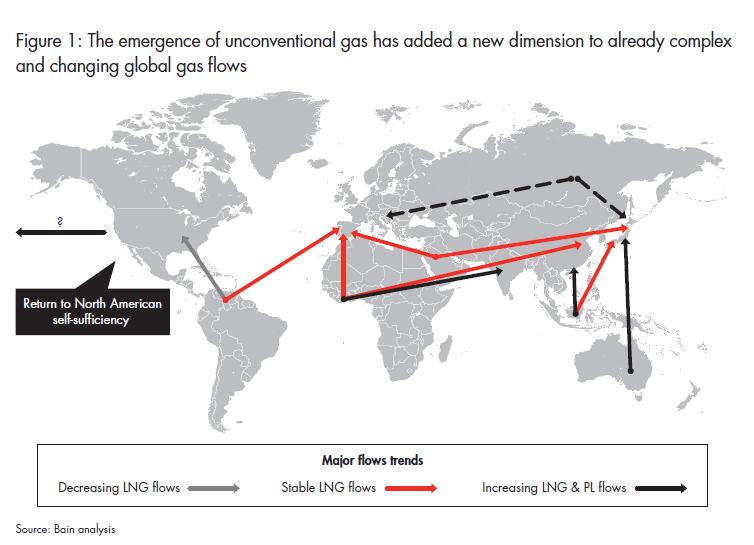
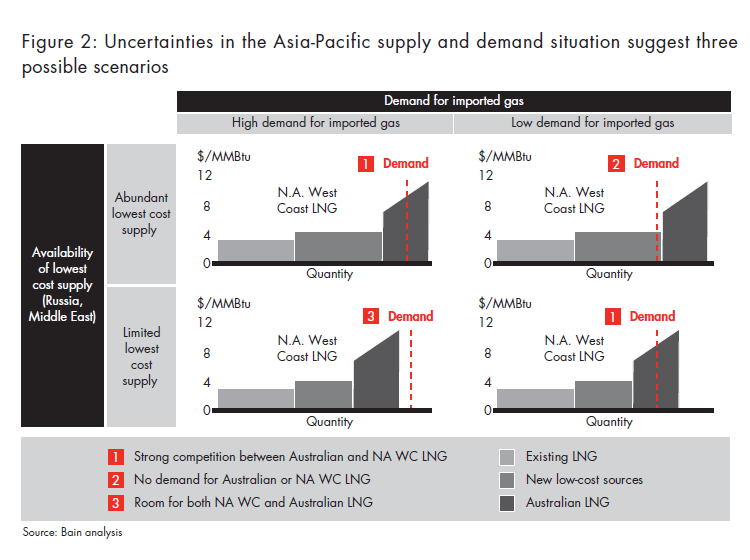
New gas supplies from West Africa, the Middle East and Australia also are arriving in Asia (see Figure 1). Asia potentially could even import LNG from North America, though that will depend on how long it takes Australian supply to develop—and how much it costs. Asia also contains a number of potential wildcards—most important, whether China’s ability to generate its own gas supply from indigenous shale and other sources can keep up with its growing energy demand. Given these supply and demand uncertainties, we see three distinct scenarios for the future of Asia-Pacific gas (see Figure 2).
How global energy markets develop
So what is the future of natural gas markets around the world? The history of other commodity markets such as refined products and coal suggests that the gas market is rapidly globalizing and evolving toward a gas-on-gas pricing model. In other commodity markets, the emergence of many different players and multiple cross-border flows rapidly led to a globally competitive market. As LNG trade flows move from local, bilateral arrangements to cross-regional and multiple-party participation, we expect a similar progression.
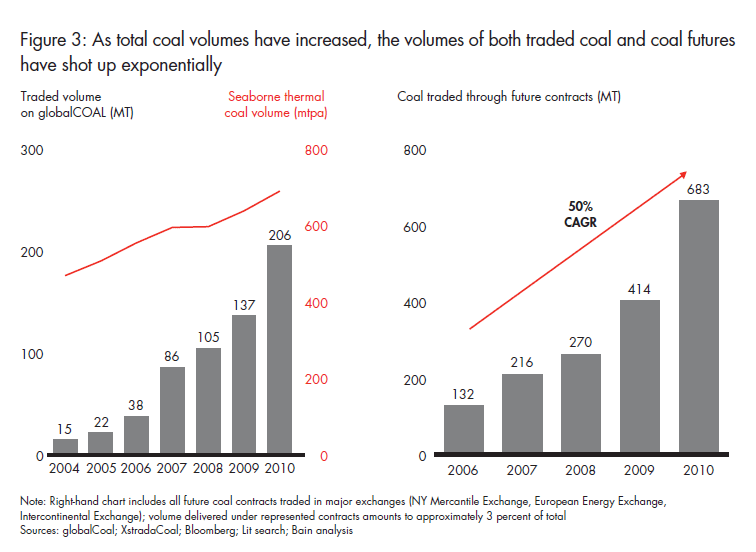
Take the development of the global seaborne coal market for example. As volumes of seaborne coal have grown, financial liquidity has followed. In general, more liquid markets tend to have lower levels of producer concentration. Predictably the market share of the top four producers of seaborne coal decreased from approximately 50 percent in 2001 to one-third in 2008. In comparison, today the top four producers of LNG comprise about half of the market. If LNG follows seaborne coal’s pace of change, we should expect to see a more diversified and fragmented set of LNG suppliers in the next decade.
As the financial markets for coal developed, so did the necessary seaborne coal infrastructure of ever larger and deeper ports and better transport systems comprised of railways, river barges and trucks. LNG is now following a similar path. Investments in pipelines and conventional gas infrastructure have accelerated, as illustrated by the development of key pipelines linking China to gas fields in Myanmar, Kazakhstan and Russia. A plethora of re-gas terminals around the globe have also emerged. New technology developments, including FLNG, mini-LNG and floating re-gas capability further aid this LNG infrastructure development.
In addition to greater liquidity and better infrastructure, higher volumes of coal also helped create more sophisticated financial instruments, allowing non-traditional players to get involved with coal and regular buyers and suppliers to hedge their positions. In the 1990s, growth in the coal spot market, along with tender sales, boomed. GlobalCOAL started futures trading in 2006 (see Figure 3). Currently, the seaborne trade indices in Asia, Europe and North America move in tandem as the coal trading market continues to grow.
LNG appears to be following a similar pattern. Traditionally, LNG trade was primarily regional and achieved through long-term contracts. But over the last 20 years, it has evolved from a bilateral to a more international market-based model.
Though short-term trading still accounts for only approximately 15 percent of LNG volumes, the similarities between the coal and gas markets suggest that an increasingly liquid and vibrant LNG market will emerge, helping to shift Asia increasingly toward gas-on-gas pricing.
New LNG hubs around the world will likely accelerate these trends, and nowhere is this more clear than in Singapore. Due to its geographical advantages, excellent storage infrastructure, attractive tax rates and incentives, sound financial system and existing commodity trading center infrastructure, Singapore is a natural choice for an Asian LNG hub. At least 12 global players, including Gazprom, Shell, BP and BG Group have established trading desks in Singapore in the past three years. This growth of LNG-focused trading capability is an early indicator of the growing market for spot and short-term LNG contracts both in Asia-Pacific and globally.
Given the increasing number of LNG players, greater financial liquidity in the global LNG markets, development of conventional gas and the growth of key gas infrastructure such as pipelines, US Henry Hub prices and today’s Asia LNG cargo prices are likely to converge over time.
Strategic implications
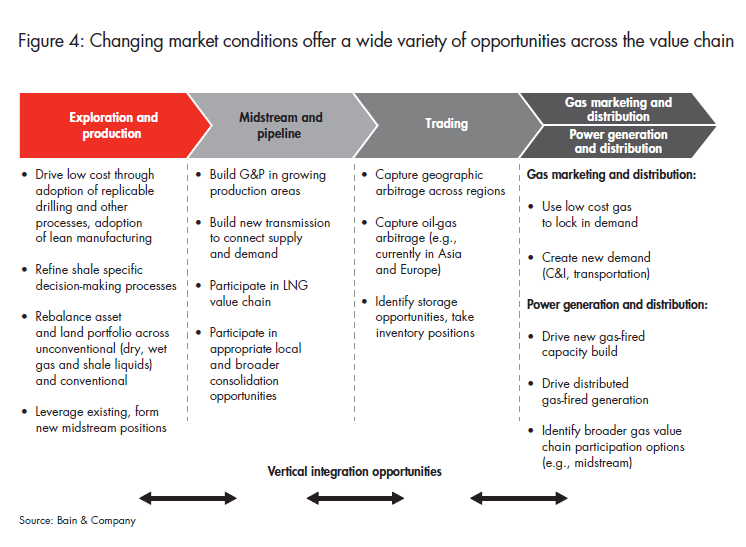
The market disruptions caused by shale have shaken up the entire gas value chain. These changes offer rich opportunities for utilities, as well as for other players across the industry—including upstream, midstream and pipeline, trading and marketing, and other end-use segments such as petrochemicals. Among the strategic actions these players can consider are portfolio rebalancing, consolidation and growth investment, and operational improvements in light of a sustained low-price environment (see Figure 4).
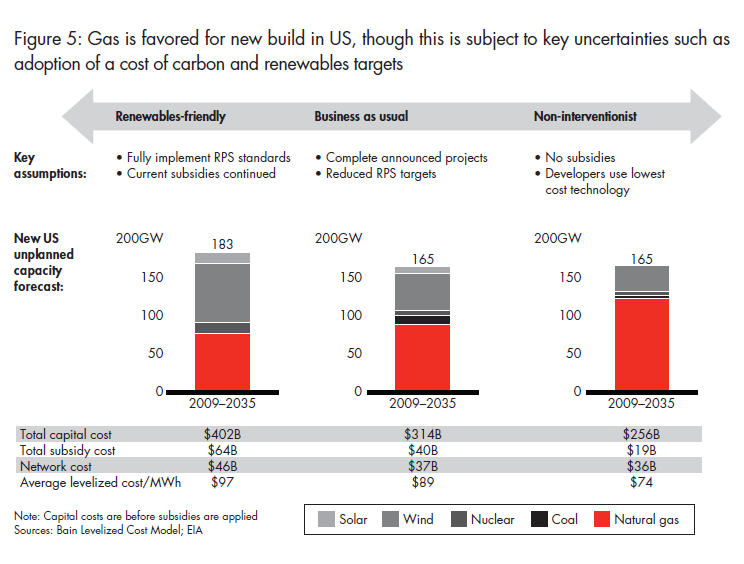
Gas market changes have particularly significant implications for utility players. First, they should reconsider what types of new generation capacity should be built and when, in light of sustainable low gas prices. Assuming gas remains disconnected from oil and relatively inexpensive, it will become a critical part of the generation mix, replacing coal at an accelerated pace, filling in for nuclear and backing up intermittent renewable. Gas is the natural fossil fuel for new generation projects because of the low cost and security of supply offered by the proliferation of new sources, as well as the fact that gas has substantially lower emissions than coal. In fact, depending on where subsidies, carbon costs and other environmental regulations fall, natural gas will likely form 42 percent to 74 percent of new build generation capacity in the US through 2035 (see Figure 5). A similar picture exists in Europe. Given current economic conditions and pressures to lower both government expenditures (including on subsidies) and consumer costs, the higher end of this range is entirely plausible, as natural gas offers both a clean and affordable source of energy.
Depending on where North American gas volumes end up, and depending on how quickly shale gas is exploited in Europe and China, utilities may also need to rethink their sourcing strategies. Although gas sources are increasingly abundant, gas prices are rapidly disconnecting from oil (which had disciplined pricing in the past).
Assuming continued expansion in overall gas supply and supply options—indigenous (both conventional and unconventional), long-haul pipeline gas and LNG imports—many utilities will want to renegotiate contracts to reflect the increasing importance of gas-on-gas competition and gas (versus oil) indices. Traditionally, oil-indexed gas contracts formed the basis of virtually all Asian and European LNG contracts (see Figure 6). However, as in the case of Centrica and other European utilities mentioned above, the increasing availability of additional gas supply has spurred renegotiation. In Asia- Pacific, increases in regional gas supply (and especially Australian supply) may pressure traditional oil-indexed LNG pricing. Major Japanese and Korean end users TEPCO, Osaka Gas and KOGAS have taken equity interests in Australian projects, and though unreported, the imputed gas prices that were the basis of the equity stake were in our perspective likely below the prevailing oil-indexed pricing.
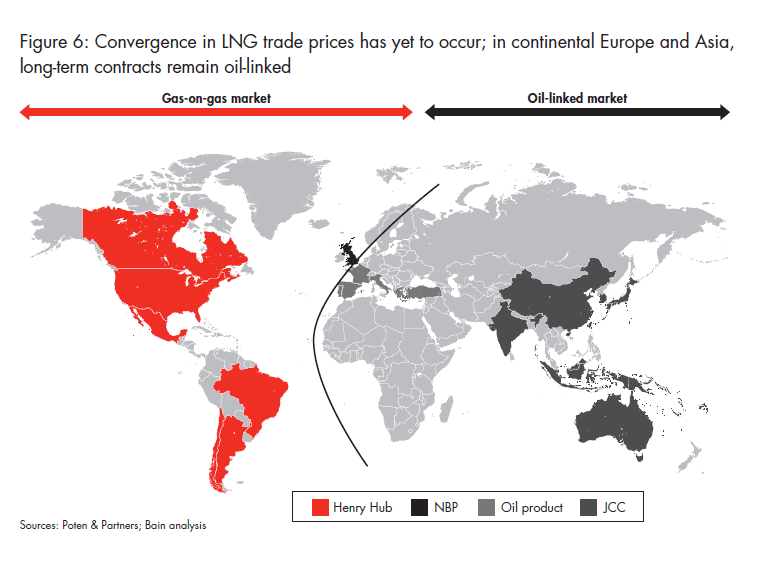
In light of continuing and diversified supply growth, we anticipate regional price spreads that exist today between US Henry Hub and Asian oil-indexed prices to diminish over time. For example, as Japan has no domestic gas production or pipeline supply, LNG prices have historically been set by indexing off of the next alternative feedstock for power generation—oil. This means that Asian LNG importers have paid a premium for natural gas. Now this historical pricing model is starting to erode. Thanks to its shale gas and other indigenous gas supply potential, China is increasingly unwilling to pay oil-indexed gas prices or to sign the long-term contracts that were previously typical in Asian markets. Late last year, Tokyo Gas Co., Japan’s biggest gas distributor, also announced plans to renegotiate gas contracts with sellers to better reflect spot gas prices elsewhere in the world.
Utilities, especially those already involved in gas distribution, should also consider extending their presence in the gas value chain. Depending on their prior experience, investments in unregulated storage, lateral pipelines to in-territory sources of gas demand, and even broader participation in new gas infrastructure requirements may also represent opportunities.
Shale gas is changing dynamics in the gas world, and with it, the assumptions that underlie many investment strategies. As in all turbulent markets, there will be winners and losers. Gas market changes will affect generation mix, gas sourcing strategy and gas infrastructure investment plans. Utilities that change their assumptions and strategic plans accordingly will be well placed to win in this new world.
Sharad Apte, a Bain & Company partner in the Bangkok office, leads the firm’s Asian Energy practice. Julian Critchlow, a Bain & Company partner in the London office, leads the firm’s European Utilities & Alternative Energy practice.
First published in 12月 2011