

論説

At a Glance
- Companies investing most heavily in automation outperform others in savings and adoption of new disruptive technologies.
- The gap between leaders and laggards has widened and will expand as leaders increase investment as a share of IT budget.
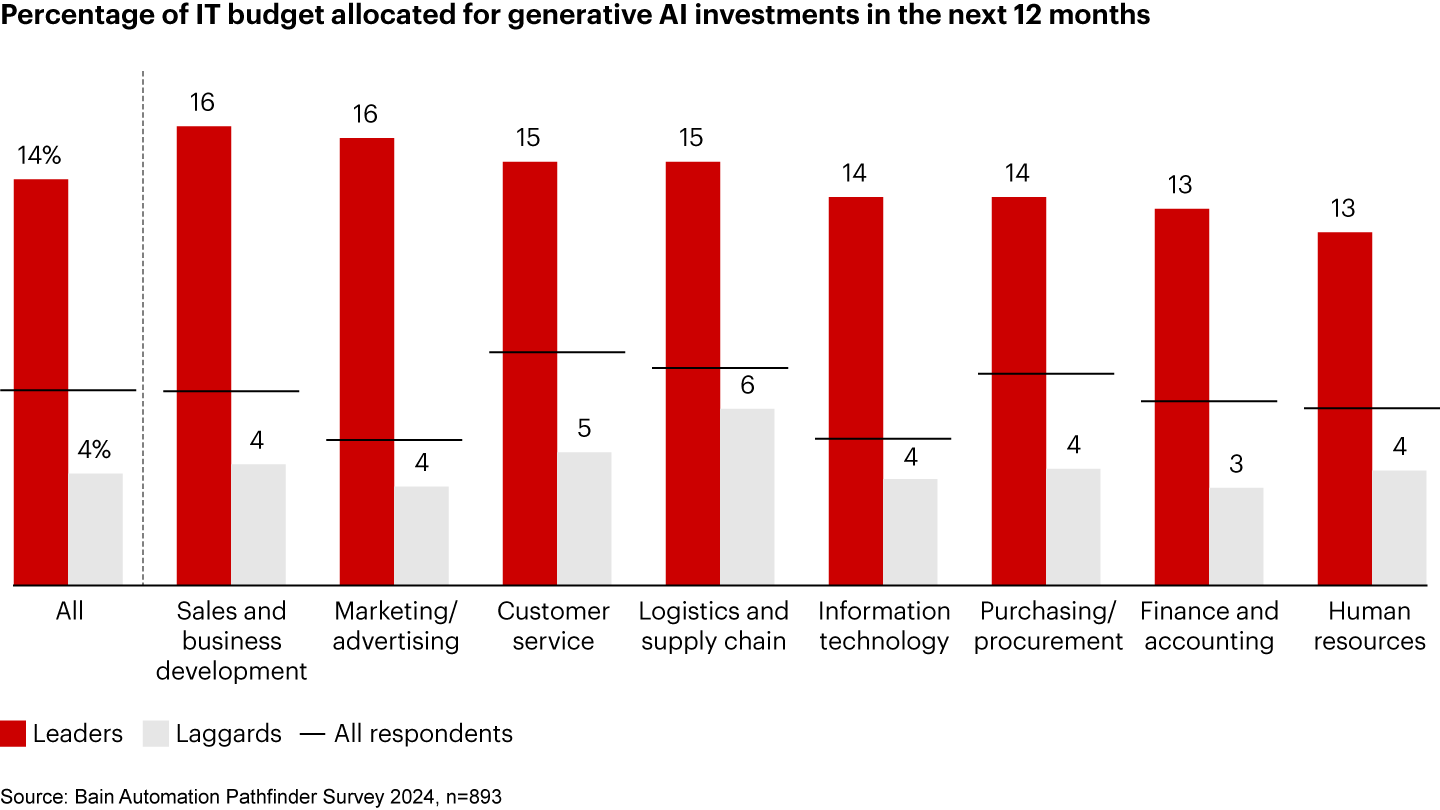
- Leaders are planning to invest, on average, almost four times more in generative AI than laggards.
- Successful automation programs include enterprise-wide rollout, combined technologies, value creation, and engaged staff.
Given UPS’ long history of successfully scaling up automation and artificial intelligence (AI), it came as no surprise that the company recently announced successful results from using generative AI in contact centers. UPS developed its Message Response Automation (MeRA), which uses publicly available large language models (LLMs) to automate responses to some of the more than 50,000 customer emails per day, reducing the time spent on emails by 50%. UPS plans to expand MeRA to other functions, such as sales, human resources (HR), and finance.
Written in collaboration with
Written in collaboration with

Like UPS, companies with a long track record of developing and scaling up programs in traditional forms of automation, such as robotic process automation (RPA) and analytical AI, are now applying the lessons learned to gain an early advantage in generative AI. Many companies have quickly launched pilot projects with generative AI, but as with traditional automation and AI, true success comes only when pilots convert into large-scale programs that deliver compelling returns on investment across the enterprise.
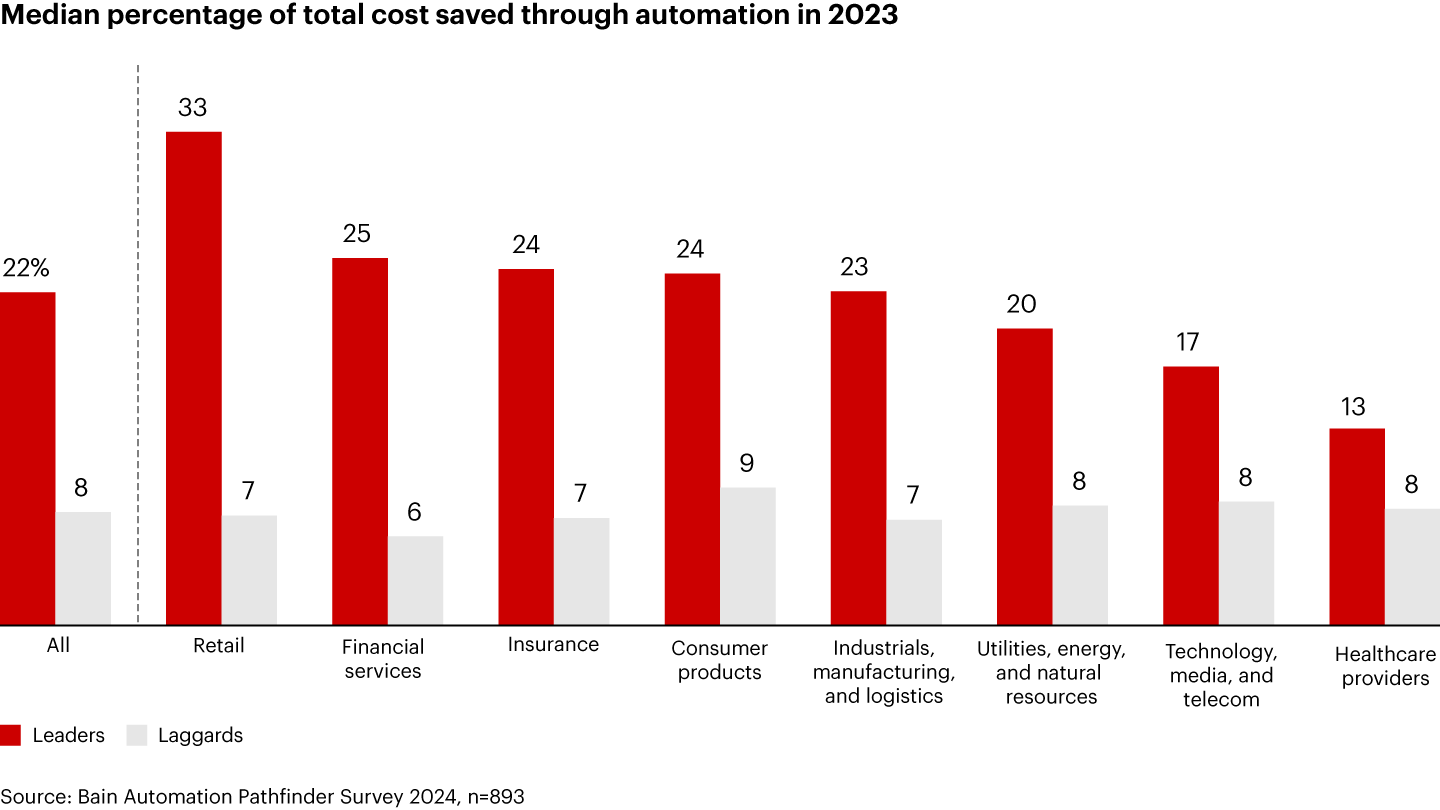
Bain’s latest survey of 893 automation executives worldwide finds that companies that invested most heavily in automation outperform laggards in savings achieved and adoption of new, more disruptive technologies, including generative AI. Broader investment enables them to transform their businesses quickly. (We define leaders as companies investing at least 20% of their IT budget in automation in the past two years, and this elite group achieved an average 22% in cost savings. Laggards are companies investing less than 5% of the IT budget in automation, and these firms achieved just under 8% in savings on average.)
Automation leaders are planning to invest, on average, almost four times more in generative AI than laggards and are already moving quickly into implementing generative AI (see Figure 1). This aggressive investment applies across most key functions, whether the functions were the earliest to adopt the technology, including customer service, IT, and marketing, or later adopters, such as finance and HR (see Figure 2).
Figure 1


Figure 2

JPMorgan Chase has invested in automation and AI for some time. By 2017, for example, the bank was using RPA to handle 1.7 million access requests in the IT function, equivalent to the work of 140 people. The bank’s legal department launched an AI program to automate the review of commercial loan agreements, saving over 360,000 hours of work annually by lawyers and loan officers. Given its leadership in traditional forms of automation and AI, JPMorgan Chase has been able to take a more measured approach to newer automation technologies, using generative AI where it can yield better results than traditional automation. For example, in May 2024, the bank announced IndexGPT, a generative AI-powered investment advisory product to support thematic investing.
More than cost reductions
The continued wave of automation is generating significant value across industries. Pharma giant Pfizer, for instance, has automated hundreds of processes and tasks across the company, such as sales representatives scanning barcodes to add a sample during a sales call and monitor inventory quantities.
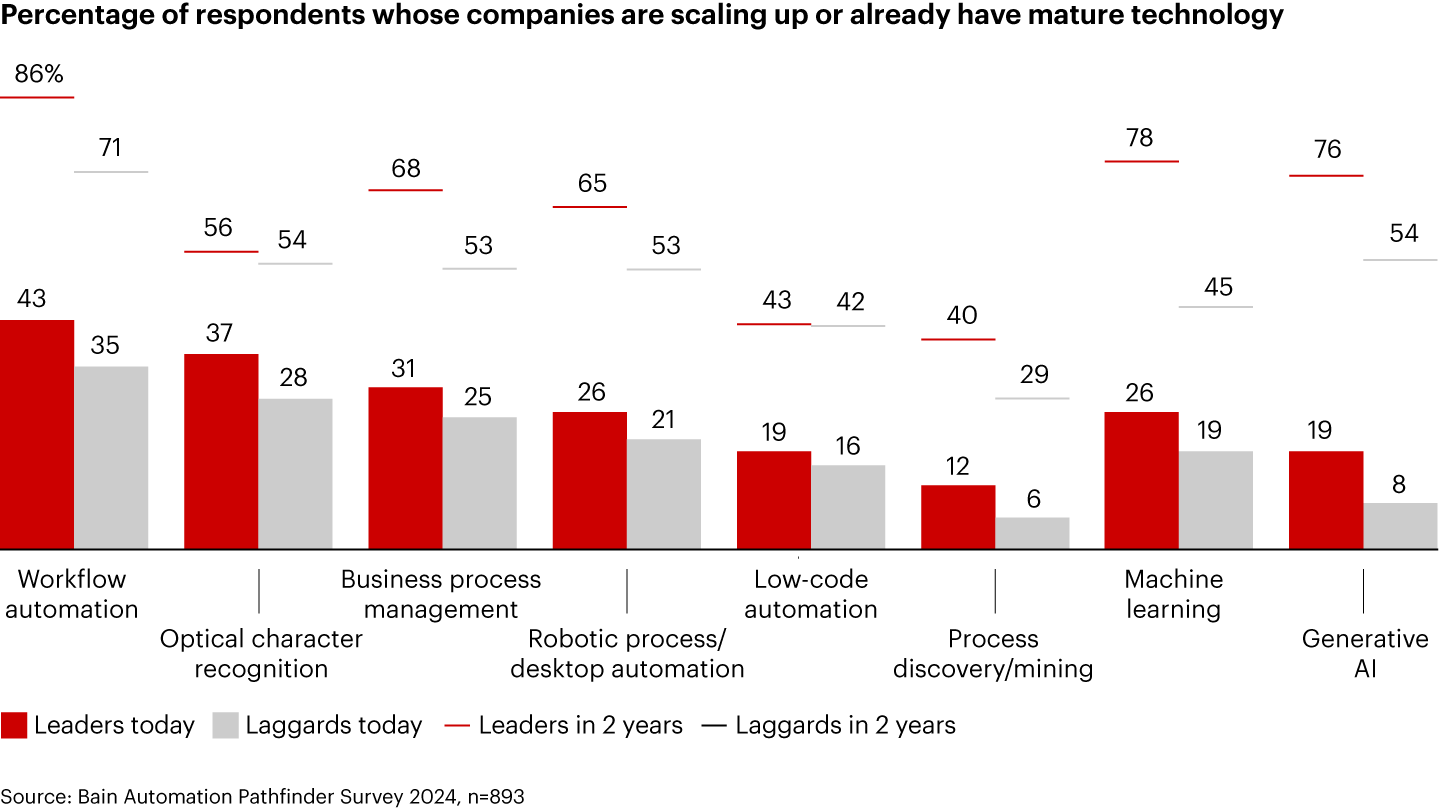
And automation leaders have a history of adopting disruptive technologies. Those companies that have successfully scaled up traditional forms of automation—workflow automation, RPA, scripting, and optical character recognition (OCR)—have already embedded AI outside of LLMs, such as machine learning (ML) in document processing or natural language processing in job descriptions, to improve the effectiveness of their automation programs (see Figure 3). Generative AI is the next frontier of technology advancement that will take automation to new levels of effectiveness and value.
Figure 3

What gives these companies the confidence that they can expand outside of traditional forms of automation and AI and invest so heavily into generative AI? The answer lies in the tangible cost savings and nonfinancial benefits they have already achieved through automation.
The majority of survey respondents are and will be using generative AI for three waves of use cases (see Figure 4). In the first wave, they are applying the technologies to use cases that were not possible in the past, such as creating new marketing content. For the second wave, they plan to replace technologies for current use cases, including order processing. And a third wave will consist of enhancing current use cases, such as accounts payable and receivable. The logic here consists of not wanting to start fresh with use cases where companies have already invested resources, built integrations, and trained employees, but rather to apply generative AI to new areas.
Figure 4
Automation leaders were able to reduce the cost of processes by 22% in 2023, whereas lagging companies managed only 8%. The top quartile of leaders lowered costs by an average 37% (see Figure 5). Respondents also cited the benefits of trimming the number of low-value tasks, speeding up process completion time, and improving service quality and accuracy.
Figure 5

What’s more, the gap between leaders and laggards has widened. Automation leaders speed down the learning curve, which can create a lasting advantage. We expect the gap will continue to widen, as leaders plan to raise their investment as a share of IT budget while lagging companies plan to be more conservative. According to our survey, 45% of leaders plan to invest significantly more in 2024, up from 29% in 2022, compared to only 17% of laggards, up slightly from 14% in 2022 (see Figure 6).
Figure 6


Automation principles that apply to generative AI
Mastering automation requires not only scaling up the number of processes and tasks automated but also delivering on the value promised in the business case. Companies that master these principles for effective automation are in a strong position to rapidly apply them to their AI programs.
Elevate automation from narrow pilots to cross-company strategic initiatives. One common trap is crowdsourcing a long list of small automation projects, often within individual functions or departments and frequently focused on subscale tasks, then trying to execute them one by one. This approach makes it difficult to achieve major savings or other benefits because the projects tend to change only fractional parts of business processes and people’s workloads; they do not affect the company as a whole or gain the attention of senior executives for resources and investment.
Automation leaders have overcome this challenge. They set bold goals, framing the potential from automation in the millions, even billions of dollars. They gain the sponsorship of senior executives and embed automation as a pillar of the overall strategic agenda.
Combine automation technologies. Many companies buy a technology, such as an RPA software license, then find places to deploy it. As the number of automation technologies grows, with the emergence of no-code and low-code development platforms, repeating the RPA experience becomes more perilous. This approach leads to many small tasks automated with different technologies and results in little value. Worse, it can add more complexity to business processes than the automation delivers in cost savings.
Automation leaders avoid this trap. They deploy multiple technologies ranging from RPA to analytical AI to generative AI, often combining the technologies to deliver the best results. They’re able to do this by starting with the business needs and process, working backward to determine the right combination of technologies.

Artificial Intelligence Consulting
It’s time to build your business for an AI world. We help you discover AI’s potential at the intersection of strategy and technology, and embed AI in all you do. Let’s turn AI’s promise into performance.
Insist on realizing value from automation. Before investing in the software and implementation resources to build an automation, senior executives increasingly want a commitment from the people asking for the investment to achieve savings and other benefits. Frequently, they demand a plan to realize that value in the financial budget before a team builds the automation. Once automations are deployed, the leading firms in automation expect business processes to be redesigned by changing how people work. And they insist on seeing proof of how teams achieved the value claimed.
Coax and convince to reach full adoption. Managing how employees change their behaviors can make or break an automation program. For example, finance departments are increasingly automating accounting processes, yet the metrics, such as the percentage of total account reconciliations automated vs. done manually, may underperform.
Automation leaders recognize the importance of maximizing adoption of automation tools. This entails documenting and educating people on the new way to work, investing in training, tracking adoption rates, and taking steps to keep improving how people use the technologies.
Automation is ensconced in most large companies by now, but the level of sophistication and maturity varies widely. Companies that lag can catch up, if they’re willing to boost their investments and commit to a sustained effort that changes how people do their work.
The good news is that lessons learned from traditional automation technologies can inform fruitful deployment of new technologies including generative AI. The techniques, governance issues, and process changes are all quite similar. Using generative AI offers a fresh approach to effectively manage costs and improve the customer experience.

About Ashling Partners
Ashling Partners is a global intelligent process automation consultancy, offering full-lifecycle services including business process discovery, design, automation, and change management. For more information visit www.ashlingpartners.com.
First published in 6月 2024