
Skip to Content
  • オフィス

    オフィス

    北米・南米
    • Atlanta
    • Austin
    • Bogota
    • Boston
    • Buenos Aires
    • Chicago
    • Dallas
    • Denver
    • Houston
    • Los Angeles
    • Mexico City
    • Minneapolis
    • Monterrey
    • Montreal
    • New York
    • Rio de Janeiro
    • San Francisco
    • Santiago
    • São Paulo
    • Seattle
    • Silicon Valley
    • Toronto
    • Washington, DC
    ヨーロッパ・中東・アフリカ
    • Amsterdam
    • Athens
    • Berlin
    • Brussels
    • Copenhagen
    • Doha
    • Dubai
    • Dusseldorf
    • Frankfurt
    • Helsinki
    • Istanbul
    • Johannesburg
    • Kyiv
    • Lisbon
    • London
    • Madrid
    • Milan
    • Munich
    • Oslo
    • Paris
    • Riyadh
    • Rome
    • Stockholm
    • Vienna
    • Warsaw
    • Zurich
    アジア・オーストラリア
    • Bangkok
    • Beijing
    • Bengaluru
    • Brisbane
    • Ho Chi Minh City
    • Hong Kong
    • Jakarta
    • Kuala Lumpur
    • Manila
    • Melbourne
    • Mumbai
    • New Delhi
    • Perth
    • Shanghai
    • Singapore
    • Sydney
    • Tokyo
    全てのオフィス
  • アルムナイ
  • メディア
  • お問い合わせ
  • 東京オフィス
  • Japan | 日本語

    地域と言語を選択

    グローバル
    • Global (English)
    北米・南米
    • Brazil (Português)
    • Argentina (Español)
    • Canada (Français)
    • Chile (Español)
    • Colombia (Español)
    ヨーロッパ・中東・アフリカ
    • France (Français)
    • DACH Region (Deutsch)
    • Italy (Italiano)
    • Spain (Español)
    • Greece (Elliniká)
    アジア・オーストラリア
    • China (中文版)
    • Korea (한국어)
    • Japan (日本語)
  • Saved items (0)
    Saved items (0)

    You have no saved items.

    後で閲読、共有できるようにするためにブックマークしてください

    Explore Bain Insights
  • 業界別プラクティス
    メインメニュー

    業界別プラクティス

    • 航空宇宙、防衛、政府関連
    • 農業
    • 化学製品
    • インフラ、建設
    • 消費財
    • 金融サービス
    • ヘルスケア
    • 産業機械、設備
    • メディア、エンターテインメント
    • 金属
    • 採掘・鉱業
    • 石油、ガス
    • 紙、パッケージ
    • プライベートエクイティ
    • 公共、社会セクター
    • 小売
    • テクノロジー
    • 通信
    • 交通
    • 観光産業
    • 公益事業、再生可能エネルギー
  • 機能別プラクティス
    メインメニュー

    機能別プラクティス

    • カスタマー・エクスペリエンス
    • サステイナビリティ、 社会貢献
    • Innovation
    • 企業買収、合併 (M&A)
    • オペレーション
    • 組織
    • プライベートエクイティ
    • マーケティング・営業
    • 戦略
    • アドバンスド・アナリティクス
    • Technology
    • フルポテンシャル・トランスフォーメーション
  • Digital
  • 知見/レポート
  • ベイン・アンド・カンパニーについて
    メインメニュー

    ベイン・アンド・カンパニーについて

    • ベインの信条
    • 活動内容
    • 社員とリーダーシップ
    • プレス・メディア情報
    • クライアントの結果
    • 受賞歴
    • パートナーシップを結んでいる団体
    Further: Our global responsibility
    • ダイバーシティ
    • 社会貢献
    • サステイナビリティへの取り組み
    • 世界経済フォーラム(WEF)
    Learn more about Further
  • キャリア
    メインメニュー

    キャリア

    • ベインで働く
      キャリア
      ベインで働く
      • Find Your Place
      • ベインで活躍する機会
      • ベインのチーム体制
      • 学生向けページ
      • インターンシップ
      • 採用イベント
    • ベインでの体験
      キャリア
      ベインでの体験
      • Blog: Inside Bain
      • キャリアストーリー
      • 社員紹介
      • Where We Work
      • 成長を後押しするサポート体制
      • アフィニティ・グループ
      • 福利厚生
    • Impact Stories
    • 採用情報
      キャリア
      採用情報
      • 採用プロセス
      • 面接内容
    FIND JOBS
  • オフィス
    メインメニュー

    オフィス

    • 北米・南米
      オフィス
      北米・南米
      • Atlanta
      • Austin
      • Bogota
      • Boston
      • Buenos Aires
      • Chicago
      • Dallas
      • Denver
      • Houston
      • Los Angeles
      • Mexico City
      • Minneapolis
      • Monterrey
      • Montreal
      • New York
      • Rio de Janeiro
      • San Francisco
      • Santiago
      • São Paulo
      • Seattle
      • Silicon Valley
      • Toronto
      • Washington, DC
    • ヨーロッパ・中東・アフリカ
      オフィス
      ヨーロッパ・中東・アフリカ
      • Amsterdam
      • Athens
      • Berlin
      • Brussels
      • Copenhagen
      • Doha
      • Dubai
      • Dusseldorf
      • Frankfurt
      • Helsinki
      • Istanbul
      • Johannesburg
      • Kyiv
      • Lisbon
      • London
      • Madrid
      • Milan
      • Munich
      • Oslo
      • Paris
      • Riyadh
      • Rome
      • Stockholm
      • Vienna
      • Warsaw
      • Zurich
    • アジア・オーストラリア
      オフィス
      アジア・オーストラリア
      • Bangkok
      • Beijing
      • Bengaluru
      • Brisbane
      • Ho Chi Minh City
      • Hong Kong
      • Jakarta
      • Kuala Lumpur
      • Manila
      • Melbourne
      • Mumbai
      • New Delhi
      • Perth
      • Shanghai
      • Singapore
      • Sydney
      • Tokyo
    全てのオフィス
  • アルムナイ
  • メディア
  • お問い合わせ
  • 東京オフィス
  • Japan | 日本語
    メインメニュー

    地域と言語を選択

    • グローバル
      地域と言語を選択
      グローバル
      • Global (English)
    • 北米・南米
      地域と言語を選択
      北米・南米
      • Brazil (Português)
      • Argentina (Español)
      • Canada (Français)
      • Chile (Español)
      • Colombia (Español)
    • ヨーロッパ・中東・アフリカ
      地域と言語を選択
      ヨーロッパ・中東・アフリカ
      • France (Français)
      • DACH Region (Deutsch)
      • Italy (Italiano)
      • Spain (Español)
      • Greece (Elliniká)
    • アジア・オーストラリア
      地域と言語を選択
      アジア・オーストラリア
      • China (中文版)
      • Korea (한국어)
      • Japan (日本語)
  • Saved items  (0)
    メインメニュー
    Saved items (0)

    You have no saved items.

    後で閲読、共有できるようにするためにブックマークしてください

    Explore Bain Insights
  • 業界別プラクティス
    • 業界別プラクティス

      • 航空宇宙、防衛、政府関連
      • 農業
      • 化学製品
      • インフラ、建設
      • 消費財
      • 金融サービス
      • ヘルスケア
      • 産業機械、設備
      • メディア、エンターテインメント
      • 金属
      • 採掘・鉱業
      • 石油、ガス
      • 紙、パッケージ
      • プライベートエクイティ
      • 公共、社会セクター
      • 小売
      • テクノロジー
      • 通信
      • 交通
      • 観光産業
      • 公益事業、再生可能エネルギー
  • 機能別プラクティス
    • 機能別プラクティス

      • カスタマー・エクスペリエンス
      • サステイナビリティ、 社会貢献
      • Innovation
      • 企業買収、合併 (M&A)
      • オペレーション
      • 組織
      • プライベートエクイティ
      • マーケティング・営業
      • 戦略
      • アドバンスド・アナリティクス
      • Technology
      • フルポテンシャル・トランスフォーメーション
  • Digital
  • 知見/レポート
  • ベイン・アンド・カンパニーについて
    • ベイン・アンド・カンパニーについて

      • ベインの信条
      • 活動内容
      • 社員とリーダーシップ
      • プレス・メディア情報
      • クライアントの結果
      • 受賞歴
      • パートナーシップを結んでいる団体
      Further: Our global responsibility
      • ダイバーシティ
      • 社会貢献
      • サステイナビリティへの取り組み
      • 世界経済フォーラム(WEF)
      Learn more about Further
  • キャリア
    人気検索キーワード
    • デジタル
    • 戦略
    前回の検索
      最近訪れたページ

      Content added to saved items

      Saved items (0)

      Removed from saved items

      Saved items (0)

      Engineering and R&D Report

      Bridging the Talent Gap in Engineering and R&D

      Bridging the Talent Gap in Engineering and R&D

      How successful companies are transforming engineering roles to attract and retain top talent.

      著者:Daniel Suter, Bill Radzevych, Junna Hashimoto, Parvathy Kailasam, and Jessica Port

      • min read
      }

      レポート

      Bridging the Talent Gap in Engineering and R&D
      en
      概要
      • Nearly three-quarters of engineering and R&D-focused companies report talent gaps.
      • Data engineering and analytics, cybersecurity, and the Internet of Things are among the most sought-after capabilities.
      • Leading companies are offering better work benefits and unearthing new talent pools.

      This article is part of Bain's 2023 Engineering and R&D Report.

      Explore the report

      Every engineering chief technology officer is feeling the pain. Industrial firms are urgently seeking to expand their ranks of engineers to cope with new technologies and fast-changing markets while tech giants have been luring away some of their best engineers for years.

      In fact, 73% of engineering- and R&D-focused (ER&D) companies report talent gaps, and that divide will widen as baby boomers retire more quickly than new graduates fill their shoes. Adding to the problem, midcareer engineers are transitioning to nonengineering roles. Globally, the percentage of engineers quitting their jobs at engineering companies has risen to between 16% and 17%, up by nearly 2 percentage points from three years ago. 

      The shortage of engineering talent is affecting all geographies and is likely to continue throughout the coming decade. Leading companies are realizing that in a tight talent market, it’s as important to improve the attractiveness of engineering roles as it is to scour the market for new pockets of labor.

      Employee demands are changing, and traditional engineering firms won’t be able to attract talent to expand their roster of engineers without significantly transforming the value proposition they offer to potential employees. With the recent waves of tech layoffs, there is a rare opportunity to recruit some much-needed talent.

      The engineering brain drain

      As technologies in all industries grow increasingly integrated and complex, IT and engineering functions are converging in companies large and small. That means tech companies such as Alphabet, Amazon, and Microsoft are entering industrialized markets outside the software sector and competing for a slice of the business.

      Fierce competition for talent means that attrition rates at ER&D companies are likely to increase over the next three years, according to Bain research. That trend will be exacerbated by the retiring baby boomer generation. The number of graduates in STEM disciplines grew at an average annual rate of 1.8% from 2016 to 2019 in OECD countries, while the population reaching retirement age (65 and older) during the same period grew at 6.2% each year.

      But young employees are also leaving engineering firms for more attractive jobs. About 40% of young engineering professionals globally say they are likely to change jobs within the next six months, according to a recent Bain survey. Many say they are frustrated by the low level of productivity at traditional engineering firms. For instance, aerospace and defense engineers say they spend only about half their time on active engineering work, of which more than 30% is spent on rework and more than 40% on lower-value tasks.

      Attracting top talent

      While all engineering firms are competing for talent, only a few succeed at consistently attracting the best people. Those winning this talent war follow a few key guidelines:

      Provide career path transparency. In the competition for talent, it’s important to determine what rates and packages other industries are offering for specific roles and candidate backgrounds. If it is tough to dramatically change compensation in low-margin industries, CEOs do have several other options to recruit and retain top talent. For one, they can reward top employees with promotions. Many engineers move to tech firms, where promotions to new roles are possible every year or two. By contrast, it may take engineers five years to be promoted at traditional engineering or industrial firms. Shortening the promotion cycle will help secure young and midcareer employees. It also helps to make sure engineers understand what it takes to earn a promotion. At software company Miro, for example, managers share their 30-, 60-, and 90-day goals with new hires and help create a roadmap to achieve them.

      Pay for skill, not for tenure. A Snowflake developer who is able to create state-of-the-art cloud-based analytics solutions is much rarer than a Java developer with the same tenure. Still, many companies would pay either of them the same wage if they had the same number of years as developers under their belts.

      Leading ER&D companies are starting to classify employees’ skills depending on whether they are more mainstream or premium. Those with more premium skills, such as fluency with Kafka (a framework used to store, read, and analyze streaming data), receive higher salaries than those with more standard skills.

      Foster employee development. Entice employees by providing learning opportunities including international assignments and new skills training. Audi, for example, announced a training budget of €500 million in 2022 to instill new digital skills necessary for the technical staff. Thousands of Audi employees every year take advantage of training in software development, data analytics, charging technology, and systems engineering. Amazon, on the other hand, offers employees self-directed online cloud-learning resources to earn additional credentials at no cost.

      Make work meaningful. One way to keep work interesting for employees is to improve efficiency and automate low-value work. Another option is to assign new employees to projects that allow them to see the impact of their work quickly. Netflix, for instance, assigns new hires to key projects that are close to completion to ensure they quickly feel a sense of satisfaction for the achievement and become motivated. An attractive work environment also includes hybrid or flexible working models (see Figure 1) and programs to ensure emotional and psychological well-being. In the wake of the Covid-19 pandemic, many employees consider such support a nonnegotiable benefit.

      Figure 1
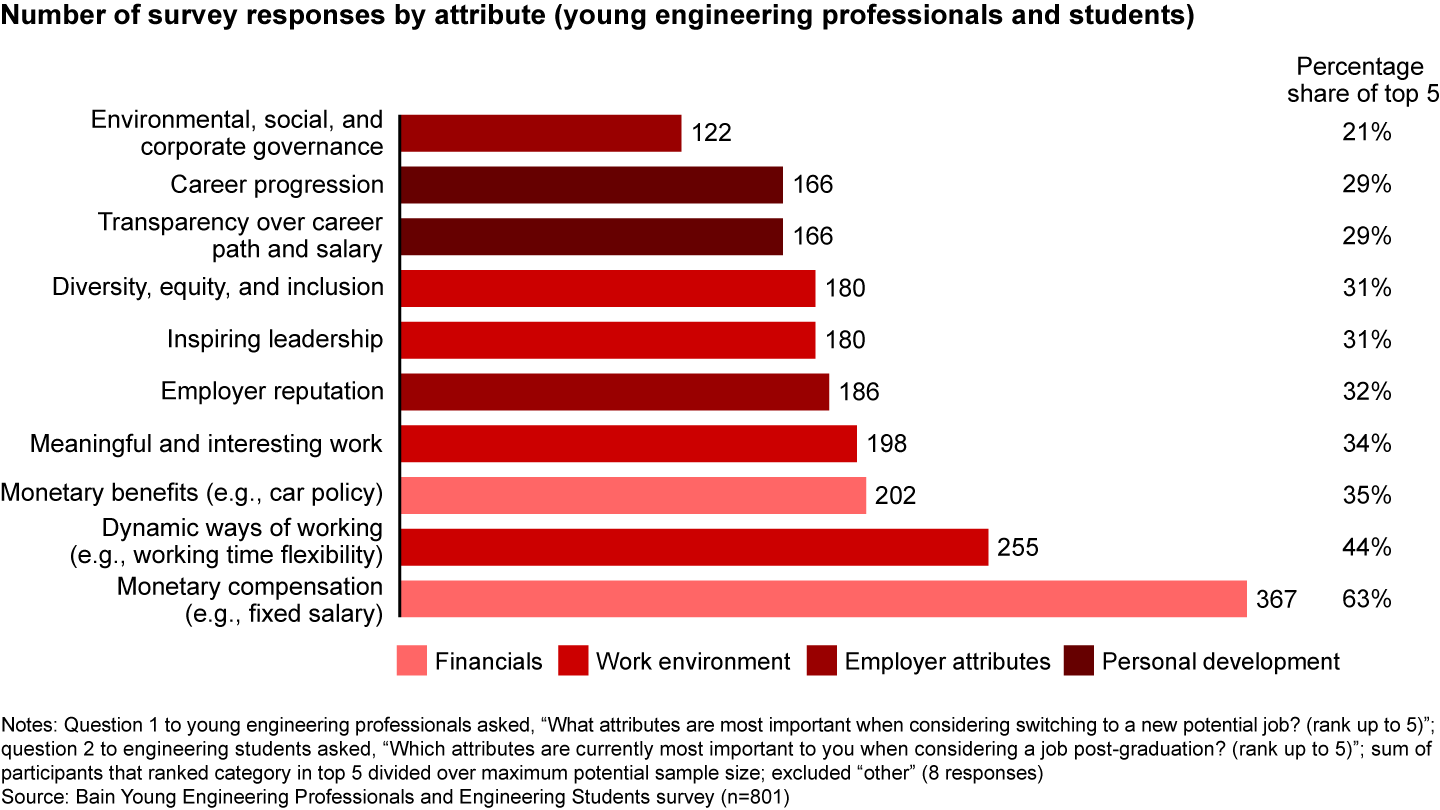
      What matters most to young engineering professionals and students when choosing jobs?
      What matters most to young engineering professionals and students when choosing jobs?
      What matters most to young engineering professionals and students when choosing jobs?

      Engage and inspire. Build ecosystems that connect employees to the company’s mission and provide exposure to new ideas. One approach is to create different cultures within an existing company. For example, some auto companies have acquired software or tech companies to create a unit with a start-up culture and office design. Others, such as Siemens, are adopting a “tech hub” model, in which the tech enterprise has its own campus and has perks typically seen at tech companies. Siemens’ Lisbon tech hub, for instance, has a pool, a garden, game rooms, and gourmet food for employees. Others, such as Volkswagen, host open innovation challenges to gather ideas that could revolutionize the future of mobility.

      Tailor jobs to what matters most. Identify the critical talent roles for the firm, and customize employment packages for each one. For instance, millennials and Gen Z are now already more than 40% of the workforce, and they have very different motivations than prior generations, according to a recent Bain survey. Companies that understand the different needs of their employees also regularly measure employee satisfaction. Indian telecommunications firm Airtel and payments company Paytm, for instance, use software from inFeedo to identify employees at risk of quitting, predict burnout, and reengage the workforce.

      Tap into new talent pools. Company alumni may be particularly receptive to recruiting. In Bain surveys of young employees who have quit companies, more than 50% said they would be willing to return if they received a raise in salary, and 20% said they would consider returning if former employers significantly improved the work environment by offering flexible working time, for example, or programs to attract more diverse colleagues.

      Outsourcing and offshore hiring can help address shortages in digital engineering capabilities that are in highest demand, such as data engineering and analytics, cybersecurity, and the Internet of Things (IoT) (see Figure 2). Companies facing high attrition rates are already 2.2 times more prone to accelerate offshore hiring for engineering activities vs. companies that have lower or decreasing attrition rates.

      Leading companies also seek out young talent through partnerships with universities. The collaboration could include funding financial scholarships, student innovation competitions, or training for high-priority candidates. Volkswagen, for example, is considering financing programming schools in Mexico and Brazil to improve its access to software developers.

      Figure 2
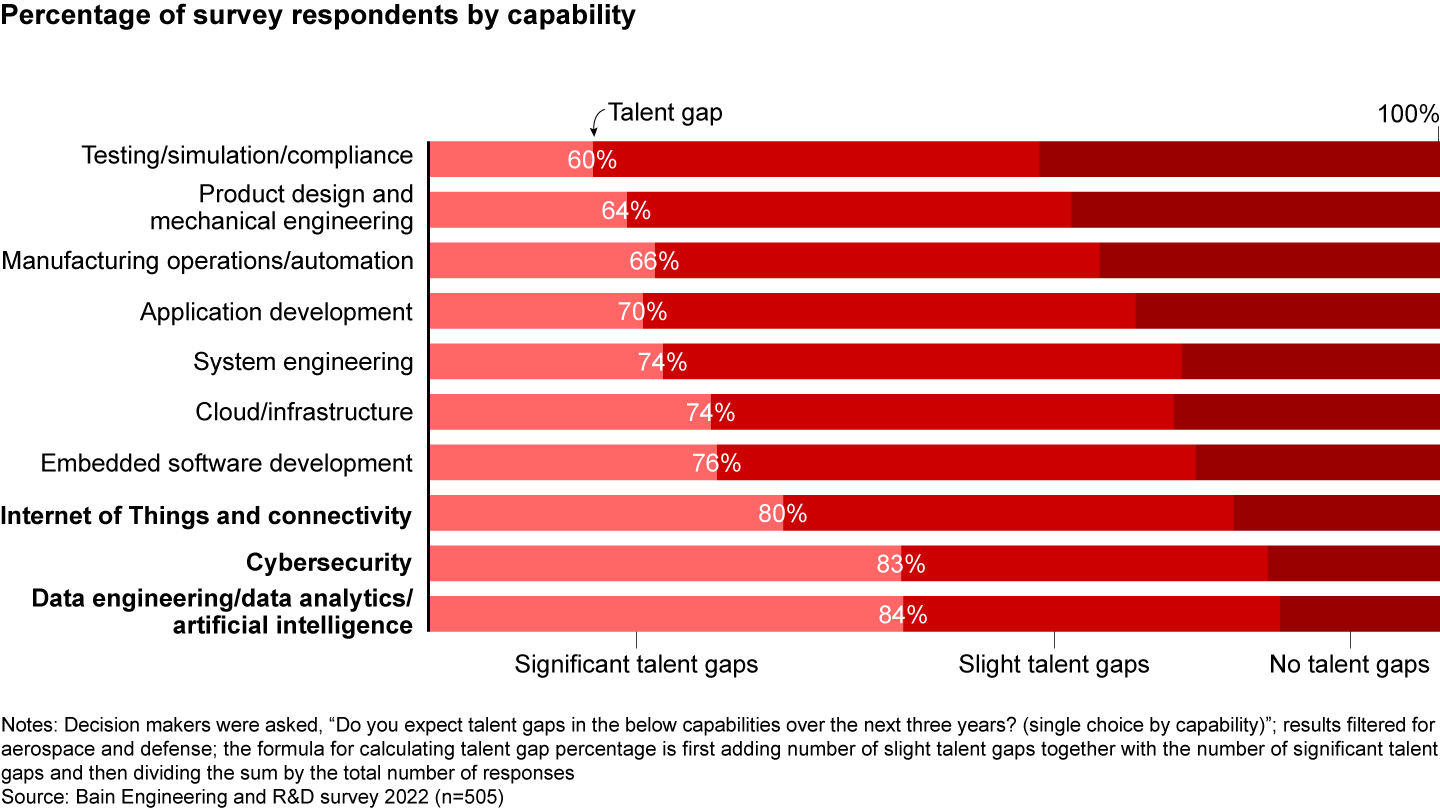
      The talent shortage is most acute in data engineering and analytics, cybersecurity, and the Internet of Things
      The talent shortage is most acute in data engineering and analytics, cybersecurity, and the Internet of Things
      The talent shortage is most acute in data engineering and analytics, cybersecurity, and the Internet of Things

      Finally, gig workers can help fill talent gaps, especially in IT and digital engineering roles. Tech companies such as Google, Salesforce, and Meta regularly employ contingent workers that allow them to quickly grow or shrink the workforce. Service companies including Wipro, TCS, and Cyient also are starting to use gig workers. Wipro, for instance, acquired Topcoder, a company with an open global community of developers, data scientists, and programmers that sells the community’s services to business clients.

      Chief technology officers of global engineering and R&D firms face a long-term battle for talent. Leaders are making gains by rethinking compensation packages, career paths, and the work environment. Above all, innovators are taking a lesson from other industries and mining new sources of talent.

      Read the Next Chapter

      Engineering and R&D: The Path to New Sources of Value

      More from the report

      • The Innovation Race: Winners Are Investing Now

      • Bridging the Talent Gap in Engineering and R&D

      • Engineering and R&D: The Path to New Sources of Value

      • The Digital Shift Fuels Outsourcing in Engineering and R&D

      • Engineering and R&D in Aerospace and Defense

      Read our Engineering and R&D Report 2023

      Explore the report Download the PDF
      著者
      • Headshot of Daniel Suter
        Daniel Suter
        パートナー, Zurich
      • Headshot of Bill Radzevych
        Bill Radzevych
        パートナー, Seattle
      • Headshot of Junna Hashimoto
        Junna Hashimoto
        パートナー, London
      • Headshot of Parvathy Kailasam
        Parvathy Kailasam
        パートナー, Mumbai
      • Headshot of Jessica Port
        Jessica Port
        パートナー, Washington, DC
      関連業種
      • Metals
      • 公益事業、再生可能エネルギー
      • 航空、運輸
      • 航空宇宙、防衛、政府関連
      • 産業機械
      • 産業財、サービス
      • 自動車
      Engineering and R&D Report
      The Innovation Race: Winners Are Investing Now

      As costs rise, engineering and R&D leaders are finding new ways to ensure a strong return on investment.

      詳細
      産業財、サービス
      Corporate Climate Stocktake 2023

      A sophisticated picture of business progress toward net zero to date, underscoring critical areas of focus for COP28 discussions.

      詳細
      Engineering and R&D Report
      Engineering and R&D: The Path to New Sources of Value

      Leaders are using engineering and R&D to reimagine the business around customer outcomes and experiences.

      詳細
      Engineering and R&D Report
      The Digital Shift Fuels Outsourcing in Engineering and R&D

      Soaring demand for digital capabilities has research-dependent firms rethinking what needs to be done in-house and onshore.

      詳細
      産業財、サービス
      How to Navigate the Transition to Sustainable Metals and Chemicals

      Winners will help stimulate the demand for green commodities and earn price premiums.

      詳細
      First published in 4月 2023
      Tags
      • Engineering and R&D Report
      • Metals
      • 公益事業、再生可能エネルギー
      • 航空、運輸
      • 航空宇宙、防衛、政府関連
      • 産業機械
      • 産業財、サービス
      • 自動車

      クライアント支援事例

      戦略 A Steel Company Seeks to Regain Market Leadership

      ケーススタディを見る

      戦略 A Conglomerate Charts a New Global Strategy

      ケーススタディを見る

      業績改善 Airline grounds planes to rise above financial cloud

      ケーススタディを見る

      お気軽にご連絡下さい

      私達は、グローバルに活躍する経営者が抱える最重要経営課題に対して、厳しい競争環境の中でも成長し続け、「結果」を出すために支援しています。

      ベインの知見。競争が激化するグローバルビジネス環境で、日々直面するであろう問題について論じている知見を毎月お届けします。

      *プライバシーポリシーの内容を確認し、合意しました。

      プライバシーポリシーをご確認頂き、合意頂けますようお願い致します。
      Bain & Company
      お問い合わせ Sustainability Accessibility Terms of use Privacy Cookie Policy Sitemap Log In

      © 1996-2026 Bain & Company, Inc.

      お問い合わせ

      How can we help you?

      • ビジネスについて
      • プレス報道について
      • 採用について
      全てのオフィス