

論説
1. Third-party logistics: Market structure
Corporate managers traditionally have viewed logistics as a mandatory cost bucket. But top-performing companies now recognize that mastering supply chain and logistics can be more than that: It can be the source of competitive advantage.
This strategic shift opens up significant growth opportunities for logistics providers, with winners using different paths and business models to foster growth. The major challenges for providers are aligning corporate strategy with the right organizational model and matching that strategy to targeted customer segments—by size, footprint, vertical category and market. Leading logistics providers excel at understanding key customers’ needs and purchasing behaviors—and they know that understanding is a key ingredient to building a solid strategy and defining the most efficient commercial approach and offerings. This report will examine both the market and winning models used by providers.
Many companies now outsource all or part of their supply chain to logistics specialists when it’s not a core business. For logistics providers, the value proposition rests on three key pillars: optimizing logistics costs for customers, shortening the length of the order completion cycle and reducing the number of fixed assets.
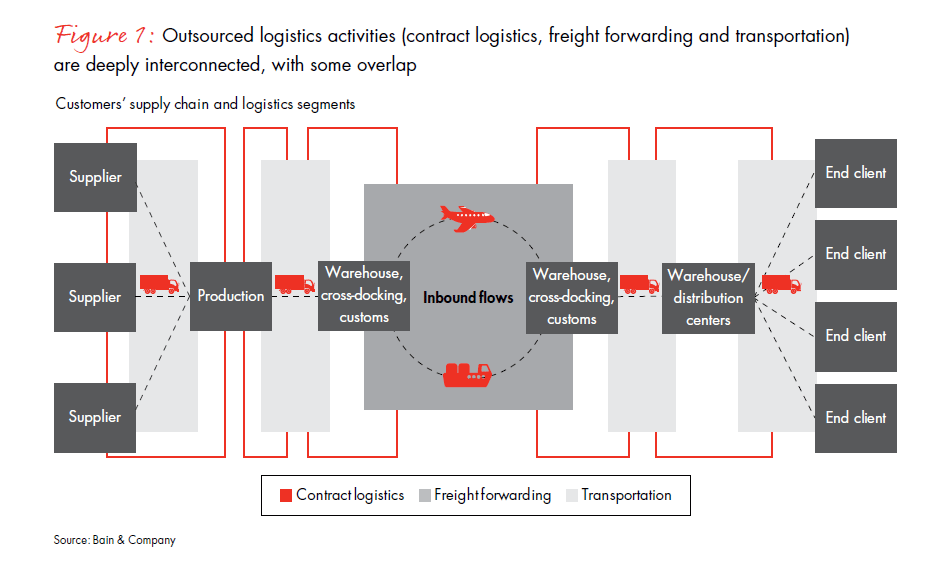
Outsourced logistics activities commonly fall into three types of services: contract logistics, freight forwarding and transportation. These businesses are deeply interconnected, with some overlap (see Figure 1). For example, freight forwarding operations frequently involve activities associated with contract logistics services that are performed when goods are collected and received, such as cross-docking and warehousing. Similarly, contract logistics providers often are responsible for local distribution and derived truck transportation. The three services are built on different business models.
1.1 Contract logistics
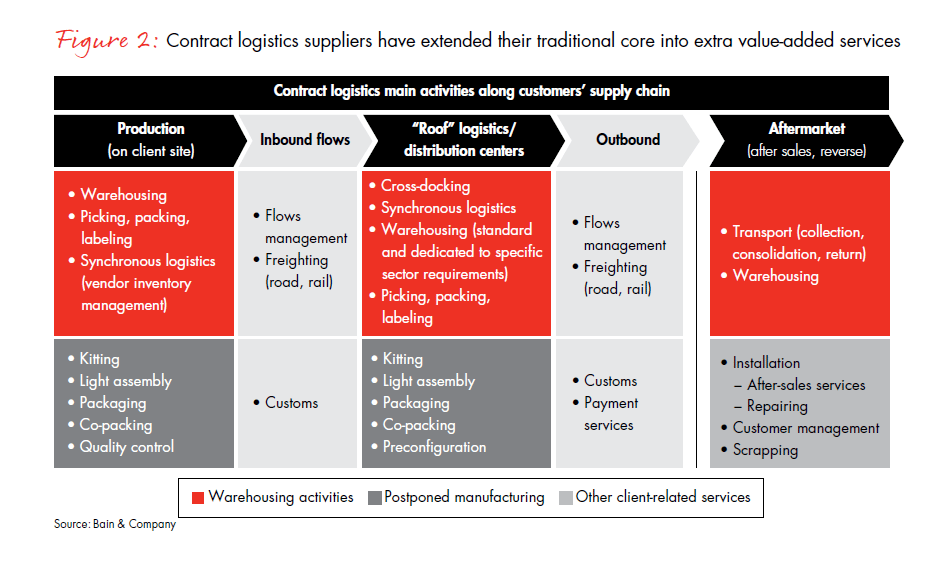
Moving beyond warehousing. Along with warehousing services (picking up, packing and labeling), contract logistics suppliers have extended their traditional core into extra value added services, such as postponed manufacturing (light assembly, kitting, manufacturing and quality control), and even payment and customer management (see Figure 2).
Still a regional and fragmented market. A few large global players dominate the contract logistics market. The leader, DHL Supply Chain, with more than €13 billion in relevant revenues in 2011, is nearly four times larger than the supply chain units of its closest competitors, Ceva Logistics and Kuehne & Nagel, the No. 2 and 3 players, respectively.
Even so, contract logistics remains a local and fragmented business. Top suppliers lead the market at a national or regional level, but not globally. In the Asia-Pacific region, Hitachi’s third-party logistics, Sankyu, Mitsubishi Logistics and Yamato are the established key players; in North America, DHL, Penske, UPS and Ryder are the major suppliers; and in Europe, the main players are Wincanton, Ceva and Kuehne & Nagel. Within Europe, the combined local market share of these logistics suppliers does not exceed 30%, with a large number of small local players meeting the remaining demand.
Cost position is triggering market competition. Despite the development of value-added services, the contract logistics market offers suppliers few opportunities to differentiate themselves. Customers often view contract logistics as a commodity, with a provider’s cost position serving as the main purchasing criteria.
This viewpoint has encouraged providers to develop cost-effective solutions, such as shared warehousing. They also replicate winning formulas that make the most of a solid infrastructure, which may include warehouse configuration, IT systems and skilled teams.
1.2. Air and sea freight forwarding
From “pure” freight forwarders to integrators. Air and sea freight forwarders are commissioned by companies to manage their freight overseas and overland. The service includes transportation, customs brokerage, insurance and tracking.
Most freight forwarders don’t own ships, airplanes or other transportation assets. Instead, they act as intermediaries between customers and cargo carrier companies. However, a few major logistics players, such as DHL, TNT and UPS, have been developing their own cargo fleets and hubs, making them logistics integrators.
Cargo companies still lead sea freight. Freight forwarding services can be directly handled by cargo companies, especially when there is sufficient volume for full-container- load transportation.
Air freight and sea freight businesses are structured differently.
- Air forwarding: Freight forwarders (sometimes integrators) currently handle almost all shipments
- Sea cargo: Two-thirds of all volume is handled without a middleman between customers and carriers
Success lies in fully utilizing trade lanes, not the overall network size. An extensive network of trade lanes isn’t enough for sea and air freight providers to succeed. Winning requires having significant freight capacity on a given route to obtain preferred freight rates and fully utilizing the route by pooling enough orders from various customers.
The challenge of rationalizing historical networks. Freight forwarding is moving away from its original structure, built on extensive networks of local branches. To improve efficiency and service, the industry is evolving toward more centralized networks, with large platforms and hubs at the national and regional levels.
Despite consolidation, this new model has not yet been fully adopted. In reality, many players still operate extensive local networks in the countries where they originally were based.
1.3. Road transportation options: Full-truckload, part-load, groupage and express
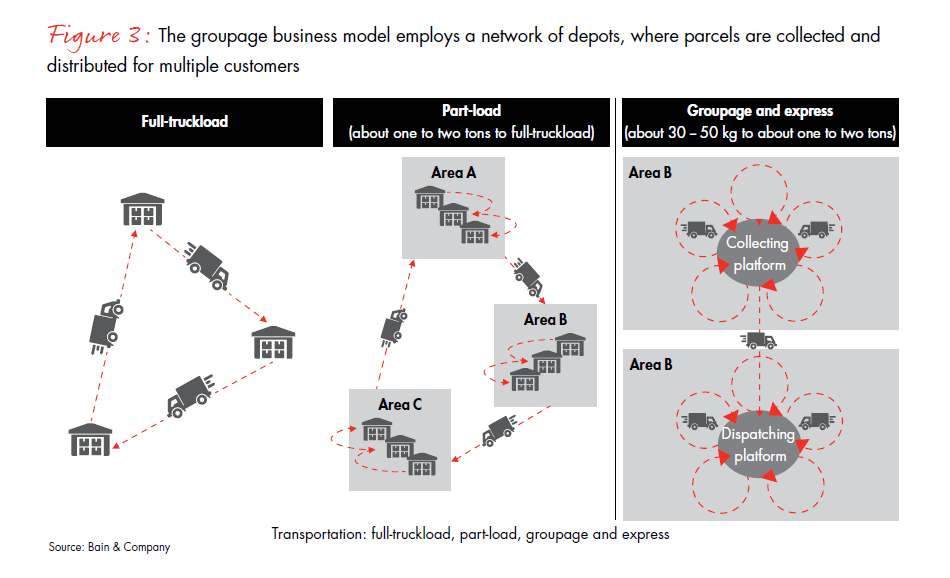
Same trucks, but different businesses. Road transportation typically is structured around three main segments, based on load type and weight (see Figure 3):
- Full-truckload (FTL) transportation: a single customer for a full truck
- Part-load or less-than-truckload (LTL): several customers with loads weighing more than one to two tons each
- Groupage and express: parcels destined for multiple customers, weighing between 30 to 50 kilograms and one to two tons
While the transportation options are similar, distinct models have emerged to serve different customer segments.
In the FTL and LTL businesses, products are carried between two points. Since customers are only paying for one-way transportation, carrier companies’ success in creating value depends on their ability to fill the truck on its return trip. The main challenge then for FTL and LTL carriers is to develop strong customer portfolios on specific routes and plan itineraries to maximize each load.
The groupage business is a service that consolidates several small shipments to create a full load. The model employs a network of depots, where parcels are collected and distributed for multiple customers. One of the most efficient forms of groupage is the hub-and-spoke network. Individual shipments are hauled from regional warehouses to a central shipping hub, where parcels are sorted and bundled. A local operation oversees delivery to the end customer. Prices exceed those of the FTL business, based on load, distance and delivery time.
Distinct competitive environments. The FTL business is highly local and fragmented—the result of low barriers to entry. For example, in France, two-thirds of FTL companies are small, with less than 10 full-time employees and just a few trucks; only 0.5% of FTL companies have more than 200 full-time workers. By comparison, the groupage business requires critical mass to develop a vast network of warehouses capable of serving a large national customer base. As a result, the market is dominated by a few national leaders that often are part of global logistics groups.
2. Two main models exist for global, multiactivity logistics players
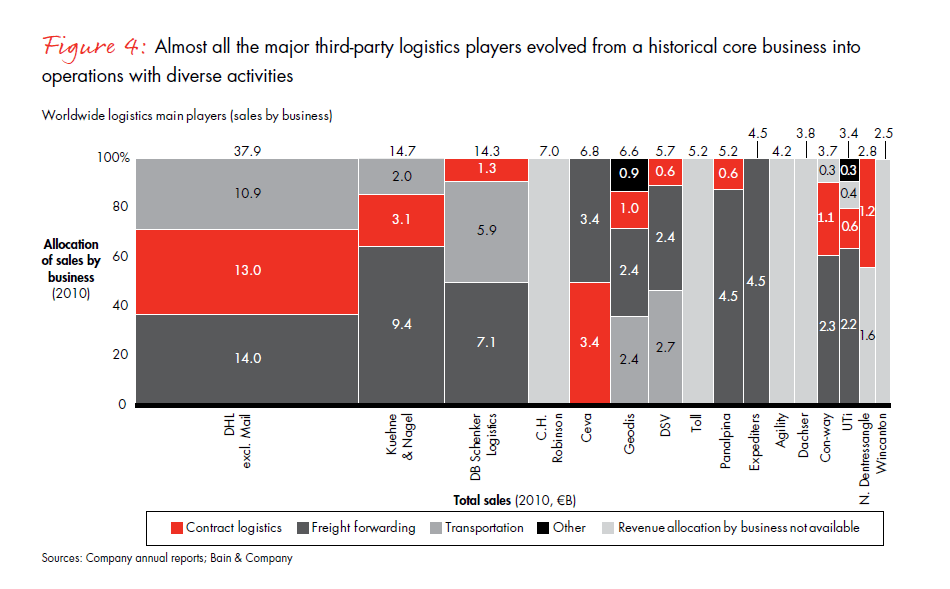
Almost all of the major third-party logistics players evolved from a core business into operations with diverse activities (see Figure 4). For example, Kuehne & Nagel started out in freight forwarding and Norbert Dentressangle began in road transport. However, these players take significantly different approaches, leading to several strategies.
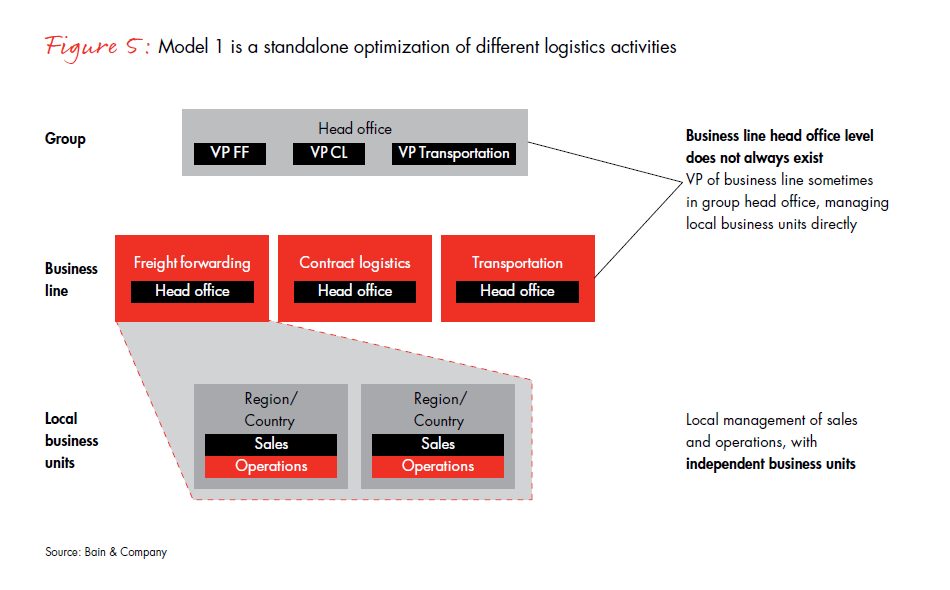
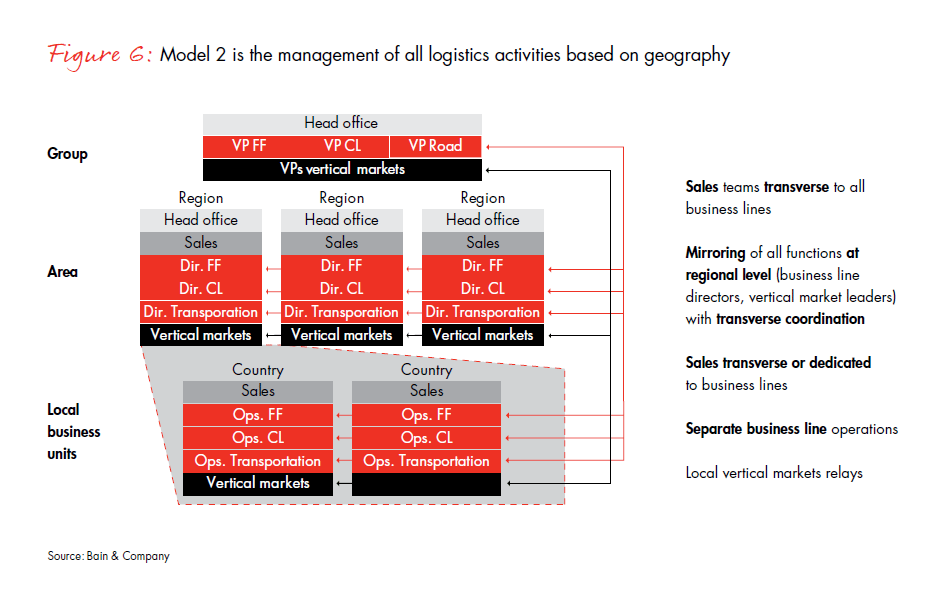
Our review of the competitive environment found two main organizational structures for implementing and pursuing distinct strategies (see Figures 5 and 6).
2.1. Model 1: Standalone optimization of different logistics activities
Several major logistics providers use the standalone optimization model, including DSV, Norbert Dentressangle and UTi. The model’s organizational plan is built on three key principles:
- Dedicated business units for each activity
- Separately run and locally managed business units, spanning from strategy definition to operations
- Decentralized and streamlined structure, with the head office serving as a consolidating holding
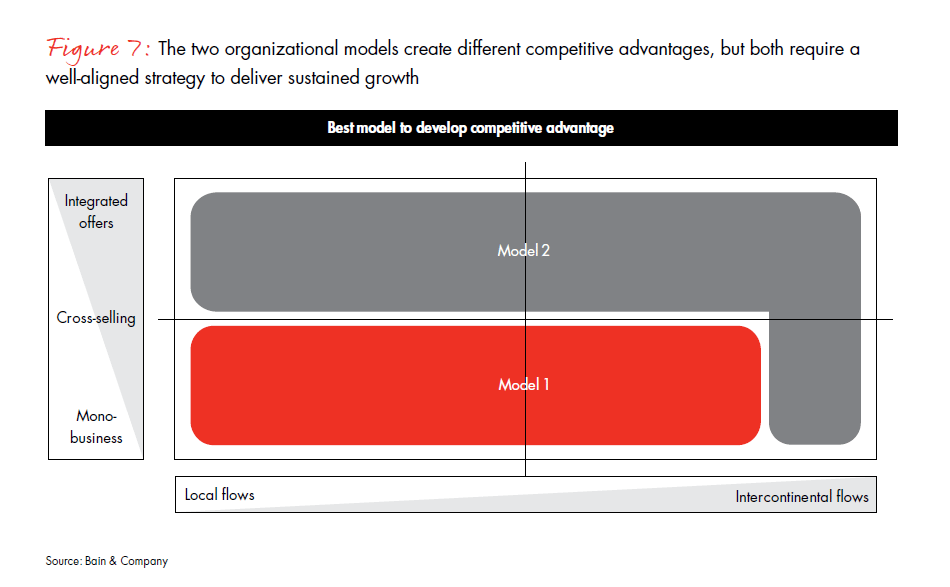
This model best serves small to midsize customers, providing them with flexible, custom-made solutions for each activity. Synergies between businesses are not the customers’ main commercial focus.
2.2. Model 2: Management of all logistics activities, based on geography
The second model, adopted by companies such as Kuehne & Nagel and Ceva, is more structured and designed to support a global network strategy. The model’s organizational plan is based on the following principles:
- Organized by country or region, grouping together different activities
- Managed by and under the responsibility of both regional VPs and country managing directors
- Matrix structure is determined by geography and activity, with mirroring of functions—such as sales and operations—and replication of vertical markets at all levels of the organization
The geographically based management model helps providers develop a global network around targeted trade lanes and grow that network by attracting a broad range of customers. It enables providers to take advantage of cross-selling opportunities, as well as win over global customers in search of solutions that integrate different logistics activities.
The two organizational models create different competitive advantages, but they both require a well-aligned business strategy to deliver sustained growth (see Figure 7). For example, logistics leaders DSV and Kuehne & Nagel have different organizational structures: DSV employs Model 1, standalone optimization, while Kuehne & Nagel uses Model 2, geographically based management. These companies have achieved high and sustained profitability, with an EBITDA margin of more than 6% and 5%, respectively, between 2007 and 2010.
Each model presents unique challenges for companies.
We’ve identified the main success factors for Model 1, standalone optimization:
- Reduce the organization’s structure and centralized head office to a minimum
- Standardize decentralized processes and IT to streamline operations and closely monitor costs
- Implement an aggressive incentives plan
For Model 2, geographically based management, success depends on outstanding management and optimization of a large-scale worldwide network:
- Develop less profitable major global clients to expand the network and saturate it with smaller but profitable customers
- Ensure fluid processes to offset the large and complex structure
3. Three main questions can help logistics providers choose the right strategy and model
How much priority is given to developing centralized key account management with a dedicated salesforce?
Creating a centralized key accounts structure is crucial for becoming a leading logistics provider and for selling global integrated solutions.
In our view, that can be difficult to achieve with the standalone optimization model. Conflicts may arise when attempting a coordinated commercial approach with independent business units. Another potential issue: the challenge of profit and loss (P&L) hosting between individual units and headquarters. However, the geographically based management model facilitates communication and coordination among the business units that are managing a single customer’s different activities.
Is approaching the market by vertical category a condition for success?
A vertical approach allows a provider to effectively assess and meet a customer’s logistics needs. Depending on the complexity and specifics of the client’s supply chain, its logistics requirements can vary greatly, creating different sales opportunities (see Figure 8).
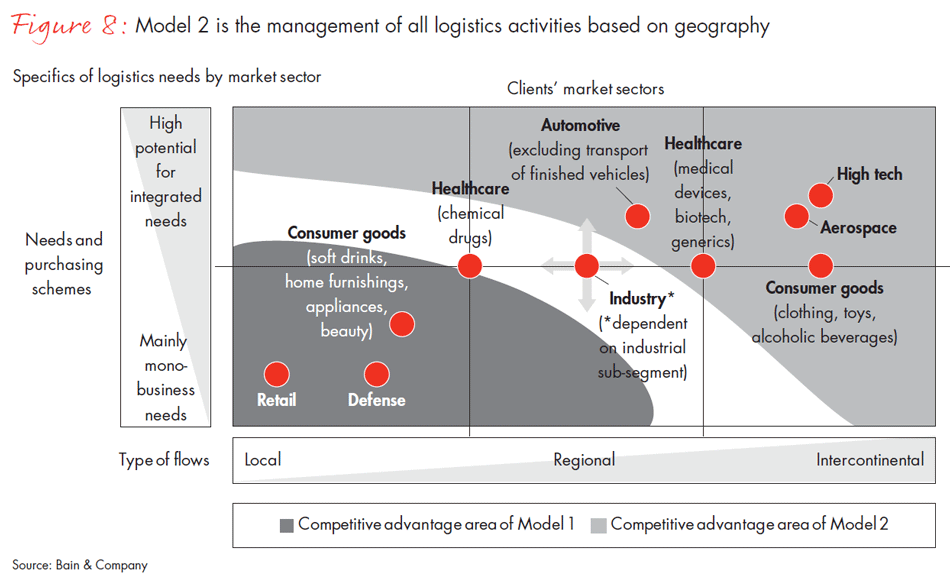
In the retail sector, for example, logistics are primarily local, with less demand for value-added services such as warehousing and trucks. Cost is a primary consideration, limiting opportunities for logistics providers to sell services that combine multiple activities such as freight, logistics and trucks.
However, high tech and automotive are two sectors that benefit from a commercially integrated approach and value-added services.
- High tech requires more complex, global logistics, with faster lead times and increased security and safety for products. Offerings are evolving from standard logistics with warehouses to flows logistics with cross docks, a technique that speeds shipping while reducing the cost.
- In the automotive sector, customers increasingly need a single logistics provider to consolidate production centers with synchronous logistics and vendor management inventory, including parts management, delivery to original equipment manufacturer production sites and minor assembly work.
The match between a logistics provider’s customer focus and its internal organization can be critical for sustainable growth. Is a focus on cost-sensitive segments, such as retail or fast-moving consumer goods, sustainable in a scenario where the provider has a complex global structure, as in Model 2?
What pace of development can investors expect from logistics providers?
A provider’s organizational model can determine its development and growth opportunities.
The standalone organization model is attractive to companies in search of faster growth through acquisitions. The simplified structure and locally managed, autonomous business units make it easier to integrate new business operations, with limited disruptions of day-to-day operations. To create a winning and repeatable growth formula, leading providers enhance their capabilities. They develop a simple, clearly defined integration process as well as the necessary tools, such as training and IT, to quickly expand their footprint.
From an investor perspective, building a geographically based management organization requires a much longer time line. For example, based on the experience of providers such as Kuehne & Nagel, it can take several decades to develop a mature, global network with sustained growth.
Conclusion
In the evolving logistics marketplace, winners understand that there is no single path to success. They overtake competitors by selecting an organizational model that best supports their corporate strategy. They also ensure that the strategy matches their targeted customer segments. To increase their competitive edge, leaders develop insights into customers’ needs and purchasing behaviors. The end result is a highly focused organization with a well-defined business strategy, designed to deliver sustained growth and profitability.
François Rousseau is a partner in Bain & Company’s Paris office, a leader in the firm’s Industrial Goods & Services practice and a Logistics & Transport sector leader.
François Montaville is a partner in Bain’s Paris office and a member of the firm’s Industrial Goods & Services practice.
François Videlaine is a principal in Bain & Company’s Paris office and a member of its Industrial Goods & Services practice.
First published in 11月 2012