

論説

概要
- Makers and sellers of industrial equipment and machinery would like to capture more value from their wares by retaining ownership and charging customers for subscription rates. But the transition to this model has been slow, reflecting the difficulty in pricing accurately.
- For the model to work, sellers and buyers have to understand the value the equipment adds to the business, and agree on how to share it.
- Choosing the right pricing model depends on the degree of control the seller has over how the equipment is used and what it produces for the company. Outcome-based models can deliver more value to vendors, but they also carry more risk. They set prices based on either the amount of activity performed or the financial results attributable to the equipment. Time and usage models are more common, based on the amount of time the equipment runs or how intensely it is used.
- Vendors switching to a service model need to prepare their organizations for a transition, boosting investment in customer service and preparing investors and the organization for an interim period when costs will be higher and revenues lower.
The business model of selling equipment as a service (EaaS) has been around for a while: Rolls-Royce introduced its Power by the Hour program, pricing their Viper aircraft engines based on flight hours, back in 1962.
More recently, the rapid rise of sensors and the advent of machines and devices connected to the Internet of Things has made it more feasible to deploy advanced pricing models based on time, usage, output or financial results. Subscription models offer clear advantages for buyers, who can access expensive equipment without a large, upfront capital outlay, while also sharing risk with the vendor. Sellers also benefit by capturing more of the total value created by the equipment.
So why hasn’t the model of equipment as a service taken off more broadly?
Our conversations with executives suggest that this pricing model is proving harder to pull off than they expected—much harder than the SaaS programs that have served as templates. In software, the unit cost is close to nil. Adobe, for example, takes some financial risk in releasing Creative Cloud for the price of a monthly payment rather than the license fee of its comparable on-site software. But it doesn’t have to ship individual pieces of machinery that cost thousands, or millions, of dollars to produce—a greater risk than sharing code. Revenue disruption at this scale could lead to a more sustainable income stream, but if anything were to go wrong the financial results could be devastating.
Still, given the potential that sellers and buyers see in this pricing model, there’s a strong incentive to make it work for all parties. In our work with companies trying to get this right, three main obstacles slow their progress:
- agreeing with customers on the value created and how to share risk;
- managing the internal changes required to support a service pricing model; and
- “swallowing the fish”—planning for a disruptive period of rising costs and falling revenues, before the financials find their new trajectory
When executive teams understand the risks and opportunities of the equipment as a service (EaaS) pricing model, they can develop offers that work for buyers and sellers, limiting exposure and maximizing the gains for both sides.
Determining the best pricing model
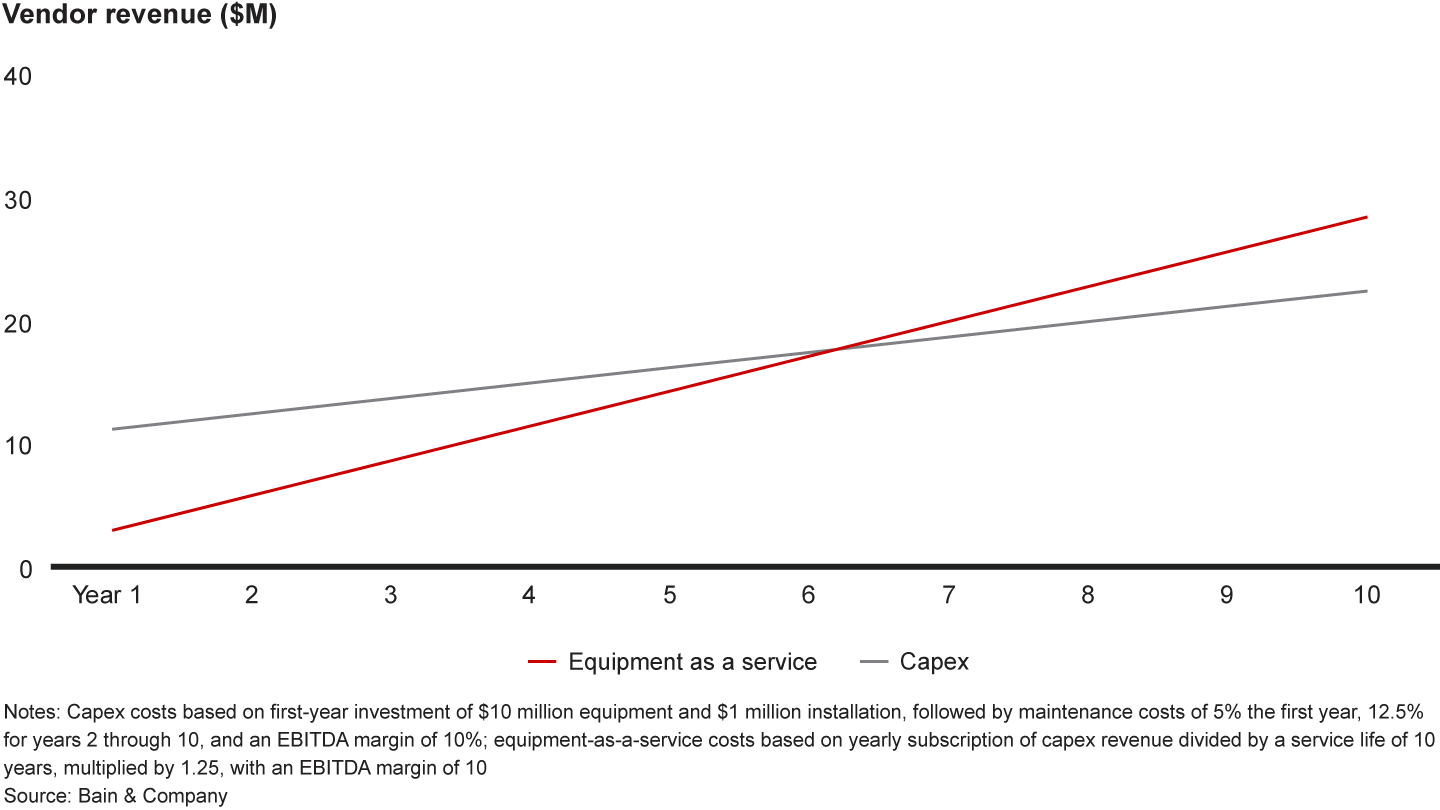
Manufacturers have been trying to develop service lines that deliver more reliable streams of revenue for decades. Equipment as a service represents the ultimate pathway to getting there: As long as the machines are running, revenue continues to flow and suppliers share in more of the value that the equipment delivers for customers. Some of that value comes as it would with any service contract, but additional value can also come from the supplier’s role as owner of the equipment (see Figures 1 and 2). But to tap that value, manufacturers first have to determine the right pricing model.
Figure 1
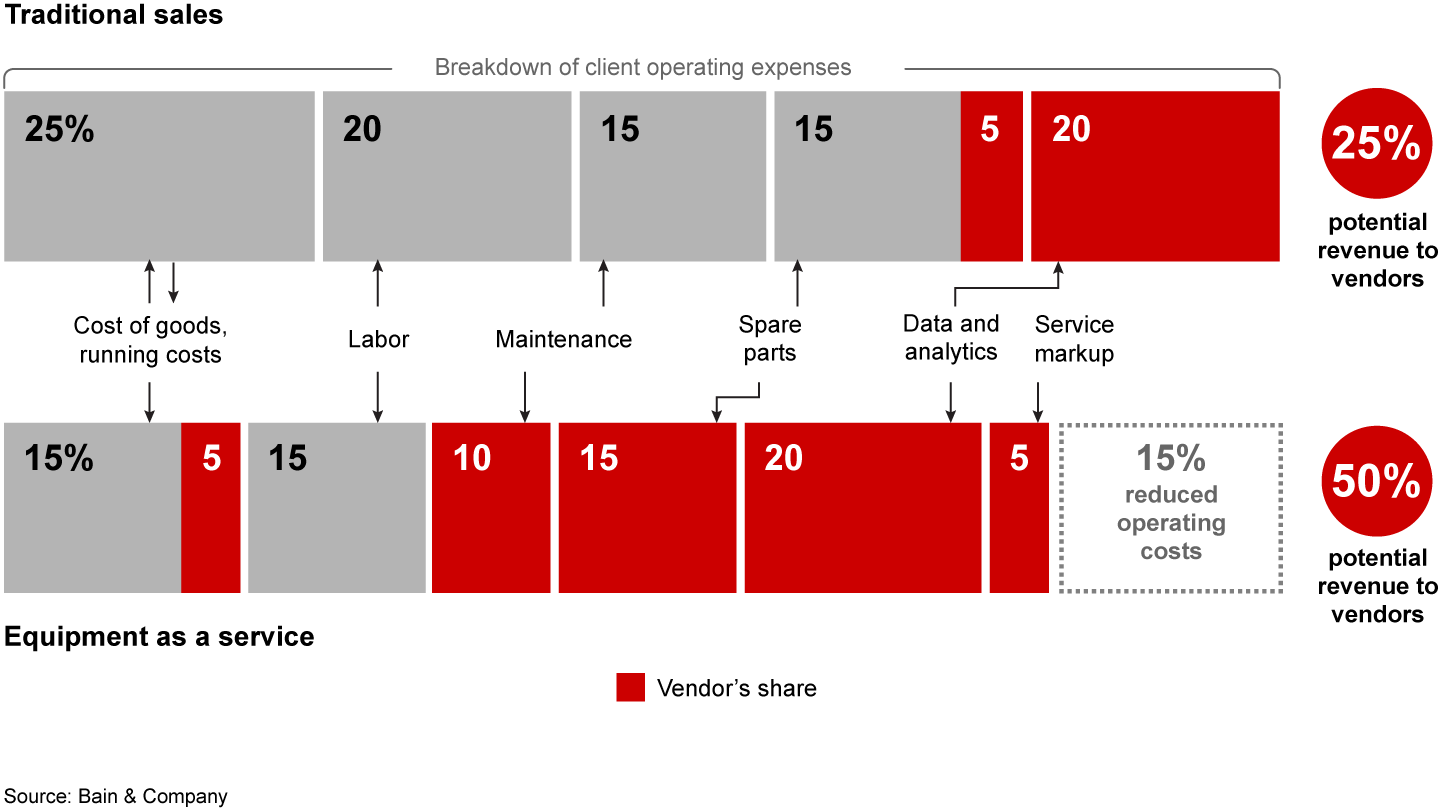

Figure 2

Outcome-based models, in which payments are based on operational or financial achievements, can deliver more value to suppliers—providing they can assess and measure that value accurately.
- Operational outcomes. This model is good for solutions that perform well-defined discrete tasks, such as industrial robotics or automation equipment. One warehouse robotics provider charges per cycle, where each cycle is defined as picking a carton, bringing it to a packing area and returning the carton to its original location.
- Financial outcomes. This model works well when you can establish a direct link between the equipment and measurable financial results. A supplier of compressed natural gas systems for fuel stations found that station operators were put off by the high capital costs for the compressor and related hardware needed to deliver the gas to vehicles. The supplier switched to a model where stations receive the compressor and hardware and then pay fees based on the volume of gas sold. In this case, the model worked well because the fuel station operator and the supplier agreed on the revenue that resulted from the availability of the new equipment.
These outcome-based models carry more risk and are a good choice only when suppliers can be sure they can accurately measure the results—and ideally when their service support can help bolster those results. To price successfully, suppliers need to understand the value of the equipment to the customer and decide how to share risk.
- Determine the value. Good pricing starts with an understanding of the amount of value the customer can generate from the use of the equipment. This isn’t always easy, since customers may not want to share sensitive operational data. One provider of manufacturing automation solutions solved this problem by working through a series of studies with potential customers to build a value-calculation tool that pooled data from those studies, so no individual company’s data was disclosed. Another way to get at the value is through a detailed total cost analysis, comparing the costs of purchase and ownership with those of a subscription. A total cost analysis should identify the financial breakeven time for a traditional purchase agreement, which is important for setting EaaS contract terms. It also uncovers the lifetime ownership costs that a supplier would pay if they moved to a service model.
- Decide how to share risk. How much control will suppliers have over outcomes? A clear view of the risks—financial, operational and market factors—and who is accountable for them, allows suppliers to work with customers to mitigate against them or choose a different price meter that preserves the quality of the revenue stream.
Time and usage models. If suppliers determine that they cannot determine the value or how to measure it, they would be better off choosing a model that prices based on factors that are easier to measure.
- Time-based models base payment on a set amount per unit for a fixed period of time. Even this model is being used in innovative ways. Hilti, a leading maker of portable power tools, offers a tool fleet program that provides contractors with access to a varied assortment of tools for a fixed monthly fee. The program eliminates up-front investment and covers repairs, loaner tools and even theft.
- Usage-based models tie payment to the intensity of machinery use. A supplier of mining equipment was seeing customers delay purchases because of the high capital costs and uncertainty about getting a return on those costs in a reasonable time frame. The firm worked to develop an EaaS model for mining projects that allows project owners to pay per cubic meter drilled.
Preparing the organization
Selling equipment as a service requires a significant overhaul of the commercial operating model. The shift from episodic sales contact to ongoing engagement has profound implications not only for a firm’s financials, but also for product development, sales and customer service.
Successful sellers develop collaborative relationships with customers that allow both parties to understand ownership costs, the production process, expected profit margins and preferred contract terms. Details about contract duration, amortization plans and post-contract value of the equipment are essential in order for customers and suppliers to make informed comparisons between buying and subscribing.
Customer service will need to make big changes, shifting from mere technical support after sales to becoming an ongoing partner that helps configure and maintain equipment, as well as performing diagnostics and data analysis that help customers improve performance.
Taking over the responsibility for ownership of equipment throughout its service life can force suppliers to rethink product designs. When General Electric began selling its GE90 engine on a power-by-the-hour plan, it made design changes to reduce operating costs and improve serviceability. GE added sensors and intelligence that optimize performance and reduce fuel consumption. It also created digital twins that allowed for better comparisons between the performance of actual engines and models with potential design changes.
Swallowing the fish
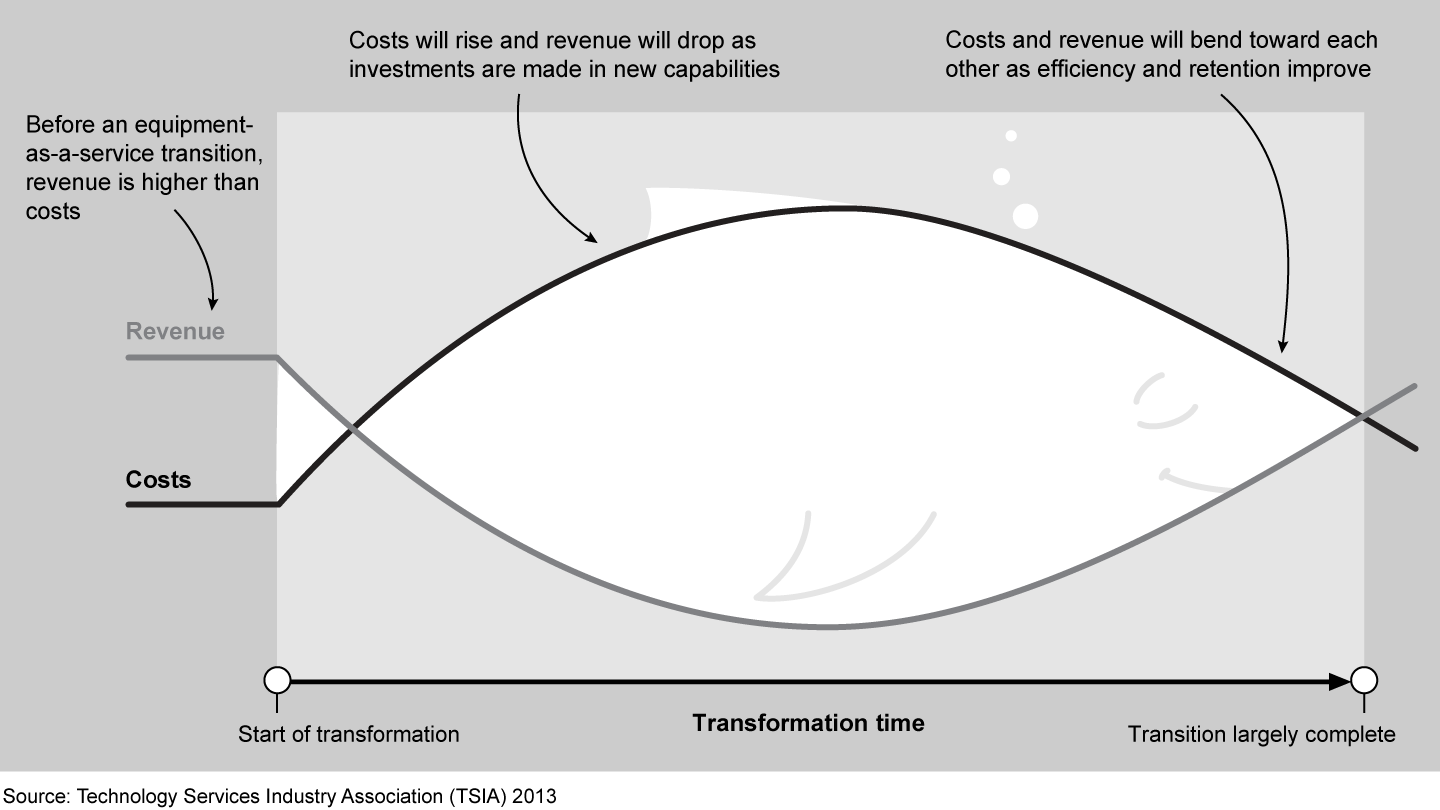
The transition from one-time capex sales to a recurring revenue model can put enormous pressure on firm financials as revenues can drop significantly in the early years. At the same time, costs will increase as companies continue to invest in equipment for customers, while also investing in new capabilities required to successfully deliver services that integrate hardware, software, communications capabilities, and performance-optimizing data and analytics.
When technology companies began making this transition from selling on-premise products to cloud-based SaaS and managed services, the financial transition came to be known as what the Technology Services Industry Association (TSIA) called in its 2013 book, B4B, “swallowing the fish”—for the shape of the rising cost curve over the decreasing revenue curve (see Figure 3).
Figure 3

There’s no denying this is a challenging transition, but suppliers do have options to ease the pain.
- First, the service model can be deployed gradually, with some customers choosing service agreements while others opt for a capex purchase. Aircraft engine suppliers pursued this path, gradually increasing the share of revenues coming from services over time.
- Suppliers can further ease the transition by establishing separate business units or subsidiaries that purchase the equipment and are responsible for systems integration, financing and insurance, and delivery to the customer.
- Finally, first mover advantages may allow pioneers to build up market share and increase revenues that can eclipse costs more quickly.
Before shifting to a subscription model, companies should develop a keen understanding of what drives adoption and uptake of new pricing models. They should work with customers to understand how the new pricing scheme will be received, and they need to develop clearly packaged value propositions that are easy for customers to understand and measure. And of course, companies need to signal to their investors how the change in pricing will affect revenue and earnings.
Time to get started?
The transition from selling to service will not happen as rapidly in machinery and equipment as it has for software. Although we are already seeing movement in some categories—particularly in discrete devices such as robots—larger and more complex systems will take longer to shift to this model. Machinery and equipment vendors are already building high-value services around data analytics, designed to optimize system performance. These are laying the groundwork for broader service relationships. Other services are likely to be folded in, including quality control, asset tracking and remote monitoring, eventually leading to full service models.
First movers are likely to capture outsized rewards from the shift, developing closer relationships with their customers and transitioning revenue models early. Executives at machinery and equipment vendors trying to determine whether it’s time to move toward EaaS offers should consider several issues:
- What’s the potential upside in terms of customer value, stickiness and higher quality revenue?
- What would it take to gain a broad consensus—among executives, board members, investors, sales teams and customers—to embrace this shift?
- Is this team ready to make the move?
Mark Burton is an expert vice president, and David Burns and Ron Kermisch are partners, with Bain & Company’s Global Customer Strategy & Marketing practice. Mark and Ron work in Bain’s Boston office, and David is based in Chicago.
First published in 11月 2019