

論説

概要
- Despite growing investment in customer success roles, net revenue retention is declining as teams struggle to scale impact.
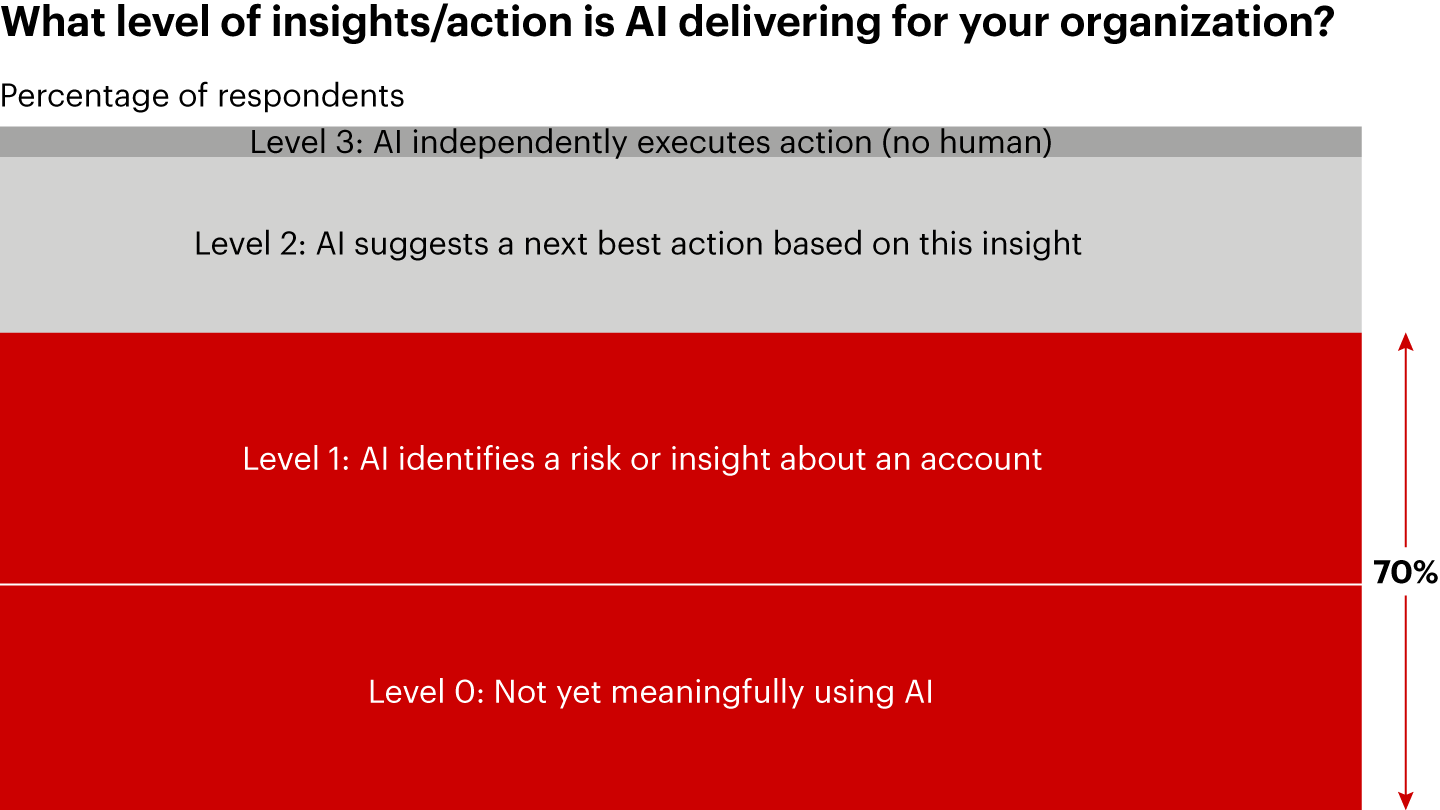
- While most leaders see AI’s potential, nearly 70% haven’t moved past scattered pilots or low-level use cases.
- Turning the tide requires bold ambition, focused priorities, and rethinking processes to fully embed AI and unlock value at scale.
Can AI help software companies climb out of their customer success quandary?
Net revenue retention (NRR), a measure of how well companies retain and expand revenue from existing customers, has declined even as companies have invested in hiring more customer success roles.
Bain’s research finds that most customer success leaders grasp the potential of AI to improve the customer experience and make their retention efforts more efficient—reducing costs and increasing coverage. AI can help with customer communication, preparing customer success managers for customer calls, writing success plans, and more. But our research also found that about 70% of customer success leaders aren’t using AI yet in a meaningful way. Among those that have started, very few have scaled beyond the pilot stage (see Figure 1).
Figure 1

What’s getting in the way of AI delivering for customer success?
- Teams focus on micro-efficiencies—tackling scattered use cases or layering AI onto outdated, human-centric processes.
- A poor understanding of customer needs leaves teams unable to prioritize them.
- A dearth of AI tools focused on customer success results in the need to juggle multiple vendors, each with narrow context.
- AI is being treated as an IT initiative rather than a strategic priority.
Customer success also lacks the size and visibility of functions like sales or engineering to command CEO-level attention and other top-down sponsorship.
How can customer success leaders harness AI’s potential to turn things around?
Understanding AI’s role
A turnaround starts by getting a clear understanding of how customer success managers are spending their time and where AI can play a role. Customer success managers spend about two-thirds of their time on lower value activities that could be automated with AI (see Figure 2).
Figure 2
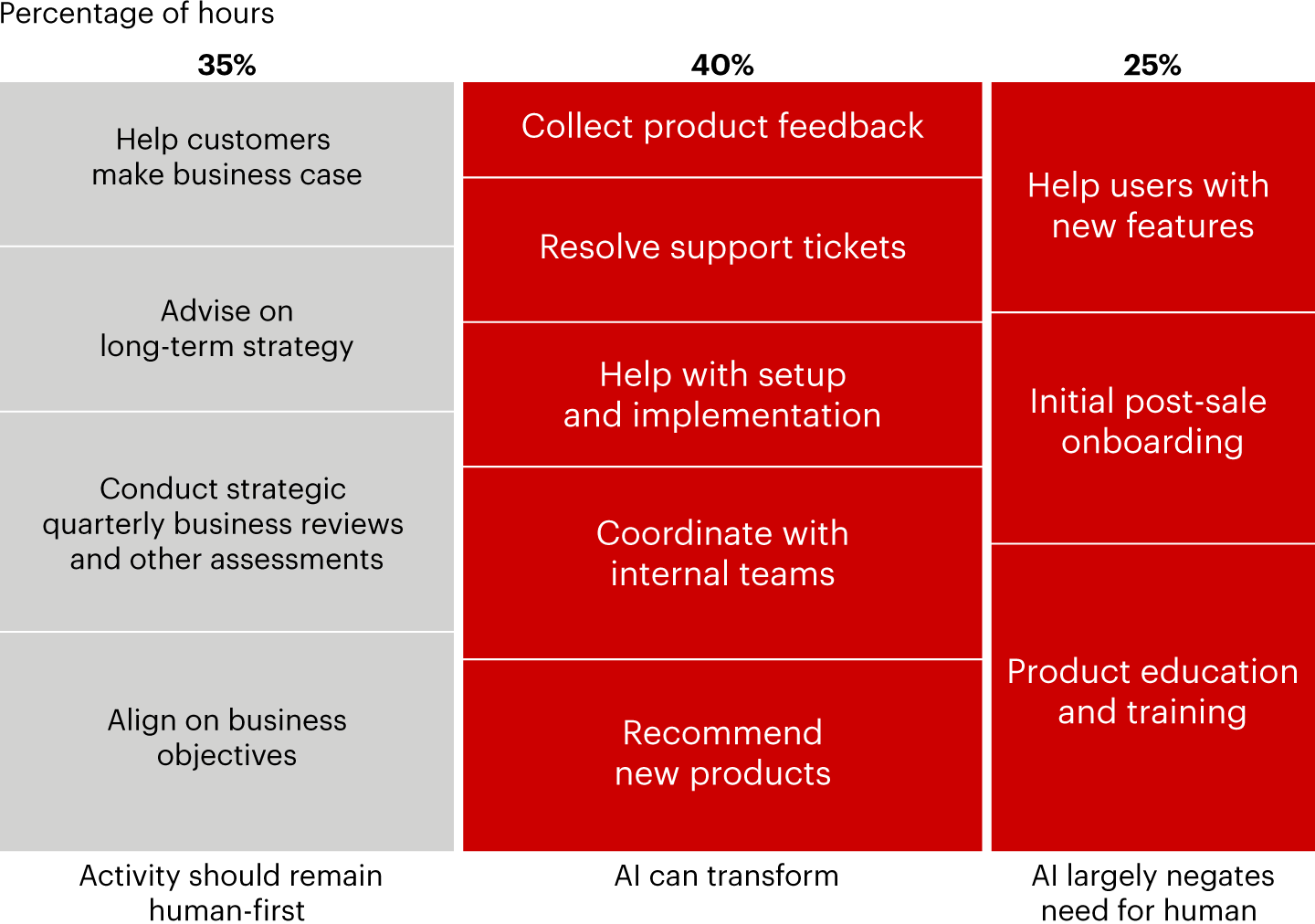

The real cost isn’t just the hours spent on manual tasks; it’s the opportunity lost. When customer success managers are stuck in the weeds, they can’t focus on what they do best: building relationships and creating new growth.
AI can change that, but only if companies approach it with clarity and discipline. Here are four actions that separate the companies seeing real returns from those still stuck in pilot mode.
- Set a bold ambition with quantifiable targets. Leaders should approach AI pilots with a clear understanding of what they hope to get out of AI. Is it more customers, or more quality time with existing customers? Is it delivering a better customer success experience with fewer staff?
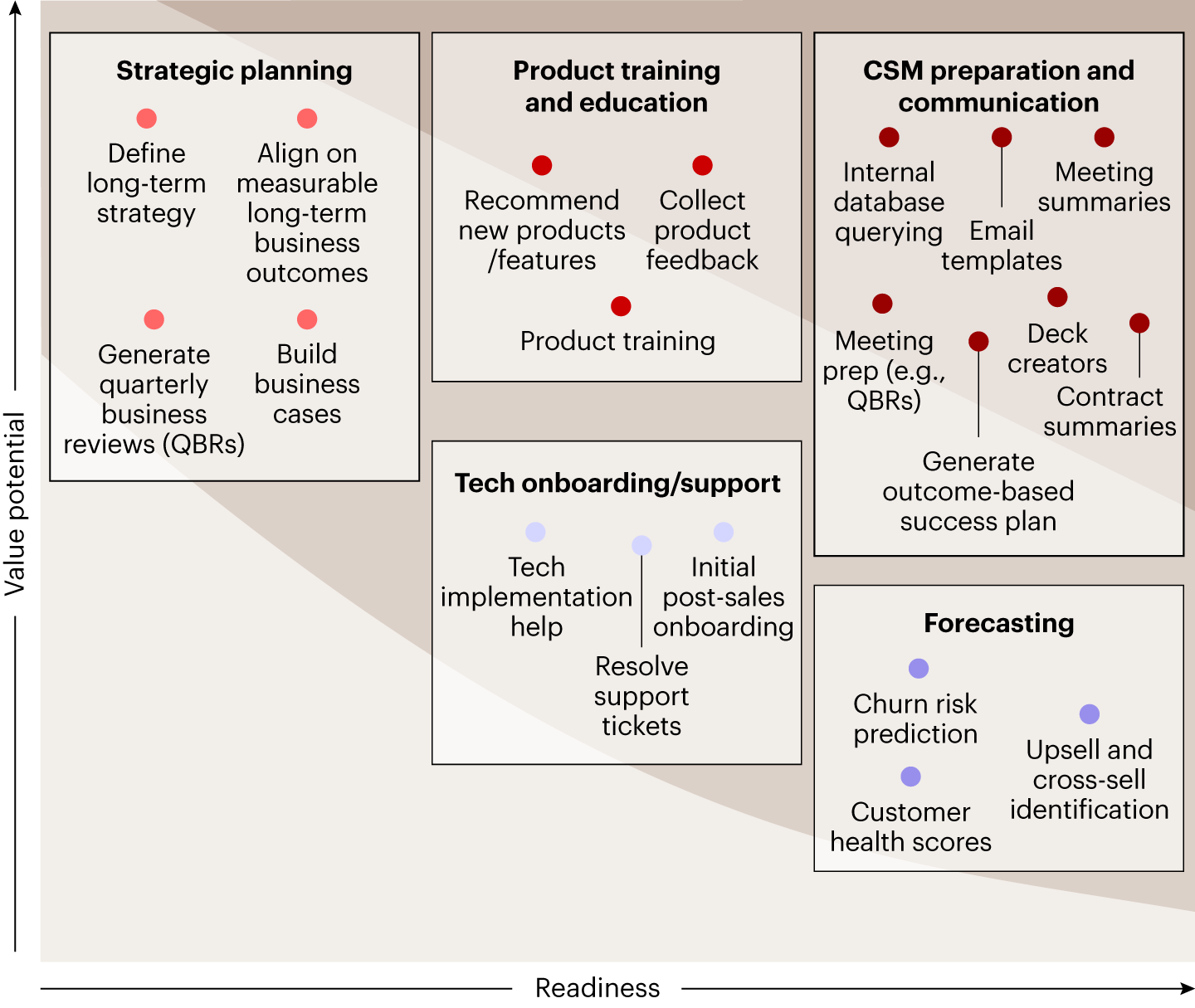
- Pick two or three processes to deliver the greatest impact. Too often, enthusiasm leads companies to pursue every opportunity at once. This can spread efforts too thin, delivering small productivity gains across the board. A better approach is to focus on a few closely related opportunities that promise to deliver bigger gains in efficiency (see Figure 3).
- Rethink processes from the ground up, with AI capabilities in mind. Most companies start by applying AI tools to each step of an existing process. This delivers small improvements but misses the greater potential. Companies see greater change when they take a blank slate and rethink how AI and automation can accomplish business goals, regardless of how it’s been done manually until now.
- Deeply embed new AI processes. Change is almost never easy in an organization, but it’s essential to create vocal promoters of new AI technologies. An effective method of encouraging adoption of new tools is to remove the old alternatives. If old dashboards go away, teams are forced to adopt new AI tools to accomplish their goals.
Figure 3

Customer success is at a crossroads. The function is bigger and more important than before, yet stagnant results could cost it momentum unless it can capture AI’s potential. The way forward isn’t about chasing isolated efficiencies but in reimagining how customer success creates value at scale. Setting bold ambitions, prioritizing the most impactful processes, and embedding AI deeply into workflows can help leaders reverse declining NRR trends and redefine customer success in the AI era.
First published in 12月 2025