

レポート
Because China is not a single market, it is important to understand the differences in shoppers’ behavior by city tier, category nature and development level, and shoppers’ life stage. This will arm marketers to further win Chinese shoppers through effective and customized brand strategy.
Introduction
China’s exploding consumer market creates exciting opportunities—but it’s also something of a mystery to consumer goods companies as they pursue the tremendous growth potential. When they consider growing with Chinese shoppers, they face the challenge of learning how to skillfully navigate a host of complex variables: distinct differences in regions and cities with different stages of economic development, and shoppers with fast-evolving needs and preferences. Brands working to establish a strong foothold and emerge as a market leader need to understand how these differences affect shopper behavior.
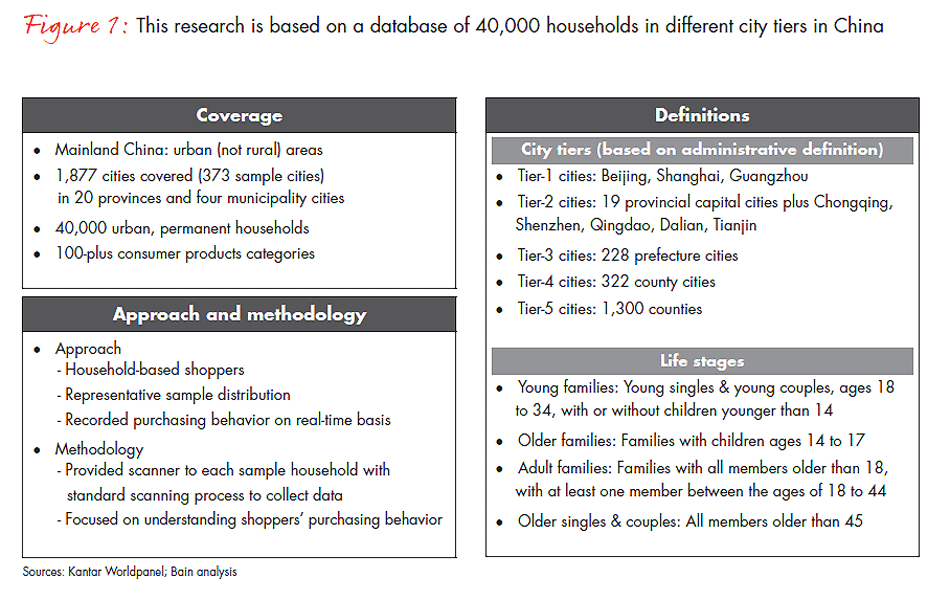
In a follow-up to our first report, "What Chinese shoppers really do but will never tell you," published in June 2012, we decided to explore shopper behavior in more depth across three dimensions: city tier, category nature and development stage, and shoppers’ life stages. The joint study by Bain & Company and Kantar Worldpanel analyzed the behavior of 40,000 Chinese shoppers from 373 cities in 20 provinces and four major municipalities, providing a groundbreaking look at how much shoppers spend by region and by city in 26 important consumer products categories ranging from milk to shampoo. This comprehensive study covers all of China’s city tiers, categories in different development stages and shoppers’ life stages (see Figure 1).
As we explained in our first report, in most situations, as Chinese shoppers buy more frequently in a category, they also tend to buy more brands in that category. We call this repertoire behavior—the tendency to choose different brands for the same occasion or need (repertoire being the set of brands purchased by a shopper within a given category). By comparison, shoppers exhibit loyalist behavior when they repeatedly buy one brand for a specific need or occasion. Chinese shoppers exhibit loyalist behavior in a few categories, including baby diapers and infant formula.
By exploring the findings in more detail, we have been able to see how repertoire and loyalist behavior is affected by different city tiers, different category types in varying stages of development and different life stages of shoppers and the implications for both foreign and domestic brands.
Full report
Differences in shoppers’ behavior by city tier and region
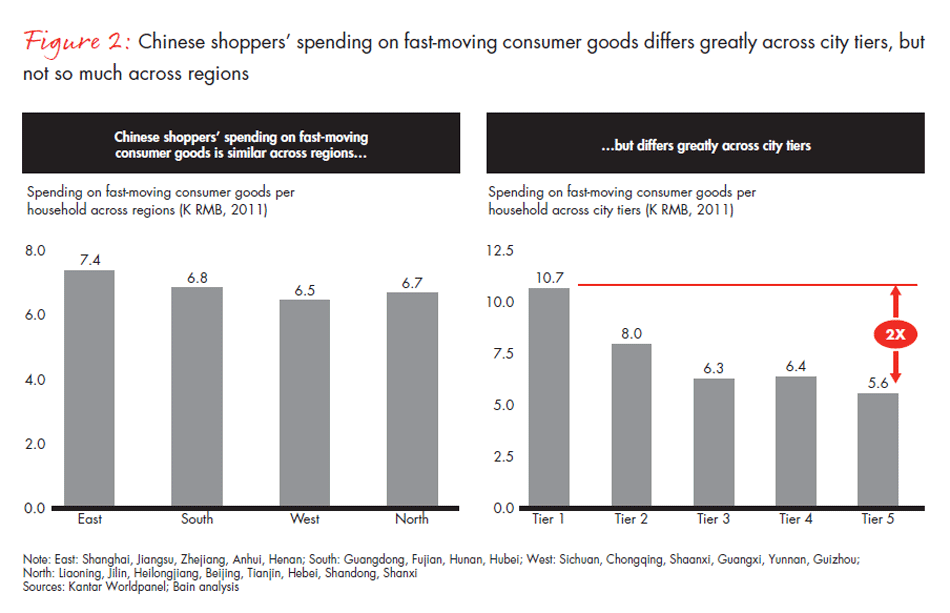
Our research shows that across China’s four regions— North, South, East and West—all households spent approximately the same amount in 2011. The average annual range was RMB 6,700 to RMB 7,400 per household. But we saw a big difference when we looked at the city tiers where shoppers live (see Figure 2). For example, shoppers in Tier-1 cities spent almost twice as much on fast-moving consumer goods in 2011 as their counterparts in Tier-5 cities. Tier-1 shoppers spent an average RMB 10,700 per household compared with RMB 5,600 for Tier-5 city shoppers. As consumption grows in China, consumer goods brands can gain valuable insights by understanding the detailed differences in shopper behavior across city tiers.
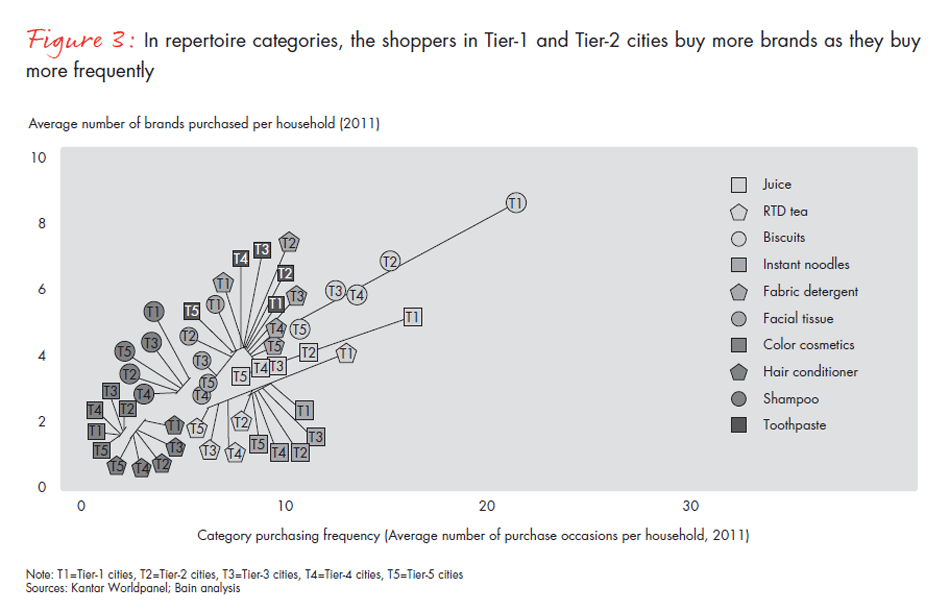
Our research shows that where shoppers live influences repertoire behavior. In repertoire categories, shoppers in Tier-1 and Tier-2 cities buy more brands than their counterparts in Tier-3 to Tier-5 cities as they purchase more frequently in a category. For example, the average household in Beijing, Shanghai and Guangzhou made 22 purchases of biscuits compared with 11 purchases by the average Tier-5 city household. They bought nine brands of biscuits in 2011, compared with four brands for shoppers in Tier-5 cities (see Figure 3).
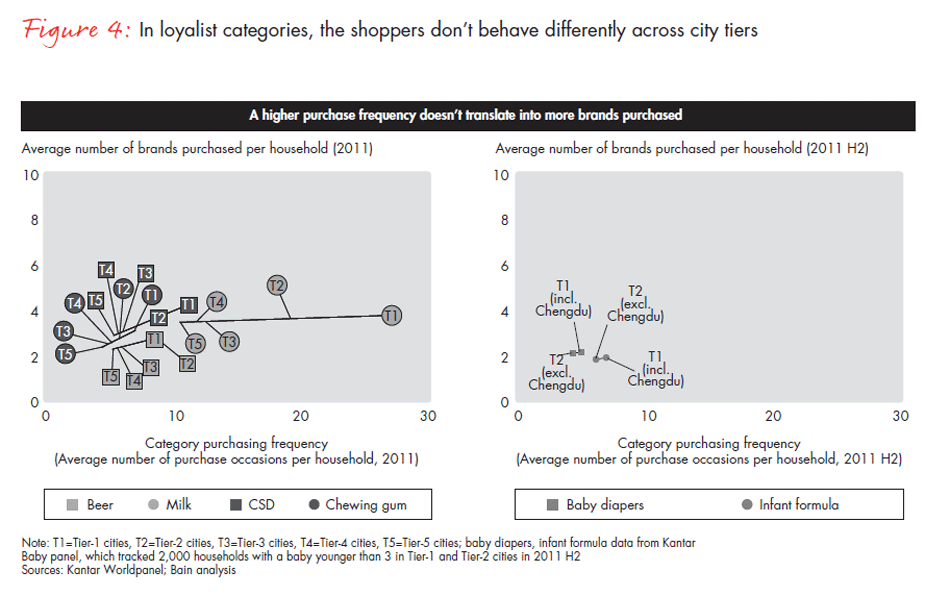
By contrast, in loyalist categories, such as milk and beer, shoppers in Tier-1 and Tier-2 cities don’t buy significantly more brands than those in Tier-5 cities (see Figure 4).
There’s a major factor contributing to the prevalence of repertoire behavior in Tier-1 and Tier-2 cities. Modern trade, which offers wider availability of brands, prevails in those cities (see Figure 5).
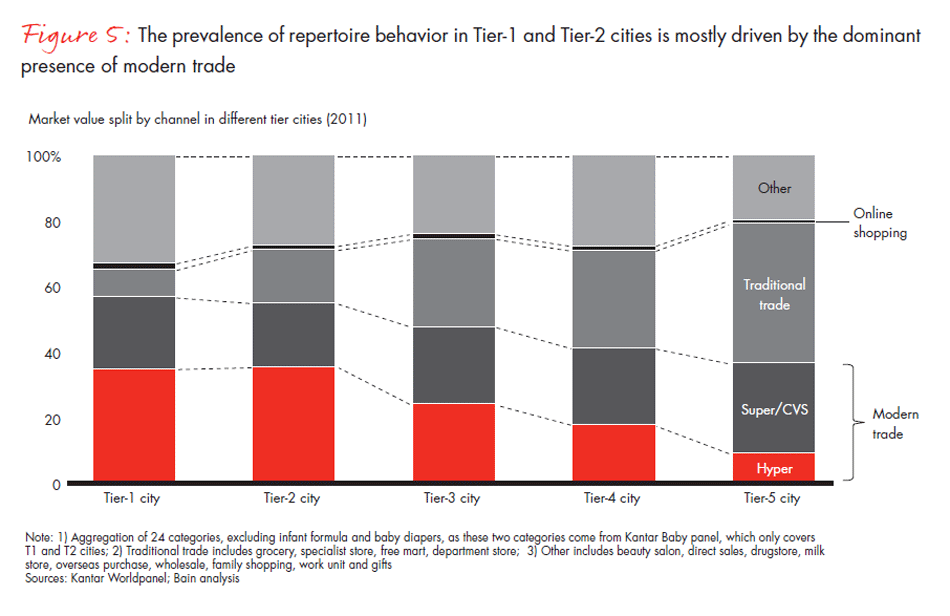
In repertoire categories, we don’t expect Chinese shoppers to develop stronger brand loyalist behavior in the future. Instead, as purchasing frequency and modern trade penetration increase in Tier-3 to Tier-5 cities, along with rising income per household, we expect repertoire behavior to increase in these areas.
Importance of category nature and development stage on shoppers’ behavior
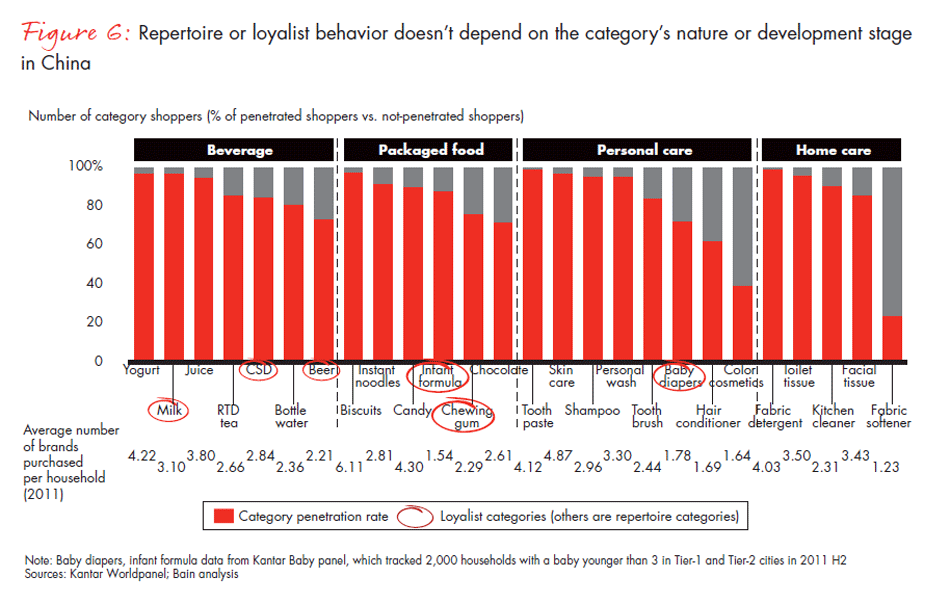
We found repertoire behavior to be consistent across all four types of categories we studied: beverages, packaged food, personal care and home care. And, similarly, although we only found a few loyalist categories, they also spanned different category types (see Figure 6). Repertoire behavior also did not vary as a result of category development stage—the extent to which the category is purchased by all potential consumers. Some companies assumed that the more developed the category, the more prevalent the repertoire behavior. However, we found that repertoire behavior exists even in underdeveloped categories. A prime example is color cosmetics, a category that includes such makeup products as mascara, eye shadow, foundation and lipstick. Color cosmetics is an emerging category in China compared with most countries—less than 40% of households made purchases in the category last year. But our study found that shoppers of color cosmetics exhibit repertoire behavior that is similar to that of shoppers of highly developed categories.
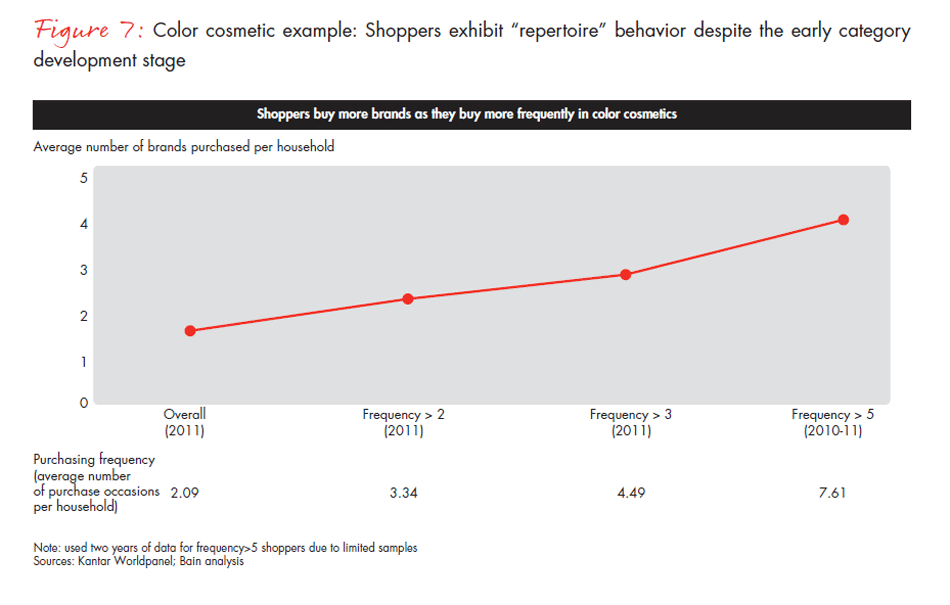
In general, Chinese women use color cosmetics for special occasions, not on a daily basis as women do in developed Asian countries or regions. They spend $5 per capita annually on color cosmetics—significantly less than women in Korea, who spend $104 per capita. But as Chinese women begin to buy color cosmetics products more frequently, they also start to exhibit repertoire behavior (see Figure 7). When women purchase them more than three times a year, they buy on average 2.86 brands. When they purchase them more than five times over two years, the average number of brands they purchase increases to 4.1 brands.
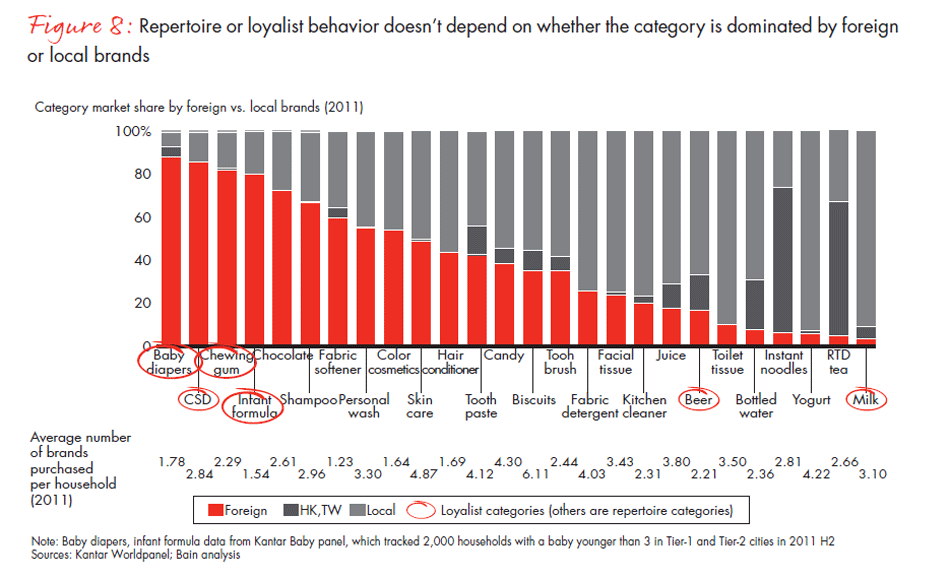
An additional observation: Repertoire or loyalist behavior in a category doesn’t depend on whether a category is dominated by foreign or local brands (see Figure 8).
Impact of shoppers’ life stages on their shopping behavior
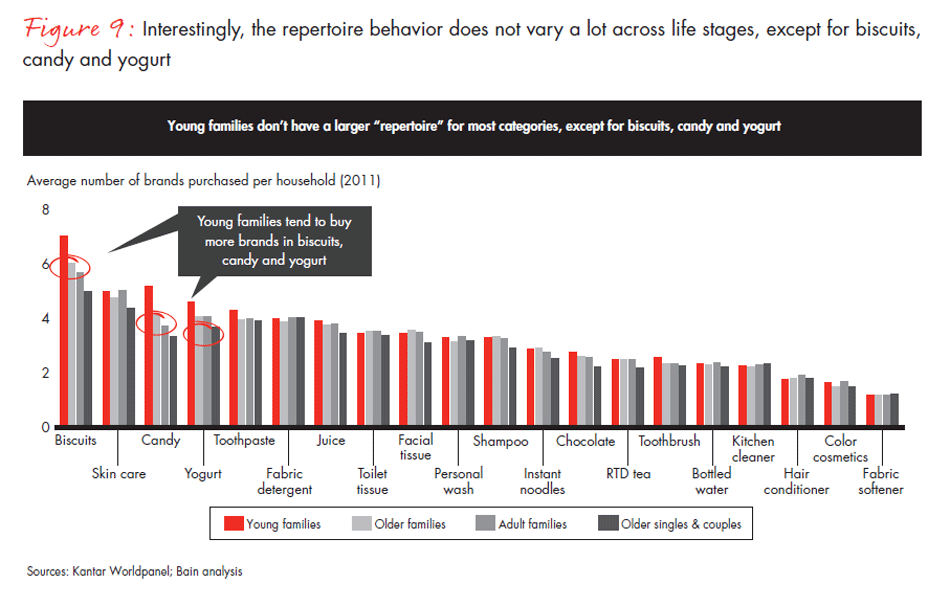
One finding that surprised us: Repertoire behavior does not vary across shoppers’ life stages. A common belief is that curious young shoppers buy more brands while older, set-in-their-ways shoppers are more loyal. But the data debunks that belief. Younger families don’t have a larger repertoire for most categories that we studied, with only three exceptions: they tend to buy more biscuits, candy and yogurt brands (see Figure 9).
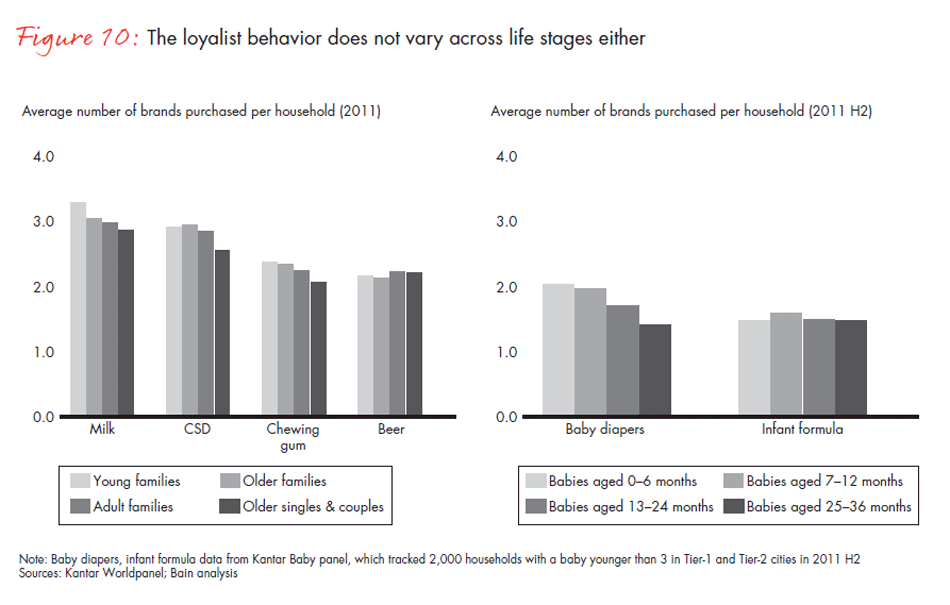
Life stage doesn’t seem to have significant impact on shoppers’ repertoire or loyalist behavior (see Figure 10 and also see Figure 1 for definitions).
Rules of the road
In the first report, we established some rules of the road for brands in both repertoire and loyalist categories. For marketers, the implications are far-reaching, providing insights that will help shape strategic decisions. Here’s a quick recap of the key implications from the first report.
The path to winning begins by understanding the type of category in which you compete. The first step is to define the boundaries of the category. For example, is it biscuits or snacks? Is it carbonated soft drinks or nonalcoholic beverages?
Then, when it is clear in which category you compete, the rules vary:
In repertoire categories:
- Make sure your brand is part of shoppers’ repertoire and then recruit them when they purchase through in-store activation, day in and day out.
- Build scale in priority regions first. If scale is required for year-round visibility, the most cost-effective approach is to target a locality or region and then move on to the next one with a winning repeatable model.
In loyalist categories:
- Recruit new shoppers in well-defined segments where you’re likely to find and attract shoppers who will stick to a preferred brand for a specific need or occasion.
- Build brand preference through highly targeted marketing initiatives and public relations events.
- Make it easy for shoppers to find your brand in the store. But it’s not necessary to constantly motivate them with in-store activations.
The new findings based on an in-depth look at city tiers, category nature and development stage, and shoppers’ stage of life provide additional implications for gaining market share and sustaining growth in China.
For brands in repertoire categories:
- Invest more resources in in-store activations in higher-tier cities, where shoppers display more repertoire behavior. Prepare for increasing repertoire behavior from shoppers in lower-tier cities as these cities approach the purchasing frequency and modern trade penetration of Tier-1 cities.
- Understand that repertoire behavior flourishes even in underdeveloped categories. Being a first mover does not guarantee long-term success because shoppers will have other brands in their consideration set as the category develops.
- Don’t focus too much on segmenting shoppers by life stage or expect to win loyalty for your brand as shoppers move to later life stages. As we mentioned, the best approach to winning repertoire shoppers is to consistently recruit them at the point of sale, day in and day out, and to deploy perfect sales execution.
For brands in loyalist categories:
- In loyalist categories, shoppers behave very similarly across regions and city tiers. So in these categories, geographic strategy should not be based on consumer behavior. Instead, it should be based on other considerations.
About the authors
Bruno Lannes is a partner in Bain’s Shanghai office and leads the firm’s Consumer Products and Retail practices for Greater China. Mike Booker is a partner in Bain’s Singapore office and leads the firm’s Consumer Products and Retail practices for Asia-Pacific. Kevin Chong and Fiona Liu are partners in Bain’s Shanghai office. James Root is a partner in Bain’s Hong Kong office. Guy Brusselmans is a partner in Bain’s Brussels office.
Marcy Kou is managing director at Kantar Worldpanel Asia. Jason Yu is general manager at Kantar Worldpanel China.
Acknowledgments
This report is a joint effort between Bain & Company and Kantar Worldpanel. The authors extend gratitude to all who contributed to this report, in particular Hongfei Zheng, Victoria Lan, Iris Zhou and Jixuan Jiang from Bain & Company; Rachel Lee, Tina Qin and Tracy Zhuang from Kantar Worldpanel.
First published in 12月 2012