
Skip to Content
  • オフィス

    オフィス

    北米・南米
    • Atlanta
    • Austin
    • Bogota
    • Boston
    • Buenos Aires
    • Chicago
    • Dallas
    • Denver
    • Houston
    • Los Angeles
    • Mexico City
    • Minneapolis
    • Monterrey
    • Montreal
    • New York
    • Rio de Janeiro
    • San Francisco
    • Santiago
    • São Paulo
    • Seattle
    • Silicon Valley
    • Toronto
    • Washington, DC
    ヨーロッパ・中東・アフリカ
    • Amsterdam
    • Athens
    • Berlin
    • Brussels
    • Copenhagen
    • Doha
    • Dubai
    • Dusseldorf
    • Frankfurt
    • Helsinki
    • Istanbul
    • Johannesburg
    • Kyiv
    • Lisbon
    • London
    • Madrid
    • Milan
    • Munich
    • Oslo
    • Paris
    • Riyadh
    • Rome
    • Stockholm
    • Vienna
    • Warsaw
    • Zurich
    アジア・オーストラリア
    • Bangkok
    • Beijing
    • Bengaluru
    • Brisbane
    • Ho Chi Minh City
    • Hong Kong
    • Jakarta
    • Kuala Lumpur
    • Manila
    • Melbourne
    • Mumbai
    • New Delhi
    • Perth
    • Shanghai
    • Singapore
    • Sydney
    • Tokyo
    全てのオフィス
  • アルムナイ
  • メディア
  • お問い合わせ
  • 東京オフィス
  • Japan | 日本語

    地域と言語を選択

    グローバル
    • Global (English)
    北米・南米
    • Brazil (Português)
    • Argentina (Español)
    • Canada (Français)
    • Chile (Español)
    • Colombia (Español)
    ヨーロッパ・中東・アフリカ
    • France (Français)
    • DACH Region (Deutsch)
    • Italy (Italiano)
    • Spain (Español)
    • Greece (Elliniká)
    アジア・オーストラリア
    • China (中文版)
    • Korea (한국어)
    • Japan (日本語)
  • Saved items (0)
    Saved items (0)

    You have no saved items.

    後で閲読、共有できるようにするためにブックマークしてください

    Explore Bain Insights
  • 業界別プラクティス
    メインメニュー

    業界別プラクティス

    • 航空宇宙、防衛、政府関連
    • 農業
    • 化学製品
    • インフラ、建設
    • 消費財
    • 金融サービス
    • ヘルスケア
    • 産業機械、設備
    • メディア、エンターテインメント
    • 金属
    • 採掘・鉱業
    • 石油、ガス
    • 紙、パッケージ
    • プライベートエクイティ
    • 公共、社会セクター
    • 小売
    • テクノロジー
    • 通信
    • 交通
    • 観光産業
    • 公益事業、再生可能エネルギー
  • 機能別プラクティス
    メインメニュー

    機能別プラクティス

    • カスタマー・エクスペリエンス
    • サステイナビリティ、 社会貢献
    • Innovation
    • 企業買収、合併 (M&A)
    • オペレーション
    • 組織
    • プライベートエクイティ
    • マーケティング・営業
    • 戦略
    • アドバンスド・アナリティクス
    • Technology
    • フルポテンシャル・トランスフォーメーション
  • Digital
  • 知見/レポート
  • ベイン・アンド・カンパニーについて
    メインメニュー

    ベイン・アンド・カンパニーについて

    • ベインの信条
    • 活動内容
    • 社員とリーダーシップ
    • プレス・メディア情報
    • クライアントの結果
    • 受賞歴
    • パートナーシップを結んでいる団体
    Further: Our global responsibility
    • ダイバーシティ
    • 社会貢献
    • サステイナビリティへの取り組み
    • 世界経済フォーラム(WEF)
    Learn more about Further
  • キャリア
    メインメニュー

    キャリア

    • ベインで働く
      キャリア
      ベインで働く
      • Find Your Place
      • ベインで活躍する機会
      • ベインのチーム体制
      • 学生向けページ
      • インターンシップ
      • 採用イベント
    • ベインでの体験
      キャリア
      ベインでの体験
      • Blog: Inside Bain
      • キャリアストーリー
      • 社員紹介
      • Where We Work
      • 成長を後押しするサポート体制
      • アフィニティ・グループ
      • 福利厚生
    • Impact Stories
    • 採用情報
      キャリア
      採用情報
      • 採用プロセス
      • 面接内容
    FIND JOBS
  • オフィス
    メインメニュー

    オフィス

    • 北米・南米
      オフィス
      北米・南米
      • Atlanta
      • Austin
      • Bogota
      • Boston
      • Buenos Aires
      • Chicago
      • Dallas
      • Denver
      • Houston
      • Los Angeles
      • Mexico City
      • Minneapolis
      • Monterrey
      • Montreal
      • New York
      • Rio de Janeiro
      • San Francisco
      • Santiago
      • São Paulo
      • Seattle
      • Silicon Valley
      • Toronto
      • Washington, DC
    • ヨーロッパ・中東・アフリカ
      オフィス
      ヨーロッパ・中東・アフリカ
      • Amsterdam
      • Athens
      • Berlin
      • Brussels
      • Copenhagen
      • Doha
      • Dubai
      • Dusseldorf
      • Frankfurt
      • Helsinki
      • Istanbul
      • Johannesburg
      • Kyiv
      • Lisbon
      • London
      • Madrid
      • Milan
      • Munich
      • Oslo
      • Paris
      • Riyadh
      • Rome
      • Stockholm
      • Vienna
      • Warsaw
      • Zurich
    • アジア・オーストラリア
      オフィス
      アジア・オーストラリア
      • Bangkok
      • Beijing
      • Bengaluru
      • Brisbane
      • Ho Chi Minh City
      • Hong Kong
      • Jakarta
      • Kuala Lumpur
      • Manila
      • Melbourne
      • Mumbai
      • New Delhi
      • Perth
      • Shanghai
      • Singapore
      • Sydney
      • Tokyo
    全てのオフィス
  • アルムナイ
  • メディア
  • お問い合わせ
  • 東京オフィス
  • Japan | 日本語
    メインメニュー

    地域と言語を選択

    • グローバル
      地域と言語を選択
      グローバル
      • Global (English)
    • 北米・南米
      地域と言語を選択
      北米・南米
      • Brazil (Português)
      • Argentina (Español)
      • Canada (Français)
      • Chile (Español)
      • Colombia (Español)
    • ヨーロッパ・中東・アフリカ
      地域と言語を選択
      ヨーロッパ・中東・アフリカ
      • France (Français)
      • DACH Region (Deutsch)
      • Italy (Italiano)
      • Spain (Español)
      • Greece (Elliniká)
    • アジア・オーストラリア
      地域と言語を選択
      アジア・オーストラリア
      • China (中文版)
      • Korea (한국어)
      • Japan (日本語)
  • Saved items  (0)
    メインメニュー
    Saved items (0)

    You have no saved items.

    後で閲読、共有できるようにするためにブックマークしてください

    Explore Bain Insights
  • 業界別プラクティス
    • 業界別プラクティス

      • 航空宇宙、防衛、政府関連
      • 農業
      • 化学製品
      • インフラ、建設
      • 消費財
      • 金融サービス
      • ヘルスケア
      • 産業機械、設備
      • メディア、エンターテインメント
      • 金属
      • 採掘・鉱業
      • 石油、ガス
      • 紙、パッケージ
      • プライベートエクイティ
      • 公共、社会セクター
      • 小売
      • テクノロジー
      • 通信
      • 交通
      • 観光産業
      • 公益事業、再生可能エネルギー
  • 機能別プラクティス
    • 機能別プラクティス

      • カスタマー・エクスペリエンス
      • サステイナビリティ、 社会貢献
      • Innovation
      • 企業買収、合併 (M&A)
      • オペレーション
      • 組織
      • プライベートエクイティ
      • マーケティング・営業
      • 戦略
      • アドバンスド・アナリティクス
      • Technology
      • フルポテンシャル・トランスフォーメーション
  • Digital
  • 知見/レポート
  • ベイン・アンド・カンパニーについて
    • ベイン・アンド・カンパニーについて

      • ベインの信条
      • 活動内容
      • 社員とリーダーシップ
      • プレス・メディア情報
      • クライアントの結果
      • 受賞歴
      • パートナーシップを結んでいる団体
      Further: Our global responsibility
      • ダイバーシティ
      • 社会貢献
      • サステイナビリティへの取り組み
      • 世界経済フォーラム(WEF)
      Learn more about Further
  • キャリア
    人気検索キーワード
    • デジタル
    • 戦略
    前回の検索
      最近訪れたページ

      Content added to saved items

      Saved items (0)

      Removed from saved items

      Saved items (0)

      論説

      Energy Transition: Delivering Capital Projects On Time and On Budget

      Energy Transition: Delivering Capital Projects On Time and On Budget

      Leading project owners are exploring more collaborative, win-win relationships with contractors.

      著者:Jason Housh, Nir Feinstein , Grant Dougans, and Michael Short

      • min read
      }

      論説

      Energy Transition: Delivering Capital Projects On Time and On Budget
      en
      概要
      • Annual spending on energy-related capex projects is forecast to grow to $3 trillion to $5 trillion by 2030.
      • A majority of contractors in a recent Bain survey see an opportunity to reduce project costs by 5% to 10%.
      • Project owners and contractors agree that cost forecasts are often flawed, leaving project teams a narrow window for success.

      It’s a recurring plight that confounds many leadership teams. Large capital projects in energy and natural resources typically run over budget and fall behind schedule, sharply eroding returns. From 2015 to 2019, for example, upstream and midstream oil and gas capital projects suffered an average delay of 2.5 years and an average cost overrun of 17%.

      While the risk of global recession has put many capital investment decisions on hold, the looming energy transition will unleash an unprecedented wave of spending in the coming decade on renewable energy infrastructure, energy-efficient buildings, and clean transportation. The International Energy Agency forecasts capital spending on the energy transition will grow to $3 trillion to $5 trillion annually by 2030—two to four times current outlays. The exact timing of those investments will depend on project approvals and funding. But the added strain from any surge in spending is likely to overwhelm companies managing capital projects and put projects at risk.

      Bain research shows energy and utilities companies (project owners) and engineering, procurement, and construction (EPC) contractors agree on the need to overhaul the management of large-scale capital projects (see Figure 1). Instead of striving to minimize cost, which often backfires on large projects, leading project owners are exploring more collaborative, win-win relationships with contractors. In fact, a majority of contractors see an opportunity to reduce costs by 5% to 10% by addressing the key challenges facing major energy projects.

      Figure 1
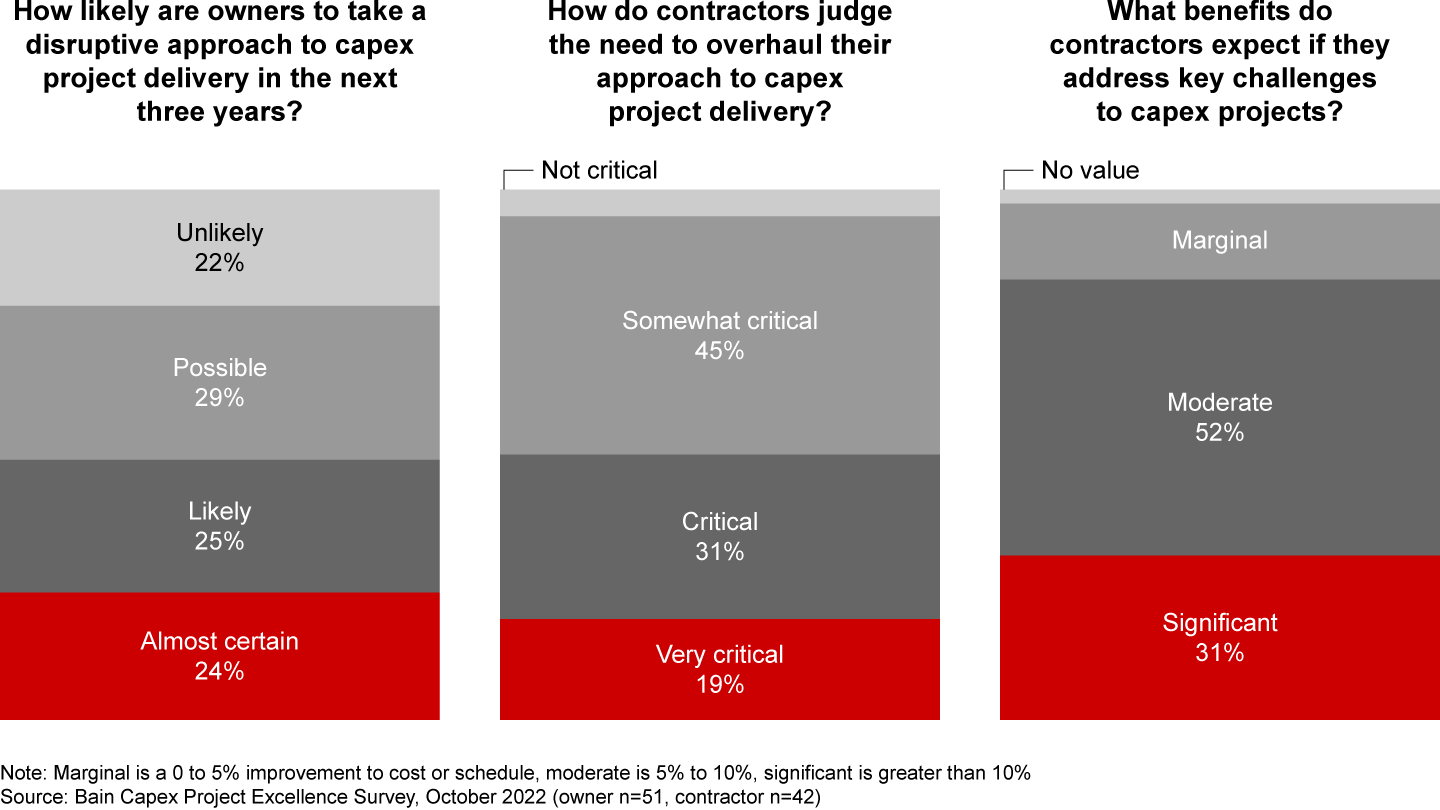
      Overhauling the way capex project owners and contractors work can lower costs and reduce delays
      Overhauling the way capex project owners and contractors work can lower costs and reduce delays
      Overhauling the way capex project owners and contractors work can lower costs and reduce delays

      Owners and contractors agree cost estimate forecasts are often flawed. In our experience, such forecasts often are disconnected from critical insights about project costs. Unrealistic planning leaves project teams a narrow window for success, increasing the risk of cost overruns and delays. That, in turn, creates adversarial relationships among teams working in the project ecosystem. For example, many owners map out a project schedule that doesn’t adequately account for site-specific productivity differences and labor constraints, which are common. As a result, contractors are unable to execute the plan as written, and they struggle to adapt to changing conditions (see Figure 2).

      Figure 2a
      Capex project owners and contractors agree on the challenges to meeting performance goals for energy-related projects
      Capex project owners and contractors agree on the challenges to meeting performance goals for energy-related projects
      Capex project owners and contractors agree on the challenges to meeting performance goals for energy-related projects
      Figure 2b
      Capex project owners and contractors agree on the challenges to meeting performance goals for energy-related projects
      Capex project owners and contractors agree on the challenges to meeting performance goals for energy-related projects
      Capex project owners and contractors agree on the challenges to meeting performance goals for energy-related projects

      The energy transition is likely to increase the size of and variety of capex projects in addition to the volume, adding to the strain. Managing efficiently under those conditions will require a more holistic approach. Forward-looking project owners are starting to examine the entire project-delivery value chain for opportunities to improve performance—from site identification to commissioning of the asset. They’re also seeking to build more collaborative relationships with the many stakeholders and contractors involved in all phases of a project. Some are piloting win-win contracts that overcome the negative spiral that results from a strategy focused too narrowly on cost reduction and performance expectations divorced from reality. Finally, leaders are adding talent and capacity in critical support functions to help secure permits, acquire sites, and improve public and customer communications.

      But implementing change will be challenging. Owners and contractors still view a significant percentage of their engagements as self-serving. Contractors are nearly twice as likely to perceive one or both sides as self-serving (see Figure 3). Owners and contractors aren’t aligned on the equitable distribution of risk and reward in projects, and fewer than one in five describe their engagement model as collaborative.

      Figure 3
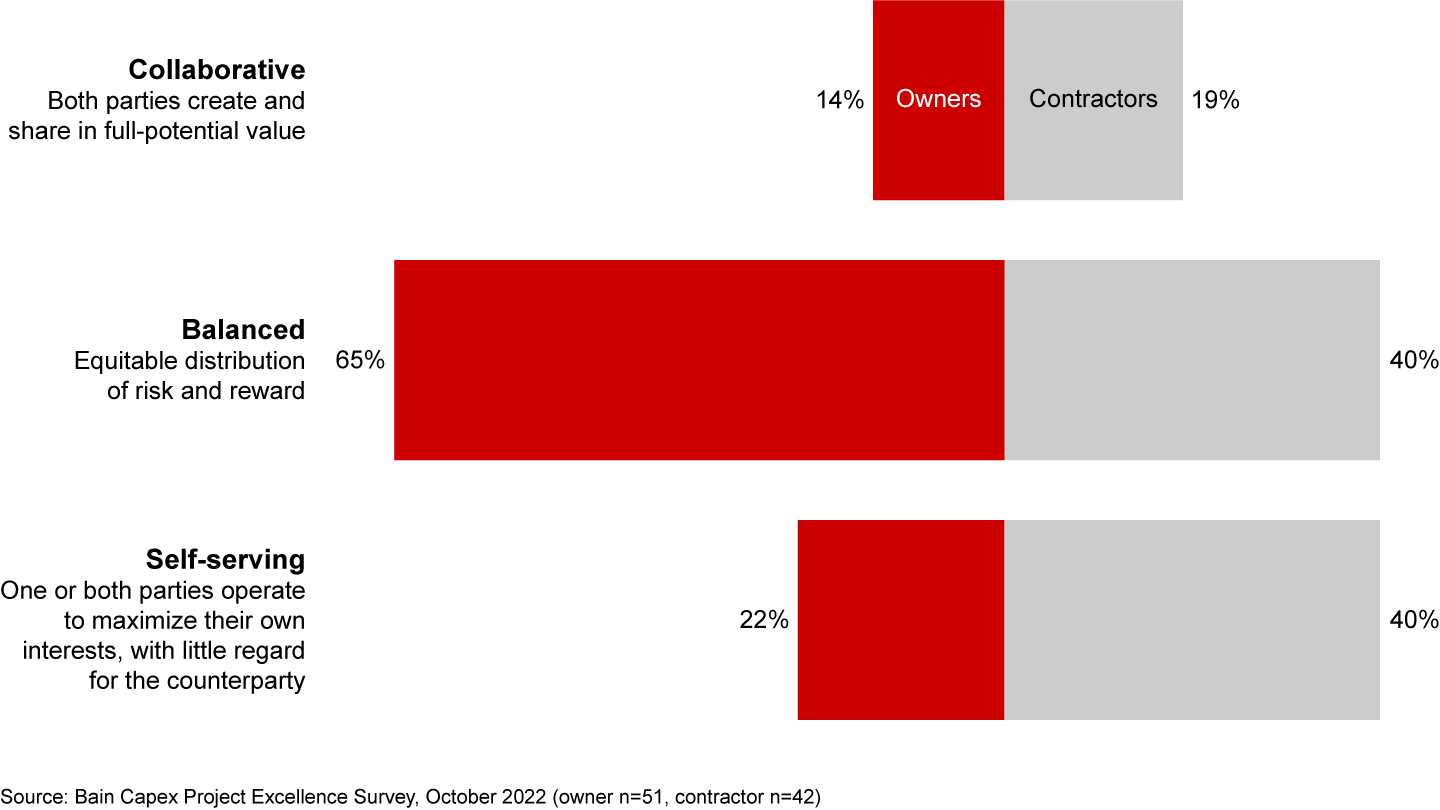
      Who benefits from the current model of engagement? Capex project owners and contractors have different views
      Who benefits from the current model of engagement? Capex project owners and contractors have different views
      Who benefits from the current model of engagement? Capex project owners and contractors have different views

      Leading energy and natural resource companies can unlock powerful advantages by developing a more integrated and collaborative approach to capital project management. In addition to reducing costs and improving delivery times, it enhances transparency and predictability, improves schedule accuracy, and creates an environment for optimal returns. Five guidelines can help project teams start down the path to better performance.

      Take an agile approach to project management. Tackle challenges early and do scenario planning to address possible failures. That will help project teams quickly identify potential problems while there’s still time to correct course.

      Apply a stress test to the value chain. Assess the project’s demand for permits, labor, equipment, and material resources and gauge the market capacity to meet those needs. Identifying potential stress points and shortages early means more time to resolve them. For instance, a top US electric utility conducting a stress test developed a three-year view of procurement in place of a quarterly view. That forward visibility increased the firm’s resilience and put capital to work more effectively.

      Reinforce the organization and operating model. Evaluate the firm’s ability to react to a surge in product demand. Strengthen talent, structure, processes, and systems as needed. Develop plans to mitigate problems before they create costly issues and delays.

      Embrace nimble execution. Anticipate disruption and make sure your strategy can adapt to change. Take the example of leading companies extracting shale gas and tight oil. They understood from the outset that rigid plans were ill-adapted to such operations and made adaptability a top priority. These companies routinely adjust operations to the volume and pace of activity and to vital input from equipment and service providers. Importantly, they incorporate lessons learned from each drilled well into field-development processes. While capital projects may differ significantly, the flexible approach that shale companies developed to accommodate uncertainty and change can be applied to a wide array of operations.

      Improve supplier relationships. Develop a more dynamic and collaborative partnership with key suppliers and contractors and take a more balanced approach to sharing risks. Before bidding, some leading companies are starting to engage EPC companies in collaborative workshops to codevelop commercial pricing structures that are transparent and equitable, and enhance owner and contractor buy-in. One leading US electric utility, eager to move away from conventional lump-sum bidding, set up workshops with EPC contractors to jointly develop long-term, dynamic commercial pricing structures. The workshops increased mutual understanding of common pain points and the success factors required for an efficient commercial structure.

      Getting started

      For many leadership teams, adopting new approaches to project planning and execution may feel uncomfortable. But as the energy transformation accelerates, it will further strain the ability to deliver projects on time and on budget. The alternative—sticking to current management practice—is riskier. Companies that fail to prepare their organizations for a step-change in demand will find it even more difficult in the future to meet their performance goals.

      Here are a few questions senior executives can use to begin to reorient their thinking ahead of the capex spending surge.

      • How can we accelerate steps such as obtaining permits and acquiring land to ensure projects start on time?
      • Can we minimize disparities in the supply and demand of equipment and materials to avoid delays and cost overruns?
      • What actions would help improve the supply of qualified labor, and where do we begin to create development programs to improve workforce skills?
      • Are our strategic partners open to adopting new ways of working to resolve the most critical problems plaguing capital project delivery?
      • How can we leverage emerging technologies, such as artificial intelligence and the Internet of Things, to enhance our capital project-delivery processes and respond better to unforeseen challenges?

      Energy and natural resources companies will shoulder the bulk of the transition to a new energy era as investments in infrastructure accelerate. The number and size of capital projects needed to meet society’s climate goals will overwhelm companies that aren’t prepared to manage them more efficiently. Leadership teams that boldly break with the industry’s narrow focus on cost management and start developing more collaborative relationships with contractors will be in the best position to navigate the challenging transition ahead.

      著者
      • Jason Housh
        Former Expert Associate Partner, Chicago
      • Nir Feinstein
        Alumni, Houston
      • Headshot of Grant Dougans
        Grant Dougans
        パートナー, Washington, DC
      • Headshot of Michael Short
        Michael Short
        パートナー, Houston
      関連業種
      • インフラ、建設、建築
      • エネルギー、天然資源
      • 化学製品
      • 公益事業、再生可能エネルギー
      • 石油、ガス
      関連するコンサルティングサービス
      • Capital Projects Acceleration
      • オペレーション
      • 購買・調達
      エネルギー、天然資源
      Improving Capital Project Delivery Systems

      Bain experts reveal how top energy companies are revolutionizing their capital project delivery to excel in cost, timing, and quality in the energy transition.

      詳細
      エネルギー、天然資源
      Raising Productivity in Energy and Natural Resources Capital Projects

      Agile and lean methodologies raise capital efficiency in engineering, procurement, and construction.

      詳細
      公益事業、再生可能エネルギー
      Solving for AI’s Data Center Construction Crunch

      AI’s computing needs could reach 200 gigawatts of new global demand by 2030, requiring companies to build faster and smarter.

      詳細
      エネルギー、天然資源
      Sustaining Capital: From Chaos to Discipline

      Fragmented budgets, poor visibility, and missed forecasts are fixable with the right approach.

      詳細
      オペレーション
      Technology Is Radically Reshaping Auto Economics

      Digital technologies and AI are poised to increase the efficiency of automotive processes by 30%.

      詳細
      First published in 5月 2023
      Tags
      • Capital Projects Acceleration
      • インフラ、建設、建築
      • エネルギー、天然資源
      • オペレーション
      • 化学製品
      • 公益事業、再生可能エネルギー
      • 購買・調達
      • 石油、ガス

      クライアント支援事例

      An Environmental Services Company Captures Massive Savings from a Merger

      ケーススタディを見る

      組織 Centralization boosts performance for an energy giant

      ケーススタディを見る

      顧客戦略、マーケティング Revitalizing a utility's market position with customer loyalty

      ケーススタディを見る

      お気軽にご連絡下さい

      私達は、グローバルに活躍する経営者が抱える最重要経営課題に対して、厳しい競争環境の中でも成長し続け、「結果」を出すために支援しています。

      ベインの知見。競争が激化するグローバルビジネス環境で、日々直面するであろう問題について論じている知見を毎月お届けします。

      *プライバシーポリシーの内容を確認し、合意しました。

      プライバシーポリシーをご確認頂き、合意頂けますようお願い致します。
      Bain & Company
      お問い合わせ Sustainability Accessibility Terms of use Privacy Cookie Policy Sitemap Log In

      © 1996-2026 Bain & Company, Inc.

      お問い合わせ

      How can we help you?

      • ビジネスについて
      • プレス報道について
      • 採用について
      全てのオフィス