
Skip to Content
  • オフィス

    オフィス

    北米・南米
    • Atlanta
    • Austin
    • Bogota
    • Boston
    • Buenos Aires
    • Chicago
    • Dallas
    • Denver
    • Houston
    • Los Angeles
    • Mexico City
    • Minneapolis
    • Monterrey
    • Montreal
    • New York
    • Rio de Janeiro
    • San Francisco
    • Santiago
    • São Paulo
    • Seattle
    • Silicon Valley
    • Toronto
    • Washington, DC
    ヨーロッパ・中東・アフリカ
    • Amsterdam
    • Athens
    • Berlin
    • Brussels
    • Copenhagen
    • Doha
    • Dubai
    • Dusseldorf
    • Frankfurt
    • Helsinki
    • Istanbul
    • Johannesburg
    • Kyiv
    • Lisbon
    • London
    • Madrid
    • Milan
    • Munich
    • Oslo
    • Paris
    • Riyadh
    • Rome
    • Stockholm
    • Vienna
    • Warsaw
    • Zurich
    アジア・オーストラリア
    • Bangkok
    • Beijing
    • Bengaluru
    • Brisbane
    • Ho Chi Minh City
    • Hong Kong
    • Jakarta
    • Kuala Lumpur
    • Manila
    • Melbourne
    • Mumbai
    • New Delhi
    • Perth
    • Shanghai
    • Singapore
    • Sydney
    • Tokyo
    全てのオフィス
  • アルムナイ
  • メディア
  • お問い合わせ
  • 東京オフィス
  • Japan | 日本語

    地域と言語を選択

    グローバル
    • Global (English)
    北米・南米
    • Brazil (Português)
    • Argentina (Español)
    • Canada (Français)
    • Chile (Español)
    • Colombia (Español)
    ヨーロッパ・中東・アフリカ
    • France (Français)
    • DACH Region (Deutsch)
    • Italy (Italiano)
    • Spain (Español)
    • Greece (Elliniká)
    アジア・オーストラリア
    • China (中文版)
    • Korea (한국어)
    • Japan (日本語)
  • Saved items (0)
    Saved items (0)

    You have no saved items.

    後で閲読、共有できるようにするためにブックマークしてください

    Explore Bain Insights
  • 業界別プラクティス
    メインメニュー

    業界別プラクティス

    • 航空宇宙、防衛、政府関連
    • 農業
    • 化学製品
    • インフラ、建設
    • 消費財
    • 金融サービス
    • ヘルスケア
    • 産業機械、設備
    • メディア、エンターテインメント
    • 金属
    • 採掘・鉱業
    • 石油、ガス
    • 紙、パッケージ
    • プライベートエクイティ
    • 公共、社会セクター
    • 小売
    • テクノロジー
    • 通信
    • 交通
    • 観光産業
    • 公益事業、再生可能エネルギー
  • 機能別プラクティス
    メインメニュー

    機能別プラクティス

    • カスタマー・エクスペリエンス
    • サステイナビリティ、 社会貢献
    • Innovation
    • 企業買収、合併 (M&A)
    • オペレーション
    • 組織
    • プライベートエクイティ
    • マーケティング・営業
    • 戦略
    • アドバンスド・アナリティクス
    • Technology
    • フルポテンシャル・トランスフォーメーション
  • Digital
  • 知見/レポート
  • ベイン・アンド・カンパニーについて
    メインメニュー

    ベイン・アンド・カンパニーについて

    • ベインの信条
    • 活動内容
    • 社員とリーダーシップ
    • プレス・メディア情報
    • クライアントの結果
    • 受賞歴
    • パートナーシップを結んでいる団体
    Further: Our global responsibility
    • ダイバーシティ
    • 社会貢献
    • サステイナビリティへの取り組み
    • 世界経済フォーラム(WEF)
    Learn more about Further
  • キャリア
    メインメニュー

    キャリア

    • ベインで働く
      キャリア
      ベインで働く
      • Find Your Place
      • ベインで活躍する機会
      • ベインのチーム体制
      • 学生向けページ
      • インターンシップ
      • 採用イベント
    • ベインでの体験
      キャリア
      ベインでの体験
      • Blog: Inside Bain
      • キャリアストーリー
      • 社員紹介
      • Where We Work
      • 成長を後押しするサポート体制
      • アフィニティ・グループ
      • 福利厚生
    • Impact Stories
    • 採用情報
      キャリア
      採用情報
      • 採用プロセス
      • 面接内容
    FIND JOBS
  • オフィス
    メインメニュー

    オフィス

    • 北米・南米
      オフィス
      北米・南米
      • Atlanta
      • Austin
      • Bogota
      • Boston
      • Buenos Aires
      • Chicago
      • Dallas
      • Denver
      • Houston
      • Los Angeles
      • Mexico City
      • Minneapolis
      • Monterrey
      • Montreal
      • New York
      • Rio de Janeiro
      • San Francisco
      • Santiago
      • São Paulo
      • Seattle
      • Silicon Valley
      • Toronto
      • Washington, DC
    • ヨーロッパ・中東・アフリカ
      オフィス
      ヨーロッパ・中東・アフリカ
      • Amsterdam
      • Athens
      • Berlin
      • Brussels
      • Copenhagen
      • Doha
      • Dubai
      • Dusseldorf
      • Frankfurt
      • Helsinki
      • Istanbul
      • Johannesburg
      • Kyiv
      • Lisbon
      • London
      • Madrid
      • Milan
      • Munich
      • Oslo
      • Paris
      • Riyadh
      • Rome
      • Stockholm
      • Vienna
      • Warsaw
      • Zurich
    • アジア・オーストラリア
      オフィス
      アジア・オーストラリア
      • Bangkok
      • Beijing
      • Bengaluru
      • Brisbane
      • Ho Chi Minh City
      • Hong Kong
      • Jakarta
      • Kuala Lumpur
      • Manila
      • Melbourne
      • Mumbai
      • New Delhi
      • Perth
      • Shanghai
      • Singapore
      • Sydney
      • Tokyo
    全てのオフィス
  • アルムナイ
  • メディア
  • お問い合わせ
  • 東京オフィス
  • Japan | 日本語
    メインメニュー

    地域と言語を選択

    • グローバル
      地域と言語を選択
      グローバル
      • Global (English)
    • 北米・南米
      地域と言語を選択
      北米・南米
      • Brazil (Português)
      • Argentina (Español)
      • Canada (Français)
      • Chile (Español)
      • Colombia (Español)
    • ヨーロッパ・中東・アフリカ
      地域と言語を選択
      ヨーロッパ・中東・アフリカ
      • France (Français)
      • DACH Region (Deutsch)
      • Italy (Italiano)
      • Spain (Español)
      • Greece (Elliniká)
    • アジア・オーストラリア
      地域と言語を選択
      アジア・オーストラリア
      • China (中文版)
      • Korea (한국어)
      • Japan (日本語)
  • Saved items  (0)
    メインメニュー
    Saved items (0)

    You have no saved items.

    後で閲読、共有できるようにするためにブックマークしてください

    Explore Bain Insights
  • 業界別プラクティス
    • 業界別プラクティス

      • 航空宇宙、防衛、政府関連
      • 農業
      • 化学製品
      • インフラ、建設
      • 消費財
      • 金融サービス
      • ヘルスケア
      • 産業機械、設備
      • メディア、エンターテインメント
      • 金属
      • 採掘・鉱業
      • 石油、ガス
      • 紙、パッケージ
      • プライベートエクイティ
      • 公共、社会セクター
      • 小売
      • テクノロジー
      • 通信
      • 交通
      • 観光産業
      • 公益事業、再生可能エネルギー
  • 機能別プラクティス
    • 機能別プラクティス

      • カスタマー・エクスペリエンス
      • サステイナビリティ、 社会貢献
      • Innovation
      • 企業買収、合併 (M&A)
      • オペレーション
      • 組織
      • プライベートエクイティ
      • マーケティング・営業
      • 戦略
      • アドバンスド・アナリティクス
      • Technology
      • フルポテンシャル・トランスフォーメーション
  • Digital
  • 知見/レポート
  • ベイン・アンド・カンパニーについて
    • ベイン・アンド・カンパニーについて

      • ベインの信条
      • 活動内容
      • 社員とリーダーシップ
      • プレス・メディア情報
      • クライアントの結果
      • 受賞歴
      • パートナーシップを結んでいる団体
      Further: Our global responsibility
      • ダイバーシティ
      • 社会貢献
      • サステイナビリティへの取り組み
      • 世界経済フォーラム(WEF)
      Learn more about Further
  • キャリア
    人気検索キーワード
    • デジタル
    • 戦略
    前回の検索
      最近訪れたページ

      Content added to saved items

      Saved items (0)

      Removed from saved items

      Saved items (0)

      論説

      Five Steps for Successful Divestitures

      Five Steps for Successful Divestitures

      Use divestitures to reset the remaining company and increase shareholder value.

      著者:Ben Siegal, Jeff Haxer, Marc Jeker, and Dustin Rohrer

      • min read
      }

      論説

      Five Steps for Successful Divestitures
      en
      概要
      • Pruning portfolios is a critical step for long-term success—90% of outperformers actively divest.
      • Companies that primarily focus on just getting to Day 1 not only risk leaving value on the table but can also destroy value.
      • The best divestors use the occasion to strategically reset the base business and set the separated business up for success.

      ​It’s no secret that frequent acquirers that make mergers and acquisitions a key part of their strategy outperform their peers over the long-term in total shareholder returns (TSRs). But what’s less well-known is that those winning companies also have a tight process for systematically evaluating their portfolios and shedding noncore, low-growth, or underperforming assets to double down on the areas with the highest growth potential and to simplify for profitability. Our research found that 90% of outperforming frequent acquirers actively divest (see Figure 1).

      Figure 1
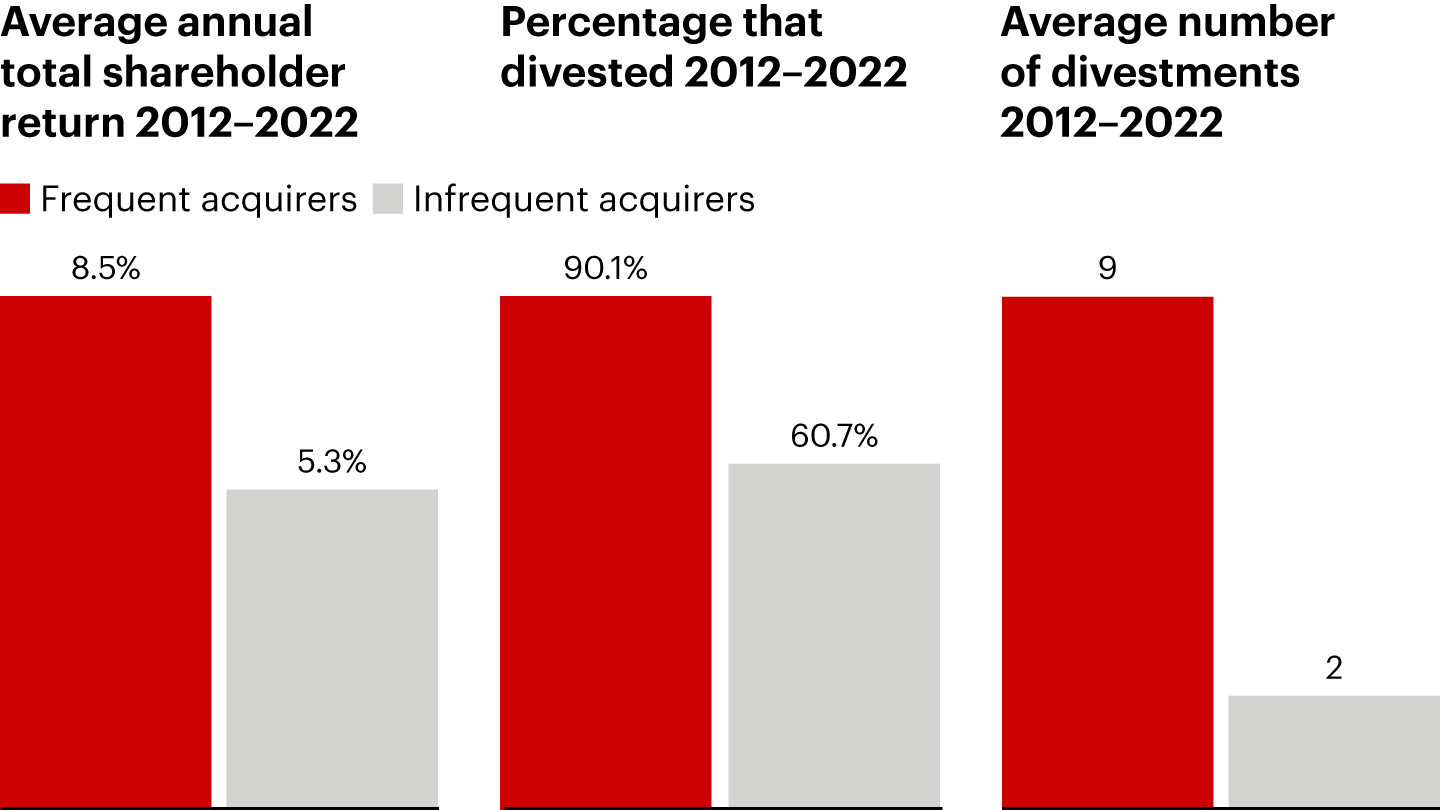
      Frequent acquirers outperform—90% of them actively divest and do so significantly more than others ...

      注 Deals between 2018 and 2022 with deal values greater than $500 million considered; S&P 500 and MSCI World Index returns are average one-year growth rates over the same time horizon

      Sources: S&P Capital IQ; Dealogic; Bain Divestiture Performance Study, 2023

      Every divestiture is a value creation opportunity. But there’s a huge gulf between companies that focus on just getting to Day 1 and those that use divestitures to reset the remaining company and increase shareholder value.

      Indeed, just splitting and selling an unwanted business leaves value on the table—on top of an already onerous deal process, base businesses often are plagued by everything from stranded costs to distracted employees and a buyer that lacks a clear plan for value creation. When we evaluated individual deal performance among sellers, we found that the average remaining company underperformed the market after divesting, while top-quartile divestors delivered TSRs that were three times higher than the market (see Figure 2).

      Figure 2
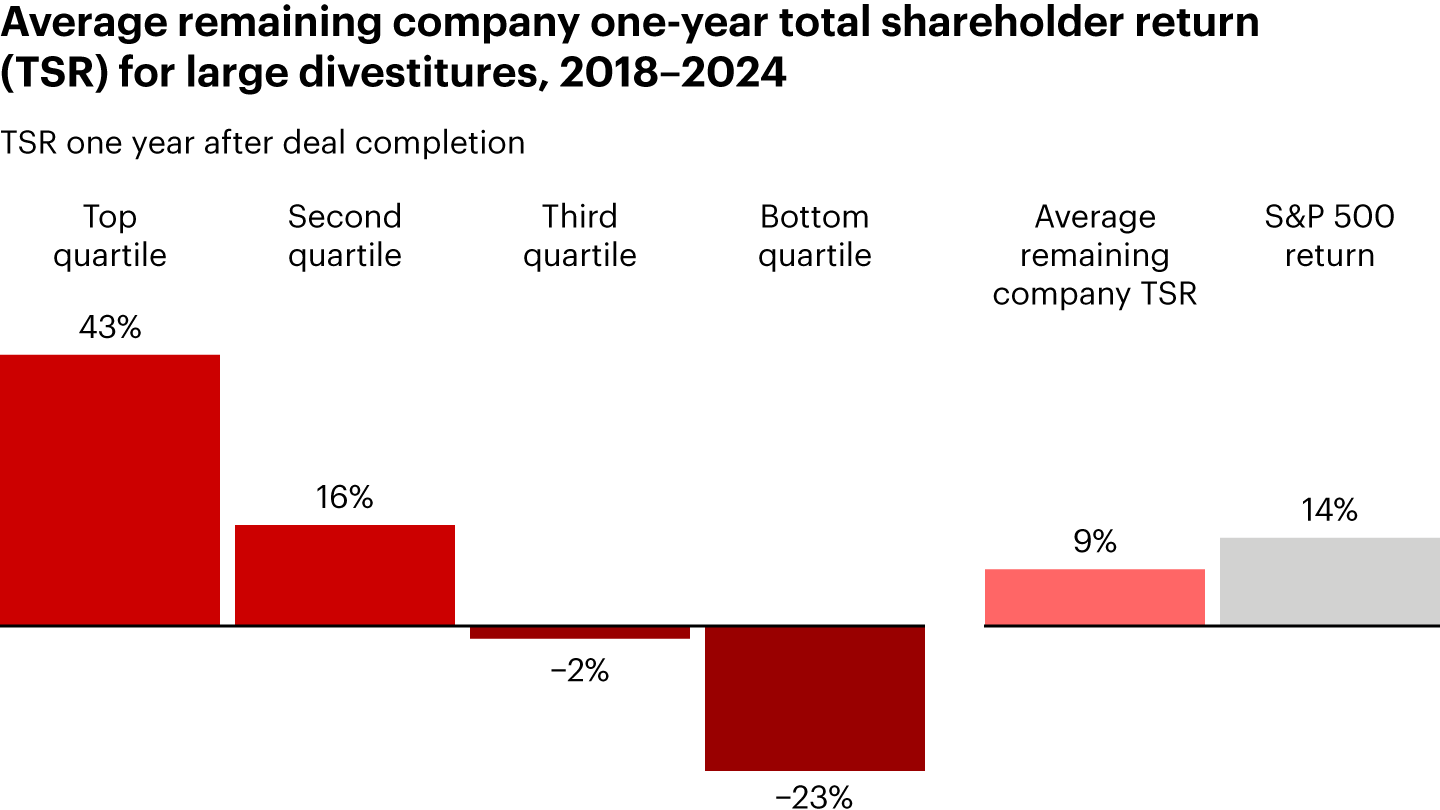
      ... But only divestors in the top two quartiles beat or match market returns

      注 Deals between 2018 and 2022 with deal values greater than $500 million considered; S&P 500 and MSCI World Index returns are average one-year growth rates over the same time horizon

      Sources: S&P Capital IQ; Dealogic; Bain Divestiture Performance Study, 2023

      What do these high performers do that sets them apart? It all starts by creating a solid separation thesis and value creation story to enable effective execution with the right team and the right focus.

      The best divestors create a separation thesis that prepares both the divested company and the remaining company to deliver value. It articulates why the divested company will perform better with another owner, it creates an asset perimeter that attracts the right buyer pools, and it builds a target profit and loss statement (P&L) that reinforces the story. At the same time, winners use each divestiture as an occasion to reshape the remaining business to optimize costs and boost growth.

      That’s not to suggest that divestitures are easy on a seller. For starters, just obtaining board approval for a divestiture requires thoughtful planning and coordinating with other priorities. And divestitures test executives’ decision-making abilities on everything from designing an appropriate asset perimeter that will deliver value to a buyer to working through transition service agreements (TSAs) and managing talent in the interim. Sellers need a clear view into stranded costs and a plan in place to mitigate. They deftly need to balance speed, base business performance, and value creation.

      We see five key steps to take for executives planning to divest.

      Step No. 1: Start with a holistic view of your portfolio, and mark businesses for exit in line with your strategy. There are some basic questions to ask: What is the divestment thesis that provides the strategic rationale for this exit? Why are you selling? Are there still parenting advantages you have over the business? Where are there shared customers and capabilities? What is the sum-of-the-parts analysis, and where are investors discounting the business? What structure can deliver the highest value? The best divestors take a future back, objective lens and understand the parts of the business that do not match their portfolio.

      Step No. 2: Aim to maximize value through perimeter design, transaction structure, and exit timelines; do not just split the business. Think through the right bundle of businesses and supporting people, assets, systems, and IP. The optimal perimeter often balances two things: ensuring attractiveness to the right buyers and minimizing stranded costs for the seller. For largely standalone business units, tax-free spin-offs can minimize tax leakage of deal proceeds. On the other hand, divestiture is often faster and requires a lower one-time cost to execute for partial businesses or businesses requiring a turnaround. Consider the need for cash and how proceeds will be reinvested as well as the trade-offs associated with maintaining deal optionality for longer (e.g., to maximize exit value) vs. prioritizing transaction speed.

      Step No. 3: Set the right objectives for Day 1 and beyond. Divestitures are a lot of work, and it’s tempting to declare victory on Day 1 when the transaction closes. This view fails to account for the impact of TSAs, commercial agreements, and stranded costs to the remaining company. Top-performing divestors recognize the transaction is an opportunity to reshape the P&Ls of both the divested company and the remaining company. Building the pro forma P&L and disentangling the businesses will often expose stranded costs and bloated cost structures in the remaining company. Even for businesses that are already largely separate, there can be an opportunity to shift investments to areas that line up with the remaining company’s new focus.

      Step No. 4: Accelerate decisions on the biggest entanglements. When we asked practitioners to name the top inhibiting factors for divestitures, functional entanglement was No. 1. Depending on the industry, the biggest entanglements often are around systems, shared production, and route to market. Thinking through how to disentangle the business in a way that ensures operational stability while minimizing stranded costs and one-time costs can be a complex equation. While it may make sense to disentangle certain parts of the business ahead of Day 1, strategically placed TSAs can provide breathing room for the divested asset to organically build up functional capacity, transition to new systems, and more, while also serving to mitigate stranded costs for the seller until the right go-forward solution is identified and executed against to rightsize the business.

      Step No. 5: Keep 95% of people 100% focused on the base business. Again, running a divestiture can distract from the base business. Such distractions can harm the growth and performance of both the divested company and the remaining company, which can destroy more value than the separation creates. The best companies keep a focus on the base business by running a divestiture program with fewer, more highly dedicated individuals.

      When executed strategically, divestitures serve as a powerful tool for companies to streamline operations, focus on core competencies, and enhance shareholder value. Bain & Company's extensive research indicates that companies adopting a proactive and disciplined approach to divestitures outpace their peers. These five steps can make the difference between companies that underperform the market and those that use divestitures for outsized growth and value creation.​

      著者
      • Headshot of Ben Siegal
        Ben Siegal
        パートナー, Boston
      • Headshot of Jeff Haxer
        Jeff Haxer
        パートナー, Chicago
      • Headshot of Marc Jeker
        Marc Jeker
        パートナー, Zurich
      • Dustin Rohrer
        Practice Director, Atlanta
      関連するコンサルティングサービス
      • Divestitures and Spin-offs
      • 企業買収、合併(M&A)
      企業買収、合併(M&A)
      Building Products M&A

      Why more companies are acquiring for scope.

      詳細
      企業買収、合併(M&A)
      Consumer Products M&A

      In their quest for profitable growth, more companies are divesting brands or buying insurgents.

      詳細
      企業買収、合併(M&A)
      Automotive & Mobility M&A

      As pressure to scale mounts, leaders are consolidating and buying technology.

      詳細
      企業買収、合併(M&A)
      Looking Ahead to 2026: Getting a Boost from the Great Rebound

      Why more companies will move from awareness to action.

      詳細
      企業買収、合併(M&A)
      10 Takeaways from Our M&A Executive Survey

      We asked more than 300 practitioners across the globe about their deal-making efforts in today’s market. Here’s what they said.

      詳細
      First published in 7月 2025
      Tags
      • Divestitures and Spin-offs
      • 企業買収、合併(M&A)

      クライアント支援事例

      Digital A Strategic Separation Enables New Growth for GSK and Haleon

      ケーススタディを見る

      企業買収、合併(M&A) Post-merger cultural issues jeopardize a deal

      ケーススタディを見る

      Divestitures and Spin-offs A holding company lets go to grow

      ケーススタディを見る

      お気軽にご連絡下さい

      私達は、グローバルに活躍する経営者が抱える最重要経営課題に対して、厳しい競争環境の中でも成長し続け、「結果」を出すために支援しています。

      ベインの知見。競争が激化するグローバルビジネス環境で、日々直面するであろう問題について論じている知見を毎月お届けします。

      *プライバシーポリシーの内容を確認し、合意しました。

      プライバシーポリシーをご確認頂き、合意頂けますようお願い致します。
      Bain & Company
      お問い合わせ Sustainability Accessibility Terms of use Privacy Cookie Policy Sitemap Log In

      © 1996-2026 Bain & Company, Inc.

      お問い合わせ

      How can we help you?

      • ビジネスについて
      • プレス報道について
      • 採用について
      全てのオフィス