
Skip to Content
  • オフィス

    オフィス

    北米・南米
    • Atlanta
    • Austin
    • Bogota
    • Boston
    • Buenos Aires
    • Chicago
    • Dallas
    • Denver
    • Houston
    • Los Angeles
    • Mexico City
    • Minneapolis
    • Monterrey
    • Montreal
    • New York
    • Rio de Janeiro
    • San Francisco
    • Santiago
    • São Paulo
    • Seattle
    • Silicon Valley
    • Toronto
    • Washington, DC
    ヨーロッパ・中東・アフリカ
    • Amsterdam
    • Athens
    • Berlin
    • Brussels
    • Copenhagen
    • Doha
    • Dubai
    • Dusseldorf
    • Frankfurt
    • Helsinki
    • Istanbul
    • Johannesburg
    • Kyiv
    • Lisbon
    • London
    • Madrid
    • Milan
    • Munich
    • Oslo
    • Paris
    • Riyadh
    • Rome
    • Stockholm
    • Vienna
    • Warsaw
    • Zurich
    アジア・オーストラリア
    • Bangkok
    • Beijing
    • Bengaluru
    • Brisbane
    • Ho Chi Minh City
    • Hong Kong
    • Jakarta
    • Kuala Lumpur
    • Manila
    • Melbourne
    • Mumbai
    • New Delhi
    • Perth
    • Shanghai
    • Singapore
    • Sydney
    • Tokyo
    全てのオフィス
  • アルムナイ
  • メディア
  • お問い合わせ
  • 東京オフィス
  • Japan | 日本語

    地域と言語を選択

    グローバル
    • Global (English)
    北米・南米
    • Brazil (Português)
    • Argentina (Español)
    • Canada (Français)
    • Chile (Español)
    • Colombia (Español)
    ヨーロッパ・中東・アフリカ
    • France (Français)
    • DACH Region (Deutsch)
    • Italy (Italiano)
    • Spain (Español)
    • Greece (Elliniká)
    アジア・オーストラリア
    • China (中文版)
    • Korea (한국어)
    • Japan (日本語)
  • Saved items (0)
    Saved items (0)

    You have no saved items.

    後で閲読、共有できるようにするためにブックマークしてください

    Explore Bain Insights
  • 業界別プラクティス
    メインメニュー

    業界別プラクティス

    • 航空宇宙、防衛、政府関連
    • 農業
    • 化学製品
    • インフラ、建設
    • 消費財
    • 金融サービス
    • ヘルスケア
    • 産業機械、設備
    • メディア、エンターテインメント
    • 金属
    • 採掘・鉱業
    • 石油、ガス
    • 紙、パッケージ
    • プライベートエクイティ
    • 公共、社会セクター
    • 小売
    • テクノロジー
    • 通信
    • 交通
    • 観光産業
    • 公益事業、再生可能エネルギー
  • 機能別プラクティス
    メインメニュー

    機能別プラクティス

    • カスタマー・エクスペリエンス
    • サステイナビリティ、 社会貢献
    • Innovation
    • 企業買収、合併 (M&A)
    • オペレーション
    • 組織
    • プライベートエクイティ
    • マーケティング・営業
    • 戦略
    • アドバンスド・アナリティクス
    • Technology
    • フルポテンシャル・トランスフォーメーション
  • Digital
  • 知見/レポート
  • ベイン・アンド・カンパニーについて
    メインメニュー

    ベイン・アンド・カンパニーについて

    • ベインの信条
    • 活動内容
    • 社員とリーダーシップ
    • プレス・メディア情報
    • クライアントの結果
    • 受賞歴
    • パートナーシップを結んでいる団体
    Further: Our global responsibility
    • ダイバーシティ
    • 社会貢献
    • サステイナビリティへの取り組み
    • 世界経済フォーラム(WEF)
    Learn more about Further
  • キャリア
    メインメニュー

    キャリア

    • ベインで働く
      キャリア
      ベインで働く
      • Find Your Place
      • ベインで活躍する機会
      • ベインのチーム体制
      • 学生向けページ
      • インターンシップ
      • 採用イベント
    • ベインでの体験
      キャリア
      ベインでの体験
      • Blog: Inside Bain
      • キャリアストーリー
      • 社員紹介
      • Where We Work
      • 成長を後押しするサポート体制
      • アフィニティ・グループ
      • 福利厚生
    • Impact Stories
    • 採用情報
      キャリア
      採用情報
      • 採用プロセス
      • 面接内容
    FIND JOBS
  • オフィス
    メインメニュー

    オフィス

    • 北米・南米
      オフィス
      北米・南米
      • Atlanta
      • Austin
      • Bogota
      • Boston
      • Buenos Aires
      • Chicago
      • Dallas
      • Denver
      • Houston
      • Los Angeles
      • Mexico City
      • Minneapolis
      • Monterrey
      • Montreal
      • New York
      • Rio de Janeiro
      • San Francisco
      • Santiago
      • São Paulo
      • Seattle
      • Silicon Valley
      • Toronto
      • Washington, DC
    • ヨーロッパ・中東・アフリカ
      オフィス
      ヨーロッパ・中東・アフリカ
      • Amsterdam
      • Athens
      • Berlin
      • Brussels
      • Copenhagen
      • Doha
      • Dubai
      • Dusseldorf
      • Frankfurt
      • Helsinki
      • Istanbul
      • Johannesburg
      • Kyiv
      • Lisbon
      • London
      • Madrid
      • Milan
      • Munich
      • Oslo
      • Paris
      • Riyadh
      • Rome
      • Stockholm
      • Vienna
      • Warsaw
      • Zurich
    • アジア・オーストラリア
      オフィス
      アジア・オーストラリア
      • Bangkok
      • Beijing
      • Bengaluru
      • Brisbane
      • Ho Chi Minh City
      • Hong Kong
      • Jakarta
      • Kuala Lumpur
      • Manila
      • Melbourne
      • Mumbai
      • New Delhi
      • Perth
      • Shanghai
      • Singapore
      • Sydney
      • Tokyo
    全てのオフィス
  • アルムナイ
  • メディア
  • お問い合わせ
  • 東京オフィス
  • Japan | 日本語
    メインメニュー

    地域と言語を選択

    • グローバル
      地域と言語を選択
      グローバル
      • Global (English)
    • 北米・南米
      地域と言語を選択
      北米・南米
      • Brazil (Português)
      • Argentina (Español)
      • Canada (Français)
      • Chile (Español)
      • Colombia (Español)
    • ヨーロッパ・中東・アフリカ
      地域と言語を選択
      ヨーロッパ・中東・アフリカ
      • France (Français)
      • DACH Region (Deutsch)
      • Italy (Italiano)
      • Spain (Español)
      • Greece (Elliniká)
    • アジア・オーストラリア
      地域と言語を選択
      アジア・オーストラリア
      • China (中文版)
      • Korea (한국어)
      • Japan (日本語)
  • Saved items  (0)
    メインメニュー
    Saved items (0)

    You have no saved items.

    後で閲読、共有できるようにするためにブックマークしてください

    Explore Bain Insights
  • 業界別プラクティス
    • 業界別プラクティス

      • 航空宇宙、防衛、政府関連
      • 農業
      • 化学製品
      • インフラ、建設
      • 消費財
      • 金融サービス
      • ヘルスケア
      • 産業機械、設備
      • メディア、エンターテインメント
      • 金属
      • 採掘・鉱業
      • 石油、ガス
      • 紙、パッケージ
      • プライベートエクイティ
      • 公共、社会セクター
      • 小売
      • テクノロジー
      • 通信
      • 交通
      • 観光産業
      • 公益事業、再生可能エネルギー
  • 機能別プラクティス
    • 機能別プラクティス

      • カスタマー・エクスペリエンス
      • サステイナビリティ、 社会貢献
      • Innovation
      • 企業買収、合併 (M&A)
      • オペレーション
      • 組織
      • プライベートエクイティ
      • マーケティング・営業
      • 戦略
      • アドバンスド・アナリティクス
      • Technology
      • フルポテンシャル・トランスフォーメーション
  • Digital
  • 知見/レポート
  • ベイン・アンド・カンパニーについて
    • ベイン・アンド・カンパニーについて

      • ベインの信条
      • 活動内容
      • 社員とリーダーシップ
      • プレス・メディア情報
      • クライアントの結果
      • 受賞歴
      • パートナーシップを結んでいる団体
      Further: Our global responsibility
      • ダイバーシティ
      • 社会貢献
      • サステイナビリティへの取り組み
      • 世界経済フォーラム(WEF)
      Learn more about Further
  • キャリア
    人気検索キーワード
    • デジタル
    • 戦略
    前回の検索
      最近訪れたページ

      Content added to saved items

      Saved items (0)

      Removed from saved items

      Saved items (0)

      論説

      Hacking Software’s Rule of 40

      Hacking Software’s Rule of 40

      Software companies need to balance growth and profitability to create lasting value.

      著者:Thierry Depeyrot and Simon Heap

      • min read
      }

      論説

      Hacking Software’s Rule of 40
      en
      概要
      • Large software companies are, increasingly, measured against the Rule of 40: the idea that growth rate plus profit margin should exceed 40%.
      • Young companies often beat that mark with their rapid growth. But older companies, whose growth has tapered off, need to improve performance and profit margins to hit that metric.
      • Beating the Rule of 40 in a single year is admirable, but the greater challenge is balancing growth and performance year after year.

      The Rule of 40—the principle that a software company’s combined growth rate and profit margin should exceed 40%—has gained momentum as a high-level gauge of performance for software businesses in recent years, especially in the realms of venture capital and growth equity. Increasingly, software industry executives are embracing the Rule of 40 as an important metric to help measure the trade-offs of balancing growth and profitability.

      • Click to expand: About the Rule of 40

        Venture capitalists began to popularize the Rule of 40 in 2015 as a high-level health check for SaaS companies, but it’s broadly applicable to most software companies. The metric neatly captures the fundamental trade-off between investing in growth (including new products and customer acquisition) and short-term profitability. Analysts have differed on which measure of profitability to use—most use EBITDA, but some have proposed free cash flow, EBIT or net income as alternatives. We use EBITDA, a publicly available profitability metric that excludes the effect of taxes and accounting policies.

      Venture capital investors initially came up with the Rule of 40 as a way to quickly assess the performance of small, fast-growing companies. For larger companies, beating the Rule of 40 in a single year is not exceptional. In fact, over such a short period, the top quintile of software businesses approaches a gross profit ratio of 50% (see Figure 1).

      Figure 1
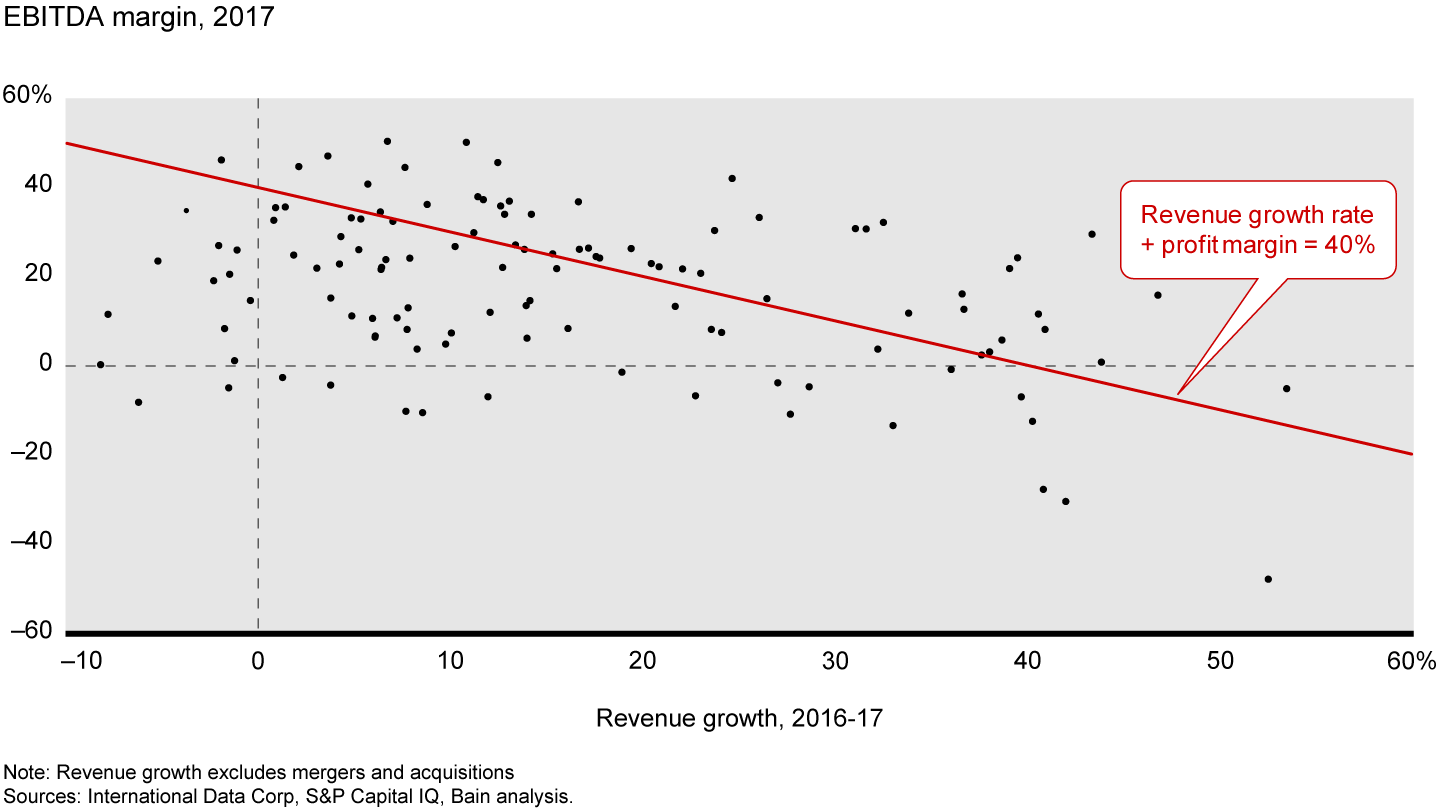
      In 2017, 40% of software companies outperformed the Rule of 40
      In 2017, 40% of software companies outperformed the Rule of 40
      In 2017, 40% of software companies outperformed the Rule of 40

      Consistently strong performance against the Rule of 40, however, is difficult to maintain. Bain & Company researched the performance of 124 publicly traded software companies to identify those that outperformed the Rule of 40 over three years and five years. We found that 40% of them outperformed the Rule of 40 in a single year (2017). But of 86 companies researched from 2013 to 2017, just 25% outperformed the Rule of 40 for three or more years, and only 16% outperformed for all five years, adjusted for mergers and acquisitions (see Figure 2).

      Figure 2
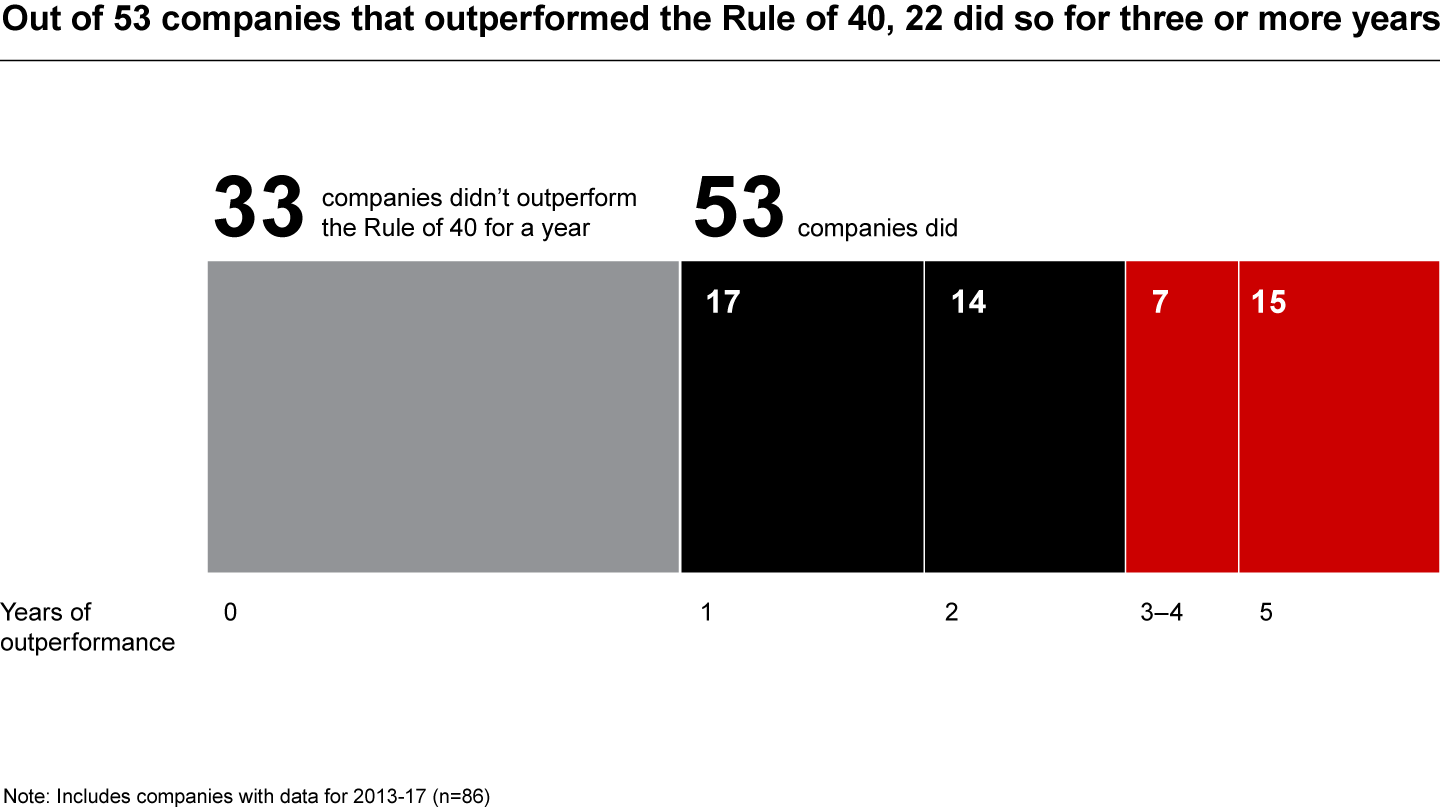
      Consistently outperforming the Rule of 40 is difficult
      Consistently outperforming the Rule of 40 is difficult
      Consistently outperforming the Rule of 40 is difficult

      What’s more, once a business has matured and its growth has slowed, it’s difficult to regain that growth. Among companies with growth rates higher than 10% in 2004–05, average revenue growth sank below 10% over time and has not bounced back (see Figure 3). Continuing growth at scale is also hard; only five software companies have grown to $5 billion from $1 billion in the past 20 years.

      Figure 3
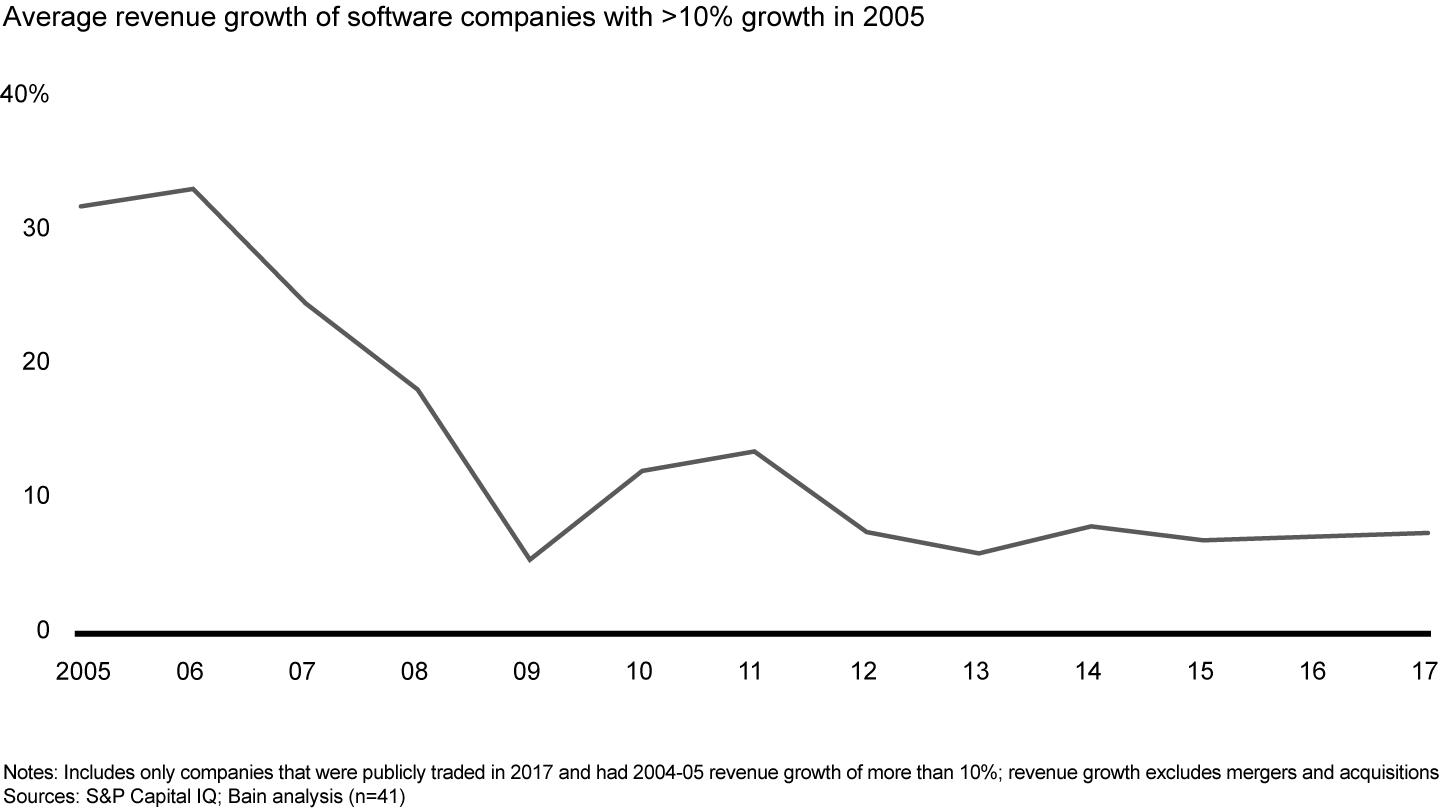
      Growth falls off over time – and is difficult to revive
      Growth falls off over time – and is difficult to revive
      Growth falls off over time – and is difficult to revive

      Software companies that can balance growth and profitability to outperform the Rule of 40 have valuations (measured by the ratio of enterprise value to revenue) double that of companies that fall “below the line,” and they achieve returns as much as 15% higher than the S&P 500. Companies whose growth slows and that fail to improve profitability often find themselves the target of activist investors and private equity acquirers.

      Bain Partner Thierry Depeyrot explains how software companies can achieve sustained, profitable growth.

      Three ways to beat the Rule of 40

      Companies can beat the Rule of 40 at all stages of their life cycle.

      • Strong growth. Of the companies that outperform the Rule of 40 over five years, one-third achieve it with revenue growth above 30%. These companies—such as Splunk, Wix and Workday—are modestly profitable while investing in hypergrowth to build a large installed base, displace legacy vendors and attain the holy grail of becoming a platform. Beyond $1 billion in revenue, software businesses must evolve their operating model and process maturity to handle the complexities of serving multiple customer segments, with multiple products, across many countries. As growth slows, mature software companies look for ways to generate more revenue from existing customers, while becoming more efficient to increase profit margins and maintain performance that beats the Rule of 40.
      • Balanced, profitable growth. Half of the companies consistently exceeding the Rule of 40 do so with revenue growth between 10% and 30%. Such large, established companies as VMWare, Adobe and Salesforce have successfully developed new products for markets adjacent to their core, and navigated technology or business model transitions (for example, to SaaS and subscription models) to keep growing. Having climbed the S-curve, they must reorient their approach to reach the next level. Some companies accustomed to rapid growth struggle to adapt. For example, R&D spending needs to reflect the fact that subsequent waves of innovation might not be as valuable as the earlier breakthroughs, relative to the business size, and that the mix of investment may need to shift to renewing the original architecture. Disciplined and data-driven portfolio management and investment choices become increasingly important.
      • Profitability. We also found that 18% of companies beat the Rule of 40 with annual organic revenue growth below 10%. Established players like Oracle, SAP and Trend Micro have large, profitable flagship businesses. With growth stabilizing below 10%, companies turn to becoming more efficient and profitable—exacting pricing power, leveraging the scale and scope of large salesforces, cross-selling and expanding installed base customers, exploring new business models, increasing renewals, moderating R&D investment.
      Infographic

      How Software Firms Can Outpace the Rule of 40

      Consistently beating this magic number remains elusive for large, established firms. But it’s possible with the right moves.

      Increasing efficiency and effectiveness in a maturing business

      It’s difficult to consistently and sustainably outperform. Each company faces its own unique profitability challenges across products and offerings, engineering efficiency and effectiveness, go-to-market productivity and customer life cycle management. But most successful companies display a few common patterns.

      • Focus on installed base. Customers are the biggest asset of a mature software business. Retaining that base, and expanding the value delivered to it, becomes the top priority. Ensuring customer success, investing in customer-centric innovation, developing broader and deeper solutions strategies, and implementing pricing strategies and discipline are all essential. Customer data can help provide insights on the best ways to deliver, as marketing investments shift to “farming” over “hunting.” They need to establish more efficient ways of selling to established customers, for example, by deploying inside sales rather than expensive field forces, and paying channel partners based on the value they add.
      • Engineering productivity. Engineering groups face new challenges as a business matures. In addition to being directed by smart portfolio investment choices, engineering groups need to balance the demands of delivering new features with those of product maintenance—all while dealing with the technical debt that often slows them down. Getting clarity on priorities and visibility into how sprawling engineering groups are spending time to align with those priorities is paramount. Streamlining roles, supporting critical developers and clarifying site strategy can refocus the best resources on building what is important in the most cost-effective way.
      • Operational efficiency. For mature companies, the enemy of efficiency is often complexity. Processes and systems reflect historical choices as new products, customer and countries are added to the business mix, along with new acquisitions. Continuous streamlining and process automation can help raise efficiency. This can include reducing the number of SKUs and price meters, streamlining the number of legal entities and channel types, clarifying the roles of operational teams and removing duplication, and eliminating layers of management.

      Some of the most successful software businesses gauge their performance against the Rule of 40, and many others increasingly aspire to achieve it across the various stages of their life cycles. What’s more, the rule is helpful not only at the companywide level, but as a way to assess the performance of business units or product families within an organization. Indeed, for some companies, focusing on and achieving the Rule of 40 at the unit level is an ideal way to get started, allowing them to build the goal into their business planning and performance assessments.

      Thierry Depeyrot and Simon Heap are partners with Bain & Company’s Global Technology practice, and both work in the firm’s Silicon Valley office.

      著者
      • Headshot of Thierry Depeyrot
        Thierry Depeyrot
        Executive Vice President, Coro, Silicon Valley
      • Headshot of Simon Heap
        Simon Heap
        Advisory Partner, Silicon Valley
      関連業種
      • テクノロジー
      コンサルティングサービス
      • Software Value Creation
      テクノロジー
      In Enterprise Software, Renewals and Retention Have Never Been More Important

      Covid-19 has changed every customer’s finances. Vendors should respond with new segmentations and offers.

      詳細
      テクノロジー
      Is Your Telco Winning the Race to Autonomous Networks?

      Cross-industry benchmarking provides a reality check on where autonomy is working, where it’s stuck, and what it takes to pull ahead.

      詳細
      Software Value Creation
      India SaaS Report 2022

      Remaining steady through turbulence

      詳細
      テクノロジー
      Why SaaS Stocks Have Dropped—and What It Signals for Software’s Next Chapter

      A sharp reset in valuations reflects AI-driven disruption, slowing retention, and a growing divide between incumbents and future winners.

      詳細
      テクノロジー
      Software M&A

      The good news: Most deal best practices still apply to AI acquisitions.

      詳細
      First published in 12月 2018
      Tags
      • Software Value Creation
      • テクノロジー

      クライアント支援事例

      サステイナビリティ、社会貢献 Can Microchips Turbocharge Sustainability Improvement?

      ケーススタディを見る

      顧客戦略、マーケティング Increased sales productivity frees selling time and saves millions

      ケーススタディを見る

      業績改善 Aggressively growing an IT service provider with a high-performance culture

      ケーススタディを見る

      お気軽にご連絡下さい

      私達は、グローバルに活躍する経営者が抱える最重要経営課題に対して、厳しい競争環境の中でも成長し続け、「結果」を出すために支援しています。

      ベインの知見。競争が激化するグローバルビジネス環境で、日々直面するであろう問題について論じている知見を毎月お届けします。

      *プライバシーポリシーの内容を確認し、合意しました。

      プライバシーポリシーをご確認頂き、合意頂けますようお願い致します。
      Bain & Company
      お問い合わせ Sustainability Accessibility Terms of use Privacy Cookie Policy Sitemap Log In

      © 1996-2026 Bain & Company, Inc.

      お問い合わせ

      How can we help you?

      • ビジネスについて
      • プレス報道について
      • 採用について
      全てのオフィス