Skip to Content
  • オフィス

    オフィス

    北米・南米
    • Atlanta
    • Austin
    • Bogota
    • Boston
    • Buenos Aires
    • Chicago
    • Dallas
    • Denver
    • Houston
    • Los Angeles
    • Mexico City
    • Minneapolis
    • Monterrey
    • Montreal
    • New York
    • Rio de Janeiro
    • San Francisco
    • Santiago
    • São Paulo
    • Seattle
    • Silicon Valley
    • Toronto
    • Washington, DC
    ヨーロッパ・中東・アフリカ
    • Amsterdam
    • Athens
    • Berlin
    • Brussels
    • Copenhagen
    • Doha
    • Dubai
    • Dusseldorf
    • Frankfurt
    • Helsinki
    • Istanbul
    • Johannesburg
    • Kyiv
    • Lisbon
    • London
    • Madrid
    • Milan
    • Munich
    • Oslo
    • Paris
    • Riyadh
    • Rome
    • Stockholm
    • Vienna
    • Warsaw
    • Zurich
    アジア・オーストラリア
    • Bangkok
    • Beijing
    • Bengaluru
    • Brisbane
    • Ho Chi Minh City
    • Hong Kong
    • Jakarta
    • Kuala Lumpur
    • Manila
    • Melbourne
    • Mumbai
    • New Delhi
    • Perth
    • Shanghai
    • Singapore
    • Sydney
    • Tokyo
    全てのオフィス
  • アルムナイ
  • メディア
  • お問い合わせ
  • 東京オフィス
  • Japan | 日本語

    地域と言語を選択

    グローバル
    • Global (English)
    北米・南米
    • Brazil (Português)
    • Argentina (Español)
    • Canada (Français)
    • Chile (Español)
    • Colombia (Español)
    ヨーロッパ・中東・アフリカ
    • France (Français)
    • DACH Region (Deutsch)
    • Italy (Italiano)
    • Spain (Español)
    • Greece (Elliniká)
    アジア・オーストラリア
    • China (中文版)
    • Korea (한국어)
    • Japan (日本語)
  • Saved items (0)
    Saved items (0)

    You have no saved items.

    後で閲読、共有できるようにするためにブックマークしてください

    Explore Bain Insights
  • 業界別プラクティス
    メインメニュー

    業界別プラクティス

    • 航空宇宙、防衛、政府関連
    • 農業
    • 化学製品
    • インフラ、建設
    • 消費財
    • 金融サービス
    • ヘルスケア
    • 産業機械、設備
    • メディア、エンターテインメント
    • 金属
    • 採掘・鉱業
    • 石油、ガス
    • 紙、パッケージ
    • プライベートエクイティ
    • 公共、社会セクター
    • 小売
    • テクノロジー
    • 通信
    • 交通
    • 観光産業
    • 公益事業、再生可能エネルギー
  • 機能別プラクティス
    メインメニュー

    機能別プラクティス

    • カスタマー・エクスペリエンス
    • サステイナビリティ、 社会貢献
    • Innovation
    • 企業買収、合併 (M&A)
    • オペレーション
    • 組織
    • プライベートエクイティ
    • マーケティング・営業
    • 戦略
    • アドバンスド・アナリティクス
    • Technology
    • フルポテンシャル・トランスフォーメーション
  • Digital
  • 知見/レポート
  • ベイン・アンド・カンパニーについて
    メインメニュー

    ベイン・アンド・カンパニーについて

    • ベインの信条
    • 活動内容
    • 社員とリーダーシップ
    • プレス・メディア情報
    • クライアントの結果
    • 受賞歴
    • パートナーシップを結んでいる団体
    Further: Our global responsibility
    • ダイバーシティ
    • 社会貢献
    • サステイナビリティへの取り組み
    • 世界経済フォーラム(WEF)
    Learn more about Further
  • キャリア
    メインメニュー

    キャリア

    • ベインで働く
      キャリア
      ベインで働く
      • Find Your Place
      • ベインで活躍する機会
      • ベインのチーム体制
      • 学生向けページ
      • インターンシップ
      • 採用イベント
    • ベインでの体験
      キャリア
      ベインでの体験
      • Blog: Inside Bain
      • キャリアストーリー
      • 社員紹介
      • Where We Work
      • 成長を後押しするサポート体制
      • アフィニティ・グループ
      • 福利厚生
    • Impact Stories
    • 採用情報
      キャリア
      採用情報
      • 採用プロセス
      • 面接内容
    FIND JOBS
  • オフィス
    メインメニュー

    オフィス

    • 北米・南米
      オフィス
      北米・南米
      • Atlanta
      • Austin
      • Bogota
      • Boston
      • Buenos Aires
      • Chicago
      • Dallas
      • Denver
      • Houston
      • Los Angeles
      • Mexico City
      • Minneapolis
      • Monterrey
      • Montreal
      • New York
      • Rio de Janeiro
      • San Francisco
      • Santiago
      • São Paulo
      • Seattle
      • Silicon Valley
      • Toronto
      • Washington, DC
    • ヨーロッパ・中東・アフリカ
      オフィス
      ヨーロッパ・中東・アフリカ
      • Amsterdam
      • Athens
      • Berlin
      • Brussels
      • Copenhagen
      • Doha
      • Dubai
      • Dusseldorf
      • Frankfurt
      • Helsinki
      • Istanbul
      • Johannesburg
      • Kyiv
      • Lisbon
      • London
      • Madrid
      • Milan
      • Munich
      • Oslo
      • Paris
      • Riyadh
      • Rome
      • Stockholm
      • Vienna
      • Warsaw
      • Zurich
    • アジア・オーストラリア
      オフィス
      アジア・オーストラリア
      • Bangkok
      • Beijing
      • Bengaluru
      • Brisbane
      • Ho Chi Minh City
      • Hong Kong
      • Jakarta
      • Kuala Lumpur
      • Manila
      • Melbourne
      • Mumbai
      • New Delhi
      • Perth
      • Shanghai
      • Singapore
      • Sydney
      • Tokyo
    全てのオフィス
  • アルムナイ
  • メディア
  • お問い合わせ
  • 東京オフィス
  • Japan | 日本語
    メインメニュー

    地域と言語を選択

    • グローバル
      地域と言語を選択
      グローバル
      • Global (English)
    • 北米・南米
      地域と言語を選択
      北米・南米
      • Brazil (Português)
      • Argentina (Español)
      • Canada (Français)
      • Chile (Español)
      • Colombia (Español)
    • ヨーロッパ・中東・アフリカ
      地域と言語を選択
      ヨーロッパ・中東・アフリカ
      • France (Français)
      • DACH Region (Deutsch)
      • Italy (Italiano)
      • Spain (Español)
      • Greece (Elliniká)
    • アジア・オーストラリア
      地域と言語を選択
      アジア・オーストラリア
      • China (中文版)
      • Korea (한국어)
      • Japan (日本語)
  • Saved items  (0)
    メインメニュー
    Saved items (0)

    You have no saved items.

    後で閲読、共有できるようにするためにブックマークしてください

    Explore Bain Insights
  • 業界別プラクティス
    • 業界別プラクティス

      • 航空宇宙、防衛、政府関連
      • 農業
      • 化学製品
      • インフラ、建設
      • 消費財
      • 金融サービス
      • ヘルスケア
      • 産業機械、設備
      • メディア、エンターテインメント
      • 金属
      • 採掘・鉱業
      • 石油、ガス
      • 紙、パッケージ
      • プライベートエクイティ
      • 公共、社会セクター
      • 小売
      • テクノロジー
      • 通信
      • 交通
      • 観光産業
      • 公益事業、再生可能エネルギー
  • 機能別プラクティス
    • 機能別プラクティス

      • カスタマー・エクスペリエンス
      • サステイナビリティ、 社会貢献
      • Innovation
      • 企業買収、合併 (M&A)
      • オペレーション
      • 組織
      • プライベートエクイティ
      • マーケティング・営業
      • 戦略
      • アドバンスド・アナリティクス
      • Technology
      • フルポテンシャル・トランスフォーメーション
  • Digital
  • 知見/レポート
  • ベイン・アンド・カンパニーについて
    • ベイン・アンド・カンパニーについて

      • ベインの信条
      • 活動内容
      • 社員とリーダーシップ
      • プレス・メディア情報
      • クライアントの結果
      • 受賞歴
      • パートナーシップを結んでいる団体
      Further: Our global responsibility
      • ダイバーシティ
      • 社会貢献
      • サステイナビリティへの取り組み
      • 世界経済フォーラム(WEF)
      Learn more about Further
  • キャリア
    人気検索キーワード
    • デジタル
    • 戦略
    前回の検索
      最近訪れたページ

      Content added to saved items

      Saved items (0)

      Removed from saved items

      Saved items (0)

      論説

      Hollywood’s Streaming Angst

      Hollywood’s Streaming Angst

      As technology firms invest heavily in new content, traditional media companies face a gap in two areas: data analytics and network branding.

      著者:Brian Dennehy and Charlie Kim

      • min read
      }

      論説

      Hollywood’s Streaming Angst
      en
      概要
      • Digital technologies have upended production and delivery of media content, as traditional media companies have seen their viewership decline sharply.
      • Now digital-native companies including Amazon, Apple and Netflix are aggressively investing in creating their own shows and movies.
      • That further threatens the entire business model of the incumbent media companies, much as online retailers blindsided traditional retailers.
      • To reverse the slide, the incumbents need to improve their capabilities in real-time analytics, and to define and promote their network brands, not just their individual show brands.

      Next questions, Jeopardy fans: Which network produced the hit television show The Big Bang Theory? Which studio produced Avatar, one of the highest-grossing films in history? You may be struggling to answer. Odds are better that you know the major sponsor of this year’s Oscar-winning Roma: online streaming giant Netflix.

      That about sums up the challenge for traditional media companies. Digital technologies, and the digital-native companies that use them so effectively, have upended the production and delivery of media content. Even after two decades (Netflix was founded 22 years ago), many traditional media companies have been slow to adapt to the massive shift in channels, processes, ways of working—really their entire business model—caused by digital technologies. Many of their moves to date have been reactive, and even those making progress move much slower than digital rivals such as Amazon, Apple, Netflix and YouTube.

      True, traditional media networks and studios have moved content onto digital platforms. However, while they have experimented with digital offerings, they have tended to anchor the offerings to legacy distribution methods, such as the Discovery Go streaming app, which is tethered via authentication to traditional distribution. The incumbent companies have not yet fully disrupted the basic model: create and distribute original content to theaters, resellers of DVDs and later to TV stations; syndicate to outlets abroad; add profits through ancillary products such as action figures, or from advertising.   

      Media companies even seeded the field for competitors by licensing their popular content over the past decade to Netflix, which used that content to grow into a major disruptive force. For instance, NCIS is a popular series on Netflix, and while CBS no doubt has welcomed the cash Netflix pays in the short term, it will nonetheless have to deal with the legitimacy and loyalty this show created for Netflix long after the checks stop rolling in.

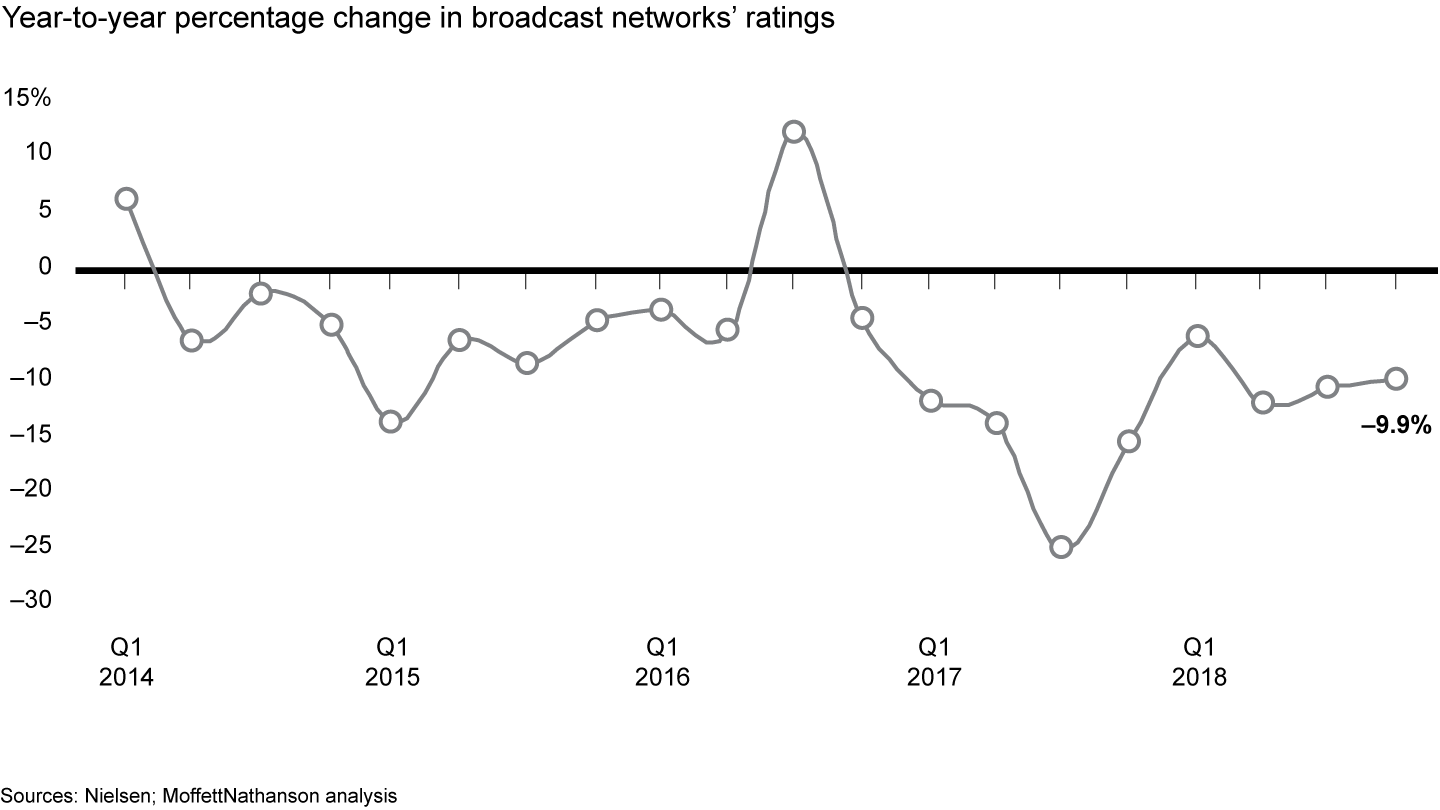
      For both cable and broadcast networks, the viewership that underpins these models has been plummeting (see Figures 1 and 2). Yet executives apparently pay more attention to what their media peers are doing than to the upstarts. Can they reverse the slide and regain viewers and develop new, profitable channels? It depends on how quickly they can progress on two fronts: improving their use of data analytics to inform programming, and effectively promoting their network brands to earn greater loyalty for the network. 

      Figure 1
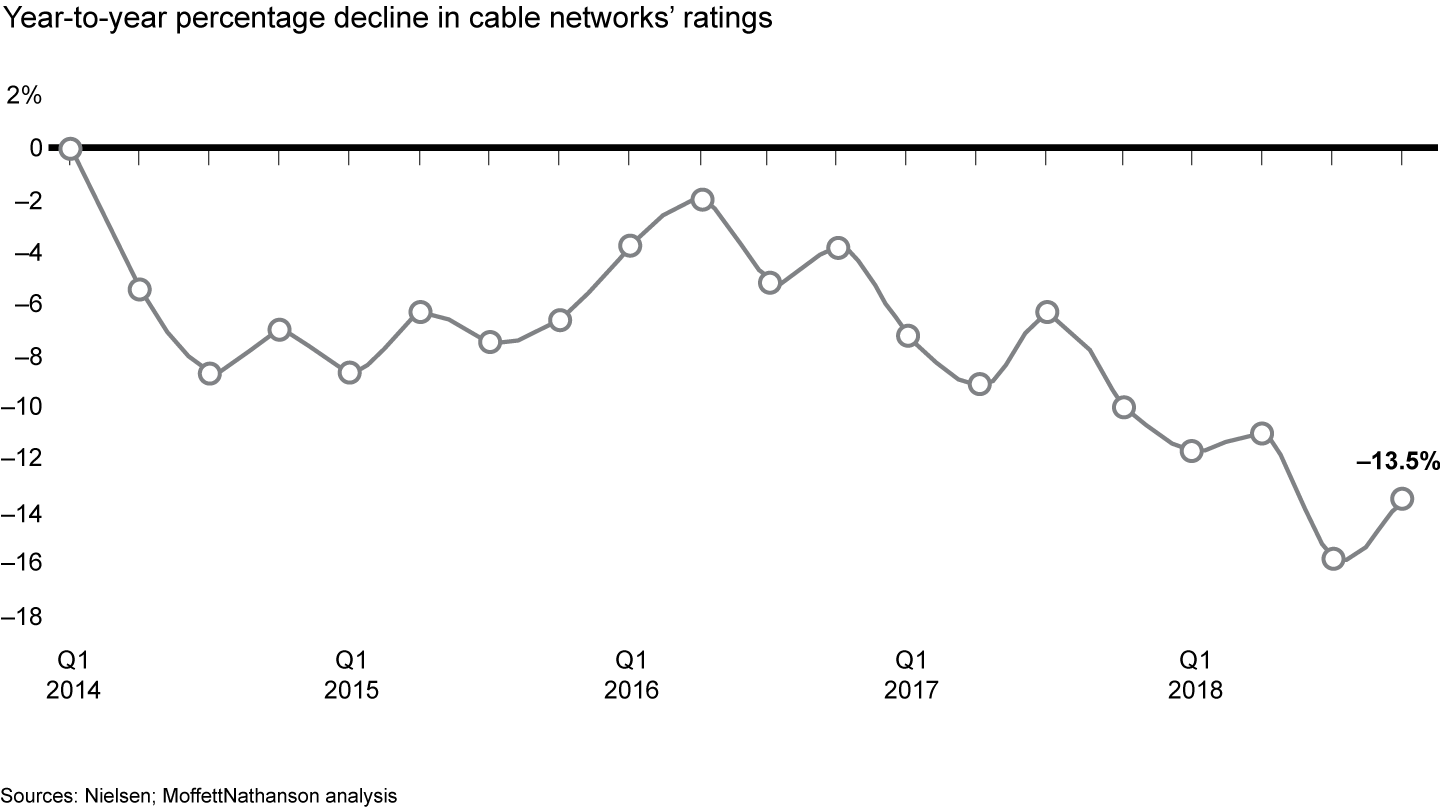
      Viewership of cable networks has declined
      Viewership of cable networks has declined
      Viewership of cable networks has declined
      Figure 2
      Viewership of broadcast networks has generally declined
      Viewership of broadcast networks has generally declined
      Viewership of broadcast networks has generally declined

      Hey, big spenders

      With the rise of digital platforms, customers now expect nearly instantaneous delivery of content, consumed at any time through any channel convenient to them at the moment. They also expect, perhaps unconsciously, for content to be curated. Think of Amazon’s “What other items do customers buy after viewing this item?” feature, and Spotify’s or Pandora’s algorithms that blend quantitative understanding of musical relationships with listener preferences. These all shape taste and consumption, and they do so at attractive prices. When Amazon buys a few movies and offers them to Prime members for free, plenty of members take them up on the offer.

      One valuable asset used effectively by digital natives is reams of first-party customer preference and behavior data. For example, Netflix analysis of viewing data informs future decisions and confers a competitive advantage. Through its analytics, Netflix has learned that 75% of viewer activity is based on Netflix’s suggestions.  

      What the digital natives lack is sufficient content, which explains why they have aggressively created their own over the past few years (see Figure 3). Amazon is on track to spend roughly $7 billion on video and music content in 2019.  Apple last year reportedly outspent Facebook and YouTube, as well as some traditional TV networks, in original programming. For Netflix, estimates vary from $8 billion spent on content in 2018 to a Goldman Sachs figure of between $12 billion and $13 billion on a cash basis. Some 85% of Netflix’s new content spending goes to original series and movies.

      Figure 3
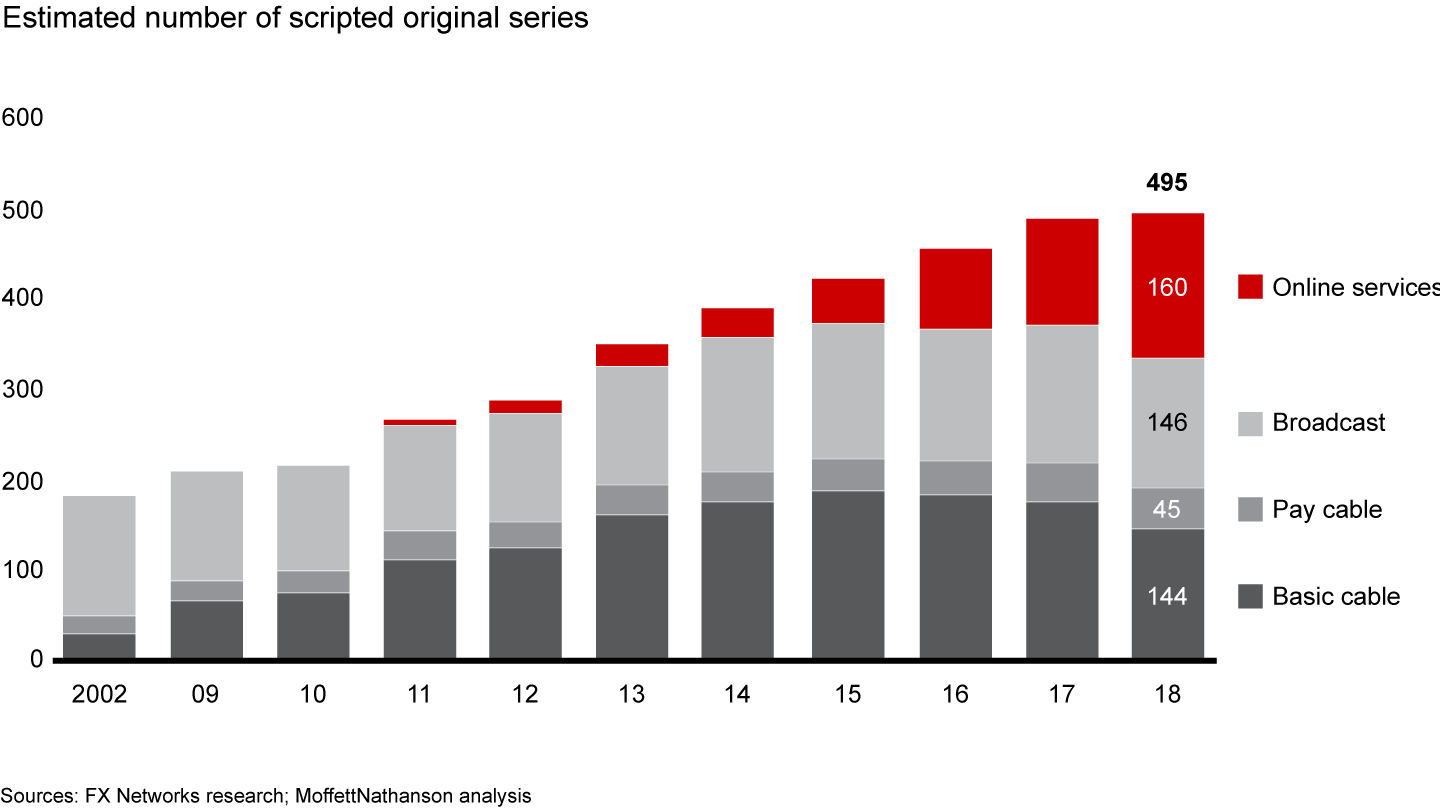
      Digital natives have aggressively invested in new content
      Digital natives have aggressively invested in new content
      Digital natives have aggressively invested in new content

      As the balance of power shifts to digital natives, they find profit in different ways. For example, Amazon’s Prime membership juggernaut allows the firm to invest with a different calculus than raising ratings and viewership. Amazon focuses on retaining and growing the base of Prime customers, who buy more than twice as much as non-Prime households. This growth fuels the company's equity valuations, which enables Amazon to fund further investments. As a result, digital natives are willing to do things that may look irrational when they acquire and produce content, sell it and even give it away—putting enormous economic pressure on traditional companies.

      The situation is eerily analogous to how retailers were blindsided by digital competitors such as Amazon and Alibaba. Amazon focused on acquiring and blending first- and third-party data to personalize both the “content” (products) that a customer would see, as well as the marketing to find and attract that customer. Many traditional retailers have either quit the field (Toys “R” Us), exited broad swaths of categories (Best Buy), or have invested heavily in both technology and their stores in order to compete for the long run (Nordstrom).

      Infographic

      How Hollywood Can Save the Day in a Streaming World

      Traditional media companies must fix their data and branding problems to compete against digital natives.

      Two ways out: analytics and network branding

      For media companies, two opportunities stand out. First, they need to improve their capabilities in real-time analytics, using data to make decisions, not justify decisions. That will change how meetings proceed and budgets get set.

      Most major media companies are using online marketing for awareness building. However, few have systematically acquired, and then used, first-party data to inform more targeted, even personalized marketing and content delivery. Studios might collect tidbits of customer data, but they do not routinely get it from distributors such as movie theaters, Comcast, Amazon Fire or Apple TV. This type of data is crucial to the digital natives’ success. Studios will need to invest in creating digital experiences where customers would be willing to give up personally identifiable information for something of value: perhaps unique content, advance screenings or virtual behind-the-scenes access.

      The second opportunity involves better defining and promoting their brands. Currently, most media companies have built equity with consumers based on specific shows and movies. Think Big Bang Theory or The Good Doctor, or The Avengers. Unfortunately, most consumers don’t know which studio produces which content, with the notable exception of Disney in some cases. By contrast, when people refer to “Netflix movies” or “Amazon series,” they sound an echo of the past as the programmer brand leads the conversation. Strong brand equity confers advantages to the digital natives as they compete for attention in consumer’s minds and viewing habits. Indeed, Netflix is the fastest-growing US brand in valuation, according to Brand Finance’s 2019 analysis of public companies worldwide. And the fastest-growing brand globally is iQiyi, the Chinese online video platform that hosts between 450 and 500 million monthly active users.

      To build out their brand equity, media companies first have to understand which of the Elements of Value® identified by Bain & Company matter most to consumers, and how consumers currently feel each company delivers on those elements. Beyond the obvious fun/entertainment, consumers might value the elements of provides access, nostalgia, variety or even saves time and avoids hassles. Each company will want to develop a differentiated value proposition that consumers find credible, then tie the brand to that proposition by delivering on its promise.  Ultimately, the shortcut of a brand can help earn greater loyalty and better economics. No doubt the effort could take years, but it allows companies to climb out of the boom-bust cycle of a single hit show or movie and draw customers back year after year, even if every show does not rate five stars, because viewers know that overall they will have a good experience.

      Mastering the use of first-party data and focused brand development and messaging will not cure all ills in the media business, to be sure. But in an environment where digital natives are rapidly issuing patents around data science and have already built strong brands, these two imperatives are the logical place for traditional media companies to start.

      Brian Dennehy is an expert vice president with Bain & Company’s Customer Strategy & Marketing practice. Charlie Kim is a partner with Bain’s Media & Entertainment, Private Equity and Digital practices.

      Elements of Value® is a registered trademark of Bain & Company, Inc.

      著者
      • Headshot of Brian Dennehy
        Brian Dennehy
        パートナー, Seattle
      • Headshot of Charlie Kim
        Charlie Kim
        Advisory Partner, New York
      関連業種
      • プライベートエクイティ
      • メディア、エンターテイメント
      関連するコンサルティングサービス
      • Customer Experience
      • Digital
      • 顧客戦略、マーケティング
      コンサルティングサービス
      • Elements of Value®
      メディア、エンターテイメント
      In Rewrite: Funding Media’s Transformation

      The meteoric rise of Netflix and Amazon as media giants is forcing the industry to confront the need for dramatic cost transformation.

      詳細
      メディア、エンターテイメント
      How Hollywood Can Save the Day in a Streaming World

      Traditional media companies must fix their data and branding problems to compete against digital natives.

      詳細
      価値要素
      For B2B Companies, Six Elements of Value® Matter Most in the Coronavirus Pandemic

      Take the high road with customers.

      詳細
      メディア、エンターテイメント
      Advertising in the Digital Age, in India and Around the World

      How advertising players are adapting in India and globally in 2025.

      詳細
      Elements of Value®
      After Years of Customer Loyalty Programs in Insurance, What Works, and What’s Next?

      Based on Bain’s 10 years of research, five themes describe the progress and challenges of earning customers’ advocacy in an increasingly digital experience.

      詳細
      First published in 6月 2019
      Tags
      • Customer Experience
      • Digital
      • Elements of Value®
      • プライベートエクイティ
      • メディア、エンターテイメント
      • 価値要素
      • 顧客戦略、マーケティング

      クライアント支援事例

      戦略 Market rewards media company's long-term planning

      ケーススタディを見る

      戦略 A cable TV acquisition nets 70% IRR

      ケーススタディを見る

      アドバンスド・アナリティクス Analytics guide an entertainment company's growth strategy

      ケーススタディを見る

      お気軽にご連絡下さい

      私達は、グローバルに活躍する経営者が抱える最重要経営課題に対して、厳しい競争環境の中でも成長し続け、「結果」を出すために支援しています。

      Digital is a service mark and Elements of Value® is a registered trademark of Bain & Company, Inc.

      ベインの知見。競争が激化するグローバルビジネス環境で、日々直面するであろう問題について論じている知見を毎月お届けします。

      *プライバシーポリシーの内容を確認し、合意しました。

      プライバシーポリシーをご確認頂き、合意頂けますようお願い致します。
      Bain & Company
      お問い合わせ Sustainability Accessibility Terms of use Privacy Cookie Policy Sitemap Log In

      © 1996-2026 Bain & Company, Inc.

      お問い合わせ

      How can we help you?

      • ビジネスについて
      • プレス報道について
      • 採用について
      全てのオフィス