

論説

概要
- Healthcare companies face growing pressure to innovate in product development, services and customer experience.
- Nearly 80% of healthcare executives say they need to be more Agile, but only 30% are familiar with Agile innovation.
- Seventy-five percent of executives say their Agile teams perform better or significantly better than traditional teams do.
In industries that thrive on innovation and speed to market, Agile management delivers breakthrough results. Even previously skeptical healthcare and life sciences executives are using Agile teams to unleash a powerful burst of innovation.
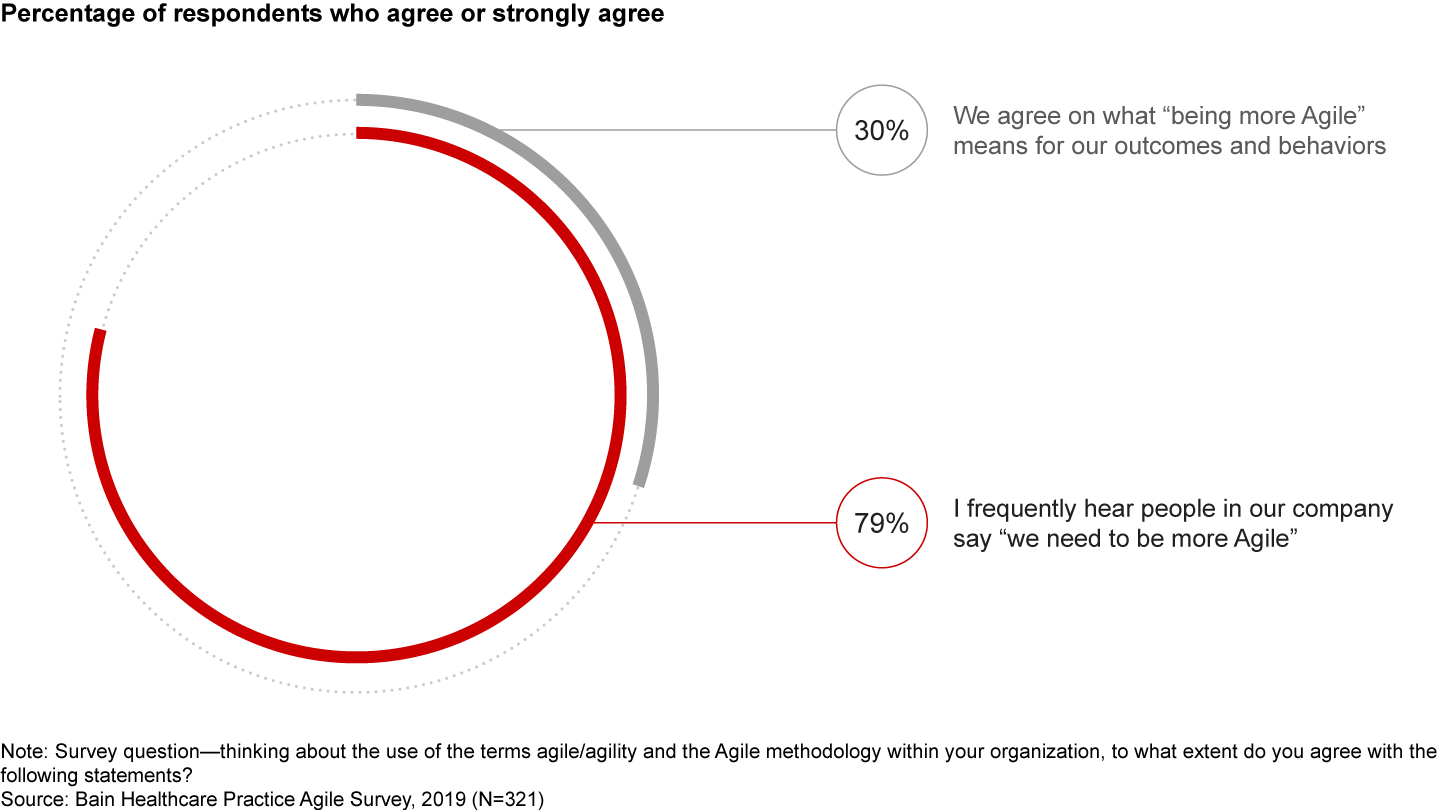
To better understand what’s still holding some leadership teams back, Bain conducted a survey of 321 life sciences and healthcare executives—we’ll refer to these two industries collectively as healthcare in this article. We looked at how they perceive Agile innovation, how they are beginning to use it and the challenges they face. The results were surprising: Nearly 80% of healthcare executives said they need to be more Agile, yet more than half said they are not familiar with formal Agile methodologies and tools, and are not yet using them in their companies. Only 30% reported that their teams agreed on what it means to be Agile (see Figure 1). So although healthcare executives talk frequently about their businesses becoming more Agile, most lack the methodology and even the language to implement it in practice.
Figure 1

Let’s first clarify the terms. Agile innovation is a set of methodologies—Scrum being the most common—that represent a faster, more efficient and collaborative way to work. Agile teams are small, self-governing, cross-functional groups dedicated to solving complex problems in rapid fashion. They work closely with customers, developing a series of prototypes to speed innovation in products, services and processes. Their primary goal: Delight the customer.

Doing Agile Right
Our latest book is a must-have guide to transform your organization through the power of agile...the right way.
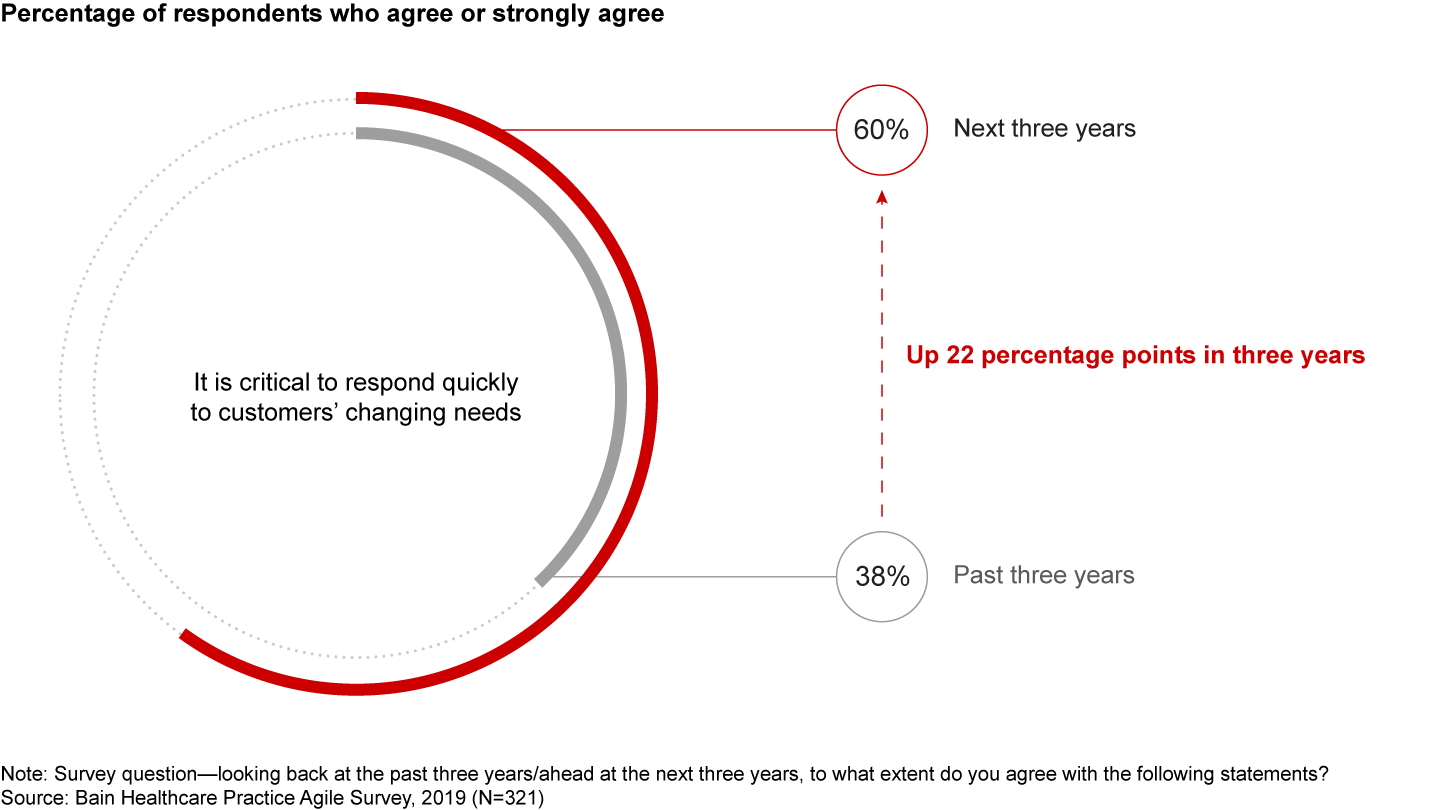
The tumultuous changes in healthcare make a powerful case for Agile innovation. Payers, pharma and medical device companies face mounting pressures to innovate faster in product development, service development and customer experience. More than 60% of the executives we surveyed said time to market is increasingly important, a number that spiked to nearly 70% among executives at medical device companies. Another major shift: 60% of healthcare executives say that over the next three years, companies will need to adapt rapidly to evolving customer needs; only 38% said that rapid adaption was necessary during the past three years (see Figure 2). As digital natives, including Amazon, challenge traditional healthcare companies, the ability to react swiftly will become even more critical.
Figure 2

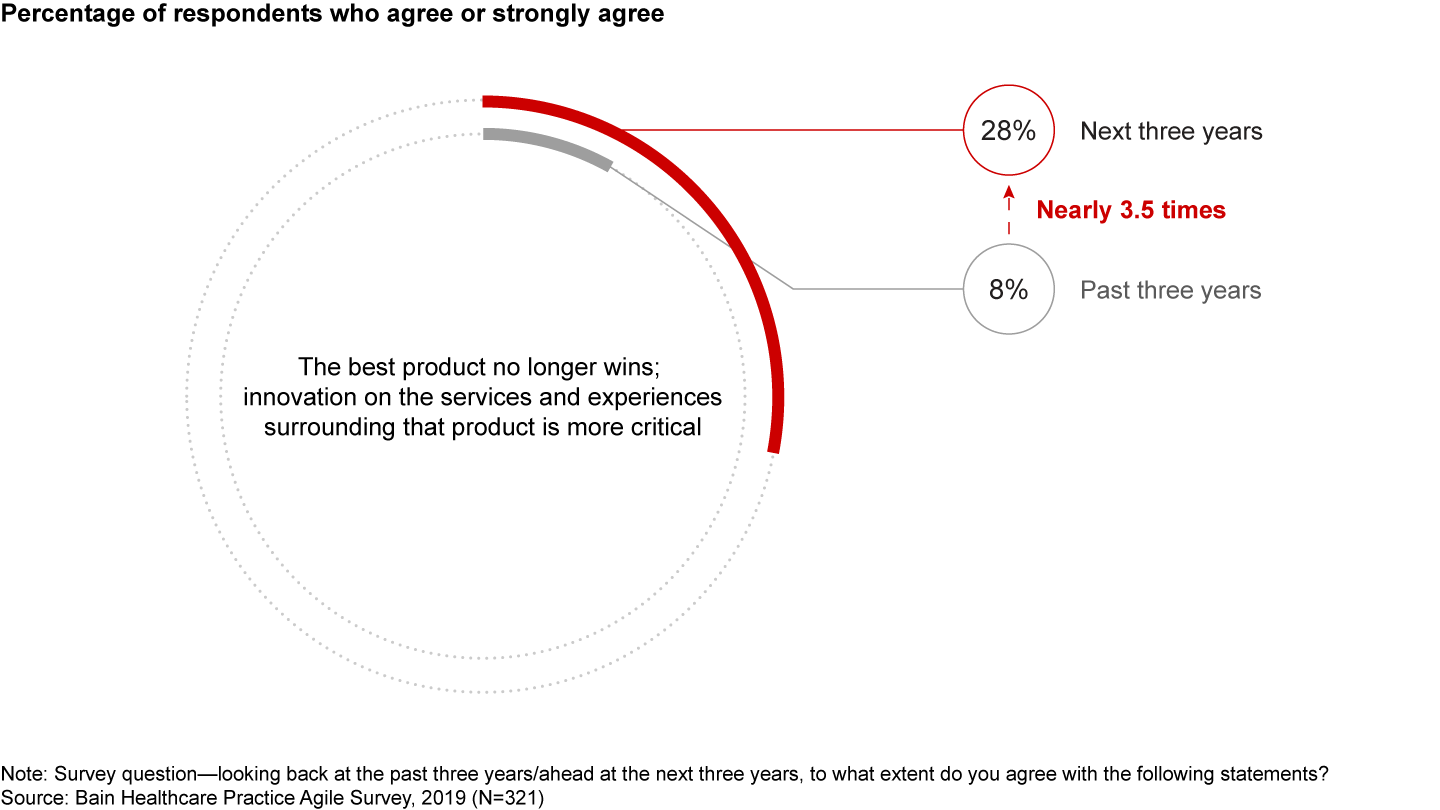
In fact, innovation in services and customer experience increasingly determines whether healthcare teams win a sale. Bain & Company research in multiple therapeutic areas has shown that when physicians prescribe a drug, the efficacy, safety and side-effect profile of the drug account for only 50% to 60% of the physician’s choice—and that figure has declined over time. The other 40% to 50% is based on a range of physician and patient experience factors that leading companies target to differentiate their products. Looking at the past three years, only 8% of healthcare executives agreed that the best product no longer wins; instead, innovating in the services, information and customer experience around the product is critical. That number jumps almost fourfold, to 28%, when executives look ahead to the next three years (see Figure 3). The product matters, but other innovations are increasingly important. Customer needs evolve continually, and leading companies respond rapidly to changing market demand.
Figure 3

Initially, some of the core Agile methods, such as rapid prototyping with customers and test and learn, seemed at odds with the highly regulated development processes for drugs and medical devices. Healthcare executives, however, now are taking a broader view of when and where to use Agile innovation. In addition to research and development, they are looking at services, customer experiences and internal processes that shape those experiences. The payoff in results and performance can be huge. Healthcare companies that have begun deploying Agile teams report a step change in those teams’ performance. Seventy-five percent of executives at these companies told us that their Agile teams perform better or significantly better than traditional teams do.
A new universe of customers
Agile innovations can target patients, insured members, physicians and even internal processes. Let’s take a closer look at some Agile success stories.
Patient experience in biopharma. While high failure rates in drug development are well known, pharma companies also have a remarkably high failure rate in service innovation. Our panel reports that 65% of service innovations fall short of expectations. That’s a sweet spot for Agile innovation. Leading companies deploy Agile teams that work closely with customers to get service innovations right.
Take the case of a major biopharma company that set out to improve the patient experience with several key products. Senior executives created an Agile brand team for a drug that had been on the market for a decade in a highly competitive therapeutic area. The team gleaned important new insights through weekly discussions with a panel of 30 patients. In particular, patients had difficulty understanding the complex steps involved in starting treatment. The Agile team worked rapidly to prototype a series of improvements to better guide patients through the early stages of treatment. Within four months, the company had tested the new solutions and introduced them to the market, significantly improving the customer experience. The team is now using patient feedback continually to improve its solutions and tackle a new set of opportunities that the patients identified.
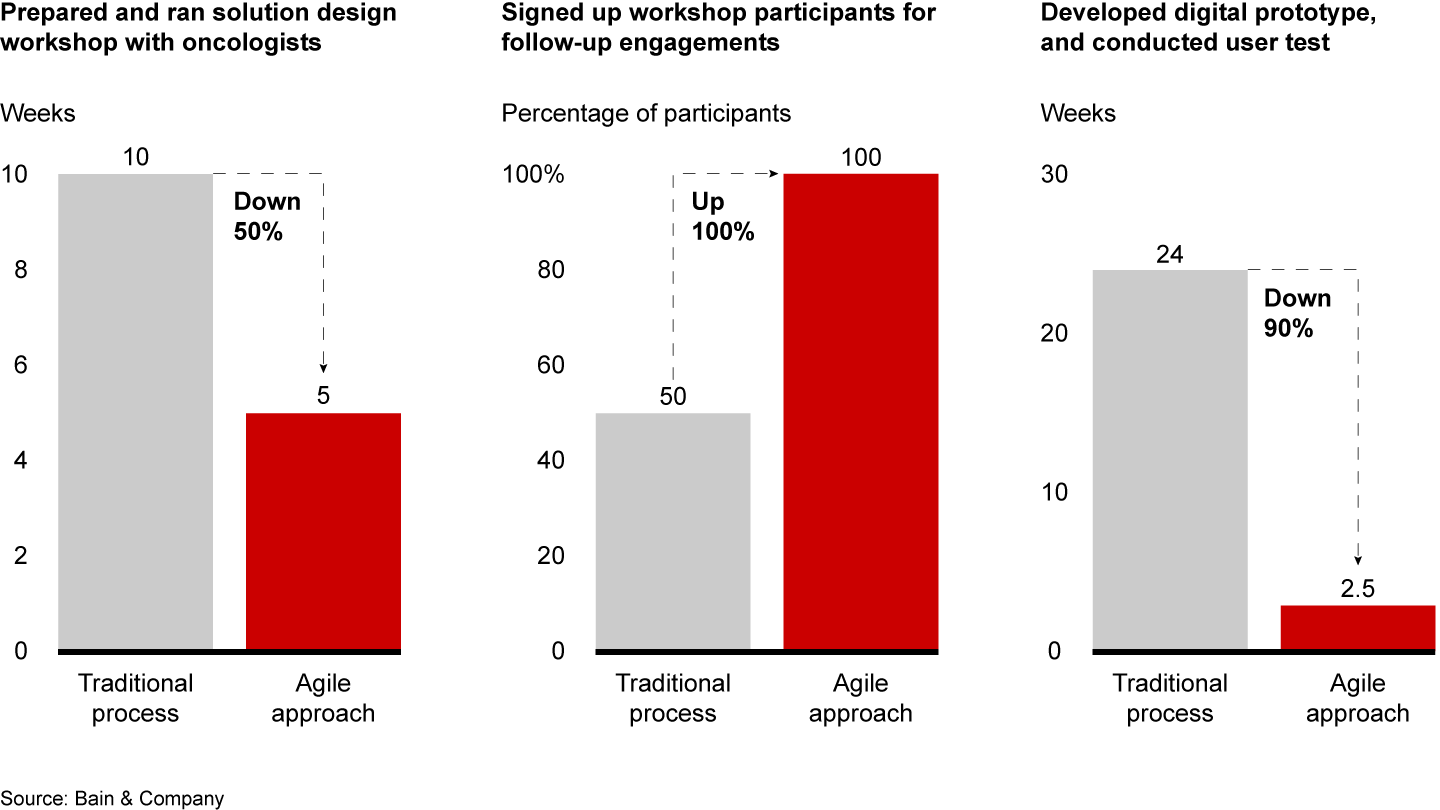
The same company created another Agile team to enhance the physician experience with its products, leading to improved customer engagement and the development of digital solutions. The multidisciplinary team also cut the lead times for developing prototypes and conducting initial customer tests by as much as 90% (see Figure 4).
Figure 4

Payer product innovation. Leading payers are deploying Agile teams in core product innovation, care management, patient engagement, provider engagement, clinical operations and medical cost management. A large US payer-provider turned to Agile after several efforts to improve medical cost management were slow to gain traction. Senior executives bet that Agile’s cross-functional teams would improve collaboration between business units and functions, as well as provide more effective leadership. The company launched a pilot program in four key areas: high-cost patients, specialty cost management, population health management and claims leakage.
One Agile team working on improving management of high-cost patients developed an analytics tool to identify these potential individuals early on. The team, which included physicians, case and care managers, and data analytics experts, created a patient-routing algorithm to match the individual with a dedicated team of nurses, doctors and specialists. That allowed the payer-provider to arrange support and treatment before costs started rising. The success of the four pilot teams convinced the company to set up an Agile center of excellence to extend the practice to other parts of the organization.
Accelerating enrollment of clinical trials. Quickly enrolling patients in clinical trials is a key challenge for pharma and medical device companies eager to speed new products to market. In competitive markets, faster enrollment increases the product’s commercial potential substantially. One leading biopharma company observed a large difference in patient enrollment rates across its clinical trial sites. The study team at some sites felt confident after being trained and were ready to enroll their first patient. Other sites found the training to be hard to remember and access later. The study teams had divergent responses on other important issues, too, including the site team’s ability to communicate effectively with prospective patients and the quality and volume of patient referrals each site received. The clinical trial sites in which investigators reported positive experiences were enrolling twice as many patients in the trials as those sites in which investigators were neutral or unhappy.
The company used Agile teams to launch a series of innovations in site start-up and enrollment support to improve investigators’ experiences. They tested new ideas and prototypes every two to three weeks with a panel of customers that included investigators and their site teams. Six weeks after Agile teams went to work, the company launched a new training program for the clinical trial sites. Every few weeks, it rolled out additional innovations that removed obstacles for the site teams, accelerated the pace of enrollment and improved referral quality, among other gains. The response from the trial sites has been so positive that the company is now beginning to extend these practices to its entire portfolio of clinical trials.
Pricing in medical devices. Healthcare companies are also making strides in internal process innovation. One leading medical devices company found its pricing to be inconsistent with its customer segments. On closer examination, executives realized that product prices varied significantly, but no one could explain why. The company deployed Agile teams to improve customer segmentation, pricing guidance, approval processes, tools, reporting and financial goals. In each area, the teams tackled small changes and innovations, testing prototypes with sales operations and sales management, making adjustments based on feedback, and then moving on to the next small adaptation. The company’s financial performance began to improve after six weeks, and the leadership team eventually introduced similar changes to core pricing systems and processes throughout the company.
Redesigning care delivery. Healthcare providers have less experience deploying Agile teams, but one of the largest US health systems is pioneering their use in different departments and offers a glimpse into how effective Agile teams can be in a hospital setting. To reduce caregiver burnout and turnover, the provider set up cross-functional Agile teams composed of nurses, physicians and pharmacists, and it asked them to reimagine their roles and responsibilities. The teams were also free to eliminate low-value-added activities (such as duplicate documentation), automate activities, introduce new processes to save time and develop solutions to reduce caregiver stress.
Although the program is less than six months old, Agile-inspired changes to caregivers’ routines already are boosting work satisfaction and reducing burnout and turnover. That, in turn, is improving patient care and efficiency. Early results show that satisfaction and loyalty scores among patients cared for by Agile units at the hospital are significantly higher. Nurse turnover in one pilot unit dropped by one-third. As burnout among healthcare professionals reaches alarming levels, Agile teams may provide a critical remedy.
Good Agile vs. bad Agile
By far, the biggest impediment to using Agile successfully is a failure to adhere to the basic principles and methods. We call that approach “bad Agile.” If you hear a colleague saying, “We want to be agile, but we’re not going to adopt Agile innovation (or Scrum or other Agile methodologies),” that’s a signal that things are likely to go wrong. The reason is clear: When companies use the language of Agile innovation without changing how they work, their underlying agility tends to stay the same. When we asked our 321 senior healthcare executives about recent innovation failures in their companies, the three most cited reasons were ineffective cross-functional collaboration, failure to collaborate effectively with customers and failure to dedicate sufficient resources to scale projects. Agile solves each of these problems.
Yet some healthcare executives want agility without applying Agile practices and discipline. They may worry about delegating decision making to their teams or that focusing on customer demands reduces attention to financial performance. Companies can overcome these obstacles by initially deploying Agile teams to a few high-priority areas with leaders open to experimentation. That approach helps demonstrate the benefits to skeptical colleagues while also addressing their concerns.
Others resist Agile because it isn’t easy. Agile teams are more effective than traditional teams, and their morale is significantly higher. But it’s a discipline that takes work. Managers must learn a different approach to forming teams and interacting with them. When companies commit to that approach, they are more successful. Yet many fall short. In our survey, 60% of those who have used Agile innovation said they underinvested in teaching and coaching their senior leaders on how to best interact with and enable their Agile teams. That slowed the benefits the teams were delivering. On the other hand, nearly half of the respondents using Agile appointed dedicated product owners to their Agile teams. In these companies, Agile teams felt more capable of making day-to-day decisions.
Agile at scale
Once companies have deployed a few Agile teams effectively, the next step is extending Agile practices across large parts of the organization. Scaling Agile requires executives and the broader management team to change some practices. For example, managers need to focus on rapidly removing barriers for their teams as well as adopting methods to manage interdependencies among Agile teams, and between those teams and other parts of the organization. Over time, Agile at scale also changes resource allocation and how companies evaluate and reward teams. Only 23% of executives experienced with Agile agreed that “our planning, budgeting and resource allocation processes can shift resources quickly (enough) today,” and only 34% said that “my company’s culture naturally enables Agile” (see Figure 5).
Figure 5
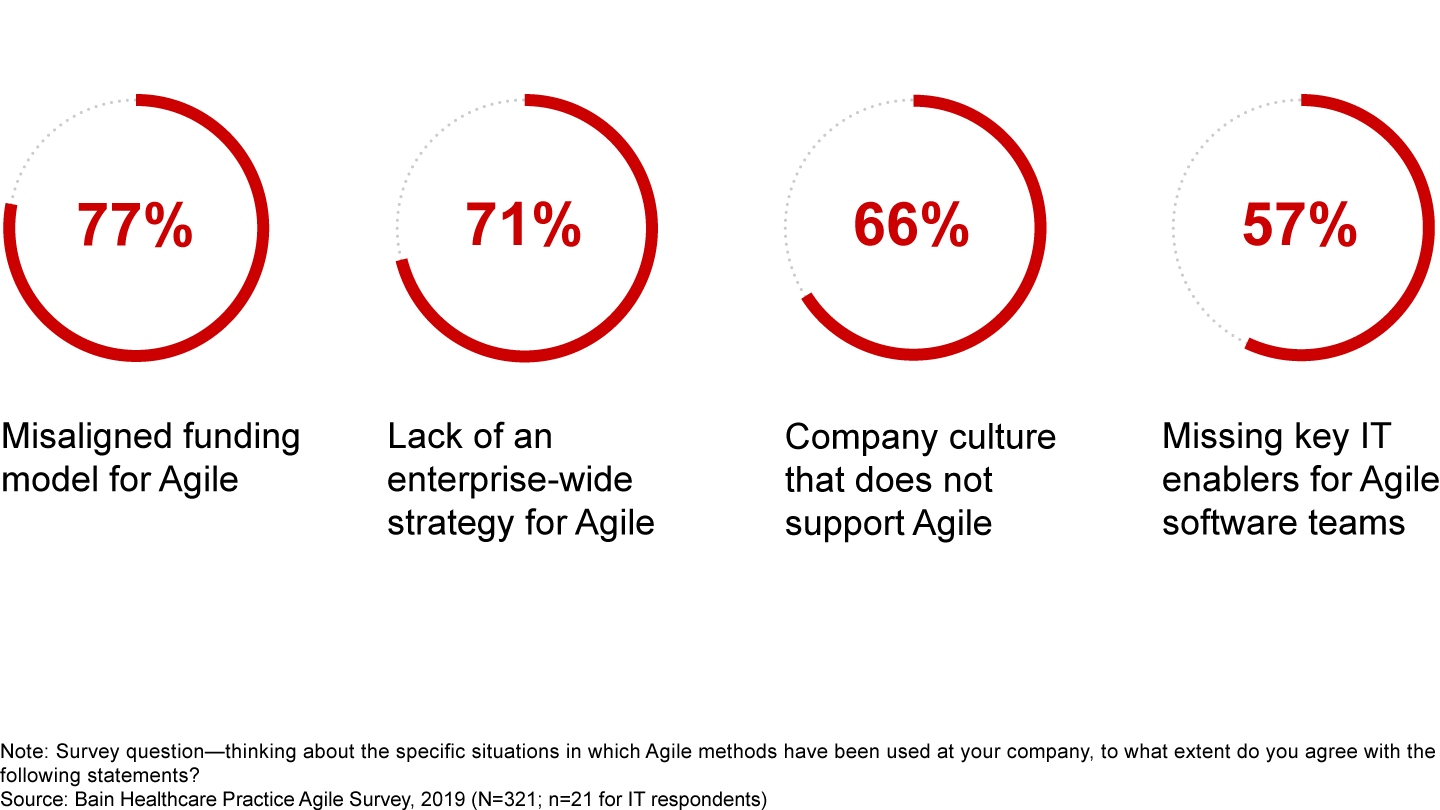

But when companies have built the appropriate foundation, Agile practices can transform the way they innovate. One large healthcare organization used a multiyear Agile program to accelerate innovation across the entire organization. Senior executives took a holistic approach that changed leadership behaviors, organizational culture, and the company’s software development process and funding model, significantly improving speed to market.
A new era
Healthcare companies are under increasing pressure to improve quality and reduce costs. To win in the coming decade, leaders are reinventing their organizations for rapidly evolving markets. Above all, they are innovating faster and designing better customer experiences. Agile teams allow these companies to focus quickly and intensively on the set of innovations that matter most, to get prototypes in front of customers, and to rapidly test, learn and adapt. Leadership teams that seize those advantages will have the best shot at staying on top in a rapidly changing landscape.
Kalyan Jonnalagadda, Dave Fleisch, Pete Hultman and Steve Berez are partners with Bain & Company’s Healthcare practice. Kalyan Jonnalagadda and Dave Fleisch are based in Bain’s New York office, Pete Hultman is located in the company’s San Francisco office, and Steve Berez is based in the Boston office.
First published in 6月 2019