
Skip to Content
  • オフィス

    オフィス

    北米・南米
    • Atlanta
    • Austin
    • Bogota
    • Boston
    • Buenos Aires
    • Chicago
    • Dallas
    • Denver
    • Houston
    • Los Angeles
    • Mexico City
    • Minneapolis
    • Monterrey
    • Montreal
    • New York
    • Rio de Janeiro
    • San Francisco
    • Santiago
    • São Paulo
    • Seattle
    • Silicon Valley
    • Toronto
    • Washington, DC
    ヨーロッパ・中東・アフリカ
    • Amsterdam
    • Athens
    • Berlin
    • Brussels
    • Copenhagen
    • Doha
    • Dubai
    • Dusseldorf
    • Frankfurt
    • Helsinki
    • Istanbul
    • Johannesburg
    • Kyiv
    • Lisbon
    • London
    • Madrid
    • Milan
    • Munich
    • Oslo
    • Paris
    • Riyadh
    • Rome
    • Stockholm
    • Vienna
    • Warsaw
    • Zurich
    アジア・オーストラリア
    • Bangkok
    • Beijing
    • Bengaluru
    • Brisbane
    • Ho Chi Minh City
    • Hong Kong
    • Jakarta
    • Kuala Lumpur
    • Manila
    • Melbourne
    • Mumbai
    • New Delhi
    • Perth
    • Shanghai
    • Singapore
    • Sydney
    • Tokyo
    全てのオフィス
  • アルムナイ
  • メディア
  • お問い合わせ
  • 東京オフィス
  • Japan | 日本語

    地域と言語を選択

    グローバル
    • Global (English)
    北米・南米
    • Brazil (Português)
    • Argentina (Español)
    • Canada (Français)
    • Chile (Español)
    • Colombia (Español)
    ヨーロッパ・中東・アフリカ
    • France (Français)
    • DACH Region (Deutsch)
    • Italy (Italiano)
    • Spain (Español)
    • Greece (Elliniká)
    アジア・オーストラリア
    • China (中文版)
    • Korea (한국어)
    • Japan (日本語)
  • Saved items (0)
    Saved items (0)

    You have no saved items.

    後で閲読、共有できるようにするためにブックマークしてください

    Explore Bain Insights
  • 業界別プラクティス
    メインメニュー

    業界別プラクティス

    • 航空宇宙、防衛、政府関連
    • 農業
    • 化学製品
    • インフラ、建設
    • 消費財
    • 金融サービス
    • ヘルスケア
    • 産業機械、設備
    • メディア、エンターテインメント
    • 金属
    • 採掘・鉱業
    • 石油、ガス
    • 紙、パッケージ
    • プライベートエクイティ
    • 公共、社会セクター
    • 小売
    • テクノロジー
    • 通信
    • 交通
    • 観光産業
    • 公益事業、再生可能エネルギー
  • 機能別プラクティス
    メインメニュー

    機能別プラクティス

    • カスタマー・エクスペリエンス
    • サステイナビリティ、 社会貢献
    • Innovation
    • 企業買収、合併 (M&A)
    • オペレーション
    • 組織
    • プライベートエクイティ
    • マーケティング・営業
    • 戦略
    • アドバンスド・アナリティクス
    • Technology
    • フルポテンシャル・トランスフォーメーション
  • Digital
  • 知見/レポート
  • ベイン・アンド・カンパニーについて
    メインメニュー

    ベイン・アンド・カンパニーについて

    • ベインの信条
    • 活動内容
    • 社員とリーダーシップ
    • プレス・メディア情報
    • クライアントの結果
    • 受賞歴
    • パートナーシップを結んでいる団体
    Further: Our global responsibility
    • ダイバーシティ
    • 社会貢献
    • サステイナビリティへの取り組み
    • 世界経済フォーラム(WEF)
    Learn more about Further
  • キャリア
    メインメニュー

    キャリア

    • ベインで働く
      キャリア
      ベインで働く
      • Find Your Place
      • ベインで活躍する機会
      • ベインのチーム体制
      • 学生向けページ
      • インターンシップ
      • 採用イベント
    • ベインでの体験
      キャリア
      ベインでの体験
      • Blog: Inside Bain
      • キャリアストーリー
      • 社員紹介
      • Where We Work
      • 成長を後押しするサポート体制
      • アフィニティ・グループ
      • 福利厚生
    • Impact Stories
    • 採用情報
      キャリア
      採用情報
      • 採用プロセス
      • 面接内容
    FIND JOBS
  • オフィス
    メインメニュー

    オフィス

    • 北米・南米
      オフィス
      北米・南米
      • Atlanta
      • Austin
      • Bogota
      • Boston
      • Buenos Aires
      • Chicago
      • Dallas
      • Denver
      • Houston
      • Los Angeles
      • Mexico City
      • Minneapolis
      • Monterrey
      • Montreal
      • New York
      • Rio de Janeiro
      • San Francisco
      • Santiago
      • São Paulo
      • Seattle
      • Silicon Valley
      • Toronto
      • Washington, DC
    • ヨーロッパ・中東・アフリカ
      オフィス
      ヨーロッパ・中東・アフリカ
      • Amsterdam
      • Athens
      • Berlin
      • Brussels
      • Copenhagen
      • Doha
      • Dubai
      • Dusseldorf
      • Frankfurt
      • Helsinki
      • Istanbul
      • Johannesburg
      • Kyiv
      • Lisbon
      • London
      • Madrid
      • Milan
      • Munich
      • Oslo
      • Paris
      • Riyadh
      • Rome
      • Stockholm
      • Vienna
      • Warsaw
      • Zurich
    • アジア・オーストラリア
      オフィス
      アジア・オーストラリア
      • Bangkok
      • Beijing
      • Bengaluru
      • Brisbane
      • Ho Chi Minh City
      • Hong Kong
      • Jakarta
      • Kuala Lumpur
      • Manila
      • Melbourne
      • Mumbai
      • New Delhi
      • Perth
      • Shanghai
      • Singapore
      • Sydney
      • Tokyo
    全てのオフィス
  • アルムナイ
  • メディア
  • お問い合わせ
  • 東京オフィス
  • Japan | 日本語
    メインメニュー

    地域と言語を選択

    • グローバル
      地域と言語を選択
      グローバル
      • Global (English)
    • 北米・南米
      地域と言語を選択
      北米・南米
      • Brazil (Português)
      • Argentina (Español)
      • Canada (Français)
      • Chile (Español)
      • Colombia (Español)
    • ヨーロッパ・中東・アフリカ
      地域と言語を選択
      ヨーロッパ・中東・アフリカ
      • France (Français)
      • DACH Region (Deutsch)
      • Italy (Italiano)
      • Spain (Español)
      • Greece (Elliniká)
    • アジア・オーストラリア
      地域と言語を選択
      アジア・オーストラリア
      • China (中文版)
      • Korea (한국어)
      • Japan (日本語)
  • Saved items  (0)
    メインメニュー
    Saved items (0)

    You have no saved items.

    後で閲読、共有できるようにするためにブックマークしてください

    Explore Bain Insights
  • 業界別プラクティス
    • 業界別プラクティス

      • 航空宇宙、防衛、政府関連
      • 農業
      • 化学製品
      • インフラ、建設
      • 消費財
      • 金融サービス
      • ヘルスケア
      • 産業機械、設備
      • メディア、エンターテインメント
      • 金属
      • 採掘・鉱業
      • 石油、ガス
      • 紙、パッケージ
      • プライベートエクイティ
      • 公共、社会セクター
      • 小売
      • テクノロジー
      • 通信
      • 交通
      • 観光産業
      • 公益事業、再生可能エネルギー
  • 機能別プラクティス
    • 機能別プラクティス

      • カスタマー・エクスペリエンス
      • サステイナビリティ、 社会貢献
      • Innovation
      • 企業買収、合併 (M&A)
      • オペレーション
      • 組織
      • プライベートエクイティ
      • マーケティング・営業
      • 戦略
      • アドバンスド・アナリティクス
      • Technology
      • フルポテンシャル・トランスフォーメーション
  • Digital
  • 知見/レポート
  • ベイン・アンド・カンパニーについて
    • ベイン・アンド・カンパニーについて

      • ベインの信条
      • 活動内容
      • 社員とリーダーシップ
      • プレス・メディア情報
      • クライアントの結果
      • 受賞歴
      • パートナーシップを結んでいる団体
      Further: Our global responsibility
      • ダイバーシティ
      • 社会貢献
      • サステイナビリティへの取り組み
      • 世界経済フォーラム(WEF)
      Learn more about Further
  • キャリア
    人気検索キーワード
    • デジタル
    • 戦略
    前回の検索
      最近訪れたページ

      Content added to saved items

      Saved items (0)

      Removed from saved items

      Saved items (0)

      Technology Report

      How Can We Meet AI’s Insatiable Demand for Compute Power?

      How Can We Meet AI’s Insatiable Demand for Compute Power?

      Technological innovation, new revenue, and public support may be needed to fund and supply enough electricity.

      著者:David Crawford, Michael Schallehn, Paul Renno, Peter Hanbury, and Alessandro Cannarsi

      • First published on 9月 23, 2025
      • min read
      }

      レポート

      How Can We Meet AI’s Insatiable Demand for Compute Power?
      en
      概要
      • AI’s computational needs are growing more than twice as fast as Moore’s law, pushing toward 100 gigawatts of new demand in the US by 2030.
      • Meeting this demand could require $500 billion in annual spending on new data centers.
      • But even an aggressive reinvestment of IT and AI savings leaves a big gap.
      • Technological and algorithmic breakthroughs could help, but supply chain shortages or insufficient power supply could also thwart progress.

      This article is part of Bain’s Technology Report 2025

      Explore the report

      Of all the breathtaking observations about AI, few exceed this one: The growth rate for AI’s compute demand is more than twice the rate of Moore’s law (see Figure 1).

      For decades, Moore’s law—that is, the number of transistors on an integrated circuit doubles about every two years—has been the unrivaled measure of technological progress. If you apply its rate of progress to other fields of endeavor, the results are equally mind-blowing and amusing. For example, an automobile with Moore’s law applied would travel at 300,000 miles per hour, achieve 2 million miles per gallon of gas, and cost four cents.

      Now, AI’s compute demand—that is, the number of computations that must be performed to support evolving models—has grown at twice that rate over the past decade. With continued growth of these models and more adoption of AI by enterprises, Bain’s analysis suggests that the total global compute requirements could reach 200 gigawatts by 2030. In the US alone, total demand could reach 100 gigawatts by that time, which would increase new electricity demand on a grid that has seen relatively flat load growth for the past 20 years.

      Figure 1
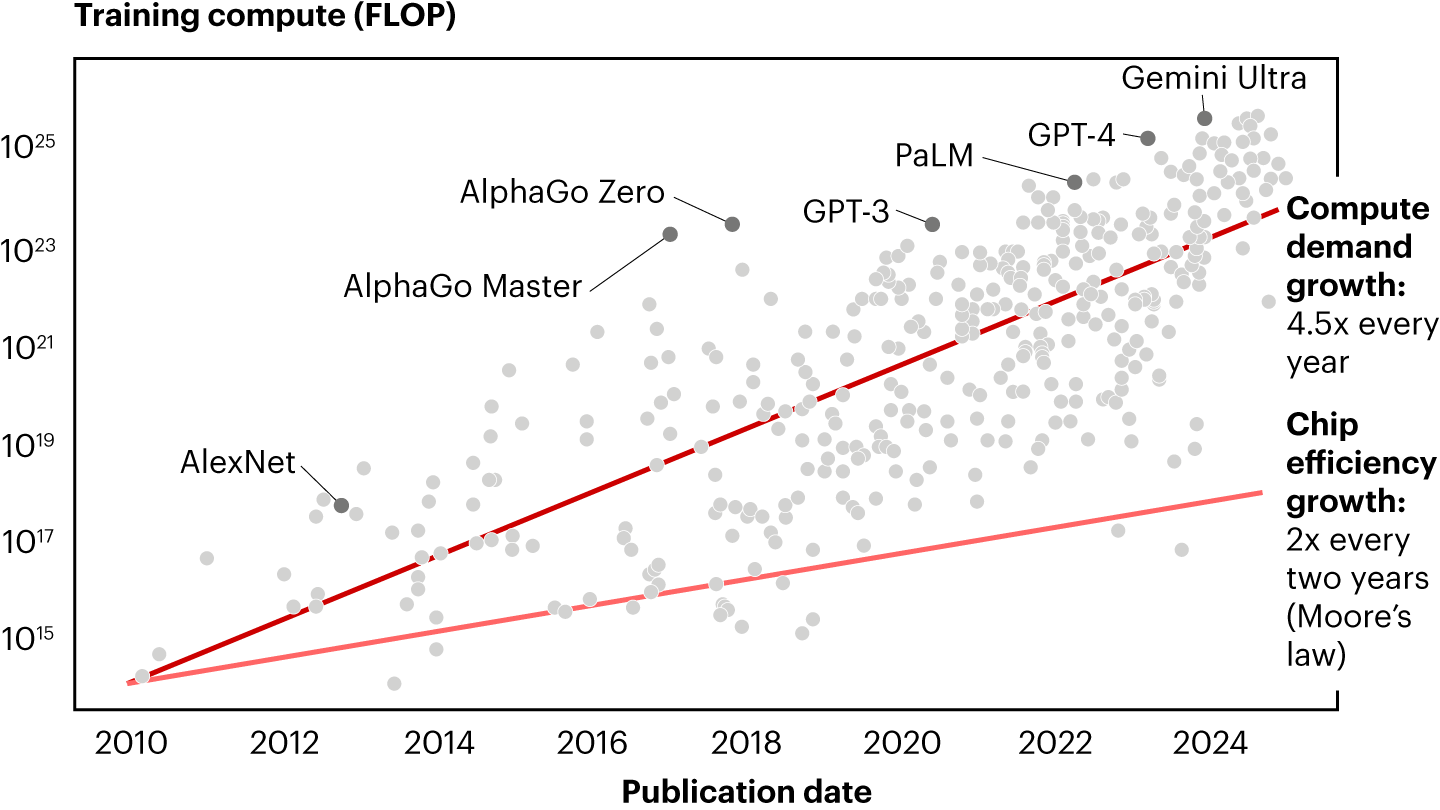
      Compute demand grows twice as fast as chip efficiency

      注 Chip efficiency growth not shown to exact scale, with the rate of growth intended to be illustrative; FLOP=floating point operations, which are the number of calculations a system performs

      出所 Epoch AI

      What are the implications of this for technology executives charged with allocating capital and managing investments? If you bet on continued growth and add lots of power generation or compute capacity while the trend slows down, you could be stuck with catastrophic unutilized power and compute capacity. If you bet that the trend will slow while it turns out to be durable, you may find yourself with insufficient capacity to capture a wave of growth and market share.

      What could change the trajectory?

      As companies form their strategic plans and determine investments, they should be considering four critical factors that could either impede or accelerate this growth: unaffordable economics, better graphics, technological breakthroughs, and supply chain shortages.

      The economics become unaffordable. Bain’s research suggests that building the data centers with the computing power needed to meet that anticipated demand would require about $500 billion of capital investment each year, a staggering sum that far exceeds any anticipated or imagined government subsidies. This suggests that the private sector would need to generate enough new revenue to fund the power upgrade. How much is that? Bain’s analysis of sustainable ratios of capex to revenue for cloud service providers suggests that $500 billion of annual capex corresponds to $2 trillion in annual revenue.

      What could fund this $2 trillion every year? If companies shifted all of their on-premise IT budgets to cloud and also reinvested the savings anticipated from applying AI in sales, marketing, customer support, and R&D (estimated at about 20% of those budgets) into capital spending on new data centers, the amount would still fall $800 billion short of the revenue needed to fund the full investment (see Figure 2).

      Figure 2
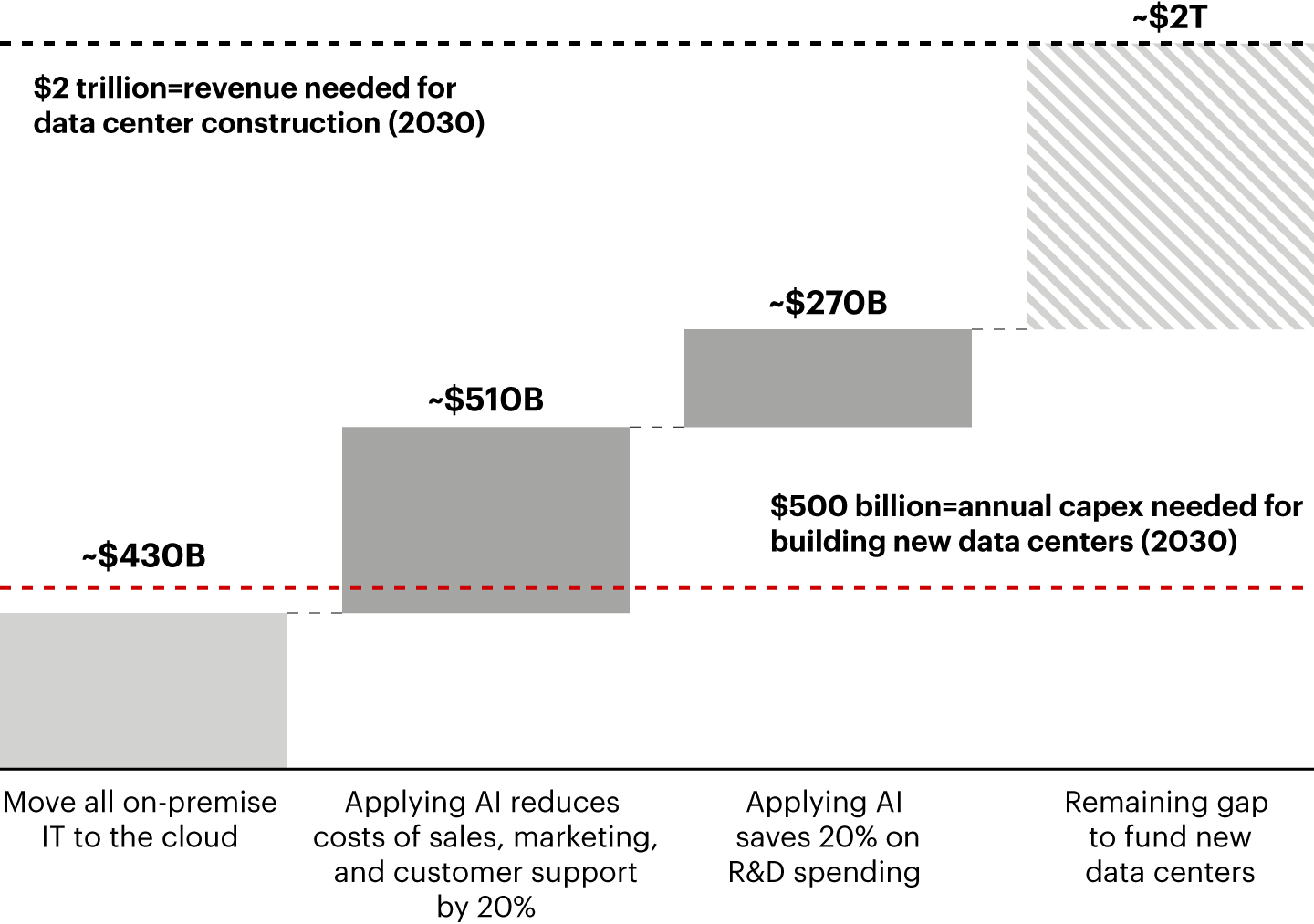
      Even with AI-related savings, $800 billion in additional revenue would need to be generated to fund the necessary data centers
      Sources: OECD; S&P Global; Bain Cloud CIO Survey; IDC; Fortune; Gartner

      The algorithms get better. When mathematical problems grow too complex or costly, step-change progress often comes not from incremental tuning but rather from entirely new algorithmic approaches. Innovations such as MapReduce (which popularized distributed data processing) and the Transformer architecture (which unlocked a more efficient way to process sequential data) exemplify this kind of breakthrough. Even at smaller scales, algorithmic innovation can unlock meaningful gains. In foundation models, techniques such as mixed-precision matrix computation improve training and inference efficiency. Logical methods, such as chain-of-thought prompting or large model distillation, boost performance while lowering computational load. DeepSeek is a recent example, pushing the compute efficiency frontier through smarter algorithmic design. Still, even with these innovations, the path forward requires a significant increase in infrastructure to reach the 100 gigawatts of additional compute power that will be needed.

      Technological breakthroughs change the landscape. History is replete with unexpected leaps of progress in computational power. Sixty years of Moore’s law progress in semiconductors has given us handheld devices that far outperform the most powerful computers of the 1970s. Many speculate that quantum computing, for example, could displace the favored semiconductors trajectory of today, reducing the compute and power demands of tomorrow’s systems. Bain’s research suggests we are at least 10 to 15 years away from quantum computers stable enough to replace generative AI training and inference workloads. Other technological breakthroughs could include specially designed training and inference application-specific integrated circuits (ASICs), which could be more efficient than general purpose graphics processing units (GPUs), or new forms of memory or advanced packaging to improve power efficiency.

      Shortages hit the supply chain. It will be difficult to build data centers fast enough to meet rising demand given constraints in four areas: power supply, construction services, compute enablers (such as GPUs), and the limited supply of data center equipment (including electrical switchgear and advanced cooling). Of these, increasing the supply of electricity may be the most challenging as bringing new power generation, transmission, and distribution online in a highly regulated industry can take four years or longer.

      While no single issue will solve this deep challenge, innovation, government support, and efficient markets are all factors that could help close the gap. AI has the potential not only to improve productivity but also to spur the development of new businesses and revolutionary technological advancements in areas as diverse as drug discovery, autonomous vehicles, and logistics. Such large shifts frequently unlock new value in the economy, and they could help produce the revenue needed for the necessary capex. However, without such innovations or breakthroughs, general progress could slow, and the field could be left to only those players in markets with adequate public funding.

      Read the Next Section

      Humanoid Robots: From Demos to Deployment

      More from the report

      • Tech's Most Valuable

      • Globally Fragmented Tech

      • Tech Investing's New Rules

      • AI Disrupts SaaS

      • AI's Appetite for Compute Power

      • Humanoid Robots

      • Quantum's Potential

      • Agentic AI Transformation

      • AI in Sales

      • Gen AI in Software Development

      • Agentic AI Architecture

      Read our Technology Report 2025

      EXPLORE THE FULL REPORT DOWNLOAD THE PDF
      著者
      • Headshot of David Crawford
        David Crawford
        パートナー, Silicon Valley
      • Headshot of Michael Schallehn
        Michael Schallehn
        パートナー, Silicon Valley
      • Headshot of Paul Renno
        Paul Renno
        パートナー, San Francisco
      • Headshot of Peter Hanbury
        Peter Hanbury
        パートナー, San Francisco
      • Headshot of Alessandro Cannarsi
        Alessandro Cannarsi
        パートナー, Milan
      関連業種
      • テクノロジー
      • 公益事業、再生可能エネルギー
      関連するコンサルティングサービス
      • Capital Projects Acceleration
      • Digital
      • アドバンスド・アナリティクス
      • オペレーション
      コンサルティングサービス
      • Artificial Intelligence
      Artificial Intelligence Insights
      Can the US Energy Grid Keep Up with AI Data Centers?

      Our latest forecast projects data centers will consume 9% of US electricity by 2030, straining the grid without new solutions.

      詳細
      Technology Report
      Will Agentic AI Disrupt SaaS?

      Disruption is mandatory. Obsolescence is optional.

      詳細
      Artificial Intelligence Insights
      Want More Out of Your AI Investments? Think People First

      To unlock AI’s exponential productivity potential, companies must modernize workflow and workforce in tandem.

      詳細
      Artificial Intelligence Insights
      Solving for AI’s Data Center Construction Crunch

      AI’s computing needs could reach 200 gigawatts of new global demand by 2030, requiring companies to build faster and smarter.

      詳細
      Technology Report
      State of the Art of Agentic AI Transformation

      Tech-forward enterprises have cracked the code on ROI for AI. Falling behind is riskier than ever as the next wave of agentic AI raises the stakes.

      詳細
      Tags
      • Artificial Intelligence
      • Artificial Intelligence Insights
      • Capital Projects Acceleration
      • CIO Insights
      • Digital
      • Technology Report
      • アドバンスド・アナリティクス
      • オペレーション
      • テクノロジー
      • 公益事業、再生可能エネルギー

      クライアント支援事例

      サステイナビリティ、社会貢献 Can Microchips Turbocharge Sustainability Improvement?

      ケーススタディを見る

      An Environmental Services Company Captures Massive Savings from a Merger

      ケーススタディを見る

      Helping a Midsize ERP Player Compete against the Giants

      ケーススタディを見る

      お気軽にご連絡下さい

      私達は、グローバルに活躍する経営者が抱える最重要経営課題に対して、厳しい競争環境の中でも成長し続け、「結果」を出すために支援しています。

      Digital is a service mark of Bain & Company, Inc.

      ベインの知見。競争が激化するグローバルビジネス環境で、日々直面するであろう問題について論じている知見を毎月お届けします。

      *プライバシーポリシーの内容を確認し、合意しました。

      プライバシーポリシーをご確認頂き、合意頂けますようお願い致します。
      Bain & Company
      お問い合わせ Sustainability Accessibility Terms of use Privacy Cookie Policy Sitemap Log In

      © 1996-2026 Bain & Company, Inc.

      お問い合わせ

      How can we help you?

      • ビジネスについて
      • プレス報道について
      • 採用について
      全てのオフィス