

論説

Customer enthusiasm for the Internet of Things (IoT) is growing across sectors, fueling more than $75 billion in M&A investments by major vendors and $30 billion from venture capital firms. We expect that by 2020, annual revenues could exceed $450 billion for the IoT vendors selling the hardware, software and comprehensive solutions that will make up the Internet of Things.
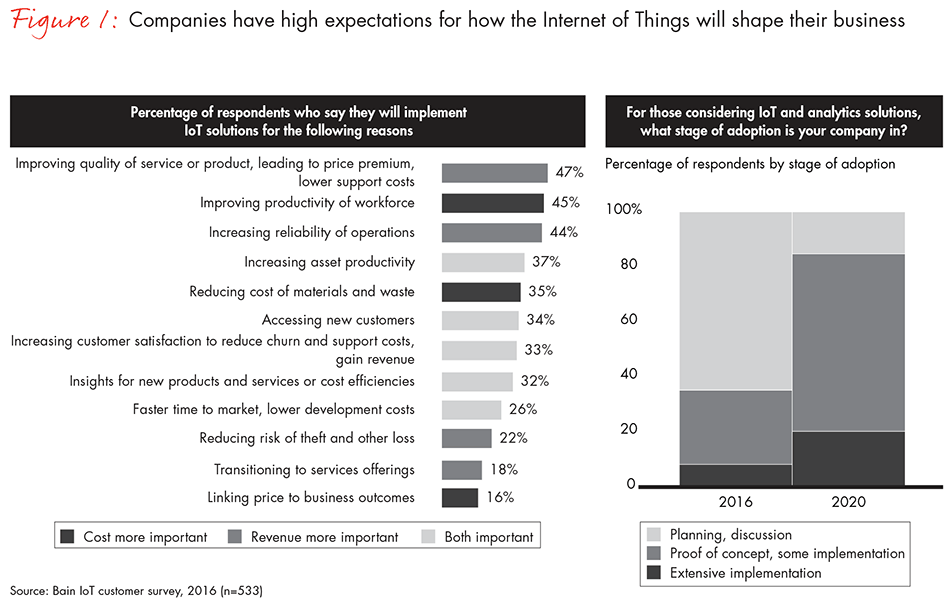
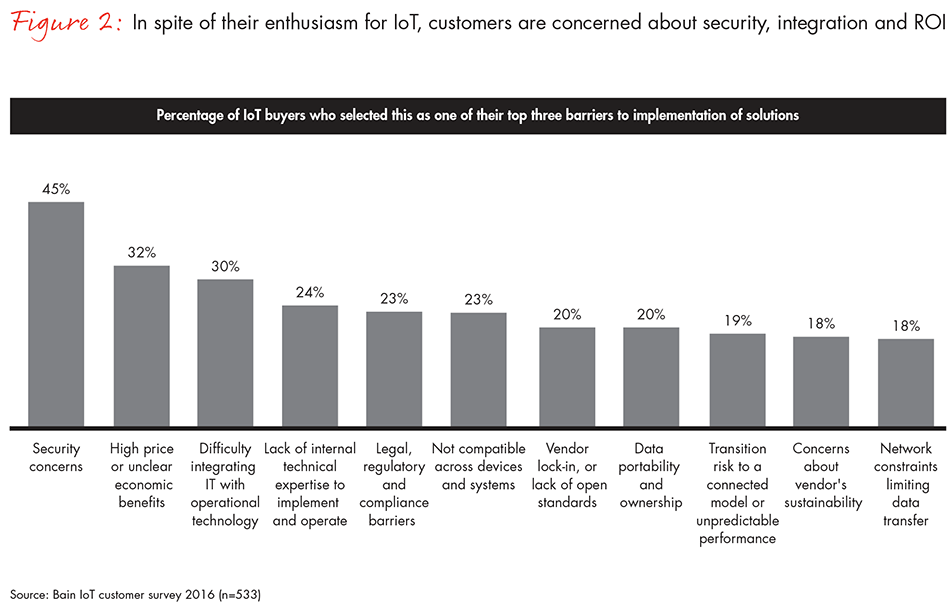
Bain surveyed more than 170 executives at IoT and analytics solutions vendors and over 500 executives looking to deploy these solutions. We found that customers are optimistic about both the cost reduction and new revenue opportunities provided by the Internet of Things (see Figure 1). But it is still early days: About 90% of respondents remain in the planning and proof-of-concept stage, and only about 20% expect to implement solutions at scale by 2020. Customers say they face many challenges when adopting IoT solutions, such as the right security, integration with current systems and achieving returns on their investment (see Figure 2).
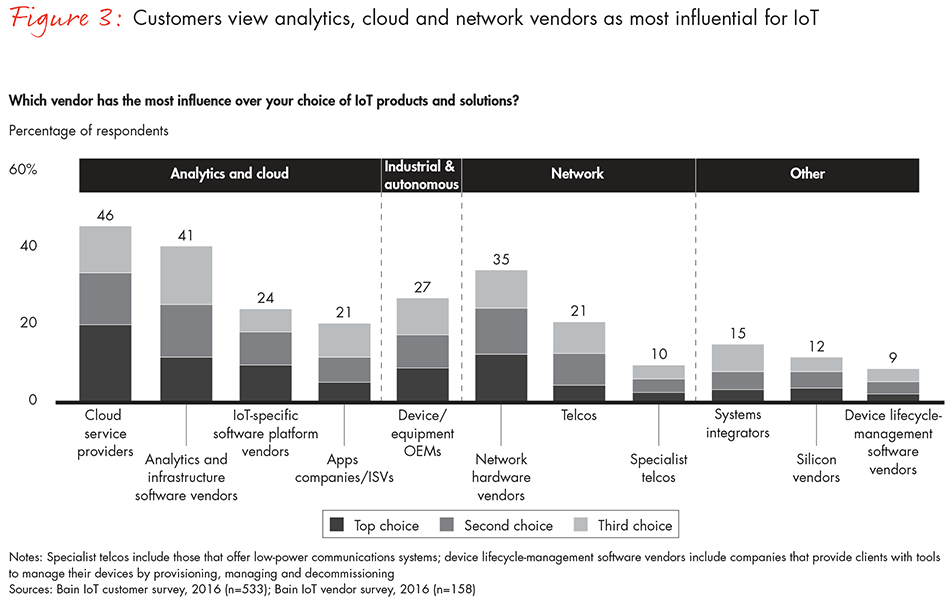
For incumbents—especially cloud-service providers, analytics vendors, network equipment vendors and industrial equipment OEMs—the good news is that customers look to them to overcome these barriers (see Figure 3). Start-ups with focused solutions get a lot of attention, but incumbents can be natural winners if they capitalize on helping customers integrate with existing technologies, address security concerns, tailor their solutions to specific industries and execute effectively.
Ann Bosche, a partner with Bain's Technology practice, discusses the most common mistakes made by vendors and the critical opportunities that will position them to win.
Despite customer confidence, executives at the vendors offering IoT solutions are struggling to prioritize investments across industries and specific uses, to decide on the best offerings and to adapt their commercial models (see below, “Investing in Attractive Opportunities”).
Vendors should base these decisions on a clear understanding of customer needs and the competitive environment within the battlegrounds that are emerging (see Bain Brief, “Defining the Battlegrounds of the Internet of Things,” April 2016). As they form and implement their strategies, executives should try to avoid several common pitfalls:
-
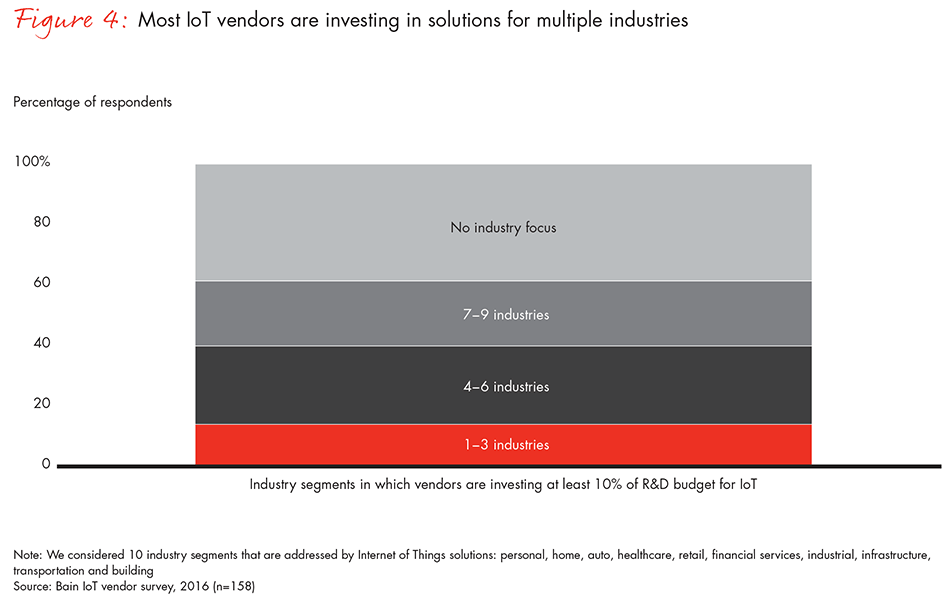
Spreading investment too thin. More than 80% of the vendors we surveyed said they are investing in solutions targeted at four or more industries (see Figure 4), and 45% said that deciding where to prioritize was one of their top three challenges. By casting their net too wide, vendors will miss the mark and develop solutions that are not tailored enough for early adoption. Implementations will be difficult and leave customers unsure about potential returns. Even vendors pursuing horizontal solutions need to showcase a focused set of vertical offerings by teaming up with industry-specific partners. Spreading across too many industries blurs the focus required to encourage customer adoption and build scale.
A more pragmatic approach is to focus on a particular battleground, select three to five specific use cases and develop solutions targeted at those, with longer-term plans to expand focus. Leaders take this portfolio approach, balancing both short- and long-term bets.
-
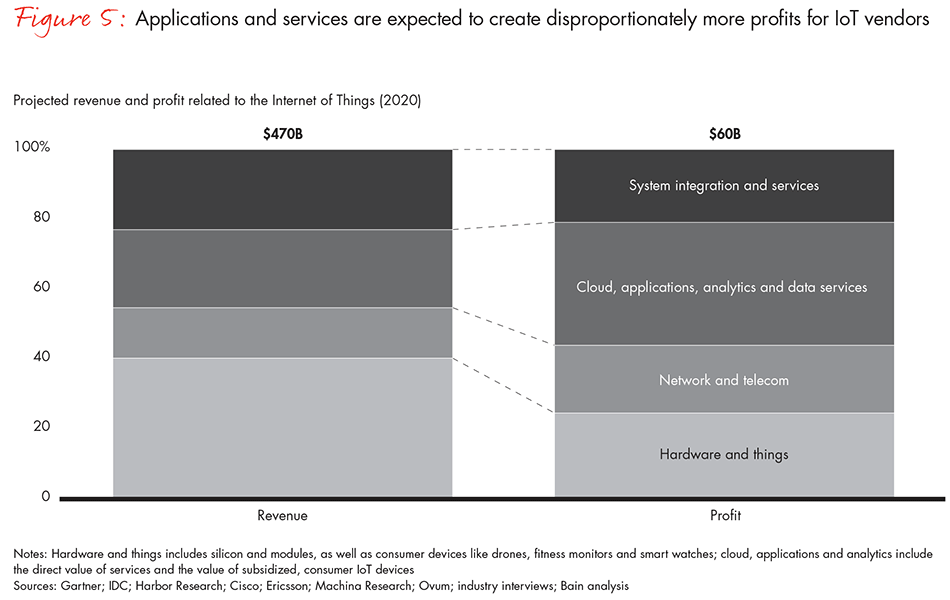
Lacking clarity on the source of profits. This happens especially when vendors compete against companies whose scope encompasses several layers of the technology stack. Profits will accrue disproportionately to certain layers, with more than three-quarters coming from cloud, applications, analytics, network, systems-integration and data services (see Figure 5). New consumer devices, such as wearables, drones and smart watches, are garnering a good deal of attention, but in the long term, a higher share of profits will come from enterprise and industrial solutions. One reason is that some major vendors are subsidizing consumer devices and capturing returns from data services and analytics instead. These plays are not always clear on the surface; companies might see a competitor delivering a smart door lock, for example, without realizing that the device is merely the entry point for a more profitable analytics model behind it. It is important to look beyond your traditional layer of the stack to identify the full competitive set. Whether in the enterprise, industrial or consumer space, vendors must have a solid plan for services and analytics solutions, either alone or with a set of partners. And for those vendors with broader scope, choosing solutions wisely and investing sufficiently in those areas are critical.
-
Delivering with a traditional ingredient model. Vendors often expect customers to integrate their standalone products and services, which creates challenges in these early days. Instead, vendors could address customer barriers such as integration requirements, interoperability and lack of internal expertise by providing pre-integrated, end-to-end solutions. They can tailor their offerings to attract partners who help develop proofs of concept with flagship customers to showcase a new use.
GE, for example, is adding its cloud-based industrial Internet platform, Predix, to its products (such as jet engines and wind turbines) and has established end-to-end partnerships to simplify deployment. GE has built partnerships with system integrators (Accenture), cloud-service providers (Amazon Web Services and Microsoft Azure) and an application platform (Pivotal) to ensure that every part of the implementation is covered.
-
Underestimating the funding required to achieve scale. IoT has attracted significant M&A activity, with more than $75 billion in investments from leading vendors. On average, these leaders are investing about twice as much in acquisitions as they are in building up internal capabilities. For example, IBM announced in 2015 that it would invest $3 billion to bring IoT solutions to market over the next four years.
Despite this, vendors underestimate the amount of investment required to develop an offering, innovate continuously and go to market. Prominent telcos, device manufacturers, and operational technology vendors are investing across the stack with acquisitions that can amount to $1 billion to $4 billion or more. But unless these companies work with others, they will either need to invest significantly more than anticipated, or they will fail to compete successfully against the largest incumbent analytics vendors.
Another type of funding challenge occurs when companies pull back on internal investments before they have had enough time to gain traction. Leaders should approach IoT and analytics investments more like venture funding, and ring-fence these initiatives to protect them from traditional budgeting processes.
-
Repurposing most talent from existing businesses. Vendors often approach new markets with existing talent, but here they need talent with new capabilities, industry expertise and entrepreneurial experience. In our recent survey, only 10% of respondents said they have the right people in the right roles to make the most of IoT opportunities. Companies need to hire new talent that better understands industry requirements and can work closely with partners to drive early adoptions.
In spite of all the attention focused on disruptive start-ups, technology and telecom incumbents have natural advantages in this rapidly evolving area. They have established records of innovation and commercial success, well-honed operations and broad bases of customers who trust them. As executives form their strategies, they should look beyond their traditional offerings, understand the competitive dynamics of the battleground and formulate action plans that avoid the common pitfalls.
Investing in Attractive Opportunities
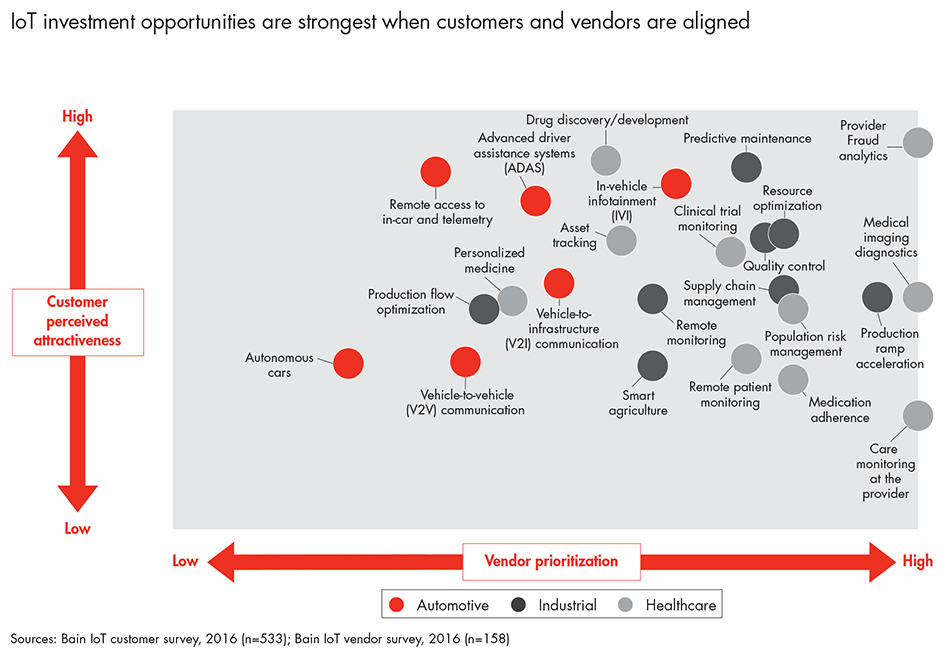
Not all opportunities in the Internet of Things are equal, of course. Vendors should prioritize investments in those opportunities that are most attractive to customers, in terms of their willingness and ability to adopt them. This figure plots several IoT opportunities in automotive, healthcare and industrials, mapped against customer attractiveness, with the best bets in the upper right.
In the automotive industry, vendors and customers are mostly aligned on features that have to do with entertainment, driving assistance and communication between the car and the infrastructure (think automatic toll collection). They also agree that autonomous driving systems and communication between cars are less important than other opportunities.

B2B Opportunities for Vendors in the Internet of Things
Explore the most attractive business-to-business opportunities for vendors in the Internet of Things.
In healthcare, vendors have high expectations and are shaping solutions, but customers show less enthusiasm for many applications. Both show strong support for systems that would prevent fraud, but customers are much less eager to adopt technologies that would monitor medical conditions or behavior.
In industrial applications, vendors are moving further ahead of their customers in many cases. While they share enthusiasm for such cost-saving applications as predictive maintenance, quality control and resource optimization, customers are more reluctant to embrace systems that would optimize production flow due to risks—for example, downtime when IoT solutions fail.
For a more comprehensive look at where providers are competing, see the Bain Brief "Defining the Battlegrounds of the Internet of Things".
Ann Bosche is a partner with Bain & Company in San Francisco, and Darren Jackson is a partner in the Los Angeles office. David Crawford, Michael Schallehn and Paul Smith are Bain partners in Silicon Valley. All work with Bain’s Global Technology, Media & Telecommunications practice. David leads the Technology practice in the Americas, and Paul leads Bain’s Telecommunications practice globally.
The authors would like to acknowledge the contributions of Radhika Josyula, a manager in Bain’s Silicon Valley office.
First published in 8月 2016