
Skip to Content
  • オフィス

    オフィス

    北米・南米
    • Atlanta
    • Austin
    • Bogota
    • Boston
    • Buenos Aires
    • Chicago
    • Dallas
    • Denver
    • Houston
    • Los Angeles
    • Mexico City
    • Minneapolis
    • Monterrey
    • Montreal
    • New York
    • Rio de Janeiro
    • San Francisco
    • Santiago
    • São Paulo
    • Seattle
    • Silicon Valley
    • Toronto
    • Washington, DC
    ヨーロッパ・中東・アフリカ
    • Amsterdam
    • Athens
    • Berlin
    • Brussels
    • Copenhagen
    • Doha
    • Dubai
    • Dusseldorf
    • Frankfurt
    • Helsinki
    • Istanbul
    • Johannesburg
    • Kyiv
    • Lisbon
    • London
    • Madrid
    • Milan
    • Munich
    • Oslo
    • Paris
    • Riyadh
    • Rome
    • Stockholm
    • Vienna
    • Warsaw
    • Zurich
    アジア・オーストラリア
    • Bangkok
    • Beijing
    • Bengaluru
    • Brisbane
    • Ho Chi Minh City
    • Hong Kong
    • Jakarta
    • Kuala Lumpur
    • Manila
    • Melbourne
    • Mumbai
    • New Delhi
    • Perth
    • Shanghai
    • Singapore
    • Sydney
    • Tokyo
    全てのオフィス
  • アルムナイ
  • メディア
  • お問い合わせ
  • 東京オフィス
  • Japan | 日本語

    地域と言語を選択

    グローバル
    • Global (English)
    北米・南米
    • Brazil (Português)
    • Argentina (Español)
    • Canada (Français)
    • Chile (Español)
    • Colombia (Español)
    ヨーロッパ・中東・アフリカ
    • France (Français)
    • DACH Region (Deutsch)
    • Italy (Italiano)
    • Spain (Español)
    • Greece (Elliniká)
    アジア・オーストラリア
    • China (中文版)
    • Korea (한국어)
    • Japan (日本語)
  • Saved items (0)
    Saved items (0)

    You have no saved items.

    後で閲読、共有できるようにするためにブックマークしてください

    Explore Bain Insights
  • 業界別プラクティス
    メインメニュー

    業界別プラクティス

    • 航空宇宙、防衛、政府関連
    • 農業
    • 化学製品
    • インフラ、建設
    • 消費財
    • 金融サービス
    • ヘルスケア
    • 産業機械、設備
    • メディア、エンターテインメント
    • 金属
    • 採掘・鉱業
    • 石油、ガス
    • 紙、パッケージ
    • プライベートエクイティ
    • 公共、社会セクター
    • 小売
    • テクノロジー
    • 通信
    • 交通
    • 観光産業
    • 公益事業、再生可能エネルギー
  • 機能別プラクティス
    メインメニュー

    機能別プラクティス

    • カスタマー・エクスペリエンス
    • サステイナビリティ、 社会貢献
    • Innovation
    • 企業買収、合併 (M&A)
    • オペレーション
    • 組織
    • プライベートエクイティ
    • マーケティング・営業
    • 戦略
    • アドバンスド・アナリティクス
    • Technology
    • フルポテンシャル・トランスフォーメーション
  • Digital
  • 知見/レポート
  • ベイン・アンド・カンパニーについて
    メインメニュー

    ベイン・アンド・カンパニーについて

    • ベインの信条
    • 活動内容
    • 社員とリーダーシップ
    • プレス・メディア情報
    • クライアントの結果
    • 受賞歴
    • パートナーシップを結んでいる団体
    Further: Our global responsibility
    • ダイバーシティ
    • 社会貢献
    • サステイナビリティへの取り組み
    • 世界経済フォーラム(WEF)
    Learn more about Further
  • キャリア
    メインメニュー

    キャリア

    • ベインで働く
      キャリア
      ベインで働く
      • Find Your Place
      • ベインで活躍する機会
      • ベインのチーム体制
      • 学生向けページ
      • インターンシップ
      • 採用イベント
    • ベインでの体験
      キャリア
      ベインでの体験
      • Blog: Inside Bain
      • キャリアストーリー
      • 社員紹介
      • Where We Work
      • 成長を後押しするサポート体制
      • アフィニティ・グループ
      • 福利厚生
    • Impact Stories
    • 採用情報
      キャリア
      採用情報
      • 採用プロセス
      • 面接内容
    FIND JOBS
  • オフィス
    メインメニュー

    オフィス

    • 北米・南米
      オフィス
      北米・南米
      • Atlanta
      • Austin
      • Bogota
      • Boston
      • Buenos Aires
      • Chicago
      • Dallas
      • Denver
      • Houston
      • Los Angeles
      • Mexico City
      • Minneapolis
      • Monterrey
      • Montreal
      • New York
      • Rio de Janeiro
      • San Francisco
      • Santiago
      • São Paulo
      • Seattle
      • Silicon Valley
      • Toronto
      • Washington, DC
    • ヨーロッパ・中東・アフリカ
      オフィス
      ヨーロッパ・中東・アフリカ
      • Amsterdam
      • Athens
      • Berlin
      • Brussels
      • Copenhagen
      • Doha
      • Dubai
      • Dusseldorf
      • Frankfurt
      • Helsinki
      • Istanbul
      • Johannesburg
      • Kyiv
      • Lisbon
      • London
      • Madrid
      • Milan
      • Munich
      • Oslo
      • Paris
      • Riyadh
      • Rome
      • Stockholm
      • Vienna
      • Warsaw
      • Zurich
    • アジア・オーストラリア
      オフィス
      アジア・オーストラリア
      • Bangkok
      • Beijing
      • Bengaluru
      • Brisbane
      • Ho Chi Minh City
      • Hong Kong
      • Jakarta
      • Kuala Lumpur
      • Manila
      • Melbourne
      • Mumbai
      • New Delhi
      • Perth
      • Shanghai
      • Singapore
      • Sydney
      • Tokyo
    全てのオフィス
  • アルムナイ
  • メディア
  • お問い合わせ
  • 東京オフィス
  • Japan | 日本語
    メインメニュー

    地域と言語を選択

    • グローバル
      地域と言語を選択
      グローバル
      • Global (English)
    • 北米・南米
      地域と言語を選択
      北米・南米
      • Brazil (Português)
      • Argentina (Español)
      • Canada (Français)
      • Chile (Español)
      • Colombia (Español)
    • ヨーロッパ・中東・アフリカ
      地域と言語を選択
      ヨーロッパ・中東・アフリカ
      • France (Français)
      • DACH Region (Deutsch)
      • Italy (Italiano)
      • Spain (Español)
      • Greece (Elliniká)
    • アジア・オーストラリア
      地域と言語を選択
      アジア・オーストラリア
      • China (中文版)
      • Korea (한국어)
      • Japan (日本語)
  • Saved items  (0)
    メインメニュー
    Saved items (0)

    You have no saved items.

    後で閲読、共有できるようにするためにブックマークしてください

    Explore Bain Insights
  • 業界別プラクティス
    • 業界別プラクティス

      • 航空宇宙、防衛、政府関連
      • 農業
      • 化学製品
      • インフラ、建設
      • 消費財
      • 金融サービス
      • ヘルスケア
      • 産業機械、設備
      • メディア、エンターテインメント
      • 金属
      • 採掘・鉱業
      • 石油、ガス
      • 紙、パッケージ
      • プライベートエクイティ
      • 公共、社会セクター
      • 小売
      • テクノロジー
      • 通信
      • 交通
      • 観光産業
      • 公益事業、再生可能エネルギー
  • 機能別プラクティス
    • 機能別プラクティス

      • カスタマー・エクスペリエンス
      • サステイナビリティ、 社会貢献
      • Innovation
      • 企業買収、合併 (M&A)
      • オペレーション
      • 組織
      • プライベートエクイティ
      • マーケティング・営業
      • 戦略
      • アドバンスド・アナリティクス
      • Technology
      • フルポテンシャル・トランスフォーメーション
  • Digital
  • 知見/レポート
  • ベイン・アンド・カンパニーについて
    • ベイン・アンド・カンパニーについて

      • ベインの信条
      • 活動内容
      • 社員とリーダーシップ
      • プレス・メディア情報
      • クライアントの結果
      • 受賞歴
      • パートナーシップを結んでいる団体
      Further: Our global responsibility
      • ダイバーシティ
      • 社会貢献
      • サステイナビリティへの取り組み
      • 世界経済フォーラム(WEF)
      Learn more about Further
  • キャリア
    人気検索キーワード
    • デジタル
    • 戦略
    前回の検索
      最近訪れたページ

      Content added to saved items

      Saved items (0)

      Removed from saved items

      Saved items (0)

      記事

      Inclusion Helps Your Company’s Black Employees Move Up, Not Out

      Inclusion Helps Your Company’s Black Employees Move Up, Not Out

      Companies can’t simply hire their way to diversity; they also must retain and advance employees. That starts with making sure they feel included.

      著者:Alex Noether and Dria James

      • min read
      }

      記事

      Inclusion Helps Your Company’s Black Employees Move Up, Not Out
      en

      As we celebrate this year’s Black History Month as two Black leaders at Bain, we are immensely thankful for the progress that those who came before us and that so many of our peers have fought to realize, from legislative progress on civil rights and employment to the tireless efforts of those who have strived for years to create more diverse and equitable workplaces.

      Yet for all the advances made, the data is clear: Too many Black workers remain stuck at the bottom of their organizations. Thirty-six percent of Black workers are in frontline roles, the highest percentage of any racial group and starkly higher than white workers (21%). Even more alarming, 21% of Black workers are in lower-income frontline roles that pay less than $30,000 per year (see Figure 1). Black people also are much less likely to hold middle-management and senior positions.

      Figure 1
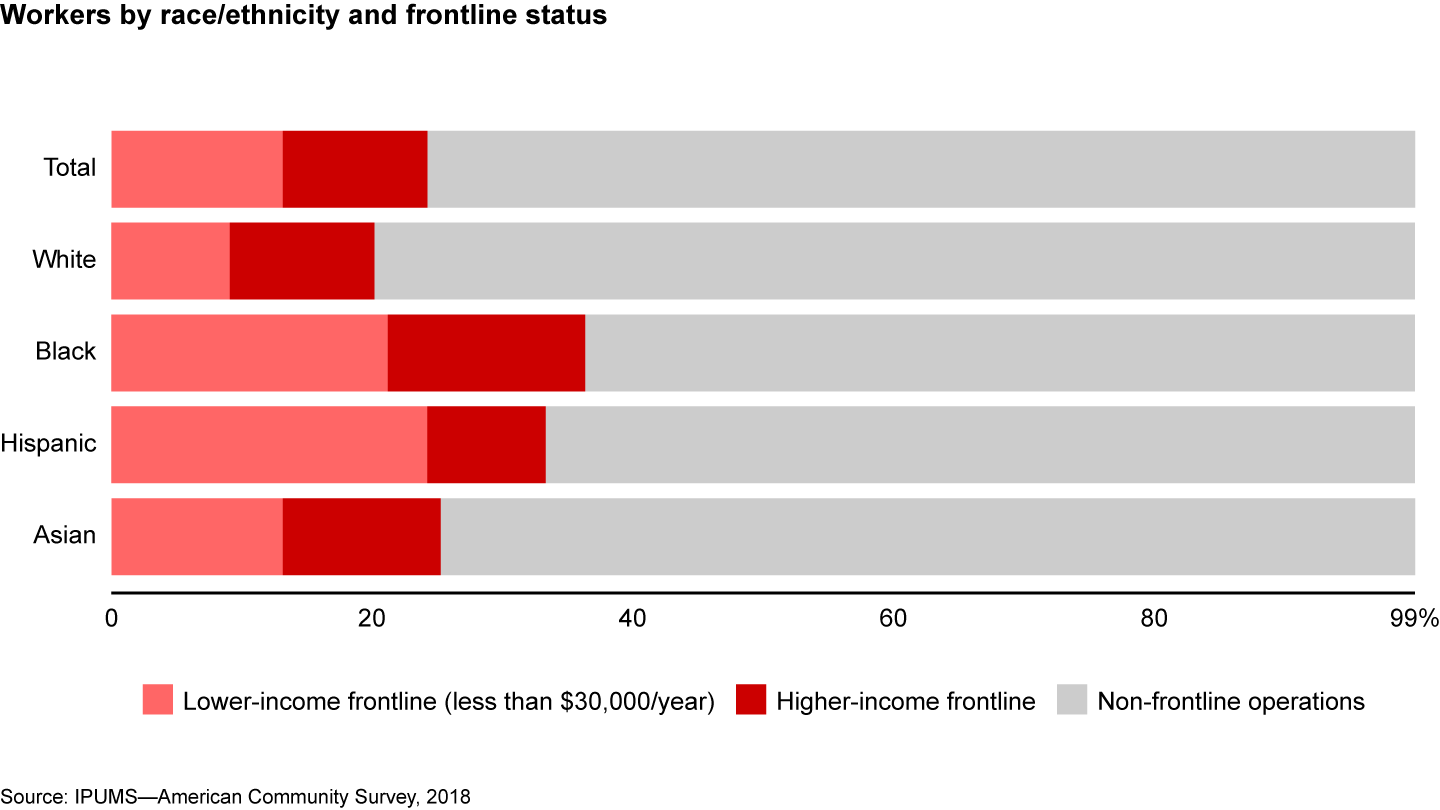
      Black employees are overrepresented in frontline roles
      Black employees are overrepresented in frontline roles
      Black employees are overrepresented in frontline roles

      One barrier to Black advancement is attrition. Companies closely guard such data, but there’s plenty of evidence that retention rates for Black employees are low. A 2019 report from Coqual found that Black employees were 30% more likely to intend to leave than their white colleagues. Any attrition is disturbing amid the Great Resignation, but faster rates for Black employees are all the more alarming as companies focusing on improving diversity, equity, and inclusion (DEI) see the diversity of their population shrink, which, in turn, reduces opportunities for advancing equity.

      Yet new Bain & Company research finds that inclusion, the third pillar of DEI, may be the key both to understanding this attrition and to knocking down the barriers it poses to advancement. To learn what makes employees feel included, we surveyed 10,000 people across industries, geographies, and demographic backgrounds at all levels of seniority and organizational size.

      One of our key findings was that employees who do not feel included are significantly more likely to quit. And we found that Black employees who feel excluded at work are two to four times more likely to leave their jobs than Black (or white) employees who feel fully included at work (see Figure 2).

      Figure 2
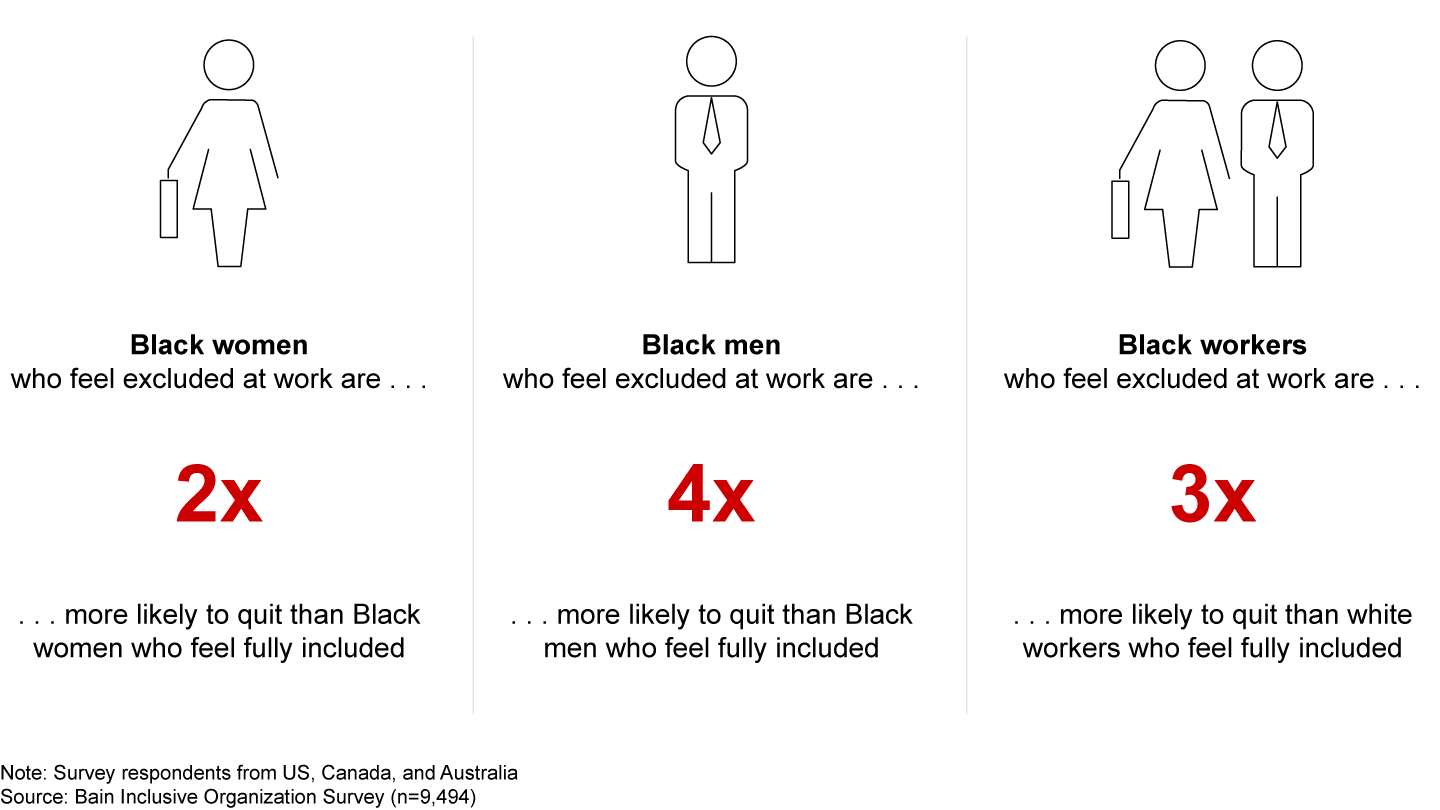
      Black employees who feel excluded at work are much more likely to leave
      Black employees who feel excluded at work are much more likely to leave
      Black employees who feel excluded at work are much more likely to leave

      Improving the retention and advancement of Black workers is a multifaceted challenge requiring multiple complex solutions. But clearly there is one “must do” for employers, and that is to make their workplaces more inclusive for Black employees.

      Clearly there is one ‘must do’ for employers: Make their workplaces more inclusive for Black employees.

      Beyond the obvious fact that fostering inclusion is the right thing to do and supports retention, inclusion also helps workers perform at their best. From neuroscience, we know that feeling excluded sets off biological alarms in the brain similar to those caused by physical pain, which is hardly conducive to employee performance. With only 20% to 25% of Black employees feeling fully included at work today, improving inclusion is a clear opportunity to support their success and advancement.

      Fostering inclusion is deceptively difficult, however, as we outlined in The Fabric of Belonging: How to Weave an Inclusive Culture. One of the key challenges is that organizations often struggle to identify what enablers will most increase feelings and experiences of inclusion for specific populations, each with different experiences and unique needs.

      Our survey statistically unpacked the most effective enablers of inclusion for 18 different populations, with a focus on how intersectionality—that is, combining lenses such as race, gender, and sexual orientation—reveals enablers with even greater impact for those populations than for broader groups.

      Here is some of what we learned about enabling inclusion for Black men and women in the workplace in the US, Canada, and Australia.

      Black women. Our study found that one of the biggest differences between Black women who feel included and those who do not is the establishment of rituals and norms around coaching and professional development conversations.

      The presence of rituals and norms regarding coaching is particularly important to Black women because they often do not have access to leaders who resemble them. It is well known that unconscious biases tend to encourage people to mentor and sponsor people who are similar to themselves. And since there are often not enough senior Black women present to organically form relationships to mentor junior ones, Black women benefit more from formal mechanisms or cultural expectations that encourage their leaders to give them the same amount of coaching that others receive.

      Black men. Our study found that Black men who feel the most included work in groups in which decision-making rights are clearly articulated and leadership teams demonstrate high levels of humility—that is, leaders recognize that they “don’t know everything and can learn/improve from others.”

      It is hardly surprising that these enablers matter significantly to Black men, who often are unfairly stereotyped as “aggressive” or “angry.” In a workplace where white men may feel free to share dissenting opinions, Black men may worry that the same outspokenness could cast them in a negative light. But in a workplace where it is clear which decisions each person does and does not own and where leaders demonstrate receptivity to differing points of view, these personal risks to Black men are mitigated, allowing them to participate more freely.

      These are just two examples of how specific enablers can meaningfully improve how included Black employees feel. But to be most effective at fostering greater inclusion, organizations need to take stock of their own unique situations (for example, what they do and do not do well, what matters to their Black employees, etc.). The first steps are for organizations to recognize the importance of increasing those feelings and experiences of inclusion for their Black employees, and to commit to understanding (with a data-driven approach such as the one we describe above) which enablers will be most effective for fostering inclusion for their Black workers.

      We are committed to pushing our organization and other organizations to ask and answer the tough questions required to keep breaking down barriers and to promote full inclusion for Black people in the workplace. If we have learned anything from history, it is that it takes commitment and action from all of us to effect such change. In other words, in the spirit of inclusion, we need to come together to tackle these challenges. That is how we will make our workplaces truly inviting and inclusive for Black employees and for everyone.

      著者
      • Headshot of Alex Noether
        Alex Noether
        Alumni, Toronto
      • Dria James
        Former Senior Director, Global Diversity, Equity and Inclusion, Washington, DC
      関連するコンサルティングサービス
      • Diversity, Equity & Inclusion
      • Leadership & Talent
      Diversity, Equity & Inclusion
      The Fabric of Belonging: How to Weave an Inclusive Culture

      Inclusive organizations have higher-performing, happier teams. But what’s the secret to creating such organizations?

      詳細
      Diversity, Equity & Inclusion
      Beyond Policies: Leadership Behaviors That Propel Women to the Top

      After a decade of progress, the next chapter of growth will rely on inclusive behaviors from every leader, every day.

      詳細
      Diversity, Equity & Inclusion
      The Business of Belonging

      Why making everyone feel included is smart strategy.

      詳細
      Diversity, Equity & Inclusion
      Better with Age: The Rising Importance of Older Workers

      Some 150 million jobs will shift to older workers by the end of the decade. Here’s how to get ready.

      詳細
      Diversity, Equity & Inclusion
      Advancing Gender Equity in the Middle East Workforce

      Women of the GCC are transforming the region’s workforce. Focused inclusion efforts can capitalize on this momentum.

      詳細
      First published in 2月 2022
      Tags
      • Diversity, Equity & Inclusion
      • Leadership & Talent

      クライアント支援事例

      戦略 A Conglomerate Charts a New Global Strategy

      ケーススタディを見る

      サステイナビリティ、社会貢献 Can Microchips Turbocharge Sustainability Improvement?

      ケーススタディを見る

      Divestitures and Spin-offs A holding company lets go to grow

      ケーススタディを見る

      お気軽にご連絡下さい

      私達は、グローバルに活躍する経営者が抱える最重要経営課題に対して、厳しい競争環境の中でも成長し続け、「結果」を出すために支援しています。

      ベインの知見。競争が激化するグローバルビジネス環境で、日々直面するであろう問題について論じている知見を毎月お届けします。

      *プライバシーポリシーの内容を確認し、合意しました。

      プライバシーポリシーをご確認頂き、合意頂けますようお願い致します。
      Bain & Company
      お問い合わせ Sustainability Accessibility Terms of use Privacy Cookie Policy Sitemap Log In

      © 1996-2026 Bain & Company, Inc.

      お問い合わせ

      How can we help you?

      • ビジネスについて
      • プレス報道について
      • 採用について
      全てのオフィス