
Skip to Content
  • オフィス

    オフィス

    北米・南米
    • Atlanta
    • Austin
    • Bogota
    • Boston
    • Buenos Aires
    • Chicago
    • Dallas
    • Denver
    • Houston
    • Los Angeles
    • Mexico City
    • Minneapolis
    • Monterrey
    • Montreal
    • New York
    • Rio de Janeiro
    • San Francisco
    • Santiago
    • São Paulo
    • Seattle
    • Silicon Valley
    • Toronto
    • Washington, DC
    ヨーロッパ・中東・アフリカ
    • Amsterdam
    • Athens
    • Berlin
    • Brussels
    • Copenhagen
    • Doha
    • Dubai
    • Dusseldorf
    • Frankfurt
    • Helsinki
    • Istanbul
    • Johannesburg
    • Kyiv
    • Lisbon
    • London
    • Madrid
    • Milan
    • Munich
    • Oslo
    • Paris
    • Riyadh
    • Rome
    • Stockholm
    • Vienna
    • Warsaw
    • Zurich
    アジア・オーストラリア
    • Bangkok
    • Beijing
    • Bengaluru
    • Brisbane
    • Ho Chi Minh City
    • Hong Kong
    • Jakarta
    • Kuala Lumpur
    • Manila
    • Melbourne
    • Mumbai
    • New Delhi
    • Perth
    • Shanghai
    • Singapore
    • Sydney
    • Tokyo
    全てのオフィス
  • アルムナイ
  • メディア
  • お問い合わせ
  • 東京オフィス
  • Japan | 日本語

    地域と言語を選択

    グローバル
    • Global (English)
    北米・南米
    • Brazil (Português)
    • Argentina (Español)
    • Canada (Français)
    • Chile (Español)
    • Colombia (Español)
    ヨーロッパ・中東・アフリカ
    • France (Français)
    • DACH Region (Deutsch)
    • Italy (Italiano)
    • Spain (Español)
    • Greece (Elliniká)
    アジア・オーストラリア
    • China (中文版)
    • Korea (한국어)
    • Japan (日本語)
  • Saved items (0)
    Saved items (0)

    You have no saved items.

    後で閲読、共有できるようにするためにブックマークしてください

    Explore Bain Insights
  • 業界別プラクティス
    メインメニュー

    業界別プラクティス

    • 航空宇宙、防衛、政府関連
    • 農業
    • 化学製品
    • インフラ、建設
    • 消費財
    • 金融サービス
    • ヘルスケア
    • 産業機械、設備
    • メディア、エンターテインメント
    • 金属
    • 採掘・鉱業
    • 石油、ガス
    • 紙、パッケージ
    • プライベートエクイティ
    • 公共、社会セクター
    • 小売
    • テクノロジー
    • 通信
    • 交通
    • 観光産業
    • 公益事業、再生可能エネルギー
  • 機能別プラクティス
    メインメニュー

    機能別プラクティス

    • カスタマー・エクスペリエンス
    • サステイナビリティ、 社会貢献
    • Innovation
    • 企業買収、合併 (M&A)
    • オペレーション
    • 組織
    • プライベートエクイティ
    • マーケティング・営業
    • 戦略
    • アドバンスド・アナリティクス
    • Technology
    • フルポテンシャル・トランスフォーメーション
  • Digital
  • 知見/レポート
  • ベイン・アンド・カンパニーについて
    メインメニュー

    ベイン・アンド・カンパニーについて

    • ベインの信条
    • 活動内容
    • 社員とリーダーシップ
    • プレス・メディア情報
    • クライアントの結果
    • 受賞歴
    • パートナーシップを結んでいる団体
    Further: Our global responsibility
    • ダイバーシティ
    • 社会貢献
    • サステイナビリティへの取り組み
    • 世界経済フォーラム(WEF)
    Learn more about Further
  • キャリア
    メインメニュー

    キャリア

    • ベインで働く
      キャリア
      ベインで働く
      • Find Your Place
      • ベインで活躍する機会
      • ベインのチーム体制
      • 学生向けページ
      • インターンシップ
      • 採用イベント
    • ベインでの体験
      キャリア
      ベインでの体験
      • Blog: Inside Bain
      • キャリアストーリー
      • 社員紹介
      • Where We Work
      • 成長を後押しするサポート体制
      • アフィニティ・グループ
      • 福利厚生
    • Impact Stories
    • 採用情報
      キャリア
      採用情報
      • 採用プロセス
      • 面接内容
    FIND JOBS
  • オフィス
    メインメニュー

    オフィス

    • 北米・南米
      オフィス
      北米・南米
      • Atlanta
      • Austin
      • Bogota
      • Boston
      • Buenos Aires
      • Chicago
      • Dallas
      • Denver
      • Houston
      • Los Angeles
      • Mexico City
      • Minneapolis
      • Monterrey
      • Montreal
      • New York
      • Rio de Janeiro
      • San Francisco
      • Santiago
      • São Paulo
      • Seattle
      • Silicon Valley
      • Toronto
      • Washington, DC
    • ヨーロッパ・中東・アフリカ
      オフィス
      ヨーロッパ・中東・アフリカ
      • Amsterdam
      • Athens
      • Berlin
      • Brussels
      • Copenhagen
      • Doha
      • Dubai
      • Dusseldorf
      • Frankfurt
      • Helsinki
      • Istanbul
      • Johannesburg
      • Kyiv
      • Lisbon
      • London
      • Madrid
      • Milan
      • Munich
      • Oslo
      • Paris
      • Riyadh
      • Rome
      • Stockholm
      • Vienna
      • Warsaw
      • Zurich
    • アジア・オーストラリア
      オフィス
      アジア・オーストラリア
      • Bangkok
      • Beijing
      • Bengaluru
      • Brisbane
      • Ho Chi Minh City
      • Hong Kong
      • Jakarta
      • Kuala Lumpur
      • Manila
      • Melbourne
      • Mumbai
      • New Delhi
      • Perth
      • Shanghai
      • Singapore
      • Sydney
      • Tokyo
    全てのオフィス
  • アルムナイ
  • メディア
  • お問い合わせ
  • 東京オフィス
  • Japan | 日本語
    メインメニュー

    地域と言語を選択

    • グローバル
      地域と言語を選択
      グローバル
      • Global (English)
    • 北米・南米
      地域と言語を選択
      北米・南米
      • Brazil (Português)
      • Argentina (Español)
      • Canada (Français)
      • Chile (Español)
      • Colombia (Español)
    • ヨーロッパ・中東・アフリカ
      地域と言語を選択
      ヨーロッパ・中東・アフリカ
      • France (Français)
      • DACH Region (Deutsch)
      • Italy (Italiano)
      • Spain (Español)
      • Greece (Elliniká)
    • アジア・オーストラリア
      地域と言語を選択
      アジア・オーストラリア
      • China (中文版)
      • Korea (한국어)
      • Japan (日本語)
  • Saved items  (0)
    メインメニュー
    Saved items (0)

    You have no saved items.

    後で閲読、共有できるようにするためにブックマークしてください

    Explore Bain Insights
  • 業界別プラクティス
    • 業界別プラクティス

      • 航空宇宙、防衛、政府関連
      • 農業
      • 化学製品
      • インフラ、建設
      • 消費財
      • 金融サービス
      • ヘルスケア
      • 産業機械、設備
      • メディア、エンターテインメント
      • 金属
      • 採掘・鉱業
      • 石油、ガス
      • 紙、パッケージ
      • プライベートエクイティ
      • 公共、社会セクター
      • 小売
      • テクノロジー
      • 通信
      • 交通
      • 観光産業
      • 公益事業、再生可能エネルギー
  • 機能別プラクティス
    • 機能別プラクティス

      • カスタマー・エクスペリエンス
      • サステイナビリティ、 社会貢献
      • Innovation
      • 企業買収、合併 (M&A)
      • オペレーション
      • 組織
      • プライベートエクイティ
      • マーケティング・営業
      • 戦略
      • アドバンスド・アナリティクス
      • Technology
      • フルポテンシャル・トランスフォーメーション
  • Digital
  • 知見/レポート
  • ベイン・アンド・カンパニーについて
    • ベイン・アンド・カンパニーについて

      • ベインの信条
      • 活動内容
      • 社員とリーダーシップ
      • プレス・メディア情報
      • クライアントの結果
      • 受賞歴
      • パートナーシップを結んでいる団体
      Further: Our global responsibility
      • ダイバーシティ
      • 社会貢献
      • サステイナビリティへの取り組み
      • 世界経済フォーラム(WEF)
      Learn more about Further
  • キャリア
    人気検索キーワード
    • デジタル
    • 戦略
    前回の検索
      最近訪れたページ

      Content added to saved items

      Saved items (0)

      Removed from saved items

      Saved items (0)

      記事

      India's life insurers need smarter policies for growth

      India's life insurers need smarter policies for growth

      The route to profitability is an arduous one for Indian insurers. The winners will be those who focus on the right customers, rethink distribution and reduce operating waste.

      著者:Donie Lochan and Harsh Vardhan

      • min read

      記事

      India's life insurers need smarter policies for growth
      en

      Industries in start-up mode can be innovative, scrappy and undisciplined as they scramble to grow and capture market share. Those traits have certainly characterized the rambunctious life insurance market over the past decade of India’s rapid economic expansion.

      Eager to serve affluent, middle-class consumers new to insurance products and looking for the protection and potential investment returns insurance can provide, insurers piled into the market and pumped capital into assembling a distribution infrastructure. To drum up sales, they aggressively boosted marketing outlays, hired novice agents and front-loaded their commissions as an incentive to sign up policyholders. Business took off, lifting Indian life insurers’ revenues to US$57 billion in 2009, according to the latest industry data.

      With premiums for private insurers growing at a 57 percent rate compounded since 2005, attractive opportunities remain for business to continue to expand. On a per capita basis, Indians are underinsured, paying annual premiums of just US$48—little more than half of what Chinese policyholders pay and just a small fraction of the $1,600 per capita premiums paid by US policy holders.

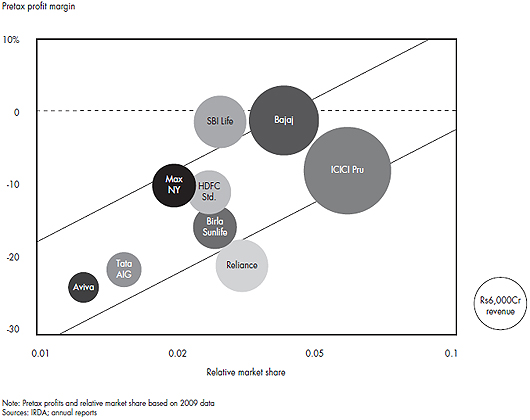
      Yet, despite their torrid growth, Indian insurers are discovering that the route to profitability is a long and arduous one, typically taking nearly a decade to break even. Only a handful of the industry’s largest players, such as ICICI Prudential and Bajaj Allianz, have recently begun to turn a profit. India’s mostly sub-scale insurers are hemorrhaging cash as a result of high operating costs and rampant customer churn, as policyholders abandon their coverage long before their policies generate earnings.

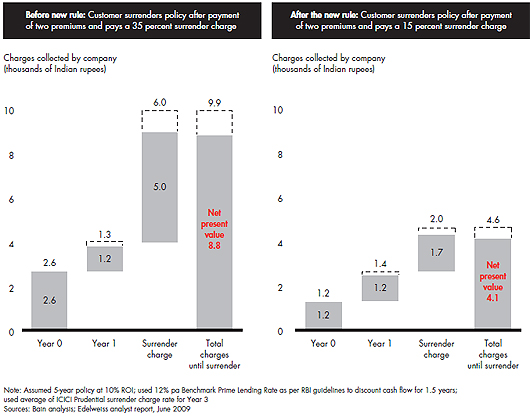
      Life insurers’ uphill climb to profitability is becoming even steeper. Despite the industry’s shallow profit pools and adverse economics, new competitors continue to crowd into the market. Eight new companies have entered over the past five years, and several more are actively drawing up plans to join them. Meanwhile, the Insurance Regulatory and Development Authority (IRDA), the industry’s public overseer, issued new rules last fall to curb consumer abuses that are slowing industry cash flows. Among other measures to make the insurance market more customer-friendly, the IRDA has toughened rules that prevent insurers from frontloading fees on new policies while capping the surrender charges insurers can levy. We expect that the new limit will cause the net present value of insurers’ revenues from surrender charges to fall by more than half.

      Suddenly, already distant profitability goals look even further away. Overall, industry analysts estimate that the new IRDA rulings will reduce the discounted profits on new policies sold by between 8 percent and 10 percent and will increase the amount of capital insurers will be required to hold in this already heavily capital-intensive business by some 40 percent. The double whammy of more competition and tougher regulation will be felt across the industry but will be acutely painful for newcomers and for companies that have yet to achieve the scale needed to succeed.

      Insurers that hope to survive the coming shakeout and ultimately turn profitable will need to find efficiencies and boost productivity in three key areas:

      Target the right customers. Most Indian insurers rely on a direct-agent salesforce to win market share, paying steep commissions that drive up new-customer acquisition costs. Outlays for payroll and commissions typically eat up more than half the first-year premium— far higher than for benchmarks in other emerging and developed markets. But high customer churn rates mean that too many policies are surrendered long before they generate sufficient premium income to become profitable.

      indias-life-insurers-need-smarter-policies-fig-01.jpg

      Companies that focus on attracting customers that their organization is best able to serve get far more bang for their marketing outlays than their less discriminating competitors. Our work with insurers around the world has shown that insurers who zero in on the right customers and use a closed-loop feedback process to track how well their organization meets or exceeds customer expectations on the critical touch-points reap higher revenue growth rates and market share.

      The reason these leaders excel is self-evident: policyholders are loyal to insurers that treat them well. Not only do promoters cost less to serve than customers who are disgruntled detractors, they are also less apt to defect, they buy more products and they are far likelier to recommend their insurer to friends and colleagues.

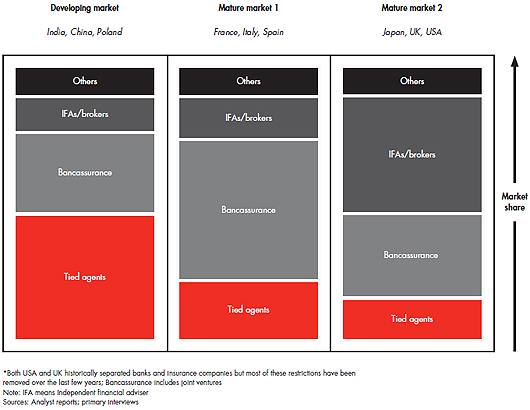
      Rethink the distribution network. The recent regulatory changes and faster competitive tempo are forcing insurers to take a fresh look at their distribution channels. Our analysis shows that new business premiums correlate closely with the reach and concentration of offices insurers have in their network. Currently, distribution is heavily skewed toward agency sales, which account for approximately 80 percent of total industry revenues. Efficient tie-ins with banks that use their multipurpose branch networks to sell insurance products will probably account for a higher proportion of new policy sales going forward.

      Bancassurance has the lowest costs, and the industry’s evolution in mature markets has clearly favored this channel. But it will be difficult for new market entrants to forge one of the few remaining partnerships available in India. Thus, while an agency-based salesforce will remain an important channel, insurers will need to take steps to improve agent productivity, which can vary by as much as 500 percent between the best and the worst performers. To close that wide gap, the laggards will want to tighten up recruitment to bring in better new hires, invest in better professional training to raise skill levels, identify the top producers and restructure compensation and incentives in order to retain the best people.

      indias-life-insurers-need-smarter-policies-fig-02.jpg

      Strip waste out of opex. Taken together, operating expenditures and customer acquisition costs account for between 25 percent and 50 percent of total annual premiums and are fat targets for rationalization. We estimate that these overhead outlays can be reduced by as much as one-third. With the smarter customer targeting described above, advertising and promotion costs, which eat up another 5 percent of total premium revenue, can also be trimmed. Achieving competitive scale is perhaps the most effective way for cost savings to flow to the bottom line. Thus, the pressure will be on newer subscale players, in particular, to ramp up quickly—through organic growth, strategic alliances or mergers.

      With the wild “land grab” phase of the life insurance business coming to an end as the industry begins to mature and comes under tighter scrutiny, India’s insurers face tough choices in the months and years ahead. Those that are unable to rework their business models risk years of losses and debilitating drains on cash reserves. Getting the distribution network right, squeezing down costs and achieving scale are insurers’ best policies for success.

      indias-life-insurers-need-smarter-policies-fig-03.jpg

      関連業種
      • 金融サービス
      金融サービス
      Wolf in Sheep's Clothing: Disruption Ahead for Transaction Banking

      The field is getting crowded and technology-intensive. How can banks stand out?

      詳細
      金融サービス
      Stay Relevant, Spark Energy: Pedro Arnt, CEO dLocal

      How can a hyperscaler grow at lightning speed without losing its soul? 

      詳細
      金融サービス
      Rethinking Transformation: Lawrence Lam on Leading Change at Prudential

      Frankie Leung speaks with Lawrence Lam, CEO of Prudential Hong Kong, about organizational transformation and sustaining change through a people-led approach.

      詳細
      金融サービス
      Banking M&A

      As conditions shift, leading banks are fusing scale with scope to create future-ready organizations.

      詳細
      金融サービス
      The Gap Between AI Strategy and Reality Is Execution

      AI’s eventual reshaping of financial services is clear, and now it’s a question of who can sequence, scale, and sustain execution across the enterprise.

      詳細
      First published in 8月 2011
      Tags
      • 金融サービス

      クライアント支援事例

      サステイナビリティ、社会貢献 Voluntary Carbon Markets: A Bank Moves Early to Seize the Opportunity

      ケーススタディを見る

      業績改善 Lean Six Sigma solves a commercial bank's growth problem

      ケーススタディを見る

      IT Bridging the Gap Between Business and Technology

      ケーススタディを見る

      お気軽にご連絡下さい

      私達は、グローバルに活躍する経営者が抱える最重要経営課題に対して、厳しい競争環境の中でも成長し続け、「結果」を出すために支援しています。

      ベインの知見。競争が激化するグローバルビジネス環境で、日々直面するであろう問題について論じている知見を毎月お届けします。

      *プライバシーポリシーの内容を確認し、合意しました。

      プライバシーポリシーをご確認頂き、合意頂けますようお願い致します。
      Bain & Company
      お問い合わせ Sustainability Accessibility Terms of use Privacy Cookie Policy Sitemap Log In

      © 1996-2026 Bain & Company, Inc.

      お問い合わせ

      How can we help you?

      • ビジネスについて
      • プレス報道について
      • 採用について
      全てのオフィス