Skip to Content
  • オフィス

    オフィス

    北米・南米
    • Atlanta
    • Austin
    • Bogota
    • Boston
    • Buenos Aires
    • Chicago
    • Dallas
    • Denver
    • Houston
    • Los Angeles
    • Mexico City
    • Minneapolis
    • Monterrey
    • Montreal
    • New York
    • Rio de Janeiro
    • San Francisco
    • Santiago
    • São Paulo
    • Seattle
    • Silicon Valley
    • Toronto
    • Washington, DC
    ヨーロッパ・中東・アフリカ
    • Amsterdam
    • Athens
    • Berlin
    • Brussels
    • Copenhagen
    • Doha
    • Dubai
    • Dusseldorf
    • Frankfurt
    • Helsinki
    • Istanbul
    • Johannesburg
    • Kyiv
    • Lisbon
    • London
    • Madrid
    • Milan
    • Munich
    • Oslo
    • Paris
    • Riyadh
    • Rome
    • Stockholm
    • Vienna
    • Warsaw
    • Zurich
    アジア・オーストラリア
    • Bangkok
    • Beijing
    • Bengaluru
    • Brisbane
    • Ho Chi Minh City
    • Hong Kong
    • Jakarta
    • Kuala Lumpur
    • Manila
    • Melbourne
    • Mumbai
    • New Delhi
    • Perth
    • Shanghai
    • Singapore
    • Sydney
    • Tokyo
    全てのオフィス
  • アルムナイ
  • メディア
  • お問い合わせ
  • 東京オフィス
  • Japan | 日本語

    地域と言語を選択

    グローバル
    • Global (English)
    北米・南米
    • Brazil (Português)
    • Argentina (Español)
    • Canada (Français)
    • Chile (Español)
    • Colombia (Español)
    ヨーロッパ・中東・アフリカ
    • France (Français)
    • DACH Region (Deutsch)
    • Italy (Italiano)
    • Spain (Español)
    • Greece (Elliniká)
    アジア・オーストラリア
    • China (中文版)
    • Korea (한국어)
    • Japan (日本語)
  • Saved items (0)
    Saved items (0)

    You have no saved items.

    後で閲読、共有できるようにするためにブックマークしてください

    Explore Bain Insights
  • 業界別プラクティス
    メインメニュー

    業界別プラクティス

    • 航空宇宙、防衛、政府関連
    • 農業
    • 化学製品
    • インフラ、建設
    • 消費財
    • 金融サービス
    • ヘルスケア
    • 産業機械、設備
    • メディア、エンターテインメント
    • 金属
    • 採掘・鉱業
    • 石油、ガス
    • 紙、パッケージ
    • プライベートエクイティ
    • 公共、社会セクター
    • 小売
    • テクノロジー
    • 通信
    • 交通
    • 観光産業
    • 公益事業、再生可能エネルギー
  • 機能別プラクティス
    メインメニュー

    機能別プラクティス

    • カスタマー・エクスペリエンス
    • サステイナビリティ、 社会貢献
    • Innovation
    • 企業買収、合併 (M&A)
    • オペレーション
    • 組織
    • プライベートエクイティ
    • マーケティング・営業
    • 戦略
    • アドバンスド・アナリティクス
    • Technology
    • フルポテンシャル・トランスフォーメーション
  • Digital
  • 知見/レポート
  • ベイン・アンド・カンパニーについて
    メインメニュー

    ベイン・アンド・カンパニーについて

    • ベインの信条
    • 活動内容
    • 社員とリーダーシップ
    • プレス・メディア情報
    • クライアントの結果
    • 受賞歴
    • パートナーシップを結んでいる団体
    Further: Our global responsibility
    • ダイバーシティ
    • 社会貢献
    • サステイナビリティへの取り組み
    • 世界経済フォーラム(WEF)
    Learn more about Further
  • キャリア
    メインメニュー

    キャリア

    • ベインで働く
      キャリア
      ベインで働く
      • Find Your Place
      • ベインで活躍する機会
      • ベインのチーム体制
      • 学生向けページ
      • インターンシップ
      • 採用イベント
    • ベインでの体験
      キャリア
      ベインでの体験
      • キャリアストーリー
      • 社員紹介
      • Where We Work
      • 成長を後押しするサポート体制
      • アフィニティ・グループ
      • 福利厚生
    • Impact Stories
    • 採用情報
      キャリア
      採用情報
      • 採用プロセス
      • 面接内容
    FIND JOBS
  • オフィス
    メインメニュー

    オフィス

    • 北米・南米
      オフィス
      北米・南米
      • Atlanta
      • Austin
      • Bogota
      • Boston
      • Buenos Aires
      • Chicago
      • Dallas
      • Denver
      • Houston
      • Los Angeles
      • Mexico City
      • Minneapolis
      • Monterrey
      • Montreal
      • New York
      • Rio de Janeiro
      • San Francisco
      • Santiago
      • São Paulo
      • Seattle
      • Silicon Valley
      • Toronto
      • Washington, DC
    • ヨーロッパ・中東・アフリカ
      オフィス
      ヨーロッパ・中東・アフリカ
      • Amsterdam
      • Athens
      • Berlin
      • Brussels
      • Copenhagen
      • Doha
      • Dubai
      • Dusseldorf
      • Frankfurt
      • Helsinki
      • Istanbul
      • Johannesburg
      • Kyiv
      • Lisbon
      • London
      • Madrid
      • Milan
      • Munich
      • Oslo
      • Paris
      • Riyadh
      • Rome
      • Stockholm
      • Vienna
      • Warsaw
      • Zurich
    • アジア・オーストラリア
      オフィス
      アジア・オーストラリア
      • Bangkok
      • Beijing
      • Bengaluru
      • Brisbane
      • Ho Chi Minh City
      • Hong Kong
      • Jakarta
      • Kuala Lumpur
      • Manila
      • Melbourne
      • Mumbai
      • New Delhi
      • Perth
      • Shanghai
      • Singapore
      • Sydney
      • Tokyo
    全てのオフィス
  • アルムナイ
  • メディア
  • お問い合わせ
  • 東京オフィス
  • Japan | 日本語
    メインメニュー

    地域と言語を選択

    • グローバル
      地域と言語を選択
      グローバル
      • Global (English)
    • 北米・南米
      地域と言語を選択
      北米・南米
      • Brazil (Português)
      • Argentina (Español)
      • Canada (Français)
      • Chile (Español)
      • Colombia (Español)
    • ヨーロッパ・中東・アフリカ
      地域と言語を選択
      ヨーロッパ・中東・アフリカ
      • France (Français)
      • DACH Region (Deutsch)
      • Italy (Italiano)
      • Spain (Español)
      • Greece (Elliniká)
    • アジア・オーストラリア
      地域と言語を選択
      アジア・オーストラリア
      • China (中文版)
      • Korea (한국어)
      • Japan (日本語)
  • Saved items  (0)
    メインメニュー
    Saved items (0)

    You have no saved items.

    後で閲読、共有できるようにするためにブックマークしてください

    Explore Bain Insights
  • 業界別プラクティス
    • 業界別プラクティス

      • 航空宇宙、防衛、政府関連
      • 農業
      • 化学製品
      • インフラ、建設
      • 消費財
      • 金融サービス
      • ヘルスケア
      • 産業機械、設備
      • メディア、エンターテインメント
      • 金属
      • 採掘・鉱業
      • 石油、ガス
      • 紙、パッケージ
      • プライベートエクイティ
      • 公共、社会セクター
      • 小売
      • テクノロジー
      • 通信
      • 交通
      • 観光産業
      • 公益事業、再生可能エネルギー
  • 機能別プラクティス
    • 機能別プラクティス

      • カスタマー・エクスペリエンス
      • サステイナビリティ、 社会貢献
      • Innovation
      • 企業買収、合併 (M&A)
      • オペレーション
      • 組織
      • プライベートエクイティ
      • マーケティング・営業
      • 戦略
      • アドバンスド・アナリティクス
      • Technology
      • フルポテンシャル・トランスフォーメーション
  • Digital
  • 知見/レポート
  • ベイン・アンド・カンパニーについて
    • ベイン・アンド・カンパニーについて

      • ベインの信条
      • 活動内容
      • 社員とリーダーシップ
      • プレス・メディア情報
      • クライアントの結果
      • 受賞歴
      • パートナーシップを結んでいる団体
      Further: Our global responsibility
      • ダイバーシティ
      • 社会貢献
      • サステイナビリティへの取り組み
      • 世界経済フォーラム(WEF)
      Learn more about Further
  • キャリア
    人気検索キーワード
    • デジタル
    • 戦略
    前回の検索
      最近訪れたページ

      Content added to saved items

      Saved items (0)

      Removed from saved items

      Saved items (0)

      論説

      Investing in a Time of Crisis

      Investing in a Time of Crisis

      Providing liquidity to markets in shock can be a win-win opportunity. But for private equity firms, operating amid the Covid-19 crisis is anything but business as usual.

      著者:Marc Lino, Hubert Shen, Andrei Vorobyov, and Hao Zhou

      • min read
      }

      論説

      Investing in a Time of Crisis
      en

      A drop in private equity deal flow is hardly surprising in the wake of the Covid-19 crisis. Owners are reluctant to sell amid deflated multiples. Buyers have limited access to financing and still lack clarity on the range of potential outcomes. Markets are in shock, and it may be that way for a while.

      Yet as funds take steps to assure the long-term health of their portfolios, dealmaking will inevitably come back. Funds have money to invest, companies need fresh capital, and as the PE industry learned during the global financial crisis, putting money to work during market downturns produces higher returns on average than during upcycles (see Figure 1).

      Figure 1
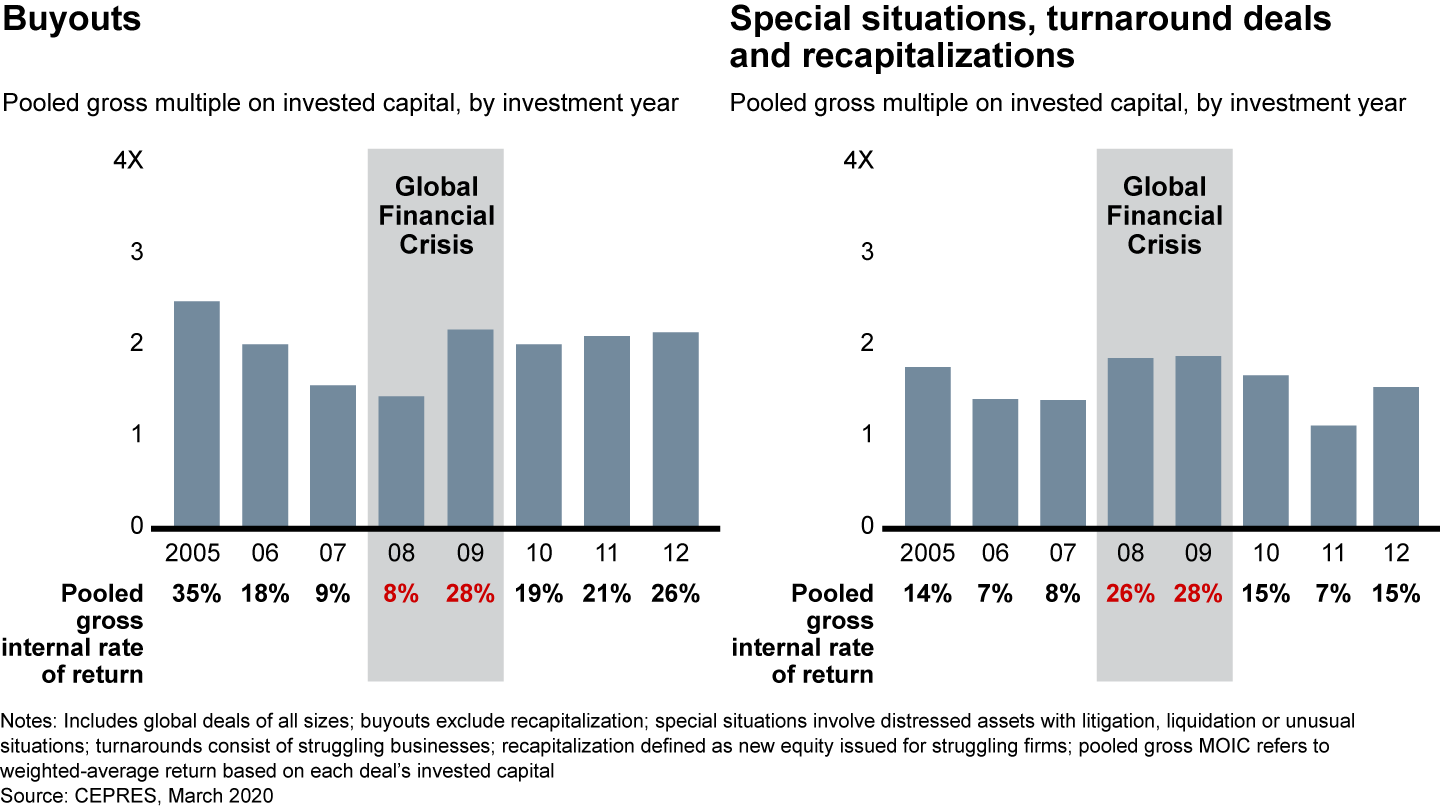
      Investments made during the 2008–09 global financial crisis typically resulted in strong returns

      Two factors, however, make this crisis different.

      The first is the sheer speed with which global economic activity ground to a halt, abruptly throwing companies across the economic spectrum into turmoil. The second is the potential impact on consumer behavior. People and businesses have learned to cope with stay-at-home orders and shortages, and the shift in demand for products and services could stick long after the pandemic has passed.

      These factors add a layer of Covid-specific complexity to the normal due-diligence process for distressed investing. As funds get back to deploying capital, they will likely have to change the way they evaluate opportunities and build models for the future, in light of this truly unique demand shock.

      The near-term questions facing investors, of course, are impossible to answer with much certainty. No one knows exactly when normal business activity will resume, making it difficult to assess the full impact of this demand shock on the global economy, let alone specific target companies. That said, there are practical ways to evaluate potential opportunities by separating the Covid-related fallout from a company’s longer-term competitive position, demand outlook and financial health. When looking at a specific target company in this environment, you need to consider several key questions.

      For Our Clients

      Macro Surveillance Platform

      For more detail on the business implications of coronavirus from Bain’s Macro Trends Group, log on to the Macro Surveillance Platform. Learn more about the platform >

      What will happen to industry demand after the crisis? 

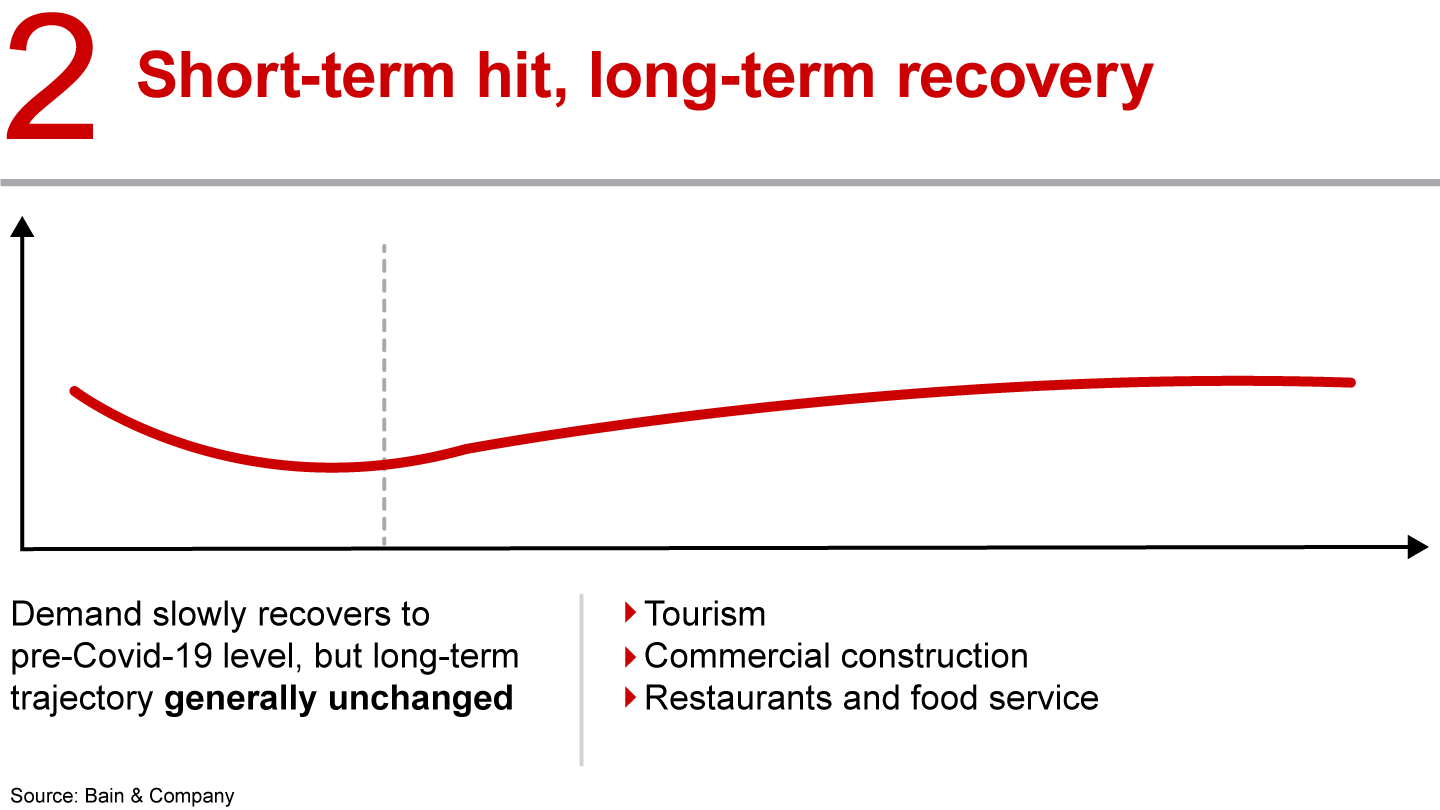
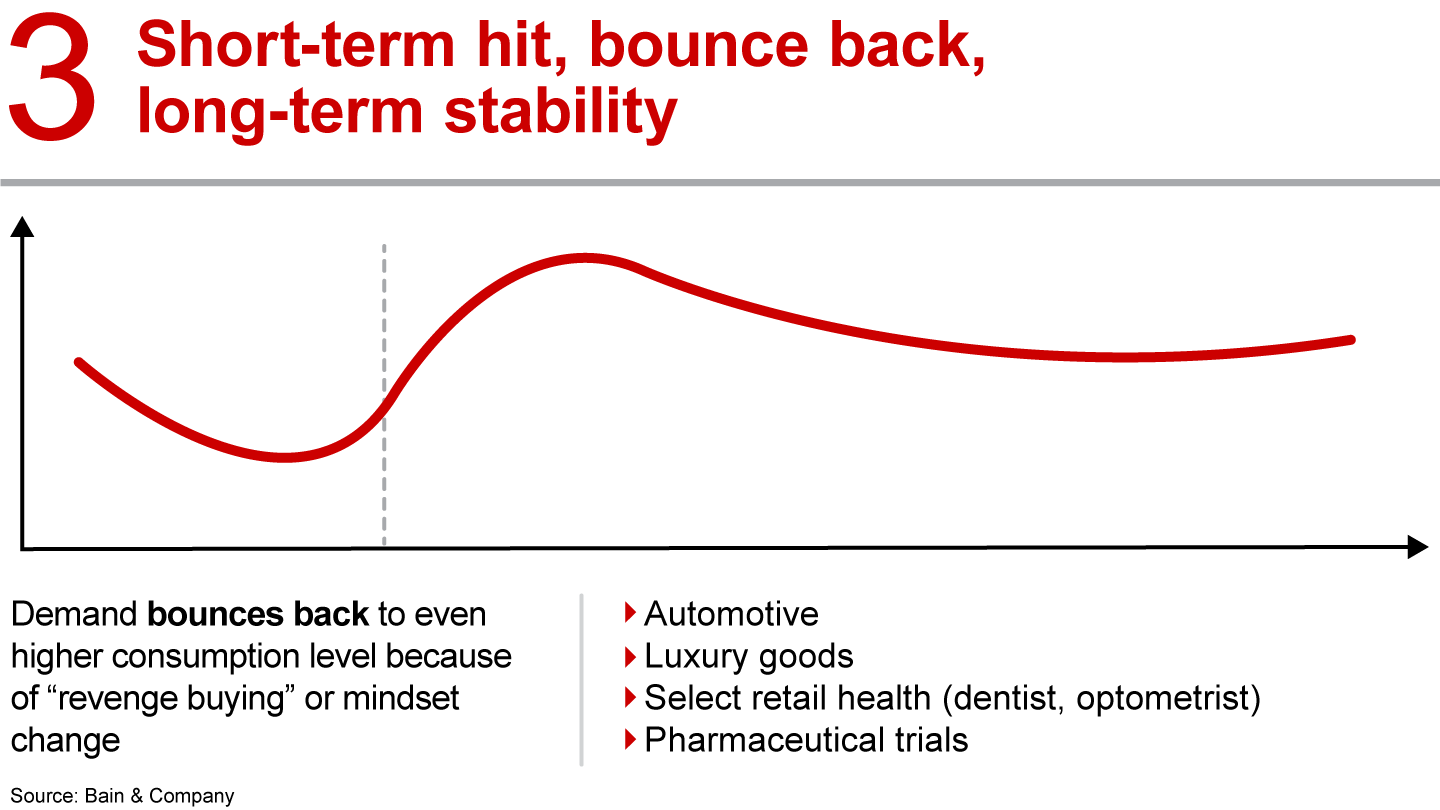
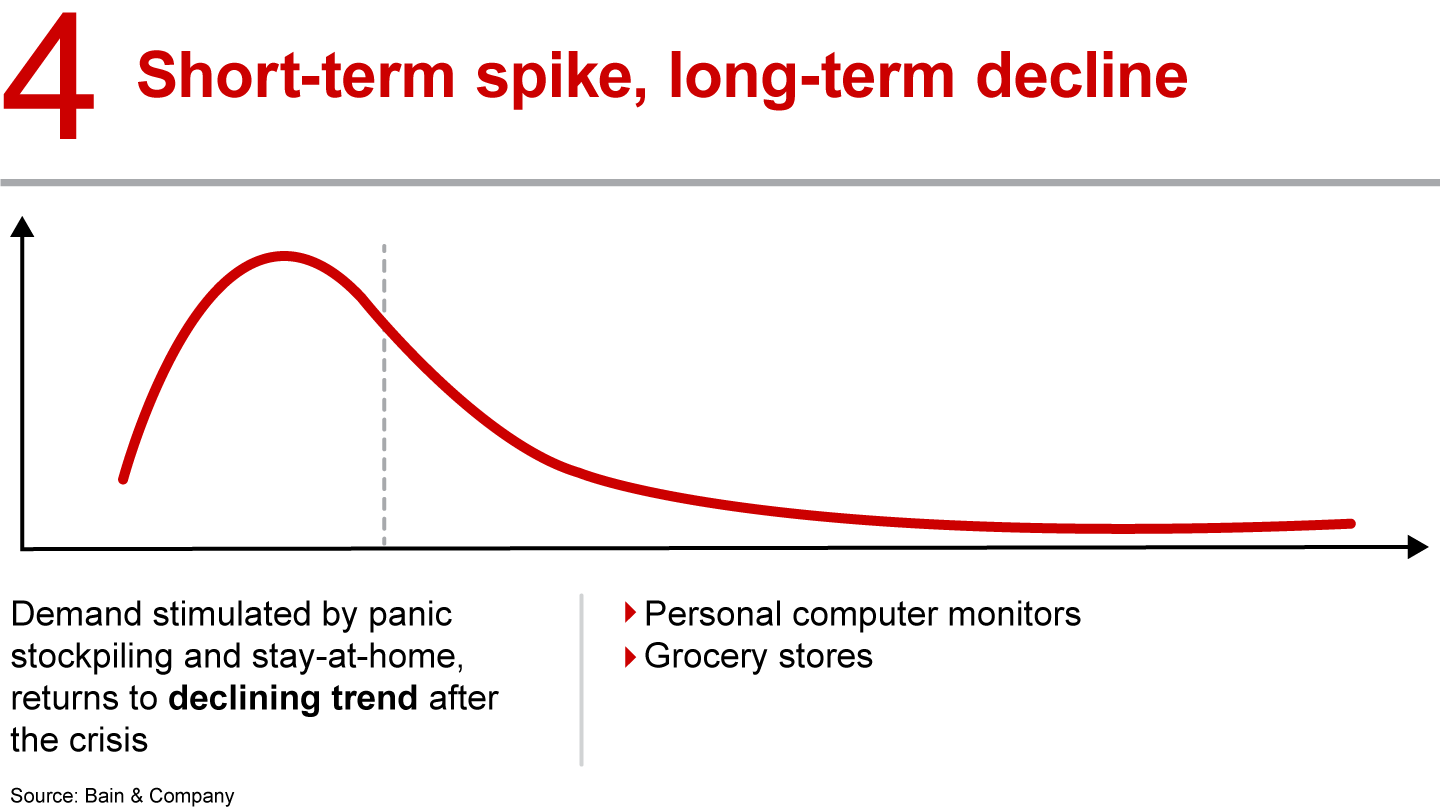
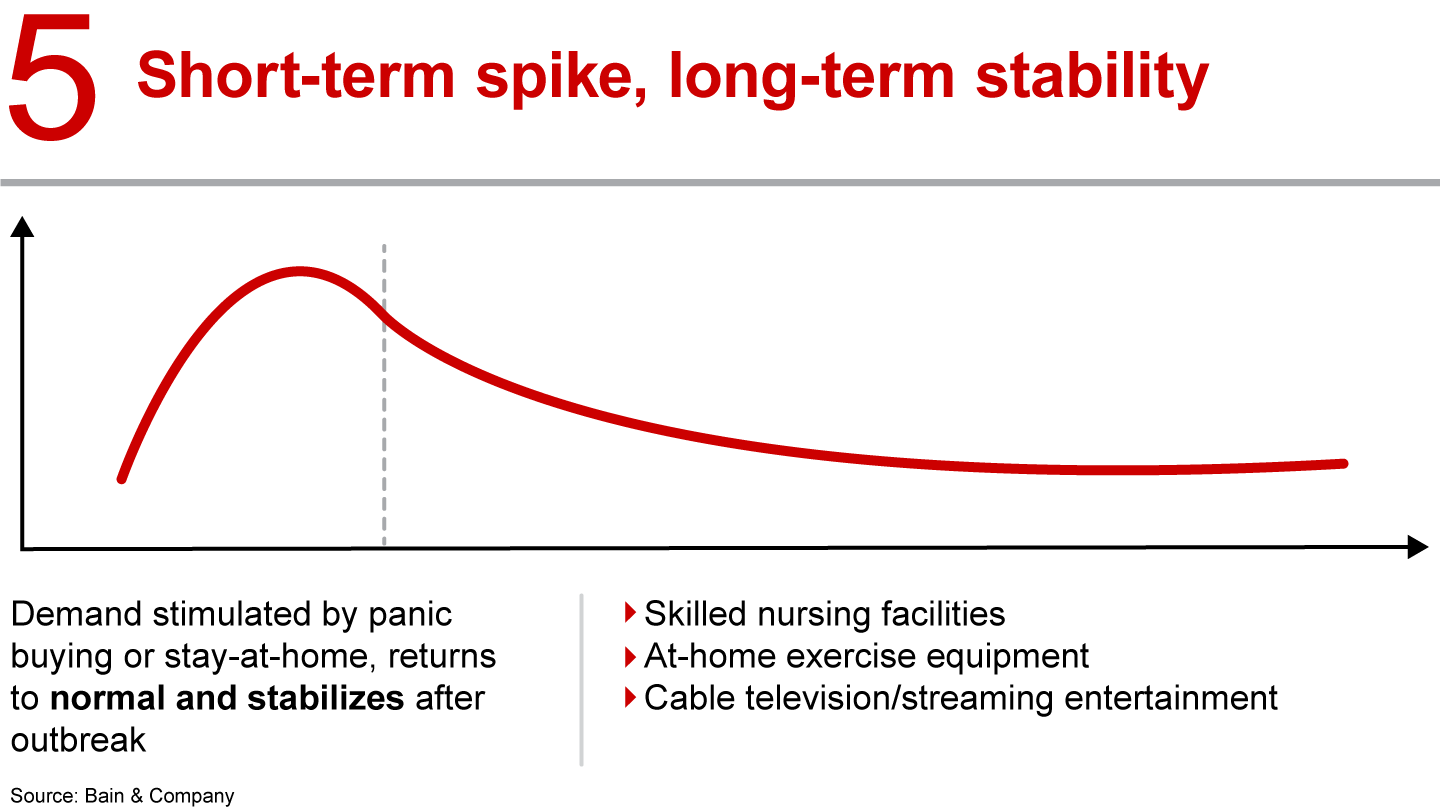
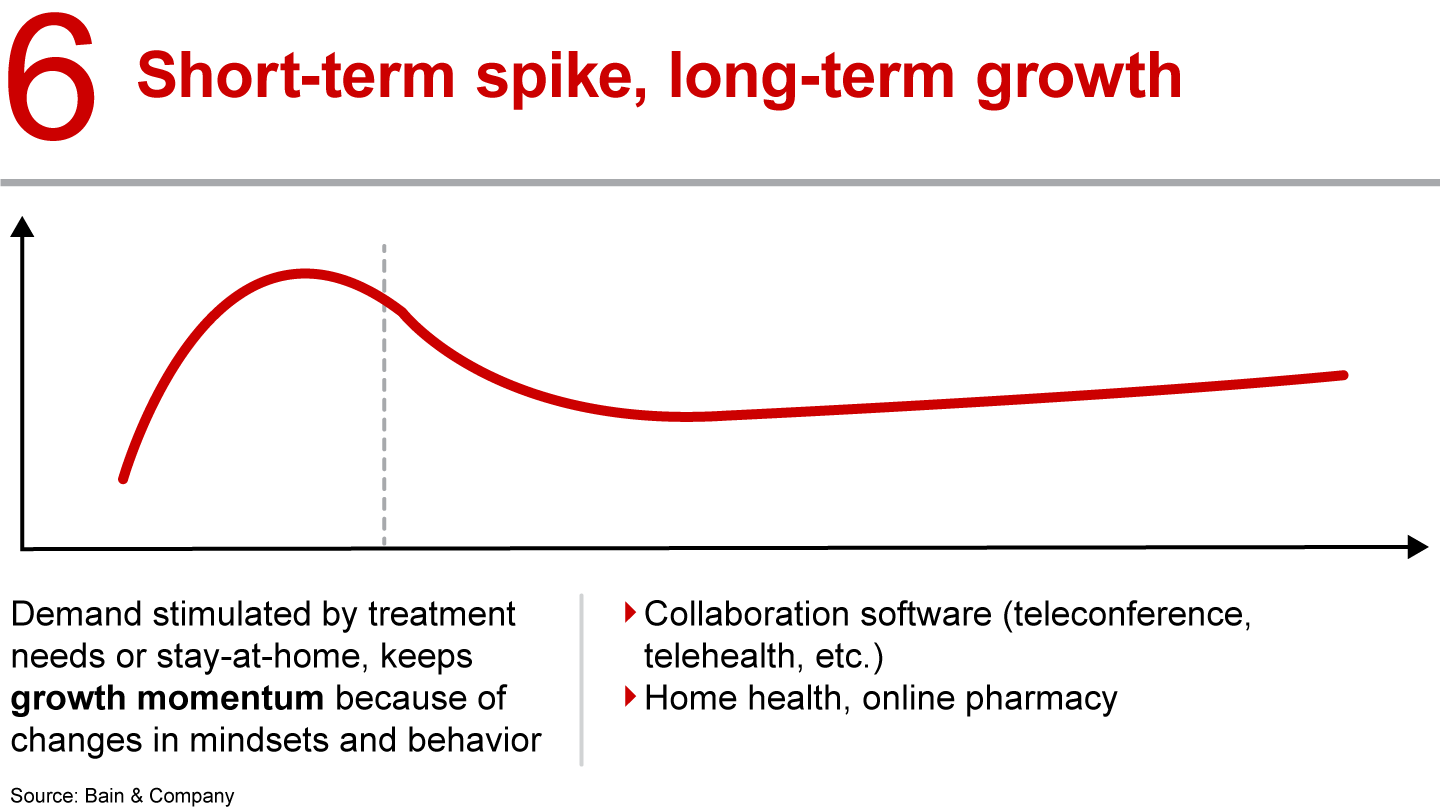
      After a period of artificially suppressed demand for goods and services, many industries are likely to bounce back when the immediate crisis passes and the economy can find its footing. But the shape of the demand profile will vary from industry to industry and may be different than it was before the crisis (see Figure 2). While today’s lockdown scenario is posing a major challenge to any tourism-related company, the overall industry will recover eventually and demand is likely to settle into a familiar pattern over the long term. But collaborative software products may step up to a new level of long-term demand, having demonstrated their utility in an assortment of remote working situations. The same could be said for a wide variety of health and safety products as consumers make a new habit of shielding themselves from potential threats.

      The question for investors is, what will the new normal look like? Are the substitutes consumers discovered during the crisis in many industries as good as, or better than, what they were using before? Do they adequately replace existing solutions, even for a subset of products? Alternatively, will post-Covid customers unleash pent-up demand for the original goods or services, resulting in accelerated growth? 

      Figure 2 (slideshow): 1
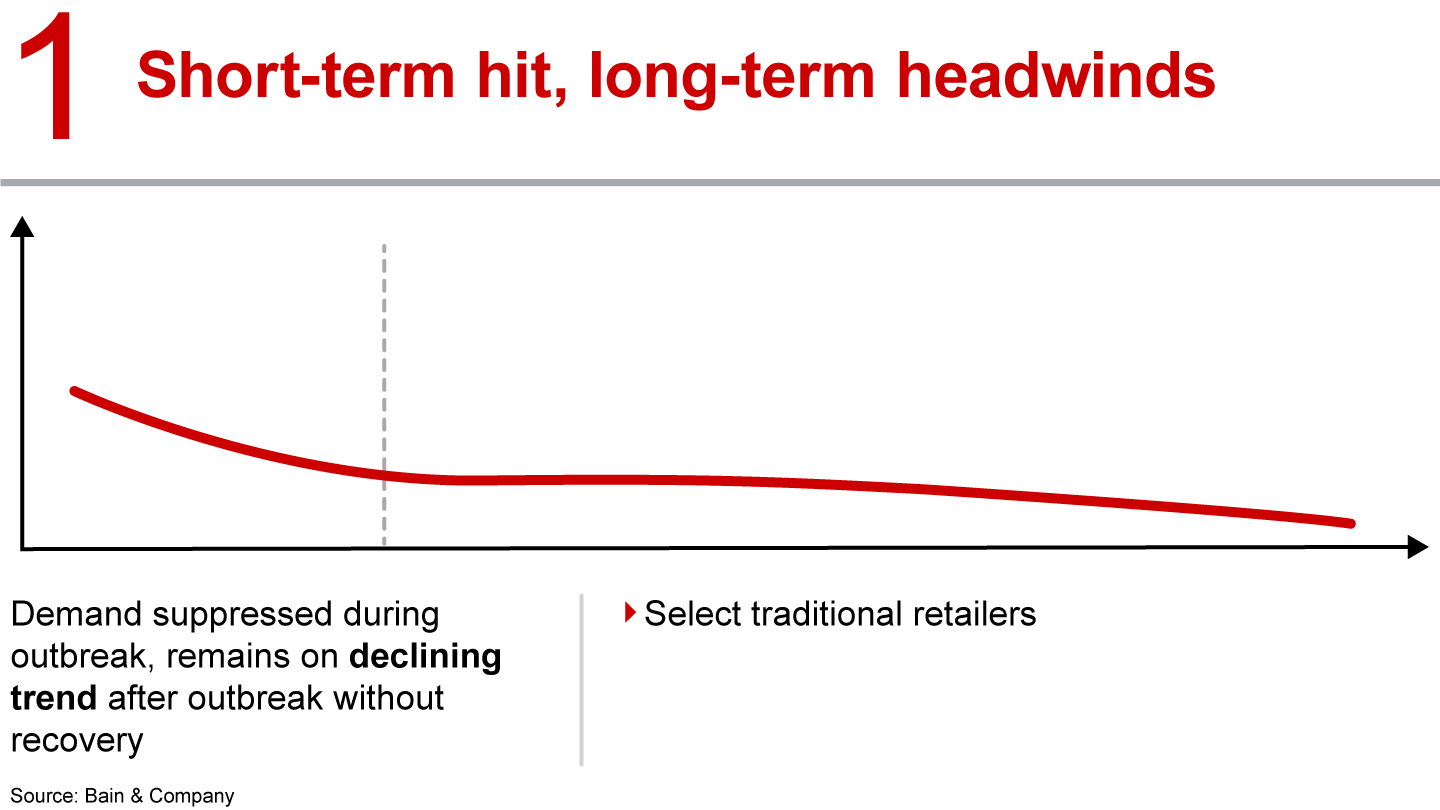
      Industries will recover from the Covid-19 crisis in different ways, which will affect their long-term attractiveness
      Industries will recover from the Covid-19 crisis in different ways, which will affect their long-term attractiveness
      Industries will recover from the Covid-19 crisis in different ways, which will affect their long-term attractiveness

      Figure 2 (slideshow): 2

      Industries will recover from the Covid-19 crisis in different ways, which will affect their long-term attractiveness
      Industries will recover from the Covid-19 crisis in different ways, which will affect their long-term attractiveness
      Industries will recover from the Covid-19 crisis in different ways, which will affect their long-term attractiveness

      Figure 2 (slideshow): 3

      Industries will recover from the Covid-19 crisis in different ways, which will affect their long-term attractiveness
      Industries will recover from the Covid-19 crisis in different ways, which will affect their long-term attractiveness
      Industries will recover from the Covid-19 crisis in different ways, which will affect their long-term attractiveness

      Figure 2 (slideshow): 4

      Industries will recover from the Covid-19 crisis in different ways, which will affect their long-term attractiveness
      Industries will recover from the Covid-19 crisis in different ways, which will affect their long-term attractiveness
      Industries will recover from the Covid-19 crisis in different ways, which will affect their long-term attractiveness

      Figure 2 (slideshow): 5

      Industries will recover from the Covid-19 crisis in different ways, which will affect their long-term attractiveness
      Industries will recover from the Covid-19 crisis in different ways, which will affect their long-term attractiveness
      Industries will recover from the Covid-19 crisis in different ways, which will affect their long-term attractiveness

      Figure 2 (slideshow): 6

      Industries will recover from the Covid-19 crisis in different ways, which will affect their long-term attractiveness
      Industries will recover from the Covid-19 crisis in different ways, which will affect their long-term attractiveness
      Industries will recover from the Covid-19 crisis in different ways, which will affect their long-term attractiveness

      Is it Covid-19 or something else? 

      Given the severity of the Covid-19 demand shock, companies in almost any industry will feel economic pressure, sometimes extreme, that will require infusions of capital. But the sweeping nature of the crisis can obscure other, unrelated problems at a target company.

      If revenue for an entire industry has walked off a cliff, it is all the more important to compare the company’s historical financial and operating performance against competitors before the crisis. An otherwise healthy company that had forged a strong market position will be in a much better position to recover and thrive when the crisis abates than a company that already had issues holding it back. Those issues may not be a deal breaker. But in an economic environment that may weigh down performance for an extended period, you need to assess whether you can fix those internal problems on a reasonable timetable with a manageable level of investment.

      Is the company poised to thrive in the recovery?

      A related question is how well-poised the company is to win as its industry emerges from the crisis. Has it positioned itself to thrive in a post-Covid-19 world? From a diligence standpoint, this involves analysis at all levels of the business. Have the company’s sales and customer engagement teams done a better job than competitors at working with customers through the crisis to deepen relationships and generate good will for the future? At an operational level, does the company have the production capacity, supply chain strength and cost structure to quickly ramp up and take full advantage of a surge in demand?

      A longer-term issue is whether the company faces new competitive threats due to changes in customer behavior and whether it can adjust quickly enough to take advantage of the changes. The crisis has forced customers to break out of old habits and try new solutions in both B2C and B2B environments. E-commerce offerings are exploding as consumers order everything from groceries to equipment for a new home office. Remote communications tools like Zoom or BlueJeans are finding uses their developers never anticipated. These changes may have ripple effects for businesses across the economy.  Restaurant chains will most certainly benefit when their customers are released from home confinement, but the restaurant companies that have developed or refined their home-delivery channel are more likely to thrive than those that have not.

      Businesses that use this period of remote engagement to redefine how they interact with employees and customers may likewise find ways to better connect with both constituencies, making their people more efficient and offering customers a better way to work together. The best companies will be thinking about these issues now, not later. The key is to emerge from the crisis aligned with any structural changes in customer behaviors.

      What are the risks from near-term disruption?

      Any investment during this highly turbulent and uncertain period must account for scenarios that assess disruption risk and the company’s ability to withstand it. Due diligence should assume the worst and identify specific, practical action plans. What will happen to customer demand if the crisis drags on into the summer? Supply chain inputs might be steady now, but what about two months from now? Does the company’s cost structure give it the flexibility to scale down temporarily and scale back up rapidly?

      With demand potentially in free fall, you have to determine whether the target has the staying power to withstand the shock. What are the short-term cash flow issues? How much capital investment will the company need (factoring in potential government aid) and what kind of balance sheet can it support? The duration and intensity of this crisis are impossible to measure right now. Given that uncertainty, do you really understand the risk, in light of the ongoing investment requirements?

      Do we have the right experience and capabilities? 

      This is really a two-part question. The first part refers to the firm’s sweet spot. Does this investment line up with the firm’s differentiated capabilities and repeatable value-creation model? A distressed investment may look like a bargain. But are you really confident your firm knows how to mitigate the risk by pulling the right levers to retool the company?

      The second part of the question involves distressed-investing capabilities. Given that many targets in the current environment are struggling, firms have to get comfortable with several key elements.

      • A stronger likelihood of default or bankruptcy. Firms skilled at distressed investing know how to track bankruptcy risk and what to do (and do quickly) if things head south. They know how to triage, how to build a detailed action plan, and where to find the capabilities to manage the process—legal expertise, alternative financing, and so on.
      • Faster decisions with less data. Distressed investing often involves moving more quickly than the investment committee is used to. Firms have to make decisions based on alternative sources of data. If there is no “book” laying out historical financial and historical information, the firm may need to lean on customer and supplier interviews or scrape web data to find answers. It may need to tap outside expertise to quickly analyze industry conditions or competitive positioning from the outside in.
      • Scenario-based turnaround plans. Given the severity of the Covid-19 demand shock, firms need to create both short-term firefighting scenarios to reduce liquidity risk and multiple long-term turnaround scenarios before investing. They also have to be prepared to execute on Day 1, shifting personnel, making operational changes, and doing it all at speed. Turnaround plans often involve drastic measures like layoffs and asset dispositions to get a company back on the right footing. So firms have to understand how to limit the damage, especially during a national emergency. And they must be prepared to manage any blowback associated with tough measures.

      PE firms will inevitably play an important role in providing liquidity to a global market in shock and will help companies across the economy find their way through the storm. But investing during a period of massive turbulence and deep uncertainty will call for new skills and approaches to due diligence. Success will require a well-reasoned understanding of short-term impacts and longer-term structural changes to companies and industries. More than ever, it will also require a clear-eyed understanding of how your firm can both add value and mitigate risk as unique investment opportunities emerge.

      Related Insights

      Coronavirus

      The global Covid-19 pandemic has extracted a terrible human toll and spurred sweeping changes in the world economy. Across industries, executives have begun reassessing their strategies and repositioning their companies to thrive now and in the world beyond coronavirus.

      Marc Lino, Hubert Shen, Andrei Vorobyov and Hao Zhou are partners with Bain & Company’s Global Private Equity practice. They are based in Amsterdam, Los Angeles, Copenhagen and Hong Kong, respectively.

      著者
      • Headshot of Marc Lino
        Marc Lino
        パートナー, Dubai
      • Headshot of Hubert Shen
        Hubert Shen
        パートナー, Los Angeles
      • Andrei Vorobyov
        Alumni, Copenhagen
      • Headshot of Hao Zhou
        Hao Zhou
        パートナー, Hong Kong
      関連業種
      • プライベートエクイティ
      Coronavirus
      Will Covid-19 Hurt or Help Healthcare Companies? It Depends

      Prospects have improved for alternative sites of care, telemedicine, modernization of clinical trials, and healthcare provider consolidation.

      詳細
      Coronavirus
      Cash Management Practices to Weather a Downturn

      Take an honest look at the business, and decide where to improve.

      詳細
      プライベートエクイティ
      Spotting the Downturn Early and Coming Out Ahead with Gryphon’s David Andrews

      We ask the co-CEO of Gryphon Investors how he spotted one of the harshest cycles in the industry’s history and when he thinks it may finally break.

      詳細
      Coronavirus
      Ramping Up Online Grocery without Breaking the Bank

      Bain’s Marc-André Kamel discusses the challenges that online grocery presents for retailers and CPGs and how they can pair up to find a winning solution.

      詳細
      プライベートエクイティ
      What Kind of AI Cycle Are We Actually In?

      The question for investors is not whether AI will boom or bust, but who may be unwittingly subsidizing the buildout.

      詳細
      First published in 4月 2020
      Tags
      • Coronavirus
      • プライベートエクイティ

      クライアント支援事例

      A Strategic Vision Inspires a Strategic Acquisition

      ケーススタディを見る

      Rapid Tech Due Diligence Helped a Private Equity Firm Invest with Confidence

      ケーススタディを見る

      戦略 Pharma oncology growth strategy

      ケーススタディを見る

      お気軽にご連絡下さい

      私達は、グローバルに活躍する経営者が抱える最重要経営課題に対して、厳しい競争環境の中でも成長し続け、「結果」を出すために支援しています。

      ベインの知見。競争が激化するグローバルビジネス環境で、日々直面するであろう問題について論じている知見を毎月お届けします。

      *プライバシーポリシーの内容を確認し、合意しました。

      プライバシーポリシーをご確認頂き、合意頂けますようお願い致します。
      Bain & Company
      お問い合わせ Sustainability Accessibility Terms of use Privacy Cookie Policy Sitemap Log In

      © 1996-2026 Bain & Company, Inc.

      お問い合わせ

      How can we help you?

      • ビジネスについて
      • プレス報道について
      • 採用について
      全てのオフィス