
Skip to Content
  • オフィス

    オフィス

    北米・南米
    • Atlanta
    • Austin
    • Bogota
    • Boston
    • Buenos Aires
    • Chicago
    • Dallas
    • Denver
    • Houston
    • Los Angeles
    • Mexico City
    • Minneapolis
    • Monterrey
    • Montreal
    • New York
    • Rio de Janeiro
    • San Francisco
    • Santiago
    • São Paulo
    • Seattle
    • Silicon Valley
    • Toronto
    • Washington, DC
    ヨーロッパ・中東・アフリカ
    • Amsterdam
    • Athens
    • Berlin
    • Brussels
    • Copenhagen
    • Doha
    • Dubai
    • Dusseldorf
    • Frankfurt
    • Helsinki
    • Istanbul
    • Johannesburg
    • Kyiv
    • Lisbon
    • London
    • Madrid
    • Milan
    • Munich
    • Oslo
    • Paris
    • Riyadh
    • Rome
    • Stockholm
    • Vienna
    • Warsaw
    • Zurich
    アジア・オーストラリア
    • Bangkok
    • Beijing
    • Bengaluru
    • Brisbane
    • Ho Chi Minh City
    • Hong Kong
    • Jakarta
    • Kuala Lumpur
    • Manila
    • Melbourne
    • Mumbai
    • New Delhi
    • Perth
    • Shanghai
    • Singapore
    • Sydney
    • Tokyo
    全てのオフィス
  • アルムナイ
  • メディア
  • お問い合わせ
  • 東京オフィス
  • Japan | 日本語

    地域と言語を選択

    グローバル
    • Global (English)
    北米・南米
    • Brazil (Português)
    • Argentina (Español)
    • Canada (Français)
    • Chile (Español)
    • Colombia (Español)
    ヨーロッパ・中東・アフリカ
    • France (Français)
    • DACH Region (Deutsch)
    • Italy (Italiano)
    • Spain (Español)
    • Greece (Elliniká)
    アジア・オーストラリア
    • China (中文版)
    • Korea (한국어)
    • Japan (日本語)
  • Saved items (0)
    Saved items (0)

    You have no saved items.

    後で閲読、共有できるようにするためにブックマークしてください

    Explore Bain Insights
  • 業界別プラクティス
    メインメニュー

    業界別プラクティス

    • 航空宇宙、防衛、政府関連
    • 農業
    • 化学製品
    • インフラ、建設
    • 消費財
    • 金融サービス
    • ヘルスケア
    • 産業機械、設備
    • メディア、エンターテインメント
    • 金属
    • 採掘・鉱業
    • 石油、ガス
    • 紙、パッケージ
    • プライベートエクイティ
    • 公共、社会セクター
    • 小売
    • テクノロジー
    • 通信
    • 交通
    • 観光産業
    • 公益事業、再生可能エネルギー
  • 機能別プラクティス
    メインメニュー

    機能別プラクティス

    • カスタマー・エクスペリエンス
    • サステイナビリティ、 社会貢献
    • Innovation
    • 企業買収、合併 (M&A)
    • オペレーション
    • 組織
    • プライベートエクイティ
    • マーケティング・営業
    • 戦略
    • アドバンスド・アナリティクス
    • Technology
    • フルポテンシャル・トランスフォーメーション
  • Digital
  • 知見/レポート
  • ベイン・アンド・カンパニーについて
    メインメニュー

    ベイン・アンド・カンパニーについて

    • ベインの信条
    • 活動内容
    • 社員とリーダーシップ
    • プレス・メディア情報
    • クライアントの結果
    • 受賞歴
    • パートナーシップを結んでいる団体
    Further: Our global responsibility
    • ダイバーシティ
    • 社会貢献
    • サステイナビリティへの取り組み
    • 世界経済フォーラム(WEF)
    Learn more about Further
  • キャリア
    メインメニュー

    キャリア

    • ベインで働く
      キャリア
      ベインで働く
      • Find Your Place
      • ベインで活躍する機会
      • ベインのチーム体制
      • 学生向けページ
      • インターンシップ
      • 採用イベント
    • ベインでの体験
      キャリア
      ベインでの体験
      • Blog: Inside Bain
      • キャリアストーリー
      • 社員紹介
      • Where We Work
      • 成長を後押しするサポート体制
      • アフィニティ・グループ
      • 福利厚生
    • Impact Stories
    • 採用情報
      キャリア
      採用情報
      • 採用プロセス
      • 面接内容
    FIND JOBS
  • オフィス
    メインメニュー

    オフィス

    • 北米・南米
      オフィス
      北米・南米
      • Atlanta
      • Austin
      • Bogota
      • Boston
      • Buenos Aires
      • Chicago
      • Dallas
      • Denver
      • Houston
      • Los Angeles
      • Mexico City
      • Minneapolis
      • Monterrey
      • Montreal
      • New York
      • Rio de Janeiro
      • San Francisco
      • Santiago
      • São Paulo
      • Seattle
      • Silicon Valley
      • Toronto
      • Washington, DC
    • ヨーロッパ・中東・アフリカ
      オフィス
      ヨーロッパ・中東・アフリカ
      • Amsterdam
      • Athens
      • Berlin
      • Brussels
      • Copenhagen
      • Doha
      • Dubai
      • Dusseldorf
      • Frankfurt
      • Helsinki
      • Istanbul
      • Johannesburg
      • Kyiv
      • Lisbon
      • London
      • Madrid
      • Milan
      • Munich
      • Oslo
      • Paris
      • Riyadh
      • Rome
      • Stockholm
      • Vienna
      • Warsaw
      • Zurich
    • アジア・オーストラリア
      オフィス
      アジア・オーストラリア
      • Bangkok
      • Beijing
      • Bengaluru
      • Brisbane
      • Ho Chi Minh City
      • Hong Kong
      • Jakarta
      • Kuala Lumpur
      • Manila
      • Melbourne
      • Mumbai
      • New Delhi
      • Perth
      • Shanghai
      • Singapore
      • Sydney
      • Tokyo
    全てのオフィス
  • アルムナイ
  • メディア
  • お問い合わせ
  • 東京オフィス
  • Japan | 日本語
    メインメニュー

    地域と言語を選択

    • グローバル
      地域と言語を選択
      グローバル
      • Global (English)
    • 北米・南米
      地域と言語を選択
      北米・南米
      • Brazil (Português)
      • Argentina (Español)
      • Canada (Français)
      • Chile (Español)
      • Colombia (Español)
    • ヨーロッパ・中東・アフリカ
      地域と言語を選択
      ヨーロッパ・中東・アフリカ
      • France (Français)
      • DACH Region (Deutsch)
      • Italy (Italiano)
      • Spain (Español)
      • Greece (Elliniká)
    • アジア・オーストラリア
      地域と言語を選択
      アジア・オーストラリア
      • China (中文版)
      • Korea (한국어)
      • Japan (日本語)
  • Saved items  (0)
    メインメニュー
    Saved items (0)

    You have no saved items.

    後で閲読、共有できるようにするためにブックマークしてください

    Explore Bain Insights
  • 業界別プラクティス
    • 業界別プラクティス

      • 航空宇宙、防衛、政府関連
      • 農業
      • 化学製品
      • インフラ、建設
      • 消費財
      • 金融サービス
      • ヘルスケア
      • 産業機械、設備
      • メディア、エンターテインメント
      • 金属
      • 採掘・鉱業
      • 石油、ガス
      • 紙、パッケージ
      • プライベートエクイティ
      • 公共、社会セクター
      • 小売
      • テクノロジー
      • 通信
      • 交通
      • 観光産業
      • 公益事業、再生可能エネルギー
  • 機能別プラクティス
    • 機能別プラクティス

      • カスタマー・エクスペリエンス
      • サステイナビリティ、 社会貢献
      • Innovation
      • 企業買収、合併 (M&A)
      • オペレーション
      • 組織
      • プライベートエクイティ
      • マーケティング・営業
      • 戦略
      • アドバンスド・アナリティクス
      • Technology
      • フルポテンシャル・トランスフォーメーション
  • Digital
  • 知見/レポート
  • ベイン・アンド・カンパニーについて
    • ベイン・アンド・カンパニーについて

      • ベインの信条
      • 活動内容
      • 社員とリーダーシップ
      • プレス・メディア情報
      • クライアントの結果
      • 受賞歴
      • パートナーシップを結んでいる団体
      Further: Our global responsibility
      • ダイバーシティ
      • 社会貢献
      • サステイナビリティへの取り組み
      • 世界経済フォーラム(WEF)
      Learn more about Further
  • キャリア
    人気検索キーワード
    • デジタル
    • 戦略
    前回の検索
      最近訪れたページ

      Content added to saved items

      Saved items (0)

      Removed from saved items

      Saved items (0)

      論説

      Is Private Equity the Bridge to Bring European Banks to Safer Shores?

      Is Private Equity the Bridge to Bring European Banks to Safer Shores?

      As big banks face regulatory and economic pressures, private equity, with ample capital and expertise, may be just what the banking industry needs.

      著者:João Soares, Tim Cochrane and Vitor D'Agnoluzzo

      • min read
      }

      論説

      Is Private Equity the Bridge to Bring European Banks to Safer Shores?
      en

      Europe’s large banks just can’t seem to get enough capital. Bailouts in 28 countries since September 2008 have totaled approximately €1.5 trillion, a huge sum of taxpayer money that has put pressure on banks to improve their balance sheets and their performance. And the well is running dry.

      Complicating matters, Europe’s states want their money back, and bailed-out banks have come under pressure to exit their state ownership. A few recent examples: The Irish state injected €21 billion in Allied Irish Banks between 2009 and 2011 and now, after the management team successfully transformed the bank, the state wants to sell around €4.5 billion of its stake. Portugal pushed Banif to find a buyer for the state’s 61% share, which sold to Santander. The UK’s bailout of Lloyds shows a better picture: Share sales have generated a £1.2 billion profit for taxpayers on the £15 billion of shares sold to date, the Financial Times reported.

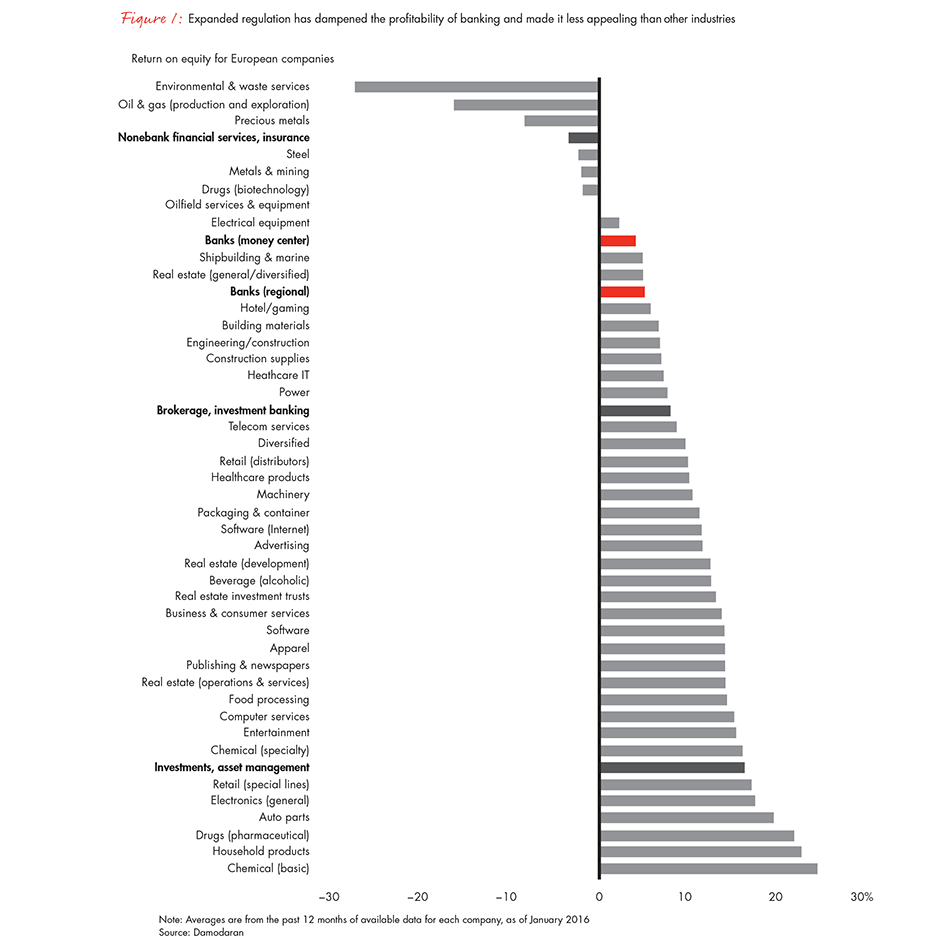
      Who will buy the business units or loan portfolios from struggling banks? Many other banks, whether within or outside Europe, have their own capital issues to deal with and have not eagerly sought to acquire new assets. Although European banks’ return on equity (ROE) recovered to more than 5% in 2015 after bottoming out in 2011, according to SNL, no one expects ROE to match the 15% that banks enjoyed in 2007 (see Figure 1).

      But there is an attractive alternative group of buyers with ample capital and expertise: private equity firms. Private equity currently has plenty of dry powder—capital waiting to be put to work—as well as plenty of experience turning around ailing banks’ strategy and operations. We consider PE funds a worthy, temporary shareholder into which governments and banks can offload assets to raise capital. After the typical holding period of about five years, PE investors will be keen to realize their returns. During that time, European banks could build enough muscle into their balance sheets to absorb the revitalized assets. If not, the revitalized banks would be in a stronger position to continue standalone operations through an initial public offering (IPO).

      PE-bridge-to-banking-fig01_embed

      Why private equity makes sense

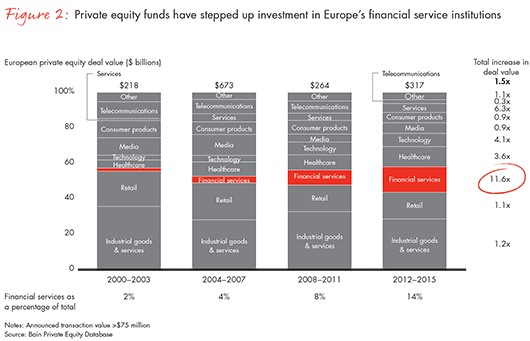
      The private equity solution has a firm foundation, as several PE funds have consistently invested in banking over the past five years (see Figure 2). For example, AnaCap Financial Partners has invested in small and midsize enterprises (SME) banking through Aldermore Bank in the UK and FM Bank in Poland. Advent International and Bain Capital have deepened their expertise in payments and cards through investments in ICBPI, Nets and Worldpay. During their Worldpay ownership, the Wall Street Journal reported that Advenand Bain Capital helped Worldpay achieve an impressive 11% compound annual growth rate in underlying EBITDA and built its value by £3.2 billion over a five-year period.

      Besides their ample experience to date, PE firms have other characteristics that make them logical buyers.

      Substantial dry powder. Private equity reported a 9% increase in dry powder in the past year, reaching $755 billion as of June 2015. The total dry powder of private capital, which includes debt, real estate and infrastructure, reached $1.3 trillion. The past year saw the best environment for fund-raising since the pre-crash boom. Financial services’ share of total deal value in Europe grew from 2% to 14% over the past 15 years (see Figure 2).

      PE-bridge-to-banking-fig02_embed


      Transitional ownership. Funds held their buyout investments for an average 5.5 years as of 2015. Their ability to deliver results to investors depends on quickly turning around businesses, improving operational efficiency and putting companies back on a growth path to ready them for sale or IPO.

      General partners have the flexibility to act quickly if the situation calls for speed. When a government or a bank needs capital fast, private equity firms can mobilize faster and with more confidence than most other sources of capital. They do not come under the public scrutiny that governments deal with, and they can quickly narrow the decision criteria to the few critical decisions that will generate the most value.

      Continued competition. Selling one bank to another implies one fewer competitor in the market. As consolidation proceeds, a lack of competition can hurt underserved groups of customers. Lending volumes to SMEs, for example, fell by almost half during the financial crisis. The elevated borrowing costs created a demand/supply gap that persists, even after the creation of a number of smaller banks and peer-to-peer lending firms. Private equity buyers will select a strategy that is designed to realize the full potential of their acquired bank. Although that strategy might involve a sale to a larger bank, in many cases the smaller bank can thrive on its own. Alternatively, a PE fund will orchestrate a merger between two subscale players, such as the merger of PBP Bank and FM Bank in Poland. In either case, market competition is preserved through a new, revitalized bank.

      Next moves for private equity funds

      Full banks. Few PE funds currently choose to take on full bank balance sheet risk, though cases do exist: AnaCap Financial Partners with Banco Popolare Ceska, Aldermore, Mediterranean Bank and FM Bank; and Lone Star with IKB Deutsche Industriebank. As more funds try their hand at full banking transactions, they might become more confident in pursuing other such investments. Most PE funds, however, prefer to buy business units or loan portfolios. Governments or banks that are looking to divest thus should consider the option of splitting assets before a sale, through a couple of methods.

      Carve-outs of divisions. Splitting a bank into multiple businesses stands to attract more interest from focused buyers. Banco Espírito Santo, for example, first went through a good bank/bad bank separation. The good bank Novo Banco then sold its insurance and its investment arms; now the government is trying, for the second time, to sell the remaining assets. In the recent case of four banche popolari, or mutual banks, on sale in Italy, the chairman appointed to conduct the sale expressed preference for a single deal, but said multiple deals were possible.

      The viability of this option will depend on stakeholders’ preferences. On the sell side, bankers must be willing to execute the carve-out and map a timeline for the transaction. On the buy side, a PE fund must be able to coordinate with other interested parties and agree to take on noncore assets.

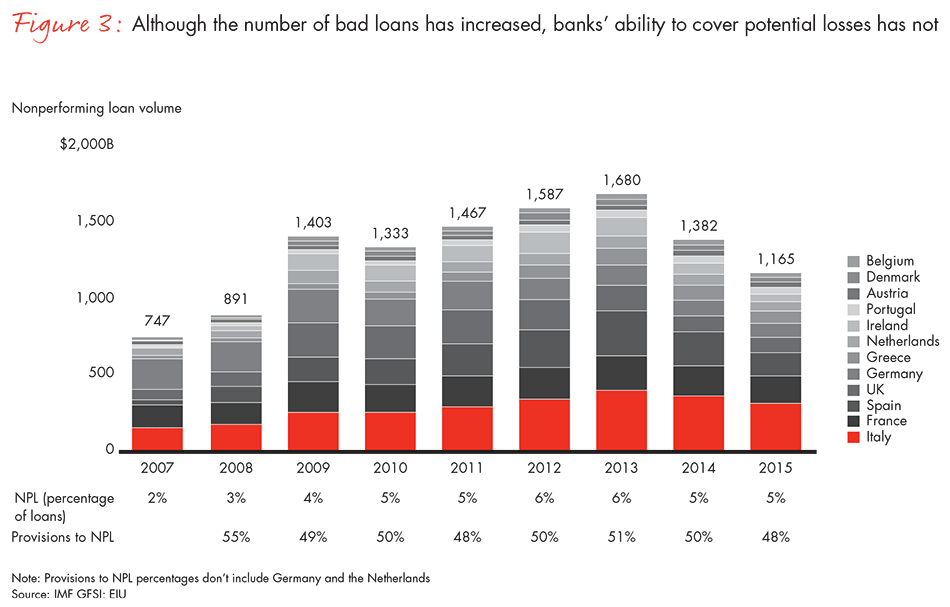
      Portfolio cleanup. Banks have been offloading bad debt portfolios in the past few years, with UK, Irish, Spanish and Italian banks among the big sellers of bad debt, according to Dealogic data. For example, UniCredit sold its bad loan unit UCCMB—with a gross book value of €2.4 billion—to a consortium led by US asset management group Fortress for about €500 million. And Banca Monte dei Paschi di Siena disclosed that it sold a loan portfolio worth €1.3 billion to Cerberus Capital Management and Banca IFIS. Nonperforming loans (NPLs) now represent 5% of total loans and a $1.2 trillion pool of assets in 12 European economies, up from 2% in 2007 (see Figure 3). 

      PE-bridge-to-banking-fig03_embed

      Yet although the volume of NPLs has doubled, provisions to absorb potential losses have not increased. With various regulators attempting to reduce the pool of NPLs, we expect banks to pursue more loan portfolio sales to specialized recovery firms or experienced private equity funds.

      As governments and regulators put more pressure on banks to resolve capital shortfalls and exit state ownership, private equity offers a logical and attractive path to recovery. Deep pockets combined with the capability to turn around assets are in high demand. Private equity firms thus could serve as a bridge between today’s capital-constrained banking market and tomorrow’s more solid financial system. An expanded role for private equity in European banking could not be better timed, with potential gains for all parties: banks, PE funds, governments and the customers that depend on banks in their financial lives.

      João Soares is a partner with Bain’s Financial Services practice and leads the firm’s banking transformation work in Europe, the Middle East and Africa. Tim Cochrane is a partner in the firm’s Financial Services and Private Equity practices; for the latter, he leads the financial services sector in Europe, the Middle East and Africa. Vitor D’Agnoluzzo is a manager with the Financial Services practice. They are all based in London.


      PE-bridge-to-banking-fig01_full

      PE-bridge-to-banking-fig03_full
      著者
      • Headshot of João Soares
        João Soares
        パートナー, New York
      • Tim Cochrane
        Former Partner, London
      • Headshot of Vitor D'Agnoluzzo
        Vitor D'Agnoluzzo
        パートナー, London
      関連業種
      • プライベートエクイティ
      • 金融サービス
      • 銀行
      プライベートエクイティ
      Bain & Company's Global Private Equity Report 2016

      Bain's annual Global Private Equity Report offers a comprehensive view of the challenges that private equity investors face following a decade of volatility and change, as well as what it will take to succeed in 2016.

      詳細
      金融サービス
      中小企業向けバンキング戦略
      詳細
      金融サービス
      Is the Bank Branch Dead?

      Customers deserting bank branches in favor of mobile and online channels for many interactions signal that the size and nature of the branch network has to change faster and more substantially than most banks acknowledge.

      詳細
      銀行業の未来
      Perform Today, Prove Tomorrow, Propel the Stock Valuation

      Leading banks build credibility with investors by aligning their strategy, execution, and equity story.

      詳細
      金融サービス
      Value or Vanish: The Diverging Paths of North American Banks

      Management’s equity story will make or break the bank’s standing with investors.

      詳細
      First published in 5月 2016
      Tags
      • プライベートエクイティ
      • 金融サービス
      • 銀行
      • 銀行業の未来

      クライアント支援事例

      Digital A European Banking Giant Rises to the Fintech Challenge

      ケーススタディを見る

      Further℠ Redesigning a Bank’s Climate Strategy for Growth

      ケーススタディを見る

      チェンジ・マネジメント The change process unlocks potential and profits

      ケーススタディを見る

      お気軽にご連絡下さい

      私達は、グローバルに活躍する経営者が抱える最重要経営課題に対して、厳しい競争環境の中でも成長し続け、「結果」を出すために支援しています。

      ベインの知見。競争が激化するグローバルビジネス環境で、日々直面するであろう問題について論じている知見を毎月お届けします。

      *プライバシーポリシーの内容を確認し、合意しました。

      プライバシーポリシーをご確認頂き、合意頂けますようお願い致します。
      Bain & Company
      お問い合わせ Sustainability Accessibility Terms of use Privacy Cookie Policy Sitemap Log In

      © 1996-2026 Bain & Company, Inc.

      お問い合わせ

      How can we help you?

      • ビジネスについて
      • プレス報道について
      • 採用について
      全てのオフィス