

論説

概要
- The proliferation of digital channels and options for customers heightens the importance of an undersung variable: message timing.
- Bain's global survey of marketers finds that marketing leaders understand the value of making timely connections with customers, and how technology can help.
- Timing comes into play through signals, sequence and speed. And the technology now exists for marketers to test each with high confidence.
- Mastering timing raises the odds of seizing attention for the immediate purchase and building brand equity in the longer run.
Time is running out on personalized marketing as a means of continually raising the return on investment of campaigns. For the past few years, many marketers have used advanced data analytics to identify the right customers and increase their ROI, but now these practices, while still valuable, are reaching a plateau.
The rise of so many digital channels and options for customers heightens the importance of another, underappreciated variable: message timing, as detailed in new research by Bain & Company in partnership with Google. To strengthen customer relationships, marketers need to know not only which current or prospective customers to reach, but also in which moments (see Figure 1). By communicating at the most opportune times based on people’s behavior and signals, companies can generate more business with fewer or more efficient ads, or expand the audience to find unexpected wins.

Think with Google: Laura Beaudin on Timely Customer Connections
Laura Beaudin discusses how leading marketers build strategies around timely customer connections.
Our research focused on nearly 1,700 marketers globally, at large firms in both consumer and business-to-business industries, to understand the value they have gained from data and technology investments. While there are differences across regions in technology adoption, integration preferences and priorities (see the sidebar, "What the survey shows about marketing around the world"), the research revealed clear characteristics of marketing leaders worldwide. Leaders, defined as the top 20% based on a composite score of revenue and market share growth, don’t just understand which customers to reach and what to say; they also know the importance of connecting with customers at the right moments, and how technology can help in that effort.
Keurig, for example, has learned the value of timing for its coffee pod business. Some people buy months’ worth of coffee pods at a time, while others purchase smaller amounts every week or two. Engaging with consumers at just the right moment makes a huge difference in revenues and customer convenience, by ensuring that people won’t run out of pods.
Previously, Keurig would send daily emails with price-based “buy now” promotions, assuming that consumers who wanted to buy would open the email. But the company decided to look at two years of buying history, including purchase frequency and the digital route taken, so that it could discern clear buying patterns. From that analysis, Keurig identified four distinct customer segments for which it could run tests of more timely and targeted messages. New coffee machine owners, for instance, get messages educating them on the range of flavors available rather than promotional messages. Because this email cadence is more appropriate to the individual consumer, spam tags have decreased, and Keurig reaps data on the effects of branding, education and promotions for each segment.
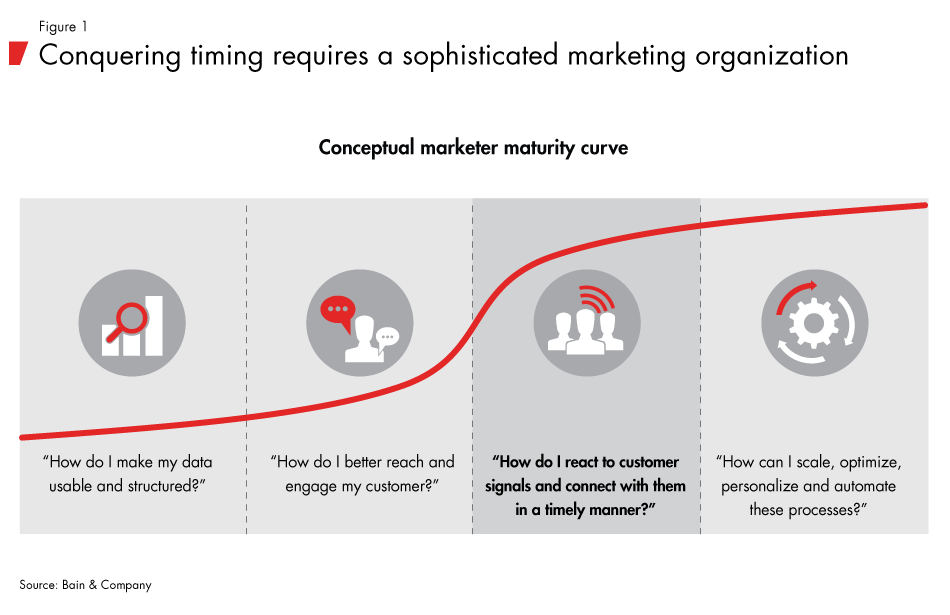
Signals, sequence and speed
Timing comes into play through signals, sequence and speed. And the technology now exists for marketers to test with high confidence when to communicate and in what order—and to do so in near real time.
In the market for over-the-counter medicines, for example, a leading brand mapped its customers’ past search and purchase behavior, determining that people who take the medication in the first two days of symptoms are more likely to get relief and become greater brand advocates. Knowing this, the company worked with Google and WebMD to reach consumers whose search terms suggested they had the symptoms in that narrow time frame. As a result, the brand substantially increased conversion of searches to sales of its medication, building greater brand loyalty at the same time.
When marketers gain a deep understanding of the key moments in the customer life cycle, they can spot crucial signals when they appear and then release a sequence of messages tailored to each customer. A major sporting goods company used to mix brand-oriented, aspirational messages and price-focused promotional messages during the same time frame, in part because its e-commerce and brand teams did not coordinate with each other. Yet leading with a promotional message, while it might generate a short-term sales boost, sacrifices long-term brand value. By contrast, leading with brand messages early in a campaign can have a halo effect on the subsequent promotional messages.
This company now runs campaigns jointly between the two teams, sending and testing messages in a carefully calibrated sequence. As the senior director of digital media told us, “We can sequence our ads to start with a brand message for our most inspirational product, then start promoting a different product with an offer attached if the customer doesn’t bite. This saves money [on promotions] and ensures our positioning remains premium with those for whom our brand really resonates.”
Timing also figures into how quickly a company is able to react to the customer’s behavior. Faster reaction times go a long way toward more effective marketing. And when companies get more proficient in timing their marketing activities, they often realize an unanticipated benefit: They free up more time for brand building, creative development, data mining and honing their capabilities. The digital director of cosmetics retailer Rituals noted that improving its customer prospecting gives the firm more time to “develop creative and ad messaging that is most true to our brand.”
What marketing leaders do differently
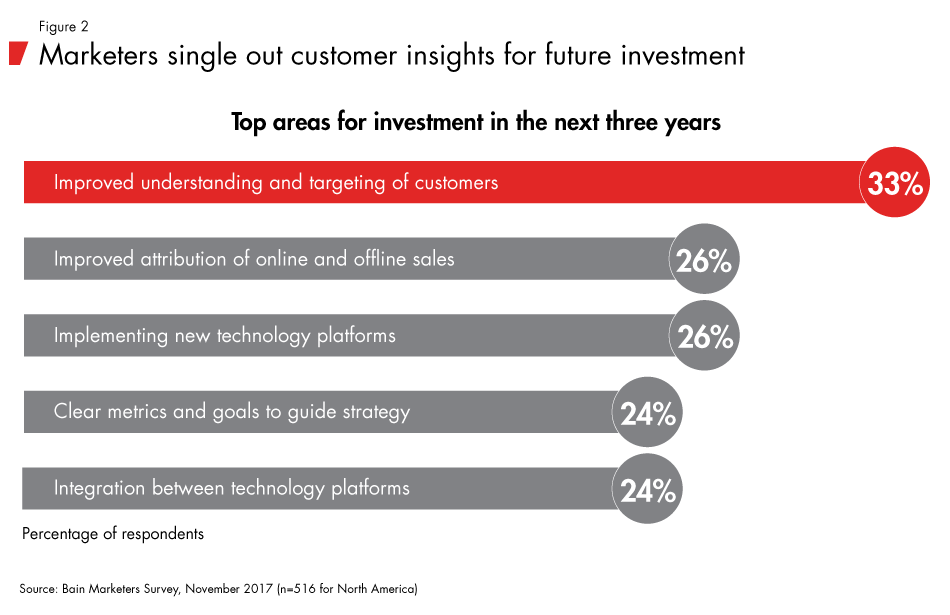
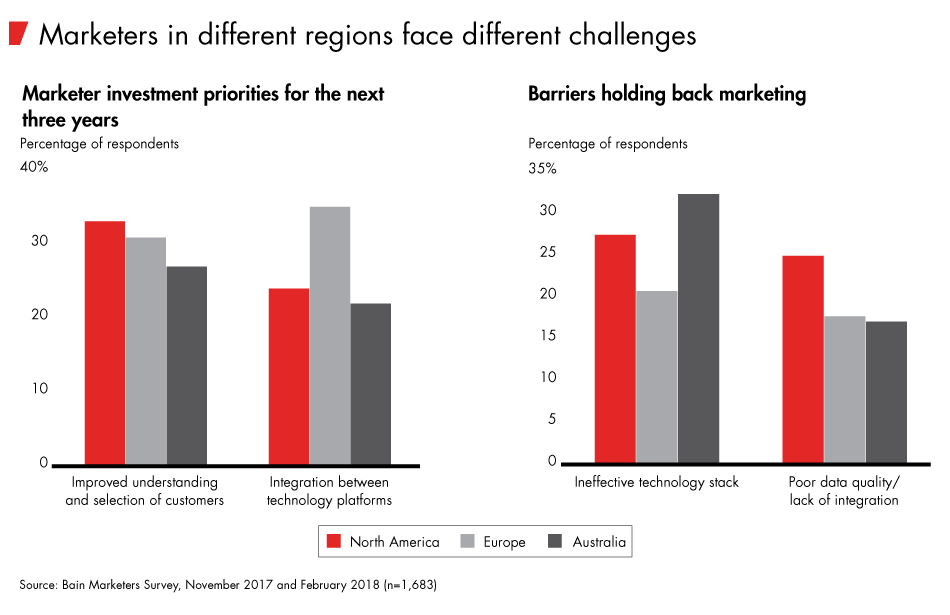
How are the most advanced marketers realizing further gains in ROI? The single greatest investment area over the next three years cited by the North American executives surveyed—roughly 1.3 times more than the next area—is improved understanding and selecting of customers (see Figure 2). While all marketers share this goal, the leaders have advanced furthest in three ways, each of which influences their use of time.
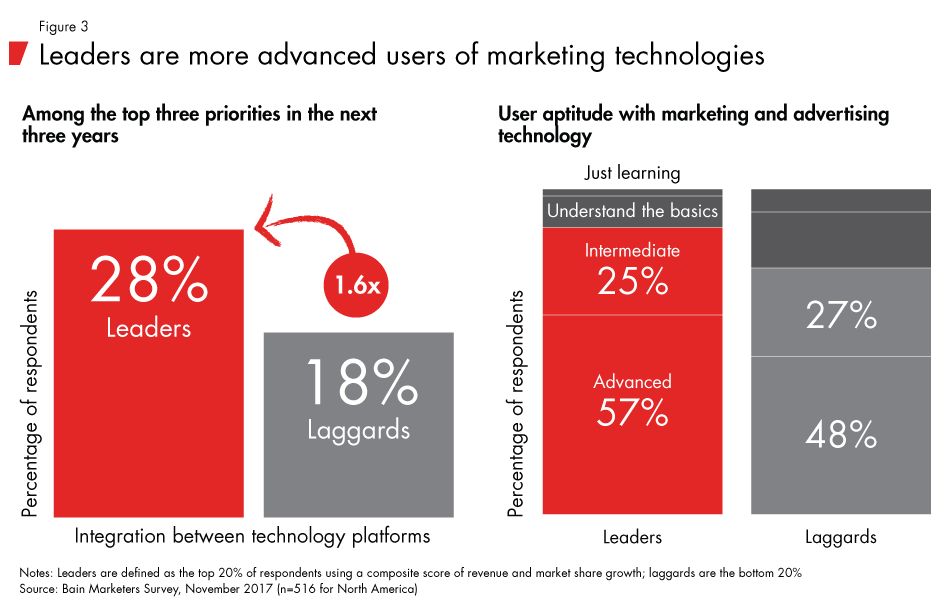
First, they own their digital destiny by taking control of their consumer data and by integrating their marketing and advertising technologies. Marketing leaders in North America are 1.6 times more likely than laggards to prioritize integrating their platforms, and they have a stronger understanding of how to deploy their technology (see Figure 3).
Telecommunications provider Sprint, for instance, consolidated its owned customer data in an open-source environment, then invested in tools and infrastructure to better connect the data to its technology stack. It also combined its analytics and advertising technology group and the media buying team, under the chief digital officer. This allows Sprint to better predict customer preferences and identify activity that indicates potential churn. Some activities that once took days now take minutes, because the employee writing the algorithm sits near a colleague buying paid search. “We’ve found ways to increase conversion rates in new customer acquisition by up to 30%,” said the chief digital officer, “by figuring out the type of phone or features they’d be most interested in, and segmenting them accordingly.”
Second, marketing leaders have built a test-for-results culture, using timely insights derived from experimentation to inform their decisions. They encourage the use of metrics with common definitions, and share the lessons among the marketing and commercial groups.
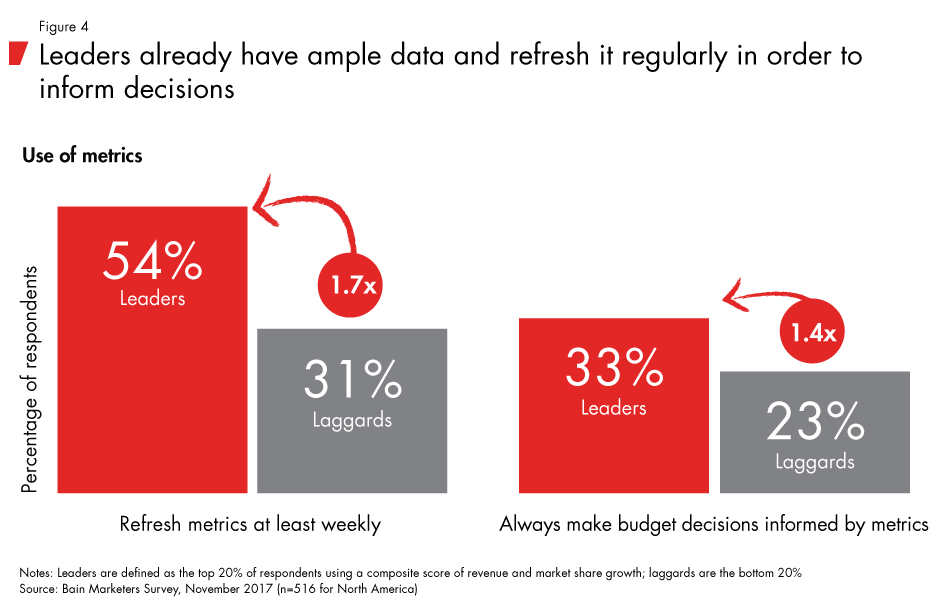
Plenty of customer data is available, and the leaders already have put it to work. Using timely data is critical for valid tests. Among North American survey respondents, the leaders are 1.7 times more likely than laggards to refresh data at least weekly and 1.4 times more likely to use data to directly inform decisions, often in near real time (see Figure 4).
Sprint sets aside a portion of its marketing budget for experimentation or open-ended testing. “We’ll conduct about 30 tests per month, and one to two will show something promising,” said the chief digital officer. “In those cases, we’ll allocate budget from something low performing to capitalize on the new insight.”
NBCUniversal has been systematic about sifting through raw data feeds to uncover insights that can be tested in order to make smarter investments in digital and traditional media channels. For the police series Shades of Blue, the company found midway through the season that audience segments outside the original chosen segment were the most enthusiastic respondents to digital campaigns. Given that insight, NBCU quickly shifted many elements of its marketing campaign to reach the new segments, buying radio ads to reach them as part of a broader, offline campaign. By integrating its technologies and automated data reports before launching the digital campaigns, the company was able to shorten the time required to gain insights and then adjust spending to the high-return audiences.
The third distinguishing feature of how marketing leaders treat time is their faster decision making. They achieve this by having the in-house team responsible for customer acquisition and retention take more accountability for budgets, technology, data and analytics. Many also empower the chief marketing officer to own marketing technology decisions (see Figure 5).
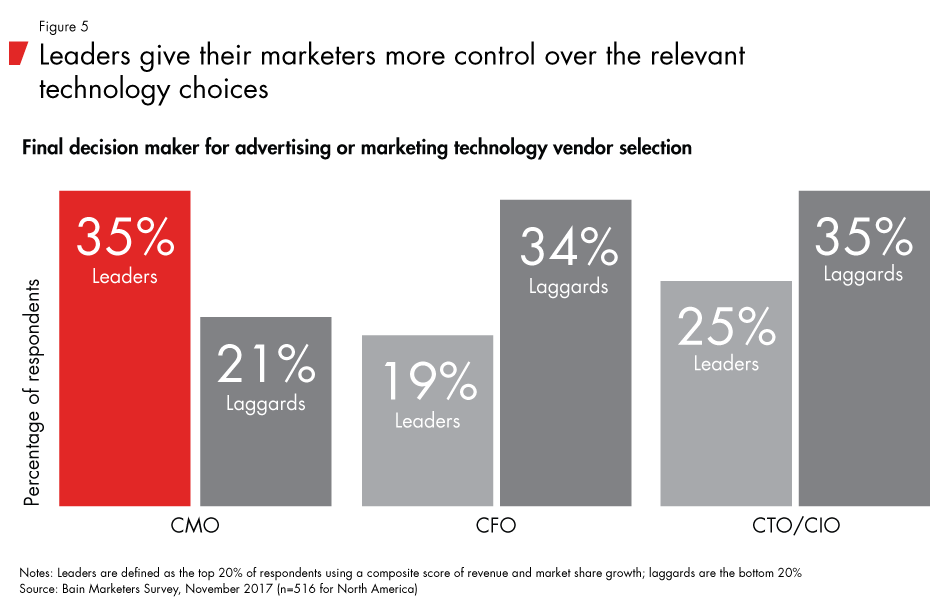
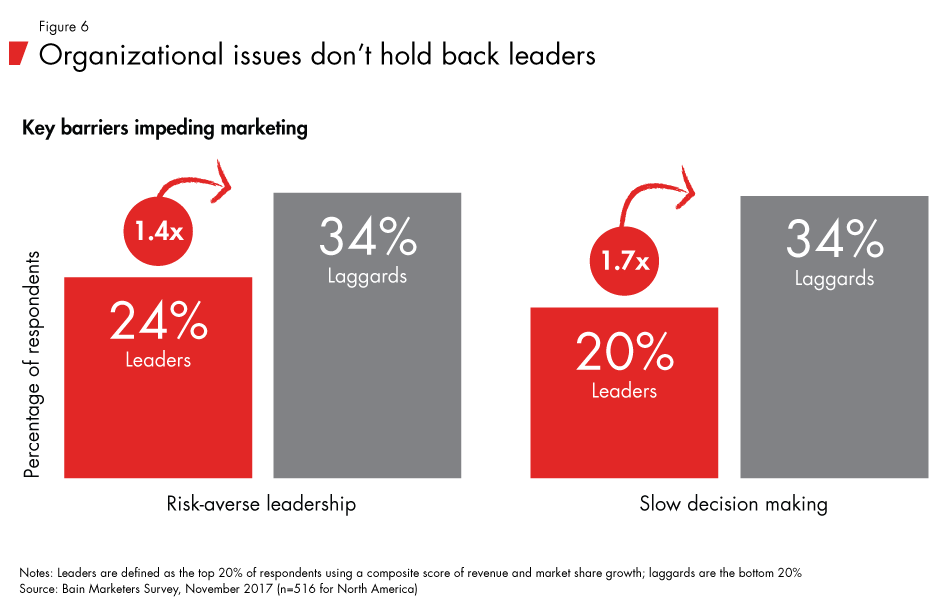
For example, in North America, leaders are almost two times more likely than laggards to manage technology within marketing and were less likely to face organizational hurdles in those decisions (see Figure 6). Some are bringing in-house the social, search and demand-side platform for managing ad and data exchange accounts, so they can monitor and adjust activities more quickly than through systems managed by outside agencies. At Bayer, for example, the head of the global consumer health practice pushed the organization to adopt data aggregation and direct partnerships with key vendors. That executive’s advocacy “was the catalyst that made my mission a lot easier,” said Bayer’s director of US digital strategy.
Tick-tock: No time to waste in moving up the curve
For companies that want to get time on their side, the experiences of current leaders point to two proven paths. Many marketing leaders, including Bayer and Sprint, started down the path when one or more influential senior executives led the charge. After setting the vision, the executives enlist others in the organization to turn that vision into real marketing practices, such as:
- Audit the technology infrastructure to determine which pieces of an integrated platform are missing or unaligned.
- Build the business case to win over the heads of other functions, especially finance and technology.
- Integrate disparate data sources into a single hub, eventually organizing data by brand, category and company division.
- Start marketing, using the chosen audience plus message timing, frequency and sequencing to improve results.
- Capture and share success stories to bring the broader organization on board, leading to collaboration and access to additional data that will further refine customer segmentation and timing.
Companies that lack a clear sponsor, by contrast, will need to rely on small-scale experiments that produce a series of positive results, building momentum for an executive to take notice. To make the case for larger investments in marketing technology, staff at Rituals started small and then scaled up the successful tests. Once conversion started to increase, others became comfortable directing resources to those activities. As the digital director said, “If we had built business cases, we would have lost time in convincing stakeholders. Because we just started testing, we had the results already to prove we should keep going.” Likewise, at Sprint, a small team’s experiments first demonstrated the power of data to others in the company. “We won them over in a natural way,” noted the chief digital officer.
With customers bombarded by marketing and advertising messages, it’s essential to bend time to serve a more efficient and effective approach. Companies that take more control of their marketing and advertising data and technology will be able to respond quickly to a customer’s zigs and zags and send a tailored message at precisely the right moment. That raises the odds of seizing attention for the immediate purchase and building brand equity in the longer run.
What the survey shows about marketing around the world
Even in a connected world, marketing practices vary significantly by region. Bain surveyed marketers in the UK, Germany, Spain, France, Italy, the Netherlands, Japan and Australia about their preferences. While a desire for integrated technology was largely consistent everywhere, we found some surprising differences.
Europe:
- As in North America, a majority (65%) of European marketers value advertising and marketing technology integration, and are making investments to improve customer data to use with advertising and marketing technology.
- But marketers in Europe use about 20% fewer technologies, such as demand-side platform ad buying, customer relationship management, optimization and data management. They are 1.4 times less likely to refresh metrics weekly and two times less likely to make budget decisions based on metrics.
- They are three to four times more likely to say they face no barriers holding back marketing, suggesting they have yet to realize the same data challenges as their North American peers or are taking a different approach.
Australia:
- In Australia, 85% of marketers are looking to adopt and integrate ad and marketing technology. Data integration is also critical for Australian marketers. Improved understanding and selection of customers is their top priority for investment, closely followed by an interest in integrating and activating data sources.
- Unlike other parts of the world, Australian marketers are more likely to feel that a lack of budget is holding them back. This barrier will need to be addressed before data and technology can be unleashed.
Laura Beaudin is a partner and Francine Gierak is a principal in Bain & Company’s Customer Strategy & Marketing practice. Beaudin leads Bain’s global marketing excellence work.
First published in 4月 2018