
Skip to Content
  • オフィス

    オフィス

    北米・南米
    • Atlanta
    • Austin
    • Bogota
    • Boston
    • Buenos Aires
    • Chicago
    • Dallas
    • Denver
    • Houston
    • Los Angeles
    • Mexico City
    • Minneapolis
    • Monterrey
    • Montreal
    • New York
    • Rio de Janeiro
    • San Francisco
    • Santiago
    • São Paulo
    • Seattle
    • Silicon Valley
    • Toronto
    • Washington, DC
    ヨーロッパ・中東・アフリカ
    • Amsterdam
    • Athens
    • Berlin
    • Brussels
    • Copenhagen
    • Doha
    • Dubai
    • Dusseldorf
    • Frankfurt
    • Helsinki
    • Istanbul
    • Johannesburg
    • Kyiv
    • Lisbon
    • London
    • Madrid
    • Milan
    • Munich
    • Oslo
    • Paris
    • Riyadh
    • Rome
    • Stockholm
    • Vienna
    • Warsaw
    • Zurich
    アジア・オーストラリア
    • Bangkok
    • Beijing
    • Bengaluru
    • Brisbane
    • Ho Chi Minh City
    • Hong Kong
    • Jakarta
    • Kuala Lumpur
    • Manila
    • Melbourne
    • Mumbai
    • New Delhi
    • Perth
    • Shanghai
    • Singapore
    • Sydney
    • Tokyo
    全てのオフィス
  • アルムナイ
  • メディア
  • お問い合わせ
  • 東京オフィス
  • Japan | 日本語

    地域と言語を選択

    グローバル
    • Global (English)
    北米・南米
    • Brazil (Português)
    • Argentina (Español)
    • Canada (Français)
    • Chile (Español)
    • Colombia (Español)
    ヨーロッパ・中東・アフリカ
    • France (Français)
    • DACH Region (Deutsch)
    • Italy (Italiano)
    • Spain (Español)
    • Greece (Elliniká)
    アジア・オーストラリア
    • China (中文版)
    • Korea (한국어)
    • Japan (日本語)
  • Saved items (0)
    Saved items (0)

    You have no saved items.

    後で閲読、共有できるようにするためにブックマークしてください

    Explore Bain Insights
  • 業界別プラクティス
    メインメニュー

    業界別プラクティス

    • 航空宇宙、防衛、政府関連
    • 農業
    • 化学製品
    • インフラ、建設
    • 消費財
    • 金融サービス
    • ヘルスケア
    • 産業機械、設備
    • メディア、エンターテインメント
    • 金属
    • 採掘・鉱業
    • 石油、ガス
    • 紙、パッケージ
    • プライベートエクイティ
    • 公共、社会セクター
    • 小売
    • テクノロジー
    • 通信
    • 交通
    • 観光産業
    • 公益事業、再生可能エネルギー
  • 機能別プラクティス
    メインメニュー

    機能別プラクティス

    • カスタマー・エクスペリエンス
    • サステイナビリティ、 社会貢献
    • Innovation
    • 企業買収、合併 (M&A)
    • オペレーション
    • 組織
    • プライベートエクイティ
    • マーケティング・営業
    • 戦略
    • アドバンスド・アナリティクス
    • Technology
    • フルポテンシャル・トランスフォーメーション
  • Digital
  • 知見/レポート
  • ベイン・アンド・カンパニーについて
    メインメニュー

    ベイン・アンド・カンパニーについて

    • ベインの信条
    • 活動内容
    • 社員とリーダーシップ
    • プレス・メディア情報
    • クライアントの結果
    • 受賞歴
    • パートナーシップを結んでいる団体
    Further: Our global responsibility
    • ダイバーシティ
    • 社会貢献
    • サステイナビリティへの取り組み
    • 世界経済フォーラム(WEF)
    Learn more about Further
  • キャリア
    メインメニュー

    キャリア

    • ベインで働く
      キャリア
      ベインで働く
      • Find Your Place
      • ベインで活躍する機会
      • ベインのチーム体制
      • 学生向けページ
      • インターンシップ
      • 採用イベント
    • ベインでの体験
      キャリア
      ベインでの体験
      • キャリアストーリー
      • 社員紹介
      • Where We Work
      • 成長を後押しするサポート体制
      • アフィニティ・グループ
      • 福利厚生
    • Impact Stories
    • 採用情報
      キャリア
      採用情報
      • 採用プロセス
      • 面接内容
    FIND JOBS
  • オフィス
    メインメニュー

    オフィス

    • 北米・南米
      オフィス
      北米・南米
      • Atlanta
      • Austin
      • Bogota
      • Boston
      • Buenos Aires
      • Chicago
      • Dallas
      • Denver
      • Houston
      • Los Angeles
      • Mexico City
      • Minneapolis
      • Monterrey
      • Montreal
      • New York
      • Rio de Janeiro
      • San Francisco
      • Santiago
      • São Paulo
      • Seattle
      • Silicon Valley
      • Toronto
      • Washington, DC
    • ヨーロッパ・中東・アフリカ
      オフィス
      ヨーロッパ・中東・アフリカ
      • Amsterdam
      • Athens
      • Berlin
      • Brussels
      • Copenhagen
      • Doha
      • Dubai
      • Dusseldorf
      • Frankfurt
      • Helsinki
      • Istanbul
      • Johannesburg
      • Kyiv
      • Lisbon
      • London
      • Madrid
      • Milan
      • Munich
      • Oslo
      • Paris
      • Riyadh
      • Rome
      • Stockholm
      • Vienna
      • Warsaw
      • Zurich
    • アジア・オーストラリア
      オフィス
      アジア・オーストラリア
      • Bangkok
      • Beijing
      • Bengaluru
      • Brisbane
      • Ho Chi Minh City
      • Hong Kong
      • Jakarta
      • Kuala Lumpur
      • Manila
      • Melbourne
      • Mumbai
      • New Delhi
      • Perth
      • Shanghai
      • Singapore
      • Sydney
      • Tokyo
    全てのオフィス
  • アルムナイ
  • メディア
  • お問い合わせ
  • 東京オフィス
  • Japan | 日本語
    メインメニュー

    地域と言語を選択

    • グローバル
      地域と言語を選択
      グローバル
      • Global (English)
    • 北米・南米
      地域と言語を選択
      北米・南米
      • Brazil (Português)
      • Argentina (Español)
      • Canada (Français)
      • Chile (Español)
      • Colombia (Español)
    • ヨーロッパ・中東・アフリカ
      地域と言語を選択
      ヨーロッパ・中東・アフリカ
      • France (Français)
      • DACH Region (Deutsch)
      • Italy (Italiano)
      • Spain (Español)
      • Greece (Elliniká)
    • アジア・オーストラリア
      地域と言語を選択
      アジア・オーストラリア
      • China (中文版)
      • Korea (한국어)
      • Japan (日本語)
  • Saved items  (0)
    メインメニュー
    Saved items (0)

    You have no saved items.

    後で閲読、共有できるようにするためにブックマークしてください

    Explore Bain Insights
  • 業界別プラクティス
    • 業界別プラクティス

      • 航空宇宙、防衛、政府関連
      • 農業
      • 化学製品
      • インフラ、建設
      • 消費財
      • 金融サービス
      • ヘルスケア
      • 産業機械、設備
      • メディア、エンターテインメント
      • 金属
      • 採掘・鉱業
      • 石油、ガス
      • 紙、パッケージ
      • プライベートエクイティ
      • 公共、社会セクター
      • 小売
      • テクノロジー
      • 通信
      • 交通
      • 観光産業
      • 公益事業、再生可能エネルギー
  • 機能別プラクティス
    • 機能別プラクティス

      • カスタマー・エクスペリエンス
      • サステイナビリティ、 社会貢献
      • Innovation
      • 企業買収、合併 (M&A)
      • オペレーション
      • 組織
      • プライベートエクイティ
      • マーケティング・営業
      • 戦略
      • アドバンスド・アナリティクス
      • Technology
      • フルポテンシャル・トランスフォーメーション
  • Digital
  • 知見/レポート
  • ベイン・アンド・カンパニーについて
    • ベイン・アンド・カンパニーについて

      • ベインの信条
      • 活動内容
      • 社員とリーダーシップ
      • プレス・メディア情報
      • クライアントの結果
      • 受賞歴
      • パートナーシップを結んでいる団体
      Further: Our global responsibility
      • ダイバーシティ
      • 社会貢献
      • サステイナビリティへの取り組み
      • 世界経済フォーラム(WEF)
      Learn more about Further
  • キャリア
    人気検索キーワード
    • デジタル
    • 戦略
    前回の検索
      最近訪れたページ

      Content added to saved items

      Saved items (0)

      Removed from saved items

      Saved items (0)

      論説

      Managing Initiative Overload

      Managing Initiative Overload

      Five guidelines for keeping your head above water—and for making good decisions.

      著者:Jenny Davis-Peccoud, Michael Mankins and Jeff Denneen

      • min read

      論説

      Managing Initiative Overload
      en

      What makes for good, fast decision making? In Decision Insights, we often focus on organizational factors, such as clear decision roles. But another set of variables can be equally important: whether the individuals in an organization can contribute effectively to decisions. If people can’t fulfill their role or don’t know how to do so, then decisions naturally bog down.

      So in this article we’ll take a different tack. We’ll look directly at one of the biggest obstacles to effective individual participation: initiative overload.

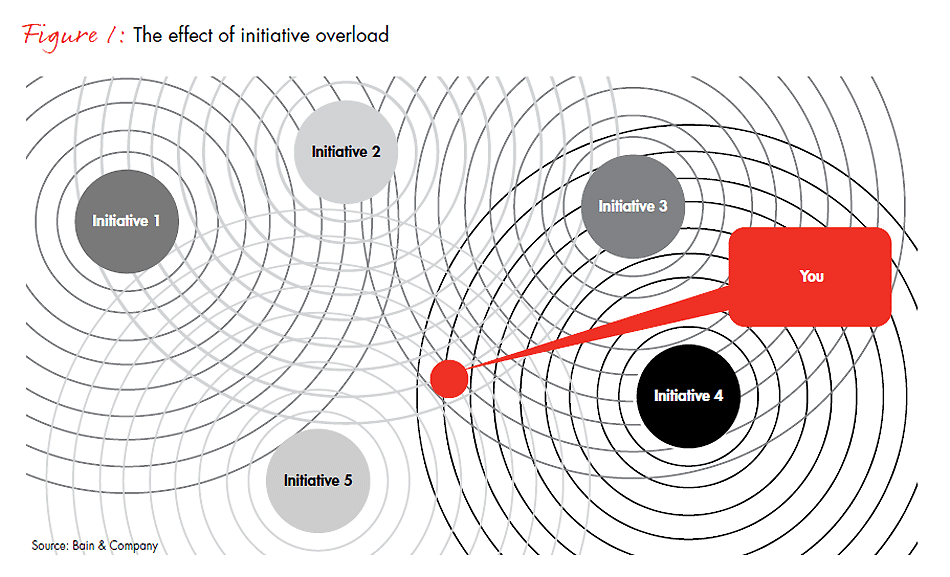
      Initiative overload is an ailment that permeates nearly every large company. Your first day on the job, you probably discovered that several initiatives affecting your unit were already under way. Over time, your colleagues and superiors likely launched still more, and you might have sponsored a few yourself. In this situation, people are like swimmers buffeted by cross currents coming from every direction (see Figure 1). The result is a kind of fragmentation, meaning that you don’t have enough time to do anything well or enough bandwidth to absorb what you need to absorb.

      di-managing-initiative-overload-fig01_embed

      Fortunately, initiative overload isn’t fatal. You may not escape it, but you can learn to manage it, and in the process make yourself a better contributor to good decisions. Here’s a practical set of guidelines to prevent it when possible and mitigate its effects when not.

      Managing your time

      Guideline No. 1 is simple: Create a personal-time feedback loop. Review where you spend your time, determine the fit between time spent and your strategic priorities, and then adjust your time allocation if necessary. This may sound daunting, but many executives follow such a procedure rigorously. “I’ve got a spreadsheet, it’s got a budget—my time for the year,” Steve Ballmer, then-CEO of Microsoft, told the Wall Street Journal. “I give the budget allocation to my administrative assistants, they lay it all out and then anybody who asks for time, they say, ‘‘Steve, this is in budget, it’s not in budget, how do you want us to handle it?’”

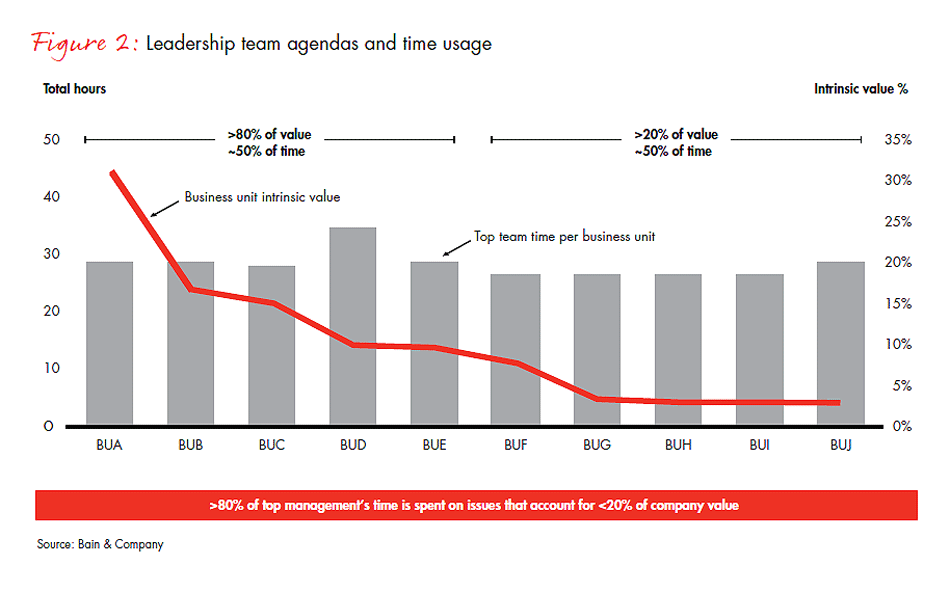
      Lack of a personal-time feedback loop leads to a predictable result: People stay busy, but don’t necessarily spend their time in the right way or on the right initiatives. Figure 2 shows the situation at one company we studied. About 80% of the leadership team’s time went to issues that accounted for less than 20% of the company’s value.
      di-managing-initiative-overload-fig02_embed


      Guideline No. 2: Carefully define your responsibilities for each initiative that passes the time-management test. Understand what the expectations are and spell out how success will be defined and measured, both for the initiative and for yourself. Make sure that all this is documented in a project charter and in your personal deliverables or development plan for the year. Figure out the resources you will need (both people and budget) to get the work done, and be sure you and your team are comfortable with the allocations and can shed other responsibilities as necessary. Sometimes an organizational approach can help. When an IT services company embarked on an ambitious multiyear growth plan, the company defined what it called Key Responsibility Areas (KRAs) for each central role. These KRAs documented the role, the full list of direct reports, critical organizational interfaces and each key initiative. They summarized goals and milestones the person in the role would be held accountable for, and they listed the performance indicators that the various initiatives would track. Spelling it all out helped the individuals involved manage their time—and helped the company keep its challenging plan on target.

      Managing your involvement

      Guideline No. 3 is simple but often underutilized: delegate. Create “freedom within a framework,” so that you can balance the demands of initiatives with the requirements of your regular job.

      Everybody tries to delegate part of their work, but many people find that they then must micromanage the delegated tasks. The key to successful delegation is to establish a crystal-clear framework within which your direct reports can make certain decisions, and ensure that you see only decisions that fall outside of that framework. A major insurance company, for example, had put its head of human resources in charge of a number of significant initiatives. Yet it also expected her to make compensation decisions for new hires above a certain level. She couldn’t do everything, so the company ended up with a bottleneck in hiring. Then the company worked with the head of HR to reset the decision process: She established the compensation framework for senior hires and delegated individual decisions to the managers involved. “It gave her the authority to come up with the rules of the game,” said one executive. It also gave her more time for her initiatives.

      Don’t forget the organizational imperative for good decisions: If you can establish clear decision processes and roles, you will speed any initiative on its way. That’s guideline No. 4. Understanding the what, who, how and when of critical decisions and actions will enable you and your team to pace the work appropriately with the right people involved, drive the right level of detail at the right point in time and manage key stakeholders along the way (without managing too many of them). Do this effectively and you’ll find that fewer people can accomplish the same amount of work in less time. When a pharmaceutical company took a closer look at some of its key decisions, it realized that 60% involved more than four committees or teams, and some of them eight or more. Many companies’ initiatives get bogged down in the same way: They involve too many people, and no one is clear about his or her role. Specifying those roles helps everyone contribute more effectively.

      Of course, there’s no substitute for guideline No. 5—transparency and open communication in any initiative. Be realistic about the effort you are putting in, the progress you are making and the impact you are having. Superheroes are for the movies. If you need more time, ask for it. If you need more people, fight for them. If you need more budget, find places to get it. At the same time, be a good citizen in the opposite direction and give back if you can—you have to make deposits if you want to make withdrawals.

      Initiatives can overwhelm any executive, turning a great job into a dismal one and a thriving unit into a laggard. Companies can’t do without projects any more than they can do without meetings. But a well-managed portfolio of initiatives—and thoughtful engagement with them on the part of each participant—can help any company make better, faster decisions and thereby boost its performance.

      Jenny Davis-Peccoud, a senior director based in London, leads Bain’s Organization practice in Europe, the Middle East and Africa and also the firm’s Global Social Impact practice. Michael Mankins leads Bain’s Organization practice in the Americas and is a partner in San Francisco. He is co-author of Decide & Deliver: 5 Steps to Breakthrough Performance in Your Organization (Harvard Business Review Press, 2010). Jeff Denneen is a partner in Bain’s Atlanta office and leads the firm’s Higher Education practice.


      di-managing-initiative-overload-fig01_full

      di-managing-initiative-overload-fig02_full
      著者
      • Headshot of Jenny Davis-Peccoud
        Jenny Davis-Peccoud
        パートナー, Amsterdam
      • Headshot of Michael Mankins
        Michael Mankins
        パートナー, Austin
      • Headshot of Jeff Denneen
        Jeff Denneen
        パートナー, Atlanta
      関連するコンサルティングサービス
      • 組織
      コンサルティングサービス
      • Org Navigator
      組織
      Boiling-frog affliction and other ills: Using combination therapies to improve organization performance

      Organizational ailments tend to come in clusters, which means you’re going to need a combination of treatments to fix them.

      詳細
      組織
      Decisions during change

      Poor decision making and execution will undermine even the most carefully planned change.

      詳細
      組織
      How group dynamics affect decisions

      Group interactions often color people’s judgment. But companies can learn to counter the effects of group biases.

      詳細
      Org Navigator
      Balanced Scorecard

      A Balanced Scorecard is a way to measure an organization’s performance and shows whether management is achieving desired results.

      詳細
      組織
      When a New Organizational Structure Isn’t Enough: How to Truly Live Your Operating Model

      The goal of any organizational redesign is for people to work differently, but that only happens if leaders invest in changing the work itself.

      詳細
      First published in 3月 2014
      Tags
      • Org Navigator
      • 組織

      クライアント支援事例

      組織 A Video Game Company Levels Up With a New Operating Model

      ケーススタディを見る

      組織 Building a winning media salesforce

      ケーススタディを見る

      組織 Powering a mining company's growth through cultural change

      ケーススタディを見る

      お気軽にご連絡下さい

      私達は、グローバルに活躍する経営者が抱える最重要経営課題に対して、厳しい競争環境の中でも成長し続け、「結果」を出すために支援しています。

      ベインの知見。競争が激化するグローバルビジネス環境で、日々直面するであろう問題について論じている知見を毎月お届けします。

      *プライバシーポリシーの内容を確認し、合意しました。

      プライバシーポリシーをご確認頂き、合意頂けますようお願い致します。
      Bain & Company
      お問い合わせ Sustainability Accessibility Terms of use Privacy Cookie Policy Sitemap Log In

      © 1996-2026 Bain & Company, Inc.

      お問い合わせ

      How can we help you?

      • ビジネスについて
      • プレス報道について
      • 採用について
      全てのオフィス