
Skip to Content
  • オフィス

    オフィス

    北米・南米
    • Atlanta
    • Austin
    • Bogota
    • Boston
    • Buenos Aires
    • Chicago
    • Dallas
    • Denver
    • Houston
    • Los Angeles
    • Mexico City
    • Minneapolis
    • Monterrey
    • Montreal
    • New York
    • Rio de Janeiro
    • San Francisco
    • Santiago
    • São Paulo
    • Seattle
    • Silicon Valley
    • Toronto
    • Washington, DC
    ヨーロッパ・中東・アフリカ
    • Amsterdam
    • Athens
    • Berlin
    • Brussels
    • Copenhagen
    • Doha
    • Dubai
    • Dusseldorf
    • Frankfurt
    • Helsinki
    • Istanbul
    • Johannesburg
    • Kyiv
    • Lisbon
    • London
    • Madrid
    • Milan
    • Munich
    • Oslo
    • Paris
    • Riyadh
    • Rome
    • Stockholm
    • Vienna
    • Warsaw
    • Zurich
    アジア・オーストラリア
    • Bangkok
    • Beijing
    • Bengaluru
    • Brisbane
    • Ho Chi Minh City
    • Hong Kong
    • Jakarta
    • Kuala Lumpur
    • Manila
    • Melbourne
    • Mumbai
    • New Delhi
    • Perth
    • Shanghai
    • Singapore
    • Sydney
    • Tokyo
    全てのオフィス
  • アルムナイ
  • メディア
  • お問い合わせ
  • 東京オフィス
  • Japan | 日本語

    地域と言語を選択

    グローバル
    • Global (English)
    北米・南米
    • Brazil (Português)
    • Argentina (Español)
    • Canada (Français)
    • Chile (Español)
    • Colombia (Español)
    ヨーロッパ・中東・アフリカ
    • France (Français)
    • DACH Region (Deutsch)
    • Italy (Italiano)
    • Spain (Español)
    • Greece (Elliniká)
    アジア・オーストラリア
    • China (中文版)
    • Korea (한국어)
    • Japan (日本語)
  • Saved items (0)
    Saved items (0)

    You have no saved items.

    後で閲読、共有できるようにするためにブックマークしてください

    Explore Bain Insights
  • 業界別プラクティス
    メインメニュー

    業界別プラクティス

    • 航空宇宙、防衛、政府関連
    • 農業
    • 化学製品
    • インフラ、建設
    • 消費財
    • 金融サービス
    • ヘルスケア
    • 産業機械、設備
    • メディア、エンターテインメント
    • 金属
    • 採掘・鉱業
    • 石油、ガス
    • 紙、パッケージ
    • プライベートエクイティ
    • 公共、社会セクター
    • 小売
    • テクノロジー
    • 通信
    • 交通
    • 観光産業
    • 公益事業、再生可能エネルギー
  • 機能別プラクティス
    メインメニュー

    機能別プラクティス

    • カスタマー・エクスペリエンス
    • サステイナビリティ、 社会貢献
    • Innovation
    • 企業買収、合併 (M&A)
    • オペレーション
    • 組織
    • プライベートエクイティ
    • マーケティング・営業
    • 戦略
    • アドバンスド・アナリティクス
    • Technology
    • フルポテンシャル・トランスフォーメーション
  • Digital
  • 知見/レポート
  • ベイン・アンド・カンパニーについて
    メインメニュー

    ベイン・アンド・カンパニーについて

    • ベインの信条
    • 活動内容
    • 社員とリーダーシップ
    • プレス・メディア情報
    • クライアントの結果
    • 受賞歴
    • パートナーシップを結んでいる団体
    Further: Our global responsibility
    • ダイバーシティ
    • 社会貢献
    • サステイナビリティへの取り組み
    • 世界経済フォーラム(WEF)
    Learn more about Further
  • キャリア
    メインメニュー

    キャリア

    • ベインで働く
      キャリア
      ベインで働く
      • Find Your Place
      • ベインで活躍する機会
      • ベインのチーム体制
      • 学生向けページ
      • インターンシップ
      • 採用イベント
    • ベインでの体験
      キャリア
      ベインでの体験
      • キャリアストーリー
      • 社員紹介
      • Where We Work
      • 成長を後押しするサポート体制
      • アフィニティ・グループ
      • 福利厚生
    • Impact Stories
    • 採用情報
      キャリア
      採用情報
      • 採用プロセス
      • 面接内容
    FIND JOBS
  • オフィス
    メインメニュー

    オフィス

    • 北米・南米
      オフィス
      北米・南米
      • Atlanta
      • Austin
      • Bogota
      • Boston
      • Buenos Aires
      • Chicago
      • Dallas
      • Denver
      • Houston
      • Los Angeles
      • Mexico City
      • Minneapolis
      • Monterrey
      • Montreal
      • New York
      • Rio de Janeiro
      • San Francisco
      • Santiago
      • São Paulo
      • Seattle
      • Silicon Valley
      • Toronto
      • Washington, DC
    • ヨーロッパ・中東・アフリカ
      オフィス
      ヨーロッパ・中東・アフリカ
      • Amsterdam
      • Athens
      • Berlin
      • Brussels
      • Copenhagen
      • Doha
      • Dubai
      • Dusseldorf
      • Frankfurt
      • Helsinki
      • Istanbul
      • Johannesburg
      • Kyiv
      • Lisbon
      • London
      • Madrid
      • Milan
      • Munich
      • Oslo
      • Paris
      • Riyadh
      • Rome
      • Stockholm
      • Vienna
      • Warsaw
      • Zurich
    • アジア・オーストラリア
      オフィス
      アジア・オーストラリア
      • Bangkok
      • Beijing
      • Bengaluru
      • Brisbane
      • Ho Chi Minh City
      • Hong Kong
      • Jakarta
      • Kuala Lumpur
      • Manila
      • Melbourne
      • Mumbai
      • New Delhi
      • Perth
      • Shanghai
      • Singapore
      • Sydney
      • Tokyo
    全てのオフィス
  • アルムナイ
  • メディア
  • お問い合わせ
  • 東京オフィス
  • Japan | 日本語
    メインメニュー

    地域と言語を選択

    • グローバル
      地域と言語を選択
      グローバル
      • Global (English)
    • 北米・南米
      地域と言語を選択
      北米・南米
      • Brazil (Português)
      • Argentina (Español)
      • Canada (Français)
      • Chile (Español)
      • Colombia (Español)
    • ヨーロッパ・中東・アフリカ
      地域と言語を選択
      ヨーロッパ・中東・アフリカ
      • France (Français)
      • DACH Region (Deutsch)
      • Italy (Italiano)
      • Spain (Español)
      • Greece (Elliniká)
    • アジア・オーストラリア
      地域と言語を選択
      アジア・オーストラリア
      • China (中文版)
      • Korea (한국어)
      • Japan (日本語)
  • Saved items  (0)
    メインメニュー
    Saved items (0)

    You have no saved items.

    後で閲読、共有できるようにするためにブックマークしてください

    Explore Bain Insights
  • 業界別プラクティス
    • 業界別プラクティス

      • 航空宇宙、防衛、政府関連
      • 農業
      • 化学製品
      • インフラ、建設
      • 消費財
      • 金融サービス
      • ヘルスケア
      • 産業機械、設備
      • メディア、エンターテインメント
      • 金属
      • 採掘・鉱業
      • 石油、ガス
      • 紙、パッケージ
      • プライベートエクイティ
      • 公共、社会セクター
      • 小売
      • テクノロジー
      • 通信
      • 交通
      • 観光産業
      • 公益事業、再生可能エネルギー
  • 機能別プラクティス
    • 機能別プラクティス

      • カスタマー・エクスペリエンス
      • サステイナビリティ、 社会貢献
      • Innovation
      • 企業買収、合併 (M&A)
      • オペレーション
      • 組織
      • プライベートエクイティ
      • マーケティング・営業
      • 戦略
      • アドバンスド・アナリティクス
      • Technology
      • フルポテンシャル・トランスフォーメーション
  • Digital
  • 知見/レポート
  • ベイン・アンド・カンパニーについて
    • ベイン・アンド・カンパニーについて

      • ベインの信条
      • 活動内容
      • 社員とリーダーシップ
      • プレス・メディア情報
      • クライアントの結果
      • 受賞歴
      • パートナーシップを結んでいる団体
      Further: Our global responsibility
      • ダイバーシティ
      • 社会貢献
      • サステイナビリティへの取り組み
      • 世界経済フォーラム(WEF)
      Learn more about Further
  • キャリア
    人気検索キーワード
    • デジタル
    • 戦略
    前回の検索
      最近訪れたページ

      Content added to saved items

      Saved items (0)

      Removed from saved items

      Saved items (0)

      論説

      Nearshoring: Overcoming the Obstacles

      Nearshoring: Overcoming the Obstacles

      Most companies want to bring production closer to home, but rerouting supply chains is complicated.

      著者:Peter Hanbury, Jordi Ciuró, Carlos Cruz, and Scott Daubin

      • min read
      }

      論説

      Nearshoring: Overcoming the Obstacles
      en
      概要
      • Eighty percent of chief operating officers plan to increase onshoring or nearshoring over the next three years, a Bain survey shows.
      • Only 2% of companies have fully implemented their onshoring or nearshoring strategies.
      • Barriers to nearshoring include cost and complexity, data and supplier visibility gaps, and regulatory hurdles.

      Global supply chains, once a source of efficiency, have become a wellspring of risk. Rising costs, unpredictable disruptions, and geopolitical shifts have prompted most companies to rethink their sourcing and manufacturing network strategies. Eighty percent of chief operating officers plan to increase their use of onshoring or nearshoring in the next three years, up from 63% in 2022, according to a recent Bain survey of senior executives.

      Ensuring supply continuity is the No. 1 reason for changing a company’s supply base location, followed by lower labor costs (see Figure 1). More than two-thirds of companies are investing in supply chains closer to home, either through split-shoring, onshoring, or nearshoring (see Figure 2).

      Figure 1
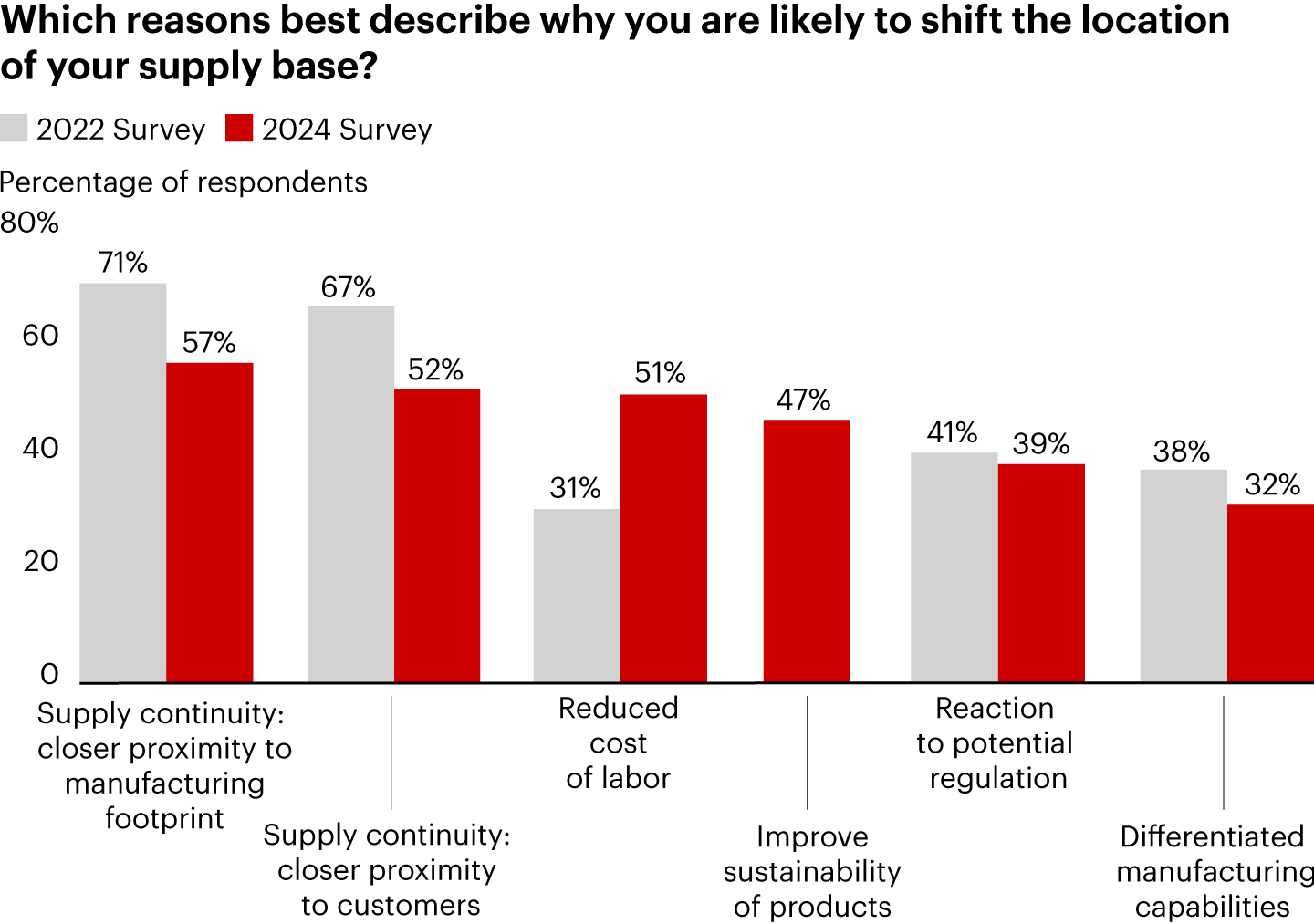
      Supply continuity remains the No. 1 reason for changing the supply base location

      Note: Improving sustainability was not covered in the 2022 survey

      Sources: Bain Operations Executive Survey 2024 (n=195); Bain Resiliency Survey 2022
      Figure 2
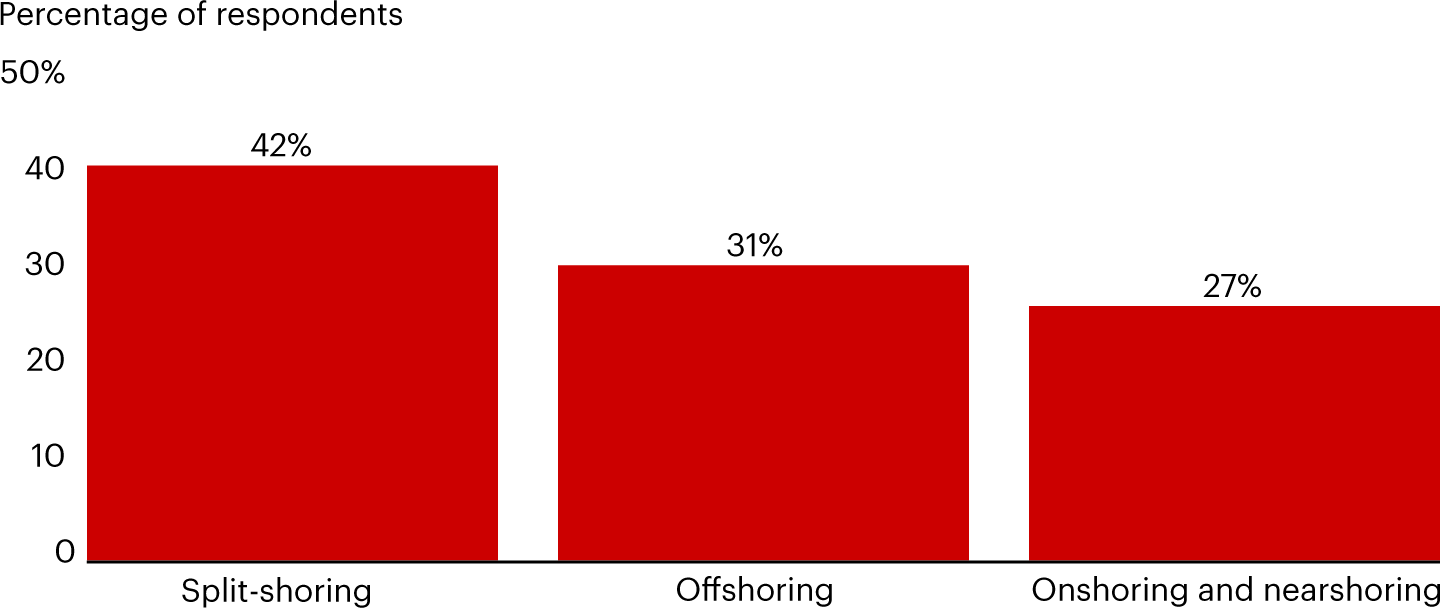
      Most companies combine onshoring, nearshoring, and offshoring to balance resilience and costs
      出所 Bain Operations Executive Survey 2024 (n=195)

      Leadership teams are betting on nearshoring to enhance resilience, reduce dependence on distant suppliers, and improve operational agility. Moving production closer to customers also enhances flexibility, shortens lead times, and reduces transportation costs. Our analysis shows companies that get nearshoring right can increase gross margins by up to 30%. But it’s no easy fix. Only 2% of respondents report having fully implemented an onshoring or nearshoring strategy, according to the survey.

      Nearshoring challenges  

      When moving supply chains closer to home, companies face three significant barriers: cost and complexity, data and visibility gaps, and regulatory hurdles.

      A shift to nearshoring or onshoring entails significant upfront and ongoing costs. Operations teams must evaluate their existing infrastructure, assess potential new sites, and navigate operational disruptions. Many firms struggle to balance the increased labor costs in nearshore locations with the savings from lower transportation outlays. Split-shoring strategies, which balance cost and resilience benefits, are often the optimal solution but are challenging to get right. 

      Leading manufacturers think about finding the right solution for the business—or right-shoring—as opposed to 100% nearshoring or offshoring. They consider the diverse needs of the end consumer and customers across regions, in addition to weighing the return on the required investments over the useful life of assets. Manufacturers also must evaluate their ecosystem of suppliers with similar rigor. Otherwise, a move closer to customer demand could just mean long and expensive inbound shipments from suppliers end up replacing long and expensive outbound shipments to customers. Our research shows the most common strategy today is split-shoring, or combining nearshoring and offshoring strategies to balance resilience and cost challenges.

      The lack of end-to-end visibility in supply chains is another challenge in bringing production closer to key markets. While many companies have improved traceability for Tier-1 suppliers, most face significant gaps in tracking Tier-3 suppliers and beyond. Without comprehensive visibility, companies face increased risk of disruptions, inefficiencies, and compliance failures. Scaling traceability solutions from pilot projects to fully integrated systems remains an ongoing struggle for most organizations.

      Differences in the regulatory landscape from country to country add further complexity to nearshoring efforts. Variations in labor laws, tax policies, and trade agreements require companies to undertake rigorous due diligence before making changes to avoid unforeseen costs. Even the best companies can struggle in new environments. For example, Taiwan Semiconductor Manufacturing Company (TSMC) has successfully built many semiconductor fabs in Taiwan but has faced higher costs and longer timelines in Arizona due to differences in permitting and labor standards.

      Compliance challenges can also delay the transition process and erode the expected benefits of nearshoring. This is particularly true for industries with stringent safety, environmental, or consumer protection standards.

      Leveraging technology in nearshoring

      To overcome these obstacles, companies are harnessing advanced technologies. Digital tools, artificial intelligence, and predictive analytics can help accelerate the implementation of nearshoring initiatives and enhance ongoing supply chain resilience.

      AI-based tools, for example, simulate scenarios to identify cost-effective nearshoring paths. These solutions enable businesses to optimize their supplier networks, monitor performance, and mitigate risks associated with the transition to nearshoring. Automated procurement systems and integrated planning tools improve efficiency while reducing manual effort.

      Leading companies use a variety of digital tools to manage their ongoing operations, such as IoT-enabled tracking systems to increase transparency across supply chain tiers. Other tools such as Resilinc assess visibility and risk monitoring in the supplier tiers. These technologies minimize disruptions while ensuring compliance with regulatory requirements. Bain’s survey highlights a key shift from traceability pilot projects to full-scale initiatives, a trend that is likely to continue as these technologies mature.

      Predictive analytics and AI tools can map out compliance requirements for specific regions, identifying potential risks and suggesting corrective measures. Partnerships with local entities and industry coalitions can provide invaluable insights into navigating region-specific regulations.

      A roadmap for success

      Leaders adopt a comprehensive approach to rethinking global supply chains to obtain the full benefits of nearshoring.

      Strategic evaluation. Three preliminary steps can help lay the foundation for a smart nearshoring plan. They include assessing the needs of key customers and the supplier ecosystem, identifying nearshore locations, and weighing cost-benefit trade-offs. A comprehensive strategic evaluation should go beyond financial metrics and include geopolitical stability, workforce availability, and infrastructure readiness. This evaluation must also consider benefits such as customer willingness to pay for local products, improved service levels, and reduced carbon footprint from nearshore production. These factors will help leadership teams develop a right-shoring approach for the business that balances the benefits of nearshoring, onshoring, and offshoring. 

      Digital and technology integration. Companies that invest in digital tools achieve greater supply chain agility and efficiency. AI, digital tools, and IoT strengthen supply chain capabilities, particularly in supplier monitoring and inventory management.

      Cross-functional collaboration. Successful nearshoring efforts depend on close cooperation across business functions. Manufacturing, supply chain, procurement, and strategy teams need to align on goals and execution. R&D and sales teams are also important to ensure product design matches local capabilities and marketing can emphasize the benefits of nearshore production. 

      Building resilient networks. Strong supplier relationships, workforce investments, and industry collaborations create ecosystems capable of weathering disruptions. Supplier ecosystem management is a critical approach to ensure the industry works together to improve resiliency while balancing the cost of shifting suppliers to new geographies. 

      Nearshoring is becoming a core element of supply chain strategy. Bringing production closer to home as part of a comprehensive right-shoring strategy allows companies to strengthen their supply chains while positioning themselves for long-term success in an increasingly volatile world.

      著者
      • Headshot of Peter Hanbury
        Peter Hanbury
        パートナー, San Francisco
      • Headshot of Jordi Ciuró
        Jordi Ciuró
        パートナー, Mexico City
      • Headshot of Carlos Cruz
        Carlos Cruz
        パートナー, Dallas
      • Headshot of Scott Daubin
        Scott Daubin
        パートナー, New York
      関連するコンサルティングサービス
      • オペレーション
      • サプライチェーン
      • 業績改善
      コンサルティングサービス
      • Capability Sourcing
      • Supply Chain Resiliency Index
      COO insights
      Beyond Tariffs: The Supply Chain Reinvention Imperative

      Tariffs are accelerating businesses’ operations overhaul. Winning in today’s disrupted world demands bold trade-offs and strategic transformation.

      詳細
      COO insights
      Tariffs: The Next Chapter

      Companies need to rebuild their strategies for a world in which the free movement of goods, capital, IP, and people cannot be taken for granted.

      詳細
      Capability Sourcing
      Rethinking Tech Outsourcing: Five Actions to Create Value

      Despite predictions that outsourcing would decline, Bain’s research shows most companies still rely on it—and many plan to expand their use.

      詳細
      業績改善
      Don’t Underestimate the Cost of Overcapacity

      Overcapacity is endemic to the paper and packaging industry, but these actions can help you maintain margins.

      詳細
      COO insights
      Procurement, Redesigned for Uncertainty

      In a volatile world, procurement can help build resilience.

      詳細
      First published in 3月 2025
      Tags
      • Capability Sourcing
      • COO insights
      • Supply Chain Resiliency Index
      • Tariff Response
      • オペレーション
      • サプライチェーン
      • 業績改善

      クライアント支援事例

      Supply Chain Security Mitigates a Sovereign Wealth Fund’s Construction Disruptions

      ケーススタディを見る

      業績改善 Turning bottlenecks into growth opportunities

      ケーススタディを見る

      業績改善 Carmaker shifts its production model

      ケーススタディを見る

      お気軽にご連絡下さい

      私達は、グローバルに活躍する経営者が抱える最重要経営課題に対して、厳しい競争環境の中でも成長し続け、「結果」を出すために支援しています。

      ベインの知見。競争が激化するグローバルビジネス環境で、日々直面するであろう問題について論じている知見を毎月お届けします。

      *プライバシーポリシーの内容を確認し、合意しました。

      プライバシーポリシーをご確認頂き、合意頂けますようお願い致します。
      Bain & Company
      お問い合わせ Sustainability Accessibility Terms of use Privacy Cookie Policy Sitemap Log In

      © 1996-2026 Bain & Company, Inc.

      お問い合わせ

      How can we help you?

      • ビジネスについて
      • プレス報道について
      • 採用について
      全てのオフィス