
Skip to Content
  • オフィス

    オフィス

    北米・南米
    • Atlanta
    • Austin
    • Bogota
    • Boston
    • Buenos Aires
    • Chicago
    • Dallas
    • Denver
    • Houston
    • Los Angeles
    • Mexico City
    • Minneapolis
    • Monterrey
    • Montreal
    • New York
    • Rio de Janeiro
    • San Francisco
    • Santiago
    • São Paulo
    • Seattle
    • Silicon Valley
    • Toronto
    • Washington, DC
    ヨーロッパ・中東・アフリカ
    • Amsterdam
    • Athens
    • Berlin
    • Brussels
    • Copenhagen
    • Doha
    • Dubai
    • Dusseldorf
    • Frankfurt
    • Helsinki
    • Istanbul
    • Johannesburg
    • Kyiv
    • Lisbon
    • London
    • Madrid
    • Milan
    • Munich
    • Oslo
    • Paris
    • Riyadh
    • Rome
    • Stockholm
    • Vienna
    • Warsaw
    • Zurich
    アジア・オーストラリア
    • Bangkok
    • Beijing
    • Bengaluru
    • Brisbane
    • Ho Chi Minh City
    • Hong Kong
    • Jakarta
    • Kuala Lumpur
    • Manila
    • Melbourne
    • Mumbai
    • New Delhi
    • Perth
    • Shanghai
    • Singapore
    • Sydney
    • Tokyo
    全てのオフィス
  • アルムナイ
  • メディア
  • お問い合わせ
  • 東京オフィス
  • Japan | 日本語

    地域と言語を選択

    グローバル
    • Global (English)
    北米・南米
    • Brazil (Português)
    • Argentina (Español)
    • Canada (Français)
    • Chile (Español)
    • Colombia (Español)
    ヨーロッパ・中東・アフリカ
    • France (Français)
    • DACH Region (Deutsch)
    • Italy (Italiano)
    • Spain (Español)
    • Greece (Elliniká)
    アジア・オーストラリア
    • China (中文版)
    • Korea (한국어)
    • Japan (日本語)
  • Saved items (0)
    Saved items (0)

    You have no saved items.

    後で閲読、共有できるようにするためにブックマークしてください

    Explore Bain Insights
  • 業界別プラクティス
    メインメニュー

    業界別プラクティス

    • 航空宇宙、防衛、政府関連
    • 農業
    • 化学製品
    • インフラ、建設
    • 消費財
    • 金融サービス
    • ヘルスケア
    • 産業機械、設備
    • メディア、エンターテインメント
    • 金属
    • 採掘・鉱業
    • 石油、ガス
    • 紙、パッケージ
    • プライベートエクイティ
    • 公共、社会セクター
    • 小売
    • テクノロジー
    • 通信
    • 交通
    • 観光産業
    • 公益事業、再生可能エネルギー
  • 機能別プラクティス
    メインメニュー

    機能別プラクティス

    • カスタマー・エクスペリエンス
    • サステイナビリティ、 社会貢献
    • Innovation
    • 企業買収、合併 (M&A)
    • オペレーション
    • 組織
    • プライベートエクイティ
    • マーケティング・営業
    • 戦略
    • アドバンスド・アナリティクス
    • Technology
    • フルポテンシャル・トランスフォーメーション
  • Digital
  • 知見/レポート
  • ベイン・アンド・カンパニーについて
    メインメニュー

    ベイン・アンド・カンパニーについて

    • ベインの信条
    • 活動内容
    • 社員とリーダーシップ
    • プレス・メディア情報
    • クライアントの結果
    • 受賞歴
    • パートナーシップを結んでいる団体
    Further: Our global responsibility
    • ダイバーシティ
    • 社会貢献
    • サステイナビリティへの取り組み
    • 世界経済フォーラム(WEF)
    Learn more about Further
  • キャリア
    メインメニュー

    キャリア

    • ベインで働く
      キャリア
      ベインで働く
      • Find Your Place
      • ベインで活躍する機会
      • ベインのチーム体制
      • 学生向けページ
      • インターンシップ
      • 採用イベント
    • ベインでの体験
      キャリア
      ベインでの体験
      • Blog: Inside Bain
      • キャリアストーリー
      • 社員紹介
      • Where We Work
      • 成長を後押しするサポート体制
      • アフィニティ・グループ
      • 福利厚生
    • Impact Stories
    • 採用情報
      キャリア
      採用情報
      • 採用プロセス
      • 面接内容
    FIND JOBS
  • オフィス
    メインメニュー

    オフィス

    • 北米・南米
      オフィス
      北米・南米
      • Atlanta
      • Austin
      • Bogota
      • Boston
      • Buenos Aires
      • Chicago
      • Dallas
      • Denver
      • Houston
      • Los Angeles
      • Mexico City
      • Minneapolis
      • Monterrey
      • Montreal
      • New York
      • Rio de Janeiro
      • San Francisco
      • Santiago
      • São Paulo
      • Seattle
      • Silicon Valley
      • Toronto
      • Washington, DC
    • ヨーロッパ・中東・アフリカ
      オフィス
      ヨーロッパ・中東・アフリカ
      • Amsterdam
      • Athens
      • Berlin
      • Brussels
      • Copenhagen
      • Doha
      • Dubai
      • Dusseldorf
      • Frankfurt
      • Helsinki
      • Istanbul
      • Johannesburg
      • Kyiv
      • Lisbon
      • London
      • Madrid
      • Milan
      • Munich
      • Oslo
      • Paris
      • Riyadh
      • Rome
      • Stockholm
      • Vienna
      • Warsaw
      • Zurich
    • アジア・オーストラリア
      オフィス
      アジア・オーストラリア
      • Bangkok
      • Beijing
      • Bengaluru
      • Brisbane
      • Ho Chi Minh City
      • Hong Kong
      • Jakarta
      • Kuala Lumpur
      • Manila
      • Melbourne
      • Mumbai
      • New Delhi
      • Perth
      • Shanghai
      • Singapore
      • Sydney
      • Tokyo
    全てのオフィス
  • アルムナイ
  • メディア
  • お問い合わせ
  • 東京オフィス
  • Japan | 日本語
    メインメニュー

    地域と言語を選択

    • グローバル
      地域と言語を選択
      グローバル
      • Global (English)
    • 北米・南米
      地域と言語を選択
      北米・南米
      • Brazil (Português)
      • Argentina (Español)
      • Canada (Français)
      • Chile (Español)
      • Colombia (Español)
    • ヨーロッパ・中東・アフリカ
      地域と言語を選択
      ヨーロッパ・中東・アフリカ
      • France (Français)
      • DACH Region (Deutsch)
      • Italy (Italiano)
      • Spain (Español)
      • Greece (Elliniká)
    • アジア・オーストラリア
      地域と言語を選択
      アジア・オーストラリア
      • China (中文版)
      • Korea (한국어)
      • Japan (日本語)
  • Saved items  (0)
    メインメニュー
    Saved items (0)

    You have no saved items.

    後で閲読、共有できるようにするためにブックマークしてください

    Explore Bain Insights
  • 業界別プラクティス
    • 業界別プラクティス

      • 航空宇宙、防衛、政府関連
      • 農業
      • 化学製品
      • インフラ、建設
      • 消費財
      • 金融サービス
      • ヘルスケア
      • 産業機械、設備
      • メディア、エンターテインメント
      • 金属
      • 採掘・鉱業
      • 石油、ガス
      • 紙、パッケージ
      • プライベートエクイティ
      • 公共、社会セクター
      • 小売
      • テクノロジー
      • 通信
      • 交通
      • 観光産業
      • 公益事業、再生可能エネルギー
  • 機能別プラクティス
    • 機能別プラクティス

      • カスタマー・エクスペリエンス
      • サステイナビリティ、 社会貢献
      • Innovation
      • 企業買収、合併 (M&A)
      • オペレーション
      • 組織
      • プライベートエクイティ
      • マーケティング・営業
      • 戦略
      • アドバンスド・アナリティクス
      • Technology
      • フルポテンシャル・トランスフォーメーション
  • Digital
  • 知見/レポート
  • ベイン・アンド・カンパニーについて
    • ベイン・アンド・カンパニーについて

      • ベインの信条
      • 活動内容
      • 社員とリーダーシップ
      • プレス・メディア情報
      • クライアントの結果
      • 受賞歴
      • パートナーシップを結んでいる団体
      Further: Our global responsibility
      • ダイバーシティ
      • 社会貢献
      • サステイナビリティへの取り組み
      • 世界経済フォーラム(WEF)
      Learn more about Further
  • キャリア
    人気検索キーワード
    • デジタル
    • 戦略
    前回の検索
      最近訪れたページ

      Content added to saved items

      Saved items (0)

      Removed from saved items

      Saved items (0)

      レポート

      Accelerating the Journey to Net Zero

      Accelerating the Journey to Net Zero

      Most large companies are announcing ambitious decarbonization goals. Setting a realistic path makes them more credible.

      著者:Martha Eggenberger and Nitesh Prakash

      • min read
      }

      レポート

      Accelerating the Journey to Net Zero
      en
      概要
      • Many companies have set ambitious decarbonization goals in recent months, responding to pressure from activist investors and consumers.
      • Delivering on those ambitions won't be easy. Bain research finds that nearly half of all sustainability initiatives fail to reach their goals.
      • Leaders set a clear ambition, develop a bankable plan, and embed the goals of carbon reduction in the company. They also recognize they’re part of a broad ecosystem and work with others to achieve common goals.

      This article is part of Bain's 2021 Energy and Natural Resources Report.

      Explore the report

      Climate change was racing up the corporate agenda before Covid-19. Some thought the pandemic would delay action on the climate, given its longer horizon. But in 2021, climate action looks more urgent than ever. Nearly every large company has announced bold decarbonization ambitions, many that include not only the emissions from their own operations, but also those along the supply chain and through the end use of their products.

      Boards and management are under pressure from activist investors and highly engaged consumers to pursue those goals. Energy and natural resources companies are also feeling the pressure from insurgents that threaten to take market share with more sustainable products, whether that’s renewable electricity, alternatives to animal protein, or fuels that emit less carbon.

      Delivering on these ambitions is proving difficult, particularly for energy and natural resources companies when compared with other industries (see Figure 1). Bain research finds that across industries, sustainability programs have a higher chance of failure (47%) than the 20% failure rate for all change efforts. As with other change programs, companies need to build new capabilities, learn how to measure things in new ways, and hire fresh talent.

      Figure 1
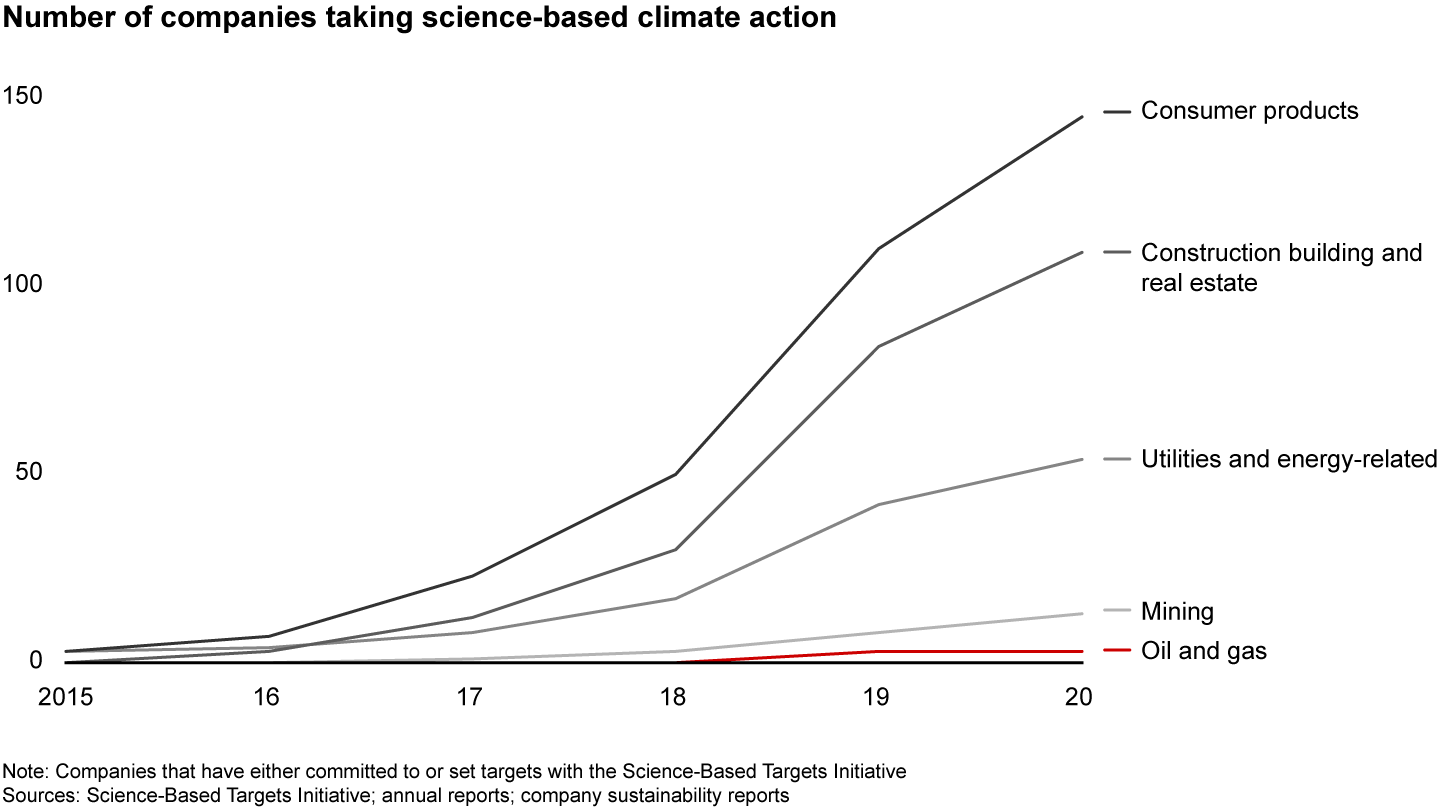
      Oil and gas, mining, and energy utility companies trail other industries in their climate commitments

      Even so, decarbonization stands apart from other change programs, in several ways:

      • It takes a long time, often decades instead of years or months.
      • People outside the company (such as regulators and investors) can have as much effect on priorities as leaders within a company.
      • New technologies and other disruptions can force a shift in strategy, and long-term investment requires a leap of faith in the future.

      On the upside, there’s ample opportunity for companies that learn how to move quickly toward their climate goals, primarily because doing so inevitably involves expanding the portfolio to include new lines of low-carbon business (see “When Less Carbon Means More Growth”). New products, new markets, and new ways of working are all part of the path to net zero—changes that can make a company more attractive to investors and customers, who are measuring corporate performance in broader ways.

      Half of all energy and natural resources companies have put the energy transition at the center of their strategy, and 41% say they’re shifting priorities to take advantage of new opportunities. About 40% say they’re already implementing changes (see Figure 2).

      Figure 2
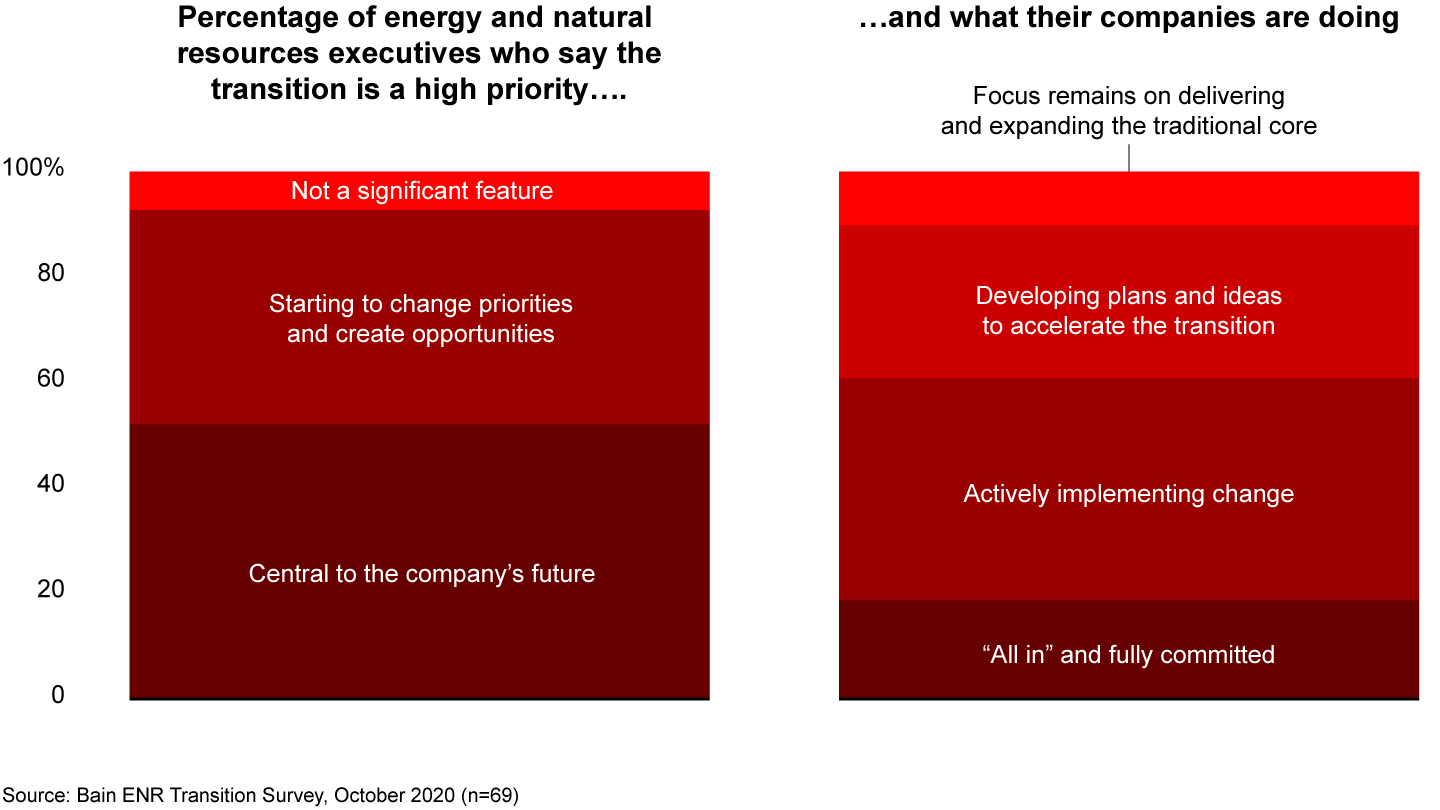
      Half of executives are making the energy transition central to their strategy, and about 40% are already implementing change

      The companies moving fastest on this path follow similar patterns: leadership aligns on the ambition, develops a bankable plan, and then works to embed decarbonization into the fabric of the organization. At the same time, they learn to see themselves as part of a broader ecosystem, reaching beyond their own organization, working with partners, suppliers, policymakers, and customers to help them in their journey.

      Set the ambition

      Customers and investors are urging companies to set more ambitious net-zero targets, which aim to reduce a company’s emissions as much as possible and mitigate the remainder by purchasing offsets that remove carbon from the atmosphere. But these targets need to be feasible, with a clear path to success. Most of these goals include not only Scope 1 and 2 emissions (from your own operations and from the energy used to conduct business), but also the Scope 3 emissions that are usually much more extensive, since they include upstream suppliers and the downstream use of products. Although many companies have announced net-zero ambitions 25 or 30 years into the future, it’s important to have a realistic path with verifiable signs of progress toward that goal, if the commitment is to be taken seriously.

      Develop a bankable plan

      Leaders develop a plan that includes strategic portfolio choices, operational improvements, and investments in offsets, such as forestry projects that preserve or increase natural carbon sinks. For example, many oil and gas companies are rebalancing their portfolios, shedding fossil-fuel assets and investing in renewable energy. Most can also find ways to reduce emissions in their operations. Even so, most won’t be able to reach net zero without purchasing offsets, so they’ll need to find ways to validate offsets and make sure they’re contributing their full measure to the net-zero equation.

      Companies prioritize these initiatives by assessing the potential for each and determining which ones are most feasible and fastest to implement. As technologies improve, regulations change, and the price of carbon rises, they’ll have to rebalance the elements of their plan and be willing to change emphasis as opportunities arise.

      Embed carbon reduction in the organization

      Even the most carefully crafted decarbonization plan won’t deliver results without an organization and operating model designed to move the needle. Embedding the plans in processes, budgets, and metrics can ensure continuing advancement. Decarbonization is likely to be on the agenda for 10 years or more, but it’s not likely to be the top item on the agenda. So companies need to balance decarbonization initiatives with other business priorities, removing obstacles that can thwart success.

      Engage with others

      To succeed in their net-zero ambitions, companies need to view themselves as part of a broad ecosystem that includes investors, suppliers, customers, competitors, regulators, and other stakeholders, including nongovernmental organizations and local communities. Even more than before, they need constructive conversations with different types of organizations, finding ways to create mutually beneficial solutions. Fortunately, climate change and decarbonization are proving to be topics that bring stakeholders together.

      Some of these collaborations may bring together many companies and policymakers, such as Denmark’s climate partnerships, which draw on the expertise of the private and public sectors to develop incentives and regulations for decarbonizing the country’s energy sector (see “Net Zero: From Political Goals to Industry Action”). Other examples will look more like technology development partnerships, like the collaboration between Anglo American mining and Umicore to research and develop technology that could make it easier to use hydrogen in fuel-cell electric vehicles.

      These and other examples show that to reach their net-zero goals, companies are raising their climate ambitions and developing strategic roadmaps that include portfolio rebalancing, more energy-efficient operations, and investments in offsets. Some are reorganizing their leadership structure to ensure that accountability for reaching these goals runs from the senior ranks through the entire organization. Finally, recognizing that they can't do it alone, companies are changing the way they work with partners, investors, and policymakers, since they share responsibility to develop constructive solutions that will move everyone closer to net zero.

      Read the Next Chapter

      Four Ways to Scale Digital in Energy and Natural Resource Companies

      Read our 2021 Energy and Natural Resources Report

      Explore the full report Download the PDF

      More from the report

      • Two out of Three Won’t Do

      • Harnessing the Energy and Resource Transition

      • Net Zero: From Political Targets to Industry Action

      • Energy Is Only One Part of the Sustainability Transition

      • Redesigning Value Chains to Deliver More Sustainable Goods

      • Time for ESG Investors and Energy and Natural Resources Companies to Work Together

      • Business Opportunities in Low-Carbon Hydrogen

      • Raising Productivity in Energy and Natural Resources Capital Projects

      • Creating Resilience, Sustainability, and Accountability in Supply Chains

      • Engine 2: How to Grow a Sustainable New Business

      • Accelerating the Journey to Net Zero

      • Four Ways to Scale Digital in Energy and Natural Resources Companies

      著者
      • Headshot of Martha Eggenberger
        Martha Eggenberger
        パートナー, Toronto
      • Headshot of Nitesh Prakash
        Nitesh Prakash
        パートナー, London
      関連業種
      • エネルギー、天然資源
      • 化学製品
      • 金属、鉱業
      • 公益事業、再生可能エネルギー
      • 石油、ガス
      • 農業
      関連するコンサルティングサービス
      • サステイナビリティ、社会貢献
      コンサルティングサービス
      • Climate Change
      Energy and Natural Resources Report
      State of the Transition 2023: Global Energy and Natural Resource Executive Perspectives

      Bain’s third annual survey on the energy transition finds executives increasing investments in low-carbon businesses, but skeptical of consumers’ willingness to pay more.

      詳細
      Energy and Natural Resources Report
      The Energy Transition’s Other Big Puzzle: Making the Math Work

      Strong investment returns are within reach for companies that focus on the fundamentals and aren’t afraid to get creative.

      詳細
      エネルギー、天然資源
      Sustaining Capital: From Chaos to Discipline

      Fragmented budgets, poor visibility, and missed forecasts are fixable with the right approach.

      詳細
      Climate Change
      Financing Climate Solutions in Brazil

      A study conducted by Bain, in partnership with BNDES, highlights both the challenges and the opportunities to accelerate the climate transition.

      詳細
      サステイナビリティ、社会貢献
      How AI Is Starting to Transform Circular Packaging

      There are 15 AI use cases companies across the value chain can use today to accelerate circularity.

      詳細
      First published in 6月 2021
      Tags
      • Climate Change
      • Energy and Natural Resources Report
      • エネルギー、天然資源
      • サステイナビリティ、社会貢献
      • 化学製品
      • 金属、鉱業
      • 公益事業、再生可能エネルギー
      • 石油、ガス
      • 農業

      クライアント支援事例

      An Environmental Services Company Captures Massive Savings from a Merger

      ケーススタディを見る

      戦略 New products propel profitability for metals manufacturer

      ケーススタディを見る

      顧客戦略、マーケティング Revitalizing a utility's market position with customer loyalty

      ケーススタディを見る

      お気軽にご連絡下さい

      私達は、グローバルに活躍する経営者が抱える最重要経営課題に対して、厳しい競争環境の中でも成長し続け、「結果」を出すために支援しています。

      ベインの知見。競争が激化するグローバルビジネス環境で、日々直面するであろう問題について論じている知見を毎月お届けします。

      *プライバシーポリシーの内容を確認し、合意しました。

      プライバシーポリシーをご確認頂き、合意頂けますようお願い致します。
      Bain & Company
      お問い合わせ Sustainability Accessibility Terms of use Privacy Cookie Policy Sitemap Log In

      © 1996-2026 Bain & Company, Inc.

      お問い合わせ

      How can we help you?

      • ビジネスについて
      • プレス報道について
      • 採用について
      全てのオフィス