
Skip to Content
  • オフィス

    オフィス

    北米・南米
    • Atlanta
    • Austin
    • Bogota
    • Boston
    • Buenos Aires
    • Chicago
    • Dallas
    • Denver
    • Houston
    • Los Angeles
    • Mexico City
    • Minneapolis
    • Monterrey
    • Montreal
    • New York
    • Rio de Janeiro
    • San Francisco
    • Santiago
    • São Paulo
    • Seattle
    • Silicon Valley
    • Toronto
    • Washington, DC
    ヨーロッパ・中東・アフリカ
    • Amsterdam
    • Athens
    • Berlin
    • Brussels
    • Copenhagen
    • Doha
    • Dubai
    • Dusseldorf
    • Frankfurt
    • Helsinki
    • Istanbul
    • Johannesburg
    • Kyiv
    • Lisbon
    • London
    • Madrid
    • Milan
    • Munich
    • Oslo
    • Paris
    • Riyadh
    • Rome
    • Stockholm
    • Vienna
    • Warsaw
    • Zurich
    アジア・オーストラリア
    • Bangkok
    • Beijing
    • Bengaluru
    • Brisbane
    • Ho Chi Minh City
    • Hong Kong
    • Jakarta
    • Kuala Lumpur
    • Manila
    • Melbourne
    • Mumbai
    • New Delhi
    • Perth
    • Shanghai
    • Singapore
    • Sydney
    • Tokyo
    全てのオフィス
  • アルムナイ
  • メディア
  • お問い合わせ
  • 東京オフィス
  • Japan | 日本語

    地域と言語を選択

    グローバル
    • Global (English)
    北米・南米
    • Brazil (Português)
    • Argentina (Español)
    • Canada (Français)
    • Chile (Español)
    • Colombia (Español)
    ヨーロッパ・中東・アフリカ
    • France (Français)
    • DACH Region (Deutsch)
    • Italy (Italiano)
    • Spain (Español)
    • Greece (Elliniká)
    アジア・オーストラリア
    • China (中文版)
    • Korea (한국어)
    • Japan (日本語)
  • Saved items (0)
    Saved items (0)

    You have no saved items.

    後で閲読、共有できるようにするためにブックマークしてください

    Explore Bain Insights
  • 業界別プラクティス
    メインメニュー

    業界別プラクティス

    • 航空宇宙、防衛、政府関連
    • 農業
    • 化学製品
    • インフラ、建設
    • 消費財
    • 金融サービス
    • ヘルスケア
    • 産業機械、設備
    • メディア、エンターテインメント
    • 金属
    • 採掘・鉱業
    • 石油、ガス
    • 紙、パッケージ
    • プライベートエクイティ
    • 公共、社会セクター
    • 小売
    • テクノロジー
    • 通信
    • 交通
    • 観光産業
    • 公益事業、再生可能エネルギー
  • 機能別プラクティス
    メインメニュー

    機能別プラクティス

    • カスタマー・エクスペリエンス
    • サステイナビリティ、 社会貢献
    • Innovation
    • 企業買収、合併 (M&A)
    • オペレーション
    • 組織
    • プライベートエクイティ
    • マーケティング・営業
    • 戦略
    • アドバンスド・アナリティクス
    • Technology
    • フルポテンシャル・トランスフォーメーション
  • Digital
  • 知見/レポート
  • ベイン・アンド・カンパニーについて
    メインメニュー

    ベイン・アンド・カンパニーについて

    • ベインの信条
    • 活動内容
    • 社員とリーダーシップ
    • プレス・メディア情報
    • クライアントの結果
    • 受賞歴
    • パートナーシップを結んでいる団体
    Further: Our global responsibility
    • ダイバーシティ
    • 社会貢献
    • サステイナビリティへの取り組み
    • 世界経済フォーラム(WEF)
    Learn more about Further
  • キャリア
    メインメニュー

    キャリア

    • ベインで働く
      キャリア
      ベインで働く
      • Find Your Place
      • ベインで活躍する機会
      • ベインのチーム体制
      • 学生向けページ
      • インターンシップ
      • 採用イベント
    • ベインでの体験
      キャリア
      ベインでの体験
      • Blog: Inside Bain
      • キャリアストーリー
      • 社員紹介
      • Where We Work
      • 成長を後押しするサポート体制
      • アフィニティ・グループ
      • 福利厚生
    • Impact Stories
    • 採用情報
      キャリア
      採用情報
      • 採用プロセス
      • 面接内容
    FIND JOBS
  • オフィス
    メインメニュー

    オフィス

    • 北米・南米
      オフィス
      北米・南米
      • Atlanta
      • Austin
      • Bogota
      • Boston
      • Buenos Aires
      • Chicago
      • Dallas
      • Denver
      • Houston
      • Los Angeles
      • Mexico City
      • Minneapolis
      • Monterrey
      • Montreal
      • New York
      • Rio de Janeiro
      • San Francisco
      • Santiago
      • São Paulo
      • Seattle
      • Silicon Valley
      • Toronto
      • Washington, DC
    • ヨーロッパ・中東・アフリカ
      オフィス
      ヨーロッパ・中東・アフリカ
      • Amsterdam
      • Athens
      • Berlin
      • Brussels
      • Copenhagen
      • Doha
      • Dubai
      • Dusseldorf
      • Frankfurt
      • Helsinki
      • Istanbul
      • Johannesburg
      • Kyiv
      • Lisbon
      • London
      • Madrid
      • Milan
      • Munich
      • Oslo
      • Paris
      • Riyadh
      • Rome
      • Stockholm
      • Vienna
      • Warsaw
      • Zurich
    • アジア・オーストラリア
      オフィス
      アジア・オーストラリア
      • Bangkok
      • Beijing
      • Bengaluru
      • Brisbane
      • Ho Chi Minh City
      • Hong Kong
      • Jakarta
      • Kuala Lumpur
      • Manila
      • Melbourne
      • Mumbai
      • New Delhi
      • Perth
      • Shanghai
      • Singapore
      • Sydney
      • Tokyo
    全てのオフィス
  • アルムナイ
  • メディア
  • お問い合わせ
  • 東京オフィス
  • Japan | 日本語
    メインメニュー

    地域と言語を選択

    • グローバル
      地域と言語を選択
      グローバル
      • Global (English)
    • 北米・南米
      地域と言語を選択
      北米・南米
      • Brazil (Português)
      • Argentina (Español)
      • Canada (Français)
      • Chile (Español)
      • Colombia (Español)
    • ヨーロッパ・中東・アフリカ
      地域と言語を選択
      ヨーロッパ・中東・アフリカ
      • France (Français)
      • DACH Region (Deutsch)
      • Italy (Italiano)
      • Spain (Español)
      • Greece (Elliniká)
    • アジア・オーストラリア
      地域と言語を選択
      アジア・オーストラリア
      • China (中文版)
      • Korea (한국어)
      • Japan (日本語)
  • Saved items  (0)
    メインメニュー
    Saved items (0)

    You have no saved items.

    後で閲読、共有できるようにするためにブックマークしてください

    Explore Bain Insights
  • 業界別プラクティス
    • 業界別プラクティス

      • 航空宇宙、防衛、政府関連
      • 農業
      • 化学製品
      • インフラ、建設
      • 消費財
      • 金融サービス
      • ヘルスケア
      • 産業機械、設備
      • メディア、エンターテインメント
      • 金属
      • 採掘・鉱業
      • 石油、ガス
      • 紙、パッケージ
      • プライベートエクイティ
      • 公共、社会セクター
      • 小売
      • テクノロジー
      • 通信
      • 交通
      • 観光産業
      • 公益事業、再生可能エネルギー
  • 機能別プラクティス
    • 機能別プラクティス

      • カスタマー・エクスペリエンス
      • サステイナビリティ、 社会貢献
      • Innovation
      • 企業買収、合併 (M&A)
      • オペレーション
      • 組織
      • プライベートエクイティ
      • マーケティング・営業
      • 戦略
      • アドバンスド・アナリティクス
      • Technology
      • フルポテンシャル・トランスフォーメーション
  • Digital
  • 知見/レポート
  • ベイン・アンド・カンパニーについて
    • ベイン・アンド・カンパニーについて

      • ベインの信条
      • 活動内容
      • 社員とリーダーシップ
      • プレス・メディア情報
      • クライアントの結果
      • 受賞歴
      • パートナーシップを結んでいる団体
      Further: Our global responsibility
      • ダイバーシティ
      • 社会貢献
      • サステイナビリティへの取り組み
      • 世界経済フォーラム(WEF)
      Learn more about Further
  • キャリア
    人気検索キーワード
    • デジタル
    • 戦略
    前回の検索
      最近訪れたページ

      Content added to saved items

      Saved items (0)

      Removed from saved items

      Saved items (0)

      論説

      One-Time Offer! Grocers Have a Unique Opportunity to Reset Promotions

      One-Time Offer! Grocers Have a Unique Opportunity to Reset Promotions

      The Covid-19 pandemic and economic turmoil have changed consumer behavior, allowing grocers to test and learn their way to more effective promotional spending.

      著者:Stephen Mewborn, Stephen Caine, Sandeep Heda, and Sumner Makin

      • min read
      }

      論説

      One-Time Offer! Grocers Have a Unique Opportunity to Reset Promotions
      en
      概要
      • Overuse of promotions has undermined their efficacy for many grocers, significantly affecting profitability and eroding consumers’ perception of value.
      • The coronavirus crisis has dramatically shifted consumer shopping behaviors and forced a reassessment of tired promotion strategies based largely on historical patterns.
      • The new realities call for a test-and-learn approach using the most recent consumer response data and machine learning technology: run near-in tests of price elasticities and promotions, then set price points, test, learn and repeat before a scale rollout.
      • Effectively refocusing promotions can increase gross margin dollars by 2% through improvements in both volume and percentage margin, equivalent to a 20% improvement in operating margin dollars.

      For years, most grocery chains and banners have relied heavily on promotions. This has been especially important for banners relying on a “high-low” pricing model, to compete with mass and discount players that typically rely on everyday low pricing strategies.

      Promotional spending (the value of all discounts, deals and coupons) runs as high as 10 times operating profit for most high-low retailers. Yet as consumers habituate to promotions, those discounts lose efficacy. Grocers often have only a limited understanding of which promotions yield the highest return on investment, which ones barely break even and which lose money. Further, grocers frequently use promotions for the wrong purposes, such as meeting weekly sales targets or satisfying vendor funding requirements, rather than to achieve longer-term goals of building customer loyalty and conveying a strong sense of overall value. As a result, many grocers have been trying to improve the efficiency of promotions while also reducing dependence on them.

      For Our Clients

      Macro Surveillance Platform

      For more detail on the business implications of coronavirus from Bain’s Macro Trends Group, log on to the Macro Surveillance Platform. Learn more about the platform >

      Covid-19 and the subsequent lockdowns are significantly affecting the grocery industry worldwide, beyond the toll on human health caused by the pandemic. The crisis has upended buying patterns:

      • Demand increased temporarily due to pantry loading and restaurant closings, with shortages reducing price sensitivity.
      • Customers consolidated shopping into fewer trips to fewer stores, so as to limit proximity with other people. For some locations, this meant a sudden influx of new and previously absent shoppers.
      • Online shopping surged as many non-regular and store-only shoppers migrated online (see Figure 1). Bain & Company surveys show that many such consumers indicate they would be more likely to shop online in the future. Promotion strategies thus should incorporate the greater prominence of online ordering.
      • More consumers have tried new brands, often as substitutes due to supply chain disruption. This serendipitous exposure to new brands could endure even after the pandemic abates.
      • Many consumers have sought out lower-priced, value products due to employment disruptions.
      Figure 1
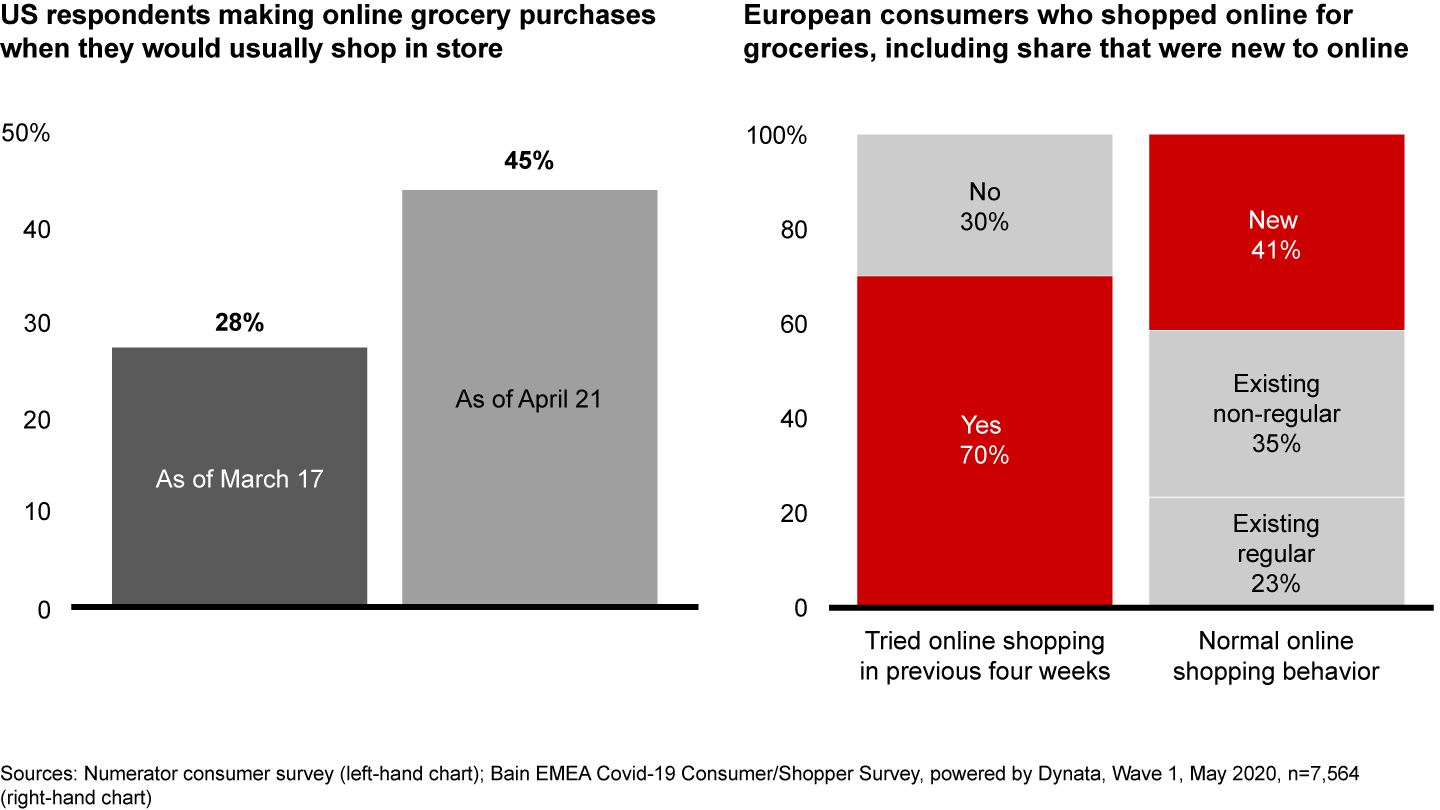
      More consumers have done their grocery shopping online, and many were new to online
      More consumers have done their grocery shopping online, and many were new to online
      More consumers have done their grocery shopping online, and many were new to online

      At the same time, grocers’ costs are rising significantly:

      • The cost of goods has spiked in certain categories due to supply chain disruptions, while some suppliers have questioned trade funding levels in the midst of major sales increases.
      • Labor costs have risen as well, due to absenteeism caused by medical conditions, lack of childcare and quarantine. New safety equipment and protocols also reduce productivity.
      • Greater use of online channels, which have high delivery and picking costs, are reducing overall profitability.
      • Greatly increased store traffic has made it less efficient, and thus more costly, to set up the store, including special feature space and end-cap sets driven by short-term promotions.

      Grocers cannot pass on most of these higher costs, fearing accusations of price gouging that would damage the brand. Instead, grocers should use this once-in-a-generation opportunity to reset customer expectations about promotions while also shoring up profitability for the long run. While grocers dialed back promotions during the pandemic, primarily because of acute operational challenges during the height of the initial demand surge, that is a temporary lull and value-conscious customers will be eager to see promotions return.

      In our experience, effectively refocusing promotions can increase gross margin dollars by 2% through improvements in both volume and percentage margin, equivalent to a 20% improvement in operating margin dollars, for a typical midsize grocer.

      Test, learn and test again

      Given the changes in consumer behavior over the past three months, grocers no longer can rely on category managers’ intuitions or forecasting models that use a few years’ worth of purchasing data. Instead, the new realities call for a test-and-learn approach using the most recent consumer response data and machine learning technology. One can run near-in tests of price elasticities and promotions, then set price points, test, learn and repeat before a scale rollout.

      When the results of such tests go quickly to merchants in the form of insights and recommendations, they can make informed decisions about promotions, rather than guessing about what is effective.

      The experience of multiple banners illustrates the value of scrutinizing and optimizing promotions. For instance, base prices for one grocer had increased over time to become considerably greater than those of the low-priced market leader, with some categories reaching “insult” levels of 40% more. The banner simultaneously used promotions to drive sales, creating an unsustainable cycle of ever-higher base prices and dependence on promotions—a variation of high-low pricing that was “very high and very low.”

      The grocer addressed this cycle in two ways. First, it selectively reset base prices by identifying known value items (KVIs), using a novel machine-learning-based approach to find those items that were most important for creating price perception, such as baby formula. This analysis led the banner to reduce the regular retail price of many KVIs, creating a mid-low pricing model, while the less critical items could remain high-low (see Figure 2).

      At another grocery chain, after extensive elasticity modeling off of past promotions, the grocer began to shift promotional spending away from those categories where promotions were least productive and toward those that drove true benefits. It stopped promoting one brand of muffins, for example, moving instead to everyday low pricing, because of the low profit margin and high purchase frequency.

      Figure 2
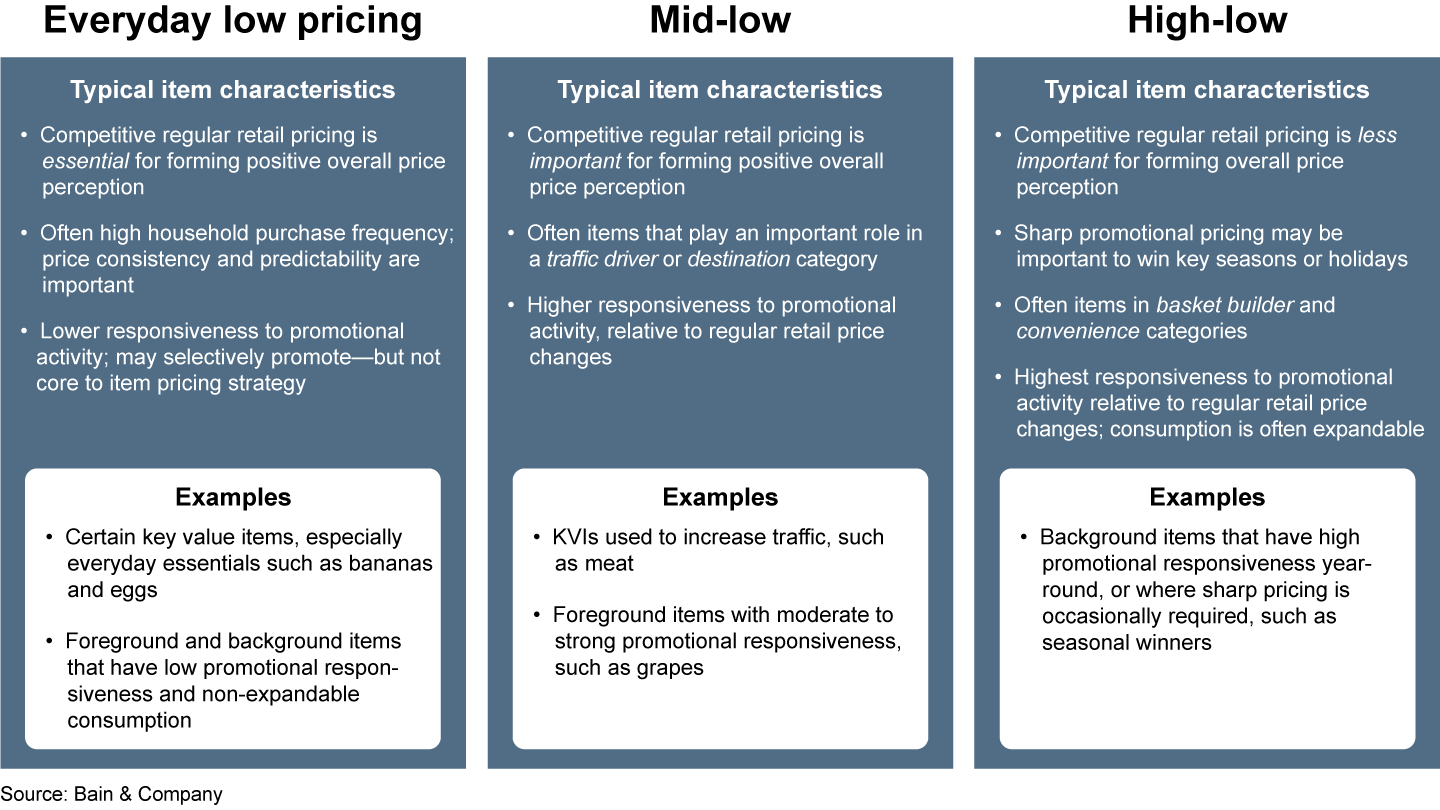
      “Mid-low” pricing may be appropriate for some categories
      “Mid-low” pricing may be appropriate for some categories
      “Mid-low” pricing may be appropriate for some categories

      In sum, these grocers used the full range of promotional models to identify the right items to promote, with the right price at the right time, and with the best use of advertising support. Results to date have been impressive: a 5% to 10% improvement in the return on promotional spending for several center-store and fresh categories, and better price perceptions reported by customers.

      This is the time for bold steps, not incremental tweaks to what a store did last year. Ruthlessly eliminating low-performing promotions, to reinvest the savings in the items customers really care about, will allow grocers to both hold the line on profitability and earn more loyalty from the shoppers now flooding their stores.

      Related Insights

      Coronavirus

      The global Covid-19 pandemic has extracted a terrible human toll and spurred sweeping changes in the world economy. Across industries, executives have begun reassessing their strategies and repositioning their companies to thrive now and in the world beyond coronavirus.

      著者
      • Headshot of Stephen Mewborn
        Stephen Mewborn
        パートナー, Chicago
      • Headshot of Stephen Caine
        Stephen Caine
        パートナー, Chicago
      • Headshot of Sandeep Heda
        Sandeep Heda
        パートナー, Atlanta
      • Headshot of Sumner Makin
        Sumner Makin
        パートナー, London
      関連業種
      • Grocery
      • 小売
      関連するコンサルティングサービス
      • Digital
      • Modern Marketing
      • Pricing
      • アドバンスド・アナリティクス
      • 顧客戦略、マーケティング
      コンサルティングサービス
      • Pricing and Promotions
      顧客戦略、マーケティング
      Cue the $100 Box of Cereal? Getting the Best Out of Pricing Software Tools

      Reaping the benefits of pricing software tools hinges on thoughtful implementation and active management, not on a plug-and-play approach.

      詳細
      Marketing Analytics
      Successful A/B Tests in Retail Hinge on These Design Considerations

      Following a small set of guidelines will result in more meaningful and trustworthy results.

      詳細
      Coronavirus
      How Can Financial Services Marketers Keep Up with Their Customers?

      Covid-19 has raised the value of faster decision making informed by a test-and-learn approach.

      詳細
      Grocery
      The Most Loved Private-Label Brands in Fresh and Perishable Food

      Texas grocer H-E-B tops our second ranking of US own-label brands.

      詳細
      Pricing and Promotions
      Smarter Bank Pricing in the Age of AI

      Understanding each customer's price sensitivity helps banks balance discounting with sales conversions.

      詳細
      First published in 7月 2020
      Tags
      • Coronavirus
      • Digital
      • Grocery
      • Marketing Analytics
      • Modern Marketing
      • Pricing
      • Pricing and Promotions
      • アドバンスド・アナリティクス
      • 顧客戦略、マーケティング
      • 小売

      クライアント支援事例

      アドバンスド・アナリティクス A Global Retailer Transforms Technology and Data to Conquer the Digital Future

      ケーススタディを見る

      業績改善 Retailer's performance improvement boosts shareholder value

      ケーススタディを見る

      戦略 Global expansion boosts supermarket earnings and growth

      ケーススタディを見る

      お気軽にご連絡下さい

      私達は、グローバルに活躍する経営者が抱える最重要経営課題に対して、厳しい競争環境の中でも成長し続け、「結果」を出すために支援しています。

      Digital is a service mark of Bain & Company, Inc.

      ベインの知見。競争が激化するグローバルビジネス環境で、日々直面するであろう問題について論じている知見を毎月お届けします。

      *プライバシーポリシーの内容を確認し、合意しました。

      プライバシーポリシーをご確認頂き、合意頂けますようお願い致します。
      Bain & Company
      お問い合わせ Sustainability Accessibility Terms of use Privacy Cookie Policy Sitemap Log In

      © 1996-2026 Bain & Company, Inc.

      お問い合わせ

      How can we help you?

      • ビジネスについて
      • プレス報道について
      • 採用について
      全てのオフィス