
Skip to Content
  • オフィス

    オフィス

    北米・南米
    • Atlanta
    • Austin
    • Bogota
    • Boston
    • Buenos Aires
    • Chicago
    • Dallas
    • Denver
    • Houston
    • Los Angeles
    • Mexico City
    • Minneapolis
    • Monterrey
    • Montreal
    • New York
    • Rio de Janeiro
    • San Francisco
    • Santiago
    • São Paulo
    • Seattle
    • Silicon Valley
    • Toronto
    • Washington, DC
    ヨーロッパ・中東・アフリカ
    • Amsterdam
    • Athens
    • Berlin
    • Brussels
    • Copenhagen
    • Doha
    • Dubai
    • Dusseldorf
    • Frankfurt
    • Helsinki
    • Istanbul
    • Johannesburg
    • Kyiv
    • Lisbon
    • London
    • Madrid
    • Milan
    • Munich
    • Oslo
    • Paris
    • Riyadh
    • Rome
    • Stockholm
    • Vienna
    • Warsaw
    • Zurich
    アジア・オーストラリア
    • Bangkok
    • Beijing
    • Bengaluru
    • Brisbane
    • Ho Chi Minh City
    • Hong Kong
    • Jakarta
    • Kuala Lumpur
    • Manila
    • Melbourne
    • Mumbai
    • New Delhi
    • Perth
    • Shanghai
    • Singapore
    • Sydney
    • Tokyo
    全てのオフィス
  • アルムナイ
  • メディア
  • お問い合わせ
  • 東京オフィス
  • Japan | 日本語

    地域と言語を選択

    グローバル
    • Global (English)
    北米・南米
    • Brazil (Português)
    • Argentina (Español)
    • Canada (Français)
    • Chile (Español)
    • Colombia (Español)
    ヨーロッパ・中東・アフリカ
    • France (Français)
    • DACH Region (Deutsch)
    • Italy (Italiano)
    • Spain (Español)
    • Greece (Elliniká)
    アジア・オーストラリア
    • China (中文版)
    • Korea (한국어)
    • Japan (日本語)
  • Saved items (0)
    Saved items (0)

    You have no saved items.

    後で閲読、共有できるようにするためにブックマークしてください

    Explore Bain Insights
  • 業界別プラクティス
    メインメニュー

    業界別プラクティス

    • 航空宇宙、防衛、政府関連
    • 農業
    • 化学製品
    • インフラ、建設
    • 消費財
    • 金融サービス
    • ヘルスケア
    • 産業機械、設備
    • メディア、エンターテインメント
    • 金属
    • 採掘・鉱業
    • 石油、ガス
    • 紙、パッケージ
    • プライベートエクイティ
    • 公共、社会セクター
    • 小売
    • テクノロジー
    • 通信
    • 交通
    • 観光産業
    • 公益事業、再生可能エネルギー
  • 機能別プラクティス
    メインメニュー

    機能別プラクティス

    • カスタマー・エクスペリエンス
    • サステイナビリティ、 社会貢献
    • Innovation
    • 企業買収、合併 (M&A)
    • オペレーション
    • 組織
    • プライベートエクイティ
    • マーケティング・営業
    • 戦略
    • アドバンスド・アナリティクス
    • Technology
    • フルポテンシャル・トランスフォーメーション
  • Digital
  • 知見/レポート
  • ベイン・アンド・カンパニーについて
    メインメニュー

    ベイン・アンド・カンパニーについて

    • ベインの信条
    • 活動内容
    • 社員とリーダーシップ
    • プレス・メディア情報
    • クライアントの結果
    • 受賞歴
    • パートナーシップを結んでいる団体
    Further: Our global responsibility
    • ダイバーシティ
    • 社会貢献
    • サステイナビリティへの取り組み
    • 世界経済フォーラム(WEF)
    Learn more about Further
  • キャリア
    メインメニュー

    キャリア

    • ベインで働く
      キャリア
      ベインで働く
      • Find Your Place
      • ベインで活躍する機会
      • ベインのチーム体制
      • 学生向けページ
      • インターンシップ
      • 採用イベント
    • ベインでの体験
      キャリア
      ベインでの体験
      • Blog: Inside Bain
      • キャリアストーリー
      • 社員紹介
      • Where We Work
      • 成長を後押しするサポート体制
      • アフィニティ・グループ
      • 福利厚生
    • Impact Stories
    • 採用情報
      キャリア
      採用情報
      • 採用プロセス
      • 面接内容
    FIND JOBS
  • オフィス
    メインメニュー

    オフィス

    • 北米・南米
      オフィス
      北米・南米
      • Atlanta
      • Austin
      • Bogota
      • Boston
      • Buenos Aires
      • Chicago
      • Dallas
      • Denver
      • Houston
      • Los Angeles
      • Mexico City
      • Minneapolis
      • Monterrey
      • Montreal
      • New York
      • Rio de Janeiro
      • San Francisco
      • Santiago
      • São Paulo
      • Seattle
      • Silicon Valley
      • Toronto
      • Washington, DC
    • ヨーロッパ・中東・アフリカ
      オフィス
      ヨーロッパ・中東・アフリカ
      • Amsterdam
      • Athens
      • Berlin
      • Brussels
      • Copenhagen
      • Doha
      • Dubai
      • Dusseldorf
      • Frankfurt
      • Helsinki
      • Istanbul
      • Johannesburg
      • Kyiv
      • Lisbon
      • London
      • Madrid
      • Milan
      • Munich
      • Oslo
      • Paris
      • Riyadh
      • Rome
      • Stockholm
      • Vienna
      • Warsaw
      • Zurich
    • アジア・オーストラリア
      オフィス
      アジア・オーストラリア
      • Bangkok
      • Beijing
      • Bengaluru
      • Brisbane
      • Ho Chi Minh City
      • Hong Kong
      • Jakarta
      • Kuala Lumpur
      • Manila
      • Melbourne
      • Mumbai
      • New Delhi
      • Perth
      • Shanghai
      • Singapore
      • Sydney
      • Tokyo
    全てのオフィス
  • アルムナイ
  • メディア
  • お問い合わせ
  • 東京オフィス
  • Japan | 日本語
    メインメニュー

    地域と言語を選択

    • グローバル
      地域と言語を選択
      グローバル
      • Global (English)
    • 北米・南米
      地域と言語を選択
      北米・南米
      • Brazil (Português)
      • Argentina (Español)
      • Canada (Français)
      • Chile (Español)
      • Colombia (Español)
    • ヨーロッパ・中東・アフリカ
      地域と言語を選択
      ヨーロッパ・中東・アフリカ
      • France (Français)
      • DACH Region (Deutsch)
      • Italy (Italiano)
      • Spain (Español)
      • Greece (Elliniká)
    • アジア・オーストラリア
      地域と言語を選択
      アジア・オーストラリア
      • China (中文版)
      • Korea (한국어)
      • Japan (日本語)
  • Saved items  (0)
    メインメニュー
    Saved items (0)

    You have no saved items.

    後で閲読、共有できるようにするためにブックマークしてください

    Explore Bain Insights
  • 業界別プラクティス
    • 業界別プラクティス

      • 航空宇宙、防衛、政府関連
      • 農業
      • 化学製品
      • インフラ、建設
      • 消費財
      • 金融サービス
      • ヘルスケア
      • 産業機械、設備
      • メディア、エンターテインメント
      • 金属
      • 採掘・鉱業
      • 石油、ガス
      • 紙、パッケージ
      • プライベートエクイティ
      • 公共、社会セクター
      • 小売
      • テクノロジー
      • 通信
      • 交通
      • 観光産業
      • 公益事業、再生可能エネルギー
  • 機能別プラクティス
    • 機能別プラクティス

      • カスタマー・エクスペリエンス
      • サステイナビリティ、 社会貢献
      • Innovation
      • 企業買収、合併 (M&A)
      • オペレーション
      • 組織
      • プライベートエクイティ
      • マーケティング・営業
      • 戦略
      • アドバンスド・アナリティクス
      • Technology
      • フルポテンシャル・トランスフォーメーション
  • Digital
  • 知見/レポート
  • ベイン・アンド・カンパニーについて
    • ベイン・アンド・カンパニーについて

      • ベインの信条
      • 活動内容
      • 社員とリーダーシップ
      • プレス・メディア情報
      • クライアントの結果
      • 受賞歴
      • パートナーシップを結んでいる団体
      Further: Our global responsibility
      • ダイバーシティ
      • 社会貢献
      • サステイナビリティへの取り組み
      • 世界経済フォーラム(WEF)
      Learn more about Further
  • キャリア
    人気検索キーワード
    • デジタル
    • 戦略
    前回の検索
      最近訪れたページ

      Content added to saved items

      Saved items (0)

      Removed from saved items

      Saved items (0)

      論説

      Peak oil: Does it matter?

      Peak oil: Does it matter?

      Peak oil, the point at which global petroleum extraction reaches its maximum rate, is overrated as a source of concern or celebration. The truth is, the days of easy oil never really happened.

      著者:Rob Fisher and Sharad Apte

      • min read

      論説

      Peak oil: Does it matter?
      en

      Peak oil—the point at which global petroleum extraction reaches its maximum rate—is a source of concern for some and celebration for others.

      Although this widely accepted definition appears simple enough, it masks some complex issues. Are we talking about oil alone, or oil and gas? Do we count both conventional and unconventional production? Do we include coal-bed methane, shale oil and tar sands? Most importantly, how significant is this event?

      We often hear that "the days of easy oil are over," but they never really occurred. They only appear so in retrospect. For example, shallow-water production in the North Sea today seems easy in comparison with production in deep-water offshore West Africa or tar-sands extraction in western Canada. Yet try telling project managers of the first North Sea gravity-based structures in the 1970s that their tasks were not so difficult. Significant cost overruns and multiyear delays were the norm. Likewise, today's methods for reaching the most difficult oil and gas deposits will someday be dismissed as easy. The point is that, even if we have already passed the point of peak oil, those who imply that the petroleum industry is dying greatly exaggerate the threat. Why?

      First, at today's consumption rates, we have approximately 120 years of recoverable oil reserves. That includes 40 years of conventional reserves and 80 years of "unconventional" reserves. While oil consumption increased over the past 25 years by more than 30 percent, those reserves have not only been replaced, the reserve base has grown by the same 30 percent. In other words, global reserves have remained approximately constant since the mid-1980s. Most of this has come not from "easy" oil, but—from a mid-1980s perspective—from "difficult" or even "impossible" oil. And the industry continues to increase reserves through new discoveries, new extractions from discovered resources, field optimizations and unconventional resources. All this comes despite geopolitical events restricting access to many of the world's most promising regions. It defies logic and experience to maintain that this trend will suddenly end.

      Second, we know that oil consumption swings on two primary factors: global demand for energy and petroleum's price relative to energy alternatives. Again, it sounds simple, but these hinge on multiple variables that are difficult to predict. For example, global energy demand rises with population growth and economic development, region by region and country by country. Yet relative price is affected by complex interactions among technology development, economic subsidies and the handicapping of other energy sources.
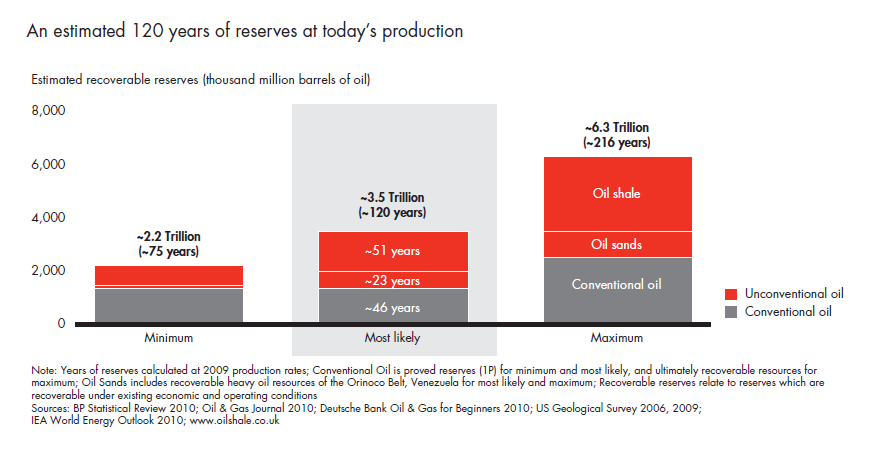

      peak-oil-does-it-matter-fig-01_embed

      Determining how these will develop is impossible, as evidenced by history's many erroneous predictions of petroleum demand and price. What we can know is that economic growth depends on a reliable supply of energy, provided at the lowest cost. Put another way, it is more useful to identify ongoing energy demand and source trends than the growth rate of new petroleum reserves.

      In our view, three trends are most important

      First, new technologies must continue to emerge. That will make production of ever-more difficult petroleum reserves possible and economically feasible, and will reduce the cost of competing energy sources. Environmental concerns will focus technology development on fossil-fuel alternatives. Improved battery technology will eventually provide a better transportation alternative to gasoline power. Wind and water power will grow too, although affected by financial subsidies more than the free market. The main constraint will be human. It requires scientists and engineers to achieve these technological developments. Companies that succeed will be those recruiting, developing and directing qualified personnel in research and technology.

      Second, flexibility is essential. That means that governments should not constrain any potential energy source. Each will likely be required at some stage. As things sort themselves out, we can expect winners and losers, with varying effects on the pace of countries' development. Governments that embrace market solutions to energy supply will ensure that their nations are best positioned to develop. They must also monitor scientifically and economically justified environmental developments, maintain stable commercial and fiscal environments in the energy sector, and prioritize the education of young people in the required disciplines.

      Finally, the petroleum industry will face competition from alternative and potentially subsidized energy sources. The industry must continue to invest in the kind of research and people to develop its own new technologies. The task is not just to find and produce petroleum more effectively. As alternatives develop, the industry must ensure that every petroleum molecule adds the maximum economic value.

      No one knows how the last barrel of oil produced will be used. Whatever way it plays out, peak oil will occur one day. But it won't signal the demise of petroleum as a growth enabler. With sufficient investment in technology and people, the industry can look forward to continuing to fuel global economic development for decades to come.

      Rob Fisher is a Bain Advisor. Sharad Apte, a Bain & Company partner in the Bangkok office, leads the firm’s Asian Energy practice.


      peak-oil-does-it-matter-fig-01_full
      著者
      • Headshot of Sharad Apte
        Sharad Apte
        パートナー, Bangkok
      関連業種
      • 公益事業、再生可能エネルギー
      • 石油、ガス
      関連するコンサルティングサービス
      • サステイナビリティ、社会貢献
      公益事業、再生可能エネルギー
      Business Breakthrough Barometer 2025

      The annual pulse check from leading businesses on the pace of the net-zero transition.

      詳細
      公益事業、再生可能エネルギー
      Sustaining Capital: From Chaos to Discipline

      Fragmented budgets, poor visibility, and missed forecasts are fixable with the right approach.

      詳細
      サステイナビリティ、社会貢献
      How AI Is Starting to Transform Circular Packaging

      There are 15 AI use cases companies across the value chain can use today to accelerate circularity.

      詳細
      公益事業、再生可能エネルギー
      Energy Capital Expenditures: Steady Growth Ahead

      Utilities, oil and gas, and mining will see uneven capex growth through 2027 as companies balance supply security with energy transition goals.

      詳細
      サステイナビリティ、社会貢献
      Exploring AI for Packaging Circularity

      AI is already creating value across the packaging lifecycle, from optimising design and reducing material use to improving sorting and traceability.

      詳細
      First published in 12月 2010
      Tags
      • サステイナビリティ、社会貢献
      • 公益事業、再生可能エネルギー
      • 石油、ガス

      クライアント支援事例

      An Environmental Services Company Captures Massive Savings from a Merger

      ケーススタディを見る

      組織 Centralization boosts performance for an energy giant

      ケーススタディを見る

      顧客戦略、マーケティング Revitalizing a utility's market position with customer loyalty

      ケーススタディを見る

      お気軽にご連絡下さい

      私達は、グローバルに活躍する経営者が抱える最重要経営課題に対して、厳しい競争環境の中でも成長し続け、「結果」を出すために支援しています。

      ベインの知見。競争が激化するグローバルビジネス環境で、日々直面するであろう問題について論じている知見を毎月お届けします。

      *プライバシーポリシーの内容を確認し、合意しました。

      プライバシーポリシーをご確認頂き、合意頂けますようお願い致します。
      Bain & Company
      お問い合わせ Sustainability Accessibility Terms of use Privacy Cookie Policy Sitemap Log In

      © 1996-2026 Bain & Company, Inc.

      お問い合わせ

      How can we help you?

      • ビジネスについて
      • プレス報道について
      • 採用について
      全てのオフィス