

論説

概要
- Resetting mine strategy can increase asset net present value by 25% to 75%.
- A large mine project often contains several smaller ones that are much more profitable than the overall undertaking.
- Leaders develop options for rising and falling prices and identify key signposts for choosing one path or another.
Many mining companies have achieved strong returns over the past three years thanks to a combination of rising commodity prices, increased productivity and deferred capital expenditure. But what happens when commodity prices are falling?
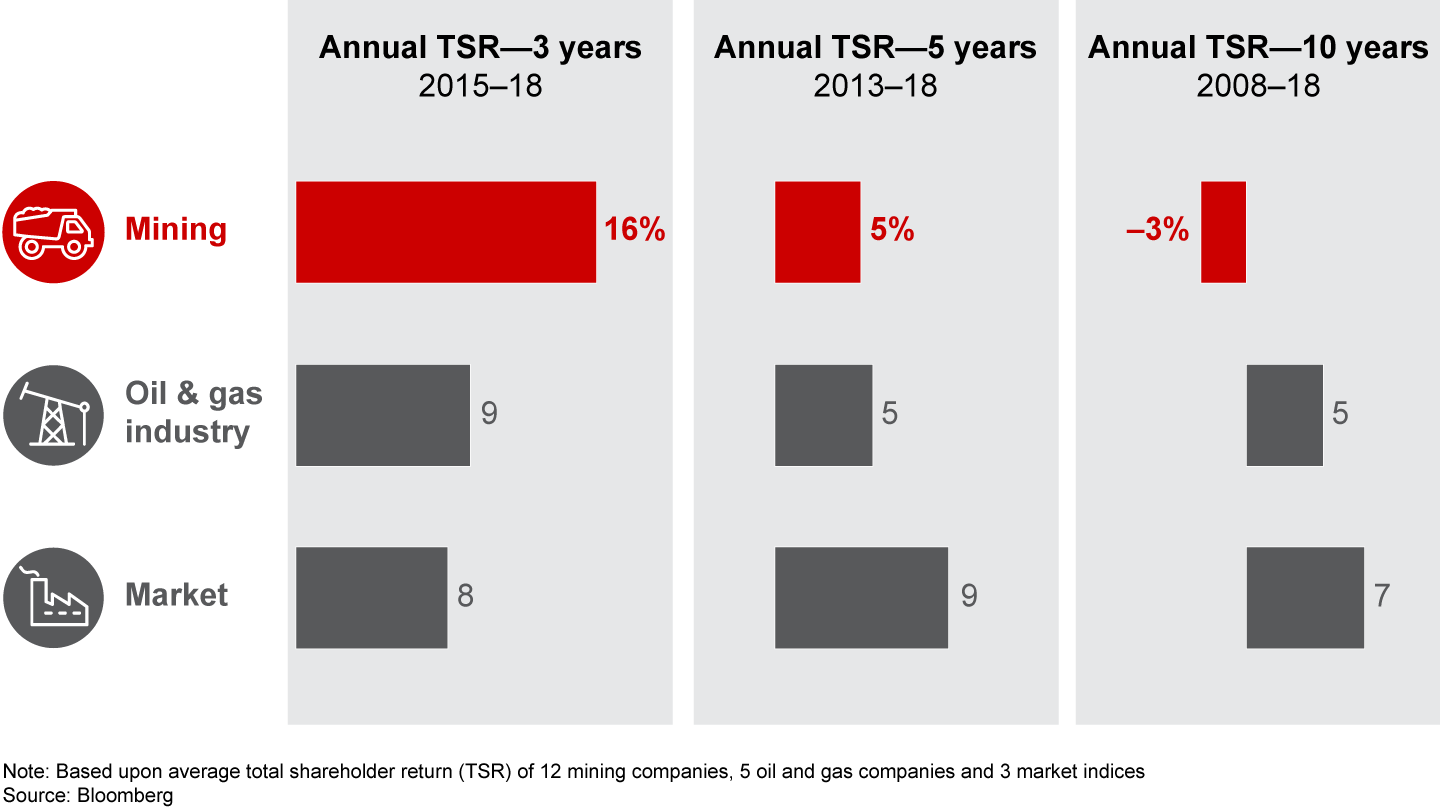
Long-term market data highlights the challenge. Total shareholder return in the mining industry has underperformed the overall market for the past 5 to 10 years, and for the most part, their underlying commodities (see Figure 1). The hard work ahead is figuring out how to deliver an acceptable return when commodity prices are in decline.
Figure 1

As leadership teams start searching for the next wave of growth and productivity improvements, the options may seem limited. Ore grades in stable geographies are in decline, and many companies must struggle to do more with existing assets. Those that seek growth in unstable geographies must meet higher internal rate of return (IRR) hurdle rates to account for the increased risk. Frustrated, some firms have unloaded poorly performing assets only to see a nimble rival generate far better returns with them.
In our experience, they often overlook an option closer to home that has the greatest potential to improve performance—rethinking mine strategy. It’s not surprising. Mining companies traditionally have viewed commodity volumes as the main measure of their success. Leadership teams are preoccupied with the engineering challenge of getting as much ore out of the ground as quickly as possible. So once mine strategies are set, they often continue down the same path without reexamining key assumptions.
Leadership teams that invest time to understand a mine’s current performance in detail often discover a shocking truth: Their strategy is actually undermining return on capital and lowering profitability. The good news is, by making a quick pivot, many are able to reverse the negative spiral and unlock new value from existing assets.
A handful of companies, prompted by new leadership, short-term cash-flow challenges or aging assets, have sharply improved cash flow and increased the value of their assets by stepping back to rethink their strategies. Bain research shows a well-executed mine strategy review can increase asset net present value (NPV) in the range of 25% to 75%, with some achieving many multiples on their asset’s status quo value.
In cases where companies see only a modest increase in NPV, the strategy review may deliver other benefits, including significantly lower risk or reduced capital investment. A strategy rethink also can help companies cope better with fluctuating commodity prices. Part of the exercise includes developing options for rising and falling prices, and identifying key signposts for choosing one path over another.
Unlocking value
A comprehensive strategy review typically unveils three common problems that erode mine performance.
Missing the “diamond in the rough.” When companies assess the economics of a mine, they often evaluate it as one large integrated project or a major phase of development. That approach can dilute earnings. The cost and effort to extract ore varies depending on where it is located. A large project often contains several smaller ones that are much more profitable than the overall undertaking.
The leadership team at a West Australian gold mine, for instance, discovered it could extend the life of the mine more than 10 years by jettisoning the historical pit design and zeroing in on a highly profitable pit extension. The company originally overlooked the profitability of this particular zone because the smaller project was subsumed within the much larger and uneconomic full-pit pushback design. Reevaluating the pit options generated higher short-term cash flows and increased the life of the mine and the overall value of the operation. It also gave the site team the capital and time to invest further in exploration, and make longer-term decisions about the configuration of the plant and heavy machinery.
Mistaking volume for value. Historically, mining companies have assumed higher volume would automatically generate higher value. As a result, many neglected short-term cash flow. But producing lower volumes may actually yield higher returns. Take the case of one company with a large mine in West Africa that had been working through multiple expansion options over a number of years. Based on the company’s calculations, the option for maximizing the mine’s NPV and metal volumes meant investing more than half a billion dollars to double the size of the plant.
Before embarking on that path, the leadership team decided to step back and challenge some of the metrics they were using to prioritize their options. They also questioned their basic premise that more volume would create higher value. Was there a path to maximizing the life of mine NPV value but at the same time preserving short-term cash flow?
By starting with a clean slate and using a more balanced set of metrics that focused on value, the leadership team identified new options. The new expansion plan, which actually slowed the pace of mining rather than accelerating it, allowed the company to maximize the mine’s short-term cash flow while maintaining longer-term options and preserving net present value over the life of the mine.
Accepting the status quo. Mine operators face a multitude of constraints, including regulatory, technical, operational and financial ones. Challenging any one of these with valid arguments requires an investment of time and resources that leadership teams often feel they don’t have the luxury to make. However, companies that regularly step back to review constraints and succeed in eliminating them often deliver a significant increase in value.
One mining company with a large complex in North America comprising both underground and open-pit mines had historically relied on mine plans that looked similar, year after year. When the site leaders took a clean-sheet approach to strategy, they were able to create options based on a new, highly profitable open-pit shell design that subsumed the underground mine. Separately, they identified ore body options that extended the life of a second high-grade underground mine and technology enhancements that created new options previously considered uneconomical. The strategy required a short-term capital expenditure of $1 billion but delivered a threefold increase in the site’s life of mine NPV.
Getting started
To get the most from a strategic review, leaders deploy multidisciplinary teams with both technical and financial expertise. They work in an agile fashion, putting all options on the table. Though a strategy reset may seem complex and time-consuming, a team with the right skill set should be able to identify all options within eight weeks, using a rapid test-and-learn process.
Three simple steps can help companies use a strategy-reset to improve performance:
Identify all the options. Regularly take a “clean sheet” approach to mine strategy that challenges existing constraints across all elements of the operation from the resource to the supply chain. Develop new options and capabilities as knowledge and technology evolve and the mine situation changes. Options that generate an impressive net present value for an asset may require a substantial investment in the short term.
Pressure test each option. Ensure each option is logical and clearly defined. The leadership team should understand the option well and be able to execute it independently of other decisions. Successful companies avoid incorporating new options into a less profitable overarching mine strategy scenario that masks their value. The extra time spent pressure testing is worth taking, even when the team is keen to start the analysis. Ensure the assumptions that underlie each element are based on the latest understanding of the operating environment and are specific to each option. Knowledge of the ore body, commodity prices, costs and operational performance change over time, so it’s critical to recalibrate those variables to achieve the best result.
Use the right metrics when comparing scenarios. Evaluate the scenarios across a balanced set of metrics, including NPV, internal rate of return, three-year or five-year cash flow and a profitability index. Assess the relative risk of different scenarios including technical, execution and economic risk. Sensitivity analysis can assist greatly in quantifying the risk, highlighting critical risk factors and setting signposts for change.
Revisiting mine strategy is a powerful and often overlooked option for improving productivity and creating value. In times of high commodity prices and abundant capital, leadership teams may feel less pressure to change tack. But as commodity prices fluctuate, and as ore grades continue to decline and operational improvements approach full potential, the winners will be those who get mine strategy right.
Tony Walker is a partner with Bain & Company in the firm’s Perth office. Stuart Love is a partner in the Perth office and coleads Bain’s Mining practice globally.
First published in 8月 2018