

論説

概要
- Passing on the higher cost of funding to customers no longer works in many markets. Profit margins on mortgages, credit cards and other bank products have been declining, which heightens the importance of tighter policies and processes around pricing.
- Smarter pricing helps to optimize yields, manage the cost of funding, gain market share, do right by the customer and manage risks.
- Clear product roles are essential, as is clear communication to the organization about the pricing strategy, including the role of products in attracting or retaining customers or funding the book of loans.
- Incentives that better align with customer and bank goals and that go beyond rewarding volume will keep the front line on track.
As the cost of funding has risen sharply and compressed banks’ profit margins in many markets, a more sophisticated approach to pricing has become essential. Returns on many products have been dropping, from declines in mortgage and commercial lending margins, to regulation-driven reductions on interchange fees for credit cards.
Crude tactics such as passing on the higher cost of funding to customers in the form of a rate rise are no longer readily available in many markets, for several reasons. Regulators and media coverage have intensified scrutiny on front-book vs. back-book discrepancies, hidden fees and incentivized sales tactics. Consumers find it much easier to switch banks if they perceive unfair pricing, because of open banking rules, product comparison websites and improved onboarding processes. In mortgages, low-cost providers such as Enkla in Sweden gain market share when banks raise rates. Other competitors are using sophisticated approaches to pricing in order to gain share. PayPal does this using the transaction data of merchants in order to better price working capital lending. Silver Chef has created a marketplace for restaurant and bakery equipment, a move that allows it to competitively price asset leases while reducing the effect of nonperforming assets.
Why pricing matters
In this environment, the onus is on bank executives to get pricing right in order to remain competitive and improve performance, along five dimensions.
Doing right by the customer and rewarding loyalty. It goes without saying that banks should ensure their prices are fair and transparent, and reflect the underlying value of a product or service. Beyond that baseline, to promote customer stickiness, banks can employ relationship-based pricing and behavior-based rewards.
For instance, another European bank segments its retail customers based on their value to the bank, and directs banking-related rewards to their most valuable customers. The main factors by which customers achieve a preferred status is holding products from multiple product groups, along with the overall amount of funds under management with the bank. Rewards include fee waivers, better rates on deposits and a personal adviser. This program has boosted cross-selling and retention rates and expanded the base of the most valuable customers by 7.5%, helping the bank to outperform peers on income growth.
Optimize yields. Pricing differentially by customer segments is one way to raise the return generated by an asset. Is the bank extracting the full economic value of a given asset considering the value proposition, the customer’s willingness to pay, and the asset's risk profile? Is it avoiding price leakage through errors, by enhancing deal disciplines on the front line?
Raising prices selectively makes sense where there is lower price sensitivity. Consider mortgages in Australia. Bain & Company analysis finds that property investors there are less sensitive to interest rate increases than buyers who will live in a home, in part because of favorable tax treatment of interest payments on loans for investment properties. This difference provides an opportunity for banks to find additional yield without creating significant additional churn or acquisition loss.
Manage the cost of funding. Any bank can attract hot money to fund the loan book. The tougher challenge is to attract sufficient funding volume without undermining net interest margin.
One European bank did that hard work. The bank had tried using promotional rates to defend market share, with limited returns. So it tried a number of more targeted actions to reduce the cost of funds in a controlled manner, such as tighter negotiations with customers who have deposit balances above a certain limit. The initiatives included selectively reducing rates on promotional offers that were not working, and reducing the rate increase on negotiated products for less price-sensitive customer segments. As a result, the bank lowered its cost of funds by 17% in the first year and an additional 10% the second year, without much runoff in deposit volumes.
Gain market share. Tactics to target attractive customer segments and products should be balanced to ensure that margins are optimized in a sustainable manner. Understanding segments gives a bank a competitive advantage in that it can tailor pricing offers around what matters most to those segments, whether that’s removing fees or offering interest rate discounts on mortgages or offering frequent-flier points on cards. That helps the bank gain market share without significantly reducing margin. To sustain this advantage over the long term, the bank needs to continually generate and test offers that appeal to specific segments, learning what works and what does not.
Manage risks. Banks now have access to more sophisticated pricing methodologies. Access to real-time, high-quality customer data has improved in recent years, and analytical techniques and automation now can support segmentation and dynamic pricing models. Further, an ecosystem of specialists such as Nomis provide off-the-shelf, cloud-based tools. As a result, banks can assess customers’ risks at a granular level and price for this risk. Doing so not only boosts profitability, it also leads banks to lend only the amounts and interest rate levels that customers can afford.
Pricing plays a big role in shaping the asset mix, and therefore the capital requirements, of a bank. Using price to ensure the right risk profile of the asset portfolio is critical to driving capital returns. Risk models will need to reflect the underlying asset category risks, based on industry and customer profiles, so that the frontline representatives can price competitively given capital requirements. When these factors get out of sync, banks attract the wrong customers and lose significant volume and margin. And with Basel III regulations taking effect soon, capital requirements will change for different asset classes, so banks will want to get ahead of the changes.
What stands in the way of better pricing
To be sure, the challenge goes well beyond simply using technologies. Banks will have to overcome some common problems pervading legacy processes.
The first problem crops up when few employees know the pricing strategy—if it even exists. Policies might be vague on when pricing should be used for customer acquisition and when for retention, or whether deposits are considered a standalone profit line or a funding cost tool. Even the basis of pricing—risk, or regulatory capital return or willingness to pay—may be unclear. Ultimately, the pricing structure should be fair, transparent, rational and easy to communicate to customers and the front line.
A second problem occurs when a bank does not fully embrace data or analytics, which makes it difficult to identify the markers supporting a different pricing structure or more advanced price management. Banks need solid data collection to understand how customers respond to different price points. (See the sidebar “How Pricing Figures into Sources of Value for Banks.”) Capturing product win-loss data allows banks to test and learn what works. A North American bank’s credit card offers were hampered by outdated rules about the target population and a poorly designed control group. The bank had a limited understanding of customer value, and a low campaign response. Working with better data and in concert with the risk group, the bank expanded the target population by 40%, using a test-and-learn approach to identify the best offer. That offer elicited a threefold higher response rate and produced 2.5 times the incremental net revenue, relative to previous campaigns.
Some banks face a third problem: No one truly owns pricing decisions, or has a view of pricing for the overall portfolio. Many stakeholders weigh in with competing interests, but no executive is accountable to sort out their interests and make a decision. And pricing typically happens product by product, without stepping back to manage portfolio profitability. A bank in Australia dealt with this issue by consolidating authority through a pricing steering group that included the head of products, the CFO and the head of pricing meeting weekly. Through that forum, product teams present ideas, and decisions get made and put into market the following week and are monitored for performance—a highly effective form of governance.
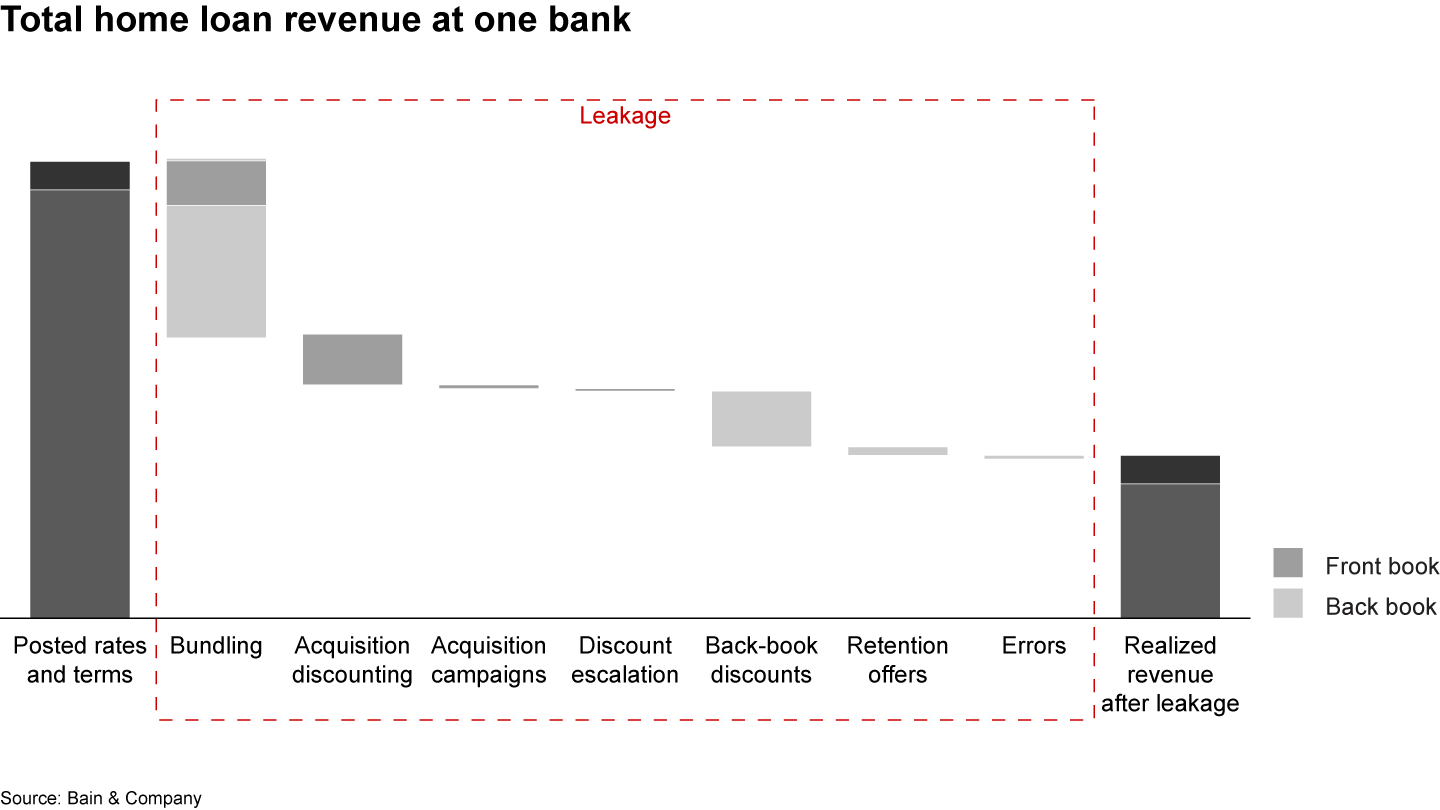
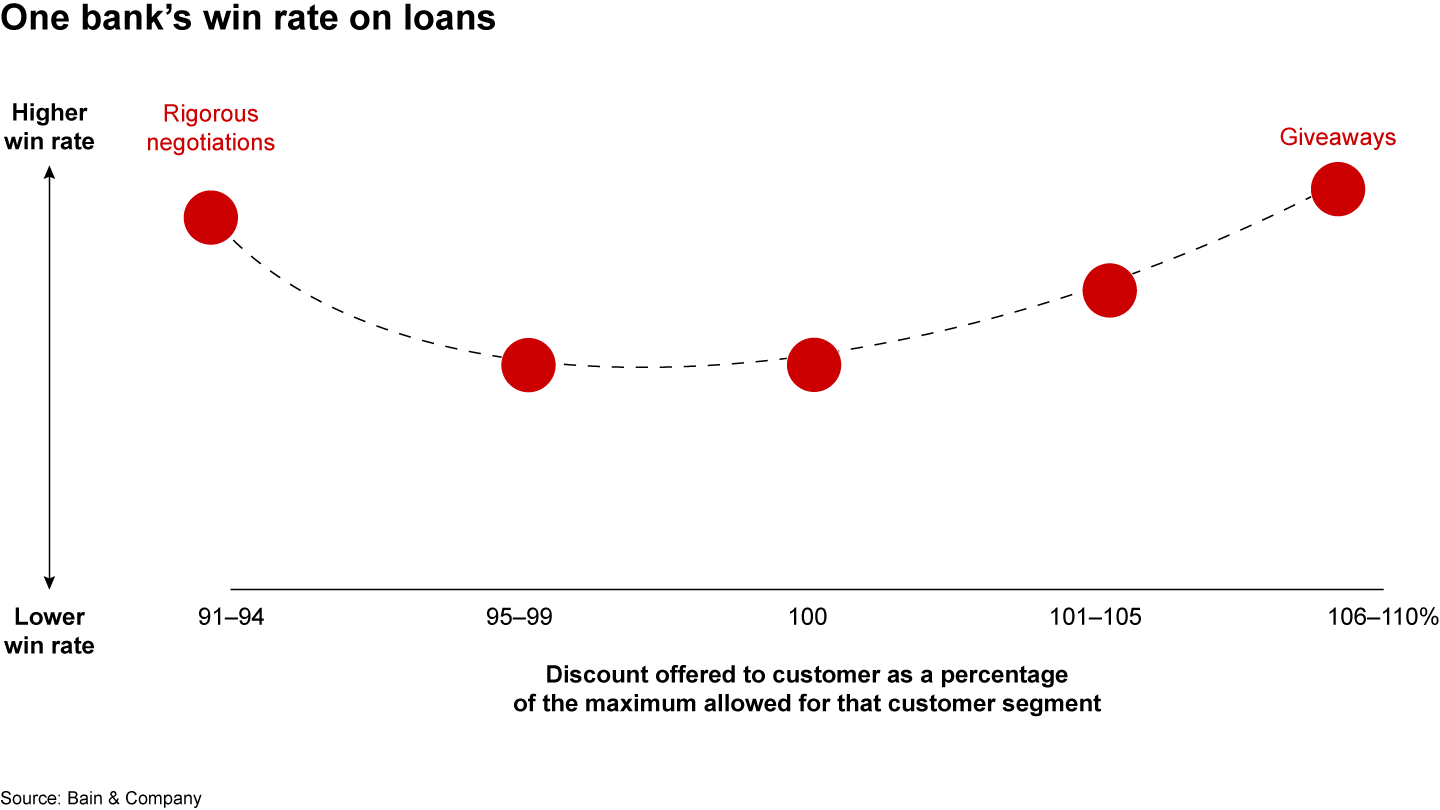
A final problem lies with incentives that favor volume at the expense of profitability, and which may undermine efforts to lend responsibly to customers. If you give the front line discretion to discount 10 basis points on a mortgage, they will give away that amount virtually all of the time (see Figure 1). Yet in many cases, the giveaway could be avoided by greater discipline and, in the future, through technology solutions that limit the discount range. Bain analysis in Australia finds that new homebuyers say they intend to solicit an average of 2.5 mortgage quotes, but wind up getting only 1.5 quotes. More discipline on discounting would take such behavior into account.
Figure 1

Where to start
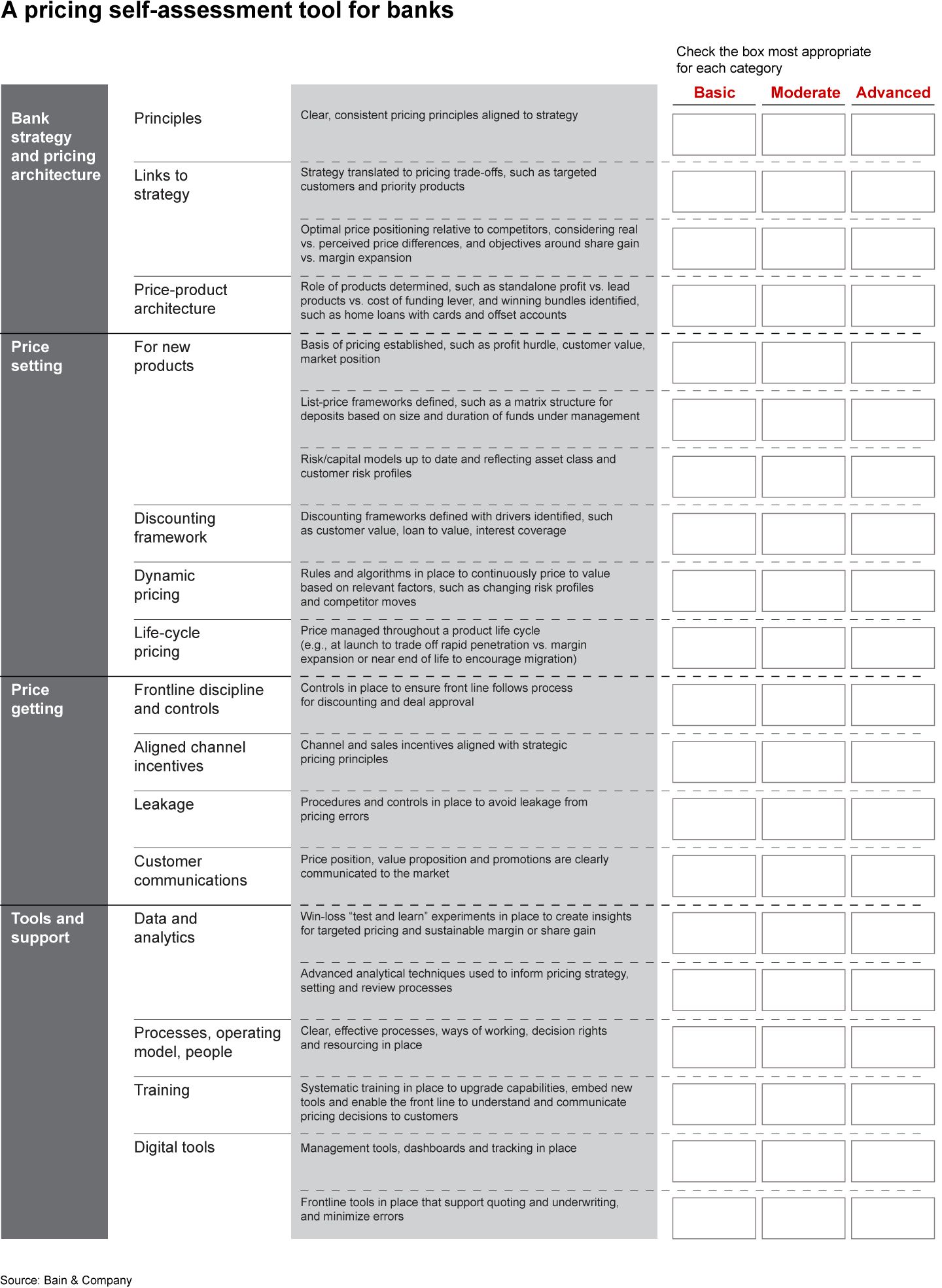
Each of these problems can be overcome, and banks can capture significant value from pricing by implementing some basic disciplines. It starts with a self-diagnosis to take stock of the organization’s current pricing capabilities (see "A pricing self-assessment tool for banks"). The next step involves laying a foundation of principles that emphasize fair, transparent pricing reflecting the underlying value delivered to a customer and matching the customer’s risk profile.

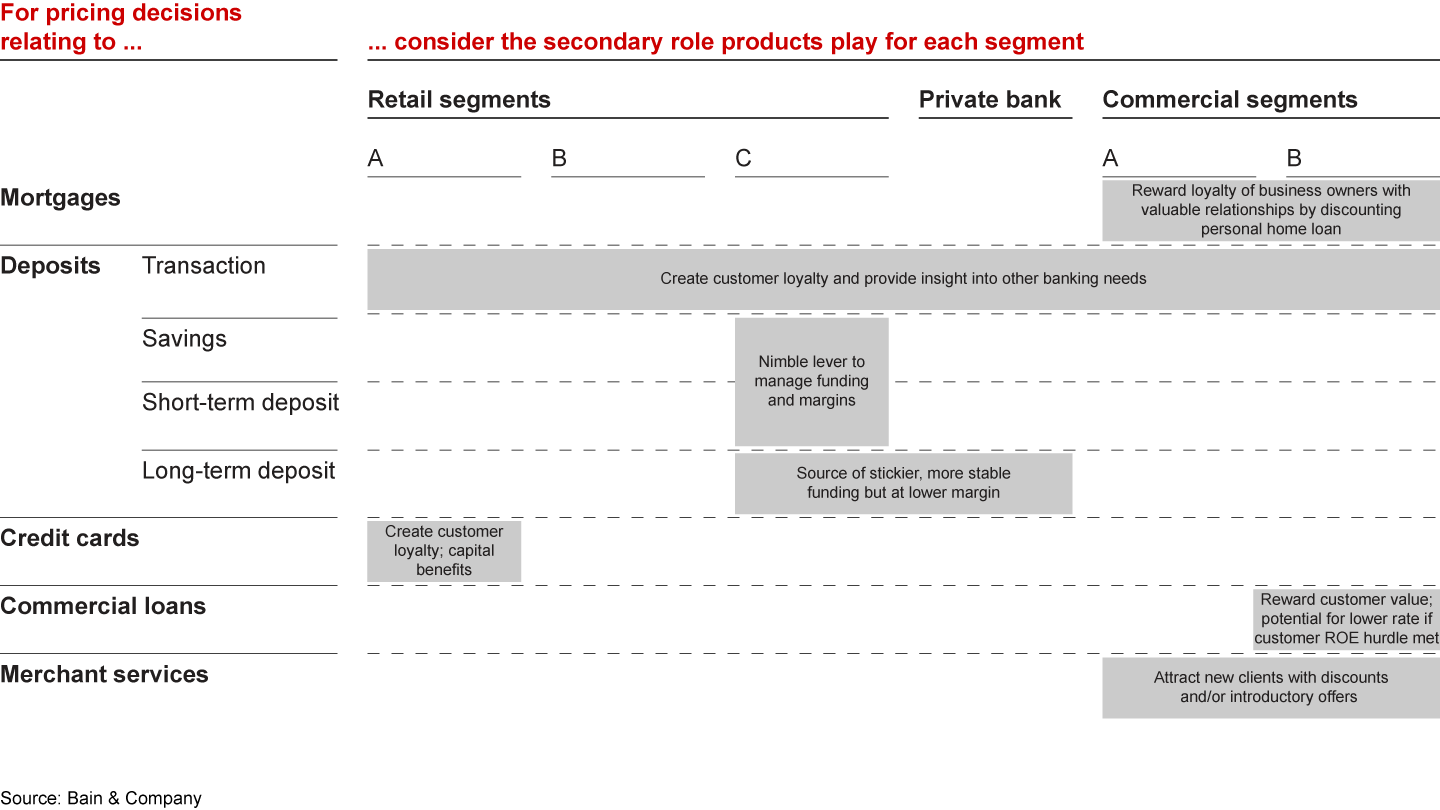
In addition, bank executives should establish product roles and a portfolio view that are clearly communicated across the organization (see Figure 2). For example, transaction banking might be priced to attract deposits, because these customers are stickier and will buy other products. Guardrails should be laid down to determine, say, whether loyal customers will get better rates than new customers, or how the bank will address the deterioration of the asset quality of a small-business borrower. The rationale for any pricing principle should be communicated simply to the front line and customers, so that discretionary items don’t become the norm.
Figure 2

With that foundation in place, a bank should stop detrimental incentives at the front line. At a minimum, balance incentives to promote profitability goals, not just volume. Looking ahead, more sophisticated models could sharply reduce or even remove the risks associated with frontline selling and discretion.
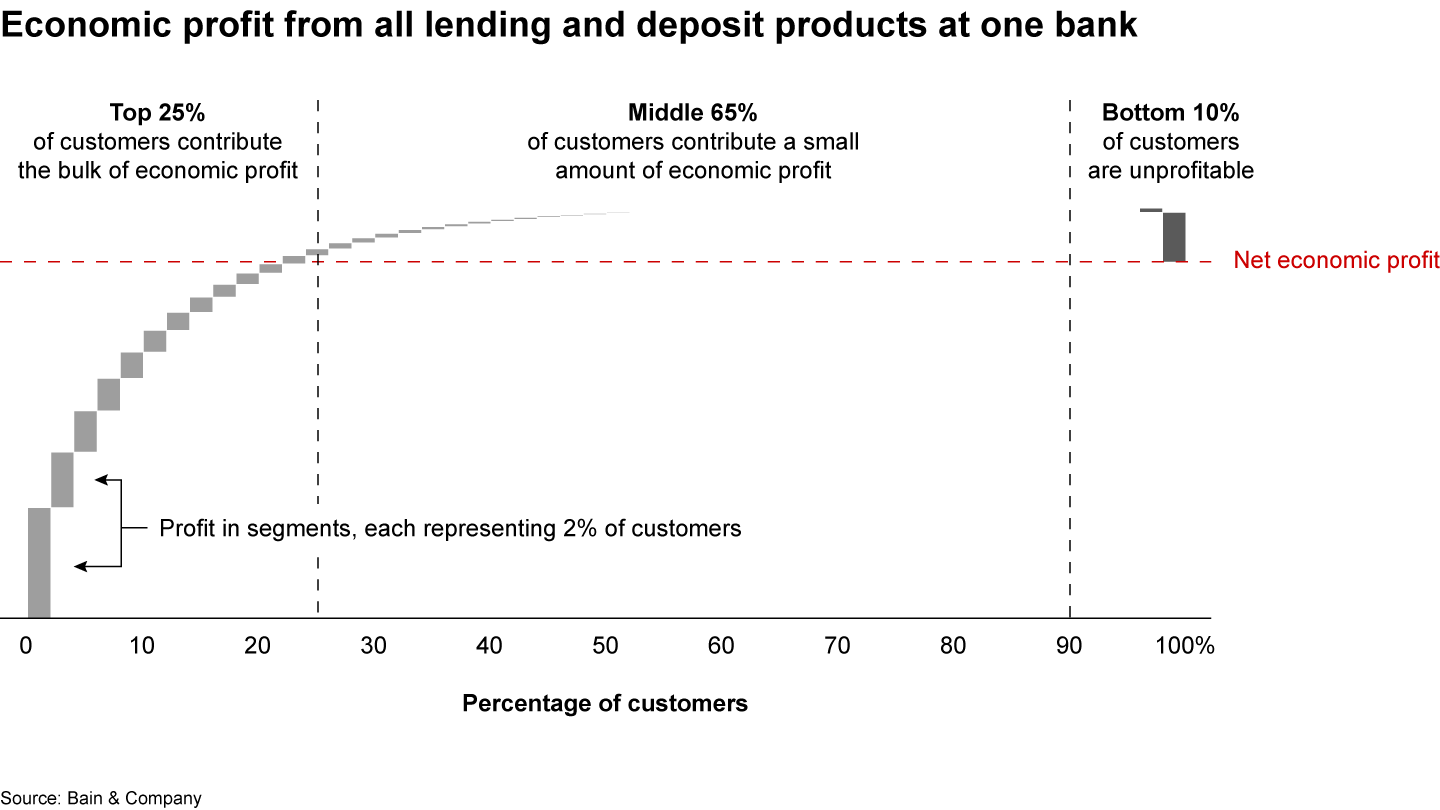
One Canadian bank, for instance, uses a branch-level incentive structure for home mortgages that gives a branch more credit for a full-price loan than one closed with a discount. And an Australian bank’s institutional unit uses a tool to calculate account-level return on equity (ROE), so that the loan can be priced to a point where the overall account does not fall below a certain ROE. These types of incentives prevent having a small minority of customers make up the lion’s share of a bank’s economic profit (see Figure 3).
Figure 3

At many banks, and notably in business and commercial banking, it pays to review the back-book customers’ returns with a view to managing performance and credit profiles. If a client’s business is struggling, banks can put in place procedures to provide advice and support to help turn around the business or, when appropriate, reduce rates or limits to reflect a changing risk profile. In other cases, if loans were sold at a discount on the premise that the bank will win other business, staff should follow through to actually cross-sell that work.
Finally, management reporting and dashboards should help bring discipline to pricing decisions and stem leakage. Reporting should make individual, business unit and regional performance transparent, so executives can see how their teams are performing and hold them accountable.
Executives committed to a more rigorous pricing approach can start with a diagnosis to find sources of pricing leakage and a view of where pricing capabilities are strong or weak. Once they build a few hypotheses about where the best opportunities lie, and what gaps in skills or capabilities must be bridged to realize those opportunities, they can map out an initial plan. With the right processes, systems and talent in place, executives can take action to stem leakage and capture early wins in areas uncovered by the diagnostic. Lessons from these early efforts should be shared with others in the organization, so they can invest to close gaps as they appear.
Smart pricing addresses the urgent cost of funding issue that banks face. But it also is a universal and enduring strength, one that benefits banks through any stage of the economic cycle, any shifts in regulatory regime, and any geographic or product line expansion.
How Pricing Figures into Sources of Value for Banks
Banks need solid data to understand how customers derive value and respond to different price points. In retail and small-business banking, where price setting tends to be formula driven, value derives from two sources:
- Seizing opportunities to refine pricing formulas for deposits, cards, personal loans and mortgages, in order to improve margins without losing volume or share. To do that, banks must systematically collect win-loss data, identify customer sensitivities and regularly test pricing hypotheses in the market. Often, such analysis will show that the front line is too quick to give away discounts rather than negotiate (see figure).
- Using data to identify interventions that enhance retention and share of wallet. Card transaction data and external sources such as credit bureau applications help banks understand why their share of wallet is changing, or which patterns lead to churn.

In commercial banking where price typically is negotiated, value derives from enhancing disciplines in deal making and customer life-cycle management:
- Banks can use client profitability hurdles, such as return on investment, rather than just revenue to make deal-pricing decisions.
- Account planning teams can ensure that promised ancillary deals are captured to support client profit targets.
- Changing client risk profiles should be reflected in pricing.
Rob Hyams, Bruno Perrin, Mark Schofield and Peter Stumbles are partners with Bain & Company’s Financial Services practice. They are based, respectively, in Melbourne, London, Toronto and Sydney.
First published in 11月 2018