

論説

概要
- Across industries, business leaders are responding to the growing appetite for a transition to a more sustainable economy.
- Sustainability is crucial to mitigating risks, but greener growth also offers significant value-creation opportunities.
- In exclusive interviews, executives explain sustainability’s commercial potential, plus what is holding back more progress.
- Six steps will help to sustainably transform businesses and pave the way for new products, services, and ways of operating.
Pursuing better environmental, social, and governance (ESG) outcomes is now common among Australia’s largest businesses. Within this, the ‘E’ has significant current focus given the increasingly urgent challenges and threats that environmental issues such as climate change present, as well as the huge business opportunities expected in the transition to less carbon-intensive and more sustainable growth.
Business opportunities and imperatives within the ‘E’ of ESG lie in two areas:
- Risk mitigation—not only physical, operational, and transition risks, but also reputational and regulatory risks as sustainability rises up the public agenda.
- Value creation—creating business opportunities and value through sustainable products, services, and operations.
Although priorities vary across companies and include ‘E’-related areas such as material use, waste, circularity, pollution, and biodiversity, tackling greenhouse gas emissions is top of mind. The ‘S’ and ‘G’ are also seen as crucial to building a better and more inclusive future, but this report focuses on the ‘E’, referred to hereafter as ‘sustainability’.
The sustainability opportunity for Australia
Extracting and exporting natural resources has long been a cornerstone of the Australian economy’s development and resilience. Fossil fuel exports alone accounted for a quarter of Australia’s total exports in 2019–20. Though some fossil fuels, such as liquid natural gas, will have an ongoing role in the ‘just’ transition to a less carbon-intensive future and economy, it is widely accepted that this transition offers Australian businesses many opportunities. These include exporting other natural resources, overhauling local infrastructure and energy sources, and creating additional value-add services. Australia is seen as well-placed to export renewable energy, given the country’s abundant land, wind, and solar resources, and take advantage of the emerging opportunity to store and export this energy, with particular potential for green hydrogen and ammonia. Additionally, Australia is resource-rich in minerals such as lithium, bauxite, cobalt, copper, iron ore, and nickel, as well as rare-earth metals, which are all critical inputs for decarbonisation technologies such as batteries and solar panels. Expanding across the value chain into processing, refining, and advanced manufacturing of green-energy production and storage would underpin a local green-energy industrial revolution.
“The key opportunity is to be a clean energy superpower. Not just as a supplier of unprocessed resources, but as a supplier of finished products, inclusive of the technology and services that come with it.”
At a business level, some Australian companies are already creating value through sustainability. Energy companies are offering customers opportunities to obtain renewable energy. Banks and accounting firms have launched advisory services to help their clients become more sustainable. Real estate managers are reaping big energy savings and charging a ‘green premium’ for properties with high energy-efficiency specifications. Retailers are accessing new customer pools with more sustainably produced products.
However, the challenges to sustainability-driven value creation in Australia are manifold. There is a perception that the country has been slow out of the blocks compared with other industrialised nations. Until recently, a clear political narrative and policy direction have been lacking. The absence of a national roadmap for low-carbon growth has also stunted the flow of capital to projects such as sustainable infrastructure that require long timeframes, large investments, and multi-stakeholder collaboration.
Nevertheless, business leaders are under growing pressure to act, with 100% of those we spoke to anticipating sustainability-driven disruption in their industry (see Figure 1). Additionally, they fear that the costs of inaction, including missed opportunities, adverse reactions from customers and other stakeholders, and mounting climate risks, will only increase with time.
Figure 1
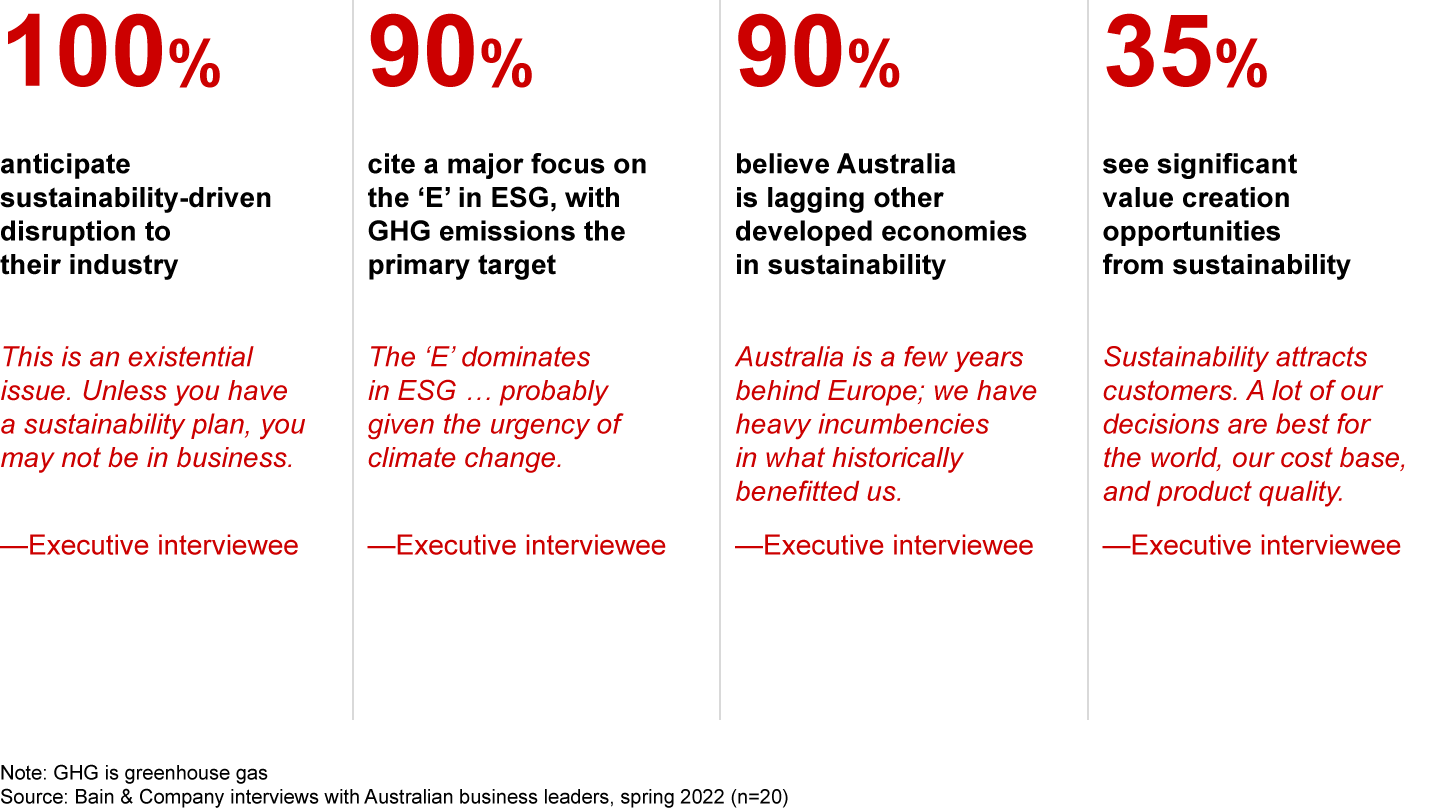

With so much at stake, we wanted to understand how Australian business leaders are navigating today’s shifting priorities and charting a way to a greener future. In exclusive interviews, 20 leaders from key sectors of the economy explained their approach to sustainability, the opportunities they see for their businesses and for Australia, and the constraints that are holding back a faster transition to low-carbon, greener growth.
Five key themes emerged from these interviews:
- Sustainability is driving significant, cross-industry disruption. All business leaders, across all sectors, recognise that the imperative to deliver more sustainable outcomes will keep growing and disrupt the way they operate.
- Everyone must mitigate sustainability risks. Business leaders agreed unanimously that inaction on sustainability presents risks to business. For approximately two-thirds of those interviewed, this was the main motive for greater action. These individuals, while recognising that market leadership has advantages, prefer to move with the market instead of being at the front of sustainability innovation given the investment and risks that this can involve.
- The sustainability value-creation opportunity is still a minority mindset. One-third of interviewees see significant value-creation opportunities from sustainability beyond risk mitigation. These leaders are using sustainability as a basis to transform their organisations and capture benefits such as access to new profit pools, lower costs, and better equity valuations.
- Progress demands wide collaboration. Business leaders are eager for collaboration. They view sustainability as a systemic challenge requiring an orchestrated response in which government, businesses, and communities must work together. Only system-wide partnerships will power the necessary systemic and policy changes.
- Common steps can make sustainability-led business transformation easier. Business leaders highlighted obstacles on their journey to transform, including immature capabilities, organisational inertia, and trade-offs with financial value. Their learnings, combined with Bain & Company’s own experience, highlight six steps to overcome these obstacles and transform successfully. Actions include integrating sustainability as a core pillar of strategy, as well as embedding it in the operating model, and teaming up across the board and executive team to lead and inspire organisational change.
Sustainability is driving significant, cross-industry disruption
Every executive interviewed for this report expects sustainability requirements and pressures to disrupt their industry, and in many cases this is already happening. The degree of disruption, its speed, and the form it will take varies by sector and activity (see Figure 2).
Figure 2
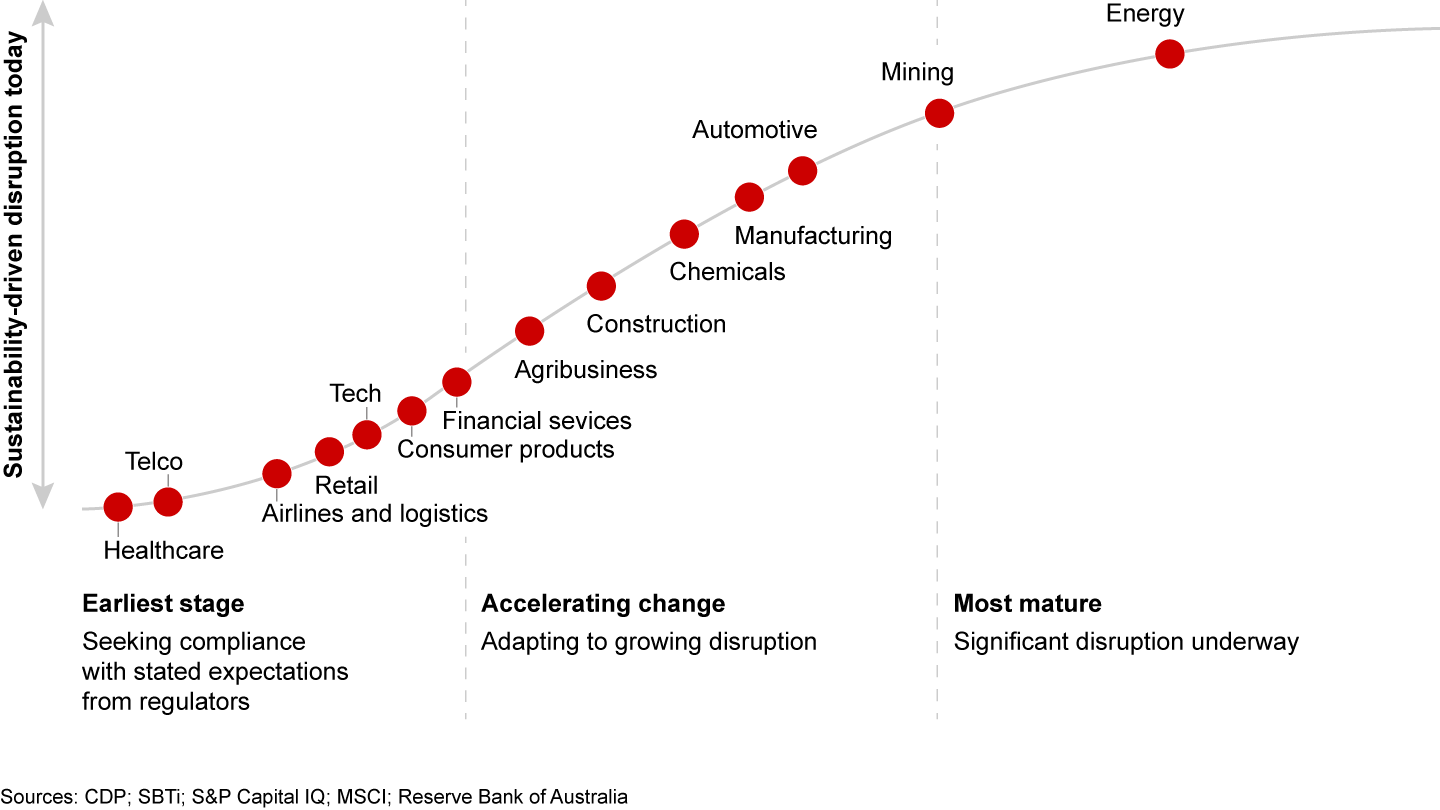

While pressure to act may be felt most acutely in the energy and mining sectors, which are responsible for 56% of the country’s greenhouse gas emissions, it is present across all industries and coming from many quarters:
- Regulators are imposing stricter emissions limits, such as the Safeguard Mechanism for businesses in Australia, as well as increasing pressure on companies to provide greater transparency in emissions reporting.
- Legislators have committed the country to reducing greenhouse gas emissions by 43% below 2005 levels by 2030, and to net zero by 2050 in the 2022 Climate Change Bill.
- Banks will no longer finance certain projects and will tighten lending to those not meeting their sustainability plans.
- Shareholders, including superannuation funds, are demanding a clear path to decarbonisation.
- Customers are taking their business to sustainable brands.
- Companies expect more sustainable outcomes from their suppliers.
- Employees are demanding climate action from their employers.
“What’s taken us 20 years to do previously we now need to do in seven years. We need to be riding a rocket to deliver the legislated 2030 goals at that scale in that time.”
Surviving: All business leaders see risk mitigation as a ‘must-do’
Two out of three executives interviewed for this report view sustainability today as first and foremost a tool to mitigate climate and other risks to their organisations and not yet as a tool for innovation or value creation. They are taking practical steps in their organisations to cut waste, recycle, increase operational efficiency, and comply with reporting requirements. However, they are not looking to take bold leaps forward and fully transform due to challenges such as the absence of developed sustainability solutions, high investment requirements, and immature data and measurement capabilities.
Despite this, executives cited positive outcomes from this approach. These include improving the cost base, such as through increased renewable energy use providing resilience against volatile energy costs, improving talent retention by inspiring employees, and enhancing their corporate reputation. But they are wary of pushing too far too fast. As one CEO said, “We want to move pragmatically. You don’t want to be on the bleeding edge of sustainability and destroy shareholder value by alienating customers and investors.”
Nonetheless, in industries with the most disruption, leaders are being forced to totally reinvent their businesses. One leader from the energy sector said, “For our sector, the energy transition is an existential risk and the biggest investment opportunity we have ever had.”
It is no surprise that most executives are focused on mitigating risks. Developing a business case to convince boards and executive teams to invest in sustainability can be hard. Often, initial costs are high and there is no immediate financial return from such actions, such as decommissioning high-emitting assets ahead of schedule. This same caution informs investment, where executives and boards don’t want to be caught wrong-footed with nascent technology, evolving timeframes, and an uncertain return on investment (ROI). Furthermore, business leaders run the risk of being accused of ‘greenwashing’ by overpromising and underdelivering if lofty targets are not met.
Nevertheless, some CEOs detect a shift in how boards and investors are balancing a company’s financial, social, and environmental performance—the so-called ‘triple bottom line’. One CEO commented, “There is strong orientation for ASX-listed companies to be financially responsible. They are not incentivised by the market or by internal stakeholders to have a triple bottom line focus, though this is shifting. Consumers are demanding it, retailers want it, the government is changing tune, and the money is flowing. Investors are beginning to allocate capital in areas that are deliberately ESG-oriented.”
Thriving: Some businesses see an opportunity to create value
While all interviewees agreed sustainability is a useful tool for risk mitigation, one-third also see significant value-creation opportunities. Several were keen to point out how their businesses are already capturing value and creating new products and services through sustainability. One leader even noted that among their brands, those committed to sustainability were growing six times faster than others in the portfolio.
Other initiatives being implemented include:
- Consumer products companies reducing plastic packaging materials—simultaneously cutting costs and polishing their green credentials.
- A real estate company developing green properties to drive premium prices for energy-efficient buildings.
- Private equity funds screening potential investments for sustainability-related upside to increase exit value.
While the value-creation lens is still a minority perspective in Australia, more and more businesses are expected to adopt this mindset in coming years as industry disruption grows. Value creation can take many forms, including lower costs, access to new profit pools, and greater equity valuations.
“Our brands that have made a commitment to an ESG agenda … are growing six times faster than our other brands.”
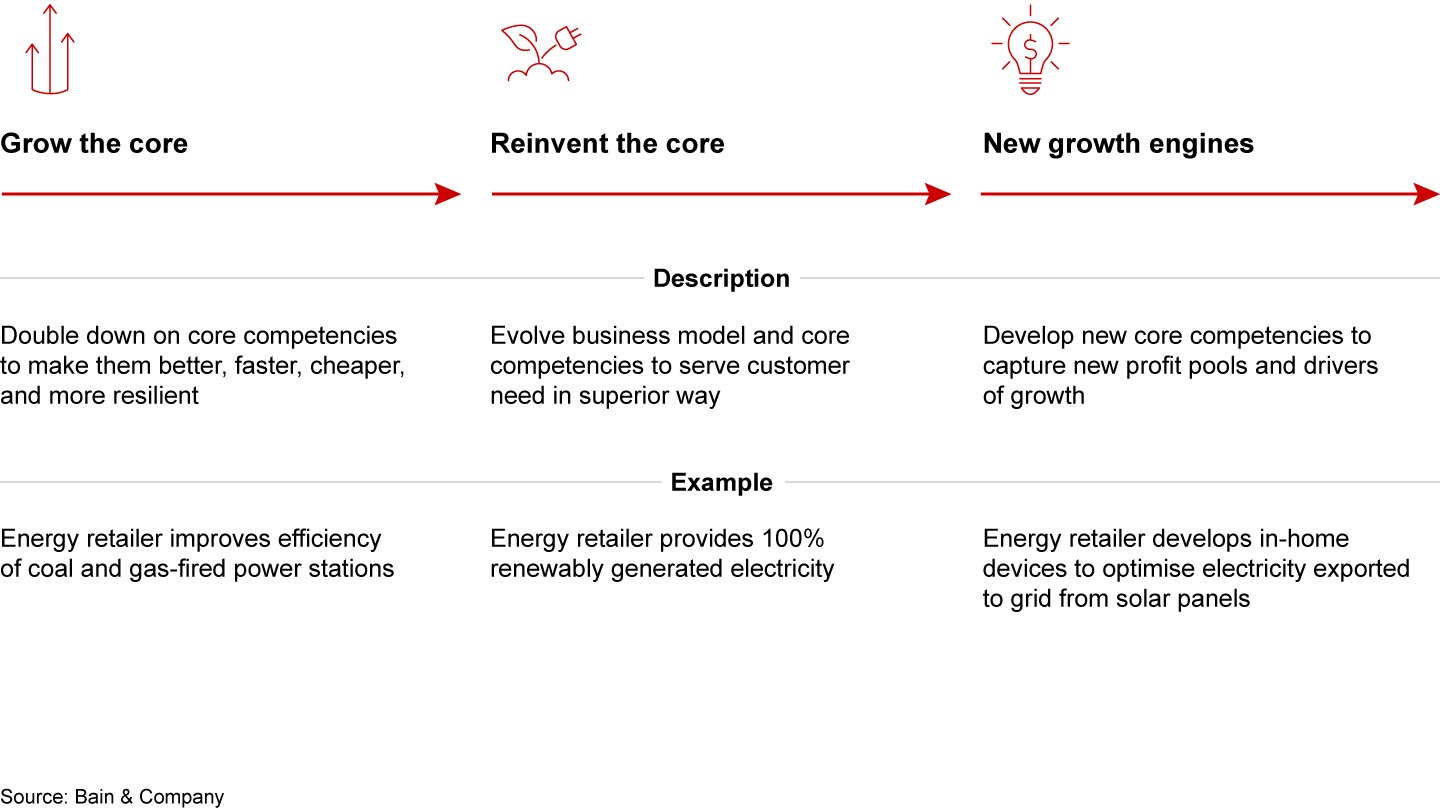
How businesses create value to thrive through disruption will look different based on the industry, business model, and each business’s core capabilities. Given the speed and magnitude of this disruption, especially in industries that have large Scope 1 and 2 carbon footprints—emissions the company makes directly or indirectly—many organisations will have to simultaneously reinvent their core capabilities while investing in new growth engines (see Figure 3). One energy executive explained, “We are reinventing ourselves by shifting from coal to renewables. However, the fundamental change in the market also offers the opportunity to take a bet on emerging new growth engines, such as the Internet of Things (IoT). Optionality is worth much more than it was 10 years ago.”
Figure 3

Progress demands wide collaboration
Most business leaders interviewed described the transition towards net-zero emissions as a systemic challenge that requires the cooperation and coordination of government, businesses, and communities. As one executive said, “I am a huge advocate for working in partnership with regulators, policymakers, industry, and community to cocreate the baselines for what we want to put in place.” Other executives mentioned that the transition to lower-carbon growth was an opportunity for the federal and state governments to work closely together to achieve critical national goals, such as transitioning Australia’s power grid to distribute more renewable energy.
“Net zero presents an infrastructure challenge of a scale like never seen before and the whole world is trying to achieve it at the same time.”
System-level collaboration means different things across industries. For energy and natural resources businesses, the low-carbon transition is a game-changer, requiring new business models, new regulations, new technology, new infrastructure, and a new ecosystem of partners, suppliers, and financiers. For financial services organisations, which are under regulatory pressure to derisk their portfolios, the transition requires closer collaboration with clients on decarbonisation. And for retail and consumer products companies, moving to net zero requires proactively supporting supply-chain partners to decarbonise and thus reduce their own Scope 3 emissions.
Many business leaders mentioned obstacles that Australia must overcome to make collective progress. One is the lack of an ecosystem to develop and commercialise technology. As one leader said, “Australia has a rich history of developing new technologies that we have not monetised in the past, such as Wi-Fi. No country is further advanced in solar technology than Australia … the question is still whether Australia will invest in scaling and monetising the technology.”
Another obstacle is the limited size of the Australian market, which increases the cost of investing in sustainability initiatives, especially where scale matters, such as recycled materials sourcing. For consumer-facing industries, the difficulty is in assessing the demand for green products and the premium customers are willing and able to pay for them, particularly in a downturn. Finally, for many industries, consistent policies are critical for driving investment.
Six steps that can make sustainability-led business transformation easier
Delivering a sustainability-led business transformation is not easy, and several obstacles emerged from our interviews. The ‘right’ actions are not always clear, data is incomplete, incentives may conflict with sustainable outcomes, and businesses often do not have or struggle to source the sustainability capabilities they need.
Despite the challenges, our conversations with business leaders, combined with Bain & Company’s own experience, highlight six steps that will help organisations ensure a deep, sustainability-led transformation which sets them up to create value from greener growth.
- Team up across the board and executive team
Executive teams and their boards must work closely together on a steep learning curve. Board members emphasised the importance of their CEOs being transparent on sustainability progress so they can provide support and oversight. CEOs’ main asks of their boards were that all members, not just the ESG committee, invest time in developing sustainability expertise and that boards help make trade-off decisions when there is tension between financial and sustainability outcomes. - Elevate sustainability as a strategic tenet
Sustainability needs to become a core pillar integrated into company strategy and business planning. This means elevating its importance to the same level as other priorities, such as financial outcomes, and making it an explicit priority for all executive team members. - Define the ambition and roadmap
Companies need to lay out the unvarnished truth of their sustainability performance and capabilities—such as whether they have the science, technology, engineering, and mathematics (STEM) talent to develop and adopt new technology—vs. competitors. They must understand the sustainability-related future scenarios facing their industry and define an ambition for how their business fits within these. Delivering requires the establishment of signposts and a flexible roadmap to navigate future uncertainties, as well as cascading the sustainability ambition into measurable and achievable targets. - Embed sustainability in the operating model
A critical step is aligning incentives to the most important sustainability KPIs and driving ownership of outcomes at all levels of the business. Companies also must consider how they embed governance to incorporate sustainability in decision-making processes. This entails designating an accountable executive for driving and monitoring progress against sustainability outcomes and may also include creating dedicated positions or committees, such as a chief sustainability officer or a cross-functional sustainability committee. Finally, companies must put in place the required capabilities, which is likely to involve internal training, as well as bringing in further talent where required. - Take the business on the transformation journey
Leading from the top—with all executives and senior leaders modelling sustainable values and inspiring passion for sustainability—is vital for successful transformation. Regular and transparent communication reinforces sustainability priorities and ensures progress is understood and success shared. Involving employees in solving challenges, such as having a team of individuals who will champion more sustainable workplace behaviours across the business, helps ensure companywide buy-in. - Move beyond organisational boundaries
Many sustainability solutions are still nascent or do not yet exist and they require collaboration to move forward. The companies most likely to succeed will look beyond their own boundaries to build an ecosystem within which to share knowledge, collect and analyse data, and work together in raising the high-water mark. Collaboration and partnerships can be both upstream and downstream, including research and development (R&D) organisations, nongovernmental organisations (NGOs), government bodies, communities, and even competitors.
Speeding up the green transition
Despite the urgency and scale of the challenges associated with the global sustainability crisis, this study sounds an encouraging note—top Australian executives understand the gravity of the problems facing both planet and businesses and are acting with resolve and purpose to build a greener and more prosperous future. Many are hopeful that the change in the federal government’s sustainability stance will add impetus to Australia’s green transition, provide clearer imperatives, and direct more capital to innovation. If the sustainability urgency taking shape in business finds root not only in companies, but also with consumers, employees, and purpose-driven shareholders, Australia will have every chance to take full advantage of the possibilities offered by a more sustainable future.
First published in 12月 2022