
Skip to Content
  • オフィス

    オフィス

    北米・南米
    • Atlanta
    • Austin
    • Bogota
    • Boston
    • Buenos Aires
    • Chicago
    • Dallas
    • Denver
    • Houston
    • Los Angeles
    • Mexico City
    • Minneapolis
    • Monterrey
    • Montreal
    • New York
    • Rio de Janeiro
    • San Francisco
    • Santiago
    • São Paulo
    • Seattle
    • Silicon Valley
    • Toronto
    • Washington, DC
    ヨーロッパ・中東・アフリカ
    • Amsterdam
    • Athens
    • Berlin
    • Brussels
    • Copenhagen
    • Doha
    • Dubai
    • Dusseldorf
    • Frankfurt
    • Helsinki
    • Istanbul
    • Johannesburg
    • Kyiv
    • Lisbon
    • London
    • Madrid
    • Milan
    • Munich
    • Oslo
    • Paris
    • Riyadh
    • Rome
    • Stockholm
    • Vienna
    • Warsaw
    • Zurich
    アジア・オーストラリア
    • Bangkok
    • Beijing
    • Bengaluru
    • Brisbane
    • Ho Chi Minh City
    • Hong Kong
    • Jakarta
    • Kuala Lumpur
    • Manila
    • Melbourne
    • Mumbai
    • New Delhi
    • Perth
    • Shanghai
    • Singapore
    • Sydney
    • Tokyo
    全てのオフィス
  • アルムナイ
  • メディア
  • お問い合わせ
  • 東京オフィス
  • Japan | 日本語

    地域と言語を選択

    グローバル
    • Global (English)
    北米・南米
    • Brazil (Português)
    • Argentina (Español)
    • Canada (Français)
    • Chile (Español)
    • Colombia (Español)
    ヨーロッパ・中東・アフリカ
    • France (Français)
    • DACH Region (Deutsch)
    • Italy (Italiano)
    • Spain (Español)
    • Greece (Elliniká)
    アジア・オーストラリア
    • China (中文版)
    • Korea (한국어)
    • Japan (日本語)
  • Saved items (0)
    Saved items (0)

    You have no saved items.

    後で閲読、共有できるようにするためにブックマークしてください

    Explore Bain Insights
  • 業界別プラクティス
    メインメニュー

    業界別プラクティス

    • 航空宇宙、防衛、政府関連
    • 農業
    • 化学製品
    • インフラ、建設
    • 消費財
    • 金融サービス
    • ヘルスケア
    • 産業機械、設備
    • メディア、エンターテインメント
    • 金属
    • 採掘・鉱業
    • 石油、ガス
    • 紙、パッケージ
    • プライベートエクイティ
    • 公共、社会セクター
    • 小売
    • テクノロジー
    • 通信
    • 交通
    • 観光産業
    • 公益事業、再生可能エネルギー
  • 機能別プラクティス
    メインメニュー

    機能別プラクティス

    • カスタマー・エクスペリエンス
    • サステイナビリティ、 社会貢献
    • Innovation
    • 企業買収、合併 (M&A)
    • オペレーション
    • 組織
    • プライベートエクイティ
    • マーケティング・営業
    • 戦略
    • アドバンスド・アナリティクス
    • Technology
    • フルポテンシャル・トランスフォーメーション
  • Digital
  • 知見/レポート
  • ベイン・アンド・カンパニーについて
    メインメニュー

    ベイン・アンド・カンパニーについて

    • ベインの信条
    • 活動内容
    • 社員とリーダーシップ
    • プレス・メディア情報
    • クライアントの結果
    • 受賞歴
    • パートナーシップを結んでいる団体
    Further: Our global responsibility
    • ダイバーシティ
    • 社会貢献
    • サステイナビリティへの取り組み
    • 世界経済フォーラム(WEF)
    Learn more about Further
  • キャリア
    メインメニュー

    キャリア

    • ベインで働く
      キャリア
      ベインで働く
      • Find Your Place
      • ベインで活躍する機会
      • ベインのチーム体制
      • 学生向けページ
      • インターンシップ
      • 採用イベント
    • ベインでの体験
      キャリア
      ベインでの体験
      • Blog: Inside Bain
      • キャリアストーリー
      • 社員紹介
      • Where We Work
      • 成長を後押しするサポート体制
      • アフィニティ・グループ
      • 福利厚生
    • Impact Stories
    • 採用情報
      キャリア
      採用情報
      • 採用プロセス
      • 面接内容
    FIND JOBS
  • オフィス
    メインメニュー

    オフィス

    • 北米・南米
      オフィス
      北米・南米
      • Atlanta
      • Austin
      • Bogota
      • Boston
      • Buenos Aires
      • Chicago
      • Dallas
      • Denver
      • Houston
      • Los Angeles
      • Mexico City
      • Minneapolis
      • Monterrey
      • Montreal
      • New York
      • Rio de Janeiro
      • San Francisco
      • Santiago
      • São Paulo
      • Seattle
      • Silicon Valley
      • Toronto
      • Washington, DC
    • ヨーロッパ・中東・アフリカ
      オフィス
      ヨーロッパ・中東・アフリカ
      • Amsterdam
      • Athens
      • Berlin
      • Brussels
      • Copenhagen
      • Doha
      • Dubai
      • Dusseldorf
      • Frankfurt
      • Helsinki
      • Istanbul
      • Johannesburg
      • Kyiv
      • Lisbon
      • London
      • Madrid
      • Milan
      • Munich
      • Oslo
      • Paris
      • Riyadh
      • Rome
      • Stockholm
      • Vienna
      • Warsaw
      • Zurich
    • アジア・オーストラリア
      オフィス
      アジア・オーストラリア
      • Bangkok
      • Beijing
      • Bengaluru
      • Brisbane
      • Ho Chi Minh City
      • Hong Kong
      • Jakarta
      • Kuala Lumpur
      • Manila
      • Melbourne
      • Mumbai
      • New Delhi
      • Perth
      • Shanghai
      • Singapore
      • Sydney
      • Tokyo
    全てのオフィス
  • アルムナイ
  • メディア
  • お問い合わせ
  • 東京オフィス
  • Japan | 日本語
    メインメニュー

    地域と言語を選択

    • グローバル
      地域と言語を選択
      グローバル
      • Global (English)
    • 北米・南米
      地域と言語を選択
      北米・南米
      • Brazil (Português)
      • Argentina (Español)
      • Canada (Français)
      • Chile (Español)
      • Colombia (Español)
    • ヨーロッパ・中東・アフリカ
      地域と言語を選択
      ヨーロッパ・中東・アフリカ
      • France (Français)
      • DACH Region (Deutsch)
      • Italy (Italiano)
      • Spain (Español)
      • Greece (Elliniká)
    • アジア・オーストラリア
      地域と言語を選択
      アジア・オーストラリア
      • China (中文版)
      • Korea (한국어)
      • Japan (日本語)
  • Saved items  (0)
    メインメニュー
    Saved items (0)

    You have no saved items.

    後で閲読、共有できるようにするためにブックマークしてください

    Explore Bain Insights
  • 業界別プラクティス
    • 業界別プラクティス

      • 航空宇宙、防衛、政府関連
      • 農業
      • 化学製品
      • インフラ、建設
      • 消費財
      • 金融サービス
      • ヘルスケア
      • 産業機械、設備
      • メディア、エンターテインメント
      • 金属
      • 採掘・鉱業
      • 石油、ガス
      • 紙、パッケージ
      • プライベートエクイティ
      • 公共、社会セクター
      • 小売
      • テクノロジー
      • 通信
      • 交通
      • 観光産業
      • 公益事業、再生可能エネルギー
  • 機能別プラクティス
    • 機能別プラクティス

      • カスタマー・エクスペリエンス
      • サステイナビリティ、 社会貢献
      • Innovation
      • 企業買収、合併 (M&A)
      • オペレーション
      • 組織
      • プライベートエクイティ
      • マーケティング・営業
      • 戦略
      • アドバンスド・アナリティクス
      • Technology
      • フルポテンシャル・トランスフォーメーション
  • Digital
  • 知見/レポート
  • ベイン・アンド・カンパニーについて
    • ベイン・アンド・カンパニーについて

      • ベインの信条
      • 活動内容
      • 社員とリーダーシップ
      • プレス・メディア情報
      • クライアントの結果
      • 受賞歴
      • パートナーシップを結んでいる団体
      Further: Our global responsibility
      • ダイバーシティ
      • 社会貢献
      • サステイナビリティへの取り組み
      • 世界経済フォーラム(WEF)
      Learn more about Further
  • キャリア
    人気検索キーワード
    • デジタル
    • 戦略
    前回の検索
      最近訪れたページ

      Content added to saved items

      Saved items (0)

      Removed from saved items

      Saved items (0)

      記事

      Sustainability Is a Natural Part of India’s Consumer Journey—Not a Marketing Ploy

      Sustainability Is a Natural Part of India’s Consumer Journey—Not a Marketing Ploy

      Brands need to promote specific dimensions of sustainability to connect with consumers in India.

      著者:Ravi Swarup and Karthik Ganesan

      • min read
      }

      記事

      Sustainability Is a Natural Part of India’s Consumer Journey—Not a Marketing Ploy
      en
      概要
      • Climate change is the top concern among consumers in India. Nearly 80% of consumers in India are “very” or “extremely” concerned about sustainability and climate change.
      • Sustainability is considered as a purchasing criteria; however, it is a natural choice in India, driven by culture and circumstance rather than intent.
      • Brands need to understand which dimensions of sustainability matter to consumers in India, such as health, quality, and cost.

      Climate change is the top concern among consumers in India, outranking politics, finances, and well-being for themselves and their loved ones. Nearly 80% of consumers in India are “very” or “extremely” concerned about sustainability and climate change.

      Yet consumers in India don’t worry about their carbon footprint. And they’re less likely than most of their global peers to recycle.

      Does this mean consumers in India are all talk and no action?

      No. It means consumers in India care about different dimensions of sustainability compared with shoppers in other parts of the world. One size does not fit all, and if brands assume all consumers have the same motivations to act or buy sustainably, they risk missing a massive opportunity in India.

      Consumers care about their environment

      Bain & Company surveyed nearly 19,000 consumers in 10 countries to understand what they care about and what drives their behavior. The global survey included 2,000 consumers in India. From that subset, we can draw global comparisons and find localized insights into consumers’ purchasing and sustainability habits.

      For example, concern about the environment is universal and increasing. Roughly 64% of consumers in India said their concerns about climate change have intensified over the past two years.

      Those fears are closely tied to extreme weather events. Extreme weather around the world was the leading reason that sustainability concerns increased globally and in India (see Figure 1).

      Figure 1
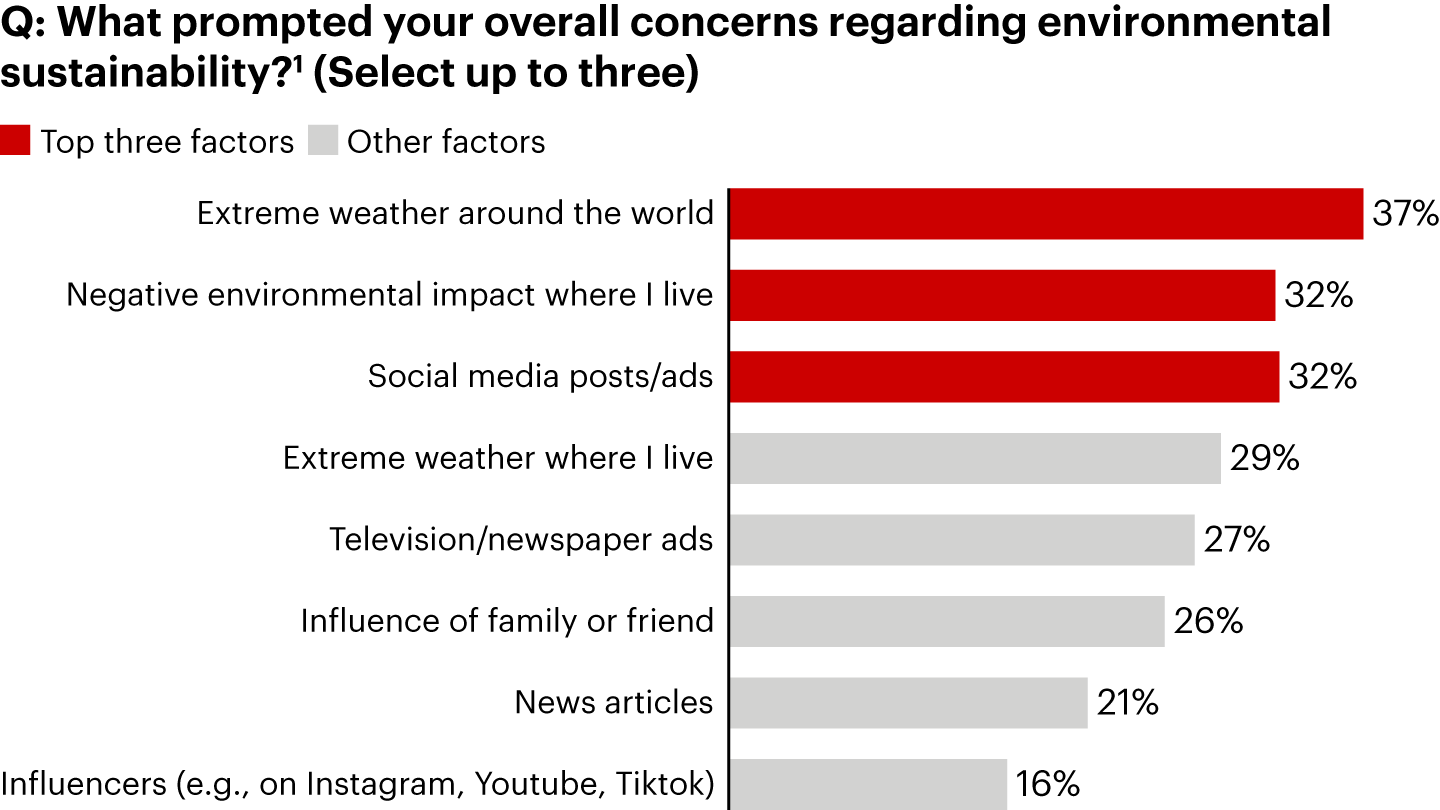
      Concern regarding environmental sustainability is driven most strongly by extreme weather
      Concern regarding environmental sustainability is driven most strongly by extreme weather
      Concern regarding environmental sustainability is driven most strongly by extreme weather

      Note: Options with less than 16% have been excluded from the chart, including: Documentaries, extreme weather around the world (e.g., floods, wildfires, hurricanes), awareness campaigns by brands/retailers, having a child or grandchild, awareness campaigns from celebrities, educational institutes/curriculum, other

      出所 Bain Consumer Lab ESG Survey 2024 (n=2,000)

      Consumers in India may be experiencing the effects of extreme weather more acutely. India’s consumers cited negative environmental impacts and extreme weather conditions where they live and social media as additional reasons for their growing concern, whereas global consumers were influenced by news articles and documentaries.

      Rethinking the “average” consumer

      In many countries, “sustainability” is a marketing device—something consumers actively seek out and even consider paying premiums for. In the US, consumers say they’re willing to pay up to 10% more for products with minimal environmental impact.

      In contrast, sustainability is a natural choice in India, driven by culture and circumstance rather than intent. And sustainable behaviors typically save shoppers money instead of commanding a premium.

      For example, in our research, about a third of consumers in India cited “being vegetarian” as one of their sustainable lifestyle habits. However, in India, vegetarianism is often linked to religion, not concern about the environment. Likewise, consumers in India said they “avoid driving” and try to lower energy consumption in their homes (see Figure 2). Sustainability is a byproduct of these behaviors, not the impetus.

      Figure 2
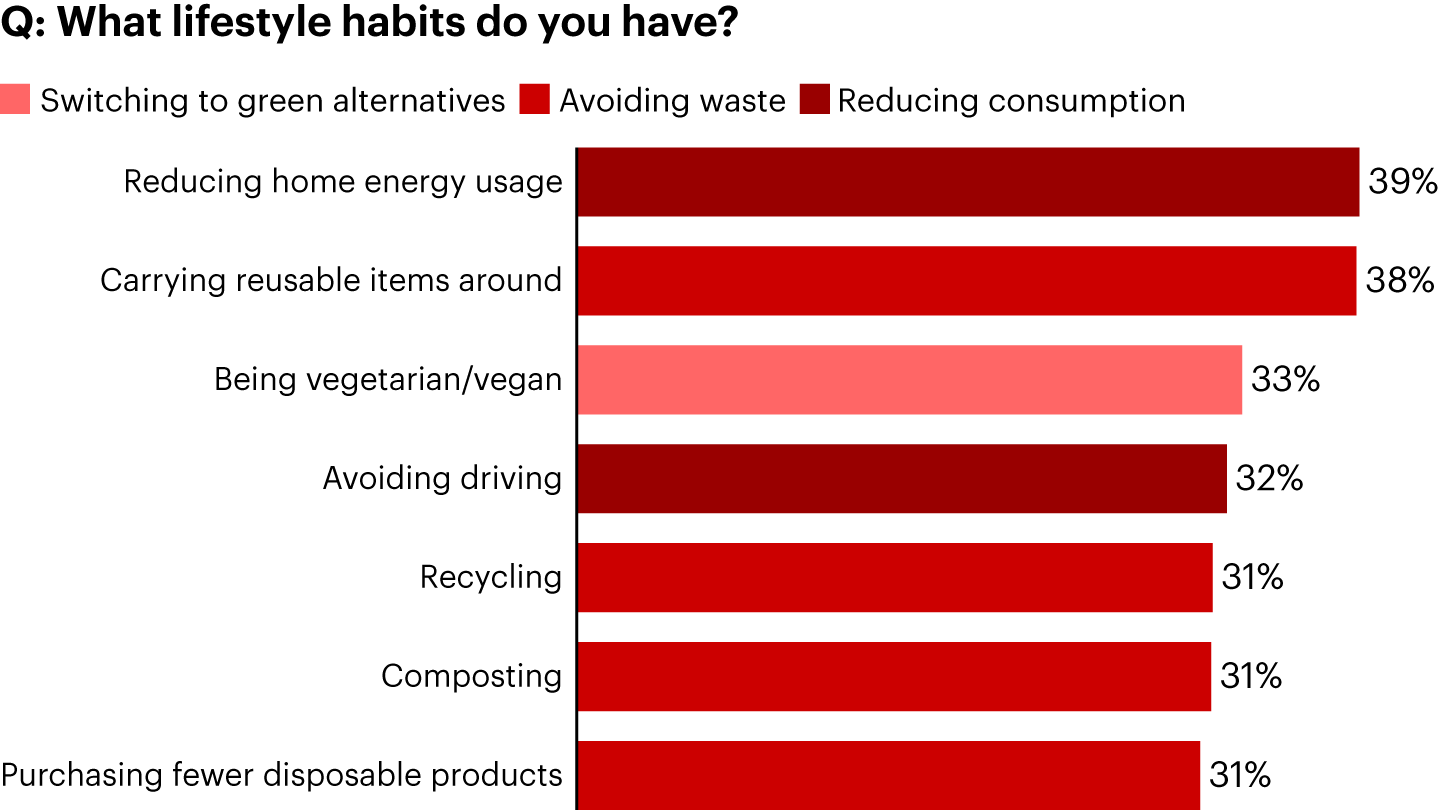
      Top sustainable lifestyle habits relate to vegetarianism, reducing consumption (driven by incomes), and avoiding waste
      Top sustainable lifestyle habits relate to vegetarianism, reducing consumption (driven by incomes), and avoiding waste
      Top sustainable lifestyle habits relate to vegetarianism, reducing consumption (driven by incomes), and avoiding waste
      出所 Bain Consumer Lab ESG Survey 2024 (n=2,000)

      What does this mean for brands? It means they cannot market “sustainability” as a singular concept. They need to understand what consumers in India value on a category-by-category basis. And they need a targeted approach to product development and marketing to address unique sustainability priorities in India.

      What consumers in India want

      Across all categories, food and non-food, consumers in India prefer “natural” goods. They also prioritize health benefits, quality, and cost in their purchasing decisions.

      Packaging is important, too. India’s consumers are well educated on the outcome of low rates of recycling single-use plastics and packaging waste. About 83% of India’s consumers believe the environmental impact of packaging is “important” or “very important,” compared to only 61% of global consumers.

      Consumers in India also have strong opinions about packaging materials in their grocery shops. More than 60% prefer paper, reasoning that it’s easy to dispose of, recycle, or reuse.

      Companies need to respond to these regional preferences and target consumers based on their specific sustainability needs. Brands can create more value by meeting key purchasing criteria with sustainable products—for example, by saving consumers time, lowering their energy bills, or improving health.

      If companies can address consumers’ key purchasing criteria (health, quality, and cost) in a more environmentally friendly product, everyone can win.

      What drives India’s sustainable shopping journey

      About 82% of consumers in India say they’ve started shopping more sustainably within the last five years. Most were inspired by a personal experience with an environmental issue. Social media, advertising, and peers also influenced their shopping habits. 

      Consumers complained that sustainable shopping can be challenging in India. They said it’s hard to find information about sustainability and labels can be confusing. Some products are only partially sustainable, and availability is limited.

      Consumers said they’d buy more sustainable products if they were affordable and available. And they believe the government could take a stronger role in encouraging sustainability.

      Next steps for brands

      Brands can take four steps to encourage sustainable shopping and living in India:

      1. Tailor products and messages for India. Consumers in India do not make purchasing decisions based on sustainable attributes. However, they will adopt sustainable products and practices that satisfy other needs.

        Brands need to understand what consumers in India value—health, quality, and cost—and develop sustainable products and messaging around those elements of value. Brands that deliver value to India’s consumers first, then embed sustainability, will build momentum for their sustainable efforts.

      1. Tackle the recycling and collection challenge. Consumers in India care about sustainable packaging more than their global peers do. Brands can respond by reducing waste and increasing the reusability and recyclability of packaging. Brands also need to make it clear and easy for consumers to make the right disposal choice.

        Consumers in India strongly prefer paper over other packaging materials, and they’re likely to repurpose packaging for other uses. If companies want to distinguish themselves on the packaging issue, they should work across the value chain to source content and help consumers understand what and where to recycle, often with other value chain players.

      2. Partner with the government. Government programs have effectively influenced public sentiment and behaviors in India in favor of sustainability. For example, challenges that persist in properly recycling plastic waste are well understood by India’s consumers, thanks to government-sponsored initiatives. Partnering with the government could be a major opportunity for brands in India—and more influential than private-public collaborations in other parts of the world.

        In addition, the government is building a carbon credits policy and encouraging listed entities to release sustainability reports.

      3. Build channel partnerships. Brand-retailer collaborations can nudge consumers toward more sustainable choices. For example, sustainable products should be widely available, accessible, and prominent in stores. Working together, brands and retailers could create recycling, packaging return, or refill programs—or even incentivize sustainable behaviors to appeal to India’s cost-conscious shoppers.

      Consumers in India care about the environment—but it’s not the only thing on their minds. Brands can encourage more sustainable purchasing and living in India by addressing shoppers’ desires for health, quality, and cost.

      Brands that define “sustainability” and speak about it in India’s terms can drive enormous environmental and economic impacts.

      著者
      • Headshot of Ravi Swarup
        Ravi Swarup
        パートナー, New Delhi
      • Headshot of Karthik Ganesan
        Karthik Ganesan
        パートナー, Mumbai
      関連業種
      • 消費財
      関連するコンサルティングサービス
      • サステイナビリティ、社会貢献
      コンサルティングサービス
      • Climate Change
      消費財
      What’s Still Stopping Consumers from Living Sustainably?

      Overloaded consumers want to act sustainably, but underwhelming solutions leave them wishing for better choices.

      詳細
      消費財
      Insurgent Q&A: Chomps Cofounder Rashid Ali

      “Our retail expansion story isn’t about taking share—it’s about growing the category.”

      詳細
      Climate Change
      Financing Climate Solutions in Brazil

      A study conducted by Bain, in partnership with BNDES, highlights both the challenges and the opportunities to accelerate the climate transition.

      詳細
      サステイナビリティ、社会貢献
      How AI Is Starting to Transform Circular Packaging

      There are 15 AI use cases companies across the value chain can use today to accelerate circularity.

      詳細
      消費財
      Shift to Vertical: David Haines, Group CEO, Flora Food Group

      What does it take to stay connected to your customers when scale and complexity threaten to pull you away? 

      詳細
      First published in 4月 2025
      Tags
      • Climate Change
      • サステイナビリティ、社会貢献
      • 消費財

      クライアント支援事例

      サステイナビリティ、社会貢献 A Manufacturer Vows to “Push to Zero” Carbon Emissions

      ケーススタディを見る

      顧客戦略、マーケティング Food Co. jump-starts growth with return to core brands

      ケーススタディを見る

      戦略 Focus on core delivers growth for retailer

      ケーススタディを見る

      お気軽にご連絡下さい

      私達は、グローバルに活躍する経営者が抱える最重要経営課題に対して、厳しい競争環境の中でも成長し続け、「結果」を出すために支援しています。

      ベインの知見。競争が激化するグローバルビジネス環境で、日々直面するであろう問題について論じている知見を毎月お届けします。

      *プライバシーポリシーの内容を確認し、合意しました。

      プライバシーポリシーをご確認頂き、合意頂けますようお願い致します。
      Bain & Company
      お問い合わせ Sustainability Accessibility Terms of use Privacy Cookie Policy Sitemap Log In

      © 1996-2026 Bain & Company, Inc.

      お問い合わせ

      How can we help you?

      • ビジネスについて
      • プレス報道について
      • 採用について
      全てのオフィス