
Skip to Content
  • オフィス

    オフィス

    北米・南米
    • Atlanta
    • Austin
    • Bogota
    • Boston
    • Buenos Aires
    • Chicago
    • Dallas
    • Denver
    • Houston
    • Los Angeles
    • Mexico City
    • Minneapolis
    • Monterrey
    • Montreal
    • New York
    • Rio de Janeiro
    • San Francisco
    • Santiago
    • São Paulo
    • Seattle
    • Silicon Valley
    • Toronto
    • Washington, DC
    ヨーロッパ・中東・アフリカ
    • Amsterdam
    • Athens
    • Berlin
    • Brussels
    • Copenhagen
    • Doha
    • Dubai
    • Dusseldorf
    • Frankfurt
    • Helsinki
    • Istanbul
    • Johannesburg
    • Kyiv
    • Lisbon
    • London
    • Madrid
    • Milan
    • Munich
    • Oslo
    • Paris
    • Riyadh
    • Rome
    • Stockholm
    • Vienna
    • Warsaw
    • Zurich
    アジア・オーストラリア
    • Bangkok
    • Beijing
    • Bengaluru
    • Brisbane
    • Ho Chi Minh City
    • Hong Kong
    • Jakarta
    • Kuala Lumpur
    • Manila
    • Melbourne
    • Mumbai
    • New Delhi
    • Perth
    • Shanghai
    • Singapore
    • Sydney
    • Tokyo
    全てのオフィス
  • アルムナイ
  • メディア
  • お問い合わせ
  • 東京オフィス
  • Japan | 日本語

    地域と言語を選択

    グローバル
    • Global (English)
    北米・南米
    • Brazil (Português)
    • Argentina (Español)
    • Canada (Français)
    • Chile (Español)
    • Colombia (Español)
    ヨーロッパ・中東・アフリカ
    • France (Français)
    • DACH Region (Deutsch)
    • Italy (Italiano)
    • Spain (Español)
    • Greece (Elliniká)
    アジア・オーストラリア
    • China (中文版)
    • Korea (한국어)
    • Japan (日本語)
  • Saved items (0)
    Saved items (0)

    You have no saved items.

    後で閲読、共有できるようにするためにブックマークしてください

    Explore Bain Insights
  • 業界別プラクティス
    メインメニュー

    業界別プラクティス

    • 航空宇宙、防衛、政府関連
    • 農業
    • 化学製品
    • インフラ、建設
    • 消費財
    • 金融サービス
    • ヘルスケア
    • 産業機械、設備
    • メディア、エンターテインメント
    • 金属
    • 採掘・鉱業
    • 石油、ガス
    • 紙、パッケージ
    • プライベートエクイティ
    • 公共、社会セクター
    • 小売
    • テクノロジー
    • 通信
    • 交通
    • 観光産業
    • 公益事業、再生可能エネルギー
  • 機能別プラクティス
    メインメニュー

    機能別プラクティス

    • カスタマー・エクスペリエンス
    • サステイナビリティ、 社会貢献
    • Innovation
    • 企業買収、合併 (M&A)
    • オペレーション
    • 組織
    • プライベートエクイティ
    • マーケティング・営業
    • 戦略
    • アドバンスド・アナリティクス
    • Technology
    • フルポテンシャル・トランスフォーメーション
  • Digital
  • 知見/レポート
  • ベイン・アンド・カンパニーについて
    メインメニュー

    ベイン・アンド・カンパニーについて

    • ベインの信条
    • 活動内容
    • 社員とリーダーシップ
    • プレス・メディア情報
    • クライアントの結果
    • 受賞歴
    • パートナーシップを結んでいる団体
    Further: Our global responsibility
    • ダイバーシティ
    • 社会貢献
    • サステイナビリティへの取り組み
    • 世界経済フォーラム(WEF)
    Learn more about Further
  • キャリア
    メインメニュー

    キャリア

    • ベインで働く
      キャリア
      ベインで働く
      • Find Your Place
      • ベインで活躍する機会
      • ベインのチーム体制
      • 学生向けページ
      • インターンシップ
      • 採用イベント
    • ベインでの体験
      キャリア
      ベインでの体験
      • Blog: Inside Bain
      • キャリアストーリー
      • 社員紹介
      • Where We Work
      • 成長を後押しするサポート体制
      • アフィニティ・グループ
      • 福利厚生
    • Impact Stories
    • 採用情報
      キャリア
      採用情報
      • 採用プロセス
      • 面接内容
    FIND JOBS
  • オフィス
    メインメニュー

    オフィス

    • 北米・南米
      オフィス
      北米・南米
      • Atlanta
      • Austin
      • Bogota
      • Boston
      • Buenos Aires
      • Chicago
      • Dallas
      • Denver
      • Houston
      • Los Angeles
      • Mexico City
      • Minneapolis
      • Monterrey
      • Montreal
      • New York
      • Rio de Janeiro
      • San Francisco
      • Santiago
      • São Paulo
      • Seattle
      • Silicon Valley
      • Toronto
      • Washington, DC
    • ヨーロッパ・中東・アフリカ
      オフィス
      ヨーロッパ・中東・アフリカ
      • Amsterdam
      • Athens
      • Berlin
      • Brussels
      • Copenhagen
      • Doha
      • Dubai
      • Dusseldorf
      • Frankfurt
      • Helsinki
      • Istanbul
      • Johannesburg
      • Kyiv
      • Lisbon
      • London
      • Madrid
      • Milan
      • Munich
      • Oslo
      • Paris
      • Riyadh
      • Rome
      • Stockholm
      • Vienna
      • Warsaw
      • Zurich
    • アジア・オーストラリア
      オフィス
      アジア・オーストラリア
      • Bangkok
      • Beijing
      • Bengaluru
      • Brisbane
      • Ho Chi Minh City
      • Hong Kong
      • Jakarta
      • Kuala Lumpur
      • Manila
      • Melbourne
      • Mumbai
      • New Delhi
      • Perth
      • Shanghai
      • Singapore
      • Sydney
      • Tokyo
    全てのオフィス
  • アルムナイ
  • メディア
  • お問い合わせ
  • 東京オフィス
  • Japan | 日本語
    メインメニュー

    地域と言語を選択

    • グローバル
      地域と言語を選択
      グローバル
      • Global (English)
    • 北米・南米
      地域と言語を選択
      北米・南米
      • Brazil (Português)
      • Argentina (Español)
      • Canada (Français)
      • Chile (Español)
      • Colombia (Español)
    • ヨーロッパ・中東・アフリカ
      地域と言語を選択
      ヨーロッパ・中東・アフリカ
      • France (Français)
      • DACH Region (Deutsch)
      • Italy (Italiano)
      • Spain (Español)
      • Greece (Elliniká)
    • アジア・オーストラリア
      地域と言語を選択
      アジア・オーストラリア
      • China (中文版)
      • Korea (한국어)
      • Japan (日本語)
  • Saved items  (0)
    メインメニュー
    Saved items (0)

    You have no saved items.

    後で閲読、共有できるようにするためにブックマークしてください

    Explore Bain Insights
  • 業界別プラクティス
    • 業界別プラクティス

      • 航空宇宙、防衛、政府関連
      • 農業
      • 化学製品
      • インフラ、建設
      • 消費財
      • 金融サービス
      • ヘルスケア
      • 産業機械、設備
      • メディア、エンターテインメント
      • 金属
      • 採掘・鉱業
      • 石油、ガス
      • 紙、パッケージ
      • プライベートエクイティ
      • 公共、社会セクター
      • 小売
      • テクノロジー
      • 通信
      • 交通
      • 観光産業
      • 公益事業、再生可能エネルギー
  • 機能別プラクティス
    • 機能別プラクティス

      • カスタマー・エクスペリエンス
      • サステイナビリティ、 社会貢献
      • Innovation
      • 企業買収、合併 (M&A)
      • オペレーション
      • 組織
      • プライベートエクイティ
      • マーケティング・営業
      • 戦略
      • アドバンスド・アナリティクス
      • Technology
      • フルポテンシャル・トランスフォーメーション
  • Digital
  • 知見/レポート
  • ベイン・アンド・カンパニーについて
    • ベイン・アンド・カンパニーについて

      • ベインの信条
      • 活動内容
      • 社員とリーダーシップ
      • プレス・メディア情報
      • クライアントの結果
      • 受賞歴
      • パートナーシップを結んでいる団体
      Further: Our global responsibility
      • ダイバーシティ
      • 社会貢献
      • サステイナビリティへの取り組み
      • 世界経済フォーラム(WEF)
      Learn more about Further
  • キャリア
    人気検索キーワード
    • デジタル
    • 戦略
    前回の検索
      最近訪れたページ

      Content added to saved items

      Saved items (0)

      Removed from saved items

      Saved items (0)

      論説

      Sustainability—Your Brand’s Next Cost-Saving Weapon

      Sustainability—Your Brand’s Next Cost-Saving Weapon

      By taking a sustainability lens, consumer goods companies are breathing new life into their products—and cutting costs.

      著者:Allard Vegter and Markus Bürgin

      • min read
      }

      論説

      Sustainability—Your Brand’s Next Cost-Saving Weapon
      en
      概要
      • Consumer goods companies regaining their footing in the current downturn are reevaluating product portfolios for opportunities to redesign products and take out costs.
      • By using a design-to-X approach that considers sustainability as a design factor, some are finding they can cut costs while also making their products more sustainable.
      • Companies can use a cross-functional Agile approach to identify and execute promising ideas that can be rolled out in as soon as six months, improving cost efficiency and creating sustainable products that have more consumer appeal.

      What seemed unachievable is now a no-brainer.

      Many consumer goods companies struggling to meet sustainability goals assume that adapting product formulations or packaging to generate lower carbon emissions or produce less potential waste means boosting costs with expensive new materials and production processes that eat into margins. Now, some are finding the opposite is true: By making their products more sustainable, they are able to cut costs—sometimes significantly—even as they create products that have more consumer appeal. Consider it a positive consequence of the Covid-19 pandemic. As companies strive to regain footing in the downturn, they quickly are reevaluating product portfolios. Many are looking for opportunities to take costs out while adding value. Companies achieve both by using an approach called design-to-X (D2X), in which the X factor is anything the consumer values that has an impact on design. By making sustainability an X factor, some companies are finding better answers than they anticipated, and a way to help them emerge from the crisis stronger (see Figure 1).

      Figure 1
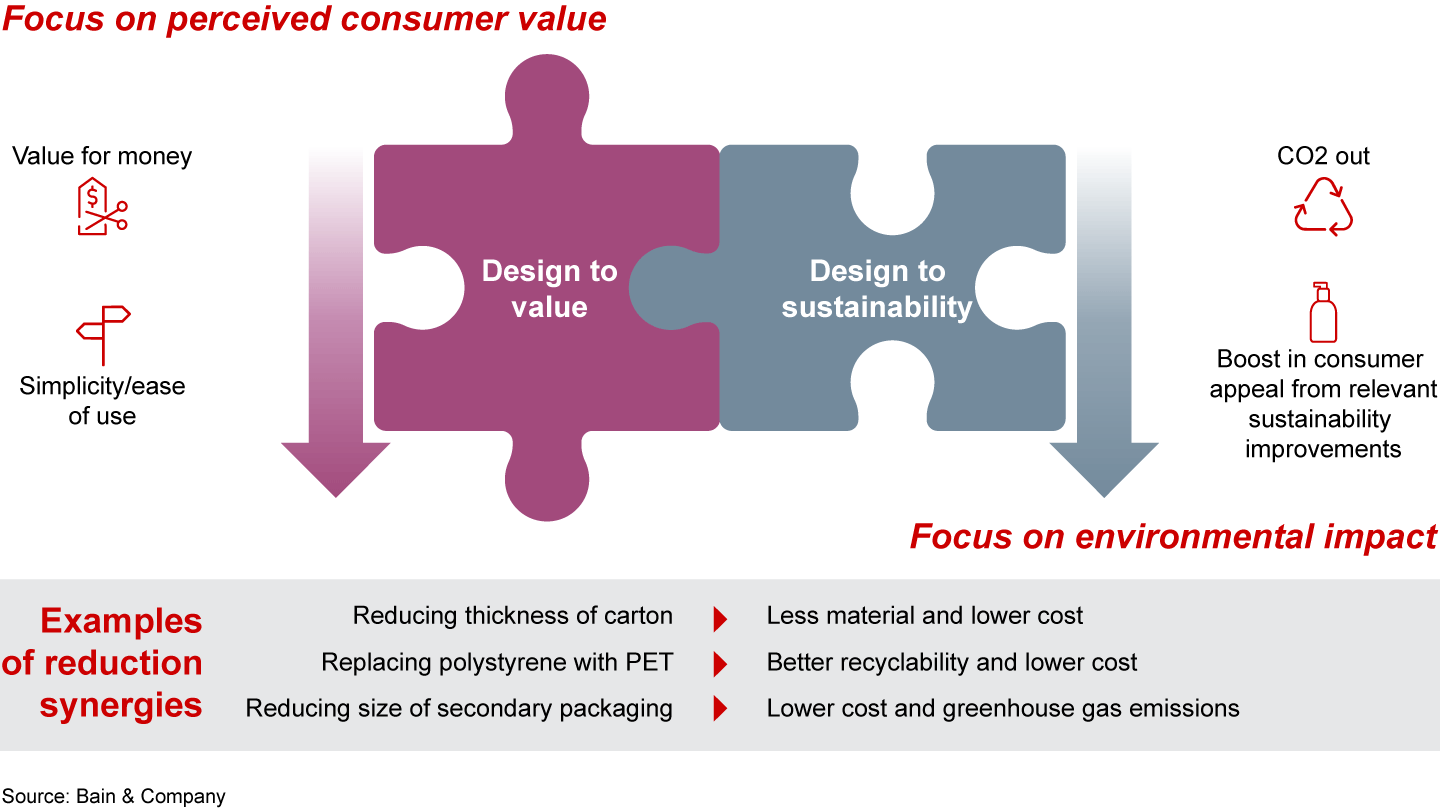
      Contrary to popular belief, in a design-to-X process companies can optimize for both cost reduction and sustainability improvement simultaneously

      They are learning, for example, that eliminating just one gram of PVC in a product can lead to measurable savings and a nearly 3.4 gram reduction in fossil fuels. No large company can afford to ignore sustainability. So while they may choose to optimize for something else, sustainability should be a “must consider” variable in their decisions.

      For Our Clients

      Macro Surveillance Platform

      For more detail on the business implications of coronavirus from Bain’s Macro Trends Group, log on to the Macro Surveillance Platform. Learn more about the platform >

      A range of consumer goods companies across product categories have reduced procurement spending and improved their environmental footprint through changes that could be rolled out in as soon as six months. For example, packaging harmonization saved one company as much as 11% on costs while substantially lowering materials requirements. Some companies have moved to such options as 3-D printing to eliminate scrapping costs, also allowing them more quickly to change label messaging for marketing promotion.

      These and other changes help companies improve costs at a time when they need cash to help them grow out of the downturn. It also enables companies to benefit from consumers’ embrace of sustainability. US sales of products marketed as sustainable grew 5.6 times faster than other products from 2013 to 2018, according to the NYU Stern Center for Sustainable Business.

      When companies use sustainability as one of the key X factors in design, they typically take a four-step approach.

      Set the rules. Companies need to clarify their ambition, their cost reduction and their margin improvement targets—while also determining the sub-X factors; that is, which dimensions of sustainability are most important to the brand. They need to set guidelines on how to manage trade-offs by product category or brand. That means asking, for example, how product packaging and design are linked to what consumers really value, and how to quantify the trade-off between those values, costs and sustainability. Cost-cutting steps that also showcase a sustainability effort may signal a highly visible commitment to something that consumers value. 

      Get the facts. The best companies conduct a rigorous cost analysis of both existing products and newly designed products. Alongside such considerations as detailed material costs and capex requirements, they assign a sustainability score to each product, looking at such factors as emissions and recyclability. The fact base covers all of the four Rs of sustainability: reducing unnecessary materials as much as possible; creating product packaging that is reusable; finding ways to replace existing materials with more sustainable materials; and ensuring products can be recycled. They also take a “shelf back” and “factory forward” approach to find the middle ground between consumer needs and cost efficiency. That involves designing the product assortment to win at the point of sale—and eliminating complexity by focusing on best-selling “hero” SKUs, for example. At the same time, it requires engineering the products for a sustainable cost advantage. Many efforts fail when there is a lack of close collaboration and agreement between supply- and operations-focused teams and the consumer-oriented marketing teams.

      Speed the process. The benefits of Agile execution are well documented. When properly conducted, Agile ways of working reduce project delivery times from 18–24 months to 5–6 months. Companies attribute rapid results in large part to empowered, cross-functional Agile teams and effective governance based on a set of specific operating principles. Among those principles: design targets that are co-owned by marketing, supply chain, procurement and sustainability, with a senior, cross-functional review board empowered to approve projects in order to hit targets. Also important: The review board has sole and final decision authority to approve ideas from the design sprints. 

      Make it stick. As with any performance improvement initiative, it is essential to rigorously track results to both fully capture savings and ensure those savings stick. The most successful companies will use their learnings to make sustainability part of their new product development process. Generating the most value from the effort also means capitalizing on sustainability gains for stronger branding and a cultural shift. The best companies embed sustainability in marketing and branding by celebrating and communicating the sustainability benefits to employees, customers and consumers.

      Even before Covid-19 began taking its toll, forward-thinking companies started reaping the rewards of taking sustainability seriously—and marketing those efforts. Brands tied to Danone’s “One Planet. One Health” corporate-level manifesto grow three times faster than the rest of the company’s portfolio. Unilever’s 28 sustainable living brands are growing 69% faster than its other brands and are the engine powering 75% of the company’s growth.

      The reality is that companies don’t need to choose between cutting costs and meeting the growing demands by consumers, retailers and regulators for sustainable products. It’s possible to optimize for both and come out stronger in a post-Covid world.

      Related Insights

      Coronavirus

      The global Covid-19 pandemic has extracted a terrible human toll and spurred sweeping changes in the world economy. Across industries, executives have begun reassessing their strategies and repositioning their companies to thrive now and in the world beyond coronavirus.

      著者
      • Headshot of Allard Vegter
        Allard Vegter
        パートナー, Amsterdam
      • Headshot of Markus Bürgin
        Markus Bürgin
        パートナー, Munich
      関連業種
      • 消費財
      関連するコンサルティングサービス
      • サステイナビリティ、社会貢献
      消費財
      Exploring AI for Packaging Circularity

      AI is already creating value across the packaging lifecycle, from optimising design and reducing material use to improving sorting and traceability.

      詳細
      消費財
      Insurgent Q&A: Chomps Cofounder Rashid Ali

      “Our retail expansion story isn’t about taking share—it’s about growing the category.”

      詳細
      サステイナビリティ、社会貢献
      How AI Is Starting to Transform Circular Packaging

      There are 15 AI use cases companies across the value chain can use today to accelerate circularity.

      詳細
      消費財
      Shift to Vertical: David Haines, Group CEO, Flora Food Group

      What does it take to stay connected to your customers when scale and complexity threaten to pull you away? 

      詳細
      消費財
      Consumer Products M&A

      In their quest for profitable growth, more companies are divesting brands or buying insurgents.

      詳細
      First published in 5月 2020
      Tags
      • サステイナビリティ、社会貢献
      • 消費財

      クライアント支援事例

      サステイナビリティ、社会貢献 A Personal Care and Cosmetics Brand Charts a Course for Sustainability

      ケーススタディを見る

      チェンジ・マネジメント Results360® Propels an Appliance Maker Into a New Era of Growth

      ケーススタディを見る

      顧客戦略、マーケティング A sweet new branding strategy

      ケーススタディを見る

      お気軽にご連絡下さい

      私達は、グローバルに活躍する経営者が抱える最重要経営課題に対して、厳しい競争環境の中でも成長し続け、「結果」を出すために支援しています。

      ベインの知見。競争が激化するグローバルビジネス環境で、日々直面するであろう問題について論じている知見を毎月お届けします。

      *プライバシーポリシーの内容を確認し、合意しました。

      プライバシーポリシーをご確認頂き、合意頂けますようお願い致します。
      Bain & Company
      お問い合わせ Sustainability Accessibility Terms of use Privacy Cookie Policy Sitemap Log In

      © 1996-2026 Bain & Company, Inc.

      お問い合わせ

      How can we help you?

      • ビジネスについて
      • プレス報道について
      • 採用について
      全てのオフィス