
Skip to Content
  • オフィス

    オフィス

    北米・南米
    • Atlanta
    • Austin
    • Bogota
    • Boston
    • Buenos Aires
    • Chicago
    • Dallas
    • Denver
    • Houston
    • Los Angeles
    • Mexico City
    • Minneapolis
    • Monterrey
    • Montreal
    • New York
    • Rio de Janeiro
    • San Francisco
    • Santiago
    • São Paulo
    • Seattle
    • Silicon Valley
    • Toronto
    • Washington, DC
    ヨーロッパ・中東・アフリカ
    • Amsterdam
    • Athens
    • Berlin
    • Brussels
    • Copenhagen
    • Doha
    • Dubai
    • Dusseldorf
    • Frankfurt
    • Helsinki
    • Istanbul
    • Johannesburg
    • Kyiv
    • Lisbon
    • London
    • Madrid
    • Milan
    • Munich
    • Oslo
    • Paris
    • Riyadh
    • Rome
    • Stockholm
    • Vienna
    • Warsaw
    • Zurich
    アジア・オーストラリア
    • Bangkok
    • Beijing
    • Bengaluru
    • Brisbane
    • Ho Chi Minh City
    • Hong Kong
    • Jakarta
    • Kuala Lumpur
    • Manila
    • Melbourne
    • Mumbai
    • New Delhi
    • Perth
    • Shanghai
    • Singapore
    • Sydney
    • Tokyo
    全てのオフィス
  • アルムナイ
  • メディア
  • お問い合わせ
  • 東京オフィス
  • Japan | 日本語

    地域と言語を選択

    グローバル
    • Global (English)
    北米・南米
    • Brazil (Português)
    • Argentina (Español)
    • Canada (Français)
    • Chile (Español)
    • Colombia (Español)
    ヨーロッパ・中東・アフリカ
    • France (Français)
    • DACH Region (Deutsch)
    • Italy (Italiano)
    • Spain (Español)
    • Greece (Elliniká)
    アジア・オーストラリア
    • China (中文版)
    • Korea (한국어)
    • Japan (日本語)
  • Saved items (0)
    Saved items (0)

    You have no saved items.

    後で閲読、共有できるようにするためにブックマークしてください

    Explore Bain Insights
  • 業界別プラクティス
    メインメニュー

    業界別プラクティス

    • 航空宇宙、防衛、政府関連
    • 農業
    • 化学製品
    • インフラ、建設
    • 消費財
    • 金融サービス
    • ヘルスケア
    • 産業機械、設備
    • メディア、エンターテインメント
    • 金属
    • 採掘・鉱業
    • 石油、ガス
    • 紙、パッケージ
    • プライベートエクイティ
    • 公共、社会セクター
    • 小売
    • テクノロジー
    • 通信
    • 交通
    • 観光産業
    • 公益事業、再生可能エネルギー
  • 機能別プラクティス
    メインメニュー

    機能別プラクティス

    • カスタマー・エクスペリエンス
    • サステイナビリティ、 社会貢献
    • Innovation
    • 企業買収、合併 (M&A)
    • オペレーション
    • 組織
    • プライベートエクイティ
    • マーケティング・営業
    • 戦略
    • アドバンスド・アナリティクス
    • Technology
    • フルポテンシャル・トランスフォーメーション
  • Digital
  • 知見/レポート
  • ベイン・アンド・カンパニーについて
    メインメニュー

    ベイン・アンド・カンパニーについて

    • ベインの信条
    • 活動内容
    • 社員とリーダーシップ
    • プレス・メディア情報
    • クライアントの結果
    • 受賞歴
    • パートナーシップを結んでいる団体
    Further: Our global responsibility
    • ダイバーシティ
    • 社会貢献
    • サステイナビリティへの取り組み
    • 世界経済フォーラム(WEF)
    Learn more about Further
  • キャリア
    メインメニュー

    キャリア

    • ベインで働く
      キャリア
      ベインで働く
      • Find Your Place
      • ベインで活躍する機会
      • ベインのチーム体制
      • 学生向けページ
      • インターンシップ
      • 採用イベント
    • ベインでの体験
      キャリア
      ベインでの体験
      • キャリアストーリー
      • 社員紹介
      • Where We Work
      • 成長を後押しするサポート体制
      • アフィニティ・グループ
      • 福利厚生
    • Impact Stories
    • 採用情報
      キャリア
      採用情報
      • 採用プロセス
      • 面接内容
    FIND JOBS
  • オフィス
    メインメニュー

    オフィス

    • 北米・南米
      オフィス
      北米・南米
      • Atlanta
      • Austin
      • Bogota
      • Boston
      • Buenos Aires
      • Chicago
      • Dallas
      • Denver
      • Houston
      • Los Angeles
      • Mexico City
      • Minneapolis
      • Monterrey
      • Montreal
      • New York
      • Rio de Janeiro
      • San Francisco
      • Santiago
      • São Paulo
      • Seattle
      • Silicon Valley
      • Toronto
      • Washington, DC
    • ヨーロッパ・中東・アフリカ
      オフィス
      ヨーロッパ・中東・アフリカ
      • Amsterdam
      • Athens
      • Berlin
      • Brussels
      • Copenhagen
      • Doha
      • Dubai
      • Dusseldorf
      • Frankfurt
      • Helsinki
      • Istanbul
      • Johannesburg
      • Kyiv
      • Lisbon
      • London
      • Madrid
      • Milan
      • Munich
      • Oslo
      • Paris
      • Riyadh
      • Rome
      • Stockholm
      • Vienna
      • Warsaw
      • Zurich
    • アジア・オーストラリア
      オフィス
      アジア・オーストラリア
      • Bangkok
      • Beijing
      • Bengaluru
      • Brisbane
      • Ho Chi Minh City
      • Hong Kong
      • Jakarta
      • Kuala Lumpur
      • Manila
      • Melbourne
      • Mumbai
      • New Delhi
      • Perth
      • Shanghai
      • Singapore
      • Sydney
      • Tokyo
    全てのオフィス
  • アルムナイ
  • メディア
  • お問い合わせ
  • 東京オフィス
  • Japan | 日本語
    メインメニュー

    地域と言語を選択

    • グローバル
      地域と言語を選択
      グローバル
      • Global (English)
    • 北米・南米
      地域と言語を選択
      北米・南米
      • Brazil (Português)
      • Argentina (Español)
      • Canada (Français)
      • Chile (Español)
      • Colombia (Español)
    • ヨーロッパ・中東・アフリカ
      地域と言語を選択
      ヨーロッパ・中東・アフリカ
      • France (Français)
      • DACH Region (Deutsch)
      • Italy (Italiano)
      • Spain (Español)
      • Greece (Elliniká)
    • アジア・オーストラリア
      地域と言語を選択
      アジア・オーストラリア
      • China (中文版)
      • Korea (한국어)
      • Japan (日本語)
  • Saved items  (0)
    メインメニュー
    Saved items (0)

    You have no saved items.

    後で閲読、共有できるようにするためにブックマークしてください

    Explore Bain Insights
  • 業界別プラクティス
    • 業界別プラクティス

      • 航空宇宙、防衛、政府関連
      • 農業
      • 化学製品
      • インフラ、建設
      • 消費財
      • 金融サービス
      • ヘルスケア
      • 産業機械、設備
      • メディア、エンターテインメント
      • 金属
      • 採掘・鉱業
      • 石油、ガス
      • 紙、パッケージ
      • プライベートエクイティ
      • 公共、社会セクター
      • 小売
      • テクノロジー
      • 通信
      • 交通
      • 観光産業
      • 公益事業、再生可能エネルギー
  • 機能別プラクティス
    • 機能別プラクティス

      • カスタマー・エクスペリエンス
      • サステイナビリティ、 社会貢献
      • Innovation
      • 企業買収、合併 (M&A)
      • オペレーション
      • 組織
      • プライベートエクイティ
      • マーケティング・営業
      • 戦略
      • アドバンスド・アナリティクス
      • Technology
      • フルポテンシャル・トランスフォーメーション
  • Digital
  • 知見/レポート
  • ベイン・アンド・カンパニーについて
    • ベイン・アンド・カンパニーについて

      • ベインの信条
      • 活動内容
      • 社員とリーダーシップ
      • プレス・メディア情報
      • クライアントの結果
      • 受賞歴
      • パートナーシップを結んでいる団体
      Further: Our global responsibility
      • ダイバーシティ
      • 社会貢献
      • サステイナビリティへの取り組み
      • 世界経済フォーラム(WEF)
      Learn more about Further
  • キャリア
    人気検索キーワード
    • デジタル
    • 戦略
    前回の検索
      最近訪れたページ

      Content added to saved items

      Saved items (0)

      Removed from saved items

      Saved items (0)

      Technology Report

      Tech M&A: The New Rules for Scope Deals

      Tech M&A: The New Rules for Scope Deals

      Successful deals focus on revenue synergies, not just cost savings.

      著者:Adam Haller, Erin Gillman, and Colleen von Eckartsberg

      • min read
      }

      レポート

      Tech M&A: The New Rules for Scope Deals
      en
      概要
      • There’s no sign that the industry’s reliance on scope deals to spur growth will end any time soon.
      • Acquirers often fail to focus on the revenue synergies that will deliver a scope deal’s intended value.
      • An inability to integrate product portfolios is companies’ most common challenge to capturing revenue synergies.
      • As they pursue revenue synergies, companies must balance the need for cost synergies, too—without cutting critical capabilities.

      This article is part of Bain's 2024 Technology Report.

      Explore the report

      When scale acquisitions in tech started encountering more regulatory obstacles, companies shifted their M&A activity to scope deals intended to give an acquirer access to new capabilities, products, or markets. The change has been so dramatic that over the past six years, scope deals have accounted for nearly 80% of all tech industry M&A (see Figure 1). That’s a bigger share than in most other industries.

      Figure 1
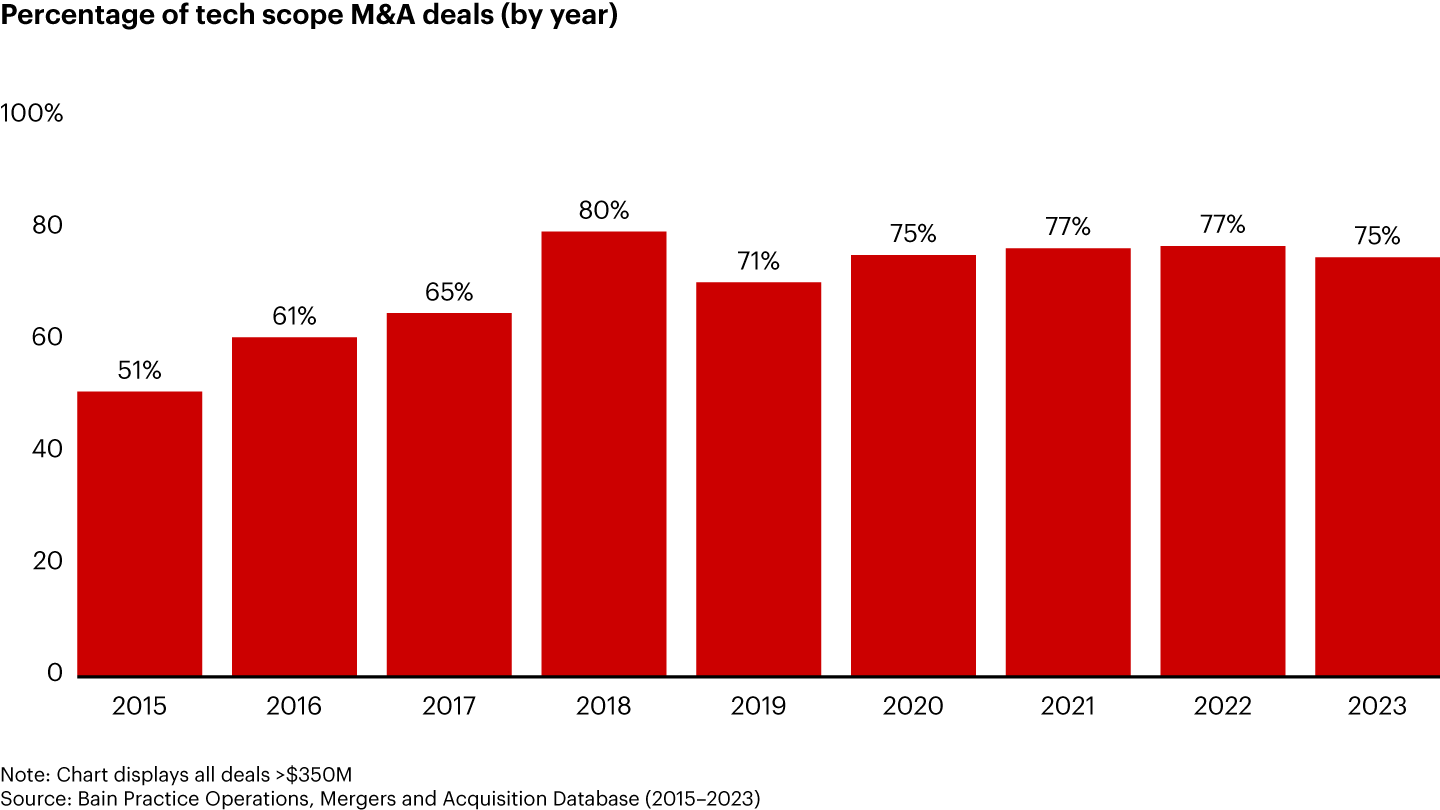
      From 2015 to 2018, the percentage of tech industry scope deals increased from 50% to 80%, holding steady ever since

      And now there’s no sign that the popularity of tech scope deals will give way to a return to massive scale deals any time soon. Big tech still is heavily scrutinized, and if anything, M&A in the industry has become more unpredictable. In addition to looking harder at scale acquisitions, regulators are now challenging scope deals, too, requiring companies to endure a lengthy regulatory process that can delay closings for months.

      The trouble is, while the types of deals have changed, too few tech companies have changed their M&A processes to accommodate. As a result, many have discovered that relying on a scale deal playbook almost guarantees that an acquirer won’t deliver a scope deal’s intended value.

      The big challenges

      Unlike scale deals, which are primarily predicated on generating cost synergies, scope deals are heavily based on revenue synergies, with companies planning to grow revenues first by cross-selling and longer term by bringing products together. However, too frequently a deal’s distractions cause decision makers to lose focus on that objective, and product integration never happens. It’s to the point that a failure to integrate product portfolios is the most common challenge to capturing revenue synergies, according to our survey of tech M&A practitioners (see Figure 2).

      Figure 2
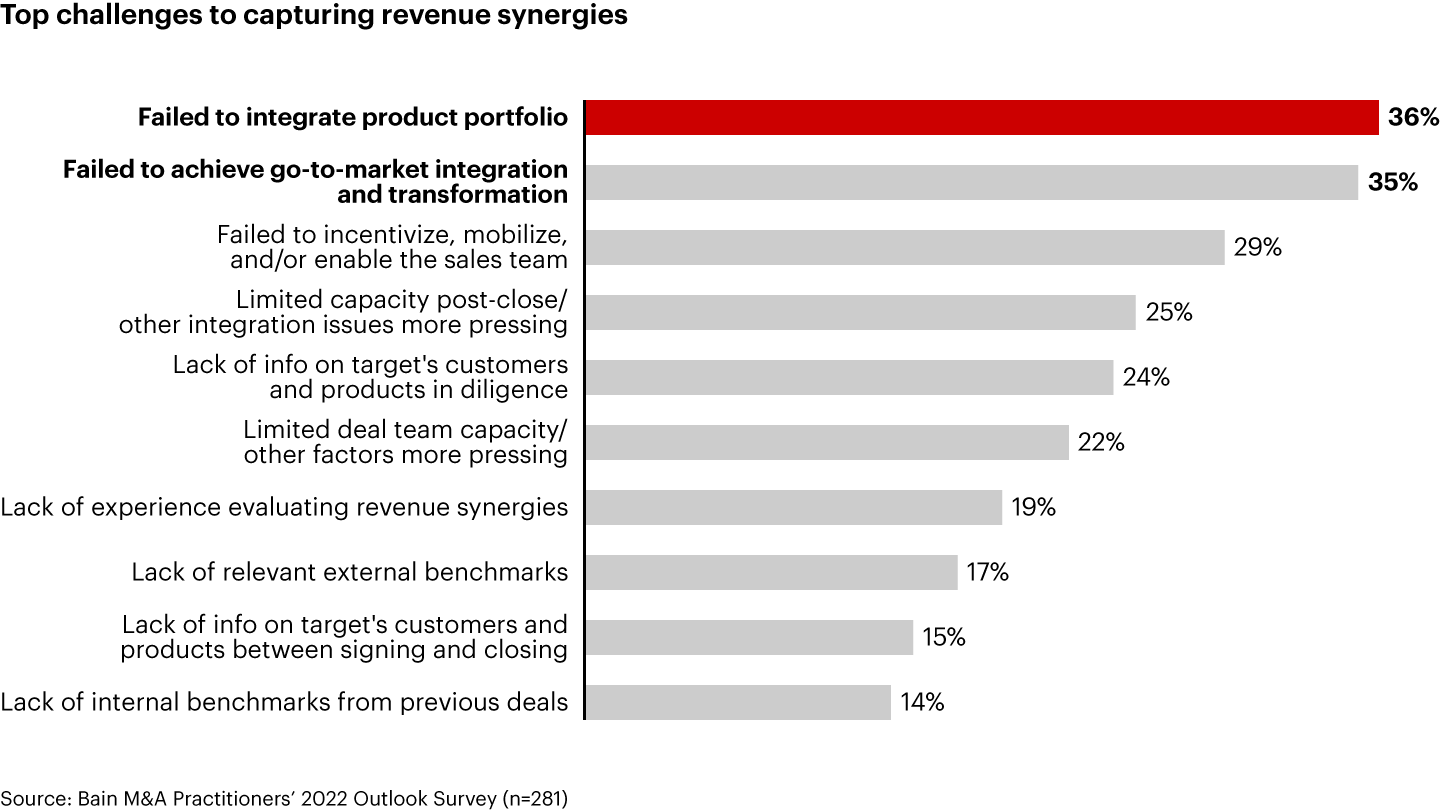
      M&A practitioners cite product integration as the top reason for falling short of revenue synergy capture

      It gets even more difficult because, as they pursue revenue synergies, companies must balance the need for cost synergies, too. Especially in a high interest rate environment, cost synergies help a company pay off expensive debt as quickly as possible. Yet, by making the moves that enable an acquirer to meet targets for substantial cost synergies, companies risk cutting the very capabilities that would underpin revenue synergies.

      There’s also the talent issue. It’s always a challenge to integrate teams when talent and culture vary from one type of business to another. But if there is no clarity on vision or growth in the short term, companies risk watching critical talent flee. Employees worry about the impending change and feel they aren’t seeing the upside or the “better together” vision they expected.

      Finally, while there’s always a risk to the base business before a deal closes, the longer pre-close timeline caused by regulatory approval processes—even with scope deals—creates more uncertainty on all fronts. There’s even more time for competitors to make inroads with customers, for example.

      What can tech companies do?

      The first move is to accept this new reality of tech M&A: In a world of scope deals and revenue synergies, you can’t run the 20-year-old playbook that only focuses on taking out costs.

      Instead, companies must look at the ways to change the playbook across the specific stages of a deal. 

      Update the diligence approach. Don’t just pressure test the financials and market growth.  Set the vision, pressure test scenarios, and align internal leadership on the deal thesis. And use diligence as an opportunity to develop a data-driven view of revenue synergy opportunities (both in go-to-market and product synergies) based on voice of the customer research. Include the non-financial elements of talent and culture in diligence as well.

      Make the most of pre-close planning and alignment. Understand the expanding regulatory hurdles and adjust your transaction strategy and integration planning accordingly. The new mantra should be plan for the worst, but be ready for the best. That means pre-close integration planning that includes preparations for the earliest and latest possible closing outcomes, with a flexible, stage-gated approach to closing. Indeed, with heightened scrutiny even on scope deals, it’s necessary to expect a prolonged timeline.

      Data shows that deals which don’t face scrutiny usually close within about three months. If regulators request additional information, timelines are likely to be six or more months longer, with those deals turning into court cases reaching delays of up to two years. Challenges can sometimes come from multiple regulatory bodies across the globe, with large deals (those $10 billion or larger) facing more scrutiny. For example, the Microsoft-Activision Blizzard deal was challenged by multiple regulatory bodies, with concerns from the EC, and UK’s CMA ultimately setting the restructuring terms and timeline.

      Accelerate Day 1 revenue synergies. Another critical pre-close step requires data-driven sales planning aimed at enabling the sales team to hit the ground running. Focus on the highest-value opportunities—pinpointing Day 1 sales plays with a targeted list of reps and customers. Equip sales teams for success with a run book. Show salespeople how they can make money and how the better together story benefits them. Give them clear rules of engagement and the right comp structure.

      These elements of pre-close planning will buy you time to invest in bringing the products together. But it’s also necessary to devise a thoughtful approach to talent and culture. Engage and inspire talent from the onset by tailoring your proposals for critical populations such as engineering and AI data scientists. And invest to understand and address the major cultural “fault lines”—potentially destabilizing differences—so integration planning teams can set the tone.

      Hitachi’s acquisition of Silicon Valley-based GlobalLogic serves as an example of what to do right. The Japanese company wanted to strengthen its digital engineering capabilities with GlobalLogic, but it knew that cultural differences could be an obstacle. One major risk was that the target would lose its unique strengths under Hitachi—or under any large corporation, for that matter. Hitachi invested heavily to pinpoint and resolve cultural fault line issues. That included several workshops, in-person visits, and a unique cross-cultural team staffed across geographies to smooth over potential misunderstandings.  The investment not only preserved GlobalLogic’s culture, but also helped Hitachi recognize how that culture encouraged innovation and then apply those learnings back to its own organization.

      Know how to motivate immediately post close. Keep a laser focus on executing toward revenue synergy goals, setting the sales team up for success from Day 1. That means establishing a win room and providing sales training while also aligning sales incentives and rules of engagement on shared accounts.

      Plan for longer-term integration, making product synergies key to revenue growth. The best companies strategically bring offers together, developing differentiated new customer value propositions and building integrations or unified platforms that, in turn, deliver the longer-term revenue synergies (see “M&A in Technology: Getting Serious about Product Synergies,” a chapter in the M&A Report 2024). Proactively communicate with customers early on, showing the initial value of the new combined products and charting a clear joint roadmap. Accelerate strategic product planning with a dedicated cross-functional team as part of the integration management office (within regulatory guardrails). And continue to focus on talent, with emphasis on the moments in integration that matter.

      In this new world, deals are more expensive than ever, and growth is riskier. But there’s a key to capturing the value of any deal. A robust M&A capability, with a tailored and strategic approach to integration, allows any company to move earlier and with more confidence at every stage of the deal.

      Read the Next Chapter

      Sovereign AI Is the Next Fault Line in the Global Tech Sector

      Read our 2024 Technology Report

      Download the PDF Explore the report

      More from the report

      • Commercializing Innovation

      • Investing in a Shifting Market

      • Scope M&A

      • Sovereign AI

      • Top AI Functions

      • The AI Opportunity

      • Big and Small Computing

      • The AI Chip Shortage

      • The Software Cycle

      • AI in Tech Services

      • Deploying Generative AI

      • Software Development Efficiency

      • Customer Success

      • AI Everywhere

      著者
      • Headshot of Adam Haller
        Adam Haller
        パートナー, San Francisco
      • Headshot of Erin Gillman
        Erin Gillman
        パートナー, San Francisco
      • Headshot of Colleen von Eckartsberg
        Colleen von Eckartsberg
        パートナー, San Francisco
      関連業種
      • テクノロジー
      関連するコンサルティングサービス
      • M&A Due Diligence
      • Post-Merger Integration
      • 企業買収、合併(M&A)
      テクノロジー
      Software M&A

      The good news: Most deal best practices still apply to AI acquisitions.

      詳細
      Technology Report
      Quantum Computing Moves from Theoretical to Inevitable

      Quantum will likely become part of a mosaic, working with classical computing to solve big problems.

      詳細
      企業買収、合併(M&A)
      Media M&A

      AI and other tech tools can boost bidding confidence in this highly competitive environment.

      詳細
      Technology Report
      Will AI Disrupt Tech’s Most Valuable Companies?

      Hyperscalers and other market leaders have adapted well to technology shifts, but generative AI poses new challenges.

      詳細
      テクノロジー
      Exploring AI for Packaging Circularity

      AI is already creating value across the packaging lifecycle, from optimising design and reducing material use to improving sorting and traceability.

      詳細
      First published in 9月 2024
      Tags
      • M&A Due Diligence
      • Post-Merger Integration
      • Technology Report
      • テクノロジー
      • 企業買収、合併(M&A)

      クライアント支援事例

      Helping a Midsize ERP Player Compete against the Giants

      ケーススタディを見る

      業績改善 Aggressively growing an IT service provider with a high-performance culture

      ケーススタディを見る

      顧客戦略、マーケティング Electronics manufacturer increases value of CRM investment

      ケーススタディを見る

      お気軽にご連絡下さい

      私達は、グローバルに活躍する経営者が抱える最重要経営課題に対して、厳しい競争環境の中でも成長し続け、「結果」を出すために支援しています。

      ベインの知見。競争が激化するグローバルビジネス環境で、日々直面するであろう問題について論じている知見を毎月お届けします。

      *プライバシーポリシーの内容を確認し、合意しました。

      プライバシーポリシーをご確認頂き、合意頂けますようお願い致します。
      Bain & Company
      お問い合わせ Sustainability Accessibility Terms of use Privacy Cookie Policy Sitemap Log In

      © 1996-2026 Bain & Company, Inc.

      お問い合わせ

      How can we help you?

      • ビジネスについて
      • プレス報道について
      • 採用について
      全てのオフィス